
Politics
Miriam Cates: Time’s up for the triple lock but there’s little hope of pension reform from the Right

Miriam Cates is a presenter on GBNews and the former MP for Penistone and Stocksbridge.
I never used to understand the appeal of the radical left.
The combination of socialist economics and a rejection of tradition is a recipe for disaster, as has been proven time and again over the last century. But last week, for a brief moment at least, I experienced a pang of revolutionary zeal and saw why the extreme left, currently embodied in Zak Polanski’s Green Party, has become so popular with young people in Britain.
This revelation was delivered to me during a Reform UK press conference, where treasury spokesman Robert Jenrick announced that his party was now committed to keeping the pensions “triple lock.” In doing so, Jenrick slammed the final nail in the coffin for the hope of state pension reform from the political right.
Should the Tories (who still support the triple lock) or Reform, or a coalition of the two win the next General Election, Britain’s young people are now condemned to pay through the nose for the retirement of the wealthiest generation in history, while simultaneously being denied the opportunity for homeownership and parenthood that their parents and grandparents took for granted.
Storming the barricades seems like a perfectly reasonable response in such circumstances.
The triple lock is a relatively new policy, introduced by the Conservative-Lib Dem coalition government in 2011. It guarantees that each year, the state pension will rise by the highest of inflation, wages or 2.5 per cent. It is a mathematical certainty that the annual increase will always exceed the average of these three metrics, and that is why since in the last 15 years, the state pension has increased by 70 per cent, twice as much as wage growth over the same period. By 2030, the triple lock alone – not the cost of the pension itself – will add £15 billion a year to Britain’s benefit bill. And the price tag will continue to rise as the value of the state pension increases and more of Britain’s “baby boomers” reach retirement age.
The pensions triple lock is a policy that everyone in Westminster – politicians, economists, think tankers and journalists – knows is unaffordable.
Since pensions are paid from current taxation and the birth rate has been falling for 50 years, a shrinking group of working age tax payers is taxed more and more each year to fund a growing number of pensioners. The state pension is driving our economy off a cliff, yet no one in the corridors of power dares to admit it in public – though all do so in private – for fear of losing the ‘grey’ vote.
I had hoped that Reform would be different.
In so many policy areas, Nigel Farage has stood bravely against the consensus, holding his ground and winning the argument, forcing the Conservative Party (eventually) into more conservative positions. On Brexit, immigration, the ECHR and Net Zero, Farage steeled himself against establishment opprobrium, and shifted the Overton Window. The Reform leader has even had the courage to ditch some of his own popular but unsound policies – such as raising the income tax threshold to £20 000 – by explaining the need for fiscal responsibility. In recent months, both Farage and Richard Tice have hinted that the triple lock may need a rethink, rolling the pitch – or so I thought – for an honest debate. Farage is often labelled a ‘populist,’ but the British political right has been considerably strengthened by his willingness to risk being unpopular.
That is why last week’s triple lock announcement is so disappointing.
In departing from the Faragist modus operandi, Reform UK has ducked the challenge of using their unique place in British politics to shift the dial on pensions reform and force the Conservatives into a more sensible position. It was noticeable that in the press conference, both Jenrick and Farage reinforced misunderstandings about how Britain’ s state pension is funded, saying that retirees have ‘paid into’ their pension, even though this is untrue. National Insurance payments are not saved for an individual; NI is a tax that is used to cover the cost of current public spending. The average pensioner receives around 25 per cent more from the state than they contributed in tax and NI. This popular myth – that pensioners receive their pensions from a ‘pot’ with their name on it – is one of the major political barriers to reform and politicians ought to take every opportunity to correct rather than perpetuate the misconception.
Reform (and the Conservatives) also claim that the triple lock can be afforded by cutting spending on foreigners and the workless. But our national finances are in such a perilous state that we must do everything at once. State pension expenditure has reached £150 billion a year; annual spending on asylum hotels (which should of course be stopped) sits at just £2 billion. Universal Credit claims by households including at least one foreign national amount to less than £15 billion a year. It is not possible to reduce spending enough without addressing the burgeoning cost of the state pension.
Supporters argue that Reform’s commitment to the triple lock is born of pragmatism, and that the Party must bolster its position among older voters. Pragmatic it may be, courageous it is not. And it is certainly not in the national interest.
Yet judging by the arguments raging online and in the media this week, it is clear that many on the right see the triple lock and the state pension as untouchable foundations of government policy. Three main arguments are being made by so-called conservatives in favour of the status quo, none of which stand up to scrutiny.
Firstly, opponents to pension reform argue that a generous state pension is part of the social contract and so, even though the state pension is technically not a contributory scheme, it would be immoral for the government to change the terms. But healthcare and unemployment benefits are also part of our social contract, and we all recognise that it is up to the government of the day to set the level of NHS spending and welfare eligibility criteria based on what is sensible and affordable. When the current state pension was introduced, life expectancy was 65 and the birth rate was high enough to sustain our native population. In all other areas of policy making we recognise that times have changed; why ring fence the state pension?
Secondly, supporters of the non-means tested state pension claim that those who paid tax throughout their working lives are entitled to this state handout because of their financial contribution. But by that logic, all working age taxpayers should be allowed to claim Universal Credit. The welfare state is based on the understanding that high earners pay a lot of tax and at the same time are not entitled to benefits. It’s unclear why this should only apply to those under the age of 67.
Lastly, it is argued that pensioners deserve a well-earned and comfortable retirement as a reward for their working life. I have no doubt that most of Britain’s current retirees have indeed worked hard. But no generation has ever before – or will again – enjoy such lengthy and wealthy retirements, benefitting as they have from improved healthcare and macroeconomic policies that saw asset prices rocket. Are Boomers more deserving than, say, the silent generation who fought the Second World War, or the Edwardians who endured the Great War, and the Spanish Flu? Of course we shouldn’t begrudge anyone a long and happy retirement, but we must also recognise that the extraordinarily advantageous circumstances of many current retirees owes more to luck than virtue.
It’s as if a form of wilful blindness has taken hold of some on the right, preventing them from seeing the state pension for what it has become – a universal basic income for those over a certain age.
Apparently without embarrassment, some conservatives complain that Britain’s benefit system is increasingly socialist – with growing expenditure on asylum seekers and those who don’t want to work – while being unwilling to contemplate reform to our most socialist benefit of all; the state pension. The same people who argue that disability benefits should only go to those who really need them seem remarkably comfortable with millionaires (one in four of today’s pensioners) and higher rate tax payers (three million retirees by the end of next year) receiving a state pension. Britain’s pension system now functions as a cash transfer from poorer young to wealthier old, in a reverse Robin Hood phenomenon that has become known online as ‘Boomer Communism’.
The delusion is so potent that it has led some to claim that those calling for pension spending restraint are ‘far left’. We really are flying upside down.
Is it any wonder Britain’s young people are so demoralised? My eldest son turns 18 this year and, once he enters the workplace, a large proportion of the tax he pays will fund an income not just for poor pensioners, but for many who don’t need the money and are sitting on unearned asset wealth that he can never hope to acquire. If this is ‘capitalism’ then there are no prizes for guessing why young people might reject it.
In their press conference, the Reform Party pointed to polling that shows young people support the triple lock. But young people also support puppies and kittens; it doesn’t mean it will be a deciding issue for them at an election. And both Farage and Jenrick had some choice words about the apparently work-shy young, which is a bit rich considering they are the people who are being forced to fund a state pension that will be long gone by the time they reach old age.
Campaigning for economic reform should not be the preserve of the radical left.
There is a compelling conservative argument for addressing generational inequality, based on responsibility, opportunity and the virtue of living within our means. It is notable that Britain’s Reform Party is considerably less popular with young voters than their European counterparts. France’s Rassemblement Nationale and Germany’s AfD have attracted the support of around 30 per cent of young people in their respective nations; just 8 per cent of Britain’s youth say they will vote for Farage’s party.
Perhaps this is because Reform has leaned into Brexit and immigration, rather than issues of identity, ethnicity and economic inequality which drive concern among the young. Interestingly the newest entrant on the right – Rupert Lowe’s Restore Party – is deliberately directing its messaging at younger voters and calling on grandparents to make sacrifices for their grandchildren. Time will tell whether Restore can land their arguments with enough voters of all ages to make a difference.
Time is running out.
The welfare bill (of which around one half is the state pension) has now exceeded income tax receipts. Of course the very poor – of all ages – must be protected. But in refusing to address the burgeoning cost of state pensions, we are enriching the old at the expense of the young and condemning our economy to crisis. If that doesn’t radicalise you, nothing will.
Or perhaps you think we can just let the young eat cake.



The UK has long been a global leader in tobacco control. The ambition to create a smoke-free future is the right one – and one that requires both urgency and pragmatism. The passage of the Tobacco and Vapes Act should have accelerated that progress. Instead, it risks falling short where it matters most
At its core, reducing smoking rates depends on one simple principle: helping adult smokers move away from combustible tobacco. The evidence is clear that a range of alternative, smokeless products can play an important role in that transition. But for that to happen at pace, smokers need access not only to these products, but to clear, responsible information about them.
Proposals to significantly restrict advertising around nicotine products risk undermining that objective. If adult smokers are less aware of the alternatives available to them, it stands to reason that fewer will make the switch. That is not a theoretical concern, but a practical barrier to progress. Regulation must strike a careful balance: protecting young people while ensuring that adult smokers are not left in the dark.
At the same time, regulation is only as effective as its enforcement. Across the UK, illicit products and underage sales remain a persistent challenge. Yet the current framework does not go far enough in ensuring that those who break the rules face meaningful consequences. Without strong, consistent enforcement, well-intentioned legislation risks being undermined in practice.
With the Act now passed, the focus turns to how it is implemented. The forthcoming consultations will be critical in shaping key elements of the regulatory framework – including how products are described, presented and made available to adult smokers.
This will be particularly important when it comes to flavours. For many adult smokers, non-tobacco flavours play a significant role in supporting switching away from cigarettes. Getting this balance right and ensuring products remain appealing to adult smokers while minimising youth appeal is essential if the UK is to sustain progress towards its smoke-free ambition.
Get it wrong, however, and the consequences are severe. Smokers may be left with fewer viable alternatives, switching rates could stall, and the illicit market – already a growing concern – may continue to expand. In that scenario, the UK risks not only slowing its progress but losing its position as a global leader in Tobacco Harm Reduction.
Politics
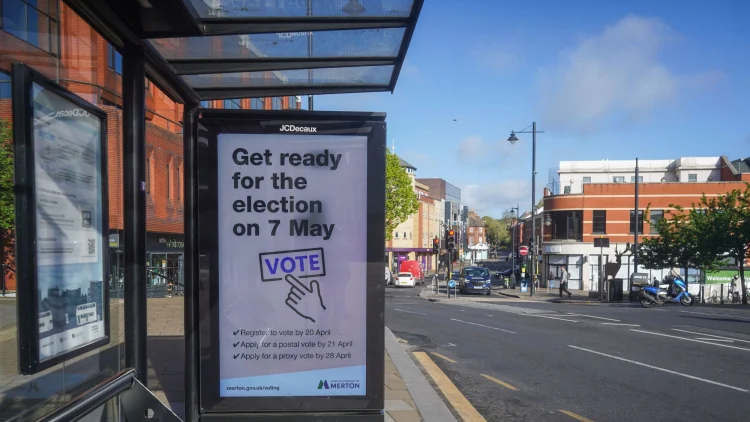
The House | The May elections face a threat from disinformation that can be generated more quickly than ever before

(amer ghazzal/Alamy)
3 min read
In a few weeks’ time 5,014 council seats, 96 Senedd seats and 129 Scottish Parliament seats will be up for election. As well as facing off against each other, candidates are facing another foe this election season, in the shape of disinformation.
Misinformation and disinformation were defining concerns for 2024’s bumper year of elections, where over half of the world’s population went to the polls. Indeed, a majority of UK voters claim to have encountered misinformation during the campaign.
The threat of false and misleading narratives are nothing new. What is different about the current environment is that the tools for the creation and spread of misinformation are cheaper, faster and more convincing than anything that has existed previously. And, as mis- and disinformation will tend to latch on to divisive or controversial issues, an election period – particularly one as hotly contested as the May polls are expected to be – is ripe for exploitation.
As part of our ongoing research into UK local news ecosystems, we found that the rate of misinformation in Gorton and Denton in the run up to the by-election was higher than we have observed in non-electoral areas. This included fake quotes attributed to Reform UK’s Matthew Goodwin, and claims that the Greens’ Hannah Spencer lived in a “massive house”, with AI generated images alongside this assertion. Concern over the extent of potential disinformation is such that the Electoral Commission has launched a pilot to detect deepfakes ahead of the May elections.
A good counterbalance to misinformation and disinformation is a well-informed and media literate electorate, supported by a healthy news and information ecosystem. Some of the crucial functions of journalism include keeping the public informed and holding figures in power to account – on a local level as well as a national one. However, news consumption in the UK has fallen dramatically – and local news outlets have been hit particularly hard. Fewer readers and financial pressures can lead to local media organisations folding, or at the very least cutting back on their staff, leaving a gap in reporting and giving space for misinformation to take a foothold that is difficult to shake or be corrected.
A good counterbalance to misinformation and disinformation is a well-informed and media literate electorate
Twisted quotes and doctored images not being called out by local media may not seem particularly problematic. After all, we’re well used to a certain amount of political spin: if it didn’t sway any votes, does it really matter? In the long term, the real world impact can be severe. This year’s Cambridge Disinformation Summit focused on “downstream harm”, making the case that disinformation narratives are often a precursor to harm and exploitation. This leaves us open to risks, including around electoral integrity. Sustained misinformation and disinformation can contribute to societal polarisation, social instability and lead to a breakdown of trust in institutions. Without local news systems to challenge misinformation, this could happen all the faster.
The question for policymakers, as we will lay out in our report in June, is what more can be done to buttress local journalism, rein in misinformation on social media platforms and improve the public’s resilience and critical thinking.
We at the SMF will be publishing a report in June, sponsored by the BBC and drawing on our manual analysis of over 150,000 social media posts, case studies of how local misinformation incidents have been handled by local media and institutions, as well as monitoring of social media in local election hotspots in May.
Niamh O Regan is senior researcher at the Social Market Foundation


Engineering and financial services firms headquartered in the UK have been shamed in a new ‘Don’t Bank on the Bomb‘ report from the International Campaign Against Nuclear Weapons (ICAN) and PAX.
The report, formally titled Investing in the Arms Race: The companies building nuclear weapons and their financiers, was published on 24 April 2026 – just ahead of the Review Conference of the Parties to the Treaty on the Non-Proliferation of Nuclear Weapons (NPT), which started on 27 April.
Introducing the report, ICAN said in a press release:
Overwhelming pressure from the defence sector and government officials have encouraged the financial industry to provide more loans and corporate financing, without considering whether those arms companies are involved in the production, maintenance and development of nuclear weapons.
ICAN director of programmes and contributing author to the report Susi Snyder said:
For the first time in years the number of investors trying to profit from an arms race is on the rise, this is a short term and risky strategy that contributes to a dangerous escalation.
It is impossible to profit from an arms race without feeding one. Investors have a choice and gambling on an arms race is risky for portfolios and for the world.
Three UK companies names
25 “companies producing nuclear weapons” were listed in the report, including three from the UK – Babcock, BAE Systems and Rolls-Royce.
The report said Babcock:
supports the maintenance and modernization of UK nuclear armed submarines and is subcontracted for work on US nuclear armed submarines. For the year ending 31 March 2025, Babcock reported revenues of £4.8bn.
Meanwhile, BAE Systems
is involved in three nuclear weapon arsenals: those of France, the United Kingdom and the United States.
BAE Systems also:
supports the sustainment of the U.S. ICBM (intercontinental ballistic missile) inventory, is contracted for work on the submarine-launched Trident missiles and builds the new UK Dreadnought class submarines. In the financial year ending 31 December 2025, BAE Systems reported sales of £30.7bn.
Finally, Rolls-Royce:
produces key components for UK nuclear armed submarines. For the year ending 31 December 2025, Rolls-Royce reported revenues of £20bn.
None of the three responded to an offer by the Canary to comment on their inclusion in the report.
Children’s charity funding nuclear weapons
The report listed the world’s “top 10 investors (holding shares or bonds)” in the manufacture of nuclear weapons, which “are mostly based in the United States”:
their combined investments in the 25 nuclear weapon producing companies totals $477,037M [and they are responsible for] over 67% of all investments.
Of the top 10, one is in UK – The Children’s Investment Fund Management (TCI Fund).
Part of the TCI Fund’s profits goes to the philanthropy of Children’s Investment Fund Foundation (CIFF), which says it works:
towards a world where children are healthy, safe and have opportunities. A world that’s prosperous and secure for everyone.
In 2025, TCI Fund invested $16.3bn in nuclear weapons production – a $4.3bn increase compared to $12bn in 2024, according to the report.
TCI Fund did not respond to an offer by the Canary to comment on their inclusion in the report.
205 financial institutions implicated
The report went on to provide a full list of 205 financial institutions that:
were found to have significant investments (share and bond holdings) in one or more of the 25 nuclear weapons companies.
Only institutions with holdings of at least 0.5% of the total number of outstanding shares or bonds of the profiled companies are listed.
The wider list of 205 mentioned 14 firms in the UK. They were AssetCo ($47M), Aviva ($1.2bn), Baillie Gifford ($140M), Barclays ($1.2bn), TCI Fund ($16.3bn), Janus Henderson ($575M), Jupiter Fund Management ($109M), Legal & General ($2.7bn), Rathbones ($452M), Rokos Capital Management ($99M), Royal London ($836M), Schroders ($137M), Sona Asset Management ($12M) and Trinity Street Asset Management ($658M).
The Canary approached all the firms and offered them the opportunity to comment on their inclusion in the report. Baillie Gifford, Jupiter Fund Management and Sona Asset Management declined to comment. None of the other firms responded.
The report said:
125 financial institutions provided financing in the form of loans or underwriting to one or more of the 25 nuclear weapons companies.
Of those, five are based in the UK – Barclays ($5.5bn), HSBC ($2bn), Lloyds Banking Group ($2.2bn), NatWest ($1.3bn) and Standard Chartered ($2.3bn).
All were approached by the Canary but none chose to comment.
The main organisations in the UK that procure nuclear weapons and related products and services are the Ministry of Defence (MOD) and the Atomic Weapons Establishment, which recently rebranded to ‘AWE – Nuclear Security Technologies’. They were also mentioned in the report.
The Canary approached the MOD and AWE. AWE deferred to the MOD, and the MOD did not respond to the opportunity to comment.
Responsible investors should exclude nukes from portfolios – charity
ShareAction is a charity that works “to build a world where the financial system serves our planet and its people”, according to its website.
The charity published a survey in 2025 covering 76 of the world’s largest asset managers, which found that only six had a comprehensive nuclear weapons exclusion, and none of those six were based in the UK.
ShareAction senior research manager Abhijay Sood told the Canary:
There is no evidence that ESG-labelled financial instruments have so far made a substantial difference to UK nuclear weapons activities.
ESG products still represent a minority of the market, and exposure to nuclear weapons is often excluded, or only referenced at a product level rather than across firms’ entire activities.
While some financial institutions have adopted policies on controversial weapons, relatively few of these explicitly cover nuclear weapons, and fewer still apply exclusions to nuclear weapons programmes in countries such as the UK which are permitted them under the Nuclear Non-Proliferation Treaty.
From our perspective, the minimum expectation for responsible investors is that they should exclude all forms of support for controversial weapons, including nuclear weapons, regardless of where they are produced or deployed.
Bank concerned by attempts to water down labelling of nukes in financing
A Triodos Bank UK spokesperson told the Canary that the bank was worried about the “erosion” of ESG standards where attempts are underway to make it harder for investors to avoid financing companies involved in nuclear weapons production.
The spokesperson said:
We welcome the report as it critically examines the evolving landscape of nuclear weapons financing. Nuclear weapons are not like other weapons.
They should be classified as controversial weapons, and even within that category, they are a class of their own due to their inhumane and destructive nature.
We’re concerned by the erosion of ESG standards seen in the EU and UK attempting to re-classify nuclear weapons, which would make it harder for responsible investors to identify and avoid companies involved in nuclear weapons production.
Similarly, it is bad news for clients who expect their money to be managed in line with values of peace and human dignity.
At Triodos Bank, our policies exclude all direct investments in companies involved in weapons production, and in the case of controversial weapons we go even further, excluding also financial institutions that provide funding for controversial weapons development and manufacturing.
As responsible investors, but also as individual citizens, we should not be complacent but take a firm stance against nuclear weapons and ensure that at least our private money is not used to finance their development and production.
Spending billions on nuclear weapons in the UK may become less popular, given that the public is experiencing poor wage growth, high inflation, and the failure by the Labour government to tackle wealth inequality.
By Tom Pashby


Nigel Farage arrives on a JCB digger, 2025, Birmingham (PA Images/Alamy)
6 min read
High-tech solutions are being touted for some of local government’s oldest problems. But will there ever be a future without potholes? Ben Gartside investigates
Wearing a trademark garish tie and less-trademark expression of fear and trepidation, Nigel Farage entered a rally in March 2025 clinging to the outside of a JCB lorry.
Knuckles white, the Reform UK leader rolled into the conference centre in Birmingham as a ticker on the giant screen behind him counted off potholes around the country: COUNTY DURHAM 65,038, CAMBRIDGESHIRE 64,915, DEVON 55,825.
Farage was preparing to launch his party’s local election campaign. Beset by mounting and unavoidable bills for social care and special educational needs, councils are finding their residents and voters frustrated at growing bills seemingly delivering less for the average resident. Reform have been open about hoping to turn the frustration into electoral success.
However, candidates across the country will struggle to fix the problem. Councils find themselves responsible for funding issues they have no power to fix and, in some cases, pledges to cut council tax they have no ability to keep.
Despite this, roads remain the main concern for voters. According to new polling from YouGov, road issues, including potholes and congestion, are currently listed as a chief concern of voters above the economy, immigration and health services.
With sweeping changes expected in the upcoming local elections, those coming into power will have little experience of how to combat what they see as decades of mismanagement.
“Aren’t potholes,” Farage began his speech, “just the perfect symbol of broken Britain?”
Water, contrary to popular presumption, is actually the main cause of potholes. While heavy vehicles do not help, water seeping then freezing into the tarmac is the chief offender. Rapid freezing and thawing exacerbates the damage caused by the moisture, breaking up the tarmac and creating holes.
The other culprit is social care. As budgets are stretched around non-discretionary spending on adult and children’s social care, the ability to spend more than the absolute minimum on roads is depleted.
Until recently, the technology of repairing potholes has seemed a relatively settled matter.
Traditionally, potholes are fixed by hand, often using spades and rapid setting tarmac, or bitumen for larger holes. Small amendments have been made over time, including the use of water-fed stone saws instead of drills, in order to minimise dust and disruption. Compactors run over cold-seal tarmac, before being topped with sealant to prevent rain water getting in.
The process is not particularly interesting – requiring two technicians working by hand, enveloped by fluorescent barriers and the always mandatory hi-vis jackets.
However, patchwork-style fixes are strictly time-limited.
Nick Thom, assistant professor of engineering at Nottingham University, told the BBC that these styles of repair may only last two or three months – enough time to schedule proper resurfacing, but not enough to provide any long-term fix.
JCB’s Pothole Pro, on the other hand, has created a high-tech advancement on patchwork potholing – an all-in-one vehicle that claims to fill potholes in only eight minutes, for the fee of £184,000 per machine. It is popular with Farage. Multiple campaign appearances, the introduction to a major speech and the centre of Reform’s conference centre have now played host to the vehicle his deputy described as a “fantastic machine”.
However, many councils with constrained budgets have focused on prevention rather than cure, treating and replacing road surfaces before they get damaged, rather than play whack-a-mole with potholes.
Paolo Maldini, the iconic left back of AC Milan in the 1990s, once remarked that if he had to make a tackle he had already made a mistake. Former Conservatives highways lead for Lincolnshire council, Richard Davies, shares his philosophical outlook.
“If a pothole has formed, you’ve failed. We have 5,500 miles of roads. We try to work out where the road is going to fail, and rebuild a five-mile stretch. You can’t be reactive.”
Davies represents a council traditionalist’s view of potholes. Flashy, techy solutions are a false hope – good long-term management represents a solution.
Farage and Reform are taking a different approach.
In September, the Pothole Pro loomed over the conference hall, as Reform led the news agenda and set out its plans for national government, having taken power in councils across the UK in the May 2025 elections.
The love for JCB is reciprocated: its owner, the former peer Lord Bamford, just donated £200,000 to Reform.

Farage also published a sleek video of him clambering into one of the 13-tonne machines earlier this month on Facebook, which sounded almost like an advertorial for the company.
“We’re going to be asking a lot of questions when we go into county councils as to why these machines have not been used already.”
But, in some areas, those questions had already been answered.
In Davies’ patch in Lincolnshire, one of the 10 new councils secured by Reform in 2025, the Pothole Pro had already been shunned following an unsuccessful trial some years previously.
Councillors had decided that the Pothole Pro travelled too slowly along country roads, where there may be a long trip between repairs. For their part, JCB say speed is a benefit of the Pothole Pro, alongside the vehicle providing a much safer method of repair for those working on the roads.
If a pothole has formed, you’ve failed
But Davies says a couple of spades and a bag of tarmac in the back of a van is both niftier and cheaper.
“It works if you’re fixing things close together, but the bits that haven’t broken will break soon,” he says. “Potholes will spring up, you can’t stop them, but it’s about the best way of dealing with them.”
Nevertheless, shortly after their election, Lincolnshire’s new cabinet decided to bring back the Pothole Pro for a 12-month trial. Fellow Reform-led Derbyshire and Staffordshire county councils also announced they were trialling the Pothole Pro.
Last year, while under Conservative rule, West Northamptonshire county council decided its existing machine had become too expensive to use. Other council contractors are looking to sell their machines too.
Councils previously filled by world-weary technocrats are now the domain of bright-eyed Reform ideologues. That eagerness could disguise a lack of concrete knowledge.
Faced with a budget squeeze, Reform councils are eyeing the funding allocated to highway maintenance. That will limit their ability to solve the pothole problem, Pothole Pro or no Pothole Pro. And many are already raising council tax, despite their campaign pledges.
Davies, who lost control of Lincolnshire council to the Reform turquoise wave, has a view on their challenges.
“It’s like being drunk at a pub, with your mates. You talk about what you’d do if you ran a pub, and how you would go about it. But it’s different to doing it.”


The North East is a political vacuum, and the politics of hate is threatening to drown out the politics of hope. Reform UK is spreading through the area like a particularly annoying rash, with Nigel Farage and his band of merry wankers seemingly everywhere. The Reform UK leader has spent 2026 touring Sunderland, Durham, and Teesside to weaponise the region’s industrial history. Meanwhile, the Green leader Zack Polanski remains largely invisible to voters up here. Yes, he made a physical appearance in Newcastle on Monday, 27 April 2026, but his brief visit felt rushed, and his words rang hollow. Like a hollow photo op, not a genuine commitment to a region struggling to survive. Its saving grace? The Green candidates and the wonderful teams behind them are determined to stop the region from turning a sickly shade of Reform blue.
Polanski in town
Farage filled the Sunderland Arena on Thursday, 26 March 2026. He drew large crowds and exploited the area’s sense of abandonment. And he took that feeling of desperation that thousands hold, and he turned it into hate. His disgusting physical presence is a stark contrast to the Green leadership. Polanski has spent most of the year zipping around the South, leaving the North forgotten. It’s nothing new; it’s been decades of political neglect from every single political party. We’re used to it up here, but that neglect has turned to anger. People in the North are lost. We are watching our homes crumble, our towns become nothing but shuttered shops and ghost towns. Truly, no one gives a shit about the North, it seems. Apart from Farage

And that is fucking dangerous.
When Polanski arrived at Newcastle bus station, he was late. A forgivable crime, as our trains run like utter shit all over the UK. But so much more so up here. He rushed through the station, barely speaking to members or activists. His focus seemed to be set purely on the press. A photo op or two, rather than an opportunity to engage with people, their worries, and to make them feel seen.
The privatisation disaster
Polanski delivered a strong speech at the Gurdwara Siri Guru Singh Sabha centre on the state of regional infrastructure. He described the privatisation of bus services as an ‘unmitigated disaster’ that’s left North East communities struggling with shite routes. He argued that bus usage had plummeted from 4.6 billion journeys in 2009 to 3.6 billion in 2024.
The Green Party leader pledged that his party would bring buses back under the control of local councils and the people of the North. He also proposed making bus fares free for anyone under 22 to help with the cost-of-living crisis. Good idea, but is that it?
The speech lacked so much, though. In his rushed twelve-minute speech, he said the North East was a ‘laboratory’ for failed economic experiments. I agree, it absolutely is. Yet Polanski failed to expand on how we could fix it. There was fuck all mention of the £1.9bn potential for renewable energy in the area. Or the 27,000 jobs it would create by 2050. Come on, that one is such a vote-winner. In an area that once literally built the world, whose mines and steel works dominated industry, why not talk about bringing that back? People would flock to the Greens if the promise of bringing the North East back to its former glory were on the table.
But they won’t flock to a leader who arrives late and then runs away straight after a rushed speech. A leader who won’t speak to his members isn’t a leader at all.
A working-class leader
The contrast between the national leadership and the local members could not be more obvious. Jamie Driscoll, the former North of Tyne mayor now standing in Newcastle, remains the real deal for the region. Driscoll is the epitome of the working class, having left school at sixteen, worked in a plumbing factory and as a nightclub bouncer, and qualified as an engineer. And he has time for everyone. Everyone who approached him was met with a smile and genuine engagement.

He’s shit hot on the need for reindustrialisation. The man has a proven track record of creating thousands of green jobs and advocates a ‘Total Transport Network’ that puts working-class people before corporations. Driscoll knows that ‘shy bairns get nowt’ and he and the local Greens are dominating with their grassroots campaign. He and his team have a massive presence in the area, and are slowly but surely turning areas Green on the map. And it’s stunning to know that, even though the North East may be an afterthought to Polanski, Driscoll will never stop fighting for a better future. He has time for everyone, an answer for most of the North’s issues and boundless energy to fight for a better future.
Grassroots passion vs leadership silence
While the national leadership drops by for a photo op, the grassroots reality is relentless hard work and passion. Across the North East, Green members and candidates are working their arses off to gain every single vote they can. From action days in Ouseburn to evening canvassing across every ward, these volunteers are the real heart of this movement.

The candidates are smashing it too. Sarah Peters and Alistair Chisholm have already proven that the Greens can overcome Reform’s hatred. Every single member and candidate I have had the pleasure of speaking to has been lovely. They’re kind, passionate, empathetic and determined despite the lack of Polanski in the area.
Empty words from Polanski for a place falling apart
The North East is ripe for a Green revolution, yet national leadership seems to have forgotten that the region exists. Mothin Ali delivered a stunning speech in Newcastle on Saturday, 18 April 2026. It came from the heart, spoke to the struggles the working class faces, and to the Green Party being a national force. But it’s hard to believe it when Polanski treats the area like a photo op backdrop.
Reform UK plans to scrap £10bn in renewable energy subsidies, which would impoverish the North even further. In a desperate place where 21% of the people live in poverty, the area needs a party that shows up and stays.
The North East is sick of being talked at. Ali’s words spoke to us, but they remain empty without Polanski’s physical presence. If the Greens continue to neglect the area, it will inevitably fall into Reform’s hands. And then, it’s well and truly fucked.
Featured images via AntifaBot & Facebook
By Antifabot


Chelsea winger Mykhailo Mudryk has been dealt a severe blow after being handed a four-year ban from football for breaching the FA’s anti-doping regulations.
According to reports, the maximum penalty was handed down to the 25-year-old after a banned substance was found in his sample, whilst Mudryk maintains his innocence and denies the charges against him.
The case dates back to November 2024, when the player played his last official match, before subsequently receiving notification of an abnormal result in a routine doping test. In June 2025, he was formally charged with breaching the regulations, leading to the current sanction.
In an escalatory move, Mudryk lodged a formal appeal with the Court of Arbitration for Sport, which confirmed in a statement that it had received the appeal on 25 February 2026, noting that the case remains at the stage of exchanging written submissions, in preparation for setting a date for the hearing.
Findings revealed that the substance detected in the sample was meldonium, a medical drug used to treat heart conditions and improve blood flow; however, it has been included on the World Anti-Doping Agency’s list of prohibited substances since 2016, due to its potential impact on physical performance.
The FA’s disciplinary system is based on the principle of “strict liability”, which holds the player fully responsible for any banned substance detected in his system, regardless of intent or knowledge. This means that the defence in such cases relies primarily on presenting mitigating factors that may influence the length of the sanction.
Pending the outcome of the appeal, Mudryk continues to train individually, at Chelsea, away from competitive action in an attempt to maintain his fitness, whilst his footballing future remains in the balance pending CAS’s forthcoming decision.
Featured image via TalkChelsea
By Alaa Shamali
Politics
Financial funding and disciplinary sanctions: FIFA adopts unprecedented rules for the 2026 World Cup


In a series of decisions reflecting the major changes expected for the 2026 World Cup, the FIFA Council has approved a package of financial and organisational amendments, the most notable of which include an increase in financial distributions, updates to certain on-pitch regulations, and an adjustment to the yellow card system to align with the tournament’s new format.
These decisions were taken during the FIFA Council meeting held ahead of the 76th FIFA Congress in Vancouver, Canada — one of the host cities for the 2026 World Cup — 44 days before the tournament kicks off.
According to a FIFA statement, a copy of which was obtained by a the Canary correspondent, the meeting saw the adoption of a package of financial and organisational amendments affecting the largest tournament in World Cup history in terms of the number of teams and matches.
FIFA — record financial increase
On the financial front, the FIFA Council approved an increase in the total prize money allocated to the 48 participating teams to $871 million, a 15% rise compared to previous editions, driven by the tournament’s growing commercial success.
The increase included raising preparation allowances from $1.5 million to $2.5 million per team, and increasing qualification bonuses from $9 million to $10 million, as well as the allocation of more than $16 million in additional contributions to cover the costs of national team delegations and boost ticket allocations, whilst emphasising that the remainder of the proceeds will be reinvested in the global development of football through member associations.
On-pitch disciplinary changes
In terms of the rules, FIFA has approved the implementation of new amendments during the tournament, which will penalise players who cover their mouths whilst speaking to opponents during confrontations.
Penalties will be imposed on players who leave the pitch immediately in protest at the referee’s decisions, as part of a drive to enhance transparency and discipline on the pitch.
Revision of the yellow card system
The Council has also approved an amendment to the yellow card system in line with the increased number of matches in the expanded tournament, whereby yellow cards will be reset after the group stage and then reset again following the quarter-finals, thereby limiting the impact of accumulated cards on players’ participation in the decisive stages of the competition.
Featured image via the Canary
By Alaa Shamali
Politics
Only 22% of Brits think US sees UK as closest ally. This is a chance to remove American bases.


Only a minority of Brits think the US sees the UK as its closest ally. And with president Donald Trump’s regular attacks on the UK’s admittedly pitiful government, it is easy to see why. It is high time we reformed the so-called ‘special relationship’ — and removing US bases could be a major step.
There are currently around 10,000 American troops based in Britain across 13 US-controlled bases.
A YouGov poll on 29 April found:
Only 22% of Britons think the US government still sees the UK as its closest national ally.
Only 22% of Britons think the US government still sees the UK as its closest national ally, with leaks revealing that the British ambassador has said that Israel is probably the only country with a "special relationship" with the US
Link in replies pic.twitter.com/xPU38qAPms
— YouGov (@YouGov) April 29, 2026
As YouGov pointed out, the finding comes after:
leaks revealing that the British ambassador has said that Israel is probably the only country with a “special relationship” with the US.
Now it’s harder to know if those polled are sad or happy about this shift, but there’s definitely a wide recognition that the US-UK relationship has changed a lot lately. And it might be an opportunity to fight back against a political establishment which follows the US around like a poodle.
The ‘Yanks out’ cohort
There is definitely a constituency for removing bases. And it has only been handed more ammunition by Keir Starmer’s decision to drag the UK into the Israel-American attack on Iran. Defence secretary John Healey described the bases as “invaluable” to the US war effort on 11 April.
Former Labour leader Jeremy Corbyn — a longtime critic of US basing — tabled a motion against the bases on 4 March. It argued for more oversight by MPs.
The (very wordy) title was:
Bill to require parliamentary approval for the deployment of UK armed forces and military equipment for armed conflict; to require parliamentary approval for the granting of permission by Ministers for use of UK military bases and equipment by other nations for armed conflict; to require the withdrawal of that permission in circumstances where parliamentary approval is not granted; to provide for certain exemptions from these requirements; to make provision for retrospective parliamentary approval in certain circumstances; and for connected purposes.
But as with many things, the space once dominated by Corbyn has been hijacked by Green leader Zack Polanski…
Polanski wants the US bases out
Polanski told the Guardian podcast on 20 January at a time when the US is becoming increasingly aggressive. Donald Trump had already kidnapped Venezuela’s president Nicolas Maduro that month and was threatening to annex Greenland.
The Green leader said the UK’s security should not be subject to Trump’s mood:
I think it’s pretty worrying that we’ve allowed ourselves to become so reliant on American interests, and that a lot of this depends on if Donald Trump is in a good mood or not.
He called for a full review into US military presence on UK soil:
We should be reviewing US bases on UK soil, and actually looking at a genuine strategic defence review.
Your Party MP Zarah Sultana also said US bases should be “kicked out” on 1 March in response to the unprovoked attack on Iran:
Kick them out. https://t.co/nlBqs3YyUo
— Zarah Sultana MP (@zarahsultana) March 1, 2026
Sultana also laid out her position on the (for now) US-dominated NATO alliance in October 2025:
NATO isn’t about “peace” or “security”. It’s an imperialist war machine. Just look at Afghanistan and Libya.
Arms dealers profit while our NHS collapses, public services crumble and millions of children grow up in poverty.
We must withdraw from NATO immediately. People don’t…
— Zarah Sultana MP (@zarahsultana) October 28, 2025
The UK public have abandoned the idea the US sees the UK as a close ally, though politics of why aren’t clear. Nevertheless, figures like Sultana, Corbyn and Polanski should use this window to offer a different vision. And it’s well past time someone told voters what a post-American Britain would look like.
Featured image via the Canary
By Joe Glenton
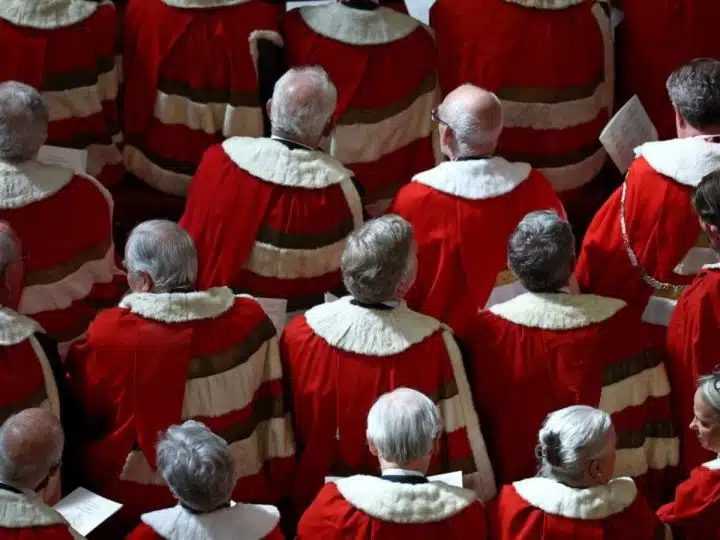

This week marked the end of hereditary peerage in the UK. But while Keir Starmer’s Lords reform bill might have put a minuscule dent in unaccountable power in Britain, the country still belongs to the wealthy.
Not that the move wasn’t popular…
As YouGov reminds us, a majority of Brits have been opposed to people inheriting peerages for years:
Today will mark the final day for hereditary peers in the House of Lords – our polling in 2024 found that 62% of Britons agreed that the Lords should not continue to have places for hereditary peers
Link in replies pic.twitter.com/vPSaLRxSCC
— YouGov (@YouGov) April 29, 2026
You can dip back into YouGov’s full 2024 study here. It describes the current system pretty accurately as:
Britain’s ‘upper’ legislative chamber that counts bishops, aristocrats who inherit their position, and people appointed largely on the wishes of the prime minister as members.
The aristocrats mentioned here are the ones whose time has come — the rest of these appointees are still in the Lords.
And YouGov found:
An entirely elected House of Lords is by a clear margin the most popular option among Labour voters (68% support), Lib Dems (65%) and Reform UK voters (54%). Conservatives are instead most supportive of a part-elected, part-appointed body, which half of Tory voters (50%) are in favour of, but they still marginally prefer an entirely elected chamber (41%) to the status quo (35%).
The speaker of the upper house, lord Forsyth, praised the last 88 peers who’d inherited their titles at an event on Monday 27 April. He said they had shown:
a willingness to act with “conscience rather than convenience.
The Telegraph wrote his comments up as:
an implicit criticism of the Prime Minister’s decision to remove the last 88 hereditary peers from the Lords chamber.
And, case in point, the billionaire-owned Telegraph isn’t a bad place to start in our quest to understand the hard limits of British democracy.
Privately owned media
Nobody with a democratic pulse will be sad to see the back of the thousand-year-old tradition of hereditary peers. But Britain’s problem with democracy is far bigger than that.
As the Media Reform Coalition pointed out in a 2025 report:
Just three companies – DMG Media, News UK and Reach – control 90% of UK national newspaper circulation.
They argued:
We need urgent action to break up the corporate juggernauts and global Big Tech cartels that dominate the UK media.
The essential principle that significant media power should be met with substantial public responsibilities has been diluted and ignored by successive generations of political decision-makers, with ever deeper and compounding consequences for the needs and interests of the British public.
And here is the key passage:
It is long past time for comprehensive public intervention to address the impact of media concentration on British democracy.
But the issue doesn’t end there… here are just a few pressing examples of how democracy doesn’t apply to the powerful.
Lobbying for influence
Lobbying by private and state interests is another way in which the wealthy and powerful trample over democracy. Transparency International has reported that:
UK citizens currently have little opportunity to understand who is lobbying whom, how, for what purpose and with what funds.
They warned that:
much of the problem is with rules governing politicians and officials. For instance, all elected legislators in the UK are allowed to receive personal payment in return for providing advice to lobbyists. In practice, lawmakers across the mainland UK are permitted to retain conflicts of interest so long as they are declared.
And, just to circle back to peerages, the group said:
At the extreme of using money for influence in the UK, major party donors can be offered positions in the legislature itself through appointment to the House of Lords.
While some lobbying is ethical and right, there are loopholes big enough to fly a jumbo jet through. For more on dark money in British politics, you can dip into the work of Democracy for Sale.
UK — dictatorship of the foreign policy
Another field in which unelected generals, officials and arms firms have more say than you is foreign policy. The current war in Iran being just one current example. For all intents and purposes, the UK is a dictatorship when it comes to issues of war and empire.
Support for Israel, US bases in the UK, defence deals, the roll-out of AI death firm Palantir in the military and NHS — the list goes on…
Perhaps the most important example of the last quarter century might be the Iraq war. Reporter Peter Oborne broke part of the problem of the British system in relation to that war down in his 2016 book ‘Not the Chilcot Report’.
He said (free PDF here):
The Iraq invasion damaged the core institutions of the British state. This in turn has led to basic questions about the British system of government itself.
He then wrote of the “pre-modern” nature of British democracy:
According to the textbooks the British state is a constitutional monarchy. This bland formula conceals the fact that the British state contains pre-modern elements, which enable a great deal of government to be carried out in secret.
Parliament had wrested away power from the monarchy over the centuries. But the precise nature of these powers has never been codified, as it would in a country with a written constitution.
“In practice”, he argued:
this means that the executive branch of government inherited very significant residual powers from the monarchy.
And, “as a consequence”:
there has always been an unresolved contradiction between an essentially medieval system of government and Britain’s democratic tradition as it evolved over the last two hundred years.
Adding:
Prior to Iraq this contradiction had rarely become a live political issue – the British governing elite had hitherto been assumed to be honest, decent and disposed to act in the national interest.
British ‘democracy’ is still a mere 200-year-old fledgling, like most modern liberal ‘traditions’. The unaccountable power of the rich and privileged is much older and far more entrenched. Getting rid of 88 aristocratic peers isn’t a bad thing. But in an era of growing authoritarianism — not least Starmer’s own — we still have to fight for a world where lawmakers — and private interests — are properly accountable to the popular will.
Featured image via the Canary
By Joe Glenton


A Department for Work and Pensions (DWP) minister has refused to rule out scrapping the health element of Universal Credit for young disabled people under the age of 22.
Instead, minister of state for social security and disability Stephen Timms seemed to hint the government may already be treating it like it’s a foregone conclusion that it needs to implement the benefit cut.
DWP Universal Credit cut for under 22s: plans could still be afoot
In March 2025, then DWP boss Liz Kendall announced the plan as part of its sweeping £5bn programme in welfare cuts.
Specifically, the government floated the proposal that people under the age of 22 would no longer be eligible for the limited capability for work related activity (LCWRA) part of Universal Credit (UC).
This would have meant the DWP would strip young disabled people of £416.19 every month. Across a year, this would have resulted in a total £4,994.28 loss in the health benefit.
Of course, the DWP assesses claimants as LCWRA if they are too sick to work. Given this, there’s no conceivably justifiable reason why a disabled person under 22 should be any less eligible for this.
And plenty of respondents to the government’s own consultation published in October spelled this out in no uncertain terms. More than 3,300 people told the DWP that social security support:
should be based on need, not age.
Campaigners like Disabled People Against Cuts (DPAC) have previously lambasted the cut. The group has particularly highlighted its impact on disabled students and their future job prospects.
In November, DWP secretary Pat McFadden confirmed that the government had not yet decided whether to take its proposal forward. He told parliament that the department wouldn’t be making any firm decisions until after Alan Milburn publishes his review into young people and unemployment this “summer”.
The DWP commissioned Milburn to carry out the “independent investigation”. It aim is to explore why young people are not in employment, education, or training (so-called NEET).
Now however, Timms has kicked the can down the road further – and refused to rule out the callous cut.
Already decided? That seems likely
Speaking to parliament on Tuesday 28 April, Timms responded to a question on the plans from Labour MP Ben Coleman.
He told parliament that:
There is an urgent need to address the big rise in the number of young people not in work, education or training that took place before the last general election. We think that better support might help young people more than extra cash. Alan Milburn’s review on the NEET problem more broadly will report in September; we will wait until then to decide whether to delay access to the universal credit health element until the age of 22. If we did do that, there would need to be exceptions.
The first notable part of Timms’ reply is that he made the decision to couch his answer in the context of the supposed “big rise” in the number of young people not in work, studying, or training. That was likely a deliberate move – because straight away Timms’ was seeking to justify the government’s vile proposal.
The next part of his answer reinforces that the DWP seems to be putting the cart before the horse.
If the government is already beginning from the position that employment schemes are better than welfare, then it goes some way to confirming fears that the Milburn review will be another monumental stitch-up. It’s the DWP playbook in a nutshell. That is: manipulating disabled people’s input to back up the conclusions it has already made.
And obviously, that “summer” publication date has now morphed into “September”.
Milburn review: gearing up to manipulate results to the DWP’s advantage
And of course, this was another problem with Timms’ response more generally. Put simply, the fact that the fate of the health element for disabled people under 22 rests on the shoulders of Blairite former health secretary Alan Milburn.
As the Canary’s Rachel Charlton-Dailey pointed out, in 2024, Milburn:
authored a report which wanted disabled people to be pushed into work. The report called for the government to cut benefits except for those with “severe disabilities”. This was, of course, adopted as part of the Universal Credit Act last summer.
The same report also called for the DWP to sink its claws further into the NHS. This had the obvious aim to kick chronically ill and disabled people off their benefits and coerce them into work.
Disability News Service (DNS) noted how Milburn’s review specifically – and exclusively – targets young disabled claimants.
Timms also already tried to soften the blow with talk of “exceptions”. As such, this also hinted at a DWP that’s hell-bent on ramming through the vicious cut in one way or another.
DWP doing its usual: wrecking disabled people’s lives
To three separate written questions, Timms was similarly evasive on the DWP’s plans for the proposal.
Labour MP and a leading rebel against the benefit cuts Neil Duncan-Jordan and DUP MP Jim Shannon and probed the government on impact assessments.
Timms’ answers made apparent it hasn’t done any for the possible benefit cut. He also didn’t commit to carrying any out once the government has decided its plans.
Once again, he merely pointed to Milburn’s upcoming review. Of course, if it does introduce this, it will likely need to do an impact assessment. However, it’s probable it will be little more than a tick-box exercise. Because ultimately, the DWP will have already made up its mind.
What’s clear is that the government hasn’t given up on wrecking young disabled people’s lives just yet. Flashy-sounding youth employment schemes putting them at the mercy of profiteering corporations for paltry wages won’t level the playing field for young disabled people. And cutting financial support to young disabled claimants who can’t work to force them into these low-paying jobs is a one-way ticket to destroying their futures.
This Labour government neither wants to admit that, nor cares.
Featured image via the Canary

Eric Dane Reflected On ‘Drunk’ Scene Before Death

David Attenborough reveals he was interrogated by Rwandan police after filming iconic gorilla documentary

AIB Group plc (AIBGY) Q1 2026 Sales/Trading Call Transcript

Manchester United reach agreement with Casemiro over contract clause amid transfer speculation

US brings back mandatory military draft registration

Steven Gerrard disagrees with Gary Neville over ‘shock’ Chelsea and Arsenal claim | Football


-

 Tech3 days ago
Register Renaming | Hackaday
-

 Fashion6 days ago
Weekend Open Thread – Corporette.com
-
 Crypto World5 days ago
Hyperliquid $HYPE Rally Builds Momentum as AI Sector Enters Prove-It Phase
-
 Business6 days ago
Patterson-UTI Energy, Inc. (PTEN) Q1 2026 Earnings Call Transcript
-
 Sports4 days ago
IPL 2026: Ruturaj Gaikwad registers slowest fifty of the season, enters all-time unwanted list | Cricket News
-

 Politics2 days ago
Drax board avoid their own AGM, accused of greenwashing & environmental racism
-

 NewsBeat4 days ago
LK Bennett closes all stores after entering administration
-

 Crypto World6 days ago
Michael Saylor says BTC winter is over. Market analyst disagrees, says bitcoin was in a pullback
-

 Fashion1 day ago
Kylie Jenner’s KHY Enters a New Era with ‘Born in LA’
-

 Tech3 days ago
Images of Samsung’s rumored smart glasses have leaked
-
Entertainment7 days ago
Michael B. Jordan and Austin Butler's “Miami Vice” movie will bring the action back to the '80s
-
 Entertainment5 days ago
Mariah Carey Slams Deposition Claims In Brother’s Lawsuit
-
Entertainment7 days ago
Russell Brand Had Sex With 16 Year Old When He Was 30
-

 Business1 day ago
Most Commercial Energy Audits Miss the Real Losses
-
Crypto World6 days ago
Is Algorand One of the Few Quantum-Resistant Blockchains? Here’s What the Data Shows
-
 NewsBeat6 days ago
Trump threatens to review UK’s claim to Falkland Islands and punish Nato allies over Iran war disagreement
-

 Sports7 days ago
2026 NFL Draft tonight: Time, TV channel, where to watch, order
-

 Sports7 days ago
Bayern Munich on the brink of historic ‘double treble’
-

 Business6 days ago
Jeanine Pirro announces closure of Federal Reserve building cost probe
-

 Business3 days ago
(VIDEO) Charlize Theron Climbs Times Square Billboard to Promote New Netflix Thriller ‘Apex’
You must be logged in to post a comment Login