If you’ve already torn through all four episodes of Netflix’s hit miniseries The Dinosaurs, you’re definitely going to want to check out the streaming giant’s latest gift for viewers.
The unique documentary premiered last week, and has already gone down a storm, with the show exploring the “rise and fall of the dinosaurs”, with narration from the incomparable Morgan Freeman.
On Monday evening, Netflix released blooper footage from Morgan inside the recording booth, and we’re delighted to report that it’s an absolute treasure trove.
From the international treasure introducing himself as “Morgan fucking Freeman” to the Oscar winner stumbling over some species’ trickier names (“Yutyranus? Let’s say Yutyrannus, ‘anus’ sounds like ‘ass’”), the clips are a must-watch for anyone who loved The Dinosaurs.
Advertisement
The Dinosaurs was co-produced by recent EGOT recipient Steven Spielberg, and serves as the sister show to his previous nature series Life On Our Planet.
It’s similarly proved popular with Netflix users and, at the time of writing, it’s the UK platform’s number one show, ahead of hits like Bridgerton, The Night Agent and Vladimir.
The Dinosaurs is a new documentary from the creators of Life On Our Planet
The Dinosaurs director Nick Shoolingin‑Jordan previously told Netflix’s companion outlet Tudum that he wanted to “tell the full chronology all the way through and take the audience on a rip‑roaring adventure” with his latest venture.
Advertisement
Dan Tapster, its showrunner, added: “We had eight 50-minute episodes to tell the entire story of life on Earth [in Life On Our Planet], so there were lots of things where we could only scratch the surface – and the dinosaur story was absolutely one of them.
“With The Dinosaurs, we finally get to tell that story in full and celebrate it like no one has ever done before.”
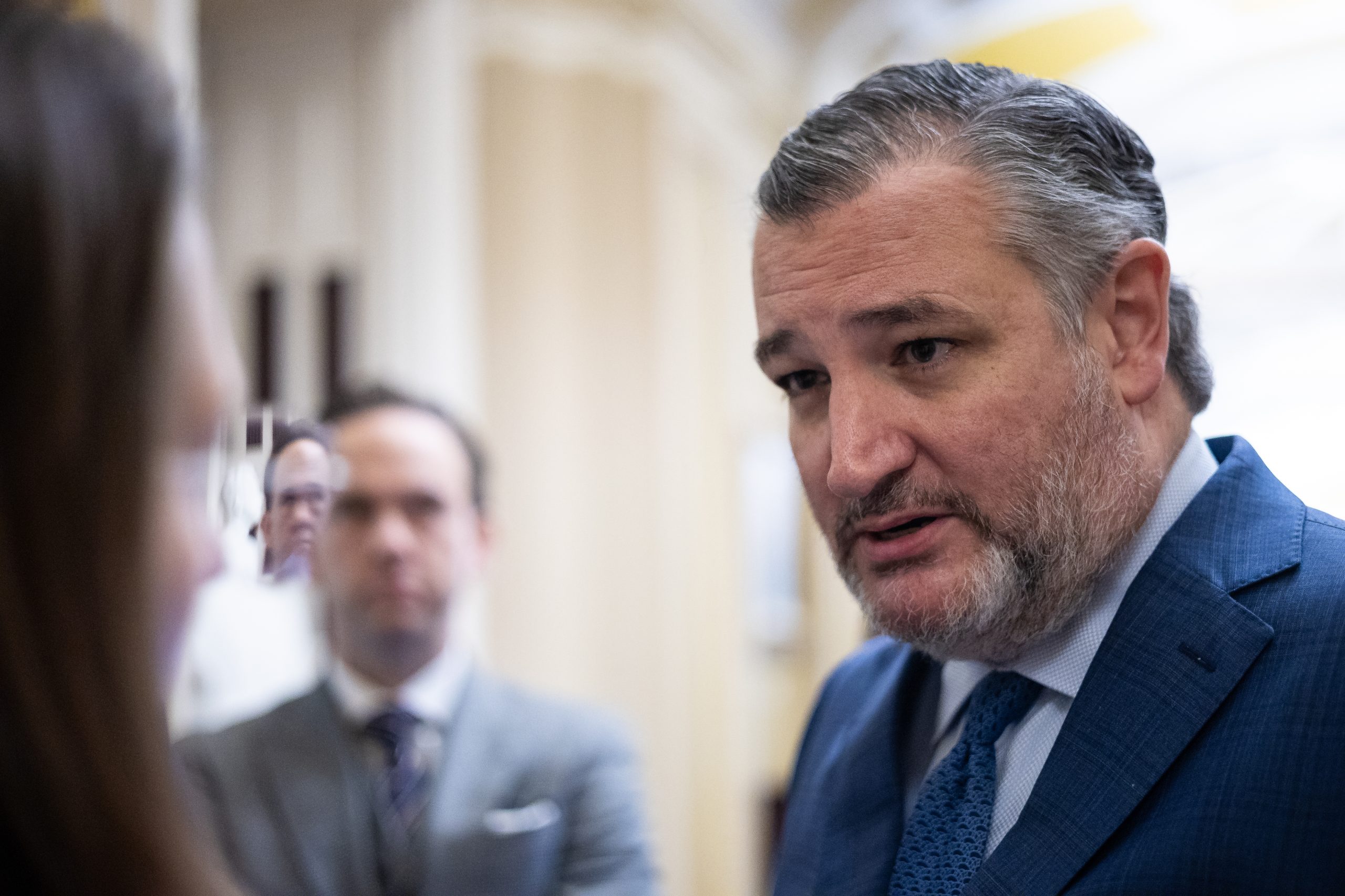
Sen. Ted Cruz and conservative pundit Tucker Carlson are again trading barbs over Israel and antisemitism, as they renew their feud over the war in Iran.
“I believe Tucker Carlson is the single most dangerous demagogue in this country,” the Texas Republican senator said Tuesday during an antisemitism symposium in Washington hosted by the Republican Jewish Coalition and National Review, before promising to directly take on the popular conservative podcast host.
“I have seen more antisemitism in the last 18 months on the right than at any point in my lifetime,” Cruz continued. “It is being spread by loud voices, the most consequential of whom is Tucker Carlson.”
Cruz’s remarks come after Carlson belittled Cruz and other Americans who trust Israeli military intelligence during his podcast last week.
Advertisement
“No offense to Ted Cruz or all the other dumbos who are always saying, ‘we get all this actionable intelligence, it’s so important, we need [Israel] so desperately,’” Carlson said in the March 2 episode. “Really? Let’s evaluate the quality of that intelligence.”
The ongoing feud between the two leading conservative figures — both podcast hosts and potential 2028 presidential candidates — represents the latest flare-up in a major schism within the party and a likely proxy battle ahead of the next Republican presidential primary, when discussions over the U.S.’ alliance with Israel and combating antisemitism domestically could be defining issues.
Carlson, arguably the most influential pundit on the conservative right, remains close to the White House and buzzed about as a potential presidential contender, even as many Republicans — including Cruz — denounce him. And Cruz, who finished second in the 2016 GOP presidential primary to Trump, is positioning himself ahead of a possible run in 2028.
When asked Tuesday about Cruz’s latest comments, Carlson offered a curt response. “Pretty funny,” he said via text. “He’s running for president against me, which I find amusing since I’m not in the race.”
Advertisement
Cruz has repeatedly criticized Carlson for hosting avowed white supremacist Nick Fuentes on his podcast and not challenging Fuentes’ claim that the “big challenge” to unifying the country is “organized Jewry.”
Cruz has signaled that fighting antisemitism and standing with Israel could be a central part of a potential 2028 bid. “I don’t want to wake up in five years and find myself in a country where both major political parties are unambiguously antisemitic,” Cruz said Tuesday. “I think that is a real possibility, if Tucker and his minions prevail.”
The two have long held differing views on the Middle East — and have been directly sparring for months.
In June 2025, Carlson hosted Cruz on an episode of the “Tucker Carlson Show,” which consistently ranks as one of the most-streamed podcasts on Spotify. The two sparred over Iran, and Carlson said Cruz didn’t “know anything” about “the country you seek to topple.” Cruz, in return, implied Carlson’s criticism of Israel was antisemitic.
Advertisement
“You’re not talking about the Chinese, you’re not talking about the Japanese, you’re not talking about the British, you’re not talking about the French,” Cruz told Carlson. “You’re asking, ‘why are the Jews controlling our foreign policy?’ That’s what you just asked.”
On Tuesday, Sen. Tom Cotton (R-Ark.), who spoke before Cruz at the symposium, seemed to downplay that concern. Though he didn’t say Carlson by name, he downplayed what he called “so-called influencers” who traffic in antisemitism. “They are not influential,” Cotton said. “They are at least not influential with Donald Trump, who continues to reject their kooky advice.”
Carlson’s anti-Israel ideas — which are the main subject of Cruz’s ire — have garnered increasing support, particularly among young Republicans. The latestYale Youth Poll found that Americans under the age of 35 are far more likely than older Americans to think that U.S. Jews “have too much power.” In the last three years, the share of Republicans under the age of 50 with a negative view of Israel jumped from 35 percent to 50 percent, pera Pew poll conducted last year.
Thomas Corbett-Dillon, former advisor to Boris Johnson, was invited onto right-wingGB News, to say that the channel is not extremist but a lovely, cuddly, and “really, really impartial.”
Barely a breath later, he was confidently telling his white, male GB News panellists that the UK is suffering a genocide from all the migrants coming in, especially the Muslims. Not a single one of them disagreed.
🇬🇧 Thomas Corbett-Dillon, a former adviser to Boris Johnson, said that indigenous Britons are the victims of a genocide.
Corbett-Dillon apparently he did a ‘Tommy Robinson’ and changed it to something posher-sounding. He even went so far as to suggest, with horror, that if white people moved to the Pacific and became the majority there would be resistance in the UN.
Perhaps he’s never heard of Australia or New Zealand:
Full of ***t, and wrong about Germany
Racism is not the only kind of shit young Corbett-Dillon is full of.
His claim that Germany has “basically banned all the right-wing parties” is nonsense. Even the neo-Nazi ‘Alternative für Deutschland’ is not banned, despite being classified as “extremist.”
Corbett-Dillon, who previously went by the name Craig, may have been some kind of Johnson adviser once, but he didn’t stay a fan. He went onto Fox News to complain that Johnson had gone ‘woke’:
Hilarious appearance by @pdoocy wannabe Thomas Corbett-Dillon, a so-called former aide to Boris Johnson, who in 2019 was a blond going by “Craig Dillon.” @Dominic2306, have you ever heard of this dude? pic.twitter.com/1ZSs4JqTZT
And Craig wasn’t done with his claims of ‘genocide.’ After appearing on GB News, he went straight onto another panel to spout the same racist nonsense:
When @christopherhope claims bafflement that GB News isn’t included in political media rounds or press conferences, perhaps this could serve as a reminder.
While Christopher is an actual journalist, GB News is a cesspit of racism and hatred.
The number of parties who got MSPs elected at the last election is… five. (Though in fairness there are now six, Reform having a single MSP after Graham Simpson defected from the Tories. The Lib Dems are even outnumbered by independents, of whom there are seven.)
Also in arithmetic news, recent figures suggest that Labour and the Lib Dems will have a total of 23 seats combined, more than 40 short of the number required to elect a First Minister with a majority. So, y’know, good luck with that, lads.
More than 50 organisations, including national trade unions, tenants’ unions and the Green Party, have announced the National Housing Demonstration in Central London on Saturday 18 April. They’re demanding urgent rent controls and a new generation of accessible council homes.
In what is set to be the largest coming-together of housing campaigners in a decade, thousands of tenants from across England and Wales are expected to take to the streets in protest of the government’s refusal to tackle runaway rents.
Major unions the National Education Union, Public and Commercial Services Union, Fire Brigades Union and others are joining forces with the Green Party, the London Renters Union, the Greater Manchester Tenants Union, Generation Rent and dozens of grassroots campaigns from across the country.
Housing developers first, tenants last
Asking rents for private tenants have risen by 44% since the pandemic, while social rents and service charges continue to climb. The consequences are stark.
Despite the scale of the crisis, Keir Starmer’s government is prioritising private housing developers and institutional investors over working-class renters.
Instead of introducing rent controls or launching a serious programme of council housebuilding, ministers are focusing on market-rate developments. But these remain out of reach for those in greatest need and would fail to reverse recent price hikes.
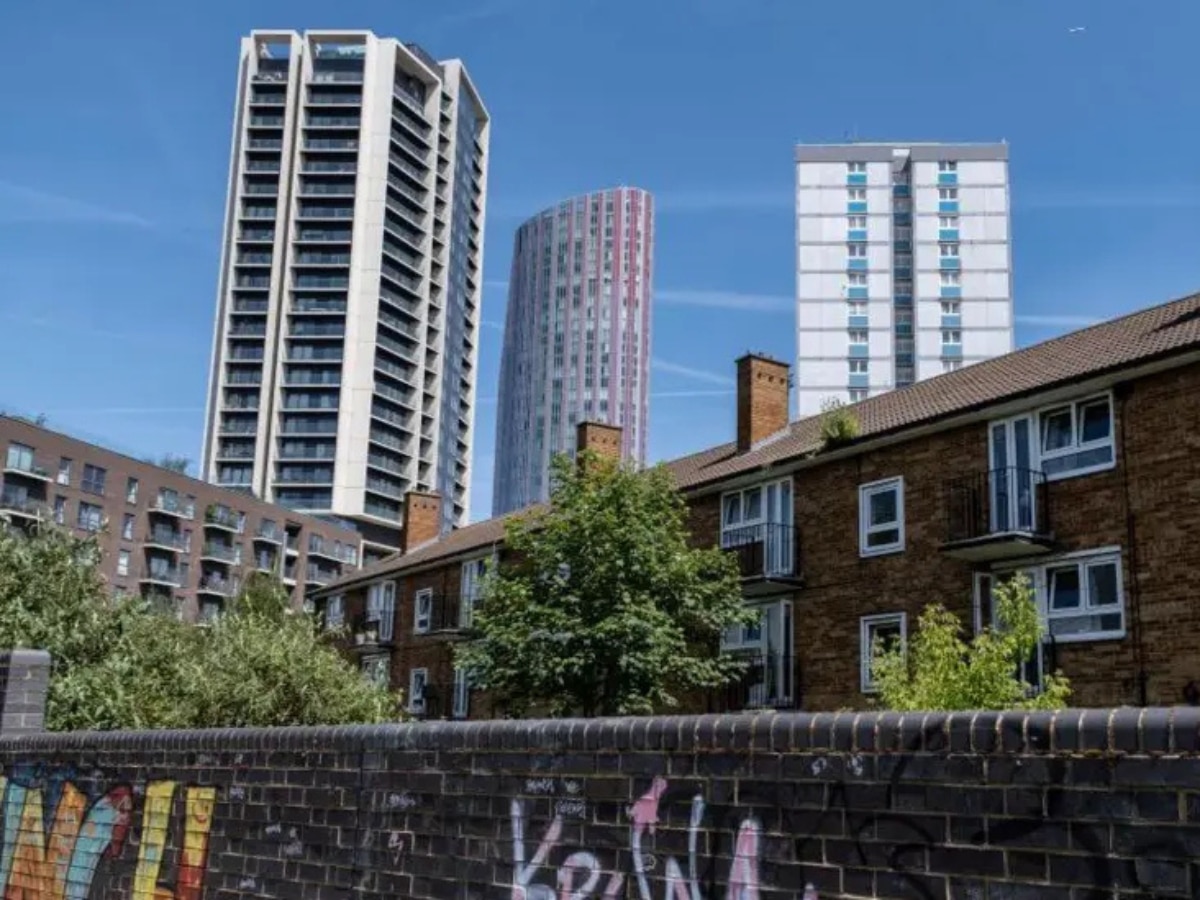
The result is a system where working-class tenants are priced out and pushed into temporary housing while luxury flats rise in their neighbourhoods.
Advertisement
A united front on 18 April
On Saturday 18 April, tenants, trade unionists and housing activists will gather in central London to demand:
Immediate rent controls.
Mass investment in accessible and good-quality council homes.
Elyem Chej, spokesperson for London Renters Union, said:
Tenants need an alternative to our rigged housing system. Soaring rents are pushing us into poverty and out of our neighbourhoods while corporate giants build luxury flats we can’t afford.
Keir Starmer’s government is making the housing crisis worse, putting developer profits before our communities. That’s why unions and grassroots groups nationwide are uniting for housing justice on 18 April.
Rent controls would cut rents now and give ordinary people more control over our lives and our homes.
We had these rights before. Now it’s time for renters to take them back.
Advertisement
Grace Brown, spokesperson for Greater Manchester Tenants Union, said:
Tenants are in crisis. Areas of Greater Manchester have seen rents increase by more than 50% since 2016, and the developer-led investment model followed in our city, like many others, is hollowing out communities beyond recognition.
Across Greater Manchester, tenants are organising against estate demolition, against rent hikes and evictions. We demand justice for every tenant.
Martin Wicks, spokesperson for Defend Council Housing, said:
The government’s strategy of planning liberalisation and reliance on the large volume private builders is doomed to fail.
Home ownership is not an option for the more than 130,000 households in temporary accommodation, the 1.3 million households on the waiting lists, and many more imprisoned in the expensive and often poor quality private sector.
Advertisement
Social rent council housing is the key to resolving the housing crisis. The government needs to fund 100,000 social rent council homes a year and end Right to Buy. Market mechanisms will never resolve the housing crisis.
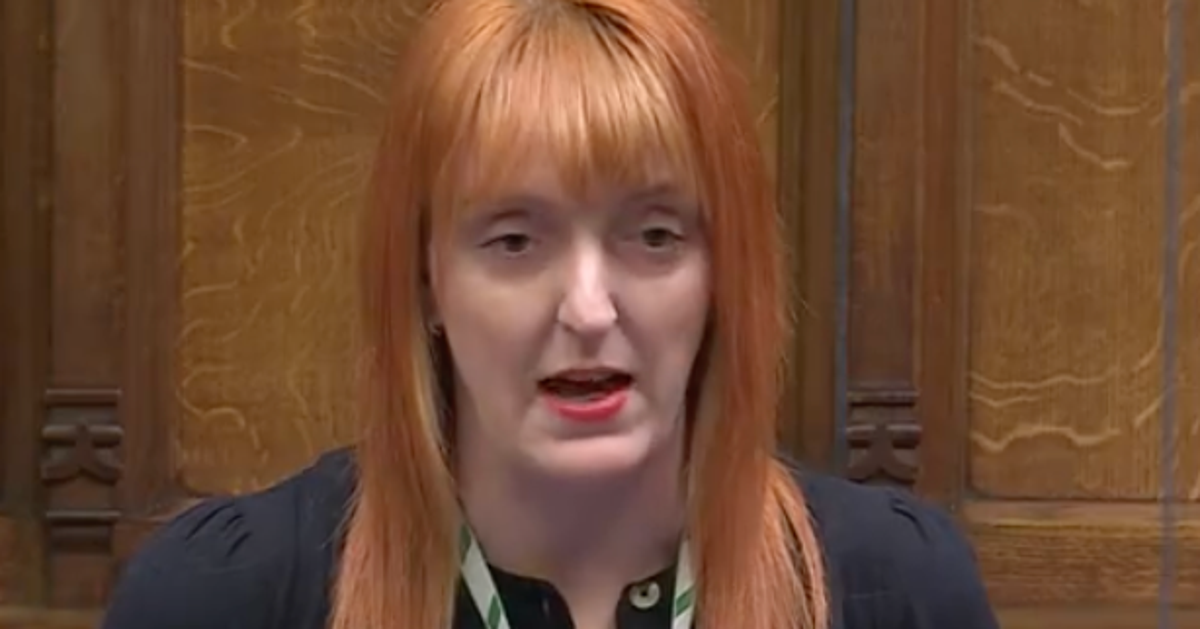
A Labour MP has condemned David Lammy’s plan to scrap most jury trials after revealing for the first time that she had been raped.
Charlotte Nichols accused the justice secretary of using victims as a “cudgel” to force the controversial reforms through.
The government wants to get rid of juries in cases where the sentence is expected to be less than three years.
Ministers say the move is necessary to clear the huge backlog of court cases in England and Wales.
Advertisement
But critics say the planned reforms, contained in the Court and Tribunals Bill, will remove a fundamental right while not actually solving the problem.
During a Commons debate on the bill, Nichols said she had waited 1,088 days for her case to get to court.
The MP for Warrington North said: “Every single one of those days was agony, made worse by having a role in public life that meant that the mental health consequences of my trauma were played out in public, with the event that led to my eventual sectioning for my own safety still being something that I receive regular social media abuse from strangers about to this day.
“But here’s the kicker, in this debate, experiences like mine feel like they’ve been weaponised and are being used for rhetorical misdirection, for what this bill actually is.
Advertisement
“The violence against women and girls sector haven’t had the opportunity to come together to discuss it, and the government’s framing and narrative has been to pit survivors and defendants against each other in a way I think is deeply damaging.
“We have been told that if we have concerns about this bill, it is because we have not been raped or because we don’t care enough for rape victims.
“The opposite is true in my case, it is because I have been raped that I am as passionate as I am about what it means for a justice system to be truly victim focused.
“It is because I have endured every indignity that our broken criminal justice system could mete out that I care what kind of reform will actually deliver justice for survivors and victims of crime more widely.”
Advertisement
She added: “There is so much that we can be doing for rape victims that isn’t [David Lammy] using them as a cudgel to drive through reforms that aren’t directly relevant to them.”
A sitting member of the London Assembly – an elected body considered the ‘eyes and ears of Londoners‘ – delivered a blistering critique of London mayor Sadiq Khan. They have described him as “part of the problem” when it comes to racialised stop-and-search powers. Notably, these powers overwhelmingly target black Londonders.
“Vital policing tool,” Khan claims
New research from the Mayor’s Office for Policing and Crime (MOPAC) and King’s College London shows black people are up to 48 times more likely to be stopped and searched in London’s richest areas. The study — based on 150,000 Metropolitan Police interactions — purports to be the largest-analysis of stop-and-search practices.
Khan has in fact rubber-stamped these very practices. In addition, Green Party councillor, Zoë Garbett, has spoken out against these double standards from the London mayor:
The Mayor has called stop and search a ‘vital policing tool’ despite its disproportionate targeting of Black Londoners, which makes him part of the problem by assuming that stop and search is an inevitable aspect of policing.
What we need to see is the Mayor ending the routine use of Section 60 powers, decriminalising cannabis to stop low-level drug searches that drive racial disparities and providing transparency around the use of live facial recognition.
Advertisement
Excusing white people
The MOPAC found strong evidence of racialised policing. They found that police officers had used “vague” grounds to justify stopping black Londoners, compared to the reasons given for white Londoners.
Black people were stopped for things like clothing or simply going about their business in high-crime areas. In contrast, white people were more likely to be stopped for stealing or admitting possession of drugs.
The report advised that improving the criteria for when people should (or should not) be stopped and searched would reduce racial disproportionality by 11 to 19 percent.
Commenting on this the greens councillor, Garbett said:
Advertisement
Report after report has confirmed what many Black Londoners have known for decades: stop and search is an inherently racist and discriminatory policing power.
This latest research simply adds to the growing body of evidence showing the staggering scale of disproportionate policing in London, spanning a wide range of tools and tactics.
For example, research I disclosed revealed that over half of live facial recognition deployments were in areas with higher-than-average Black populations, including Thornton Heath, Croydon (40%), Northumberland Park, Haringey (36%), and Deptford High Street, Lewisham (34%).
We also know that Black Londoners are 5.1 times more likely to be stopped and searched for drug offences than white people highlighting how cannabis criminalisation is inherently discriminatory by design.
Punitive policing
King’s College researchers also found that Black Londoners are subjected to a troubling 4,300 extra stops by police each year – almost one every two hours. These statistics are difficult to square against Khan’s sheepish support for punitive policing practices.
Advertisement
Across 24 London wards (districts) with higher racial disproportionality, Black people could be up to 48 times more likely to be stopped and searched than White people.
These problem areas include Ealing, Hillingdon, and Hackney, where Garbett serves as a councillor for the Dalston ward.
She spoke about the human impact of these discriminatory practices, sanctioned by the mayor.
Constituents and community groups I’ve spoken to describe stop and search as an invasive and degrading tactic and they say it causes real and long-lasting harm that undermines trust and confidence in the police.
What we need is for the Met to genuinely listen to communities and take on board their input and act on it rather than pushing back or assuming they know better.
The world’s largest pension fund has revealed that it sold its shares in the Bolloré group, a powerful French conglomerate. This was due to unresolved concerns about “serious human rights violations” at a plantation company which Bolloré partly owned.
A report from the Norwegian Bank Investment Management (NBIM) made the decision public on 26 February. The report states that after years of dialogue with Bolloré SE and Compagnie de l’Odet SE on “their management of human rights risks, sexual violence, harassment and labor rights abuses” at the plantations of the Luxembourg-based company Socfin, in which the Bolloré group holds a “significant share”, NBIM decided to exclude them from its investment portfolio.
Affected communities have long denounced the violations and abuses. The Socfin group dates back to 1909. It controls 370,000 hectares for the production of palm oil and rubber in ten countries of Africa and Asia.
Plantations on stolen land
In many of these countries, Socfin acquired the lands without community consultation or consent. As a result, the communities feel their lands were robbed from them. The plantations often surround villages and pollute their water sources, such that villagers cannot grow their own food crops.
Advertisement
When villagers gather fallen palm nuts or speak out about their conditions, they regularly face harassment. For women villagers and girls, sexual violence and even rape by plantation labourers or security forces is a common occurrence.
In 2024, after years of complaints from communities and civil society, Socfin hired the Swiss-based Earthworm Foundation to investigate these issues. The results were appalling: 59% of the complaints were said to be founded, to one degree or another, and 85% of these were judged to be the responsibility of the company.
Norway’s move follows a similar decision by Switzerland’s largest pension fund, BVK. The Swiss spent three years discussing these issues with the Bolloré group, which argued that it held no responsibility for what happens at the Socfin plantations. This was despite Bolloré being a major shareholder and sitting on the board of directors of several Socfin holdings and plantation companies.
Félicité Ngo Bissou of the Association des Femmes Riveraines de Socapalm Edéa in Cameroon said:
Advertisement
It’s about time that investors take action against Socfin and Bolloré. For too long, the Bolloré group has claimed it’s not responsible for the abuses we face around the Socfin plantations and as a result, the abuses have continued. This cannot go on.
Rizal Assalam of the Transnational Palm Oil Labour Solidarity, in Indonesia, agreed:
For us, Norway’s decision, like that of the Swiss, means that someone is listening to the communities and the workers, even if it’s not Bolloré.
The European Commission invited Socfin last week to be a key partner and speak at the EU-Liberia Business forum in Brussels. Yet Liberian communities are to this day denouncing Socfin’s lack of action on their long standing complaints!
We hope you love the products we recommend! All of them were independently selected by our editors. Just so you know, HuffPost UK may collect a share of sales or other compensation from the links on this page if you decide to shop from them. Oh, and FYI – prices are accurate and items in stock as of time of publication.
Yes, that’s right, Mother’s Day is indeed coming up, and fast.
Don’t feel bad if you let it creep up and surprise you – it tends to do that.
The good news is it’s definitely not too late to get your lovely ma the gift she deserves.
Advertisement
I have put my cholesterol levels on the line (willingly, don’t worry) to try and test the very best gift-friendly boxes of chocolates so that you don’t have to.
From pralines to truffles to whisky-infused delights, here’s my list of the best of the best.
The government has launched its long-awaited consultation on digital ID. Here is what we learned, as well as questions that remain unanswered.
Advertisement
Speaking at a Downing Street press conference on Tuesday afternoon, the cabinet minister tasked with leading the rollout of digital ID, Chief Secretary to the Prime Minister, Darren Jones, said that the planned scheme could save “tens and tens of billions every year”.
The government has said that the consultation, which is expected to last for eight weeks, will go further than those before it. It will include engaging with a ‘People’s Panel’, which Jones himself today admitted was “a gamble”.
The Keir Starmer administration is trying to rebuild public support for the policy after the initial announcement last year had a rocky landing.
Advertisement
Legislation implementing digital ID is expected to be put to Parliament later this year, with work on the app to begin in 2027.
Will digital ID be compulsory?
In January, PoliticsHome revealed that the government was scrapping plans to make the new digital ID scheme mandatory amid warnings, including from many Labour MPs, that going ahead with the compulsory element would be strongly opposed by the public.
While the public will still be required to carry out some digital right-to-work checks, they will be able to do so using other documents, like a passport of eVisa.
Advertisement
The consultation being launched today will ask the public how the government can ensure that everyone who wants to use the scheme can do so after concerns were raised about accessibility.
Jones today told the House of Commons that it “must be for everyone” and the government “will help those who are less confident with technology or don’t have other forms of ID like a passport”.
Ministers are consulting on at what age someone should be able to obtain a digital ID.
What will a digital ID look like?
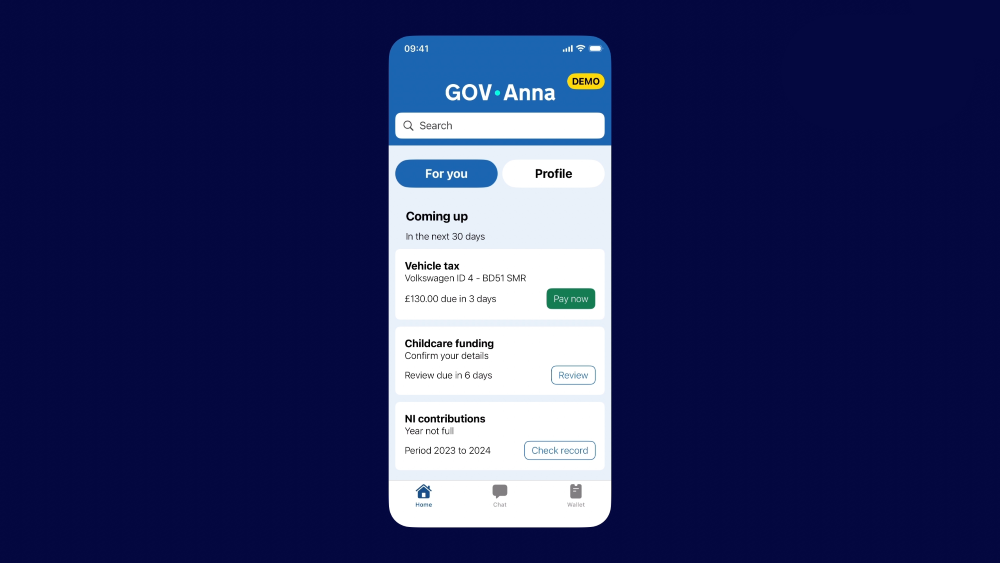
The digital ID will be held in an app on a smartphone or tablet, with the government today publishing a working prototype of the digital ID system, pictured below.
Advertisement
Government prototype of digital ID app (Cabinet Office)
Jones also said on Tuesday that the NHS app “will be separate” from the government’s digital ID, as the NHS app is “already pretty well developed”.
Ministers are also consulting the public on what information digital ID should contain, which will go a long way to determining how it will appear on a user’s screen.
Digital ID will make processes “fairer”
While the government initially focused on digital ID as a way of tackling illegal migration, since then, the emphasis has shifted to making aspects of everyday life easier, with ministers using examples like filing a tax return and managing free childcare.
“The status quo is a legacy system of call centres, paperwork, and the need to tell your story, multiple times, to the different parts of government, with hours on hold and not knowing where you are in the process,” Jones said today.
“The whole point with this is that it should be easy, simple, and accessible to everybody.”
Advertisement
Jones claimed that digital public services could also be cheaper to run and more efficient.
“We cannot continue on this two-track process where services in the private sector, in banking and shopping, and all the other things that we do in our day-to-day lives are fast, easy, and digital, and then when you come to the public sector, they’re slow, clunky, and disjointed.”
What will the scheme cost?
It is still unclear how much the digital ID system will cost to develop, with today’s consultation claiming it was “not yet possible to quantify or assess the full impacts of the system”.
The government has previously pushed back against the Office for Budget Responsibility (OBR) forecast that the policy would cost £1.8bn over the next three years, arguing that the design of the scheme is yet to be decided on.
Advertisement
Today, Jones said the government had already carried out estimates showing that digitising customer services could save “tens and tens of billions of pounds every year” that is currently being spent on “very unproductive call centres, lots of paper shuffling, slow processes”.
Jones claimed that a digital ID could “free up taxpayers’ money” to go on frontline services like the NHS or “give back to taxpayers in the years ahead”.
‘People’s Panel’ to “help debate difficult questions”
Jones also confirmed that the government will go beyond a typical consultation, announcing the creation of a ‘People’s Panel’ on digital ID, with 100-120 people to be randomly selected, bringing together people across the country from different backgrounds.
Jones told reporters that the panel was a “gamble” as it would mean the government “kind of giving up control of it around the process”.
Advertisement
He said the panel would “help us debate the difficult questions, find ways forward and help us build a system that will win the trust and support of the public at large”.
Speaking at an event hosted by the Institute for Government think tank (IFG) in January, Jones said he believed the policy would grow in popularity over the next 12 months as people realised how it would positively impact their day-to-day lives.