
Politics
Mothin Ali, Green party deputy, responds to smears


Green party deputy leader Mothin Ali has hit back at Israel lobby-funded Starmeroid MP David Taylor. Taylor had quoted notoriously Islamophobic, pro-Israel ‘X’ account ‘Habibi’ to attack Ali. It was part of the Israel lobby’s flailing attempt to revive the ‘Labour antisemitism’ scam against the Greens for daring to debate whether to support international law on Palestinian resistance.
Taylor went for Ali after the Habibi account used an X post to try to mock the Greens. With the typical Zionist lack of self-awareness, the troll didn’t realise that what it was using to attack Ali is 100% true and aligned with the majority of Britons’ disgust with Israel’s genocide and the Labour party’s collaboration in it. Ali’s post also demonstrates the kind of plain-speaking politics most voters would welcome compared to the evasiveness of mainstream political parties:

David Taylor has form
Taylor’s own record, unsurprisingly, is scarcely any better than Habibi’s. He joined the Israel lobby’s attempts to remove anti-genocide hero Francesca Albanese from her voluntary UN post advocating for Palestinians. He promoted the Starmer regime’s unlawful ban on Palestine Action – and wants it extending to the Islamic Human Rights Commission for being ‘anti-British’ by opposing war. He opposed a report criticising Israel’s crimes against the Palestinians and pushed for war with Iran to protect Israel. He publicly called for military strikes on Iran in February 2025 to protect Mossad-controlled mobs. And he opposed the government creating an official definition of Islamophobia – one that almost exactly mirrors the ‘IHRA’ antisemitism definition he supports.
True to form, Jewish News libel-machine Lee Harpin joined in the attack on Ali, though he used a different tack, citing supposed horror at Ali’s “repeated engagement” with Muslim news site 5Pillars.
But like his party boss, Mothin Ali knows to come out fighting when the Israel lobby revs up its smear machine. He hit back in uncompromising style, telling Taylor that his post showed “exactly why you’re called the genocide party” and pointing out the racism of the ‘Habibi’ account Taylor quoted:
This is exactly why you’re called the genocide party! Labour MPs now agree with extreme racists and islamophobes, like there’s no difference between them!
Anyway how much did you get? https://t.co/nPzuc2C3pU
— Mothin Ali (@MothinAli) February 24, 2026
What a very welcome difference to the ‘apologise and apologise again’ response to pro-Israel smears that killed Corbyn’s Labour.
Featured image via the Canary


The US has been begging and pleading with Iran to open the Strait of Hormuz to nations attacking them. As the Canary noted, the strait is open to nations who are not bombing Iran. Evidently, the US is finally facing robust opposition to its previously unchecked hegemony.
Traditionally, the imperialist settler state of the USA have been able to dominate proceedings via two avenues:
- domination of aerospace which allows it to issue threats to smaller nations
- its ability to ransack global south resources and economies via bombs, sanctions, IMF/World Bank loans, and funding counterinsurgencies.
Iran’s refusal to capitulate to the US’ demands to open the Strait of Hormuz doesn’t mean that the world’s biggest military power has become powerless. However, it does mean that the gap between America’s geopolitical ambitions and its capabilities is widening.
Herein lies the opportunity for global south countries to widen this gap even further so they are never threatened with being turned into rubble again. And, the US’ domination of the globe is facing robust opposition from not just Iran, but also China.
Hormuz to China’s ascendency
The U.S. is well aware of its loss of productive capacity to China, especially on critical minerals.
At a recent Senate committee hearing, officials testified that the entire US military apparatus, from fifth-generation aircraft and precision-guided munitions to satellite constellations and naval vessels, depends on a reliable supply of rare earth elements (REE) and minerals, including gallium, antimony, germanium, and others.
Chinese hegemony of these REE and minerals is a “clear and present” danger, officials said. The Senate heard:
“Today, our primary strategic competitor, China, controls the global supply chain for numerous critical minerals. On heavy rare earths alone, China controls 95 percent of global output, with the United States importing almost 100 percent of what we use, 90 percent of that coming from China. This control provides Beijing with the ability to weaponize these supply chains, threatening to disrupt our Defense Industrial Base and compromise military readiness in a crisis.”
The beauty is that instead of taking ownership of the rabid post-1970s neoliberal era, which led to the hollowing out of the industry in the West, they blame China for “malign adversarial efforts to manipulate markets” and its efforts to “undermine” the US’s domestic market.
Accountability is not their competitive advantage, one can say!
USA’s inability to diagnose or treat internal contradictions
This is part of capitalism’s hubris. A part of the solution, according to them, lies in leveraging their “private capital markets, one of our few remaining comparative advantages against Beijing.”
In fact, as Costas Lapavitsas, Professor of Economics, SOAS University of London, explains, it was US multinationals that:
exported productive capital, established global production chains, outsourced labour-intensive processes upstream, and financialized their own operations through share buybacks rather than domestic investment.
He says that the hollowing out of the US industrial base was carried out largely by the very corporations Trump and his predecessor Biden are most aggressively defending.
Critical minerals through economic coercion
Another way US hubris gets in the way is the belief that countries are breaking Chinese ties.
The Senate heard that countries are:
poised to ditch the predatory debt trap diplomacy Beijing has foisted upon them in this area.
Not only is this self-aggrandizing claim wrong, but the opposite is true. Trump, in fact, boasts about the use of economic sanctions and coercion.
The list is endless of economic coercion being used by the USA for access to minerals. Just recently, Trump threatened to withhold HIV medication from Zambia to coerce access to minerals; his so-called peace deal between Congo and Rwanda is a guise for American corporations to “make a lot of money,” and then he is coercing Venezuela for access to its oil and critical minerals by the illegal kidnapping of President Maduro.
Or that in Indonesia, Trump used the threat of tariffs to sign the Agreement on Reciprocal Trade (ART) with Indonesia, which gives US investors the same access as domestic firms across the entire critical minerals value chain.
That the US’s World Bank sits on the Gaza Board of ‘Peace’ says everything about America’s economic and debt policy for the global south.
Meanwhile, between 2000 and 2019, China cancelled at least US$3.4 billion of debt in Africa, according to a study by Johns Hopkins University.
China holds important levers
In April and October 2025, China imposed export controls on heavy rare earths, expanded them to include any product containing Chinese-sourced materials or technology, and added five more elements to the restricted list. Worth noting, these restrictions were retaliatory – the US first imposed export restrictions on 140 Chinese semiconductor firms.
Trump and Xi were supposed to meet in China in March-April, and now he has postponed the meeting to May. White House has cited the war on Iran as the reason.
Economist Michael Hudson explained that Trump believed that the US could conquer Iran in two to four weeks.
He intended to use regime change in Iran as leverage to confront China, threatening to cut off its oil supply unless China agreed to export key raw materials such as gallium and tungsten, which the US military needed. Well – that didn’t work out!
Hormuz exposes dependency
U.S. Trade Representative Jamieson Greer was recently asked if the U.S. would need an extension on rare earth access by October. He said, “We’ll assess that down the road.” He admitted the process with China was working “fairly well” but noted, “a few things here and there where we didn’t feel like we were getting rare earths in a timely fashion.” Chinese counterparts, he said, “took note of that and have it under consideration.”
China – they can’t bomb countries into rubble without your magnets needed for jet engines – keep that in mind!
The USA’s handicaps on minerals should not be underestimated. Even at the height of the US-backed Ukraine and Russia’s war – US kept importing uranium from Russia. Yes, American exceptionalism is really something. Europe couldn’t buy Russian LNG, but the USA could buy Russian Uranium.
Worth adding that these were the two countries – China and Russia – that recently vetoed the US-backed Bahraini proposal to authorize defensive military action for securing commercial shipping in the Strait of Hormuz.
Brand America, dollar hegemony injured
China beat the United States in global approval ratings in 2025, with a median of 36% approving of China’s leadership, compared with 31% for the U.S., according to the latest Gallup polling.
Even the pro-American Economist published a cover of Chinese President Xi overshadowing Trump that read – “Never interrupt your enemy when he is making a mistake.”
Deutsche Bank has warned in a new report that the rise of the petroyuan poses a clear challenge to the U.S. currency. The petrodollar system, built on a 1974 agreement between the U.S. and Saudi Arabia, faces a “perfect storm” from the ongoing war on Iran initiated by the US/UK/Israel, the bank said.
Reduced global oil trade would also create more room for the pricing of goods and services to shift away from the dollar, the report said. Both petro (i.e., oil) and one of the US’s main exports, as well as the US dollar, the US’s currency, would be impacted adversely. Hormuz is evidently a central strategic point.
Bombing countries into rubble is still a viable threat
The US military budget is roughly $1 trillion annually. That is more than the next ten countries combined, including China, Russia, and every European power. The US operates 800-plus military bases worldwide.
American exceptionalism will be here for the near future despite losing industrial productive capacity to China. As Lapavitsas noted, the Federal Reserve’s balance sheet functions as “the ultimate collateral backstop for global markets.” The dollar remains the world’s currency; nearly 60 percent of global reserves and roughly half of all cross-border payments are settled in dollars.
Despite losing productive capacity, US banks and multinationals still dominate global finance and corporate control. As Lapavitsas notes, three large investment funds—BlackRock, Vanguard, and State Street control roughly 25 percent of all US corporate equity. These same firms are the largest shareholders in European, Japanese, and emerging market corporations.
Growth at any cost
This was the reason Starmer was proud of his photo op with BlackRock’s Larry Fink.
I’m determined to deliver growth, create wealth and put more money in people’s pockets.
This can only be achieved by working in partnership with leading businesses, like @BlackRock, to capitalise on the UK’s position as a world leading hub for investment. pic.twitter.com/qDPpEYEYAh
— Keir Starmer (@Keir_Starmer) November 21, 2024
Owning the elites like Starmer and NATO’s Mark Rutte across the globe is another card up the US’s sleeve. They have Modi, who is mentioned in the Epstein files, as well as his best friend Adani, facing an SEC indictment, giving the US blackmail leverage over India’s prime minister.
They have Pakistan’s elite on Trump’s Board of Peace and its crypto traders chasing the Americans cryto industry.
However, popular support in both India and Pakistan against Trump – another contradiction – is not in favor of the USA. Not dissimilar to what the popular masses want in the UK or other NATO countries like Italy.
Are the stacks in favor of the global majority? Or the elites with Trump as the head of the snake? The gap between American ambitions and its capabilities is certainly widening. As Iran’s closure of Hormuz shows, here lies the opportunity for global south countries to widen this gap even further – and not get bombed or sanctioned back to the Stone Age.
Featured image via the Canary
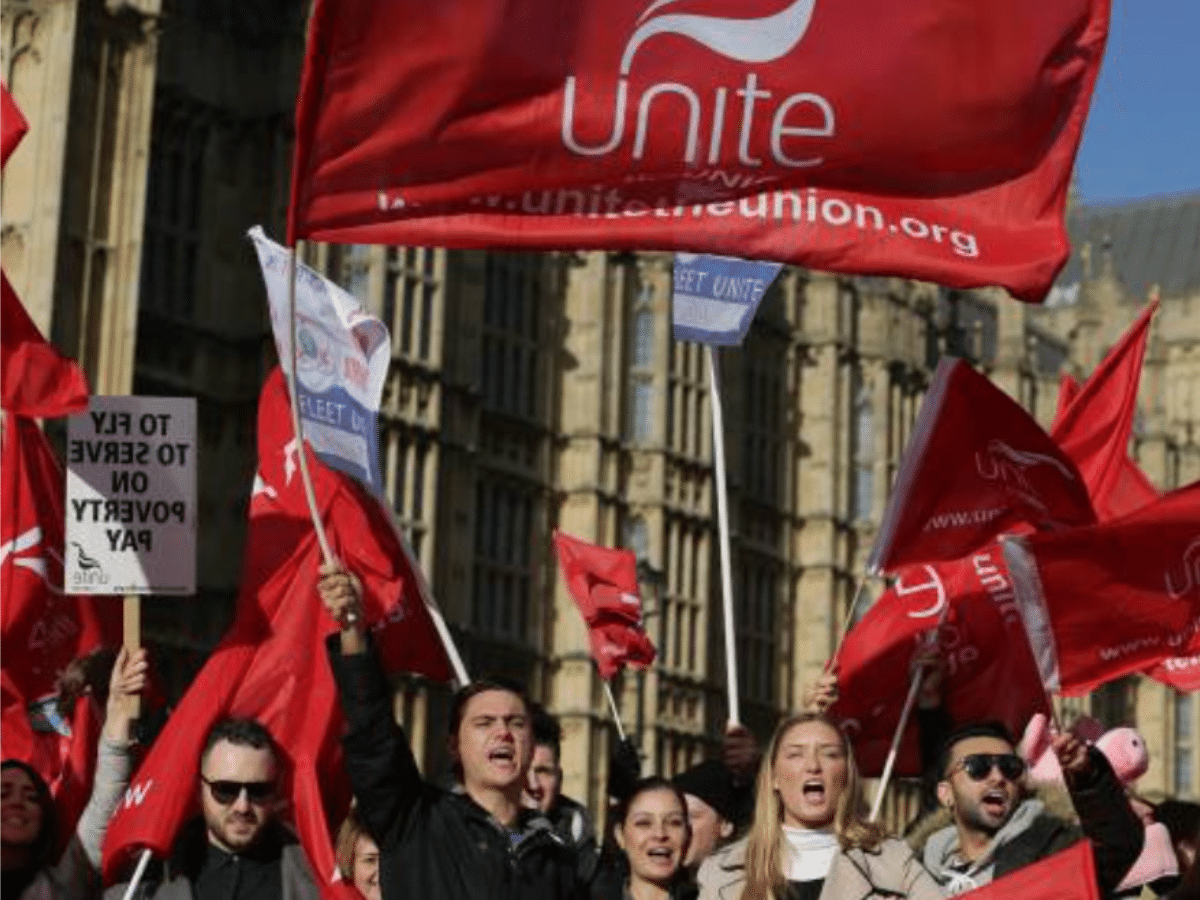
Unite the union have announced that 1,000 workers will stage a 24-hour walkout at Glasgow, Strathclyde and Edinburgh Napier universities. The industrial action will take place on 10 April 2026, as a demonstration against the universities’ imposed real-terms pay cut.
Most of Unite’s staff in Glasgow, Strathclyde and Edinburgh Napier are employed in non-academic roles, such as admin, estates and security.
The Strathclyde staff members also recently undertook seven days of strike action, lasting 16-22 March. This was motivated by the university’s failure to consult the workers over organisational change and proposed job cuts.
Alongside the announcement, Unite also took the opportunity to tout its vision for the future of the higher education sector. This is particularly timely, given that the Scottish parliamentary elections fall next month.
Unite tackle real-terms cuts
The higher education (HE) sector across the country has already suffered under 15 years of substandard pay awards. Compared to 2010, the below-inflation ‘rises’ have left most staff with a real-terms cut of around 30%.
Trade unions across the HE sector are already engaged in negotiations for the 2026/27 pay award. They’re demanding the higher of either RPI + 3%, or a £3,000 increase – this would be paid in full in August 2026. On top of that, they’re also arguing for a £15/hr minimum basic pay.
Now however, for Scottish university workers in 2025/26, the pay proposal stands at just 1.4% on average. For comparison, the current Retail Price Index (RPI) inflation level stands at 3.6%. On top of that, predictions hold that even higher rates are on the way due to the fallout of Trump/Netanyahu’s war on Iran.
As such, the proposal amounts to a 2.2% real-terms pay cut, along with the immanent promise of worse to come.
It’s unsurprising, then, that the union members plan to hold pickets at each university, between the hours of 08:00 and 11:00 on 10 April. These will take place at the Main Gate at Glasgow on University Avenue, Rottenrow Hill at Strathclyde, and Merchiston at Napier.
Sharon Graham, Unite’s general secretary, said:
University workers deserve far better than a real terms pay cut after over a decade of below-inflation pay rises. They are faced with rising energy, household, transport and food costs while their wages are being slashed.
University employers should be ashamed of treating hard working staff in this way which is why our members in Glasgow, Strathclyde and Edinburgh Napier will fight for better jobs, pay and conditions by taking a stand against this appalling treatment.
National Vision for Education
Alongside its current battles for Glasgow, Strathclyde and Edinburgh Napier university staff, Unite Scotland is also mounting an ongoing National Vision for Education campaign.
Alison MacLean, Unite’s lead officer for higher education, stated that:
Last year, university staff had one of the worst ever pay awards imposed upon them which is why our members have no option but to fight back. The 2025-26 budget for higher education represented a real-terms cut, failing to match inflation and leaving our institutions exposed. We are currently in pay negotiations for 2026/27 and our members will simply not accept another derisory pay award.
Unite’s members are being forced to pay the price for financial mismanagement through low-ball pay offers, attacks on terms and conditions, and increasing threats of compulsory redundancies. We will not accept this, and our members are prepared to fight for a better education sector for all.
Holyrood currently relies on a ‘frozen’ per-student funding model. As such, the real-terms funding for Scottish undergraduate teaching has fallen by 19% over the past 12 years. Worse still, college funding has also seen a 20% drop in real-terms funding in just 5 years.
In its campaign document, Unite stated that:
Our universities and colleges are not just businesses; they are hubs of cultural expression, research excellence, and social mobility. Unite will not stand by while they are managed into decline. We demand a sector that
provides security for its staff and remains open to all, underpinned by a sustainable funding model that ends the reliance on precarious international fees and student debt.
Given that the next Scottish parliament will be decided in the May 2026 elections, the next month could be crucial – both for Unite’s vision of a fully funded HE sector, and for the future of education in Scotland as a whole.
Featured image via the Canary


4 min read
The focus on jury trials is a distraction. The root causes of the court backlog are historic underinvestment and systematic inefficiencies.
Proposals to curtail jury trials within the Courts and Tribunals Bill are being framed as a necessary response to the growing backlog in the criminal courts. This narrative is not just misleading. It risks obscuring the real causes of delay while undermining one of the cornerstones of our justice system.
I recently visited Birmingham Crown Court, the second-largest court in the country, a visit that laid bare a system under acute strain. Yet, contrary to political rhetoric, juries are not the source of the problem. As one barrister put it bluntly: “You won’t find a single person in this building who thinks juries are an issue.” What I observed instead was a system buckling under the weight of cumulative failures across every stage of the justice process.
Cases are routinely listed before they are trial-ready, with evidence arriving late, sometimes days before proceedings begin. In one case, we observed, crucial CCTV footage had only been received that week. Even when cases are ready, inefficiencies persist. Courtrooms sit empty (one to two at Birmingham on any given day, and even more in nearby courts) while multiple cases are scheduled for the same time slot, creating confusion and frustration for all involved.
Defendants are often held in prisons far from the courts where they are being tried, sometimes being transported back and forth daily across significant distances. Delays in prisoner transport are common, exacerbated by the removal of contractual penalties for lateness since the pandemic. Barristers frequently have little or no time to consult with their clients before proceedings begin.
The physical condition of court buildings further reflects systemic neglect. At Birmingham Crown Court, basic infrastructure is failing: lifts are frequently out of order, limiting accessibility; the cafeteria has closed, affecting staff wellbeing and morale; and some courtrooms lack adequate technology. Even the design of courtroom furniture has not kept pace with modern expectations, with one barrister pointing out to me that the desks are designed for men.
The human cost of these failures is profound. Victims are being asked to endure long waits for justice. Witnesses, too, are left without adequate support – Birmingham Crown Court has one break room for all the witnesses across all the cases present that day.
For those working within the system, the pressures are immense. Criminal barristers face unpredictable pay, often waiting until the conclusion of a case to be compensated for their work, if the case proceeds at all. The emotional toll is particularly acute for those handling the most serious offences, such as rape and sexual assault, and there is a lack of mental health support available. Furthermore, high training costs and low pay deter new entrants, limiting diversity and social mobility within the profession.
Against this backdrop, the proposal to scrap jury trials is not only misguided but harmful. Juries play a vital role in ensuring fairness and public confidence in the justice system, and they bring a diversity of perspectives that is often lacking in the judiciary.
Ultimately, the focus on jury trials as the cause of court delays is a distraction. The real issues lie in chronic underinvestment, poor coordination, and systemic inefficiencies that span the entire justice process. Reform is undoubtedly needed, but it must target these root causes, not one of the system’s most vital safeguards.
In light of these realities, there is a strong case for caution as the legislation continues its passage through Parliament. There are already examples of good practice in Preston and Liverpool, where court backlogs have been brought down by carefully managing cases and listings and fast-tracking certain trials. This proves that backlogs can be reduced without legislation changes and, crucially, without removing juries. There is no doubt, though, that significant investment is needed long-term to ensure our courts run efficiently and justice is delivered.
I hope the government continues to listen and reflect on the concerns raised by both MPs and those working in the courts, and looks to implement practical steps that make a tangible difference. The Bill is currently in Committee Stage, and I hope changes can be made before it returns to the Commons for further debate.
Cat Eccles is the Labour MP for Stourbridge

We hope you love the products we recommend! All of them were independently selected by our editors. Just so you know, HuffPost UK may collect a share of sales or other compensation from the links on this page if you decide to shop from them. Oh, and FYI — prices are accurate and items in stock as of time of publication.
Since I finished my GCSEs (throwback), I’ve been drinking around four cups of coffee a day.
I like to blame it on my five years of coffee shop shifts, but the truth is that every morning (and afternoon) I can’t help but top up my caffeine levels with just one more cup.
My addiction is so real that colleagues and friends have even commented on my intake, and when I get sick I find myself getting withdrawal headaches. You know the drill, I’m sure.
Until now, I haven’t minded so much. But I’m getting to the point in my life where I notice the impact that much caffeine has on me more than ever.
I’m talking severe afternoon crashes, crazy caffeine jitters, an unwelcome boost to my anxiety and stomach issues, plus I need to pee a thousand times a day. To top it all off, my afternoon coffee habit means it often takes me a while to fall asleep at night.
Not to mention that I notice it impacts me differently at certain stages of my cycle. (Betcha didn’t know that taking the contraceptive pill makes you more sensitive to caffeine.)
So when I heard about London Nootropics’ mushroom coffee, I was curious to try it, especially as there is currently 20% off everything on their site with the code ‘HUFFPOST’.

Benefits of mushroom coffee
Thanks to being packed with adaptogens, London Nootropics promises their coffee won’t give you the same afternoon crash as regular coffee.
Each of its blends includes a different combination of adaptogens to target specific concerns, like increasing energy, focus and mental clarity; reducing stress; and improving physical strength and endurance.
While caffeine, by design, increases our alertness and makes us feel more awake, it can also boost our cortisol levels and make us feel more stressed and anxious – like anyone needs that.
It’s also absorbed into the bloodstream quickly, which is why it’s common to experience a caffeine crash.
However, London Nootropics claims that adding adaptogens like L-theanine, cordyceps, and ashwagandha could help to offset the more negative side effects of coffee while still making you feel more awake.
How I tested London Nootropics

Determined to see if mushroom coffee could make a difference to my work week, I switched out my morning and afternoon coffees with London Nootropics for a week.
I averaged around three coffees a day while drinking London Nootropics. Depending on how I felt each day, I chose between Mush Love (to ‘elevate your morning,’ with a blend of cordyceps and lion’s mane for energy and cognitive balance) and the Selection Box, which contains three different blends.
Not one to disobey instructions, I reached for Mush Love for my first coffee of the morning, unless I was going to the gym or a Pilates class, when I drank Mojo. Zen and Flow were my drinks of choice for my post-lunch slump.
Review of London Nootropics mushroom coffee
One thing about me is I’m fussy about my coffee, so I was a little sceptical about whether or not I’d enjoy the taste of London Nootropics.
As a firm instant coffee avoider, it was slightly concerning that all blends come in a sachet. Once I tried it, though, my fears were eliminated.
Now, when I’m in the office I’m used to drinking a black americano from a coffee machine, which we all know is not exactly the pinnacle of good coffee.
While that isn’t really hard to beat, I can safely say this coffee tastes much better than that. It’s not quite as good as my preferred filter coffee, but the flavour is so inoffensive I didn’t feel drawn to add any milk or sugar like I’d thought I might have to.
Even more notable than that, I noticed my caffeine jitters completely disappeared. I was so used to that being a daily occurrence that I hadn’t stopped to think of it as concerning, nor had I considered that it was an option to drink coffee without feeling shaky afterwards.
But somehow, London Nootropics didn’t make me feel at all wobbly after drinking it, and I definitely noticed that I didn’t have an afternoon slump in the same way as I would with another black coffee.
I also drank less cups than I normally would as a result, because just one cup was enough to make me feel awake and more tapped in in the mornings thanks to not feeling quite so wired.
Another welcome and unexpected side effect was that I didn’t have to pee quite so much. That was a real blessing in disguise – I hadn’t realised how much the ramped up anxiety and need for pretty much hourly toilet breaks was getting to my head.
Final verdict
Pros:
- Easy to make
- Reduced jitters
- No afternoon slump
- Can take it in your bag with you
Cons:
- I wish there was an option to make it in a French press
- More expensive than regular coffee you’d make at home
My favourite London Nootropics blend was Mush Love. It was the perfect start to my day, and if I still found myself needing another cup of coffee to wake up, Flow helped me get my head in the game.
While I didn’t find myself reaching for Mojo quite so much, Zen was great for a post-lunch pick me up. I will almost certainly be refreshing my supply of London Nootropics, I just might need to cut down to just one of their sachets a day as they’re slightly more spenny than I would like for a cup of coffee.
But with 20% off its whole site with the code ‘HUFFPOST’, and the impact it had on my overall wellbeing, it’s definitely worth it.

George Clooney drew the ire of the White House this week after deeming President Donald Trump’s public rhetoric on Iran a “war crime.”
Trump wrote on his Truth Social platform early Tuesday that “a whole civilisation will die” if no deal between the US and Iran could be reached by that evening. A two-week ceasefire between the two nations was agreed upon later that day, though foreign policy experts say its specifics are highly questionable.
Clooney, a longtime critic of Trump and the GOP at large, condemned the president’s threats while speaking at a Wednesday event for about 3,000 high school students in Italy, organised by the Clooney Foundation for Justice.
“Some say Donald Trump is fine. But if anyone says he wants to end a civilisation, that’s a war crime,” he said, per Variety. “You can still support the conservative point of view, but there must be a line of decency, and we must not cross it.”
It didn’t take long for White House Communications Director Steven Cheung to clap back at Clooney’s remarks.
“The only person committing war crimes is George Clooney for his awful movies and terrible acting ability,” he wrote Wednesday on X, in response to Variety’s article.

Clooney, a 2005 Oscar winner for Syriana, wasn’t deterred, and doubled down on his initial criticisms in a lengthy statement to Deadline.
“Families are losing their loved ones. Children have been incinerated. The world’s economy is on a knife’s edge,” he said. “This is a time for vigorous debate at the highest levels. Not for infantile name calling. I’ll start. A war crime is alleged ‘when there is intent to physically destroy a nation,’ as defined by the Genocide Convention and the Rome Statute.”
He concluded his statement with a bit of self-deprecating humour, adding: “What is the administration’s defence? [besides calling me a failed actor which I happily agree with having starred in ‘Batman and Robin’?]”
The Ocean’s Eleven actor’s Democratic politics have made him a frequent target of Trump’s social media attacks. After Clooney and his wife, human rights lawyer Amal Clooney, were granted French citizenship last year, the president deemed the couple “two of the worst political prognosticators of all time.”
“Clooney got more publicity for politics than he did for his very few, and totally mediocre, movies,” he wrote on Truth Social. “He wasn’t a movie star at all, he was just an average guy who complained, constantly, about common sense in politics.”
Interestingly, Clooney acknowledged being on friendly terms with Trump long before the real estate mogul and reality TV personality entered the political arena.
“I knew him very well,” Clooney told Variety in a separate interview last year. “He used to call me a lot, and he tried to help me get into a hospital once to see a back surgeon. I’d see him out at clubs and at restaurants. He’s a big goofball. Well, he was. That all changed.”
Politics
Politics Home | Labour MP Says “Harmful” Jury Trial Reforms Are A “Distraction” As Rebellion Grows

3 min read
The plan to reduce the use of jury trials is a “distraction” from the real reasons for the court backlog, a Labour MP has said, as the government braces for the prospect of a major backbench rebellion over the reforms.
Writing in The House on Friday, Labour MP Cat Eccles said that the proposal is “not only misguided but harmful”, and that the focus should be on addressing “chronic underinvestment, poor coordination, and systemic inefficiencies” in the justice system.
The MP for Stourbridge said she had recently visited Birmingham Crown Court, the second-largest court in the country, where one barrister told her: “You won’t find a single person in this building who thinks juries are an issue.”
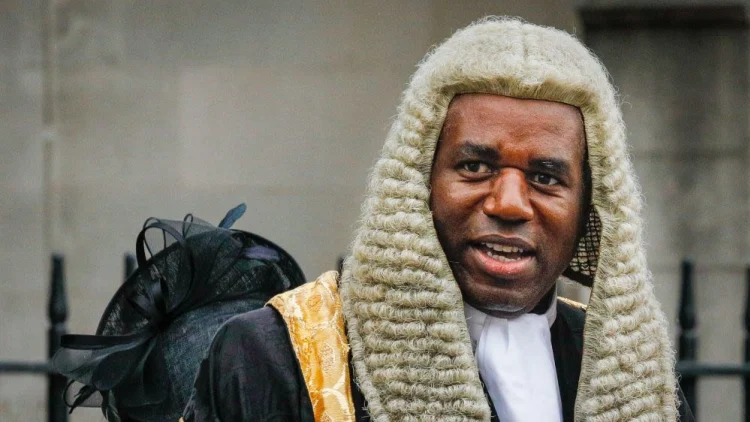
Justice Secretary David Lammy has said that the reforms are a bold but necessary way to help tackle the national court backlog in England and Wales.
Under the changes, announced by the Labour government in December, juries would no longer be used for crimes with sentences of less than three years. More extreme offences, such as rape and murder, will still be put before a jury, however.
The government has sought to stress that around three-quarters of all trials going to the Crown Court will continue to be heard by juries under the proposals, and points to the fact that many countries, including Sweden, Canada and France, only use juries in some cases.
However, ministers are seemingly facing a growing Labour backbench rebellion.
This week, Labour MPs tabled an amendment to the Courts and Tribunals Bill, putting forward plans to introduce specialist rape courts, which would have both a jury and a specialist judge. The amendment, revealed by The Times, is reported to have the support of as many as 90 Labour MPs, and is seen as the main route to “kill off” the jury trials policy.
The proposals are in the name of Charlotte Nichols, the Labour MP who waived her right to anonymity last month and spoke publicly for the first time about being raped, accusing Lammy of “weaponising” the experiences of others like herself to push through the reforms.
It is supported by Labour MP Stella Creasey, who said on Thursday that it was possible to “cut the backlog and improve the experience of victims in our courts without compromising due process”.
Writing in The House, Eccles listed what she described as the actual reasons for delays in the legal system, citing unused courtrooms, long distances between prisons and court buildings where defendents’ cases are heard, and cases being listed before they are ready for trial.
“Ultimately, the focus on jury trials as the cause of court delays is a distraction,” she wrote.
“The real issues lie in chronic underinvestment, poor coordination, and systemic inefficiencies that span the entire justice process. Reform is undoubtedly needed, but it must target these root causes, not one of the system’s most vital safeguards.”
Veteran MP Karl Turner recently lost the Labour Party whip after weeks of voicing strong opposition to the jury reforms and severe criticism of the Keir Starmer government.
However, party sources insisted that his suspension was over a pattern of behaviour, not a specific incident.

The use of remand (holding a person in custody before trial or sentencing) is at its highest level in over 50 years. Today, one in four women in prison are being held on remand. Women on remand are less likely than men to be granted bail, and racially minoritised and migrant women are significantly overrepresented in the remand population.
Court delays mean women can wait months in detention, sometimes longer, without knowing their future. Even a short period in custody can lead to a woman losing her job, housing and care of her children.
A briefing by the Howard League for Penal Reform noted that for women remanded by magistrates:
almost two-thirds … go on to be found not guilty or do not receive an immediate custodial sentence.
A new key findings paper by the chief inspector of prisons reinforces the scale of the problem. People on remand now make up 19% of the total adult prison population. Suicide is more common among this group and the report also found that 67% of people on remand report mental health difficulties.
Together with six other women-led organisations working for justice, Women in Prison has formed The Remand Collective. The other organisations are:
This is a bold new partnership committed to ending the unjust, unsafe and unfair use of remand for women. Together, we are calling for fewer women to be imprisoned whilst awaiting trial or sentencing, and for alternatives that are based in care, safety and trust.
One woman involved in the Remand Collective highlights its importance:
I’ve never been asked what I need to feel safe – only told what’s expected of me. This space was different.
Change is possible and it starts by listening to women and investing in alternatives that keep women safe while upholding justice and dignity.
Featured image via the Canary

This year, I’ll be trying sleeping tricks to see whether they actually improve my insomnia. Check back in on this series, Rest Assured, to see how I get on.
I have been struggling with sleep maintenance insomnia for years. That means I struggle to stay asleep, though I usually nod off just fine.
But in the past week, I’ve had trouble nodding off to begin with, thanks to a cold (mild short-term insomnia is a common symptom of the virus).
We’ve written before at HuffPost UK about the “military sleep method,” which promises sleep in two minutes flat.
So, I figured I’d give it a try this week.
What is the military sleep method?
It originally came from Relax and Win: Championship Performance, a 1981 book by coach Bud Winter. He helped to develop a relaxation technique that he said helped the US Navy airmen-to-be fall asleep in 120 seconds during WWII.
It’s a combination of progressive muscle relaxation, deep breathing, and visualisation.
Lie on your back, imagine something pleasant (I went with a treehouse in a rainy forest) and “Move from the top of your body to the bottom when relaxing your muscles, picturing yourself sinking into your bed,” the University of Minnesota Medical School said.
Does the military sleep method actually work?
Speaking to Real Simple, psychologist Dr Victoria Bangieva said that “I don’t know of any study that has looked at the effectiveness or benefits of this method”.
I couldn’t find any that definitely proved its two-minute claim.
But, as Dr Bangeiva added, “the science behind it is based on proven relaxation techniques, such as deep breathing, progressive muscle relaxation, and visualisation”.
Indeed, some studies have shown that progressive muscle relaxation can lead to lead to faster sleep onset, while slow, deep breathing and “imagery distraction” (picturing nice thoughts) can also help you fall asleep sooner.
Still, in the original book, Winter said it took six weeks of practice to achieve a reported 96% success rate. I only had one.
My verdict
The first night, I found my mind wandering too much: I would relax my muscles one by one, but by the time I reached my elbows, I had forgotten what I was doing and restarted the process at least twice.
By the fourth night, though, even starting the process seemed to make it more relaxing.
And on the final night, I think I fell asleep in about 10 minutes (much better than the two or so hours at the beginning of the week).
Again, my form of insomnia doesn’t usually mean I find the first nod-off hard. But even when I woke up at 3am, I found the “military method” made it slightly easier to fall back to sleep.
So, no, in my experience, it didn’t lead me to fall asleep in an astounding two minutes, but it was still worth a go.

In the realm of international relations, negotiation is traditionally regarded as the art of extracting the possible from the impossible.
However, in the political lexicon of the current Lebanese administration, this process has devolved into a demonstrable act of political folly – a reckless gambit that transcends mere incompetence to border on a deliberate conspiracy against the very survival of the state.
By scurrying towards ‘direct negotiations‘ with the Israeli enemy, the authorities are not only flouting the 1955 Anti-Israeli Boycott Law, which criminalises the slightest contact. They are placing the entire Lebanese entity, spearheaded by its military, into the firing line of a comprehensive civil war.
The art of exchange or the trap of liquidation?
At its core, negotiation is a trade-off – a quid pro quo. The Israeli enemy – a power that has never offered ‘charitable gifts’ – will not be satisfied with mere technical or maritime border arrangements.
The transparent Israeli demand, which lies beneath every diplomatic overture, is the total dismantlement of the Resistance.
Here, the ‘political idiocy’ of the government is laid bare: how can a decaying authority negotiate the disarmament of a force that is fundamentally beyond its executive reach? How can it promise what it does not possess, unless it is planning a suicidal bet that gambles with the blood of its own citizens?
The fatal trap
Any negotiated outcome that mandates the Lebanese army to disarm the Resistance, raid its depots, or arrest its combatants is, in reality, a death warrant for the military institution itself.
The administration, believing it can appease ‘foreign agendas’ through such commitments, is effectively pushing the army into an inevitable collision with the very people it is sworn to protect.
This path leads to three catastrophic certainties:
- The Fragmentation of the Military: The collapse of the army along sectarian and ideological lines at the first sign of internal confrontation.
- The Disintegration of the State: Lebanon’s transformation from a political entity into an open ‘militia playground’, where the central government loses the final vestiges of control.
- An Israeli Playground: Once the army falls and sedition is ignited, Lebanon becomes a security vacuum, totally vulnerable to the enemy’s whims, allowing them to achieve through internal strife what they failed to secure through direct military aggression.
Slaughtered National Pact and legal treachery
The purported consent of the President cannot be used as a shield to bypass this ‘legal treason‘.
The Anti-Israeli Boycott Law is not a mere detail to be sidestepped by a ‘political understanding’; it is a pillar of the Lebanese national doctrine. To circumvent it through direct talks is to demolish the foundation of Lebanon as a state of confrontation.
Furthermore, the ‘National Pact’ (Mithaqiya) is slaughtered the moment a faction in power decides to gamble with the fate of an entire people. By turning the Lebanese people against one another, they seek to satisfy external diktats that view Lebanon as nothing more than a ‘security file’ to be liquidated.
Perpetuating conflict, not ending it
This trajectory does not lead to peace; it perpetuates war in its most hideous form: internal strife.
The rush to negotiate from a position of profound weakness, devoid of a vision that preserves national unity, renders the government a mere tool for the implementation of the Zionist agenda to fragment Lebanon.
Sovereignty is not reclaimed by tearing the national fabric, and dignity is not preserved by conspiring against those who defend the land.
Those who believe the path to ‘stability’ passes through the destruction of Lebanon’s elements of strength and the dismantling of its army are either political simpletons or agents for hire, driving the country toward the ultimate abyss.

Some researchers think spending too much time on your phone might age your brain faster. One study found that “passive” scrolling may be linked to an increased dementia risk; another found that excessive use could lead to thinning of the cerebral cortex, which processes memories and handles decision-making.
According to a 2025 PNAS study, though, those changes don’t have to be permanent.
In their research, blocking mobile internet for two weeks appeared to result in better subjective well-being, mental health, and sustained attention, “as much as being 10 years younger”.
What did the research involve?
In this study, 467 participants used an app that turned their smartphones “dumb” again: in other words, it took away their internet access, but kept their ability to make and receive calls and texts. (While they used a specific app, you can enjoy a similar effect by disabling the mobile data and wi-fi on your device).
The average age of the participants was 32.
After the 14-day period, people’s screen time had almost halved (from 314 minutes a day to 161 minutes).
They also had fewer depression and anxiety, an effect the paper said was “more than antidepressants”.
And subjective well-being, or how good the participants said they felt, leapt up too.
The scientists said they think that some of these results could be due not to digital detoxes per se, but “by the mediators of time use, social connection, self-control, and sleep” that reducing time online facilitates.
But “none of them explained a significant portion of the intervention’s effects on sustained attention,” the researchers said (which, as we mentioned before, was equivalent to a 10-year brain ageing wipe).
You don’t need to be perfect
Good news for people who aren’t sure they could stick to this scheme: people who didn’t stick really strictly to the programme still saw benefits.
“Even those who did not fully comply with the intervention experienced significant, though more modest, improvements,” the paper reads.
This “suggests that fully blocking mobile internet is not necessary to produce benefits. Rather, simply reducing mobile internet use may be sufficient.”
They ended, “Balancing the practical benefits that smartphones offer against these significant negative consequences is an important task for smartphone users. Our results suggest that, for many people, spending less time with their device can help achieve this balance.”

Disney+’s New Sci-Fi Crime Series Dominates Global Streaming Charts in Just 1 Week

Hunkemoller 3rd Bra Free or 2nd Bra -50%

What is Finance? | Definition Financial Company|Financial Information| Accounts Video #financial

Why Israel is blocking foreign journalists from entering

Bitcoin: We’re Entering The Most Dangerous Phase

Alan Cumming Brands Baftas Ceremony A ‘Triggering S**tshow’
What is Finance? | Definition Financial Company|Financial Information| Accounts Video #financial

Psalm 23 Prayer for Financial Prosperity and Abundance #Psalm23 #DivineProtection #FaithInGod

The Top 5 Careers of Millionaires
-

 Fashion7 days ago
Weekend Open Thread: Spanx – Corporette.com
-

 Business5 days ago
Three Gulf funds agree to back Paramount’s $81 billion takeover of Warner, WSJ reports
-

 Sports6 days ago
India men’s 4x400m and mixed 4x100m relay teams register big progress | Other Sports News
-

 Business6 days ago
Expert Picks for Every Need
-

 Tech3 days ago
How Long Can You Drive With Expired Registration? What Florida Law Says
-

 Business5 days ago
No Jackpot Winner, Prize to Climb to $231 Million
-

 Fashion4 days ago
Massimo Dutti Offers Inspiration for Your Summer Mood Board
-

 Fashion3 days ago
Let’s Discuss: DEI in 2026
-

 Crypto World2 days ago
Bitcoin recovers as US and Iran Agree a Ceasefire Deal
-

 Business6 days ago
Akebia Therapeutics, Inc. (AKBA) Discusses Pipeline Progress and Strategic Focus on Kidney Disease Treatments at R&D Day – Slideshow
-

 Crypto World1 day ago
Canary Capital Files SEC Registration for PEPE ETF
-

 Politics6 days ago
The UK should not pay a penny in slavery reparations
-

 Fashion7 days ago
Frugal Friday’s Workwear Report: Hammered Metallic Button Sweater Vest
-

 Tech4 days ago
Samsung just gave up on its own Messages app
-

 Tech4 days ago
Haier is betting big that your next TV purchase will be one of these
-

 Fashion7 days ago
Weekly News Update, 4.3.26 – Corporette.com
-
Sports7 days ago
A Kevin O’Connell Theory Can Now Be Retired
-

 NewsBeat7 days ago
Kemi Badenoch talks ‘spring cleaning’ Reform defections
-

 Tech4 days ago
Gamer Restores the Original PlayStation Portal From Two Decades Ago
-

 Tech7 days ago
Flat tire? Dead battery? Speedy’s serves stranded Seattle riders as a quicker e-bike picker-upper
You must be logged in to post a comment Login