

Politics
‘My Birth Injury Remained Undiagnosed For Years’


It’s no secret that maternity care in England is in real crisis. A recent 174-page report reiterated what many – families, midwives, legal experts – have known for years: too many women and their babies are frequently experiencing harm.
Baroness Valerie Amos, chair of the National Maternity and Neonatal Investigation which published the report, called for an immediate overhaul of the maternity system as “it is not fit for the now, and it is not fit for the future”.
Issues repeatedly flagged during the investigation included women and families not being listened to; racism and discrimination; and services not being set up to support women’s choices.
In the very worst cases, women and babies died, while many others have been left with long-lasting injuries and trauma.
As conversations around the broken maternity system continue to swirl, Zara Ishfaq is sharing her story to try and raise awareness of birth injuries, particularly among women of South Asian heritage.
Previous research from birth injury charity The MASIC Foundation found that around one in 20 first-time mums suffer an obstetric anal sphincter injury (OASI) – or severe tearing – during childbirth.
However, studies have also found women of Asian heritage are up to nine times more likely to suffer an OASI during vaginal birth than white women.

Zara was left with a devastating birth injury which remained undiagnosed for two years. She’s been left with ongoing bowel complications as a result, including needing to have a stoma fitted in 2025.
She’s, sadly, not alone in her plight. New NHS figures shared by The Guardian show the rate of women experiencing the most serious type of tear during childbirth is at the highest since monitoring began in 2020.
Zara suffered a life-changing birth injury after a three-day labour in December 2021 which resulted in her baby’s head becoming stuck. In the end, baby Aariz – her first baby – was delivered by forceps weighing 7.7 pounds. (Use of forceps has been linked to higher rates of anal sphincter injuries in birthing parents.)
The mum, from London, suffered a serious post-delivery bleed, losing around two litres of blood. She also experienced a perineal tear – a common issue for vaginal births. Roughly nine in 10 first-time mothers who give birth vaginally will have some sort of tear, graze or episiotomy, according to the NHS.
For most women, these tears are minor (usually called a “first-degree tear”) and heal quickly. A second-degree tear will typically require stitches, while a third- and fourth-degree tear may be deeper and therefore impact the anal sphincter muscle.
These injuries are known as OASI and typically need repair surgery. It can trigger bowel incontinence, which – in new mothers – can impact many aspects of life, from sex and work to socialising and bonding with their baby.
Zara’s tear was underestimated, and despite complaining of symptoms and attending medical appointments it took more than two years before she received a proper diagnosis, during which time her complications worsened.
“Over time my symptoms became worse and had a greater effect on my life and also my ability to bond with my baby,” she said.
“While my friends were meeting in the park and attending baby groups, I was barely able to leave the house. I struggled on, but the situation was dire.”
She began to experience changing bowel habits and by the following June, was going to the toilet more frequently and leaking, but was sent home with advice to do pelvic floor exercises.
In December that year, she complained of continuing symptoms and needing to wear an incontinence pad.
But it wasn’t until May 2024 that she finally received confirmation that the severity of the perineal tear she sustained at birth had been underestimated, and she would require an operation to try and repair the damage.
A year later she underwent surgery, but was left with ongoing bowel complications.
Zara has since had another baby, Elayna, but sadly the pregnancy wasn’t straightforward. “My second pregnancy was affected because of my symptoms,” she explained.
“I suffered with hyperemesis [gravidarum] – serious sickness. Because of my injuries it was coming out of both ends. I suffered with infections and at one point developed sepsis.”
She continued: “I feel so blessed and lucky to have my children and they’re adorable. However, that I had to go through the experience I did will always upset me.
“It’s not just the physical injuries that affect you, it’s the psychological toll of having a reduced quality of life. Too many women are suffering unnecessarily and more needs to be done to improve maternity care, but also break the taboo around birth injuries to mums.”
The parent is due to share her story at legal firm Irwin Mitchell’s South Asian Maternal Health Conference next spring, which focuses on tackling maternal health inequalities.
“The solution starts with listening to women,” she ended. “If birth injuries are recognised earlier, treated sooner, and taken seriously, fewer women will have to live for years with preventable suffering.”

I’ve had a lot of flak in my career. But I never imagined I’d be condemned for expressing horror at the parading of an emaciated Jew through the streets by a mob of anti-Semites. I never thought I would get it in the neck for using the word ‘medieval’ to describe a swarm of men who surrounded and jeered at a terrified half-starved Jewish woman. And yet here we are.
The Centre for Media Monitoring (CfMM) – the most batshit wing of the Muslim Council of Britain, and that’s saying something – has published another whiny ‘report’ about the British media’s coverage of Islam and Muslims. This time its target is the Spectator, a publication I am proud to contribute to. It is titled No Mere Spectator: Anti-Muslim Hosility in Britain’s Oldest Political Magazine. The front cover is illustrated with a cartoon of a snooty-nosed posh bloke in a Union Jack dicky bow perusing the Speccie as he chomps on a fat cigar. Remember, lads, we’re not allowed to caricature Muhammad but they can caricature Brits till the cows come home. Them’s the rules under asymmetrical multiculturalism.
The column of mine that really seems to have got their goat – no offence! – was published in January last year. It was about the vile spectacle of Hamas’s handover of Arbel Yehoud, the young woman seized from her home in Kibbutz Nir Oz during the Islamofascist invasion of Israel on 7 October 2023. She was held for 482 days. She was entirely alone. She was deprived of food. Her gaunt, ashen face was a testament to the maltreatment she suffered under the cruel yoke of her racist captors.
I wrote angrily for the Spectator about the barbaric theatre of her handover to the Red Cross. Yet the CfMM seems angrier with me than with the gun-toting scum who humiliated a Jew before the eyes of the world. It reprimands me for calling the handover a ‘medieval spectacle’. It tells me off for referring to the brutes who paraded their malnourished prey in the streets as ‘armies of anti-Semites’. It rebukes me for saying this ritualistic Jew-taunting was ‘sport for radical Islamists’.
What is going on here? Why is a media think-tank attacking a journalist for feeling revolted by the sight of a terror-stricken Jew being jostled through a howling crowd? The CfMM spies racism in my commentary. Of course it does. It says it is unclear whether my phrase ‘armies of anti-Semites’ refers only to Hamas or to the entire crowd of possibly just curious Palestinians. What, the crowd that included burly men who mocked and filmed the terrorised Jew? Yeah, they’re anti-Semites too.
As for ‘medieval’ – apparently l deployed that word not as a ‘precise historical reference’ but as a ‘civilisational judgement’ designed to ‘[position] the crowd as temporally and morally primitive’. You know what? Fuck off. First, ‘medieval’ and ‘primitive’ mean wholly different things. Buy a dictionary. Secondly, it takes ethno-narcissism to dizzying new heights for someone to read an article about the racist subjugation of a Jew and turn it into a discussion about the wounded feelings of Muslims. This is self-regard on smack. These are hitherto untapped depths of self-pity.
It’s moral relativism, of course. I’m being censured for daring to assert civilisational values – for making a ‘civilisational judgement’, no less – against a frothing mob that got a sick kick from the existential terror of a Jew. Perhaps the people in that crowd are just differently cultured? Maybe their feelings are valid? Everything’s valid these days. But it’s something worse, too – it’s moral inversion. Turning a story about the largest act of anti-Jewish persecution since the Holocaust into a hubristic screed on hurty words about Muslims is repulsive. This isn’t about you, babe. It’s about Jews.
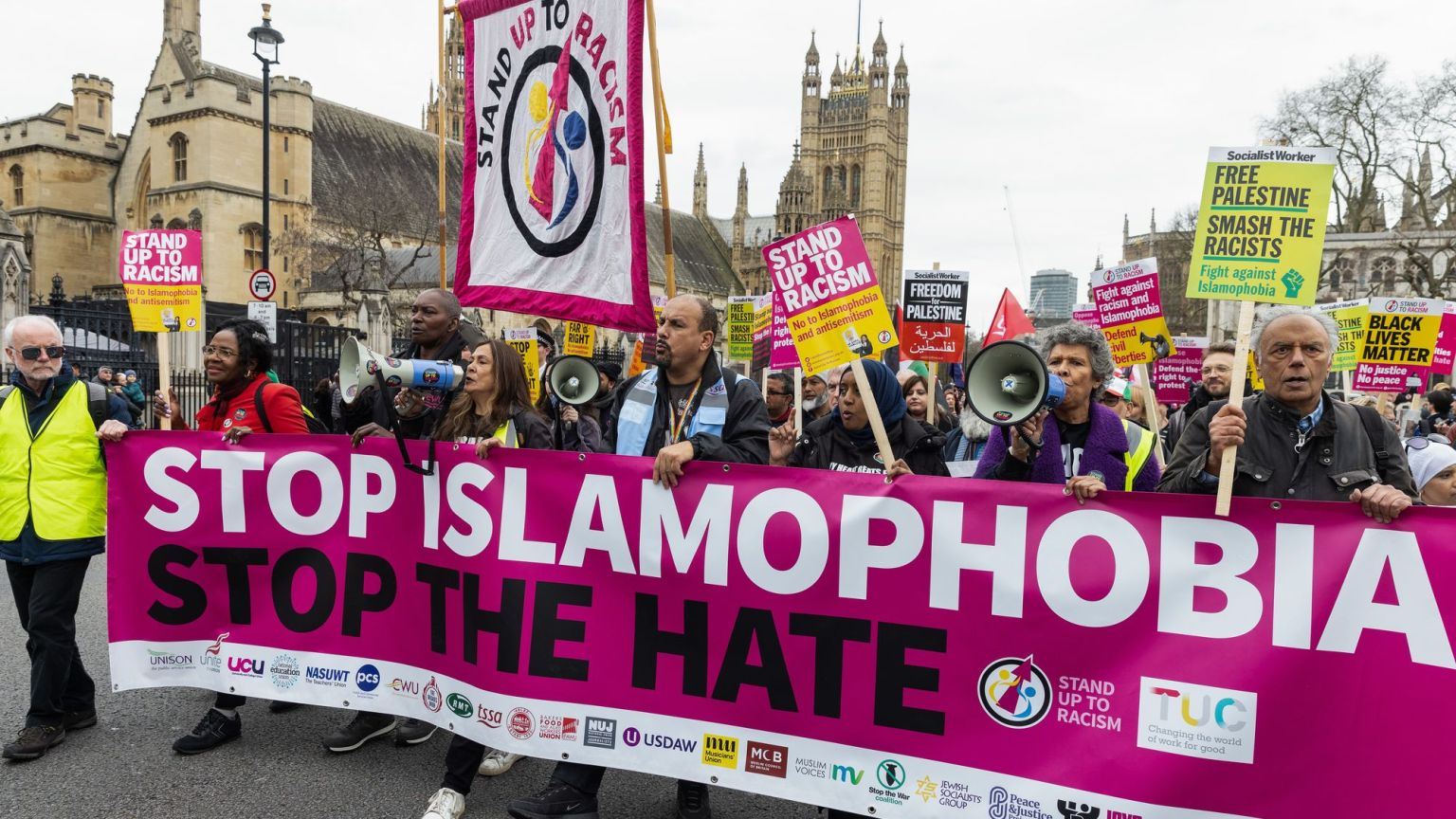
That my piece on Arbel Yehoud has been included in a report on ‘anti-Muslim hostility’ is all the proof we need that the ‘Islamophobia’ industry is a scam whose mission is not to defend Muslims from discrimination but to police and punish political opinion. Not one word of my piece expressed ‘anti-Muslim hostility’. It expressed hostility to Hamas, to fascist terror, to Jew hatred. Under the guise of ‘defending Muslims’, the CfMM is chilling legitimate discussion, seeking to limit what we can say about Islam, Israel, Gaza, religion and a whole host of other things. Deploying religious grievance to crush public debate? It’s medieval!
The whole report is crazy. It analyses 3,733 Speccie articles about Islam and related issues. It found that 57.4 per cent of them were ‘biased’ or ‘very biased’. Bear in mind that this includes me calling Hamas cunts. It mauls Spectator writers for ‘delegitimising the idea of Islamophobia’ (guilty as charged), for using the phrase ‘Islamic terrorism’, and for obsessing over ‘so-called “grooming gangs”’. Keep up – they’re called rape gangs now, given the reams of evidence we have that these gangs of mostly Pakistani men raped hundreds of white working-class girls. Seems it’s not only ‘anti-Muslim hostility’ to be outraged by the mobbing of an Israeli woman but also by the subjugation of English women.
The report wangs on about me, Douglas Murray, Julie Burchill, Gavin Mortimer, Rod Liddle – fine company! Burchill – who’s also a spiked columnist – rattles the pious pricks because she ‘defends the right to make jokes about Islam’. Call the ayatollah! ‘We’re always told that making jokes about Islam is “punching down”’, she wrote in March 2023. ‘But tell a migrant worker-slave in Qatar or a gay man in Dubai or a spirited woman in Iran that the world’s wealthiest and fastest growing religion is powerless.’ The CfMM’s fun-sponge scribes accuse her of ‘invoking human-rights abuses’ in ‘three separate state contexts’ and ‘attribut[ing] them collectively to Islam as a unified religious force’, which has the effect of reinforcing a moral ‘asymmetry’ that is… oh, I can’t go on. The humourlessness is asphyxiating. Guys, someone disagrees with you. It’s fine. You’re going to give yourselves a hernia.
It’s so telling which articles of mine get on their wick. I’m criticised for saying there has been an ‘orgy of anti-Semitism’ in the West since 7 October. I’m slammed for saying the keffiyeh classes are motored less by ‘concern for Muslim life’ than by ‘contempt for Israel’. I’m accused of using the word ‘Islamist’ in a ‘broad, undefined’ way. O’Neill is too vague in his piece on ‘what he calls the “Jew hunt of Amsterdam in 2024”’, the report says. Erm, it wasn’t me who called it a ‘Jew hunt’ – it was the anti-Semitic mob itself, which expressly hit the streets in order to ‘hunt’ the ‘cancer Jews’ who had travelled to watch Maccabi Tel Aviv.
And of course I’m told off for my pieces on the rape gangs. Especially a 2017 piece in which I commented on the ‘palpable reluctance’ of the state and polite society to ‘confront the particular problem of some Muslim men’s disdain for white working-class girls’. Apparently that’s Islamophobic. It isn’t. I stand by every word. The safety of working-class girls matters to me infinitely more than your feelings.
There’s a side-splitting irony in this bonkers report. It quotes a phrase of mine from a Spectator piece I wrote 11 years ago. It quotes it three times, including in the foreword, which is written by Peter Oborne. That phrase is ‘dainty sensibilities’ – I was criticising the cloying offence-taking of the professional misery guts who stink up our activist classes. How dare you say we are exhibiting ‘dainty sensibilities’, asks this 146-page report about the mean media and its mean words. You couldn’t make it up. But the CfMM is right about one thing: I am making a ‘civilisational judgement’. I judge that Hamas is morally inferior to Israel, that Islamism is morally inferior to secularism, and that shitting your pants when you read something you don’t like is morally inferior to just laughing it off. And everyone is welcome on my civilisational side: Christians, Jews, Muslims, ex-Muslims, non-believers, everyone. Because we don’t discriminate against people, only against ideas.

Volodymyr Zelenskyy has admitted he is “afraid of changes” as Keir Starmer prepares to step down as prime minister.
The outgoing PM has been a staunch supporter of Ukraine in its war against Russia throughout his two years in office.
He recalled how he proudly welcomed Zelenskyy to the UK in February 2025 after the Ukrainian leader was ambushed by the Trump administration and kicked out of the Oval Office.
Starmer has chosen to travel to the beleaguered country and remind Kyiv of the UK’s ongoing backing with just four days left in the job before Andy Burnham is given the keys to No.10.
Zelenskyy told the press during Starmer’s visit that he is “afraid of changes” with the UK PM set to step down and French president Emmanuel Macron expected to leave office next year.
He said: “Of course I’m afraid of changes, of course we are afraid because we are in the war each day.
“But again the priority is the relation between nations, not just between just people. I’m sure that these relations will not change, or we have to do our best not to lose such very good relations.”
“I hope we will never lose strong relations with the UK during or after the war.”
Starmer replied: “You won’t.”
Zelenskyy said he hopes to build “new strong relations” with the next prime minister and that he wants to have a meeting with Burnham “as soon as possible”.
Zelensky also awarded Starmer the Order of Freedom honour, which is Ukraine’s highest award for a foreign person.
Starmer shook Zelenskyy’s hand and said the award was “completely unexpected” and “very meaningful”, adding: “it really means a huge amount.”
A Downing Street spokesperson said the PM was “grateful and deeply humbled to receive the Order of Freedom for outstanding merit, the highest honour that can be given in Ukraine to anyone from another country”.
It is the second major honour the outgoing prime minister received this week for his work on the international stage.
He was unexpectedly awarded Légion d’honneur by French president Emmanuel Macron, becoming the first UK PM to ever receive the historic honour.
It was awarded in recognition of Starmer’s work in setting up the Coalition of the Willing, the group of countries chaired by France and the UK meant to help Ukraine.
On social media, Starmer wrote: “I’ve visited Ukraine four times as Prime Minister, and I’ve seen first-hand the devastation caused by Russia’s invasion. The UK’s support for Ukraine will never waver.
“That’s why we’re funding fighter jets for Ukraine, strengthening their ability to defend themselves while supporting thousands of skilled jobs in the UK. So good to see you again my friend, [Zelenskyy].”
Listen to Commons People, the podcast that makes politics easy. Every week, Kevin Schofield and Kate Nicholson unpack the week’s biggest stories to keep you informed. Join us for straightforward analysis of what’s going on at Westminster.

The US, through its ambassador to the UN, has said it will “dismantle” the International Criminal Court (ICC) to protect Israel. It didn’t name Israel, but Israel was clearly the point — and, of course, protecting the US’s own mountain of war criminals. The attack came a day after warmongering US secretary of state Marco Rubio also threatened the court.
Orwellian claims
And Jeff Bartos was in full Orwellian mood, claiming the ICC is engaged in some kind of international takeover. The US has enabled Israel’s Gaza genocide and murder of Lebanese civilians as well as knowingly slaughtering over 160 schoolgirls in Iran. Laughably, Bartos claimed the US ‘condemns’ violence against civilians and that the US is “working tirelessly” to prevent it:
ICC under attack
Below is the full relevant section of his speech:
First and foremost, I must address the ICC itself, which continues to pose an intolerable threat in its attempts to assert jurisdiction over the United States or over any U.S. ally that has not consented to ICC jurisdiction.
The ICC was supposed to be a court of last resort, a narrow backstop to prosecute the gravest crimes.
The ICC and its proponents seek a standing world tribunal with near-unlimited reach. The ICC is constantly seeking to aggrandize its own power, falsely asserting so-called jurisdiction beyond its mandate, including over nations who never consented to its authority. The ICC’s perverse attempts to encroach on the sovereignty of states, including some on this Council, must be defeated.
So long as this decades-old concern remains unaddressed, we will continue to take steps as needed to protect U.S. interests.
To this end, the United States has launched a full-on diplomatic campaign, working beside every ally with whom we can make common cause, to dismantle the capabilities of the ICC until it is completely incapable of threatening the United States, our people, and our interests.
We encourage all current states parties to the Rome Statute to withdraw from this power-hungry institution which has grossly exceeded its legal authority.
To those who suggest that the disgraced ICC is the only venue to address humanitarian tragedies, they are ignoring both precedent and more reasonable options. Nations as well as this Council established time-limited tribunals for war crimes before the ICC existed, and that option remains viable and preferable to this unaccountable and corrupt institution.
Separate from the ICC and its work on Darfur, and as Senior Advisor Boulos stated last month in the meeting of this Council, the situation in Sudan is dire.
We are witnessing some of the worst types of violence, harm to civilians, and the continued escalation of drone warfare and airstrikes that are causing significant damage to humanitarian and civilian infrastructure and hindering humanitarian assistance.
The conflict in Sudan has also seen some of the worst types of fighting and violence that humanity has experienced, with the commission of atrocities, including genocide by the Rapid Support Forces (RSF), and the use of chemical weapons by the Sudanese Armed Forces (SAF).
The United States is deeply concerned by ongoing mass atrocity risks, including in and around El Obeid across the Kordofan region and elsewhere in Sudan.
We are seeing both the SAF and RSF turn to their drones supplied by external actors to perpetrate remote warfare, which does not translate to any battlefield successes, but instead just exacerbates the suffering and harm to civilians.
The United States reiterates its deep concern about external support to the parties, which only serves to prolong the conflict and therefore must cease.
As Secretary Rubio has noted, at the highest levels of our government the case is being made and pressure is being applied to relevant parties to stop the outside assistance that is facilitating the violence.
President Trump is committed to achieving peace in Sudan.
The United States condemns the violence and killing of civilians in the strongest terms, and we call on all parties to the conflict to halt the violence and embark on a path to peace.
And the United States, alongside our allies, and importantly, exclusive of the ICC, is working tirelessly to help achieve this.
Those who do not do so must be held accountable.
I thank you.
Like its protege Israel, the US is a rogue and terror state. 1984 was meant to be a warning, not a handbook.
By Skwawkbox

We’ve written before at HuffPost UK about the best breakfast time longevity experts swear by.
But that’s only one detail in a morning’s worth of habits. In case you wanted to go a little more in-depth, we asked Dr Dominic Greenyer, a private GP at The Health Suite who has a particular interest in longevity, to share his entire morning routine.
“People often think longevity comes from finding one miracle supplement or expensive biohack, but the reality is much less glamorous,” he shared.
“The biggest gains come from consistently doing the basics well… If someone asked me what has the biggest impact on how well we age, I’d say protect your sleep, prioritise strength and muscle, spend time outdoors, eat mostly whole foods, and don’t underestimate the importance of relationships and purpose.
“Those habits, repeated day after day, have a far greater influence on long-term health than almost anything else,” he added.
With that in mind, here are seven steps he follows in his morning routine:
1) Wake up as close as possible to the same time every day
“Your body clock thrives on routine. Getting up at a similar time each day helps regulate sleep quality, energy levels and hormone balance,” the GP said.
Some research has found that sleep consistency (how well we stick to a sleep schedule) is a better predictor of longevity than sleep duration, or how long we sleep.
2) Get outside within 30 minutes of waking up
Dr Greenyer said he tries to get some morning sunlight 15-30 minutes after waking up. “Morning light is one of the most powerful ways to regulate your circadian rhythm, improve alertness and support better sleep that night,” he said.
He’s not the only expert who swears by the technique, either.
3) Drink water before coffee
“After seven or eight hours without fluids, hydration comes first. I always drink a large glass of water before my first coffee,” the doctor stated.
One study suggested it might be better for us to drink coffee after breakfast instead of beforehand, too.
4) Eat a protein-rich breakfast
Getting more protein in for your first meal of the day has been linked to fewer evening cravings and greater satiety.
Dr Greenyer’s usual morning fare usually consists of Greek yoghurt with berries, nuts and seeds, or eggs on wholegrain sourdough with avocado.
“Protein supports muscle health, keeps you fuller for longer and helps avoid the mid-morning energy crash,” he said.
5) Move every morning
The doctor isn’t fussed about whether you do resistance training, balance work, or a brisk stroll – the important thing is to get moving.
“Exercise isn’t just about fitness – it’s one of the most effective longevity tools we have,” he said.
6) If you’re taking supplements, keep it simple
If you have a deficiency, like anaemia, it’s important to keep on top of any supplements you’ve been told to take. But if you’re spamming your system with vitamins because you have a vague idea “more is better,” Dr Greenyer said to think more carefully about what you’re consuming.
“For many people, that might include vitamin D during the winter months if they’re at risk of deficiency, but supplements should complement a healthy lifestyle, not replace one,” he said.
7) Don’t check your emails first thing in the morning
The doctor said he spends a few quiet minutes planning his day before checking his emails.
He ended: “Starting the morning in a constant state of reaction can increase stress before your day has even begun.”
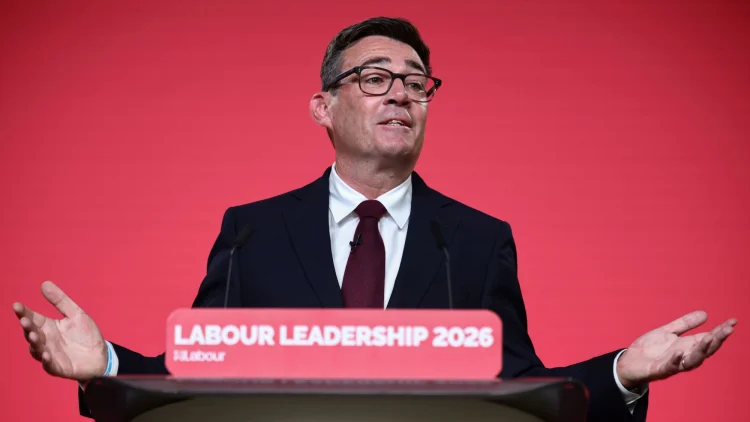
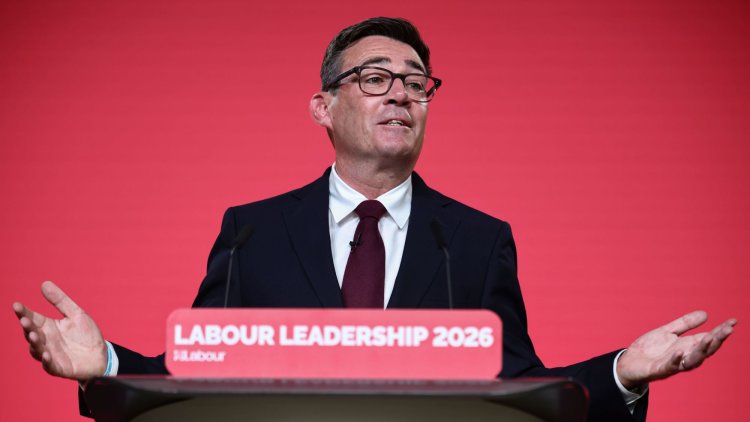
Andy Burnham speaks after being confirmed as the Labour Party’s new leader (Alamy)

4 min read
Andy Burnham has said this is the Labour Party’s “last chance to change” in his first speech as the party’s new leader.
At a special party conference in central London, Burnham said: “I will work to build a new politics. The country is crying out for it. We might enjoy the point scoring against others. The public don’t.”
“How can politicians point fingers when living standards are falling and politics as a whole isn’t working for them? It infuriates them and makes them switch off.”
He added: “Let’s be honest, everybody: this is a last chance to change, and we must take it together, united together.”
After two previous attempts to become Labour leader in 2010 and then 2015, he became Labour leader unopposed after winning nominations from 369 of the party’s 403 MPs. However, he will not become Prime Minister until Monday.
The MP for Makerfield returned to Westminster last month after a by-election victory which led to Keir Starmer’s resignation just days later.
Burnham paid tribute to Keir Starmer for transforming the party after the crushing 2019 general election and said he “put Labour back in a position to change people’s lives”.
The new Labour leader said the only way to beat the “new right” is to end factional in-fighting.
“Fighting to eradicate it and the insidious briefing culture that goes along with it will characterise my leadership,” he promised.
“In future, when a Burnhamite walks into a bar,” he said, joking about a well-worn Westminster gag, that they will say: “Great to see you. We don’t like factional politics here.”
Burnham promised to set an “authentically” clear direction for the party, accusing his Labour predecessors of being too much like the Conservatives.
He said: “As your leader, I will set a direction that is distinctively Labour. We won’t try to out-Green the Greens or out-Reform Reform or doing what we’ve done in the past of wearing too many Tory clothes. Let me tell you, I’m quite happy that Kemi doesn’t approve of my wardrobe choices because I’m not keen on theirs either.
“From here we do it differently. We win by being us, boldly, confidently, authentically us. Labour. That’s how we win. I want people to understand the thinking behind the political direction I set so people can see the decisions we take and the reasons why.”
With mounting speculation about who will be in his Cabinet and who will be Chancellor, the Labour leader says he has made no decisions yet.
“When I have you will see that it reflects all parts of our party, all communities and it will reflect your own place within this great place within this great party of ours,” he said.
“A stronger, more united Labour Party building up a stronger and more united Britain.”
Burnham pledged to “help places that built our party” and accused Margaret Thatcher of stripping power from Labour’s heartlands in the 1980s.
“Change starts with honesty. We must recognise that this generation of politicians, myself included, have failed to challenge a political culture and an economic model that simply doesn’t work well enough for ordinary people.
“Four decades of the neoliberalism that begun in the 1980s have not been kind to the places that built our party, nor to the communities across the UK, nor to the communities across the UK in rural and coastal areas.”
Burnham pledged to be a “pro-business” leader and to “re-industrialise” as he set out his vision for Britain.
“We want to give your area more power to build the council and social homes that you desperately need, more power to improve your high street, backing local businesses such as the pubs and the shops that bring them to life.
“And make no mistake, everybody, I will be a pro-business leader of the Labour Party as I was a pro-business mayor of Greater Manchester… and as part of that more power to re-industrialise.”
Burnham has promised to be a leader for “all places” of the UK as he laid out his devolution agenda.
“We will take power back from Westminster and Whitehall and give it to the place where you live. More power over life’s essentials so you can make them work better, and more affordable for people.”
The new Labour leader said he had made mistakes throughout his political career, but promised to give this new job “his all”.
“I haven’t got everything right, and I’m sorry for when I’ve fallen short. But I’ve always given it my all and I always will.”
He added: “I won’t change. I have a style, it’s my style, I will always stay close to the ground. Close to the people. Hopefully, still in my season ticket when the new season starts.”

A disgusting leak has exposed the hijacking of our democratic system by Europe’s most powerful corporate lobbying group. It’s killing vital wildlife protections. Plotting behind closed doors, billionaire agricultural business interests have systematically swapped the safety of our planet, our wildlife and our communities for cash.
The war on wildlife
The European Union planned to cut pesticide use by half to try to protect vulnerable, collapsing ecosystems. But Copa-Cogeca, Europe’s most powerful farming lobby, launched a ruthless campaign to stop it in the name of corporate profits. And our vulnerable wildlife is paying the price, with pesticides shredding bee populations, poisoning the earth and wiping out birds and wildlife that need a healthy ecosystem to survive.
Crucial reporting from @zdboren.
"Newly revealed documents from inside the most powerful farming lobby in Europe show how it delayed, gutted and overturned some of the most sweeping farming reforms in EU history…"https://t.co/ZehyAsLumr — Jan Dutkiewicz (@jan_dutkiewicz) July 16, 2026
Yet this vicious lobby fought tooth and nail to protect these toxic, bee-killing chemicals, including glyphosate. Leaked documents capture the dark lobbying to protect glyphosate, which the World Health Organisation has classified as probably carcinogenic.
They chose to put their bank accounts first and as a result, have launched a campaign to shield industrial-scale animal cruelty, including vile practices such as foie gras and the fur markets.
The backroom heist of politics
This was not a democratic debate. This was a calculated political hijacking, and its aim was to run down the clock. Internal documents show this lobbying group used delay tactics with massive political pressure to force the European Commission to drop its green objectives.
In September 2022, internal memos suggested slowing the vital pesticide legislation until the 2024 European Parliament elections. Another two-year death sentence for our environment. The lobby group knew that as the elections neared, politicians were likely to drop the green rules to grab rural votes.
Copa-Cogeca was successful in delaying the process by demanding ridiculous impact assessments. This vile stalling tactic worked perfectly. The EU fully withdrew these crucial pesticide regulations in February 2024, and it has left wildlife at their mercy. Thomas Waitz, Green MEP from Austria sits on the Agricultural Committee said:
“Copa-Cogeca focused on sabotaging, delaying, and ultimately killing the sustainable use of pesticides regulation. They are acting in the interest of large agrichemical multinationals and against the wellbeing of small and medium farmers.”
Corporate profits over health
This corporate sabotage didn’t stop at poisonous pesticides. Copa-Cogeca ruthlessly targeted rules that were designed to oversee polluting and industrial factory farms. They specifically prioritised corporate profits over our human health and animal welfare. A major EU target to cut pesticides in half to protect biodiversity was ripped to shreds by this vile corporate giant.
This disgusting entity managed to raise the threshold for what counts as industrial farming by a whopping 50%. This corporate manipulation was hidden from the public. And politicians hadn’t even seen the proposed rules before they were decimated. Copa-Cogeca then coordinated with EU commissioners to attack and weaken health criteria.
This backroom deal has a massive human cost. It robs the public of €1.8bn in lost health benefits annually, all because of pollution. And even worse? The final laws excluded cattle farms ENTIRELY, and weakened the rules for pigs. Pigs have the same level of intelligence as a human toddler. And they have sentenced millions of them to horrific conditions in unregulated industrial farms. To live out their lives in tiny, filthy cages, waiting to die.
A hit list of wildlife
Tragedies are already unfolding in our forests and fields because of these lobbying efforts. Somehow, in all of this, wolves in the EU have now lost their strictly protected status. All because of the relentless lobbying of these corporate entities.
Copa-Cogeca spent years trying to strip the wolf of its protections. In June 2025, the EU amended its habitat directives to allow wolves to be slaughtered. The company celebrated this as a “major lobbying victory”.
Disgusting cruelty to wolves in Spain as EU lifts protection on this endangered species across the Continent pic.twitter.com/9rqvbFm7YI
— dominic dyer (@domdyer70) January 19, 2025
And even worse? They’re already planning their next massacre. Secretive files show the lobbying group is creating a new hit list of which species to target next. And when does this list stop? Because the pockets of these companies are endlessly deep, and it won’t cease until they’re full. They will not stop until they have wiped out everything in the name of profit.
We need to ask ourselves how long are we going to let these insatiable corporate dogs poison our planet? If we don’t stop these dodgy lobbyists and their backdoor tactics, there will be no more wildlife to protect.
Featured image via the Canary
By Antifabot

Infidelity can be hard to discuss. But given that some estimates say 75% of men and 68% of women have engaged in some form of cheating at one point or another, chances are most of us are close to a “cheater”.
And Nicholas Rose, a counsellor, author, and psychotherapist who lists “affairs and betrayals” among his specialties, may see more than most.
We spoke about what he’s learned about cheaters, who he defines as “people who have sex or intimate romantic relationships with other people/partners when there is an agreement in place that a relationship is monogamous”, in his years of practice.
1) Many cheaters don’t see themselves as cheaters
Even though people committing infidelity know they’re doing it, the therapist told us their self-image might never align with their actions.
“Cheating is, by its definition, a bad thing; I’ve never yet met anyone who wanted to think of themselves as doing a bad thing and as a cheater,” he told HuffPost UK.
2) Cheating sometimes begets more cheating
The counsellor added that sometimes, the negative feelings a cheater may experience after their indiscretion can actually lead them further astray.
“The shame, guilt and pressure people can feel about having cheated [or] cheating often adds to the stress that sits behind the drive to be a cheater, leading to further cheating,” he suggested.
3) Cheaters often see themselves as victims
From the outside, the person who’s been cheated on has obviously been wronged. But the cheater’s mind can make that dynamic blurry and even invert it, Rose said.
“The narrative a cheater constructs around their cheating often justifies the behaviour through a victim’s perspective,” he explained.
It’s possible to “challenge that and call it out, however, compassion can be the most effective way to understand what has happened,” the therapist added.
4) Cheating can mean different things to different people
In general, Rose said, clear boundaries help. For instance, cheating can occur because partners have “not had the monogamy/non monogamy conversation”.
Additionally, “everyone’s relationship to ‘cheating’ is personal – for those who grew up in family systems where cheating occurred, there can be a normalisation and acceptance that means it has a different level of meaning, significance and emotion attached to it than for someone for whom cheating never occurred,” he added.
5) Cheating can be caused by unmet needs
Sometimes, cheating is an inappropriate way of dealing with unmet needs, the therapist said.
“Unfortunately, for many people, when cheating occurs, the conversation stays purely on the cheating and never gets to the unmet needs and how and if they might be met going forwards.
“A cheater can sometimes resort to cheating because all attempts to try and talk about their unmet needs have failed. In these cases the offended party/ies often carry a sense of unease and sometimes guilt knowing that they have needed to avoid something in the relationship previously.”
6) Cheaters can’t always explain themselves once they’ve been found out
“Often, when a cheater is found out, the guilt, shame, and fear of loss that surfaces can render the cheating partner into such an experience of fear and self-loathing that they are unable to help their partner understand what has happened,” Rose ended.
“The partner often sees this as an act of further betrayal… [but] the other is actually unable to respond.”
Couples’ counselling service Relate said it’s important to make time for yourself if you’ve been cheated on. Talk honestly with your partner, and think carefully about what you want to happen next. Speak to a therapist if needed.

Yes, it’s a very old and impressive text. But that doesn’t necessarily mean the modern-day successs of The Odyssey – a 24-book epic poem attributed to the Ancient Greek poet Homer – was ineviable.
Lykophron’s Alexandra, for instance, is one of the most “neglected” Ancient Greek poems, Professor Simon Hornblower writes. I don’t reckon there’s anywhere near as much buzz around “the greatest lyric poet of ancient Greece”, Pindar, as there is Homer, either.
In other words, “ancient” plus “a big deal in Ancient Greece” does not necessarily equal “relevant enough for a big-budget movie in 2026”.
So why has a 12,000-plus-line work, finished around 725–675 BCE, remained so present in the imagination of modern audiences that Christopher Nolan has created a massive-scale, star-studded flick about it?
HuffPost UK spoke to Jeffrey Carnes, an Associate Professor of Classics and Classical Civilisations at Syracuse University, about why we can’t let go of the centuries-old poem.
Why do we still read and make art about The Odyssey?
“The Odyssey has stuck with us so long because it has spectacular stories – Sirens, the Cyclops, Circe – that grab hold of our imaginations when we’re young,” Carnes explained.
“But it also has subtleties of characterisation and narrative that we don’t expect in a poem from 2,700 years ago: it tells a non-linear story, with focus on three separate characters (Odysseus, Penelope, and Telemachus), who all have their own, sometimes competing interests.
“In a poem of 24 books, Odysseus, the title character, doesn’t even appear until Book five!”
Then, there’s the fact that reading and talking about The Odyssey has passed down through generations.
“When we read it for the first time, we’re joining an age-old community of readers, and learning the really cool and important stuff that generations before us knew,” the expert said.
We might be surprised by how familiar the book’s main character, Odysseus, feels too.
He’s a ”strong character who knows what he wants, and will do whatever it takes to survive,” Carnes stated.
“Homer opens the poem calling him polytropos – tricky, the man of many ways – but immediately adds that ‘many were those whose cities he saw, whose minds he learned of.’
“When he gets in trouble – as with the Cyclops – it’s because he was too curious, and explored things he shouldn’t have. When the Sirens sing to him, what do they offer him? Knowledge. And only his clever trick of being tied to the mast kept him from running aground.”
Where do I even start if I want to read The Odyssey?
We asked Carnes what modern readers should do if they want to try reading the poem, but are a little put off by its length and/or language.
He said that while reading the Odyssey in 2026 might feel “off-putting, at least at first”, at least we can comfort ourselves that Ancient Greeks probably felt the same way.
“The story is told in an epic idiom that seemed old-fashioned to most of the Greeks who read it (a fifth-century Athenian would react to it the way we react to Shakespeare – difficult, but beautiful once you accept the challenges of reading it),” he shared.
Adaptations and retellings, like the upcoming Nolan movie, can be a great way to approach the text if you’re not sure yet.
When you start, be patient, and leave your expectations – as well as your 21st century ideals of morality – at the door.
“I was surprised when I first read it how little of the poem was devoted to the famous adventures (Cyclops, Sirens, and so on), and how that was neatly contained within books nine to 12. So what’s the rest of the poem about? Homecoming, recognition, revenge – and I was shocked that Odysseus murdered all the Suitors simply for eating his cattle,” Carnes told us.
“But in the world of the Odyssey this is considered the right thing to do – the gods approve of it, and urge his son Telemachus to participate in the revenge. (Anyone who suggests that Odysseus is troubled by this mass killing is missing the point of the story.)”
Ultimately, The Odyssey is “an epic, an adventure story, and a Greek audience roots for the destruction of evil characters in the same way that we root for the destruction of the villains in film noir, Westerns, or the [Marvel Comic Universe]”.
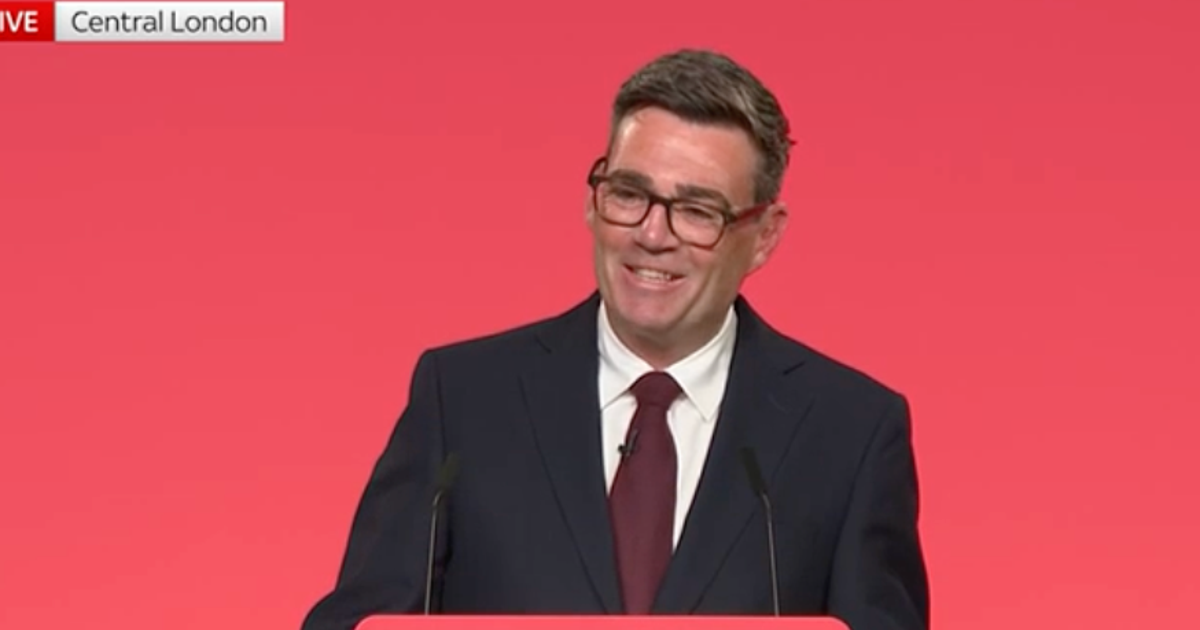
Andy Burnham has officially been crowned as the leader of the Labour Party, meaning he is days away from being de facto prime minister.
The Makerfield MP will have to wait until Monday to formally take over from Keir Starmer in No.10, as a quirk in the rules means he could not take both titles on the same day.
Burnham ran uncontested to be the next leader of the largest party in the Commons with the support of more than 350 of Labour’s 403 MPs.
In his first speech as Labour leader, he promised he would help to give Brits “hope back”.
He said his supporters “heard the call from the people of Makerfield on behalf of forgotten places everywhere, up and down this country, for a return of the Labour they once knew”.
He added: “And now we answer that call. We will be that version of Labour again.”
Burnham, who has run three times to lead the party, promised he is “ready” to lead Labour now after his nine-year stint as Greater Manchester mayor.
He also praised Starmer for making the party electable after its shocking defeat in the 2019 general election.
He then began to outline what changes he wants to implement, promising: “Change starts with honesty.
“We must recognise that this generation of politicians, myself included, have failed to challenge a political culture and an economic model that simply doesn’t work well enough for ordinary people.
“Four decades of neoliberalism that began in the 1980s have not been kind to the places that built our party, nor to the communities across the UK in rural and coastal areas. So we pledge today to them to be better.”
He added that the public has given his party a “last chance” to implement change – and that he will take the country in a direction which is “distinctively Labour”.
Burnham made five promises to improve the party, too.
He said he would work to build a “new politics”, change Labour’s “political direction”, be a leader for the entirety of the UK, take power back from Westminster and Whitehall and work to stop Labour in-fighting.
Burnham has had a rapid ascent to Downing Street in recent months.
Support for the then-Greater Manchester mayor started to rise as Starmer’s successor after the party’s disastrous performance in the May elections in England, Scotland and Wales.
However, as he did not have a seat in the Commons, Burnham was not able to challenge Starmer’s premiership.
So Josh Simons, Makerfield MP, stood aside to trigger a by-election and give Burnham a chance to return to the Commons.
His comfortable victory over Reform UK last month only strengthened calls for Starmer to step down.
The prime minister subsequently resigned and Labour MPs rushed to endorse Burnham.
There is still plenty of mystery around what Burnham intends to do in office as he avoided any major press conferences and is yet to announce who he wants in his cabinet.
But he insisted today that he “has a plan” and that he will “not change”, staying loyal to his style.
“I have listened and learned as I have gone along, you’ll be pleased to know. And hopefully I’ve got better as a result,” Burnham said. “You can be sure of this: I know what I believe after 25 years as an elected Labour representative, and I know what I want to do with you all. I have a plan.
“What I also want you to know is I won’t change. I have a style and it’s my style. I will always stay close to the ground, close to the people.”
Listen to Commons People, the podcast that makes politics easy. Every week, Kevin Schofield and Kate Nicholson unpack the week’s biggest stories to keep you informed. Join us for straightforward analysis of what’s going on at Westminster.
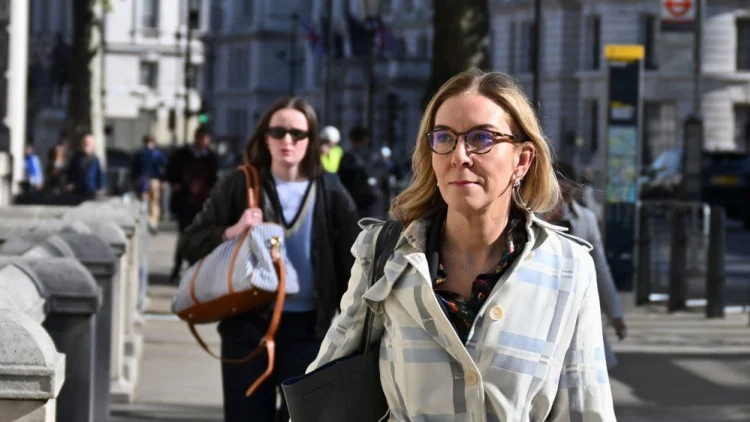

The use of success profiles will be scrapped under changes to civil service recruitment (Alamy)
2 min read
Exclusive: The Cabinet Secretary is planning to overhaul civil service recruitment, scrapping the use of success profiles.
PoliticsHome understands that there will be a new model introduced that “emphasises skills and expertise”.
The expectation is that the move will more closely align civil service recruitment with the private sector and bring in more talent, PoliticsHome understands.
Currently, the civil service recruits using so-called “success profiles”, made up of “ability”, “technical”, “behaviours”, “strengths”, and “experience”. The civil service also has a set of defined “behaviours”, which “when demonstrated, are associated with job success”.
In an email to staff on Friday, Cabinet Secretary Antonia Romeo said: “We are going to start by scrapping success profiles, instead introducing a new model that emphasises skills and expertise – and will make further changes over the coming months.”
Romeo also said “to deliver for the public, my focus – and that of your Permanent Secretaries – has been to build a world-class civil service that is fit for the future.” The head of the civil service also referenced the Review into the organisation, performance and transformation of the permanent civil service”.
“The Review will define a clear vision for the civil service as a world-class organisation, delivering a onece-in-a-generation transformation.”
Romeo was appointed as the new Cabinet Secretary in February and is the first ever woman to hold the role. She replaced Sir Chris Wormald, who was awarded a peerage by the outgoing Prime Minister Keir Starmer earlier this week.
The civil service’s approach to recruitment has faced criticism in recent years for its rigidity, with the Institute for Government previously recommending the replacement of success profiles in order to test “more robustly whether applicants have the skills they say they do”.
The think tank has also criticised the current approach discouraging external candidates to apply for roles in the civil service.
The Cabinet Office has been contacted for comment.

Wall Street Traders Are Having Their Best Year Ever

Will Solana price rebound to $80 as SOL tests key support?

Lana Del Rey Picked Fan’s Birthday Over Taylor Swift Wedding


-

 Fashion7 days ago
Weekend Open Thread: Nutriplenish Leave-In Conditioner
-
 NewsBeat22 hours ago
London Mayor Sadiq Khan handed a peerage by Keir Starmer alongside 15 other Labour figures… just days before the PM leaves No10
-

 Crypto World2 days ago
CFTC blocks Kalshi from unwinding Michigan trades after court order
-

 Business1 day ago
Nvidia Stock Slips After Big Tuesday Rally as Huang Confirms Vera Rubin Chip Is Now in Production Today
-

 Politics2 days ago
Young campaigners urge incoming PM to act on outdoor junk food ads
-
 Entertainment2 days ago
Disney’s Most Ambitious Failed Star Wars Attraction Is Coming to SDCC
-

 News Videos3 days ago
XRP BOMBSHELL… XRP OMBOARDED FOR TRANSACTIONS!!!
-

 Tech3 days ago
Get Your ESP32 Sunny Side Up With This Solar Dev Board
-

 Crypto World17 hours ago
Injective Submits SEC Transfer-Agent Registration to Onchain Ownership Records
-

 Tech3 days ago
Dark Secrets Emerge When Jailbreaking LLMs
-

 Business1 day ago
Palantir Shares Rise After Expanded Nvidia Partnership and Fresh Analyst Upgrades Ahead of Earnings Day
-
 Sports2 days ago
New Cornerback Enters Vikings Trade Rumor Mill
-

 News Videos7 hours ago
Money | Class 12 Economics | CBSE Board Exam 2026-27
-

 Business12 hours ago
Banco Bilbao Vizcaya Argentaria, S.A. (BBVA) Discusses Global Macro Environment and Economic Outlook for Core Markets Transcript
-
 Tech4 days ago
Cloudflare Precursor Watches Your Mouse and Keyboard To Decide If You Are Human
-

 News Videos4 days ago
how to make coin bank box with cardboard #scienceproject #money #diy #shorts
-

 NewsBeat2 hours ago
Registration is now open for March for Men with Kev 2026
-
 Entertainment2 days ago
Vicki Gunvalson Defends Discussing Heather Dubrow’s Money
-
Crypto World3 days ago
Ripple, Coinbase, Circle Join Linux x402 Foundation to Help Shape AI Payments
-

 Crypto World16 hours ago
Claude Fable 5 Slips to Second in AI Coding Leaderboard
You must be logged in to post a comment Login