Politics
My Grandpa Sexually Assaulted My Grandma

Most people sign their names on forms, emails and notes without giving it a second thought, but every time I write my name or introduce myself, there’s a twinge of hesitation.
Last week, I stood in a small art gallery in the East Village and stared at a list of names spelled out in black vinyl letters and affixed to a wall near the entrance. As people moved through the space looking at the actual artwork, I stood with my eyes locked on my own name, slowly analysing each letter. I was simultaneously proud and disgusted because I couldn’t shake the fact that my accomplishments are linked to the name of a man who assaulted my grandmother, refused to acknowledge my father’s birth and doesn’t even know I exist.
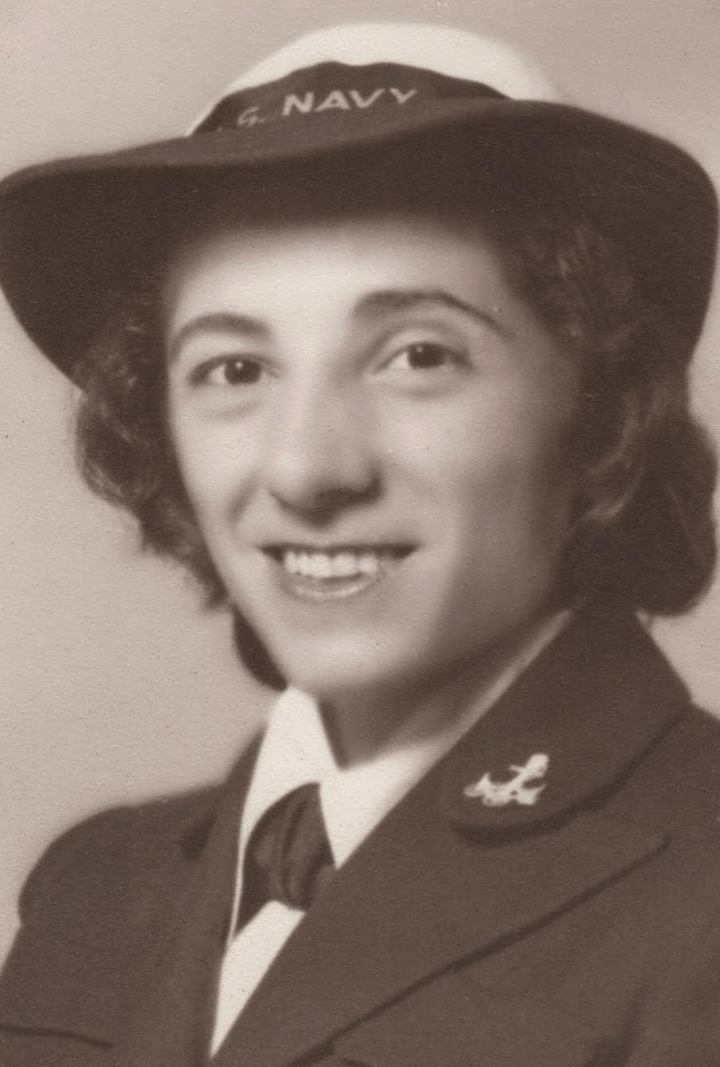
In the latter years of World War II, as part of the WAVES (Women Accepted for Volunteer Emergency Service) program, my grandmother Josephine Jovino, born and raised in Sunset Park, Brooklyn, was shipped out to the Naval Air Station in Jacksonville, Florida, where she worked as an aviation mechanic. While living there, she met Cecil. They went on a single date, he sexually assaulted her, and they never spoke again after that night. My grandmother had not only experienced a great trauma, but she soon discovered she was pregnant with her abuser’s child. She sent a letter to Cecil telling him about the pregnancy, but he never responded.
My father, William Jovino, was born later that year, and together, Josephine and baby Billy, as he was affectionately called, returned to Brooklyn to live with Josephine’s parents. It was 1947, and being a single mother was not necessarily unusual because of the vast number of fathers who died in the war, but openly having a child outside of wedlock was not socially acceptable. Due to fears about how my father would be received in the neighbourhood, my great-grandparents firmly encouraged my grandmother to change not only my father’s name, but also hers, to Short, Cecil’s surname, thereby giving the impression that she was previously married and that Billy was born legitimately.
Seventy-nine years later, Short has been passed to my older brother, my mother, my brother’s wife, my 4-year-old nephew and me.

I never gave much thought to my last name when I was growing up. I was more preoccupied with having to constantly correct the pronunciation of my first name, Ciarán (“KEER-awn”), which was a battle I slowly abandoned in elementary school, when I dropped the accent and went by the still-difficult-to-pronounce but more familiar “KEER-an,” like Kieran Culkin. As I grew accustomed to answering to everything from “Karen” to “Syrian” in the cacophony of mispronunciations of my name, I gained a greater sensitivity to the meaning and power of names. When I discovered the origins of my family’s last name, I was dumbfounded.
My grandmother was a social worker for the majority of her life, a devout Catholic and fluent in French. These are facts I learned from reading her biography on a paper handout at her funeral when I was 7 years old. I also learned she was born with a different last name than mine: Jovino. I innocently inquired about this and was met with an intensely disproportionate amount of animosity from my father, which made me even more curious.
I knew my dad grew up without ever meeting his father, and from the ferocity with which he spoke of my absent grandfather whenever I asked, I learned early on not to bother him with questions about this mysterious figure in our lineage. Instead, I directed all sensitive inquiries to my mom. When I asked her why Grandma’s whole family had the last name Jovino and we didn’t, she didn’t dismiss me, but coolly said, “You’ll understand when you’re older.” I asked my brother, who was five years older than me, and he said Short must have been our grandpa’s last name. “But we don’t have a grandpa,” I asserted.
Six years later, when I was taking a computer research class in middle school, I was tasked with making a family tree. I grew up using the internet, so even at 13, I was able to find birth records, marriage certificates and other details to fill out a thorough tree on the maternal side of my family by starting a seven-day trial on Ancestry.com. I came across very little information about my dad’s side — until I remembered the name Jovino. However, I realized I didn’t even know my paternal grandfather’s first name.
I went home and presented what I had discovered at school that day. I didn’t have to do much after that to get my mom to tell me the truth. I had no delusions about my paternal grandfather being a war hero or secret rock star, but I wasn’t expecting him to be a monster.
My maternal grandmother was the gentlest person I ever met. She spoke at a volume barely above a whisper, smiled and said hello to everyone we passed on the street, and spent hours of her days volunteering at her church. I was heartbroken knowing that she was not only assaulted by this man, but also had to take his name and be constantly reminded of him. I was also filled with rage on her behalf. From that point on, I constantly pleaded with my parents to change our last name to my grandmother’s original surname. I printed forms, found articles with detailed instructions, and one year, I even created matching shirts for everyone with “Jovino” printed on the backs.
My enthusiasm was met with somber indifference. My parents also hated what the name represented, but they didn’t see the point of changing their name after so many years. The harder I pushed, the sadder my dad seemed to get, so I gave up that fight when I was 17 and began to concentrate on a new goal: finding Cecil and forcing him or his family to acknowledge my family’s existence.
The only things I had to aid me in my search were his name and his military record. It turns out more than one Cecil Short was enlisted during World War II, which made things more complicated than I expected. I tried messaging a couple of relatives of the various Cecil Shorts I found online, but none of them responded. Rather than continuing to grope in the dark and jump down every online rabbit hole I found, I tucked my feelings away. After some time had passed, my animosity receded into a silent discomfort that I was able to tolerate.

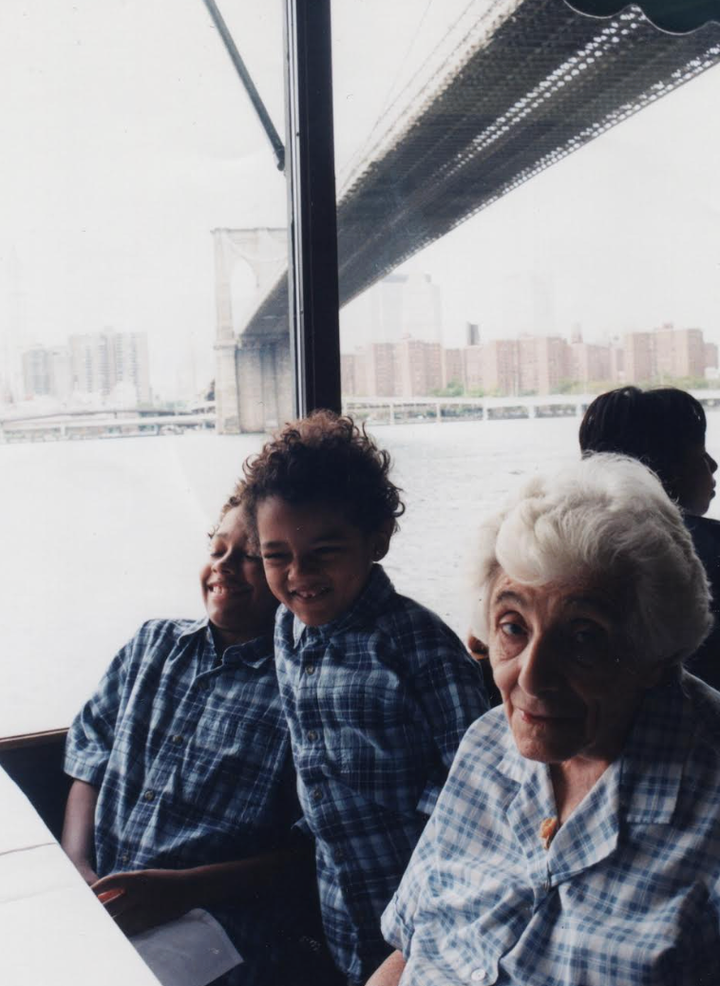
Things came to a head again in 2021 when my nephew was born. It felt completely unnecessary to have this brand-new, innocent baby be anchored down by a legacy of trauma and shame due to his last name. I was 23 at the time and equipped with a liberal arts post-grad moral superiority complex that gave me the skills and passion to make a far more convincing argument than I had in the past, but, once again, it fell on uninterested ears. I had become politically active during my college years, which coincided with Donald Trump’s first term, the start of the MeToo movement and George Floyd’s murder. I spent hours and hours organizing protests and going to marches, sit-ins, and demonstrations on behalf of strangers, yet in my own family, it felt as though the ghost of a genuine villain was perpetually haunting us, and there was nothing I could do about it.
The current Short family is composed of my father, who was raised in a very stereotypical working-class Italian-American household in Brooklyn during the 1950s, my mother who was born and raised in the Bronx by her parents (two Jamaican immigrants), myself and my brother (two Upper West Siders who are mixed race but identify and visually present as Black), my brother’s wife (a Chinese immigrant), and now my nephew, who is Chinese, Black, Italian, and whatever Cecil is. My family’s complex cultural heritage has been completely flattened into the generic surname of a white man, who, based on my calculations, was born in the South in the early 1920s.
I know nothing about Cecil’s lineage or what his feelings were about identity politics, but his surname enduring through various generations of racial amalgamation is hardly unique. Through forced assimilation, slavery, prejudice faced by immigrants, and various other forms of colonisation that have shaped our country, cultural erasure via altering or completely changing names is nothing new in America.
I’m now 27 years old, engaged to be married, and facing the question of whether I want my fiancée to share my last name. When considering the broader context of my family’s name, I’ve come to realise that my biggest issue with our surname is what it conceals and, in turn, who it celebrates. Beneath every last name are hundreds of ancestors whose impact on a lineage gets a little bit dimmer and more obscured with every passing generation. One can only have so many hyphens in a name.
While I still feel a deep-seated unease about having Cecil Short’s last name, I cannot escape the fact that I’m his descendant, and I’ve realised that to change my name would be to abridge my family’s story. What feels far more resonant for me is to embrace and acknowledge the peaks and valleys in my lineage. Rather than running away from a shameful family secret, I believe facing it head-on and chronicling it will allow me to finally move forward and give a new context to my name. I now believe that my surname doesn’t represent shame but instead honors what my grandmother endured. By embracing her perseverance and maintaining a record of where my family has been and how we got to where we are now, I hope our story won’t be forgotten, even when the names of my descendants inevitably change.
Ciaran Short is a multidisciplinary artist and writer born and raised in New York City. His work explores New York culture and often tackles issues of race and masculinity. He is a cofounder of All Street Gallery, an art collective and gallery with two locations in Manhattan’s Lower East Side, which exhibits work by emerging and underrepresented artists. He holds a master’s degree in media studies from The New School.
Do you have a compelling personal story you’d like to see published on HuffPost? Find out what we’re looking for here and send us a pitch at pitch@huffpost.com.