
Politics
Neil Garratt: London needs a Mayor who believes in enterprise

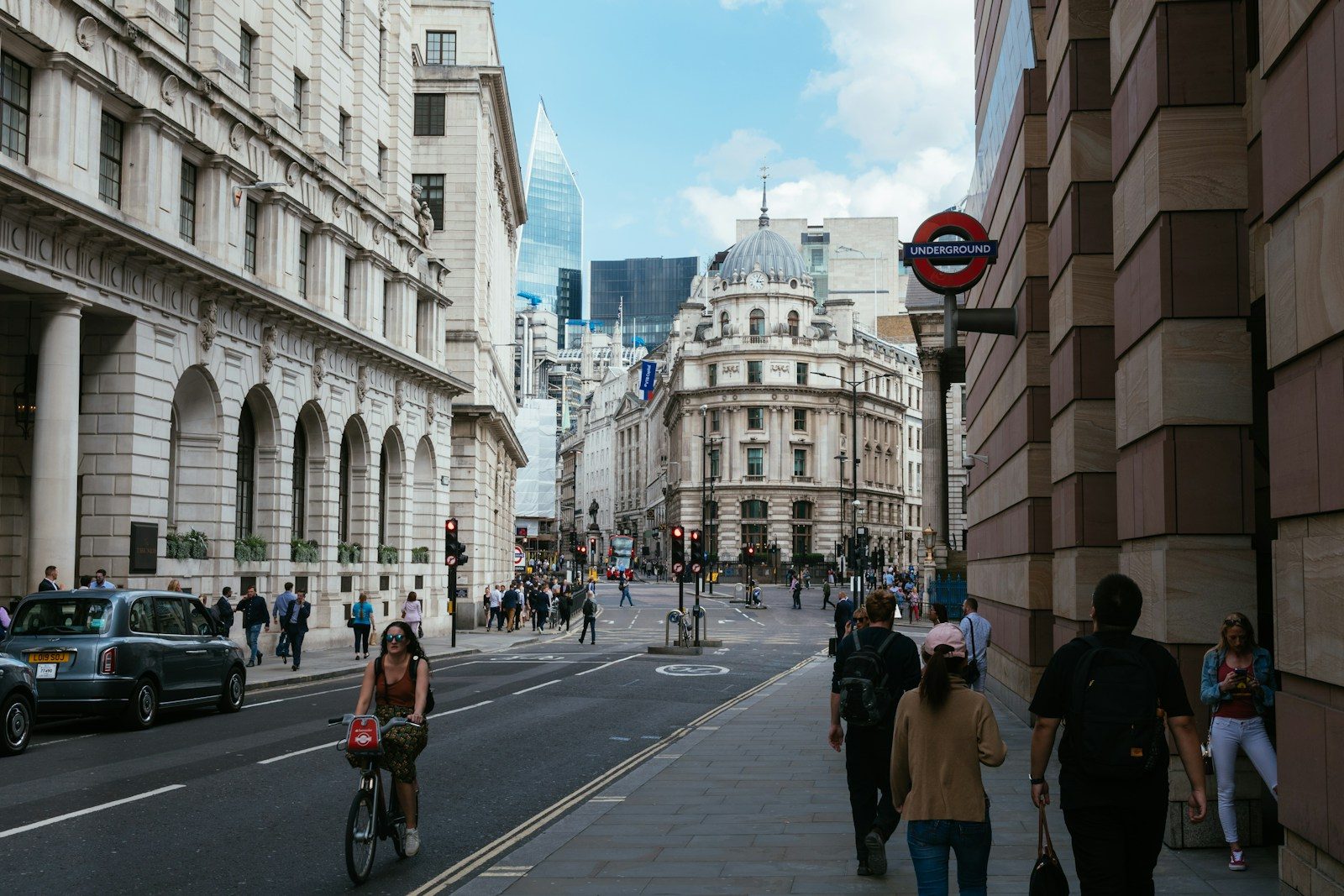
Neil Garratt is the London Assembly member for Croydon and Sutton.
In 1959, Winston Churchill observed to his Woodford constituents:
“Among our Socialist opponents there is great confusion. Some of them regard private enterprise as a predatory tiger to be shot. Others look on it as a cow they can milk. Only a handful see it for what it really is: the strong and willing horse that pulls the whole cart along.”
Seventy years on, we find the tiger shooters have taken over the Green Party while the milkers fill the Labour Cabinet but the essential truth remains: employers feel drained, people are losing their jobs, and the economy is sadly going nowhere. What is to be done about all this?
I decided to get the facts straight from the horse’s mouth by convening a roundtable discussion of London business: what’s working, what’s not, and where do we go from here? What I heard shocked me.
What stood out most was a common theme that cut across every sector and every size of business: a sense that London has lost its oomph. There is a lack of ambition and zest that attendees felt was the single biggest force holding the city back. From City Hall to Whitehall, Labour is light on business experience and it shows. To them, successful companies are just another source of tax.
The biggest alarm bell is the brain drain. London is packed with talent and an impressive list of unicorn startups; every year dozens of companies reaching a $1 billion value. But the story behind the story is that these ambitious companies are increasingly lured abroad, where financial backing is easier to find. US funders then insist companies make plans to relocate, taking future British wealth and jobs to America.
Retail theft is another big worry and it’s up despite the Mayor’s selective stats on crime. Staff safety, profitability, and wages all suffer when brazen shoplifters march out the door with an armful of stock. Some businesses are even weighing up whether to continue trading in a city where not only is retail crime increasingly common but seemingly legalised. It is hard to maintain confidence in a city when the basic compact that the law will be enforced is visibly failing.
Tax and bureaucracy came up repeatedly. Labour’s jobs tax is predictably cutting firms’ willingness to hire, as it now costs nearly £30k to employ someone on minimum wage. Business Rates are crippling what remains of profitability for some hospitality businesses, a cruel gut-punch after Chancellor Reeves trumpeted a cut to hospitality Business Rates in her Budget speech. People were stunned when the Treasury website told them their tax bill would double. And now Khan is delighted to announce a holiday tax on top of everything else, an overnight charge on every visitor. There’s only so much people can afford to pay for a meal, a drink, or an overnight stay, at which point businesses will just go pop.
The short-termism is glaring. By trying to pump as much tax as possible from the private sector, from the point of sale to the back office costs, Labour are blocking companies from achieving the long-term success that would generate natural increases in tax revenue. Not to mention creating jobs, selling goods and services to willing buyers, and inventing the products of the future we’ve barely dreamed of. Churchill’s willing horse can pull the cart a long way, but not if you keep loading it with rocks.
The capital deserves a Mayor who knows in their bones that prosperity does not come from slicing the pie ever-more finely, but from letting people bake more and bigger pies. A Mayor who sees that when businesses succeed, the benefits flow to everyone: to the companies in their supply chains, to the employees who see their pay rise, to the wider economy that benefits from their spending. My report, which you can read here, shows how Sadiq Khan could be more pro-business and unlock the abundant potential in London. Or, on the off-chance he chooses not to listen, how a future Conservative Mayor can bring London galloping back.


Following the huge success of her chart-topping single Where Is My Husband! and a string of sold-out UK arena shows, Raye has finally unveiled her second full-length release, This Album May Contain Hope.
Turning everything that made her debut My 21st Century Blues a chart-topping and Brit Award-winning success, Raye’s latest offering sees the London-born singer genre-hopping, belting it out and delivering the relatably introspective anthems with which she’s become synonymous over the last few years.
Early reviews for This Album May Contain Hope have been unanimously positive, with critics hailing its “ambitious” scope (especially in an era where pop stars have become notably risk-averse) and theatrical, maximalist approach.
In fact, even those who’ve been more critical of the project have still praised the sheer scale of the album, calling it “fascinating” and “unquestionably dynamic”.
Here’s a selection of what the critics are saying about This Album May Contain Hope…
“Throughout, Raye sings like her life depends on it. Her vocal stacks and counter-melodies are full of intricate detail; and her phrasing is exquisite, even on the jazz numbers where lesser pop singers would come unstuck. It sounds like a lot. It is a lot […] Not everything works, but in an era of AI slop, and meme songs designed for Tiktok clip-ability, it’s reassuring to hear Raye unapologetically going for broke.”
“Such fearless musicianship sets a stage on which great love can die like a phone battery, toxic south London lover-boys stalk the streets like B-movie beasties and our plucky high-heeled heroine must put on her headphones to dance away her despair […] Her appetite for the heart-on-sleeve razzle dazzle of it all is glorious. This Music May Contain Hope is a pure audio spectacle that will have you screaming for an encore.”

Harvey Aspell/Shutterstock
“There’s artistic growth, and then there’s the radical transformation of Raye […] This Music May Contain Hope is an exciting, life-affirming listen that reminds you it’s never too late to turn things around. In a way, it’s the Raye story writ large, with absolutely killer choruses.”
“Despite the moments that feel de trop, it’s hard not to like This Music May Contain Hope. It is wildly ambitious, in a pop era in which a lot of artists’ ambitions extend no further than maintaining their career. But the end result feels less like a showstopping grand artistic statement than a wild, fascinating, occasionally messy miscellany of ideas.”
“The lyrics are excessively on-the-nose and the spoken-word sections bluntly expositional but the end result is unquestionably dynamic and outside of present trends – a rare thing in the commodified world of pop.”
“Given its emotional heft and likely cultural impact, it’s an album that could turn Raye into Britain’s Beyoncé. It’s a towering achievement.”
“The ambition on This Music May Contain Hope is actually staggering, from the lavish orchestral heft of noirish opener I Will Overcome, to the racy flapper jazz of charmingly self-deprecating I Hate The Way I Look Today. Like it or not – I very much do – this is not an artist playing it safe.”
“Could it have been edited or cut down? Who cares. It’s huge, expansive, bonkers and brilliant. It’s Raye at her very core, and it’s fantastic.”
“A theatrical magnum opus of pure triumph […] in allowing the listener to give themselves over to its majesty, theatrical magic, and ultimate exhilaration, there’s nothing that stands in the way of its symphonic power.”
“Tracks like Joy and Life Boat tip over into Instagram-ready platitudes […] but Raye is refreshingly unconcerned with sounding corny. On This Music May Contain Hope, maximalism proves to be an effective cure for the loneliness epidemic.”
Raye’s This Music May Contain Hope is out now.

On Wednesday, US President Donald Trump — who has an estimated net worth of more than $6 billion, made mostly through crypto in the past year — spoke to House Republicans at the National Republican Congressional Committee fundraising dinner and essentially admitted that he knew that his little “excursion” to start a war with Iran would make everything more expensive.
And more important, he really doesn’t care.
“I thought it was going to be much worse. I thought that the energy prices, oil prices, would go up higher. I thought the stock market would go somewhat lower,” Trump said. “But it didn’t matter to me. It’s short-term.”
He continued, “What we had to do is get rid of the cancer. We had to cut out the cancer. The cancer was Iran with a nuclear weapon, and we’ve cut it out. Now we’re going to finish it off.”
Leading up to these remarks, Trump also claimed that “numerous” other US presidents from the past 47 years said they “wished” they had started a war with Iran but “didn’t have the guts to do it.”
Last week, Trump made a similar claim, and went so far as to say that one of the only four living US presidents told him, “‘I wish I did it, I wish I did,’ but they didn’t do it.”
When asked by reporters which former president Trump was referring to, Trump replied, “I can’t tell you that. I don’t want to embarrass him.”
This prompted MS NOW to reach out to Bill Clinton, Barack Obama and Joe Biden, who all confirmed that they never spoke to Trump about Iran. George W. Bush confirmed the same thing to The Wall Street Journal.
Last week, gas prices shot up about 30% nationally, with the price of crude oil at $99.75 per barrel as of Wednesday, Forbes reports.
The spike in cost is mostly due to Iran retaliating against the attacks by effectively blocking the Strait of Hormuz, a vital oil shipping route on the country’s southern coast.
“I feel like we’re being squeezed everywhere else,” Ashley Brown, a hairstylist based in Seattle, told HuffPost last week about adjustments she’s making due to higher gas prices. Brown said she decided to take a train, rather than drive her car to work, which has doubled her commute time.
“The cost of doing business, the cost of groceries, the cost of living. And now with gas going up, there’s just no room,” she said.
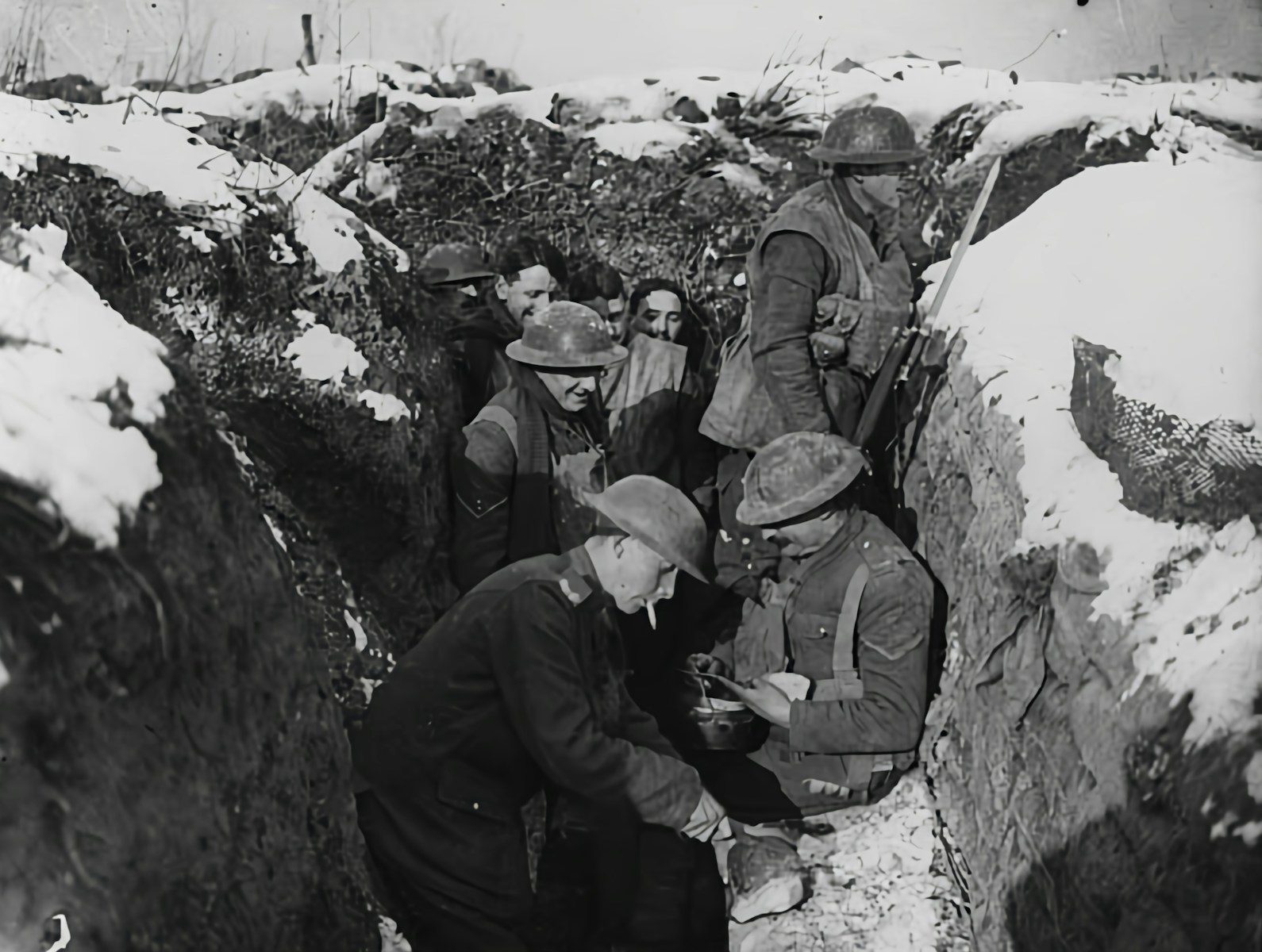
I mentioned to Nigel Farage a fortnight ago that it was odd feeling to have ended up “in opposing trenches” firing pot shots at each other these days. I’m not sure what he thought but what he said with a smile was:
“You should come over. mine’s a better trench”.
To be fair to him he absolutely has to stand on his expressed positions, even in private. We’ve often ended up discussing things in these terms because of a shared passion for the history of the First World War.
No, I won’t be crossing no man’s land. To lose one Editor of ConservativeHome to Reform UK might be considered unfortunate to lose two looks like carelessness.
When I venture into no man’s land however I find people I very much recognise and talk to quite regularly. I don’t always agree but I definitely listen to them.
They are mainly – still angry and disappointed former Conservatives, who felt completely let down by the party’s last stint in Government finding them weak rudderless and incompetent. They’ve seen people cross to Reform and yet deep down aren’t convinced the Farage show really does have the answers, or the ability to do anything but protest, and aren’t convinced on some of the economic stuff or the characters he has around him.
Before either side get angry – too much of that in this arena as I will come on to – those are not my views, but a cocktail of many a conversation with these voters about both sides. The no man’s landers, sometimes shift slightly one way or another but don’t feel the need, or in some cases the desire, to make a choice, yet.
These dug in positions have been reinforced ever since hostilities really broke out at the beginning of this year with a concerted push from the Reform front trying to overrun what they saw as still weak Conservative lines. They still think those lines are terminally weak but the whole operation in January was inspired by the fact despite filling 2025 with shouts that the Tories were dead, their trenches abandoned, “it’s over”, the people in Reform HQ knew that it wasn’t, and Badenoch’s position as leader had solidified in a way they hadn’t anticipated. There was frustratingly for them, still fight in them and especially under their new general.
By January of this year, their mole inside at the top was in discussions about defection. There was a four month run to May’s local elections. These have to – and probably will – establish a bridge head for Reform and their building of a national spread of local party structures. It was the right move in terms of timing to try and bully the Tories off the pitch if they could. That’s definitively their plan.
Either by vote, by gaslight, by out sloganing, convince both Tory and electorate to cede the field.
I’m not criticising here. Tactically it’s what I would have done.
Badenoch and Farage don’t like each other much, or more accurately find dealing with each other tricky. She was the leader he didn’t really want them to choose, and he finds her unnecessarily abrasive and sub-par. She thinks he’s fundamentally a charlatan and an unserious bar room blowhard. That’s not a combination that makes for constructive discussions.
Both have long ruled out any chance whatsoever of any ‘deal’.
However I have recently had a number of occasions, away from the ‘bubble’, or the arenas of political combat, where solid Conservative supporters and Reform supporters and yes, no man’s landers have been gathered together. They’ve been talking . I’ve been listening to them talking to each other. Lots of them.
Not the angry back and forth of online skirmishing but looking each other in the whites of their eyes, and talking. Talking for some time, and that’s the key here.
Let’s talk about anger first. Lots of it about. It’s where a lot of people, regardless of alliegence, start in this discussion.
Frustrated anger about years of supporting a party that you feel let you down badly, and it feels raw, almost like betrayal. Anger that when Starmer is so awful as PM, Ed Davey is comically ineffective and Zack Polanksi is not just comic but actually dangerous, Reform still want to give the Tories, and just the Tories, a kicking. Anger at a stubborn refusal from die hard Reformers that the Tories are under new leadership that has changed them. Anger at Tories for looking down on Reform, and thereby insulting their voters.
Anger, like that which has spread across the country, and applies to a lot of things, that there’s nothing they can do about this fight, except watch, or sigh, and join in.
And then, when they’d got it out of their systems, you started to hear the notes of a different tune. And what struck me was how similar those notes were, whoever produced them.
They all agreed the Starmer project must be stopped for the good of the UK. That the Greens might say they loath Labour but if they could drag a wounded Labour way over to the left and get co-operation with a party sans the Starmer project then they could do a deal that kept Tories and Reform out and the whole socialist doom circus rolling on.
At this point there was an up bubbling of the old battle cries – ‘that’s why you have to move out of the way, stand down and let us advance’ – awkward use of that word in this context but we’ll leave that. But it was a brief moment because now these two sides – and undecideds were talking, another truth, I have long predicted, came out: a recognition that ultimately neither Tories nor Reform are going to be able to kill the other off.
They can keep slugging it out if they wish but it will be a wearisome watch because it won’t work and the Left will love it, a satisfaction to be honest I’m not inclined to give them.
So where did this 1914 style meeting in the middle end up?
An acceptance, and just an acceptance, that one and the other might not be the enemy here. That, whether they want it or not, at some point it is likely electoral maths and right-leaning voters will demand they have, at least, ‘a conversation’. And, and I was surprised at this, it was probably better to have a ceasefire soon, and if necessary, ignore each other for a bit.
Timing is everything. Ahead of the local elections – and haven’t they just zoomed into stark focus – you won’t hear a single thing like the above coming out of any spokesperson, leader or candidate. Battle is raging on all fronts, it’s just when it’s quiet, and away from the clash, you can now start to hear if you listen closely, as I do, the sound of how things might play out.
Not yet, but at some point.
Peter Franklin’s column last week came in just as I had had these conversations. It’s worth reading again.
There is no inevitability about any kind of deal. There are a range of strong arguments on both sides for not doing any ‘deal’ or ‘pact’ or whatever. If either side believes it can go it alone if it just holds out, they absolutely will do that. Neither party needs to do this now, there is still a long way to go until 2028/29.
But there’s a shift in the debate, for those who are willing to have it. More are, and mercifully without the wearisome ‘screaming’ at each other that marked the start of hostilities.

Suicide of a Nation: Immigration, Islam, Identity by Matt Goodwin
No recent book has received so hostile a reception.
Under the headline “Suicide of an Author’s Credibility”, Ben Sixsmith of The Critic describes Suicide of a Nation as “a very bad book” in which Matt Goodwin doles out “slop” to members of the silent majority who are treated as if they had “the reading level of a dim-witted 12-year-old”.
On X, Andy Twelves points out that many of the quotations in Goodwin’s book appear to be made up, offers a wealth of evidence to that effect, and notes the appearance of ChatGPT in the scanty footnotes.
John Merrick, writing for The New Statesman, calls the book “a shockingly poor piece of research and writing”, while Mary Harrington on Unherd terms Goodwin a “slopagandist” and observes that “Suicide of a Nation isn’t a book in the conventional sense, so much as a tranche of internet”.
More excitingly for readers of this site, Tim Montgomerie – the founder in 2005 of ConHome, and its editor until 2013, but since December 2024 a prominent member of Reform UK – took to X to say:
“The whole controversy over @GoodwinMJ ‘s book reminds me of the early warning sign that Rachel Reeves’ dodgy footnotes provided about her. @reformparty_uk should now fully investigate Mr Goodwin’s book and if there are repeated examples of factual error he should be removed from the candidates list. We need our future MPs to be trustworthy and credible.”
There rose for a moment in my mind’s eye a delightful vision of the lavish “Welcome Home to ConHome” party which will be thrown for Tim in the Royal Albert Hall, once he decides he can no longer in all conscience remain in harness with a man who writes dodgy footnotes.
What of the actual book? That I had intended to ignore, having already reviewed one of Goodwin’s earlier efforts on ConHome, and found it to be no good.
That policy now seemed unfair. One really ought to see whether the new book is as bad as it has been painted.
Here is how Goodwin begins:
“There are moments in the life of a nation when everything changes − not with a bang, not even with a conscious decision, but with a quiet, creeping loss of confidence so profound that a people start to forget who they are. Britain, I believe, is living through such a moment. For decades, the institutions that once embodied our nation − Parliament, the civil service, the courts, the police, the BBC, the universities, the schools, the museums − have drifted away from the public they exist to serve. They no longer protect our interests; they merely perform a morality play for one another.
“Our country is now in the grip of a new ruling class whose members see themselves not as custodians of a living nation, but as supervisors of a global humanitarian project that has no borders, no limits and no loyalty to the people whose taxes fund their salaries. Their defining ideology, as I will show you, is ‘suicidal empathy’ – a deeply twisted worldview that is destroying our country in the name of showing empathy to others.”
One of the limitations of Goodwin as a writer is that he appears to have no sense of history, so implies that our present predicament is worse than any our forbears faced. Yet in July 1975, after the British had voted to stay in what was then the Common Market, Enoch Powell said:
“It is the nation that is dying…or rather, perhaps, it is committing suicide…to be a nation self-governed and self-taxed, living under its own laws and accepting no external authority, meant nothing to the majority.”
And while checking a reference for this piece, I came across a volume of essays published in 1963 called Suicide of a Nation? An Inquiry into the State of Britain Today, edited by Arthur Koestler, who said the British are lions when roused and ostriches who keep their heads in the sand for the rest of the time.
In the 1930s Pont published a drawing of an angry man in an armchair hurling the newspaper across the room, captioned “The British Character – A tendency to think things not so good as they used to be.”
The hymn “Abide with me”, containing the line “Change and decay in all around I see”, was written in 1847. One might multiply examples back to the dawn of recorded time.
The hymn-writer, a clergyman called Henry Francis Lyte, was sustained by his Christian faith. Goodwin finds no consolation in Christianity, and is instead appalled by the rise in the Muslim population:
“By the end of this century, by the year 2100, the share of the country’s population that is White British will collapse from 73 per cent today, to just 33.7 per cent. The share of people who are foreign-born or the immediate descendants of foreign-born parents will rocket from 19 per cent to over 60 per cent. Muslims will go from representing about one in every seventeen people in Britain to one in every four, or one in every three among the young.”
A few years ago, Ed Husain wrote a book about a journey through Muslim Britain, reviewed on ConHome, and warned that many British Muslims lead increasingly separate lives.
Goodwin tells the story from the opposite point of view. He prefers statistics to conversations with human beings, and is a less perceptive writer than Husain, but one ought not to use these limitations as an excuse to ignore the phenomenon he describes.
In May 2014 I went for ConHome to a pub on the eastern edge of London, between Romford and the M25, and asked the drinkers there, all of whom were white and many of whom worked in trades such as roofer, why UKIP, Nigel Farage’s then party, was doing so well.
They expressed a sense of patriotic dispossession: an anger they had lost parts of London which they used to dominate.
They also communicated a certain vulnerability: an awareness that they had better watch what they said, for their indignation was no longer tolerated by the powers that be. One of them said with admiration of Farage, “He’s got the bollocks to say what he likes.”
A month ago Goodwin stood as the candidate for Farage’s current party, Reform UK, in the Gorton and Denton by-election, and came second with 10,578 votes, 28.7 per cent of the vote, to Hannah Spencer for the Greens, who got 14,980 votes, or 40.6 per cent.
Labour was third, with 9,364 votes, or 25.4 per cent, in a seat they had held at the general election with 50.8 per cent, while the Tories fell back from a low base, 7.9 per cent in the general election, to only 1.9 per cent, 706 votes.
Alexis de Tocqueville observed that free institutions are no less necessary to the principal citizens, to teach them their perils, than to the least, to secure their rights.
How easy it is to scoff at Goodwin, but in both the by-election and his book he has shown what danger the Conservatives are still in from the almost a third of voters who prefer Reform UK.
Politics
Georgia L. Gilholy: Ministers must finally face up to facts and proscribe the IRGC as terrorists
Georgia L Gilholy is a journalist.
Generally speaking, you will be hard pressed to find something that myself and Ed Davey agree on. But this week, the jolly but rather juvenile Liberal Democrat leader, told MPs that “Antisemitism and those who fuel it have no place in our society,” and urged the government to finally proscribe Iran’s Islamic Revolutionary Guard Corps (IRGC) as terrorists.
His remarks come mere days after four ambulances belonging to the Jewish Haztola volunteer service, which charitably helps local Jews and non-Jews in need of paramedics, were set on fire in Golders Green. Police understandably remain cautious about assigning a motive, but the Iranian terror proxy “Harakat Ashab al-Yamin al-Islamiya” quickly claimed responsibility for the attack- the latest in a long line of Islamist plots against Jewish organisations.
This is the grim backdrop against which Britain is still having an oddly timid argument about the IRGC, the financial and strategic backbone of the Islamic Republic’s global and domestic terror apparatus. It is this ideological army that has played a vanguard to Iran’s theocratic regime since the 1979 revolution, and which has played its part not only in overseas attacks but in the slaughter, rape and torture of much of the country’s own population.
For years now, British ministers and officials have warned that Iranian state actors and their proxies pose a real threat on our soil. MI5 director-general Ken McCallum said last year that the service had responded to more than 20 Iran-backed plots in the UK. The point is not that every alarming incident can be pinned on Tehran before the evidence is in. It is that the wider threat picture is already well established. Last Summer our security services foiled an alleged Iranian plot to bomb the Israeli Embassy in Kensington mere hours ahead of time. Earlier this month four Iranians in London were arrested on suspicion of spying on Jewish communities.
A new Labour Friends of Israel paper, launched in the House of Lords on Wednesday, puts the case starkly. The report, authored by senior United Against Nuclear Iran research analyst Jemima Shelley, correctly frames the IRGC as “Iran’s primary exporter of terrorism abroad” and the regime’s “iron fist against domestic dissent”. It also makes a point that ought to embarrass ministers: sanctions may “create friction”, but proscription “creates criminal liability and fundamentally alters operational ability” to root out this dangerous force.
The standard excuse is that the IRGC is part of the Iranian state, and that the Terrorism Act 2000 was not really designed for bodies such as this . Indeed, Joshua Rozenberg KC noted earlier this month that Jonathan Hall KC’s 2025 review concluded Parliament had never intended the 2000 Act’s proscription regime to apply to state entities, which is why Labour promised a new state-threats power instead. The trouble is that, almost 12 months after Yvette Cooper’s commitment to create that new power, there is still no timetable for legislation.
So the government is caught in the worst of both worlds. It says the existing law is the wrong tool, but has not yet produced the replacement tool it promised. This is despite the fact that Labour’s manifesto specifically pledged to ban the group. It is interesting that Sir Keir Starmer seems much more keen to allocate swathes of parliamentary time to the highly controversial Private Member’s Bill on assisted suicide-which was not part of his party’s election platform-than to a clampdown on specific element of the antisemitic, Islamist terror threat that he promised voters he would execute? Perhaps he simply cares much more about the former issue, than he does about the latter, regardless of public opinion?
Even now, Lord Blunkett is arguing that the government could immediately proscribe the IRGC’s external operations arm, the Quds Force, under existing terror laws, while bringing forward legislation to deal with the IRGC in full. He points to Canada’s example: ban the Quds Force first, then move wider later. That feels a great deal more serious than the government’s present position, which seems to consist mainly of saying the matter remains “under review”.
The political pressure is plainly building. On Thursday, The Telegraph reported that retired MI6, MI5 and GCHQ chiefs have taken the uncharacteristic step of publicly criticising Keir Starmer’s failure to proscribe the IRGC, calling it a “necessary step” and warning that continued hesitancy risks leaving Britain yet further “strategically exposed”.
There are, of course, some reasons ministers may hesitate. Proscription would carry diplomatic consequences. It could further narrow Britain’s room for manoeuvre with Tehran, and there are concerns about British nationals who have been arrested in Iran-generally on false charges-and about whatever residual value remains in maintaining channels. But these are arguments about costs, not arguments that the threat is unreal or that endless delay is sustainable.
But as the former intelligence chiefs reportedly argued, Britain’s leverage in today’s Tehran is already minimal, and ministers should have the honesty to say so. We are not calling the shots in the region, nor will we be capable of playing a serious role again if we continue to deplete our military and industrial capacity.
The Tories mulled over a ban and failed to deliver. Labour was happy to condemn that hesitation in opposition, but in power, its approach has been equally lacklustre.
For decades, Britain has tolerated violence intimidation from the IRGC and its proxies within our borders. In 2023, pro-democracy news channel Iran International, whose staff have suffered violent attacks from pro-regime partisans, abandoned its historic London studio because our police could no longer guarantee its safety in a “free” country.
Leaving the IRGC somewhat to its own devices in Britain makes a mockery of our country and puts real people’s lives in danger. The government must either proscribe what they can now and legislate fast for the rest, or explain their cowardice to the public.
Politics
Azeem Ibrahim: We have thousands of citizens in a war zone – Here’s how we welcome them home and fix the country

Dr Azeem Ibrahim OBE is the Chief Strategy Officer at the New Lines Institute for Strategy and Policy and author of A Greater Britain: Rethinking UK Grand Strategy and Statecraft
Let me be blunt about what is happening in the Middle East because our government has been anything but.
The joint American and Israeli campaign against Iran is not a skirmish. It is not a limited operation. It is a fundamental restructuring of the regional order one that has already shuttered Dubai International Airport sent Iranian drones over Gulf cities that once felt as safe as Zurich and left tens of thousands of British nationals asking themselves a question they never expected to ask is it time to go home? The answer for many of them is yes. The question for this government is whether it is ready to say yes and were ready for you.
Right now, it isn’t. And that needs to change urgently imaginatively and with the kind of political boldness that this moment demands.
I have spent the better part of two decades advising governments on security policy in Washington in Whitehall at the G7. I was an adviser to the 2021 Integrated Defence and Security Review. I know what a genuine strategic opportunity looks like and I know just as clearly when governments are about to sleep through one.
This is that moment.
There are an estimated 250,000 British nationals living and working across the Gulf states in Dubai, Abu Dhabi, Riyadh, Doha, Kuwait City, Bahrain, Muscat. They are not for the most part oligarchs or tax exiles. They are engineers keeping the lights on in Jeddah. Teachers in international schools in Dubai. Nurses architects project managers bankers. Hardworking British people who chose the Gulf for opportunity and the sunshine and who have over years sometimes over decades accumulated savings in a zero tax environment that the UK could only dream of.
Many of them want to come home. The war with Iran has focused minds in a way that even Covid never quite managed. What they need from the British government is not a Foreign Office travel advisory telling them to avoid non-essential travel. They need an active positive financially intelligent welcome. Here is what I am proposing and what I have reason to believe is already being considered in Treasury circles.
It’s a three-month Remittance Tax Holiday.
Any British national abroad who remits savings to a UK bank account during a defined window would be exempt from UK income tax and capital gains tax on those funds provided they invest a minimum of 25000 in one of two new government backed bonds. Two bonds. Both sovereign guaranteed. Both tax free on interest payments for subscribing investors. The first a British Defence Bond paying 4.0 per cent fixed over five years with every penny of proceeds ring fenced for defence procurement missiles ships autonomous systems the domestic manufacturing base that two decades of peace dividend eviscerated. The second a GB Housing Bond paying 4.5 per cent fixed over five years directed entirely at building the social and affordable homes this country so desperately needs.
After meeting the 25,000 minimum the remainder of what they bring back is theirs to spend on a house a business a savings account their children’s school fees. No strings. No bureaucratic labyrinth. No Whitehall working group deciding how they should allocate their own hard-earned money. The economics are compelling. If 250,000 British nationals each remit an average of 100000 a conservative figure for professionals who have spent a decade in the tax-free Gulf the total inflow is 25 billion. The mandatory minimum subscriptions alone guarantee 6.25 billion in bond proceeds. If investors go further and the tax equivalent yield of 4.5 per cent tax free is over 7 per cent gross for a higher rate taxpayer making it one of the most attractive retail savings instruments in living memory total bond capital could reach 12 to 15 billion. Split roughly equally between defence and housing that is a transformational sum for both national priorities.
Let us talk about defence first because this is where the urgency is most acute.
The 2026 Iran conflict has exposed the brittleness of NATO and Western munitions stockpiles in a way that should alarm every serious policymaker. The UK has deployed assets in support of operations across the region. Those stockpiles do not replenish themselves. The government has committed to 2.5 per cent of GDP on defence roughly 75 billion a year but that commitment is stretched across a thousand competing demands and the Treasurys conventional borrowing appetite is not infinite. A British Defence Bond changes the equation. It is not borrowed money. It is voluntary private capital offered by citizens who want to see their country strong in exchange for a guaranteed return. This is how Britain financed two world wars. It is time to dust off the model.
And then there is housing.
The GB Housing Bond is if anything even more timely. We have a chronic decades long failure to build enough homes. Every returning British national who brings capital back and eventually wants to buy a property will find a market in which demand already vastly outstrips supply. The Housing Bond funds the supply side social housing affordable homes brownfield development so that the returning wave of expatriates does not simply inflate prices further but lands into a market that is expanding to meet them.
These two bonds are not in competition. They are complementary instruments addressing two of the three greatest challenges Britain faces security and shelter. The third growth is addressed by the investment activity of returning nationals themselves.
I am aware that some will say this is too generous. That it rewards people who left. That it amounts to a tax break for the comfortable classes.
I disagree forcefully.
These are British citizens. They built careers abroad because Britain frankly did not give them the opportunities they deserved at home. They paid taxes in their host countries they contributed to those economies, and they did so as ambassadors for British expertise and British values. Now they want to come back. Penalising them for doing so slamming them with a tax bill on savings they accumulated abroad in a crisis not of their making would be not just economically foolish but morally wrong.
Britain has long had an uncomfortable relationship with its diaspora. We either ignore them or we treat their return as a tax opportunity. This policy proposes a third path genuine welcome mutual benefit and a clear national purpose. You come home you invest in the country the country invests in you.
The window will not stay open forever. The conflict in the Gulf is fluid. If Iran stabilises or if regional economies recover faster than expected the incentive for British nationals to repatriate their savings will diminish. The government has perhaps six months to seize this moment.
The bonds are ready to be designed. The statutory instruments are straightforward. NSI can build the subscription portal. HMRC can process the certifications. British embassies in Dubai Riyadh Doha and Abu Dhabi can set up the advice desks tomorrow.
What is needed is political will. A Prime Minister willing to stand up and say we see you we want you back and here is what we will build together.
Two bonds. A tax holiday. A homecoming.
It is the simplest most elegant most patriotic economic policy this government could announce. The question is whether anyone in Number Ten is bold enough to announce it.
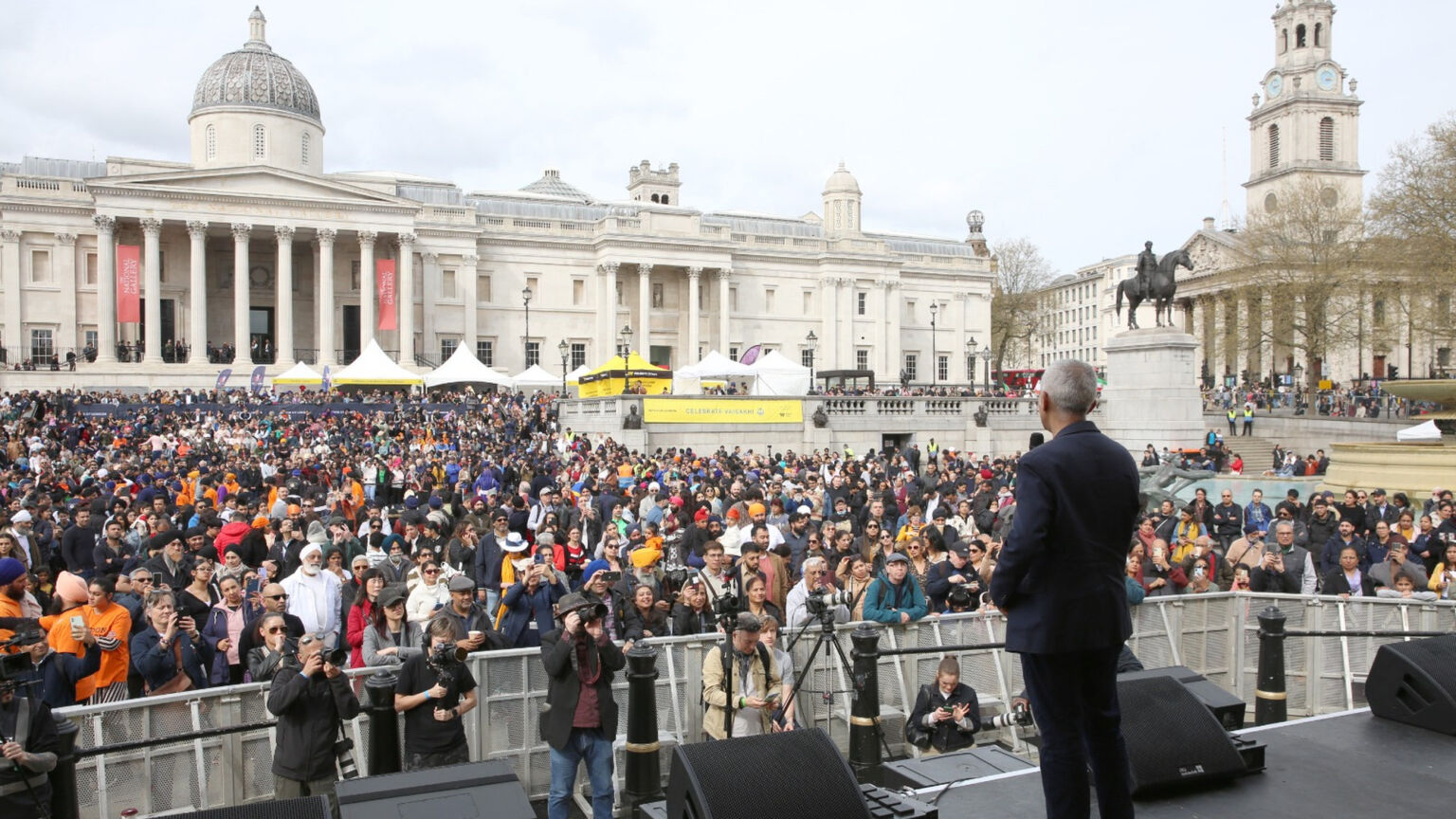
Whenever a public figure dares to criticise Muslims or Islam, you can bet that they will be met with two emotive responses. The first is that they will be accused of racism or ‘Islamophobia’. This option was the one taken by the UK prime minister last week when reacting to comments by the shadow justice secretary, Nick Timothy, who had described a mass act of worship in central London as an ‘act of domination’. Rather than address the substance of Timothy’s claim, Keir Starmer condemned the ‘utterly appalling’ remarks, suggesting that Kemi Badenoch and her Conservative Party had a ‘problem with Muslims’. In effect, he was smearing them as bigots.
The second response – equally evasive – is to indulge in deflective ‘whataboutery’. This was the path chosen by attorney general Lord Hermer. ‘Timothy and Badenoch’s comments beg the question – would they have a problem if I, as a Jewish man, were praying in public?’, he asked. ‘Or is it just Muslim prayer they find offensive, and contrary to “British values”?’ This line of inquiry was repeated and expanded ad nauseam, with many deeming it brilliant and original to hypothesise whether we should also be unsettled by Christians, Sikhs and Hindus engaging in mass worship on Trafalgar Square.
Of course, both responses betray an ignorance of the nature of religion. They fail to address the central concern raised by Timothy: that a variety of Islam practised in Britain today has become distinctly aggressive. The reason public displays of Christianity raise no eyebrows is because Christianity has been intrinsic to these islands for a millennium and a half, and the leaders of England’s established Church largely refrain from seeking the mass conversion of the country’s heathens. Moreover, Christianity, unlike Islam, does not divide the world into two spheres: that in which it reigns (The House of Peace) and that where it does not yet reign (The House of War). To put it more starkly, people simply aren’t worried about Christian, Jewish, Sikh or Hindu suicide bombers.
Shallow secularists are prone to make the argument that ‘You wouldn’t ban [insert other religion here]’ because they believe all religions are basically interchangeable. They have no understanding of differing religious systems or how they affect the behaviour of their adherents. As Jake Wallis Simons reminded us on spiked last week, Islam consists of many denominations, some more liberal than others. And it remains an uncomfortable truth that the Islam that prevails in Britain today is not a version that enthusiastically embraces difference. It is neither as eager to reciprocate tolerance, nor to ‘celebrate diversity’, as we might like.
This is something that lazy agnostics, timorous liberals and lofty humanists never seem to comprehend. Belligerent varieties of religions are just as dangerous as any political ideology that seeks power through domination. No ideology, sacred or profane, automatically deserves ‘respect’.
Jürgen Habermas: a free-thinker to the end
In the latter part of his life, Jürgen Habermas, the philosopher and polymath who died this month aged 96, was known in political circles as an enthusiastic champion of the European Union. This was perhaps inevitable, given that he had lived through the Nazi regime as a boy, and that like many left-wingers of the postwar generation, he believed a supranational European institution was the best way to dampen or ultimately transcend the poisonous virus of nationalism.
What was less well known was that he had become critical of the EU project in recent years. In 2015, in the midst of the Greek debt crisis, when asked by the Guardian if he agreed that his vision of a united Europe would end up actually abolishing democracy rather than saving it, he agreed. Habermas argued that EU institutions such as the European Council, European Commission and European Central Bank were pushing a programme of ‘technocratic hollowing out of democracy’, a result of their having adopted a ‘neoliberal pattern of market-deregulation policies’.
This was an argument left-wingers used to make more commonly, and less fearfully, when opposing what would become the EU. The Labour Party’s Tony Benn often said as much. So it shouldn’t surprise us that Habermas also came to express his misgivings along the same lines. It was consistent, too, with his philosophy. He consistently emphasised the need for open dialogue, rational debate and the unemotive pursuit of truth.
Lazy writing leads to lazy thinking
When faced with arguments they don’t like or can’t rebut, politicians usually seek refuge in reassuring clichés and weedy platitudes. We witnessed this in the collective response to Nick Timothy’s remarks by the Labour outrage machine, during which Keir Starmer hit the stock-phrase jackpot with his assertion that Islamic prayers in Trafalgar Square epitomised ‘the great strength of our diverse city and country’.
It is customary on these occasions to quote George Orwell, who in his 1946 essay, ‘Politics and the English Language’, condemned clichés as ‘prefabricated’ phrases used as substitutes for original thought. Yet as I discovered only recently, French novelist Gustave Flaubert drew an even firmer line almost a century before Orwell. Flaubert was so obsessed by what he saw as the corruption of the French language that in his 1857 classic, Madame Bovary, he placed in italics the lazy, stale phrases and clichés uttered by the protagonists that had been debased through overuse. As one ominous passage reads: ‘Emma sought to find out exactly what was meant in real life by the words felicity, passion and rapture, which had seemed so fine on the pages of the books.’
I get a similarly unsettling sensation whenever I hear vibrant, diverse, divisive, racist, systemic, structural and hate. Such second-hand, hollowed-out language seems to signify one thing only: that its users aren’t thinking for themselves at all.

 lead image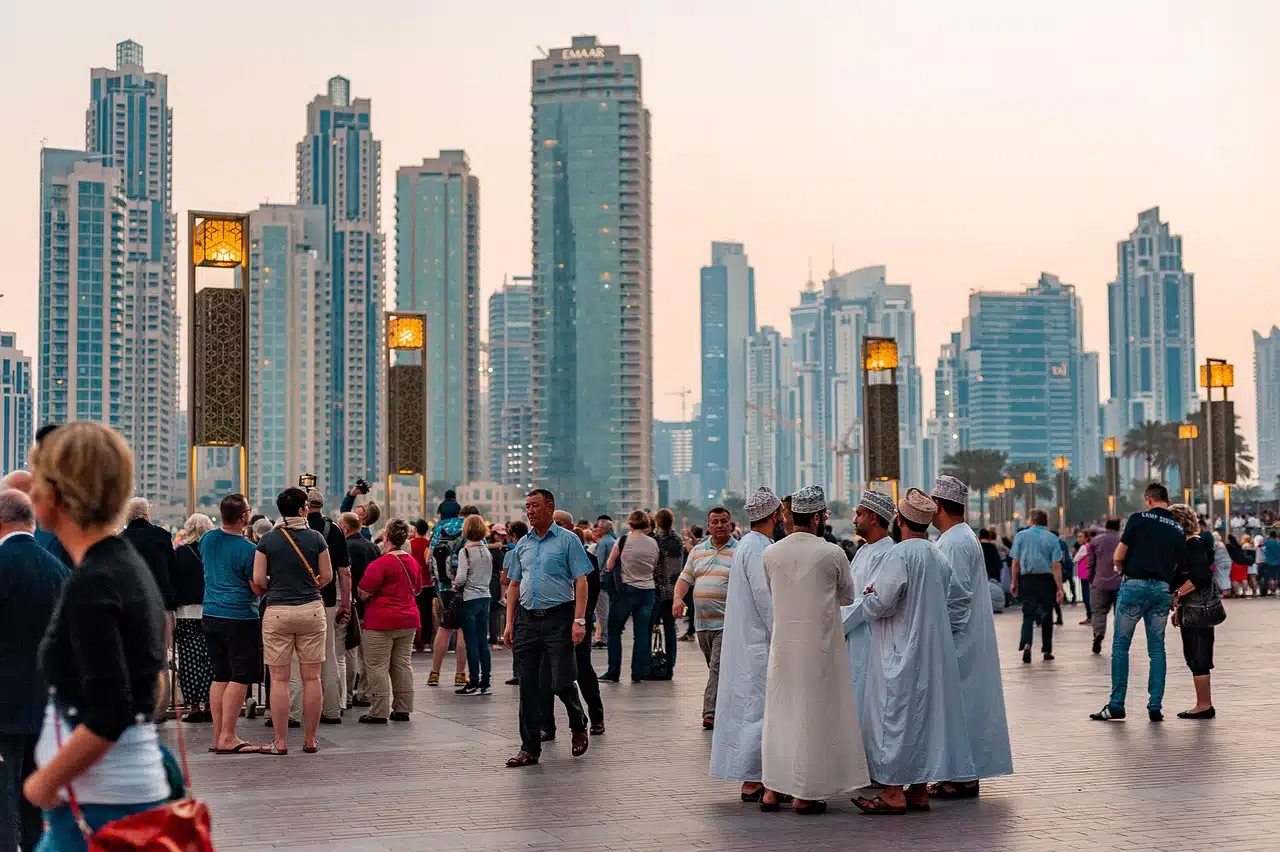
Dubai’s luxury property market is evolving rapidly, with global investors showing growing interest in homes that offer more than premium finishes and prestigious addresses. One of the clearest signs of this shift is the rising demand for branded villa communities, which combine private residential living with the design identity, service culture and lifestyle appeal of internationally recognised luxury names. These developments are becoming increasingly attractive to high-net-worth buyers who want exclusivity, strong long-term positioning and a more curated ownership experience. In a market known for innovation and ambition, branded villa communities are emerging as a standout segment because they align with what modern luxury investors value most: privacy, prestige, convenience and a distinctive sense of place.
A More Refined Definition of Luxury
Luxury in Dubai is no longer defined by size alone. Today’s premium buyer is more interested in the full living experience, including architecture, landscaping, wellness amenities, privacy and service standards. Branded villa communities respond to this shift by offering homes that feel intentionally designed around a lifestyle rather than simply built to a luxury specification. The presence of a recognised brand can influence everything from interiors and clubhouse design to concierge services and resident experiences, giving the development a stronger identity in the market. This matters to global investors because it creates a product that feels more complete, more memorable and more competitive than a conventional standalone villa in an upscale district.
Why Global Investors Are Paying Closer Attention
International investors are increasingly drawn to branded villa communities because they reduce uncertainty in a foreign market. A well-known brand can offer reassurance about the quality of planning, design execution, maintenance standards and overall positioning, which is especially valuable for buyers who may not be deeply familiar with every sub-community in Dubai. Beyond that, these developments often have a clearer narrative, making them easier to understand and more appealing from both an emotional and investment perspective. For many overseas buyers, the attraction lies in owning a luxury asset that carries a recognisable standard and can be more easily differentiated in a competitive market where prestige and perception play an important role.
Prestige Has Become Part of the Investment Case
Prestige has always influenced buying decisions in the luxury segment, but branded villa communities turn prestige into a more structured value proposition. Buyers are not just purchasing a large home in an attractive location; they are buying into a branded environment that signals exclusivity, quality and status. This symbolic value matters because it helps the asset stand out among other high-end properties and can strengthen its appeal at the point of resale. In Dubai, where premium supply continues to expand, product differentiation has become essential, and branded villas benefit from a clearer identity than many conventional luxury homes. That stronger positioning can make them more appealing to both current buyers and future purchasers.
Lifestyle-Led Demand Is Reshaping Luxury Buying
A major reason for the growth of branded villa communities is that luxury real estate decisions are becoming increasingly lifestyle-led. Buyers still care about capital appreciation and prime locations, but they are also placing more emphasis on wellness, privacy, service, security and the overall atmosphere of the community. The home is now judged as much by the environment it creates as by its physical specifications. For instance, the sustained demand for villas in Palm Jumeirah highlights how strongly luxury buyers continue to value beachfront privacy, iconic views and prime residential prestige. These same factors are also supporting the rise of branded villa communities, which package similar lifestyle benefits within a more structured and intentionally curated living environment. Interested investors can search for Palm Jumeirah villas on Bayut, a leading property portal in the UAE, to explore a wide variety of luxury residences.
Scarcity Strengthens Long-Term Appeal
Scarcity remains one of the most important drivers of value in the prime residential segment, and branded villa communities benefit strongly from limited supply. These projects are often launched in carefully controlled phases with fewer homes, lower density planning, larger plots and more private surroundings, making them feel distinctly exclusive. For affluent buyers, that rarity enhances desirability, while for investors it supports stronger long-term positioning by reducing direct competition. In a market where new luxury developments are regularly introduced, homes that feel harder to replicate tend to hold attention more effectively. A branded villa community can therefore offer both physical scarcity and conceptual scarcity, which together make it a more defensible luxury asset over time.
Service Standards Add Another Layer of Value
One of the clearest advantages of branded villa communities is the level of service they can provide. These developments often go beyond the standard amenities found in traditional gated neighbourhoods by incorporating concierge support, wellness facilities, private club environments, enhanced security and professionally managed shared spaces. This service dimension is especially attractive to international buyers who may not live in Dubai throughout the year and want their homes to remain well maintained and ready for use. For second-home owners and seasonal residents, the convenience of a professionally managed environment adds real value because it makes ownership simpler and more enjoyable. In this sense, branded villas appeal not only because of prestige, but because they deliver a more seamless luxury experience.
Golf and Resort Communities Reflect the Trend
The popularity of branded villa communities also reflects the broader strength of lifestyle-oriented luxury districts in Dubai, particularly golf and resort-style environments. Buyers in this segment consistently respond to low-density settings, landscaped surroundings and communities that offer more tranquillity and privacy than dense urban locations. For instance, the continued appeal of villas for sale in Jumeirah Golf Estates shows how strongly investors respond to landscaped surroundings, premium community planning and a lifestyle-led setting. These same qualities help explain why branded villa communities are becoming more desirable, since they similarly emphasise environment, exclusivity and a fully developed lifestyle concept rather than just the home itself.
Why Dubai Is the Perfect Market for Branded Villas
Dubai is particularly well suited to the growth of branded villa communities because it already attracts the exact buyer profile these developments target. High-net-worth individuals are drawn to the emirate for its safety, infrastructure, global connectivity, tax-efficient environment and reputation for luxury living, while the city itself has built a strong international image around ambition, design and premium experiences. This creates the perfect setting for branded residential concepts, especially in the villa segment where privacy and space are highly valued. Branded communities fit naturally into Dubai’s wider luxury narrative because they combine what the city already offers with a more structured, globally recognisable standard of upscale living that resonates strongly with international wealth.
The Long Term Appeal of Branded Villa Communities
From an investment perspective, branded villa communities align closely with where luxury demand is heading. Buyers are becoming more selective, more lifestyle-conscious and more interested in homes that combine privacy, design quality, service and identity in one product. Branded villas meet those expectations particularly well, which is why they are increasingly viewed as more than a short-term trend. They appeal to a wide pool of affluent end-users, second-home buyers and overseas investors, while also offering stronger differentiation in the resale market. As Dubai continues to attract global capital and expand its premium housing stock, branded villa communities are likely to remain one of the most compelling opportunities in the high-end segment because they reflect the future of luxury living rather than the past.
Frequently Asked Questions
Are branded villa communities in Dubai usually freehold?
Yes, many branded villa communities in Dubai are offered as freehold properties, especially when they are located in designated investment zones that allow foreign ownership.
Do branded villa communities offer better rental appeal?
They can, particularly among high-net-worth tenants who value privacy, prestige, premium amenities and professionally managed living environments.
Are branded villa communities mostly off-plan or ready?
Many branded villa projects in Dubai are launched as off-plan developments, although the market also includes ready luxury villas in established high-end communities.
Do buyers pay a premium for branded villas?
Yes, branded villas often command a premium because buyers are paying for brand association, curated design, elevated services and a more exclusive lifestyle offering.
Are branded villa communities a good option for second-home ownership?
Yes, they are often well suited to second-home buyers because they offer strong management standards, convenience, security and a more seamless ownership experience.
What factors should investors compare before buying in a branded villa community?
Investors should compare location, brand reputation, developer track record, community amenities, plot size, service model, payment plan and long-term resale potential before making a decision.

Keir Starmer is busy trotting out another set of excuses for yet another political scandal. Morgan McSweeney is the ex-Downing Street chief of staff who resigned in disgrace in February this year. McSweeney resigned to take the fall for the hiring of Peter Mandelson – a man that Starmer knew was a close associate of the international paedophile Jeffrey Epstein. Now, it’s emerged that McSweeney conveniently had his phone stolen not long after Mandelson got the boot.
Given the timeline, many have accused McSweeney of faking the incident to destroy any messages between himself and Mandelson. Given what we know about the ‘theft’, this is arguably more plausible than the official narrative, and yet Starmer has responded as follows:
Q: Critics say the theft and botched investigation of Morgan McSweeney’s phone stinks of a cover-up. Can you understand why people are suspicious about this phone being stolen just as the Mandelson scandal was unfolding? https://t.co/nDvTL34qZj
— Beth Rigby (@BethRigby) March 26, 2026
Is it really any more “far fetched” than what we know for certain – i.e. that Starmer hired Mandelson in the first place despite everything he knew about the man?
Starmer losing control
At this point, we know McSweeney reported his phone stolen in October 2025 – the month after Mandelson got shitcanned from his position as ambassador to the US. In what the BBC described as an “unusual step”, the police have released a full transcript of the call between McSweeney and the police:
Call handler: Police, what’s your emergency?
Caller: Oh, hello, someone just robbed my phone.
Call handler: Did they actually take it from you just now?
Caller: Yeah
Call handler: How did they get away?
Caller: So he’s on a bike. He’s come onto the pavement to grab my phone and cycled off on a bike.
Call handler: And where did this happen?
Caller: It happened in Belgrave Street* in Westminster.
*We now know that the incident took place in Belgrave Road, Westminster. The call handler inputs Belgrave Street and it provides a matching road name in Tower Hamlets, which is what is recorded in error. There are further references to locations near to Belgrave Street in Tower Hamlets later in the call, which compounds the issue.
Call handler: And whose phone are you using now?
Caller: I’ve got two phones. I’m using my personal one. That was my work one.
Call handler: Can I take the phone number for this phone you’re calling on?
Caller: Yeah, 07XXXXXXXXX.
Call handler: Thank you. And you said Belgrave Street, yeah?
Caller: Yeah, just kind of going back to the location.
Call handler: Don’t put yourself at any risk. It’s not worth it over a phone. I appreciate it’s frustrating.
Call handler: And which way did they go towards, this suspect on a bike?
Caller: He went. He travels north. I saw him for a few blocks.
Call handler: So where were you when you last saw him? Have you got any idea?
Caller: Yeah, so.
Call handler: Did you get up to Stepney?
Caller: Let me tell you where I got to. I’m just going back to where I can.
Caller: So he turned right. Sorry, he turned left. There’s a park on top of the road and he turned left there.
Call handler: Stepney Green Park, ok.
Caller: Yeah. He turned left there.
Call handler: Can you remember anything about his appearance?
Caller: Yeah, he was young. He was a black guy. He was on a bike.
Call handler: About how young?
Call handler: Just a guess.
Caller: Teens. Late teens.
Call handler: Was he skinny, tall, any idea?
Caller: Yeah. He was slim. He was about average height.
Call handler: Was it an e bike or pedal bike?
Caller: Pedal bike.
Call handler: Have you got a tracker on the phone at all?
Caller: I do. It’s a government phone.
Call handler: And it’s your work phone. What kind of phone is it?
Caller: It’s an iPhone.
Call handler: Do you know what model?
Caller: I don’t.
[PAUSE]
Call handler: Right, just bear with me a second.
Call handler: We would normally deploy to see you but at the moment, we are having extreme demand on police officers. So, I don’t know if you would prefer to make your way home and make a crime report over the phone or online tomorrow. I mean, I can complete one with you now. I can pass this down, you can wait, but I honestly do not know how long you’ll be waiting,
Caller: If I could complete it now that would be good.
Call handler: Ok.
Call handler: What’s your name, please?
Caller: My name is XXXXXXXXXX.
Call handler: XXXXXXXXXX? (repeats name back)
Caller: Yeah.
Call handler: And your date of birth, please?
Caller: It’s XXXXXX
Call handler: Is XXXXXXXXX (surname) all one word?
Caller: Yeah, (spells surname).
Call handler: And what’s your home address?
Caller: (Provides non-London address)
Call handler: So you live in XXXXXX?
Caller: Yeah.
Call handler: Are you staying anywhere while you’re in London?
Caller: Yeah.
Call handler: Sorry, it just takes a little bit longer to deal with an address outside of the Met. I do apologise.
Caller: It’s ok.
Call handler: And may I take an email for you please (name)?
Caller: Yeah, it’s [email protected] (personal email address)
Call handler: You’ll get a copy of the preliminary crime report through to that email.
Call handler: How would you like to be contacted by an investigating officer? By email or phone?
Caller: Phone, please. Or either, I’m not fussed.
Call handler: Have you got any finance apps on the phone?
Caller: No.
Call handler: You’ll need to change any passwords for any logins you do have on the phone.
Caller: Yeah, okay.
Call handler: You’re not vulnerable in any way. Are you?
Caller: No I’m not.
Call handler: Do you believe there was any CCTV near where the incident happened?
Caller: Might be. [Inaudible] away from location.
Call handler: Don’t worry. Don’t return. No, I’ll just put at the moment unknown. And obviously, if we find out more, we find out more.
Call handler: Are you willing to make a statement to support the investigation?
Caller: Definitely.
Call handler: So what time did he actually snatch the phone?
Caller: About two minutes before I rung you and I chased, and then I rang my office to get the phone tracked and then I rang you.
Call handler: Okay, cool. It would have been about 25 past that you were robbed.
Caller: A little before, about 23 minutes past, I think.
Call handler: 23? Little bit before? Okay.
[PAUSE]
Call handler: Just bear with me, I’m just trying to get this system to accept the address. Sorry about this. I won’t keep you much longer.
Call handler: If you do get any tracking updates, what you do is you give us call back if the phone is stationary.
Caller: Yeah.
Call handler: And we can review attending then. We can’t guarantee attending a moving phone at all, but if it’s been stationary for a few…
Call handler: It’s not accepting your address.
Caller: I can give you my London address?
Call handler: It’s alright. I’ve nearly got this to work.
Caller: Okay
Call handler: How long you staying in London?
Caller: So I come to London every week. I work in London.
Call handler: Oh, I see. Okay, that makes sense.
Caller: So I’ll be here till Thursday.
Call handler: Okay.
[PAUSE]
Call handler: As I was trying to say, I’ve got this sorted now, so I’ll be texting you a crime reference number in the next few moments. Along with the crime reference number will be a CHS reference number. If you need to give us a call back, you can call back giving that reference number from any device, and then we’ll be able to link it straight away to your crime report and review deploying. We will need to know a bit more details about the phone itself, so when you’re contacted by the investigating officer, or if you do get tracking details, you can call us back with the IMEI number, and the type of phone that it is that would be super helpful.
Caller: All right, thank you.
Call handler: All right, I’m just about to text you through the crime reference number now.
Caller: Thank you so much. You’ve been really helpful.
Call handler: No worries. All right, (name). You take care now, okay? Bye.
Caller: Bye bye.
If you’re confused as to why the Downing Street chief of staff called the police and not MI6, you’re far from alone. As Sky News reported, McSweeney:
was the prime minister’s chief of staff, so the PM’s most senior political advisor. His phone contained the contact details for and messages with Sir Keir Starmer, the cabinet, and the most senior British officials.
This is information that the foreign intelligence services of adversaries like Russia, China and Iran would be very interested in obtaining.
Why are we keeping James Bond on the payroll if not for instances like this?
It gets worse, too, because McSweeney also left out crucial information in his call to the police.
Starmer steps in
In the video above, Starmer says:
The phone was stolen. It was reported to the police. There’s a transcript of the call in which Morgan McSweeney gives his name, his date of birth, the details of the phone and the police confirm that it was reported.
Unfortunately, there are thefts like this. It was stolen. It was reported at the time, the police have acknowledged and confirmed that … and the idea that somehow everybody could have seen that some time in the future there’d be a request over the phone is, to my mind, a little bit far-fetched.
Starmer leaves out key details here, though:
Labour’s then Chief of Staff Morgan McSweeney gave the police the wrong road – an address in Stepney – and then encouraged them to believe he was indeed in Stepney. And this was a legendarily tech-savvy man who knew his duties to preserve all data on the Government phone? https://t.co/o9FGwtJ8NA
— Joe Rich (@joerichlaw) March 25, 2026
McSweeney also failed to inform the police that he was one of the most important people in the country from a security perspective, and that the loss of his phone could result in an international incident. But yes, as Starmer said, he did at least give his date of birth – so well done for getting that right, Mr McSweeney.
This wasn’t the only way in which shifty Starmer gave a false impression:
And again, Keir Starmer is deliberately trying to misled people. The whole point is that the phone was ‘stolen’ a week AFTER No.10 officials had discussed the possibility of parliament demanding to see the messages. https://t.co/EzQ7hSfjdu
— (((Dan Hodges))) (@DPJHodges) March 26, 2026
As Saul Staniforth highlighted, it’s hard to fathom that McSweeney should have left this to the Metropolitan Police:
Councils have strict protocols around this, so you would think that the government would be the same if not stricter. Unbelievable !
— Bee (@h_bee28788884) March 26, 2026
Others have noted that protocols around this sort of thing are much higher than the government is expecting us to believe:
I’ve now spoken to two former Government Spads. Both were senior, both lost their Government phones. In both cases their first approach was to the Government internal security services, who then brokered a liaison with the Met to ensure the issue was dealt with properly.
— (((Dan Hodges))) (@DPJHodges) March 25, 2026
Crazy! When my laptop was stolen in Oxford Circus while working for UN, police came asap, went through CCTV, identified professional thieves (2 of them) & took me to the police station to file the report. But McSweeney didn’t tell police he advised PM Starmer on his phone.👇 https://t.co/Qcl2yi4qVv
— Jane Samuels (@Jane_Samuels) March 25, 2026
It’s looking so bad for the government that even Labour MPs are calling bullshit:
I don’t believe McSwindle had his iPhone stolen. 🤷🏼♂️
— Karl Turner MP (@KarlTurnerMP) March 25, 2026
Defending the indefensible
Some are defending the government’s limp defence; among them is Huff Post editor Kevin Schofield. Schofield’s defence was so bad that it was quickly torn apart by GB News founder and human whoopee cushion Andrew Neil:
He wasn’t mugged. Even he doesn’t claim that. Making things up to bolster an untenable position is not a good look. Try and come up with something better. https://t.co/jlvuBCrOtb
— Andrew Neil (@afneil) March 25, 2026
Others have highlighted there may be other ways to access the WhatsApp messages between McSweeney and Mandelson, meaning there was no reason for the ex chief of staff to destroy his phone:
Peter Mandelson handed back his government iPhone when he was sacked as US ambassador last September. So presumably some of his WhatsApp conversations with Morgan McSweeney will be available to the government because they will be on an iPhone in their possession https://t.co/I4Xs2lwvWF
— Robert Peston (@Peston) March 25, 2026
Government have already confirmed they have handed all the messages on it to the police.
The medias latest conspiracy theory that Mcsweeney faked a mugging , 6 months previously, and despite police releasing reported theft details, is looking more stupid by the hour. https://t.co/bqjHPBvxOb
— Lou D🌹 🇬🇧 🇺🇦 (@louderry) March 25, 2026
There is a logic to this if all the WhatsApps materialise, but there’s something else to consider; who else was McSweeney communicating with, and what apps did he use to contact them?
Because his phone was ‘stolen’, we may never know.
And let’s be real; this whole affair stinks to high heaven.
Featured image via Sky News

Under-fives should not watch screens for more than an hour a day, Keir Starmer tells parents

China plus One: The Race for Indispensability in a Fragmented World

BTC/USD Analysis: Bitcoin Tests Key Support


-
 Crypto World6 days ago
NIO (NIO) Stock Plunges 6.5% as Shelf Registration Sparks Dilution Worries
-
 NewsBeat2 days ago
Manchester United reach agreement with Casemiro over contract clause amid transfer speculation
-

 Fashion7 days ago
Weekend Open Thread: Adidas – Corporette.com
-

 Politics7 days ago
Jenni Murray, Long-Serving Woman’s Hour Presenter, Dies Aged 75
-

 Crypto World5 days ago
Best Crypto to Buy Now: Strategy Just Spent $1.57 Billion on Bitcoin During Fear While Early Investors Quietly Enter Pepeto for 150x Potential
-

 Crypto World5 days ago
Bitcoin Price News: Bhutan Sells $72 Million in BTC Under Fiscal Pressure, but the Smart Money Entering Pepeto Sees What the Market Does Not
-

 News Videos1 day ago
Parliament publishes latest register of MPs’ financial interests
-

 Sports4 days ago
Remo Stars and Kano Pillars Strengthen Survival Hopes in NPFL
-

 Sports4 days ago
Gary Kirsten Accuses Pakistan Cricket Board Of ‘Interference’, Mohsin Naqvi Responds
-

 Tech4 days ago
Give Your Phone a Huge (and Free) Upgrade by Switching to Another Keyboard
-

 Business5 days ago
No Winner in March 21 Drawing as Prize Rolls to $133 Million for Next
-

 Sports7 days ago
2026 Kentucky Derby horses, odds, futures, preview, date: Expert who nailed 12 Derby-Oaks Doubles enters picks
-

 Tech4 days ago
AI enters the chat: New Seattle dating app relies on tech to facilitate meaningful human connections
-
Business6 days ago
Columbia Sportswear enters $500 million credit agreement with JPMorgan Chase
-

 News Videos4 days ago
Ch 9 Financial Management Part 1 | Detailed One Shot | Class 12 Business Studies Boards 2026
-

 Tech5 days ago
Today’s NYT Connections Hints, Answers for March 22 #1015
-

 Business12 hours ago
Instagram, YouTube Found Responsible for Teen’s Mental Health Struggle in Historic Ruling
-
 Crypto World7 days ago
Small-cap Russell 2000 enters correction territory
-

 Business5 days ago
Will Duke Basketball Win It All? Duke Basketball Enters Second Round as Third Favorite to Claim NCAA Title
-

 Sports4 days ago
2026 Kentucky Derby horses, odds, futures, preview, date: Expert who hit 12 Derby-Oaks Doubles enters picks
You must be logged in to post a comment Login