
Politics
Newslinks for Monday 9th February 2026

How long can Starmer cling on after chief of staff quits?
“Keir Starmer’s premiership was in freefall on Sunday after his right-hand man walked the plank over the Mandelson scandal. Downing Street chief of staff Morgan McSweeney quit over his part in the disastrous appointment of Peter Mandelson as US ambassador. Mr McSweeney said he took ‘full responsibility’ for the decision to send the disgraced peer to Washington, despite knowing he had stood by Jeffrey Epstein after the depraved financier was jailed for child-sex offences. But Labour MPs are openly speculating about how long Sir Keir can continue without the man who masterminded his rise to power and who was seen as ‘the PM’s brain’. Left-wingers called for the PM to resign, with former campaigns chief Jon Trickett warning: ‘The buck stops at the top.’… Kemi Badenoch welcomed Mr McSweeney’s resignation, saying it was ‘about time’. But the Tory leader said the PM ultimately had to ‘take responsibility’ for agreeing an appointment that has triggered a wave of public revulsion. In a post on X, she said: ‘Once again with this PM it’s somebody else’s fault: “Mandelson lied to me” or “Morgan advised me”. Keir Starmer has to take responsibility for his own terrible decisions. But he never does.’ Mr McSweeney is the second chief of staff to depart during Sir Keir’s turbulent reign, following the sacking of Sue Gray just months after the 2024 election.” – Daily Mail
- Morgan McSweeney resigns as Starmer’s chief of staff — as it happened – The Times
- Morgan McSweeney resignation ignites Labour civil war as furious allies say aide was made scapegoat in bid to save PM – The Sun
- After McSweeney quits, his allies point finger at Powell – Daily Telegraph
- ‘Dead man walking’: No 10 chief’s resignation may be too late to save Starmer – The i
Comment:
- The fall of the house of Blair is now almost complete – Tim Stanley, Daily Telegraph
- Morgan McSweeney’s resignation won’t save Starmer – Anne McElvoy, The i
- Keir Starmer left in purgatory by Morgan McSweeney’s exit – Trevor Phillips, The Times
- If McSweeney had to go over Mandelson, so too must Starmer – Tom Harris, Daily Telegraph
- What links Jeffrey Epstein and Keir Starmer’s government? A thick seam of contempt – Nesrine Malik, The Guardian
> Yesterday:
Jockeying for Labour leadership steps up a gear with Streeting and Rayner
“MPs are secretly planning to lend staff to work on a leadership campaign by Wes Streeting in anticipation of a formal move to dislodge Sir Keir Starmer as prime minister. Allies of the health secretary have held talks with their parliamentary officials and suggested they hold back annual leave in preparation for a challenge after the local elections in May. Streeting has remained publicly loyal to Starmer and disavowed briefings in his name. However, in private remarks at a fundraiser, he said Labour must “meet the moment” and avoid voters thinking that “things can only get worse”. Labour rebels hoping to install Streeting as prime minister have continued quietly preparing for a contest, not wanting to be seen to directly agitate against Starmer in the run-up to the Gorton & Denton by-election on February 26. But one Labour MP said: “I’ve already told my staff, ‘If you want to take annual leave later in the year to go and work on Wes’s leadership campaign, I’d be fully supportive of that’.” Another said: “These conversations are already happening, because even though colleagues have accepted there won’t be a change before May, they want Wes to be ready as soon as possible after.” Streeting’s allies think he should move swiftly in the event of a poor set of election results for Starmer. They fear that a longer wait will only benefit Angela Rayner, who stepped down as deputy prime minister last September over unpaid stamp duty still unresolved with HMRC.” – The Times
- Angela Rayner offers help to speed up HMRC inquiry into tax affairs – The Times
- Keir Starmer facing day of reckoning as Angela Rayner and Wes Streeting ‘line up leadership bids’ – GBNews
- Hair apparent: Tipped for the top Angela Rayner gets haircut as Keir Starmer’s No 10 operation implodes – Daily Mail
Comment:
- Why Angela Rayner would be the most abysmal PM of my lifetime – Stephen Glover, Daily Mail
- Angela Rayner puts UK on the brink – one word could detonate full-blown financial crisis – Harvey Jones, Daily Express
Pro-democracy Briton Jimmy Lai sentenced to 20 years in Hong Kong
“The UK foreign secretary has said a jail term handed down by a Hong Kong court to pro-democracy campaigner Jimmy Lai is “tantamount to a life sentence”. The media tycoon and British citizen was found guilty of two counts of conspiracy to collude with foreign forces and one count of publishing seditious materials in December last year. The 78-year-old had denied all the charges against him, saying in court he was a “political prisoner” facing persecution from Beijing. Foreign Secretary Yvette Cooper agreed with that assessment and, in a statement, called the sentence a “politically motivated prosecution” aimed at Mr Lai “for exercising his right to freedom of expression”… Lai, who founded the now-defunct pro-democracy newspaper Apple Daily, was arrested in August 2020 after China imposed a national security law following massive anti-government protests in Hong Kong. The longstanding critic of the Chinese Communist Party had previously been sentenced for several lesser offences during his five years in prison. Lai has spent more than 1,800 days in solitary confinement. His family say his health has worsened as a result and that he suffers from diabetes, high blood pressure and heart palpitations. – Sky News
- Jimmy Lai jailed for 20 years in Hong Kong – Daily Telegraph
- Jimmy Lai gets prison term ‘tantamount to a life sentence’ – The Independent
- Jimmy Lai, Hong Kong pro-democracy figure, sentenced to 20 years in prison for national security offences – The Guardian
- Hong Kong court jails pro-democracy media tycoon Jimmy Lai for 20 years – BBC News
News in brief:
- Morgan McSweeney’s resignation won’t save Starmer – Tim Shipman, The Spectator
- Call for the King: Why the Restoration and Renewal Programme is mad, bad, dangerous for Parliament and must be stopped – Nicholas Boys Smith, The Critic
- McSweeney, Mandelson and the stain of New Labour – Neal Lawson, The New Statesman
- MAGA will win the media war: The European insurrection is doomed – UnHerd
- Peter Mandelson: The anatomy of a fall – Eliot Wilson, CityAM

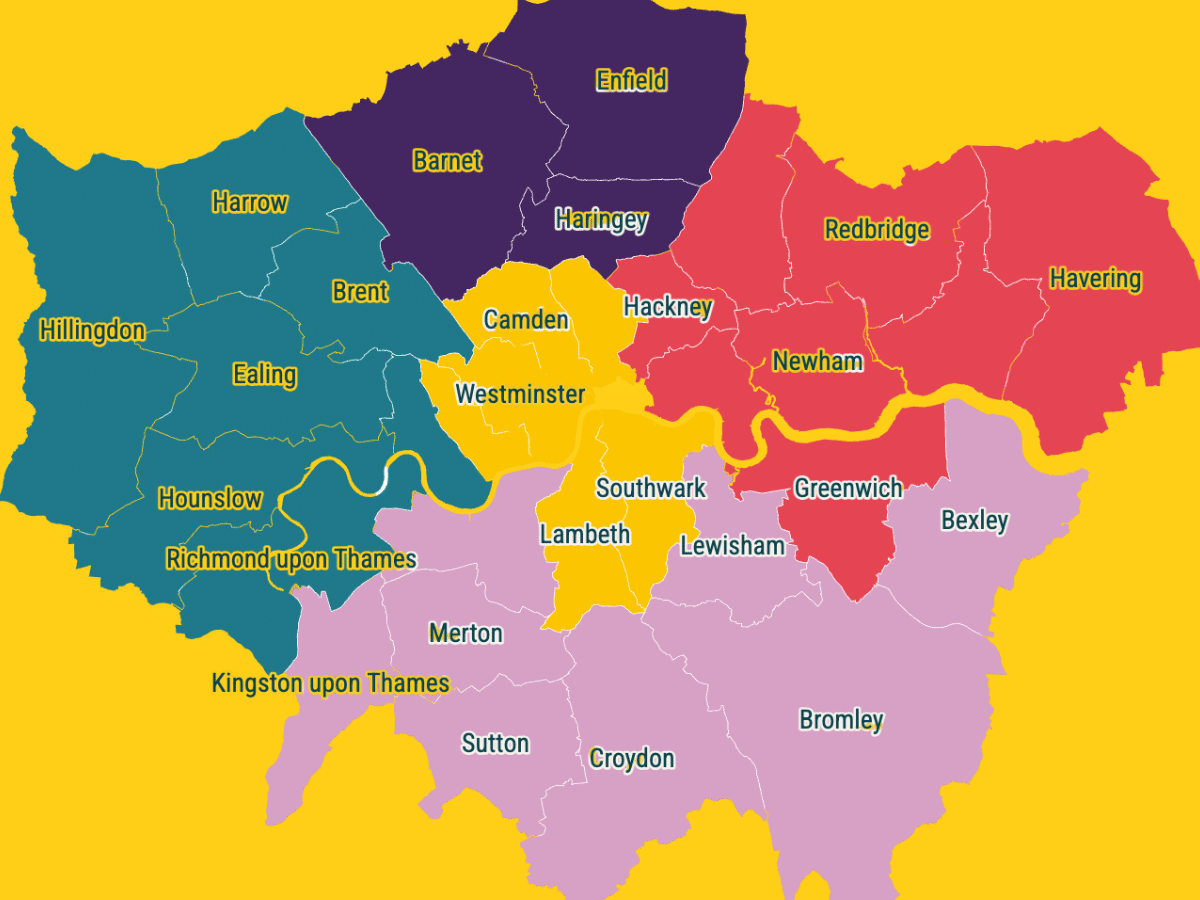
It’s obvious why London has the highest level of child poverty in the UK. Newly published data has revealed that it is one of the most economically unequal places in the country.
London poverty
Poverty levels are high in the capital, with a reported 38% of children living in relative poverty compared to 27% in the rest of the UK.
Across the North West and the Midlands, 32% of children live in poverty. In the North East the figure is closer to 30%, while in the South East it is the lowest at 21%.
Following immense pressure, only now is Labour doing something about this. Still, they appear to be reversing a Conservative policy—that’s the two child benefit cap which exacerbated child poverty levels.
Low-income families starting from 6 April will be entitled to equal universal credit payments for each of their children living in the household.
After suspending seven Labour MPs who voted against the cap, prime minister Keir Starmer is making another U-turn—in part spurred by the rise of the Greens. It seems that, for Labour, punishing children for being born is more of an electoral issue than an ethical one. The policy change makes further sense, given that the childbearing rate is just 1.4 rather than the 2.1 needed to replace the population.
In two London boroughs—Tower Hamlets and Hackney—more than half of the children live in poverty.
London inequality
The capital also has the highest level of economic inequality in the country. Money equates to resources and expertise, which are finite in some instances. It’s worth noting that the current system also upholds artificial scarcity in the instances where the service or product is not finite. These elites restrict access to resources and expertise in a similar manner to JSTOR’s academic gatekeeping.
In London, the richest 10% receive 11 times more income than the less well-off 90%. And that’s before considering higher wealth inequality.
Speaking to South West Londoner, Kelly Hobbs, 50, a single mother in Sutton said:
I’ve had to look into my finances and do huge cutbacks just to be able to afford to live.
When it comes to finite resources and expertise, people can only be rich if others are not well off. That’s why it’s obvious that London, while harbouring more of the less well off, is also the most economically unequal place. It doesn’t mean everything needs to be completely economically equal, just that working for a living if possible should guarantee you a moderately high standard of living.
With the possibilities of artificial intelligence (AI), the UK can increasingly remove the need for labour, through automated services where enjoyable work, creativity, and leisure time take its place. Until then, we need to address the rising levels of economic inequality in the country.
Featured image via Trust for London

A football fan has died inside Mexico City’s Estadio Banorte — a World Cup venue — after falling from a VIP seating area shortly before the start of the friendly match between Mexico and Portugal.
The tragic incident happened on Saturday evening at the extensively renovated Estadio Banorte, also known as the Azteca Stadium, on the same day as the deadline to declare its readiness for the World Cup.
The tragedy has casts a shadow over the stadium’s reopening and raises questions about safety as the countdown begins to highly anticipated global sports event.
Authorities in Mexico said the man was intoxicated and attempted to jump from the second tier of the stands to the first tier by climbing the stadium’s external structure, before losing his balance and falling to the ground, Reuters reported. Sadly, he died at the scene.
In a statement on X, the Mexico City Attorney General’s Office, said:
According to initial reports, the incident took place in the suite area of the venue, from where the person fell to the parking area, resulting in their death.
The Mexico City Prosecutor’s Office will continue the investigations thoroughly and will keep the public informed as relevant developments are obtained.
The incident comes as the stadium prepares to host the World Cup opening ceremony on 11 June when it will make history as the first stadium to host matches in three different editions of the World Cup.
Featured image via Estadio Banorte
The most striking thing in those leaked WhatsApp messages from the Greens for Palestine group was the activists’ searing irritation at having to say ‘Zionists’ rather than ‘Jews’. I’m sick of it, said one. The monsters who laid waste to Gaza ‘were Jews’, the activist said. ‘They were Jewish supremacists’, that lowest, most vile category of human being, which loves to ‘murder, bomb and starve children’. We have been ‘scared into using the word Zionists because of the fear of being labelled anti-Semites’, said these digital lowlifes.
It gets worse. Not only were these Green Party activists hell-bent on truthfully naming the object of their bilious hatred – Jews – they also wanted to preach to the world what a demonic people these Jews are. These supremacists, these slayers of innocents, are ‘an abomination to this planet’, said one.
The 1930s card is played way too often these days. But I honestly cannot recall the last time such Nazi-level bile was uncovered in a mainstream political party in the UK. Greens for Palestine is a faction in the Green Party of England and Wales, which is led by Zack Polanski. The party is in the ascendancy, building an electoral base from that unholiest alliance of bourgeois genderfluids and Gaza-obsessed Muslim conservatives. And now we know it has within its ranks activists who look upon the Jews as a uniquely wicked people and a pox on the planet.
They lie too, these ‘abominable’ creatures. The Green activists flirted with the idea, rife in the digital sewers of Israelophobia, that the burning of the four Hatzola ambulances in Golders Green in London last week might have been a ‘false flag’. That is, the Jews did it to themselves for moral advantage. A Green candidate in the upcoming local elections in England said there is no doubt the attack was an ‘inside job’.
Tellingly, the WhatsApping activists warned each other to watch their words. Our enemies will try to ‘bait us into making statements emotionally’ so that they can ‘say that we are a bunch of unpleasant, vengeful anti-Semites’, one said. ‘Don’t take the bait!’ Can we speak plainly? If you need to remind yourself not to have an ‘emotional’ outburst that might come across as anti-Semitic, then you might well be anti-Semitic. I’m old enough to remember when being anti-racist meant challenging racism, not keeping a lid on your own racism so that no one will find out what a piece of shit you are.
Of course, that’s not how these activists see it. Remember, said one, ‘our cause is a righteous one – we are the good guys’. You know what? Every hater of Jews in history thought this. From the medieval mobs that hunted Jews for ‘killing Christian children’ to the fascists who exterminated Jews for being a typhus-like threat to the Aryan race to the frothing Israelophobes who devote themselves to the destruction of the abominable homeland of this abominable people – all thought they were serving a great, high cause. A burning, untameable, wholly misplaced sense of righteousness lies at the rotten heart of every anti-Semitic crusade.
As rancid as that digital chat was, the Green Party’s response to it was worse. Where was Zack Polanski in the hours after this story broke in the Telegraph? Dad-dancing on the stage in Trafalgar Square at that orgy of bourgeois smugness, the Together Alliance’s ‘march against the far right’. The future satirists of our political moment will be so spoilt for content. They will scarcely believe that a party leader gyrated with BDSM fellas to prove his hatred of ‘the fash’ and yet had not a word to say about the fascist-style banter in his own ranks.
Actually, it was even worse than that. Over the weekend, Polanski aimed his ire not at those Green activists spouting Jew hate on WhatsApp but at a Jewish journalist who had the temerity to interview members of his family about the Green Party’s possible adoption of a ‘Zionism is racism’ policy. Polanski himself is Jewish and the fine journalist Nicole Lampert found that some of his relatives think he is taking the Greens in a very dark direction. They said it would be devastating for Britain’s Jews if the Greens decreed that ‘Zionism is racism’ – a policy they didn’t get around to discussing in the end at their party conference this weekend. Polanski accused Lampert of ‘parasitic behaviour’ – oof – and she swiftly found herself on the receiving end of a shitshow of hate from all those ‘good guys’.
So, a recap. Green activists referred to Jews as an ‘abomination to this planet’. The Green Party is considering adopting a policy singling out Jewish nationalism as racist. Polanski called a Jewish journalist ‘parasitic’. And, going back further, the Greens’ deputy leader, Mothin Ali, made excuses for the anti-Semitic barbarism of 7 October 2023, as did other Greens. Can we say it now – that the Green Party has a very serious problem with that most ancient of bigotries?
The Israelophobic left loves to say: ‘But Polanski is a Jew! How can you say the Greens have a problem with Jews?’ Here I will merely cite the words of Ms Lampert, who has been fighting the Jews’ corner in British journalism for many years. Polanski uses his Jewish heritage, she wrote in the Telegraph, to ‘kosherise the rampant Jew hatred in the Greens’. It’s a devastating line, and one it is increasingly hard to disagree with: that Polanski’s historic role is to provide the middle-class adherents to the new Socialism of Fools with a get-out-of-jail card. They point to his Jewishness as proof of their righteousness even as they engage in truly hateful behaviour against that ‘abominable’ people.
‘We’re not anti-Semitic, we’re anti-Zionist’, they’ll say. The irritation of Greens for Palestine at having to say Zionist rather than Jew surely explodes that crap once and for all. But more to the point, what do people mean when they say they’re anti-Zionist, not anti-Semitic? All I hear is: ‘I don’t hate Jews, I just want to deprive them of a right enjoyed by every other people and bring about the destruction of their homeland so that they will once again be scattered across the Earth.’
I’m sick of pussyfooting around this: if you dream of the Jewish nation’s destruction, and chant for the death of Jewish soldiers, and demonise Jewish nationalism as uniquely barbarous, then you have a problem with Jews. It might take 10 years, maybe 30, perhaps longer, but I am confident we will one day look back at the people who said, ‘I’m an anti-Zionist’, in the same way we look at those who said, ‘Round up the Jews’.
Brendan O’Neill is spiked’s chief political writer and host of the spiked podcast, The Brendan O’Neill Show. Subscribe to the podcast here. His latest book – After the Pogrom: 7 October, Israel and the Crisis of Civilisation – is available to order on Amazon UK and Amazon US now. And find Brendan on Instagram: @burntoakboy.


Donald Trump boasted that Saudi Crown Prince Mohammed bin Salman (MBS) is “kissing my ass” over America’s apparent economic rebound, a boast that seemingly doubled as both a threat and a plea for affection. Meanwhile, Narendra Modi thanked the same Crown Prince for supporting Indian workers in Saudi Arabia, a remarkable claim given the ILO complaints over migrant labour conditions.
Trump claimed MBS was impressed by America’s “hot” economy under his leadership at a speech on Friday at the Future Investment Initiative (FII) Institute in Miami.
“One year ago, you were a dead country,” Trump quoted the Crown Prince as saying. “Now you’re the hottest country anywhere in the world.”
Trump boasted:
He [MBS] didn’t think this was going to happen. He didn’t think he’d be kissing my ass.
He followed up by saying:
Now he has to be nice to me. You tell him he’d better be nice to me.
Trump chats shit
Trump also contrasted Saudi Arabia with NATO when talking about his illegal war on Iran. He said:
I want to thank the entire Kingdom of Saudi Arabia… Unlike NATO, Saudi Arabia fought, Qatar fought, UAE fought.
During this rant against NATO, he said MBS was a warrior.
Trump’s remarks highlighted his view that the Gulf Cooperation Council (GCC) countries proved more reliable than traditional Western allies during his illegal war, a theme he returned to multiple times throughout the speech.
It’s true that NATO countries didn’t provide their full support for the US and Israel’s unprovoked war on Iran. The illegality of the action meant NATO countries had no obligation to support the US, and yet many supported Trump anyway by allowing him to use their bases (the UK included).
Trump also boasted about Saudi Arabia as a major non-NATO ally and pleaded with them to join the Abraham Accords.
When I hosted the crown prince at the White House last fall, we officially designated the kingdom as a major non-NATO ally. First time. And for the very first time, we agreed to sell Saudi Arabia perhaps the most capable fighter jet ever built, the F-35.
Modi and MBS
Trump’s other ally, Modi, was also singing MBS’s praises—if being called an arsekisser can be considered praise. On Saturday, Modi tweeted:
Spoke with Crown Prince and PM of Saudi Arabia, HRH Prince Mohammed bin Salman and discussed the ongoing conflict in West Asia.
I reiterated India’s condemnation of attacks on regional energy infrastructure.
We agreed on the need to ensure freedom of navigation and keeping…
— Narendra Modi (@narendramodi) March 28, 2026
Modi concluded by offering thanks for Saudi Arabia’s purported commitment to the welfare of Indian nationals in the Kingdom.
It is a seemingly weird claim, given that migrant labour has borne the brunt of Iran’s retaliatory strikes, and Saudi Arabia is currently facing ILO complaints over dire working conditions for racialised migrant labour.
Featured image via the Canary
By The Canary

Pope Leo XIV has waded into the fuck up that is America’s war on Iran by condemning Donald Trump and other leaders for their “atrocious” warmongering, stating God “rejects” the prayers of those with blood-soaked hands. Ouch.
The leader of the Catholic church made the comments during a Palm Sunday mass in St Peter’s Square, in Rome. He described the war between the US, Iran and the rogue-state Israel as “atrocious”, and insists Jesus cannot be used to justify violence.
Dude even tweeted about it:
This is our God: Jesus, King of Peace, who rejects war, whom no one can use to justify war. He does not listen to the prayers of those who wage war, but rejects them, saying: “Even though you make many prayers, I will not listen: your hands are full of blood” (Is 1:15).
— Pope Leo XIV (@Pontifex) March 29, 2026
Pope says God doen’t listen to warmongers
The comments follow a fucking terrifying prayer from the US defence secretary. Peter Hegseth recently called for “overwhelming violence” against those who “deserve no mercy”.
Worryingly, Hegseth is a member of a church affiliated with the Communion of Reformed Evangelical Churches. This is the same church that believes women shouldn’t hold positions of leadership within it, and that women should submit entirely to their husbands. Erm, yeah, they’re bad.
Addressing thousands of people in St. Peter’s Square, Pope Leo said God “does not listen” to leaders who start wars and have “hands full of blood,” warning Jesus cannot be used to justify conflict.
As the Iran war enters its second month, he renewed calls for a ceasefire. pic.twitter.com/KtsGGClGrM
— Al Jazeera English (@AJEnglish) March 29, 2026
The pope reminded worshipers that Jesus rejected the sword. He stated that Jesus “revealed the gentle face of God” rather than arming himself. I never thought I’d be bigging up a Christian leader but here we are.
Escalation in the Middle East
This spiritual intervention comes as the Pentagon prepares for ground operations. Thousands of US troops are currently in the Middle East to face Iranian forces. Weird, choosing to die for Israel.
Iranian leaders have already threatened to set US troops on fire if they advance and let’s be honest, we should believe them. They have embarrassed the US/Israel way too much already in this war. The pope has repeatedly called for a ceasefire and a total ban on aerial bombing.
The pope is showing that faith should be a tool for peace and not for colonial empires. He sadly expressed that the “destruction” in the region is preventing people from celebrating Easter.
Christians in the Holy land
Israeli Occupation Forces Assault Palestinian Christians In Jerusalem, Outside The Church Of The Holy Sepulchre. Right at the beginning of Christian Easter. pic.twitter.com/GMnKHdGgkJ
— Irlandarra (@martinez_j7902) March 29, 2026
Whilst Trump’s administration uses religion as a weapon to fuel conflict, the pope makes one thing very clear: God is not on the side of warmongers.
When 20% of adults in America are Catholic, making it one of the largest religious groups, Trump is playing a very foolish game. This is going to piss off a lot of American voters and Trump is losing support all over.
Featured image via the Canary
Over the weekend, the Canary has followed an ongoing feud between former Daily Mail showbusiness editor Nicole Lampert and Green leader Zack Polanski.
It’s over Lampert’s recent Mail article claiming to have interviewed Polanski’s family members, which ran with the headline:
Zack Polanski is facing rebellion from his OWN family as they fear being forced to leave UK if Green Party leader becomes Prime Minister
Normally, Polanski seems quite happy to face the slings and arrows of the right-wing media with a smile. However, the Mail’s claims of poking around his family have been three steps too far.
Polanski: ‘all refused to talk to you’
On 29 March, the Green leader tweeted:
Spoke to my family today – all refused to talk to you.
You then started hunting down random “anon” relatives.
People are holding your shit rag accountable.
You’ve not just “touched a nerve.”
You’ve absolutely spurred on a movement ready to take on the Daily Mail. Congrats. https://t.co/95Oq3SUxAf
— Zack Polanski (@ZackPolanski) March 29, 2026
The Mail claimed to have spoken to three members of Polanski’s “extended family”. Of course, these family members are anonymous. However, they have Nicole Lampert’s journalistic seal of approval.
That counts for a lot – we know Lampert goes so far to guarantee her stories that she’s embroiled in an ongoing phone-hacking court case. Allegedly, not even the law or basic human decency can stop her in pursuit of the truth.
100% extended, 100% family, 100% definitely real
That established, one bona fide extended relative said:
He’s currently the leader of the future Islamic party of Britain, that’s what the Green Party is fast becoming. And there would be no place for Jews in an Islamic state of Britain.’
On the words “Islamic state”, the Mail helpfully linked to its page on ISIS. So, you know, they definitely don’t have an agenda there.
A separate anonymous relative, guaranteed by the Mail’s exacting editorial standards, said that:
If the Zionism-is-racism motion is passed it will make the Greens the most anti-Semitic party in British history since Oswald Mosley’s British Union of Fascists. The idea of it is one of the most sickening things I’ve heard in a long time.
It’s somewhat remarkable that the definitely real family member is happy to denounce Polanski in the Daily Mail here, given that the rag actually supported the British Union of Fascists.
A third family member said:
The mad thing is that he’s gay, he’s Jewish but he’s cosying up to people whose ideology is the complete antithesis of everything that he’s supposed to stand for. It’s like he’s a chicken, telling us to vote for KFC.
Quite apart from the antisemitic notion that all Jewish people must support Israel, this is textbook pinkwashing. Unless, that is, Israel is suddenly taking care not to genocide all of the gay Palestinians along with the straight ones.
Stop the Hate UK
In the tweet Polanski quoted, Lampert was herself quoting the nebulous organisation ‘Stop the Hate UK’ (StHUK):
You’d think the leader of a political party would have better things to do than continuing to send hatred in my direction.
My story, in which his family expressed fears about the dangerously Jew-hating place the Greens are going to, appears to have touched a nerve.
Because he… https://t.co/7umEbltNr1— Nicole Lampert (@nicolelampert) March 29, 2026
Note that StHUK manages to remember that Lampert is Jewish, but conveniently forgets that Polanski is also Jewish. Understandable, given that he’s the only Jewish leader of a major political party in the UK.
As the Canary’s Hannah Sharland previously wrote, StHUK first emerged in early 2024. Its twitter profile shows that the group registered an account in April 2024, when it immediately began posting graphics with counter-protest callouts against Palestine marches.
The group’s co-founder, Itai Galmudy, appears to have been coordinating counter-demos, though under a different name – Enough Is Enough – since at least March 2024.
Likewise, it appears that it’s Galmudy who’s been front and centre of Zionist instigators colluding with the Met to get pro-Palestine activists arrested. He’s reportedly a former IDF soldier, who served during the 2014 attacks on Gaza.
So we’re sure he’s posting about Polanski from a place of good faith.
Bring it on
However, in spite of the condemnation of his definitely non-fictional family members, Polanski remains buoyant:
And what’s delightful is every time you and other right wing hacks try this crap – our membership and poll ratings rise.
Because people hate the lies and toxicity.
They want a party taking on the billionaires and those who serve them.
Your game is up.https://t.co/0qbagSvIYp
— Zack Polanski (@ZackPolanski) March 29, 2026
And, just to hammer the point home:
🚨 The Greens are FOUR points off Reform UK.
The real opposition to Reform is the Green Party. 💚 pic.twitter.com/Q6TAceRbs5
— Green Elects (@GrnElects) March 29, 2026
The UK public are increasingly bored of this song and dance. It’s clear that the right-wing establishment are rattled at the Green’s success – and they’re throwing anything at the wall to see what sticks.
As always, if the Daily Mail hate you, it’s a sure sign you’re doing something right.
Featured image via the Canary

You may have seen that BBC just helped out disgraced Labour Together MP Josh Simons with a softball 40 minute interview. The Beeb’s arch anti-Left journalist Laura Kuenssberg even conducted it. You can read our first report on the interview here.
Simons was forced to resign from his cabinet job on 28 February. He’d instructed a PR firm to investigate multiple journalists, it had been revealed. Ex-Canary journo and Declassified UK reporter John McAvoy was one of those affected. Paul Holden – author of The Fraud, a forensic, gritty, play-by-play takedown of the right-wing project to lie a Starmer government into existence – was another.
Holden has now responded to the BBC interview at length:
PAUL HOLDEN STATEMENT IN RESPONSE TO INTERVIEW WITH JOSH SIMONS ON BBC NEWSCAST
Yesterday, BBC Newscast published a lengthy, forty-minute interview with former Cabinet Minister Josh Simons MP. The interview addressed how Simons, as a director of @LabourTogether, had appointed a…
— The Fraud (@StarmertheFraud) March 29, 2026
BBC flunks on journalistic basics
Holden, unlike the hacks at the BBC it seems, is an old-fashioned muckraking reporter in the South African tradition. As he told the Canary recently, that’s a model built on journalists not being pals with politicians. Imagine?! Naturally, Holden was not happy that the vaunted corporation hadn’t even got the basics right:
Yesterday, BBC Newscast published a lengthy, forty-minute interview with former Cabinet Minister Josh Simons MP. The interview addressed how Simons, as a director of Labour Together, had appointed a firm called APCO Worldwide to investigate me and my colleagues.
He went on:
I was not told by the BBC ahead of the broadcast that the episode was being recorded or aired. I was not approached to respond to the lengthy comments made about me or the small anti-corruption organisation Shadow World Investigations, that I run with my colleague Andrew [Feinstein], who is also repeatedly mentioned, was also not approached for comment.
This failure of the BBC to adhere to basic journalistic standards is truly shocking even by the BBC’s recent performance. I would expect the Director General to respond to explain how this has happened or, failing that, a Board member to intervene. https://t.co/zRpBbPhUtz
— John McDonnell (@johnmcdonnellMP) March 29, 2026
Holden only found out that the BBC interview was going ahead from a friend:
I only found out last night, when a friend texted me, that the person who hired a major multinational reputation management firm that produced a despicable and defamatory report on me and my colleagues, and who reported me on the basis of these false and defamatory reports to the UK’s security services, was being given forty minutes to give his version of events on a major podcast published by our national broadcaster.
Holden reiterated that the BBC hadn’t so much as whispered in his direction about what is clearly a major story in which he is a key figure:
To be clear, the BBC has NEVER – not once – approached me to comment on a story that is, ultimately, about me, my investigations, my family and my colleagues. They did not approach me when the story first broke, and they did not approach me for this episode.
False ‘hack’ allegations
The BBC seem to have given free and unchallenged rein to Simons. He then painted an allegedly false picture – unchallenged.
Here’s Holden’s take:
If the BBC had done so, I would have raised several issues with the way in which matters related to me were discussed. For example, Simons repeatedly stated in the interview that he instructed APCO to investigate whether my reporting or sourcing derived from a ‘hack’ of the Electoral Commission.
He added:
The word ‘hack’ is used eight times in the interview. At no time was it acknowledged in this discussion that this allegation – that I might have received hacked materials – is entirely false, and I have repeatedly proven it to be false.
Laura,
You and the BBC have serious questions to answer about this interview.
A statement from Paul Holden @StarmertheFraud:
‘the BBC has NEVER – not once – approached me to comment on a story that is, ultimately, about me, my investigations, my family and my colleagues.’… pic.twitter.com/xx21GSbXLM
— Media Lens (@medialens) March 30, 2026
Holden contacted the BBC about the major issues with the interview. The BBC said additional reporting would be added.
However:
This has not yet happened with regards to the podcast, although I note some online reporting finally reflects a very small and limited sampling of my comments. I will wait to see if amendments and updates will follow. If they do not, I will be escalating this matter to OFCOM.
Point-by-point debunking
Holden used his initial statement to advance many criticisms of the interview and to defend his work.
- his reporting on Labour Together and Morgan McSweeney was entirely factually accurate and based on impeccable, legal sourcing
- Revelations based on his book, The Fraud, had subsequently been covered widely across the mainstream media in outlets such as The Times, Daily Mail, The Guardian, The National and ITV.
- Josh Simons states that he never intended for APCO Worldwide to investigate Holden or his colleagues. However, a copy of the contract between APCO Worldwide and Labour Together, addressed to Simons, has now been published. The contract sets out a scope of work written in plain English.
- This contract is clear. APCO were hired to investigate Holden to produce materials that would ‘proactively undermine’ my factually accurate, public interest reporting.
- Josh Simons was provided with a report called Operation Cannon. It is the result of a lengthy investigation into Holden by APCO Worldwide. Holden has seen a copy of this report and claims it mades a series of extremely defamatory allegations against him.
- Multiple media freedom advocacy organisations, including the NUJ, have strongly criticised the APCO investigation and these related matters.
Saturday’s BBC Newscast iv with Josh Simons was ridiculously cosy.
Simons was caught red-handed attempting to smear journalists and political opponents. His defence – I was only trying to smear the left wing ones!
The BBC then invited him on and allowed him to make a whole… https://t.co/W3d9Rq6eBw
— Richard Sanders (@PulaRJS) March 29, 2026
Holden added that he is “still reviewing the Newscast interview”:
I will be responding in due course and I hope that the BBC will, this time, give me the platform to set out what really happened and why.
If you’re a disgusted by the BBC’s mate’s rates style of softball journalism, you can start reading part one our twelve-part serialisation of Paul Holden’s investigative masterpiece The Fraud here. The Canary will be covering this story as it develops further – have no doubt. And we have our own deep-dive interview with Paul Holden in the works as we speak…
Featured image via the Canary
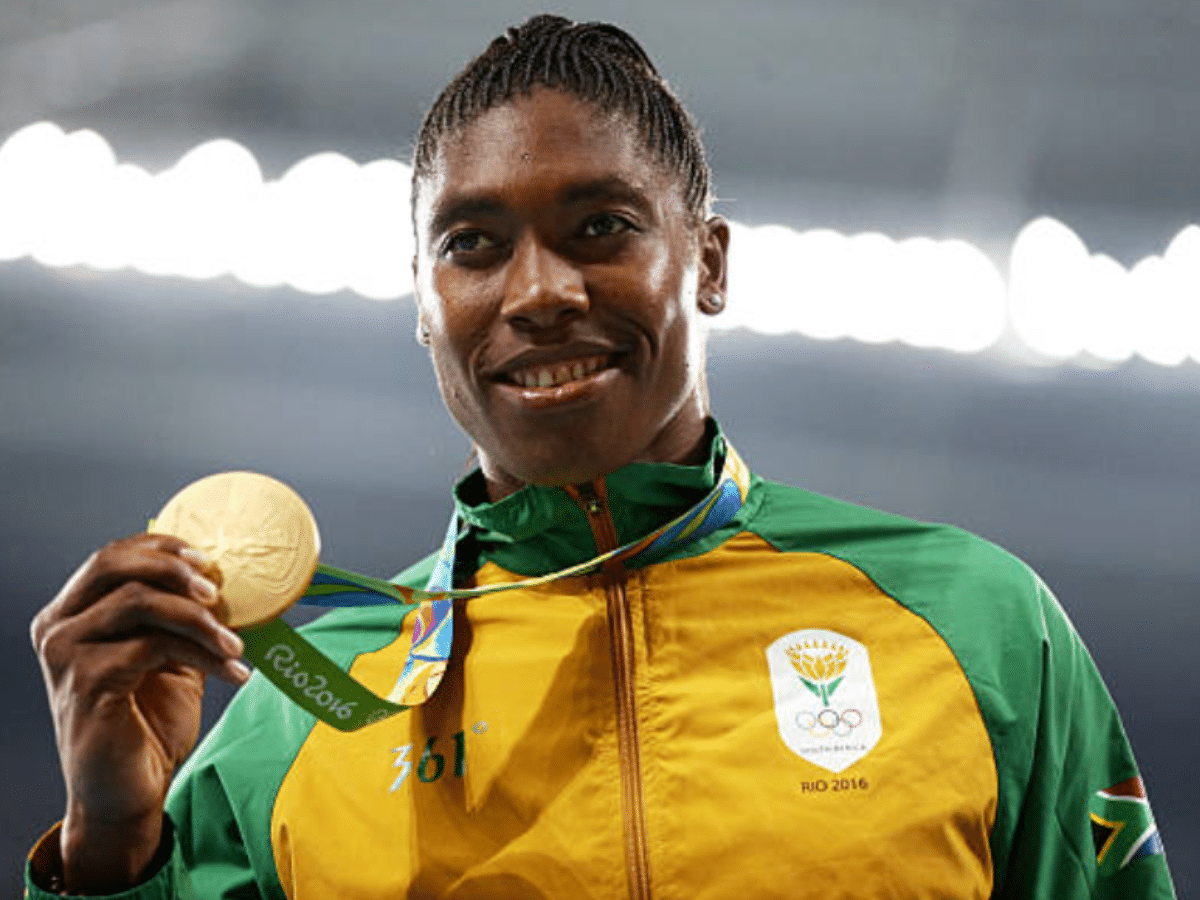
Double Olympic champion runner Caster Semenya has announced that she will challenge the International Olympic Committee’s (IOC) new ban on intersex and trans athletes. She’s also encouraging fellow Olympians to join her in a class action lawsuit.
On Thursday 26 March, the IOC announced that it was reinstating mandatory sex testing for eligibility to compete in women’s athletics. It plans to require all participants to undergo an SRY test, which detects the presence of a Y-chromosome-linked gene.
Caster Semenya: ‘I was told I needed to have surgery’
Semenya has become a figurehead of the battle around the borderlines of women’s sport after facing years of highly public legal battles over her natural testosterone levels. In an article for the New York Times, she explained that:
In 2009, as I prepared to run in the Berlin World Championships, athletic authorities sent me for some medical testing. Because of my looks, there had been speculation from my fellow athletes, sports officials, the media and fans that I was not what I said I was.
I arrived at the medical appointment expecting to be checked for performance-enhancing drugs. Instead, at age 18, I had my first gynecological exam. Afterward, I learned that I had XY chromosomes, rather than the typically female XX pairing, and high levels of testosterone, produced by undescended testicles I didn’t know I had. In order to continue racing as a woman, I was told, I needed to have surgery to remove them.
After Semenya refused to undergo the unnecessary operation, authorities instead required her to take medication to lower her testosterone. The medication caused extreme fatigue, nausea, headaches, and brain fog. When Semenya stopped taking it, she was barred from competing, and instead became a coach.
Despite having lived her entire life as a woman, the IOC’s new document refers to people like Semenya as “biological males”. It insists that this “does not and cannot change”.
‘It came as a failure’
As such, it’s unsurprising that Semenya has been a vocal critic of the IOC’s ruling, and its new president, Kirsty Coventry of Zimbabwe. On Sunday 29 March, at a press conference in Cape Town, Semenya said of Coventry that:
For me, personally, for her being a woman coming from Africa, knowing how African women or women in the global south are affected by that, of course, it causes harm.
Black and brown women have been targeted by a disproportionate level of arbitrary sex testing in sports.
Semenya went on to criticise the IOC’s previous requirement for sex testing:
It came as a failure. And that’s why it was dropped.
For you as a woman, why will you be tested to prove that you fit? You know, it’s like now we need to prove that we are worthy as women to take part in sports. That’s a disrespect for women.
The IOC abandoned its previous requirement of blanket sex tests for women in 1999. The tests were of questionable scientific merit, and often caused severe identity crisis, social isolation, demeaning reactions from the public, depression, and suicide.
Following its U-turn, the IOC will now require girls to take the test from age 15 and up.
‘It does not save women’s sport’
In an exclusive interview with Sky News, Semenya stated that:
I’m fighting for women’s dignity. Those who say, ‘I am not going to be tested to prove that I’m a woman’ … I will encourage them to do that to stop this nonsense.
As such, she also announced her plans to tackle the IOC in court:
I will encourage athletes to come together as a class action … because this does not make sense. It does not save women’s sport.
The interviewer questioned Semenya on the IOC’s new guidance. It states that there is a “10-12 per cent Male performance advantage” in running and swimming, and up to 100% in punching and lifting sports.
However, the document somehow failed to mention that intersex and trans athletes often reduce their testosterone. Just five years ago, the IOC held that this eliminated their potential advantage.
Semenya replied:
Based on what? There’s no scientific proof about what has been said. It’s an ideology.
She’s right to question the IOC’s science, given that the Olympic body has failed to share it with the public. What we do know is that this latest ruling completely contradicts the IOC’s science from just five years ago, which stated that trans people “should not be deemed to have an unfair or disproportionate competitive advantage”.
The IOC’s ‘new science’ now happens to align with the views of Donald Trump. When he came to office, the far-right American president moved to ban trans athletes from all sport in the US. This is particularly convenient, given Los Angeles will host the next Olympic games.
Ideology over all
Semenya is also correct in her statement that this is an ideological battle. In the Guardian’s article on Semenya’s criticism of the IOC, it states that:
The best-known DSD [difference of sex development] athlete of recent years is Semenya, who has male XY chromosomes.
Semenya doesn’t have ‘male XY chromosomes’. She has XY chromosomes – she hasn’t nicked them from some bloke; she’s a woman, who has lived her whole life as a woman. These are neutral statements that nobody – not even Semenya herself – started questioning until she started winning.
Across humanity, both sex and gender are a spectrum filled with countless variations. The belief that men have XY chromosomes and women have XX chromosomes is just that – a belief. It isn’t a fact – in fact, it’s demonstrably false, as in Semenya’s case.
We’re told that the distinction is natural, and therefore good and right. In fact, the distinction is so natural that we require women like Semenya (and countless intersex babies) to undergo unnecessary, often non-consensual surgeries and take medication in order to make them more ‘natural.’
Separating men and women into two distinct categories and insisting that they can never meet is a legal fiction. It relies on the perpetuation of intersexist and transphobic violence against anyone caught in the borderlands. Natural, universal distinctions don’t need police at their boundaries.
Featured image via the Canary

Once upon a time, a productivity app called Habitica turned the industry of productivity apps upside down. It turned routine tasks that people were bored with doing into a game. And voila! Millions of people found it saving!
I was one of them and have used Habitica for quite some time now. Not to lie, the app really works. But since it was launched, almost 15 years have passed! The industry evolved, and productivity apps are not limited to gamifying habits.
There are thousands of Habitica alternatives, but these 3 work for me like a charm. They’re cheaper, more comprehensive, and nicer to look at.
Why Seek a Replacement for Habitica?
Habitica is a pioneer in the industry of productivity apps. It became successful due to its strong concept. But user experiences on Trustpilot, Reddit, the App Store, and Google Play collectively report several problems with the app:
- Technical issues. There have been no significant updates to the app in years, and hence, many users experience slow loading, and the app simply turns off.
- Rude staff. User feedback on Reddit frequently highlights that moderators within the app are no help, to the point that staff were posting threatening messages. We’ll return to the matter of Habitica’s staff later.
- More distracting than helpful. Yes, tracking habits is important, but what’s more important is actually doing these tasks. Habitica users, including me, found it hard to exist without the app because the gamified interface pushed our dopamine buttons. For me, it meant more screen time and less productivity.
- Subscription issues. Several users reported that Habitica had charged them for a subscription without their consent. Not to mention that premium features are underwhelming, like buying outfits or some gems, in-app currency.
These are all valid reasons to look for Habitica alternatives, but for me, it was simply not enough. Productivity doesn’t depend on consistency or planning alone. Our health or life events significantly impact mood and energy, and it’s okay because we’re all humans. I would like my productivity to be healthy, and healthy productivity is born from being satisfied with your life.
The last straw for me quitting Habitica was their scandal over how they mistreated their employees and volunteers. I want to support businesses that treat their staff with respect (and not delete the best features within the app).
Top 3 Replacements for Habitica
1. Breeze Wellbeing
If Habitica focuses on what you do, Breeze Wellbeing focuses on why you do it. Breeze doesn’t force you to stay consistent through guilt or overworking yourself. It’s a comprehensive app that boosts productivity by improving your mental well-being.
Breeze also includes a habit builder that lets users create customisable tasks and set reminders/frequency. The features of the Breeze app also include:
- Mood tracker and analytics that show your average mood during a week/month/year and what events triggered what emotions.
- Self-discovery tests include an ADHD evaluation, a charisma level test, a love languages test, and 30 more quizzes.
- Guided journaling to process thoughts and behaviors.
- Community and knowledge base features are available only in the US, UK, and Canada (so far).
- Mindfulness exercises to reduce sensory overload and return to the present moment.
I’ve been using Breeze Wellbeing for two months primarily as a habit and mood tracker. It helped me significantly to finally see myself as a person who’s allowed to have bad days and be sad, not a productivity robot who has to keep up with everything. Habitica, in this case, would just erase my streak, and that’s demotivating.
Another advantage is that Breeze feels less distracting. There’s no game layer pulling attention away. This makes it especially useful for people who feel that gamification works short-term but doesn’t address deeper issues.
Breeze is particularly helpful if your challenges with habits are connected to:
- Burnout or low energy
- Anxiety or overthinking
- Difficulty staying consistent
- Confusion about what you should do
In that sense, it’s not just a productivity tool. It’s a behavioral self-discovery system that helps you build habits in a way that adapts to you.
2. Focus Friend by Hank Green
Hank Green’s “Focus Friend” isn’t a different type of productivity app. The concept is built around a virtual companion, Bean. When you set a timer, you and Bean “work” together. While you focus on your tasks, Bean knits socks and scarves, in-app currency that you can use to decorate Bean’s space.
This isn’t necessarily a gamification of planning but a gamification of a process. Shortly put: a timer on steroids.
Hank Green, as TikTok’s favorite science blogger, explains that his app works due to a straightforward reward system. Our brain loves dopamine, and it doesn’t see the difference between earning real or “fake” in-app money. The release of dopamine when you get something for free then motivates you to initiate and proceed with tasks more easily.
Oh, and have I mentioned that the app is completely free? There are no premium versions. It’s a fully free initiative with limited details that don’t distract users from the app’s initial aim.
However, “Focus Friend” has limitations. Users complain about the app becoming repetitive quite quickly. Once you’ve decorated Bean’s space, the reward system loses its sense. This can reduce long-term engagement.
That said, as a short-term motivation tool, Focus Friend is extremely effective. Plus, it’s actively maintained. Hank Green listens to users and adds new rooms to keep the app relevant.
3. Todoist
Todoist is one of the most well-known productivity tools, and it offers a much more structured alternative to Habitica. Instead of gamification, Todoist focuses on organisation and prioritisation.
Some users call Todoist boring, and it’s valid. But its simplicity makes it highly customisable and accessible. Among the main features of Todoist are:
- Creating tasks
- Setting deadlines
- Organising tasks into projects
- Assigning priorities
- 80+ plugins to personalise your space
- Syncing across devices
- Creating public projects
- Visualisation
However, don’t forget that Todoist isn’t a productivity app. It’s a task manager whose main aim is to focus on what needs to be done. It doesn’t take nuances into consideration: your mental health, motivation, and reward system.
In my case, procrastination was driven by anxiety and overthinking, and lists with perfect structure in Todoist didn’t help me at all. So, this app will work best for people who are motivated but need a clear system to organise and execute tasks efficiently.
Habitica Alternatives in Short Comparison
Don’t have time to analyse which habit tracker is for you? Here’s a quick overview of three main Habitica alternatives:
| Feature | Breeze Wellbeing | Focus Friend | Todoist |
| Free? | Yes, has premium options | Yes | Yes, has premium options |
| Platform | iOS, Android | iOS, Android | iOS, Android, Desktop |
| Key Features | Mood tracking, habit builder, self-discovery tests, journaling, mindfulness, insights | Timer-based | Task creation, setting deadlines, establishing priorities |
| Best For | People who want to improve productivity by improving their mental health | People who need a quick boost of motivation to start the task | People who are motivated, but procrastinate due to a lack of structure |
| Main User Drawback | Some features differ based on region | Becomes repetitive | Can feel too simple or limited |
What to Consider While Choosing a Habit Tracker App
Choosing a habit tracker isn’t about finding the perfect app. It’s about finding the best fit for your needs. Here are some questions I asked myself before sticking to one productivity app:
- What do I need help with?
Are you trying to build discipline, stay organised, or improve your well-being? It’s okay not to know exactly what you need help with. In this case, I’d start with Breeze Wellbeing as a universal, comprehensive option. Depending on what features felt the most helpful, you can go into more niche directions.
Gamification works for some people, but not for everyone. Ask yourself what actually motivates you: rewards, inner feelings of satisfaction, social accountability, etc. For me, the best motivator was crossing off tasks from to-do lists and getting recognised for that.
- What can I do so that the app sticks?
It’s a frequent experience that users start using productivity apps with the mindset “I’m starting a new life.” But it’s actually a toxic approach because it’s impossible to cram 5 new healthy habits in a day if you previously did nothing (speaking from experience).
Consider whether you can realistically keep using it when motivation drops. For example, determine the bare minimum or take breaks. But what I personally recommend is to treat these apps as supportive tools, not a must-do every day. It takes off some pressure.
Why Habit Trackers Work
One study found that when people simply wrote down what they ate, how many steps they walked, their weight, etc., 85% adhered to healthy habits, compared to 37% among those who didn’t self-monitor.
But why does simply seeing our accomplishments written down make us want to stick to them more? In psychology, this is called positive reinforcement: rewarding desired behavior. The human brain loves dopamine, and it will be motivated to repeat things that produce it. That’s why gamification works.
Another reason why habit trackers work is predictability. Once again, human brains are lazy. When there is a plan vs. unpredictability, they will choose to adhere to a plan. For example, that’s why some people don’t like weekends. They simply don’t know what to do without their work routine.
An important disclaimer: habit trackers don’t build habits on their own. Simply downloading the app doesn’t make a person more or less productive. These apps help to stay consistent and aware, but only when users invest some time and effort in them.

About six and a half million adults in the UK were regular runners from 2023-24, or just over 9% of the population.
Still, not everyone sticks to it. In one paper, 11% of people who said they wanted to run a marathon quit the sport entirely before they got close to the start line.
But you don’t need to break records to see the health benefits of running. Here, we thought we’d share some of the (many) advantages of the sport – just in case you needed a little extra motivation.
1) It may be beneficial for your joints
You might have grown up hearing that running wrecks your knees (I did). But a systematic review of 17 studies found that “In the short term, running is not associated with worsening [patient-reported outcomes] or radiological signs of knee [osteoarthritis] and may be protective against generalised knee pain.”
2) It can boost your mood
A review of over 100 studies concluded that running appeared to have “important positive implications for mental health, particularly depression and anxiety disorders”.
And another paper found that a single 10-minute run can help to boost participants’ mood and even executive function.
3) It could help you live longer
More proof that small efforts are far better than nothing in a 2015 paper, researchers noted that five to 10 minutes of running a day and/or running slower than 9.6km/hour was linked to a lower risk of all-cause and cardiovascular mortality.
4) It’s really, really good for your heart
Running is a cardio workout, so perhaps it’s no wonder it’s so good for our hearts. It’s linked to lower cholesterol, better blood pressure, and a decreased risk of adverse cardiovascular events, like heart attacks or strokes.
5) It can strengthen your bones
Scientists found that marathon runners’ bones may be denser than those of their non-running counterparts.
6) It’s a great way to get a good night’s sleep
Exercise, especially exercise with outdoor light exposure (e.g. running in your local park) is linked to better sleep quality and improved sleep habits.
7) It can make your legs stronger
Like walking, running can help to build your leg strength. But it can plateau after a while, which is why it’s important to mix in some strength training.
8) Your endurance will improve
Running trains the heart and lungs, meaning you’ll be able to exercise harder, for longer, once you get into the habit.
What about the downsides?
While running is good for us, there are some downsides.
A 2020 paper found that injury rates were about 20% among runners, especially those with weaker hips. The risk is higher for new runners.
Strength training, including that which targets the hamstrings, knee-stabilising methods, hips, and glutes, can reduce your likelihood of getting injured.
Like HIIT, overdoing running can lead to insomnia. About a third of all runners are believed to suffer some form of overtraining syndrome.
If you notice mood changes, fatigue, poor sleep, and getting sick more often, get more rest and let your running shoes breathe for a while.
Remember that running three days a week is enough to lower your risk of early death by 40%, and that five to 10 minutes of running does a lot of good.
Covid Cicada variant: Everything we know
Zcash’s (ZEC) upside hinges on a repricing of financial privacy in an AI-driven world, Grayscale says

Poverty can’t be solved by lifting the two-child benefit cut alone


-
 NewsBeat5 days ago
Manchester United reach agreement with Casemiro over contract clause amid transfer speculation
-

 News Videos5 days ago
Parliament publishes latest register of MPs’ financial interests
-

 NewsBeat3 days ago
The Story hosts event on Durham’s historic registers
-

 Business4 days ago
Instagram, YouTube Found Responsible for Teen’s Mental Health Struggle in Historic Ruling
-
 NewsBeat5 days ago
Tesco is selling new Cadbury Dairy Milk bar and people can’t wait to try it
-

 Tech7 days ago
Samsung will soon let you control smart home devices from your car’s dashboard
-
 Entertainment2 days ago
Lana Del Rey Celebrates Her Husband’s 51st Birthday In New Post
-

 Fashion6 days ago
Does It Matter What You Wear When You’re Laid Off and Looking?
-

 Business6 days ago
More women enter wealth management, but few in advisory roles: study
-

 Politics7 days ago
How Media Platforms Balance Performance and Accessibility in Image Delivery
-
 Tech4 days ago
Intercom’s new post-trained Fin Apex 1.0 beats GPT-5.4 and Claude Sonnet 4.6 at customer service resolutions
-

 NewsBeat6 days ago
Entrepreneurs Forum survey reveals optimism in North East
-
 NewsBeat6 days ago
NASA Artemis II Astronauts enter 14-Day quarantine as moon rocket reaches launchpad
-
 Business6 days ago
Late-paying firms face multimillion-pound fines under new crackdown
-

 Sports5 days ago
Fantasy Baseball Week 1 Preview: Top sleeper hitters for both five- and 12-day period led by Munetaka Murakami
-

 Crypto World6 days ago
BTC gives up $70,000 level as markets mull higher interest rates
-

 Fashion6 days ago
Coffee Break: Korean Skincare Set
-

 Tech6 days ago
Embedding compliance in AI adoption
-

 Tech5 days ago
US FCC Prohibits Approval Of New Foreign-Made Consumer Routers
-

 Politics7 days ago
Greyhound racing under renewed scrutiny in Ireland
You must be logged in to post a comment Login