
Politics
Nicola Coughlan Auditioned To Play Robin In Stranger Things Season 3


As Penelope Featherington in Bridgerton, Nicola Coughlan has been a major part of one of Netflix’s biggest and most popular original series ever.
However, the Derry Girls star has revealed that she almost appeared in another of the streaming giant’s most iconic shows.
During a recent interview on the Capital breakfast show, the Bafta nominee was asked if there’d been any near-miss roles earlier in her career, before opening up about auditioning for Stranger Things in the lead-up to its third season.
“It would be generous to myself to say I narrowly missed out on it,” she claimed. “But I did a first-round audition for Stranger Things.”
Nicola then shared that the audition was “to play Robin”, the character eventually brought to life on screen by Maya Hawke in what proved to be her break-out role.

“You know when you watch a show and you go, ‘oh well, thank God I didn’t get that, because I would have been way worse!’,” she joked.
The Irish performer quickly added: “I don’t think I was anywhere close to being in Stranger Things, but I did audition.”
Since rising to fame as a cast member in Derry Girls, Nicola’s screen work has included a minor role in Greta Gerwig’s Barbie and a leading performance in the dark comedy Big Mood.
Big Mood will return for a second season on Channel 4 next month, with the inaugural run earning Nicola her first TV Bafta nomination in the Best Female Performance In A Comedy category last year.
Nicola also recently lent her voice to the animated sports comedy Goat, made a scene-stealing appearance in the 2024 Doctor Who Christmas special and plays Silky in the star-studded new adaptation of Enid Blyton’s The Magic Faraway Tree, alongside the likes of Claire Foy, Andrew Garfield, Rebecca Ferguson and Baby Reindeer’s Jessica Gunning.

Politics
Politics Home | Charity welcomes government consultation to properly ban hunting with hounds

Animal welfare charity the League Against Cruel Sports has welcomed a government consultation, launched today, which will pave the way for tougher laws to finally end hunting with dogs, such as fox hunting, in the English and Welsh countryside.
The League is encouraging the public to take part in the hunting consultation and use it to back the government’s pledge to ban so-called trail hunting, but also to demand new measures to outlaw reckless and ‘accidental’ hunting, to remove loopholes in the existing Hunting Act 2004, and to introduce custodial sentences to act as a deterrent for lawbreaking.
New figures released by the League today to coincide with the consultation show suspected illegal fox hunting is rife. During the last fox and cub hunting seasons, from August 2025 to March 25 this year, the charity recorded 488 reports of foxes seen being pursued, along with 1,220 reports of anti-social behaviour and havoc inflicted on rural communities by fox hunts. Pre-laid trails were recorded being laid at only four per cent of hunt meets attended by monitors.
The consultation will be open for 12 weeks from today and invites respondents not only to give their opinions on trail, drag and clean boot hunting, but also “whether any other legislative changes are needed to ensure that a ban is effective”.
Emma Slawinski, chief executive of the League Against Cruel Sports, said: “This consultation is the very welcome start of a process which should lead to more effective legislation allowing the courts and police to tackle persistent and prolific illegal hunting, something the League has been lobbying many different governments for over many years.
“The time for change is now – 21 years after the original hunting ban came into force, we are now finally on the brink of consigning this old-fashioned blood sport to history
“So-called trail hunting must be banned, the exemptions in the Hunting Act removed, the end of so-called accidental hunting, and jail sentences introduced to act as a deterrent for those who would break new stronger fox hunting laws.”
The charity has public backing. In February 2025, on the twentieth anniversary of the Hunting Act coming into force, the League handed a 104,000-signature petition into Number 10 calling for stronger laws on hunting, followed this year by a 36,000-signature open letter to the government urging it to stand by its promises to do just that.
The League’s fox hunting data was collected from reports into the League’s Animal Crimewatch service, the League’s professional investigators, and other monitor and saboteur groups in the field.
The hunt havoc includes reports of trespass in people’s gardens, attacks on family pets, reports of other wildlife such as deer being chased, hounds running amok on busy roads and causing road traffic accidents or on a railway line – all activities inconsistent with the idea of following a trail, which is what hunts claim to be doing.
However, the League says the figures are just the tip of the iceberg, showing only those hunts being monitored, with hunt behaviour in many remote rural areas and incidents of animals being chased and torn apart going unreported.
Emma added: “For more than 20 years, hunts have carried on breaking the law and ignoring the ban on chasing and killing wild animals with dogs.
“This is a pivotal moment for animal welfare and, as well intentioned as the original ban was, this time around we need to get it right with stronger measures to stop the cruelty and killing.”
More about how to take part in the consultation, and how people can make their voice heard, is available here: https://www.league.org.uk/hunting_consultation

The King’s Speech will be delivered on 13th May, just six days after the local elections. Labour is expecting a bloodbath. Number 10 hoping this will make it harder for any ambitious Cabinet minister to immediately call for Starmer’s head…

The Israel lobby’s frantic attacks on the Green party continue, this time from the Spectator. The colony’s UK mouthpieces have been targeting the Greens and their leadership intensively since members tabled a motion to declare the party explicitly anti-Zionist.
The front page of the latest issue of the Spectator – edited by ultra-Zionist Islamophobe Michael Gove – is a naked attack on the party for, supposedly, ‘abandoning its roots’.
Spectator push slop
The cover image shows Green party leader, Zack Polanski, deputy leader Mothin Ali and new Green MP Hannah Spencer hacking away at trees as if they are now anti-nature. But in reality, the attack is all about Israel – the Greens’ environmental policies haven’t changed. And of course, it’s not long before the article’s author Angus Colwell gives that away.
Colwell’s support for Israel has long been on show, including in previous Spectator spew like the “The Ultras: meet Britain’s new Islamo-socialist alliance‘. But on the Greens’ “environmental” “betrayal” he soon exposes his real agenda, ranting about “Palestinian activism” and courageous pro-Palestinian author Sally Rooney [emphases added]:
Climate activism begets trans activism begets Palestinian activism. The author Sally Rooney gave a speech at a progressive conference this month that’s a good example of the sentiment. ‘The adversaries we confront in the Palestinian solidarity movement… are the same forces driving catastrophic climate change and destroying the very basis for our shared survival,’ she said. Each issue is yet more proof of a permanent crisis.
At this weekend’s online-only conference, party members will have an opportunity to vote on a motion declaring that ‘Zionism is racism’. Two similarly named splinter groups – Greens Anti-Zionist Alliance and Greens for Palestine – have been leading the effort, and Polanski (himself Jewish) hasn’t really condemned it: ‘If we’re talking about the definition [of Zionism] that this Israeli government are clearly perpetrating through a genocide in Gaza, then yes, absolutely. That’s racist.’
Backing the motion more vehemently is Mothin Ali, Polanski’s deputy. He’s a keen gardener, has been on a BBC show with Marcus Wareing and has a ‘My Family Garden’ YouTube page with 56,700 subscribers. The most recent video opens with him taking a chainsaw to a tree, then removing his headgear to reveal a Palestine beanie. ‘As-salamu alaykum,’ he says. ‘So today, what I’m going to do, is I’m going to show you how to cut down trees for profit’ – which is an interesting thing for a Green deputy leader to say. He then shows everyone how to prune fruit trees. He is genuinely liked on a personal level in the party: one senior figure tells me he’s a ‘gentle soul’.
A Palestine beanie. The horror. But clearly the motion is what has Colwell and the Israel lobby so rattled. Good. Polanski, for his part, showed his trademark lack of you-know-what-giving and used the whole nonsense as a vehicle to invite people to join the Greens, wondering aloud what was wrong with the poor souls at the Spectator:
The motion must pass. No political party that thinks building an apartheid ethno-state on land stolen from its people isn’t racist has any place in British politics – and you can tell from their pearl-clutching panic that the Israel lobby knows the British public is catching on.
Featured image via the Canary

Palestinian doctor Mohammed Hammad is looking for help to get from Gaza to Scotland to complete a research project at Edinburgh University.
The people’s doctor
Hammad completed his medical training in late 2025, during a brief lull in Israel’s genocide in Gaza. Since then, living in a tent in the Mawasi concentration camp, he has been treating sick and wounded Palestinians under Israel’s illegal blockade of food, fuel and medicines.
Now he has secured a year-long neuroscience research fellowship under consultant neurologist Prof Rustam al-Shahi Salman. The project will evaluate stroke care in Gaza to find improvements that can be implemented despite Israel’s occupation and genocide. However, the placement and travel costs are not funded. Hammad, who is from Rafah but was displaced to Mawasi in May 2024, is seeking financial support and has set up a crowdfund to raise cash for the placement.
Defying the odds
He told Edinburgh Live:
During the war, I volunteered for six months in the Neurology Department at Nasser Medical Complex – the only operating hospital in southern Gaza, serving 1.2 million Gazans. During my final year of medical school, I supported patient care, documentation, neurological emergency management, and CT interpretation under extremely high-pressure conditions.
Hospitals faced severe shortages of electricity, medications, imaging access, and basic medical supplies. There were periods of overcrowding, limited diagnostic capacity, and constant uncertainty.
Some of the most difficult situations involved managing acute stroke cases without access to thrombolysis or advanced stroke unit care, treating prolonged seizures with limited medication availability, and assessing traumatic brain injuries with restricted imaging capacity. There is currently no MRI available in Gaza, and in the south there has effectively been only one functioning CT scanner serving a population of around 1.2 million people.
Working under siege
On his experience working as a doctor under siege, he said:
The difficulty was not only the medical complexity, but having to make critical decisions in severely resource-constrained and high-pressure conditions. Despite this, healthcare workers continued to provide care with remarkable resilience.
My immediate family is safe at the moment, but we live under very difficult humanitarian conditions, displacement, limited access to consistent electricity, clean water, and stable infrastructure. For the wider population, daily life is defined by uncertainty and rebuilding from repeated disruption.
This opportunity to come to Edinburgh represents more than academic progression. It is a chance to gain structured research training, international mentorship, and exposure to advanced stroke systems of care — knowledge that I hope to bring back to strengthen neurological services and medical education in Gaza.
Featured image via the Canary
4 min read
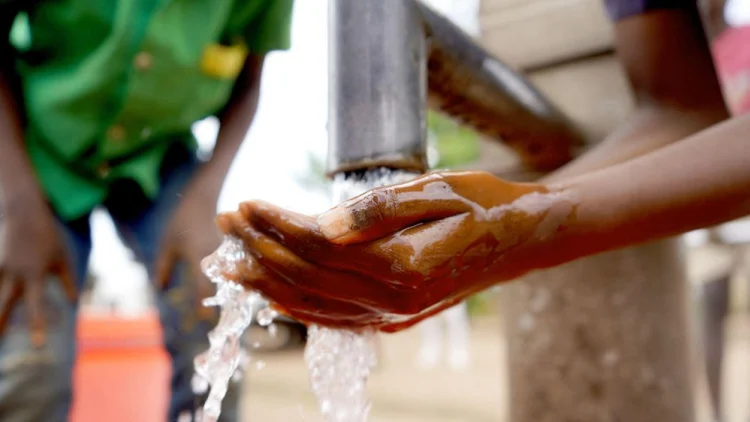
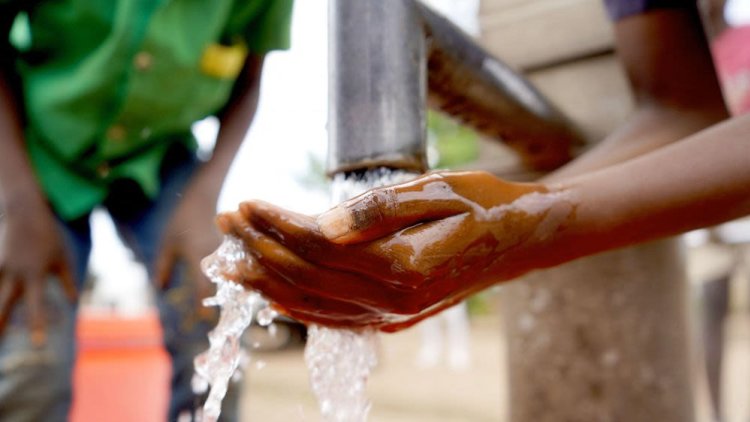
A mother gives birth in a health centre without clean water, decent toilets and good hygiene every two seconds. The government must bear this in mind before going ahead with planned cuts to aid spending.
For the first time since the UK government announced its drastic aid cuts – the steepest of any G7 country – we’ve heard how it plans to spend what’s left of the overseas aid budget. Amid sweeping changes, we’re hearing that the flagship global health and water programme, WASH FOR Health (HS4H), has been axed, cancelling work across multiple countries with only 3 months’ notice.
Last week, I had the privilege of being elected as the new Chair of the All-Party Parliamentary Group on Water, Sanitation and Hygiene in parliament. Water runs through every priority area in international development, from prioritising women and girls, to building resilience to the climate crisis, and reducing the spread of deadly diseases, yet we’re seeing critical programmes like WASH4Health being cut.
This sidelines one of the public’s top issues, with new polling showing that clean water tops the public’s priority for UK aid spending for the third year in a row. In a new More in Common poll, almost half of respondents (48 per cent) say access to clean water and sanitation is the most important area for investment in foreign aid, with health the second most selected option (35 per cent). Regardless of voting preferences, of geography or gender, across different viewpoints and core beliefs, water comes out on top.
Furthermore, the data shows that the public believes clean water to be the area which receives the most money from UK aid spend, second only to disaster relief, when in reality it’s one of the lowest areas of spend. Funding for water, sanitation and hygiene (WASH) has been reduced by over 60 per cent since 2018. With nearly three-quarters of the public supporting increased investment into WASH in healthcare centres to support maternal and newborn health, cuts like WASH4Health clearly fly directly in the face of public support.
Looking at conflicts around the world, we’re increasingly seeing that water security is global security, elevating the risk of instability, the spread of diseases that don’t respect borders, and climate pressures that make us all more vulnerable, at home and abroad.
The sweep of global aid cuts calls for much sharper thinking on how to make the most of a scarce resource. If the UK wants to be an investor, it should be prioritising water – an overlooked tool that saves lives, creates long-term change and underpins global health, food, energy and national security.
And the public agrees. WASH is ranked as the best value for money intervention and the best way to build self-sufficiency in developing countries. If the government is serious about moving from paternalism to partnership, the answer is clear: change starts with water.
It’s not just about smart investment. It’s also about the lives of millions around the world.
Every two seconds, a mother gives birth in a health centre without clean water, decent toilets and good hygiene. That means wards or delivery rooms which are unclean, where midwives are unable to deliver babies with clean hands and new mothers are unable to clean themselves after giving birth. Over three-quarters of births in Sub-Saharan Africa take place in unsafe delivery rooms like this, contributing to 1 in 9 mothers developing sepsis each year.
WaterAid’s new Time to Deliver campaign joins the demands of women around the world, calling for every health centre to have clean water, decent toilets and good hygiene.
At the campaign launch in Parliament last week, I had the privilege of hearing from Patience Emmanuel, a former midwife now working as a WASH Manager for WaterAid Nigeria. When asked what having funding for water would mean for women giving birth in health centres right now, she became emotional. She told us that if governments took action this year, the difference that mothers would feel first is dignity. Their child would be born into a place that is safe.
It’s testimony like Patience’s that should be in the minds of decision makers at the moment. Water, sanitation and hygiene are simple, inexpensive tools that have the power to create long-term change for low- and middle-income countries, while transforming the lives of women and girls, protecting global health, and boosting economies.
Lee Pitcher is Labour MP for Doncaster East & the Isle of Axholme and Chair of the Water, Sanitation and Hygiene All-Party Parliamentary Group

!function(n){if(!window.cnx){window.cnx={},window.cnx.cmd=[];var t=n.createElement(‘iframe’);t.display=’none’,t.onload=function(){var n=t.contentWindow.document,c=n.createElement(‘script’);c.src=”//cd.connatix.com/connatix.player.js”,c.setAttribute(‘async’,’1′),c.setAttribute(‘type’,’text/javascript’),n.body.appendChild(c)},n.head.appendChild(t)}}(document);(new Image()).src=”https://capi.connatix.com/tr/si?token=19654b65-409c-4b38-90db-80cbdea02cf4″;cnx.cmd.push(function(){cnx({“playerId”:”19654b65-409c-4b38-90db-80cbdea02cf4″,”mediaId”:”79474502-9d7b-4f18-8836-9726d521714a”}).render(“69c53fb3e4b09f8e00502879”);});

On 25 March, LBC host Tom Swarbrick retweeted a clearly Islamophobic post:
Tom Swarbrick from LBC and now a guest on Good Morning Britain retweeted this tweet calling Muslims in the West dirty. pic.twitter.com/AV7mkJFe1d
— Mukhtar (@I_amMukhtar) March 25, 2026
To make matters worse, the post was from a known liar and propagandist.
“I hope you all cry forever”
As we reported in 2018, Swarbrick is an establishment hack with zero integrity. James Wright reported for us at the time:
Text messages leaked to BuzzFeed show that an LBC presenter tried to stage-manage an interview with a Conservative cabinet minister.
LBC‘s Tom Swarbrick was trying to bag an interview with the unnamed government figure. In the process, he sent the minister the interviewing questions and promised to be gentle. In the end, the interview didn’t go ahead.
The fact that he’s still at LBC shows they’ve got about as much integrity as him.
Here’s how people responded to his retweet:
Why is LBC presenter Tom Swarbrick endorsing a comment that Muslims are “smelly”? pic.twitter.com/eLZBMZs3LQ
— Lowkey (@Lowkey0nline) March 25, 2026
Tom Swarbrick will post about “dirty Muslims” before delivering a solemn monologue on LBC about why “from the river to the sea” is chilling antisemitism. https://t.co/O06W22fPcm
— Karl Hansen (@karl_fh) March 25, 2026
Swarbrick was retweeting a post from Nioh Berg.
Many are quoting @NiohBerg as the voice of the oppressed Iranian, the one we must free, the truth of their people, and what they want and need.
What they forget is Nioh isn’t Iranian.
He’s Chandresh. An Indian paid by Israel, to pretend, but who forgot to delete. pic.twitter.com/cSTy8ZeiDM
— Ewan MacKenna (@EwanMacKenna) March 1, 2026
Berg notoriously posted the following in early March, and was retweeted by every moron online as a result (we now know definitively that it was the Americans who bombed the school):
🔴 BREAKING:
The regime in Iran has now confessed that the IRGC mistakenly bombed an Iranian school yesterday, killing many children.
To all the legacy media and pro regime influencers who peddled your fake news:
RETRACT and DELETE. pic.twitter.com/MNBdIcmvkG
— 𝐍𝐢𝐨𝐡 𝐁𝐞𝐫𝐠 🇮🇷 ✡︎ (@NiohBerg) March 1, 2026
The above should have been a ‘fool me once’ moment for those who follow Berg. However, it looks like there’s no limit to how many times you can fool a guy like Swarbrick.
Following considerable backlash, Swarbrick has now deleted his retweet.
Establishment hacks
This is the last thing Swarbrick posted himself:
https://t.co/OGYJBjfpQ9 pic.twitter.com/VS9iyVwpbx
— Tom Swarbrick (@TomSwarbrick1) February 28, 2026
The image is from when the US announced the capture of Saddam Hussein in 2003. This was treated like a the final victory at the time, but of course the disastrous Invasion of Iraq raged on for another eight years, and still impact the country until today. This is fitting, given that the disastrous attack on Iran has gone very poorly for the Yanks since they assassinated the Supreme Leader.
Potentially this was the point Swarbrick was making—that history repeats itself in increasingly farcical ways—but given his other posts, it’s more likely he’s just another media ghoul with zero memory for how badly these things turn out.
Featured image via LBC

There is no single “normal” number of times to poop a week – it can range from three times a day to three times a week, says the NHS.
But a 2025 study, which involved 1,400 adults, found there is a “Goldilocks [or ‘just right’] zone” for poop frequency, which is once to twice a day.
What did the study involve?
The study authors divided participants into four poop frequency groups:
- Constipated (one or two bowel movements per week),
- Low-normal (between three and six bowel movements per week),
- High-normal (between one and three bowel movements per day), and
- Diarrhoea (more than three bowel movements a day).
Then, they looked at health markers in each group, including gut microbiomes and blood samples.
What does my poop frequency say about my health?
The scientists found that people whose gut microbiomes had more fibre-fermenting gut bacteria, which is often associated with good gut health, tended to poop once or twice a day.
But bacteria linked to protein-related gut fermentation were likely to be stronger in those with constipation or diarrhoea.
These, the researchers said, might release “toxins” into the body.
“If stool sticks around too long in the gut, microbes use up all of the available dietary fibre, which they ferment into beneficial short-chain fatty acids. After that, the ecosystem switches to fermentation of proteins, which produces several toxins that can make their way into the bloodstream,” the study’s lead author, Johnson-Martinez, said.
And a build-up of these “toxins,” including indoxyl sulphate or trimethylamine, may be linked to kidney disease and cardiovascular disease.
Meanwhile, those with diarrhoea had more C-reactive proteins, a sign of chronic inflammation, and chemicals that may be linked to liver damage.
“In a generally healthy population, we show that constipation, in particular, is associated with blood levels of microbially derived toxins known to cause organ damage, prior to any disease diagnosis,” study author Dr Sean Gibbons said.
How can I improve my poop schedule?
In this research, people who adhered to a “Goldilocks zone” schedule tended to eat a lot of fibre, exercise regularly, and stay hydrated.
Speaking to BBC Science Focus, Dr Gibbons added: “High-protein diets can also be kind of dangerous because of the protein fermentation by-products I mentioned.
“There’s a lot of evidence, especially in younger people, that they can be problematic for things like type-2 diabetes”.
Politics
Jonathan Guttentag: When soldiers guard synagogues, something has already gone deeply wrong

Rabbi Jonathan Guttentag is a UK representative of the Coalition for Jewish Values and a communal rabbi based in Manchester.
When a European government sends soldiers onto its streets to protect synagogues and Jewish schools, it is tempting to describe the move as a tough law-and-order response.
It is not.
It marks a more serious shift: from policing a society to defending it.
That distinction matters.
Police operate within a functioning civic order. Their presence assumes that public life, however imperfect, is broadly governed by law, consent, and deterrence.
Soldiers are different. Armies are not instruments of civic management; they are instruments of defence. They are deployed when the threat is no longer simply criminal, but organised, ideological, and resistant to the normal authority of the law.
When soldiers stand guard outside synagogues, a line has already been crossed.
I have seen this before.
In France, following the attacks on a kosher supermarket and the murders at a Jewish school in Toulouse, troops were deployed to protect Jewish institutions. I encountered this directly a year later, attending a gathering of the Conference of European Rabbis in Toulouse. The synagogue and community buildings were guarded by young soldiers, barely out of training, cradling automatic weapons.
It was, in one sense, reassuring.
But it also raised a more troubling question: how had things reached the point where even armed police were no longer sufficient, and the state had to reach for the army?
For decades, attending such gatherings across Europe, security had always been present — police outriders on motorcycles, flashing blue lights, traffic briefly halted, the visible choreography of the state in control. But that was policing. This is something else.
For years, rising antisemitism across Europe has been treated as a social problem to be managed rather than a threat to be confronted. The response has been familiar: statements of concern, educational initiatives, intermittent enforcement — accompanied by a marked reluctance to address the sources of hostility directly.
The result is a recognisable pattern: hesitation, escalation, and then emergency measures.
We are now seeing elements of this closer to home.
In recent days, even Hatzola ambulances — volunteer emergency responders whose sole purpose is to save life — have come under attack. When those providing medical assistance become targets, it is no longer credible to describe the problem as marginal.
Last Yom Kippur in Manchester, my colleague Rabbi Daniel Walker was forced to defend his synagogue from a violent attacker. The outer gates had already been rammed and breached before the confrontation reached the entrance itself. This was not a distant or abstract threat. It was immediate and physical.
In the days that followed, King Charles III visited the site and later became patron of the Community Security Trust — a welcome and important signal of national support.
But it also reflects a harder truth: that protection is increasingly required where once it was assumed.
The lesson for policymakers should be clear.
If threats of this kind are treated merely as issues of community relations or low-level disorder, the response will always lag behind reality. By the time soldiers are required, the failure has already occurred.
The task is not only to respond at the point of crisis, but to restore the conditions in which ordinary policing is sufficient.
That means:
- enforcing the law decisively
- confronting sources of incitement without hesitation
- and reasserting that public space in Britain is governed by law, not intimidation
A society in which people can worship freely without armed protection is not a luxury. It is a basic test of civic health.
Once that assumption begins to fail, restoring it is far harder than preserving it.

For the second time in four years, Britain is staring down the barrel of a major energy crisis. Since America and Israel began bombarding Iran, the prices of oil and gas have soared across the world, and Britain is especially exposed. This week, even as talk of a potential ceasefire has calmed the markets somewhat, global oil prices remain 45 per cent higher than before the war began, and 60 per cent up on the start of the year. Whatever happens next between Trump and the ayatollahs, whether the US ‘unleashes hell’ or ceases fire, the UK is in for a very rough ride.
The outlook is beyond bleak. The typical household energy bill in the UK is expected to climb by 20 per cent in July, when a new energy price cap comes into effect. Industry is already feeling the strain, with input prices for British factories surging at the fastest pace since the Black Wednesday market crash in 1992 – thanks to the soaring costs of energy, transport and oil- and gas-derived products. Investment bank Morgan Stanley has warned of a ‘pronounced recession’ later in the year.
Of course, there is no scenario in which modern Britain could have been immune from such seismic events in the Middle East. Iran has effectively closed the Strait of Hormuz, through which 20 per cent of the world’s oil flows. For every day the strait is closed, more barrels of oil are being taken out of circulation than in the 1973 and 1979 oil crises combined. Added to that has been the Islamic Republic’s attacks on LNG (liquified natural gas) facilities across the Gulf. Iranian strikes on Qatar’s Ras Laffan gas facility have wiped out 17 per cent of Qatari LNG exports. All in all, the Iran War has prompted what the International Energy Agency considers to be the single ‘largest supply disruption’ to the world’s energy supplies in history.
So no, Britain was never going to escape the headwinds of this crisis. But it could have been far better prepared for weathering the storm. It could – and should – have learned at least some lessons from the last energy-price crisis in 2022, when Russia’s invasion of Ukraine sent gas prices soaring. Not least as Britain is blessed with abundant oil and gas reserves of its own, in both the North Sea and as frackable shale gas beneath the ground. Yet unless Keir Starmer and his energy secretary, Ed Miliband, radically change course on decades of perverse policies, the UK is only set to become even more vulnerable to future external shocks beyond our control.
The Labour government insists the crisis underlines the need for Britain to ‘get off’ oil and gas, and switch to ‘clean power’. According to Miliband, fossil fuels cannot be produced domestically at scale. And even if they could, he claims, we would still be prisoners of a volatile global energy market.
The energy secretary is wrong on all fronts. Catastrophically so. As a new report by Offshore Energy UK (OEUK) confirms, North Sea oil and gas drilling has indeed fallen sharply in recent years. But this has been driven by government policy, not the supplies in reserve beneath the sea. Miliband’s ban on new North Sea oil exploration, and his continuation of the Tories’ windfall tax on the sector, are by far the greatest constraint on domestic drilling. As a result, according to OEUK, imports of LNG – which currently account for 14 per cent of the UK gas supply – are set to soar to 46 per cent by 2035. Under Miliband’s North Sea shutdown, Britain will become more dependent on suppliers like Qatar, and thus more vulnerable to external energy shocks.
And what might domestic protection mean for the price of energy? While nobody expects reopening the North Sea to instantly rescue the UK from the current price hikes, more domestic drilling could indeed lower costs in the long run. Miliband’s insistence that prices are set ‘internationally’, and so domestic production would ‘not take a penny off energy bills’, is straightforwardly untrue. If prices really were set globally, the UK would not be paying six times more for gas than energy-rich America.
It is, however, true that Britain buys and sells gas on a European market, but this doesn’t mean exploiting the North Sea would be a fruitless endeavour. For one thing, more domestic production would mean fewer LNG imports – avoiding the costs of liquefaction, shipping and regasification that shipping gas around the world entails. This is also why it is unlikely that all new oil and gas produced in the UK would simply be sold abroad, as foreign markets pay a premium for transport costs. In any case, as energy expert Dieter Helm explains, there is no reason why, with enough ‘imagination’, the UK government could not secure favourable treatment from North Sea firms as a condition for granting new drilling licences.
Even if Miliband were somehow correct, that any new oil and gas would immediately leave the country, keeping the North Sea alive would still be a no-brainer. It would provide billions in tax revenue at a time of fiscal crisis. It would vastly improve the balance of payments, at a time when Britain is importing far more goods and services than it exports. And it would keep alive an industry that supports hundreds of thousands of mostly well-paid, unionised jobs. There is simply no rational, let alone progressive, argument for throttling the North Sea.
For the past decade or so, the big bet made by the establishment has been that renewables can replace energy derived from fossil fuels. Wind and solar, they claim, are not only cheaper, but offer more security of supply, too. Again, these are sheer delusions. The only time British consumers have ever paid less for wind power than for gas was when the gas price went into the stratosphere at the start of the Ukraine war. After 2030, should Miliband hit his target for a ‘clean-powered’, renewables-heavy grid, energy supplier Centrica expects prices to be higher than at the peak of the Ukraine energy crisis. Britain is set to exit what Miliband calls the ‘rollercoaster of fossil fuels’, only to lock in crisis-level energy costs in the longer run.
As well as being exorbitantly expensive, renewables are inherently insecure. Wind and solar are intermittent sources, as they can only provide electricity when the wind blows and the Sun shines. When the weather is unfavourable, gas needs to be purchased (at an inflated price) as a backup, or there is a risk of blackouts. What’s more, renewables can’t even mitigate against geopolitical risks. Several large offshore wind projects are facing delays, as components made in the United Arab Emirates are also stuck behind the blockade of the Strait of Hormuz.
Britain’s energy policies are nothing short of suicidal. Blinded by Net Zero zealotry, Miliband and his predecessors have made our energy supplies more costly, less secure and more reliant on foreign imports. The result is an almost permanent energy crisis that will long outlast the current conflict in the Middle East. If the economic pain of the next few months doesn’t change the establishment’s thinking then perhaps nothing ever will. It will confirm, beyond any shadow of a doubt, that our current trajectory of deindustrialisation and decline will have been actively chosen by our rulers.
Fraser Myers is deputy editor at spiked and host of the spiked podcast. Follow him on X: @FraserMyers.
![BITCOIN... I AM TAKING ACTION RIGHT NOW [Exact trade....]](https://wordupnews.com/wp-content/uploads/2026/03/1774544463_maxresdefault-80x80.jpg)
BITCOIN… I AM TAKING ACTION RIGHT NOW [Exact trade….]

Stranded whale rescue running out of time as ‘exhausted’ humpback remains stuck in Baltic Sea | World News
Wave Life Sciences shares tumble on obesity drug trial data


-
 Crypto World6 days ago
NIO (NIO) Stock Plunges 6.5% as Shelf Registration Sparks Dilution Worries
-

 Fashion6 days ago
Weekend Open Thread: Adidas – Corporette.com
-
 NewsBeat1 day ago
Manchester United reach agreement with Casemiro over contract clause amid transfer speculation
-

 Politics6 days ago
Jenni Murray, Long-Serving Woman’s Hour Presenter, Dies Aged 75
-

 Crypto World5 days ago
Best Crypto to Buy Now: Strategy Just Spent $1.57 Billion on Bitcoin During Fear While Early Investors Quietly Enter Pepeto for 150x Potential
-

 Crypto World5 days ago
Bitcoin Price News: Bhutan Sells $72 Million in BTC Under Fiscal Pressure, but the Smart Money Entering Pepeto Sees What the Market Does Not
-

 Tech6 days ago
inKONBINI Lets You Spend Summer Days Behind the Register
-

 News Videos15 hours ago
Parliament publishes latest register of MPs’ financial interests
-

 Sports3 days ago
Remo Stars and Kano Pillars Strengthen Survival Hopes in NPFL
-

 Politics7 days ago
Gender equality discussions at UN face pushbacks and US resistance
-

 Business4 days ago
No Winner in March 21 Drawing as Prize Rolls to $133 Million for Next
-

 Sports3 days ago
Gary Kirsten Accuses Pakistan Cricket Board Of ‘Interference’, Mohsin Naqvi Responds
-

 Tech4 days ago
Give Your Phone a Huge (and Free) Upgrade by Switching to Another Keyboard
-

 Sports6 days ago
2026 Kentucky Derby horses, odds, futures, preview, date: Expert who nailed 12 Derby-Oaks Doubles enters picks
-

 Tech4 days ago
AI enters the chat: New Seattle dating app relies on tech to facilitate meaningful human connections
-

 Business7 days ago
DLocal: Entering 2026 At Escape Velocity
-
 Politics7 days ago
Scotland’s rejection of assisted dying is a victory for humanity
-
Business6 days ago
Columbia Sportswear enters $500 million credit agreement with JPMorgan Chase
-

 Tech5 days ago
Today’s NYT Connections Hints, Answers for March 22 #1015
-

 News Videos3 days ago
Ch 9 Financial Management Part 1 | Detailed One Shot | Class 12 Business Studies Boards 2026
You must be logged in to post a comment Login