
Politics
Nobody Wants To Clean Up Trump’s Mess In The Strait Of Hormuz


US allies in Europe and elsewhere are continuing to rebuff President Donald Trump’s demands they help reopen the Strait of Hormuz amid the US-Israeli war in Iran, despite Trump’s ultimatums, pleas and claims that, actually, “we no longer need” their help after all.
(Rounding out the mixed messaging, Trump also claimed on Monday that “numerous countries” were already “on the way” to help, but declined to say which ones.)
Turns out allies don’t like helping when all you do is insult them.
“They should be in here very happily helping us,” Trump told reporters on Monday. “They should be jumping to help us because we’ve helped them for years.”
Trump struck a different tone on Tuesday in a post on social media.
“Speaking as President of the United States of America, by far the Most Powerful Country Anywhere in the World, WE DO NOT NEED THE HELP OF ANYONE!”
Here’s what the rest of the world is saying:
UK
Keir Starmer has voiced support for a plan to reopen the critical shipping lane, but has notably stopped well short of committing British resources to doing so.
“Ultimately, we have to reopen the Strait of Hormuz to ensure stability in the [oil] market. That is not a simple task,” Starmer told reporters on Monday.
“So we’re working with all of our allies, including our European partners, to bring together a viable collective plan that can restore freedom of navigation in the region as quickly as possible and ease the economic impact.”
European Union
European Union foreign policy chief Kaja Kallas told Reuters that “nobody is ready to put their people in harm’s way in the Strait of Hormuz.”
“We have to find … diplomatic ways to keep this open so that we don’t have a … food crisis, fertilizers crisis, energy crisis in the world,” she said.
Kallas added that the 27-nation bloc would be open to looking at ways to replicate a deal that helped get grain out of Ukraine amid the war in the country, telling Reuters that the United Nations is already working on that.
Greece
Greek prime minister Kyriakos Mitsotakis said Greece, a major force in global shipping, would not join any military operations near Iran.
“Greece is not going to participate in any operation around the theatre of current operations,” he told a Bloomberg event on Tuesday in Athens. “I doubt that there is much European appetite for such a mission right now.”
Germany
German defence minister Boris Pistorius echoed a similar sentiment.
“The Americans chose this path, together with the Israelis,” he said, according to Politico, noting Germany would prioritise defending NATO territory.
“We did not start this war,” he added.
German Chancellor Friedrich Merz said, “NATO has no place here at all,” arguing it is “a defensive alliance, not an interventionist one.”
Denmark
Denmark, which in 2024 helped safeguard traffic in the Red Sea amid strikes by Houthi militants in Yemen, has been far more reticent to commit to similar action off the coast of Iran.
In comments on Monday, Danish Foreign Minister Lars Lokke Rasmussen told journalists the country would like to see a coordinated European response.
“Even if we don’t like what’s going on, I think it’s wise to keep an open mind on whether Europe … in some way can contribute, but with a view towards de-escalation,” he said. “Denmark is a sea-faring nation and we have in every way an interest in ensuring free navigation.”
France
French president Emmanuel Macron said on Tuesday the country will not take part in any immediate operation to reopen Hormuz, but might reconsider “once the situation is calmer.”
“We are not party to the conflict,” he said at a defence council meeting. “France did not choose this war. We are not taking part in it. We have a purely defensive position. Our objectives are clear: to protect our nationals, our diplomatic and military sites, and our interests in the region.”
Spain
Madrid’s defence and foreign affairs ministers on Monday flatly ruled out any action in Hormuz.
Foreign minister José Manuel Albares called the war a “spiral of violence” and an “escalation that does not have clear objectives” in an interview with La Razón, a Spanish newspaper.
Defence minister Margarita Robles meanwhile said that “Spain is not considering any mission in Hormuz. What we are considering is the demand that the war end.”
Australia
Catherine King, Australia’s transport minister, told the Australian Broadcasting Corporation on Monday the country doesn’t plan to pitch in on Trump’s crisis, either.
“We won’t be sending a ship to the Strait of Hormuz,” she said. “We know how incredibly important that is, but that’s not something that we’ve been asked or that we’re contributing to.”

Politics
Ben Fletcher: The abolition of Stamp Duty is a great first step, but for further tax reform lets talk VAT
Ben Fletcher is the Conservative candidate to be mayor of Cheshire and Warrington. He was previously CEO of Boots Opticians and CFO of The Very Group.
The best Conservative governments have been those that grasped the difficult job of fundamental tax reform to ensure stable finances that allow the economy to flourish. In the 1840s the Peel government ushered in a generation of prosperity through the combination of income tax reform and free trade. Disraeli oversaw significant local taxation reform, and, of course, the Howe/Lawson reforms in the 1980s were crucial to changing the trajectory of Britain’s economic performance.
Kemi Badenoch has rightly said she wants us to create a high growth, low immigration economy. There is a big argument that we need to win before the next general election: to reduce tax rates, we must reform the system. High rates are a consequence of the design of the tax system, and just reducing rates will not cut it. Successive chancellors have, in pursuit of a budget day ‘rabbit out of the hat’, tinkered with the system, creating distortions and anomalies that stunt economic growth. This has created a distorted tax system. There has been little sense of what type of tax system we want, what behaviour do we want to reward, and how do we create the environment for faster economic growth.
Reforming the tax system is going to be controversial. Since 1997 the tax code (as measured by Tolleys) has grown nearly fourfold from 7,250 pages to c.24,000 The tax code is now so long, with so many exceptions, that there will, inevitably, be opposition to almost any major change because there are bound to be losers. The need for reform though is immense. We have a Council Tax system based on 1991 housing values, an Income tax system where the marginal rate of tax rises to 70 per cent at certain income levels, meanwhile tax lawyers debate whether product is a cake or biscuit.
As the famous New Zealand Finance Minister, Roger Douglas, showed and argued, reform succeeds when the changes are big enough to create winners who can champion reform alongside the short-term losers. To sustain a reforming agenda in a way that commands the confidence of markets, fends off the ‘losers’ from any reform, and creates a clear direction of travel, we need a set of principles that can be seen to be adhered to over a series of Budgets.
A good tax system has four elements: There are as few taxes as possible, the base for those taxes is as broad as possible, so that the rate can be as low and least distorted as possible, and there are as few exceptions as possible. Adherence to these principles across the tax system would create one that was simpler, which better rewarded hard work and risk taking, and which was much less onerous for the individual or organisation being taxed.
These can be applied to any tax, but it’s VAT that’s urgent. It has become so distorted that it is now killing critical sectors of the economy, most noticeably hospitality. In Cheshire this is particularly acute as hospitality is 10 per cent of our economy, employing 40,000 people. Reforming VAT would be the tax reform that potentially does most to stimulate economic growth.
The current VAT system breaks all four of the principles I described: it is levied on a narrow base meaning the rate is high, the number of exceptions is high, and it is distortive in key sectors. The threshold is set in such a way as businesses manage with the aim of avoiding it, causing growth to be capped.
VAT is levied on only c.40 per cent of consumption. There is no longer any rationale for why the base remains so narrow. Our consumption habits have changed hugely since the introduction of the tax in 1973. In particular, the percentage of household income spent on food has fallen by two thirds, and the exclusions for books and newspapers speaks to a pre-digital age. We’re having fewer children (another VAT exception) and real wages have risen faster than the cost of products.
This has distortive effects. In hospitality, most of their costs are zero rated for VAT meaning it cannot be reclaimed. The consequence for this is that 20 per cent of their income goes straight to HMRC, an unusually high amount. This puts sustained pressure on their cashflow such that when other costs are raised, they have very little left to manage with.
The narrow base causes the rate to be high. We have the highest rate in Western Europe which drives the second distortive effect: incessant lobbying for exceptions to the rate. Food in a pub? Taxed. Food at home? Not taxed. Plain biscuit? No VAT. Chocolate Biscuit? 20 per cent. Buying a pet? Taxed. A Rabbit, though? Not taxed. No wonder the lawyers are doing well.
The other aspect which narrows the base is the threshold for VAT registration, currently £90,000. Entirely unsurprisingly small businesses manage their revenue to the threshold to avoid the rate. The presence of this cliff edge (a lamentable feature of many taxes) means there are sudden movements in tax liabilities for small businesses which hamper growth as owners seek to minimise their cash outflow. We need businesses focused entirely on growing their income, not managing to an effective revenue cap.
The next Conservative government should go big. Taxing consumption is preferable to taxing income or risk taking. We need people to want to work, and found businesses risking their capital, and for that to be rewarding. What families spend their money on is their business.
Extended VAT to all consumption and radically reduce the rate. Extending the base should allow the rate to come in at c. 8 per cent and still raise the same revenue as today. In the same package of reform, we should cut the threshold from £90,000 to zero, so that every company pays VAT from day one. This removes the growth cap of the cliff-edge and because the rate has been cut makes it manageable for all companies. For new companies there should be a three-year transition where a VAT rebate is provided of 75 per cent in year one, 50 per cent in year two, and 25 per cent in year three to support cashflow in the critical early years.
Big changes always mean there are some losers, such as those businesses not currently paying VAT, and tax lawyers. Others, such as hospitality would have their growth prospects transformed. Our highly competitive retail industry would work hard to keep prices keen for the consumer.
Kemi Badenoch and Mel Stride have shown with their announcement on Stamp Duty that they are prepared to be radical about tax. This willingness to make bold choices will be essential in creating a growing economy.
Reforming VAT in a first Conservative budget would create the basis for accelerated economic growth and be consistent with the reforming approach shown by the best of our predecessors.
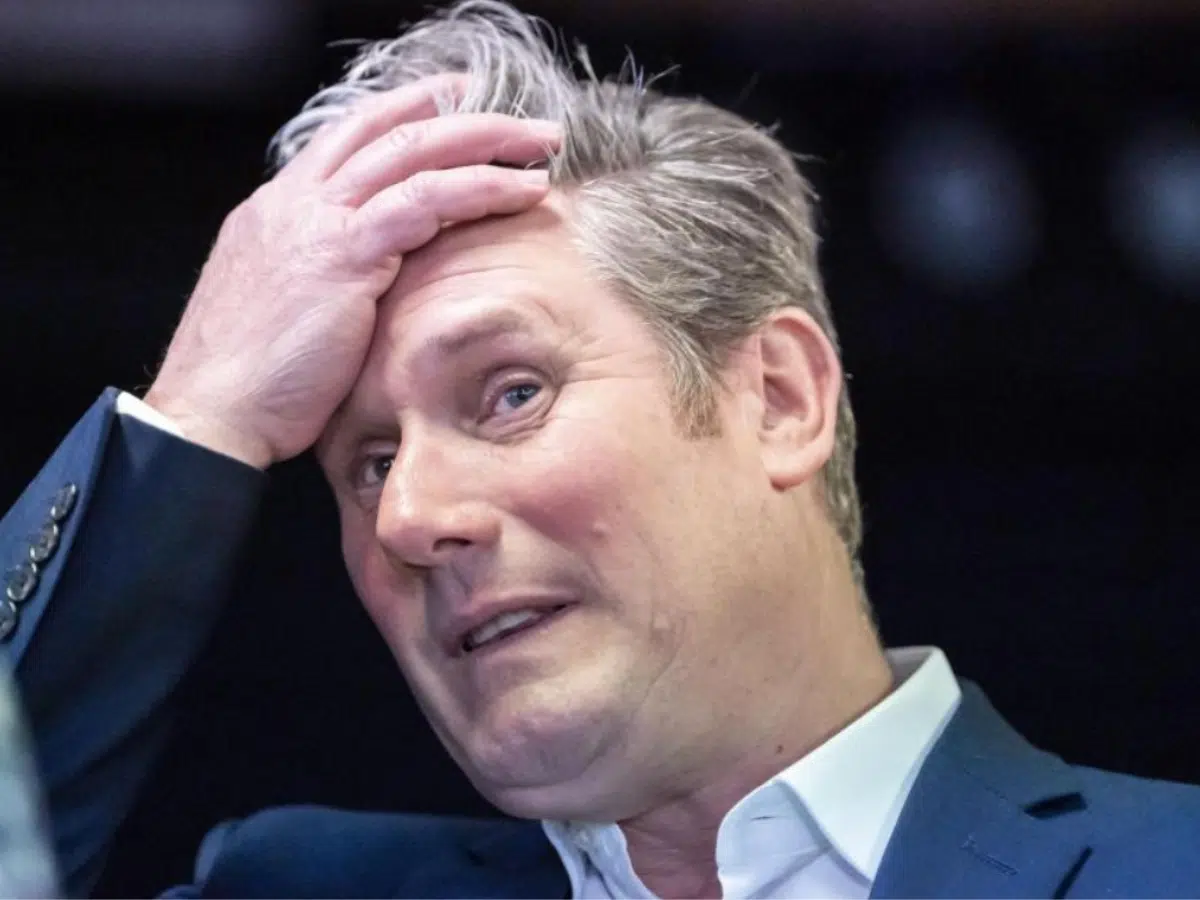
In a speech outside Downing Street this week, Keir Starmer spoke about his cost of living policies. The thing is, his remarks take the phrase a ‘band aid for a bullet wound’ to new heights.
Nearly all of these policies are reheated. They had already been announced.
Cost of living policies explained
The energy price cap until June — an attempt to shield Britons from volatile international energy prices — was announced in February. However, energy bills still rose on average by 68% (£713) between the winter of 2020 and 2025. This policy does next to nothing to address the overall and spiralling cost of living.
If Labour was serious about homegrown energy, the Prime Minister would deliver a Green New Deal, like he pledged to while campaigning to become Labour leader. This would mean Iran’s retaliatory blockade of the Strait of Hormuz, a key shipping route, would have no impact on UK energy prices. It would also bring energy into public ownership — another way to make bills significantly cheaper.
Instead, Starmer said in his speech on Monday:
we have to reopen the Strait of Hormuz to ensure stability in the market.
Labour’s cut in fuel duty is also not a new policy. It’s a Conservative one from 2022 that Labour is actually removing in September rather than “extending” as Starmer presented in the speech. Labour is in fact bringing the first increase to fuel duty since 2011.
Rather than investing in modern development, Starmer also said he will make provisions for petrol stations to publish prices. The climate crisis means we need to swiftly move away from oil powered vehicles, not encourage them.
The 1945 Clement Attlee government delivered huge change, such as nationalising 20% of the economy. This brought down inflation for decades through a price drop in the essentials that every business and person relies on. It shows the government taking an active and strategic hand in the economy is entirely possible.
Featured image via the Canary

Hours after the shock caused by the Confederation of African Football’s (CAF) decision to award Morocco the 2025 Africa Cup of Nations (AFCON) title and declare Senegal the loser with a 3-0 scoreline, the Senegalese Football Federation announced it would launch a new legal battle to defend the rights of its national team and fans.
The federation will officially appeal to the Court of Arbitration for Sport (CAS) to overturn the decision, considering what happened a serious deviation from legal and administrative procedures.
The federation’s general secretary, Abdoulaye Sow has called the decision a “travesty.” Sow said:
This is a travesty; this decision is based on absolutely nothing. It has no legal foundation … The president of the federation will get in touch with the lawyers; we will engage with the appropriate authorities, and then we will go to the court of arbitration for sport, which will issue the final decision.
He added:
We will not back down. Senegalese people should have no doubt. The truth is on Senegal’s side, the law is on Senegal’s side.
AFCON debacle
The Senegalese Football Federation described the procedures preceding the decision as arbitrary and without any legal basis, anticipating that the case will turn into a lengthy legal battle that could affect the fate of the tournament and reopen one of the most controversial Africa Cup of Nations finals.
In concluding his remarks, Sow reassured the fans, affirming that the fight is not over and that the federation is striving to restore justice and the title that the national team won on the field. He confirmed that communication is ongoing with all relevant parties to guarantee Senegal’s rights.
With the case now before the Court of Arbitration for Sport, the world awaits the outcome of this legal battle, in a new chapter of African football’s history, already full of controversy and drama.
Featured image via the Canary
Politics
Politics Home Article | Angela Rayner Joins Fightback Against Government Immigration Reforms
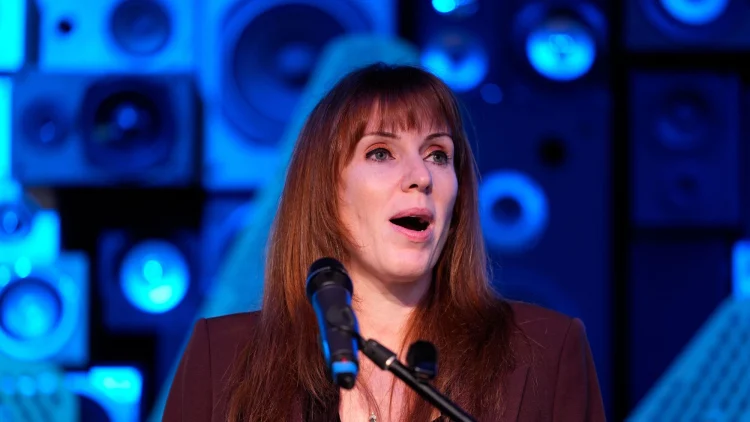

Angela Rayner, February 2026 (Alamy)

4 min read
Former Labour deputy leader Angela Rayner has given her backing to the efforts of a large group of Labour MPs currently lobbying the government against its immigration reforms.
Addressing a reception held by Labour soft left group Mainstream on Tuesday evening, Rayner said voters had been given the impression that Labour has “represented the establishment, not working people” and that “at worst, we became it”.
“The very survival of the Labour Party is at stake,” she warned a packed pub basement in Westminster.
“As a party and movement, we cannot hide. We cannot just go through the motions in the face of decline,” Rayner said.
“There is no safe ground for us, and we’re running out of time. The change that people so desperately wanted to see needs to be seen. It needs to be felt.”
The influential backbencher, widely seen as a potential successor to Keir Starmer, started her speech by telling the crowd: “I have a lot to say. I’ve been waiting a long time for this moment.”
She also joked that she was “really pleased” the reception was being held in a pub that Labour MPs were allowed to enter – “we’ve been banned from a few”, she said.
Rayner went on specifically to criticise Home Secretary Shabana Mahmood’s plan to extend the automatic qualifying period for awarding Indefinite Leave to Remain from five to 10 years retroactively.
The change would “pull the rug” from migrants who have already arrived in the UK, and represent “not just bad policy but a breach of trust”, she said.
“We cannot talk about earning a settlement if we keep moving the goalposts,” she added. “It’s un-British.”
No primary legislation is required to implement the changes being proposed by the government, which means there is no automatic Commons vote on the proposals and no obvious crunch point for a rebellion.
If there are enough rebel MPs, however, there is a possibility they could organise to force a vote, though they acknowledge that this would be difficult.
Tony Vaughan MP, from the 2024 intake, led more than 100 Labour colleagues in signing a private letter to the government urging it to rethink the tightening of immigration rules.
PoliticsHome understands that he is holding a strategy meeting today for Labour MPs concerned about the plans for earned settled status and refugees.
Vaughan also spoke at the Mainstream reception, telling attendees that Mahmood’s reforms were not informed by Labour values of community, solidarity, internationalism and social justice.
“The idea that mere financial contribution is the beginning and end of what we think qualifies somebody to belong in this society is totally wrong,” he said.
“We have to ensure that as a political movement, in every policy debate, we fight not just to win the argument but ultimately to define the terms and the boundaries of the debate before the argument even starts.”
Mayor of Greater Manchester Andy Burnham, another figure on the party’s soft left who is touted as a possible successor to Starmer despite not being an MP, today told the BBC that Labour “would always do well to listen to what Angela has got to say”.
Nick Thomas-Symonds, the Cabinet Office minister, denied in response to Rayner’s comment that the plans for immigration reform were “un-British”.
He told Times Radio: “I don’t think that the changes Shabana Mahmood has announced are un-British. I think what they are doing is trying to strike fairness and a balance between, in the first instance, control of our borders and also people who are here still, of course, having the opportunity then to gain a settled status, but also being fair to everybody.”
The Home Secretary doubled down on the reforms in a speech last week, warning Labour MPs that the current asylum system is “eroding trust” with voters, and arguing that restoring order at the borders is necessary, “not a betrayal” of Labour values.
“Hard-working people across this country engage in the daily struggle to make ends meet.
“They see a state that they pay taxes towards, yet it is unable to stop the flow of dinghies across the channel. They see a state that is paying billions towards hotels. It doesn’t look fair because it’s not fair, and it erodes their trust in government,” she said.
One attendee of the Mainstream event last night said Rayner was “here for nominations”, referring to the 81 MP nominations any leadership challenger or candidate would have to secure.
Another warned PoliticsHome against interpreting Mainstream’s invitation to Rayner as a leadership endorsement by the organisation, which is also seen as close to Burnham.
Rayner resigned from cabinet in September after being found to have breached the ministerial code over unpaid stamp duty.
There is a feeling among Labour MPs that it will be very difficult for her to stand as a leadership candidate as long as the HMRC investigation into her tax affairs is ongoing.
Politics
The House | The new register to protect children from their abusers shows Parliament at its best

Image by: RayArt Graphics / Alamy

3 min read
Parliament has recognised that the risk posed by the most serious offenders does not end at the prison gates
The campaign for a child cruelty register has revealed something important about how Parliament really works: meaningful legal change does not depend solely on who sits on the government benches. Opposition MPs can identify gaps in the law, build coalitions across parties, and ultimately shift government policy. Despite the way Westminster is often portrayed, cross-party collaboration remains one of the most effective engines of legislative progress.
The gap in the law came to light through the work of my constituent, Paula Hudgell. Few realised that individuals convicted of the most serious offences against children can effectively disappear once their sentences end. After release, there is no long-term mechanism to track them, no requirement to notify authorities of their whereabouts, and no system to ensure that the risks they pose remain visible.
Paula’s determination is rooted in the appalling abuse suffered by her adopted son, Tony. At just 41 days old, he was subjected to such extreme violence by his birth parents that both of his legs later had to be amputated. They were sentenced to 10 years at Maidstone Crown Court but released after serving eight. Their supervision will end when their licence expires, even though the risk they pose may not.
Experience shows that offenders can relocate, change identities and disengage from services to avoid scrutiny. Without a statutory framework for monitoring, authorities are left without the tools they need to assess risk or intervene early.
A child cruelty register, modelled on the Sex Offenders Register, would help to close this loophole. It would introduce mandatory notification requirements, make breaches a criminal offence and allow police and probation services to manage and monitor high-risk individuals over the long term. It would give families and communities confidence that serious offenders cannot simply vanish.
Experience shows that offenders can relocate, change identities and disengage from services to avoid scrutiny
The campaign has demonstrated how Parliament can function at its best. Before Christmas, Conservative MPs tabled an amendment to the Sentencing Bill to create such a register. Labour MPs voted against it at that stage, but that was not the end of the story. The same amendment was later tabled to the Crime and Policing Bill in the House of Lords, and discussions continued across party lines.
Through our sustained engagement with Home Office ministers, justice ministers, Deputy Prime Minister David Lammy and, crucially, through constructive dialogue with colleagues cross-party in both Houses, the government has now accepted the principle of our proposal and tabled its own amendment to introduce a child cruelty register. This is a clear example of how opposition-led initiatives can shape government legislation when the case is strong and the collaboration is genuine.
There is still work to do. I remain concerned that the list of offences proposed by the government does not capture all serious violent child cruelty cases, and I will continue to press for a more comprehensive register. But a fundamental shift has been secured: Parliament has recognised that the risk posed by the most serious offenders does not end at the prison gates, and neither should oversight.
This change in the law will help ensure that those who pose an ongoing danger to children remain visible to the authorities. Tony’s experience should never be repeated. Protecting the most vulnerable is a responsibility shared across Parliament, and this campaign shows that, despite public scepticism, cross-party co-operation remains not only possible but essential to achieving it.
Helen Grant is Conservative MP for Maidstone and Malling, and shadow solicitor general

Former Pussycat Dolls performer Carmit Bachar has claimed that she was not invited to take part in the group’s upcoming reunion.
Carmit was an original member of the girl band when they launched in the mid-2000s, and was part of the line-up when they released hits like Don’t Cha, Buttons and Stickwitu.
Although she eventually stepped away from the Pussycat Dolls before the release of their second album to pursue a solo career, she reformed with the band in 2019 for the release of the surprise hit single React and a planned reunion tour, which was eventually cancelled following the Covid pandemic.
Last week, it was announced that the Pussycat Dolls would be heading on tour later this year as a three-piece, with Carmit speaking out about this for the first time on Tuesday.

“As an original member of The Pussycat Dolls, that chapter of my life will always hold profound meaning,” she began. “I carry with me deep gratitude for the music we created, the experiences we shared, and most importantly, the incredible fans around the world who supported us.
“I am especially thankful to the LGBTQ+ community – performing at Pride events has been among the most meaningful and joyful moments of my career.”
Carmit continued: “In light of recent developments, I feel it is important to speak honestly and respectfully. I was not contacted regarding the group’s decision to move forward, and I learned of these plans at the same time as the public.
“Given my history with the brand, having been part of its foundation long before its commercial debut and instrumental in the connections that led to the record deal… I would have appreciated direct communication.
“While this is disappointing on a personal level, I remain proud of the role I played in helping shape what The Pussycat Dolls became. I believe the legacy of any group is built not only by those seen on stage, but also by the collective contributions and shared vision that brought it to life.
“My intention in sharing this is not to create division, but to honour the truth and the fans who have supported us throughout the years. Transparency and respect are values I hold deeply.
“At this time, I am choosing to focus on my well-being and to move forward with positivity and purpose. I remain open-hearted about the future and grateful for the continued love and encouragement I receive.”
Read Carmit’s full statement below:
The band’s 2020 live shows were repeatedly postponed as the result of the Covid pandemic, before being cancelled entirely, which coincided with reports of a legal dispute between Nicole and PCD founder Robin Antin relating to the tour.
Back in 2022, Carmit and bandmate Jessica Sutta claimed they had not been informed before the announcement that the tour was being shelved.
“We want to say how incredibly disappointed we are to learn of an announcement made on Instagram that the Pussycat Dolls reunion tour is cancelled,” they said in a joint statement. “As of now, there has been no official notification of that.
“Either way, it seems as though it’s the end of a chapter to an incredible, life-altering experience filled with awesome memories that we will forever be grateful for.”
Jessica – who now describes herself as a “mommy, wife and activist”, and is outspoken in her pro-Donald Trump and anti-vaccine views – has also insisted that while she was “never planning to return” to the Pussycat Dolls “under the current circumstances”, and is “still unable to dance due to ongoing health issues”, the reunion announcement still proved “difficult for me”.
Melody Thornton, meanwhile, turned down the opportunity to reform with the Pussycat Dolls in 2019, so her absence from the upcoming reunion comes as less of a surprise.
“I’m primarily a vocalist, and getting into that group, and Nicole had been signed [by a label] twice, so it only made sense for her to sing the majority of the leads,” she previously explained.
“But then, I kept being asked to wait my turn, and then my turn just never came, and we only released two albums.”
She added: “I’m actually a really bad dancer. I’m a singer. So for me, there’s really nothing to go back to.”
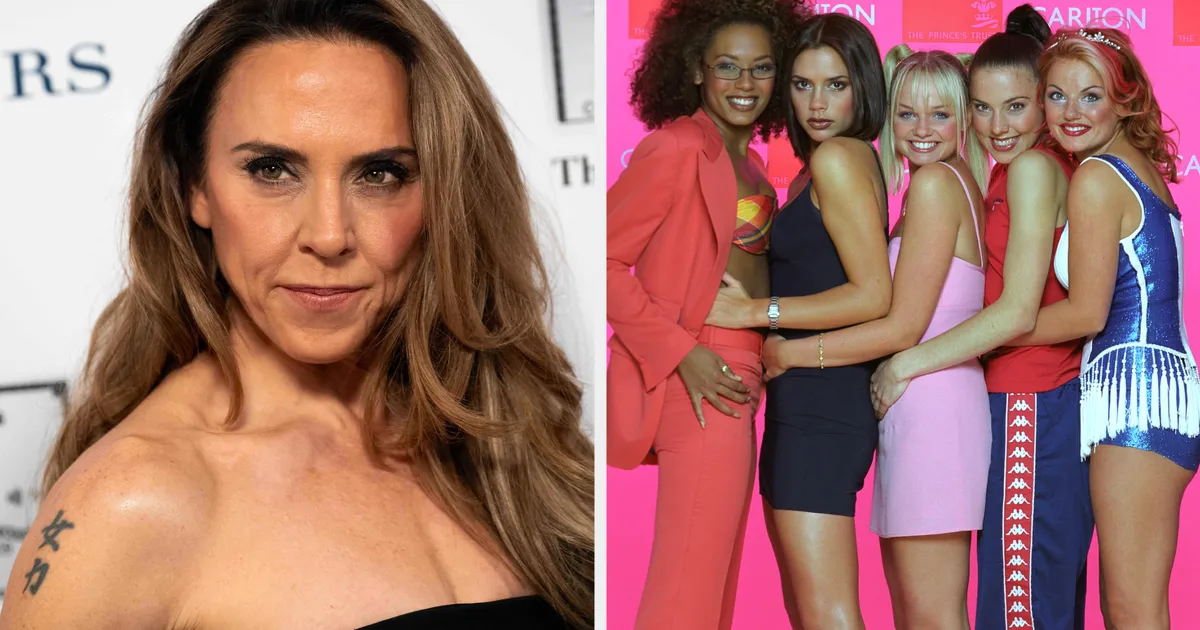
Rumours about a Spice Girls reunion have been rampant since the minute they finished their string of concerts as a four-piece back in 2019, with various reports over the years about whether or not we could expect to see the iconic girl group back together.
In recent history, it was heavily rumoured that the band had a number of plans to mark the 30th anniversary of their debut single Wannabe, which reached number one on both sides of the Atlantic back in 1996.
However, The Sun has reported that the band “failed to reach an agreement” and therefore these plans have all been ditched.
“We are communicating all the time, we want to do something,” she continued. “Who knows when? But I still feel very optimistic – and I keep my fingers crossed – that you will see the Spice Girls together at some point in the future.”
Back in 2024, an unconfirmed report in the Daily Mail claimed that a fall-out between Mel B and Geri Horner had “thwarted” plans for a 30th anniversary celebration that would have included live shows and an official Netflix documentary.
She last performed with the Spice Girls way back in 2012, at the closing ceremony of the London Olympics.


James Young, Vice President – Agriculture
| McCain Foods GB
Sustainable farming isn’t just good for the planet – it’s essential for food security and economic resilience
Visiting McCain growers across the country, I have the privilege of seeing the hard work that British farmers dedicate to feeding the nation. But, in recent years, they’ve faced a series of headwinds that have made this more difficult. Families who have farmed for generations are navigating the challenges of climate change, rising input costs, and the downstream impact of geopolitical conflict.
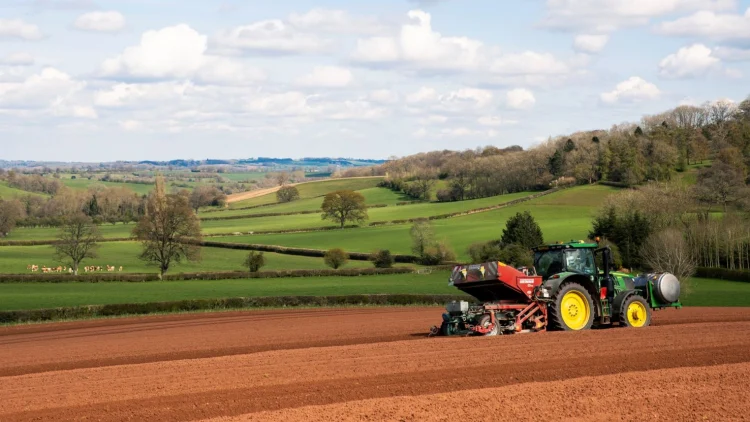
As the largest purchaser of British potatoes, working with 250 farmers across the country and buying around 20 per cent of the total market, McCain is committed to supporting the long-term sustainability of UK agriculture. We are proud to stand alongside British farmers as they produce quality food in this increasingly complex landscape.
While there is no silver bullet, Demos’ Growing Strong report demonstrates clear opportunities to reduce farmers’ exposure to these headwinds. The solution here is clear: we must transition from viewing sustainable farming purely as an environmental concern to recognising it as a cornerstone of national food security.
Sustainable farming also has the power to strengthen our economic security. Demos’ research shows that upscaling sustainable farming could drive £31.6bn in increased farm profitability filtering through the economy by 2050 and £56.3bn from enhanced natural capital across the UK by 2035. Crucially, with global adoption, it could lead to an average seven per cent reduction in annual food bills for consumers.
To bring change, we need industry to partner with policymakers. For its part, McCain is committed to implementing regenerative practices across 100 per cent of our global potato acreage by 2030 and just launched the McCain Farm of the Future UK to drive innovation that can unlock improved farming outcomes. However, to drive a widespread move from concept to reality, Demos concluded that the government must act in three key areas.
First, we must establish national farming baselines. The government should develop a standardised baseline for carbon, soil, water, and biodiversity outcomes. This would give farmers a clearer understanding of their asset base, enabling better business planning and risk management, while unlocking new market opportunities in carbon and nature markets. This data, aggregated by a trusted independent body, should be updated regularly and integrated into the Land Use Framework.
Second, we must bridge the skills gap. We urge the government to commission Skills England to review the practical demands of sustainable farming, from land management to data use. This review will ensure that investment in technology is matched by investment in people, creating a confident workforce to share knowledge via regional networks.
Finally, we must embed an understanding of sustainable farming impacts. The government should undertake a comprehensive analysis of how these practices benefit long-term profitability and share the findings through accessible training. Spreading this information will help address the perception gap, where many farmers underestimate the financial benefits of the transition.
While the challenges are significant, forthcoming government strategies such as the 25-year Farming Roadmap and the Land Use Framework have the potential to drive a sustainable farming future. The opportunity to build a resilient, profitable farming sector has never been greater.
To read the Growing Strong report, click here.
The first trailer for the much-awaited new Dune movie has been released – offering fans of the franchise a first look at Robert Pattinson’s character.
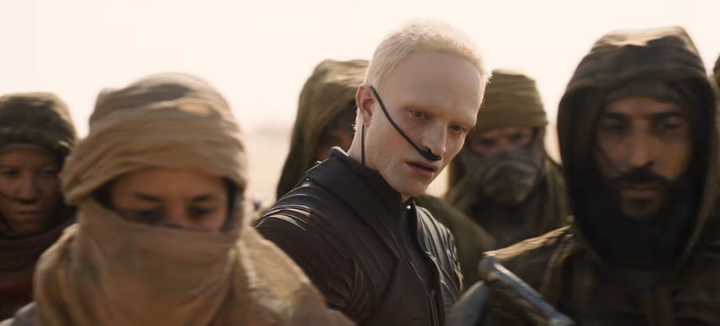
In addition to returning stars like Timothée Chalamet, Zendaya and Florence Pugh, Dune: Part Three introduces the former Twilight star as the scheming Scytale, one of Timothée’s character’s main adversaries in the forthcoming movie.
And it’s fair to say that Robert has undergone quite the transformation to play his latest role, sporting almost-white blond hair, no eyebrows and, believe it or not, an even more pale complexion than we’re used to seeing him with.

Denis Villeneuve’s third Dune film will also welcome back cast members Rebecca Ferguson, Charlotte Rampling, Anya Taylor-Joy, Josh Brolin and Jason Momoa.
Jason is set to share the screen with his son Nakoa-Wolf Momoa in the new film, previously insisting that the teenager landed the role “all on his own”.
Watch the two-minute trailer for Dune: Part Three for yourself below:
Dune: Part Three is one of three collaborations between Zendaya and Robert Pattinson hitting cinemas in 2026.
The first, The Drama, will see the pair playing a seemingly happily engaged couple whose world is turned upside down when Zendaya’s character makes a shocking revelation about her past to her husband-to-be in the lead-up to their wedding.
Following this, they’re also both due to appear in the star-studded ensemble of Christopher Nolan’s The Odyssey, his follow-up to the Oscar-winning Oppenheimer, which will also feature everyone from Oscar winners Matt Damon, Anne Hathaway, Charlize Theron and Lupita Nyong’o to Elliot Page, John Leguizamo, Mia Goth and Zendaya’s rumoured husband Tom Holland.
Rob recently recalled to his frequent co-star: “I was talking to you on the set of The Drama. I was like, ‘Can I get in one of those Dune movies?’.”
He added: “It was a very unexpected call a few months later. And I kind of did think you had something to do with it.”

Zendaya and her long-time stylist Law Roach dug deep into their archives when it came to dressing her for the premiere of her new movie The Drama.
The Emmy winner stars alongside Robert Pattinson in the new romantic drama, in which they play a seemingly happy engaged couple whose relationship begins to unravel thanks to a shocking revelation about the bride-to-be’s past in the run-up to their big day.
At the movie’s premiere on Tuesday night, you’d be forgiven for thinking that Zendaya was playing up to the film’s wedding theme (and, indeed, ongoing rumours about her own personal life) by wearing bridal couture on the red carpet.
However, upon closer inspection, the Vivienne Westwood dress is one she actually first wore more than a decade earlier at the 2015 Oscars.

“Who remembers this dress and all the headlines that came with it?” Law wrote on X. “Decided to go with SOMETHING OLD tonight.”
The first time Zendaya wore that white dress, she was much earlier in her career, and found herself on the receiving end of unkind comments from Fashion Police presenter Giuliana Rancic, who became embroiled in a racism row when she suggested that the star wearing her hair in locs made it look like she smelled of “patchouli and weed”

Zendaya responded at the time: “There is already harsh criticism of African American hair in society without the help of ignorant people who choose to judge others based on the curl of their hair.
“My wearing my hair in locs on an Oscar red carpet was to showcase them in a positive light, to remind people of colour that our hair is good enough.
“To me, locs are a symbol of strength and beauty, almost like a lion’s mane. I suggest some people should listen to India Arie’s I Am Not My Hair and contemplate a little before opening your mouth so quickly to judge.”
Explaining why she chose to revive the gown, Zendaya told Variety: “I remembered the saying ‘something old, something new, something borrowed, something blue’. So, this is my ‘something old’.
“I thought I’d bring it back and give it new life.”
Last week, Zendaya attended another event sporting a classic dress.
However, in that instance, it was one previously worn by Sarah Jessica Parker in character as Carrie Bradshaw in Sex And The City.

OpenAI built a $180 billion charity. Will it do any good?

How the Iran War Will Cause a Global Financial Crisis (Yanis Varoufakis) | The Chris Hedges Report

Stephen Smith buys 26.9% stake in Economist Group from Rothschild family


-
 Crypto World4 days ago
HYPE Token Enters Net Deflation as HyperCore Buybacks Outpace Staking Rewards
-

 Fashion5 days ago
Weekend Open Thread: Addict Lip Glow
-

 Tech3 days ago
Your Legally Registered ‘Motorcycle’ Might Not Count Under Proposed US Law
-
Sports4 days ago
Why Duke and Michigan Are Dead Even Entering Selection Sunday
-

 NewsBeat7 days ago
Residents reaction as Shildon murder probe enters second day
-

 Sports7 days ago
PWHL, Senators discussing plan to keep Charge in Ottawa
-

 Business3 days ago
Search for Savannah Guthrie’s Mother Enters Seventh Week with No Arrests
-

 Business4 days ago
US Airports Launch Donation Drives for Unpaid TSA Workers as Partial Government Shutdown Enters Fifth Week
-
 Tech18 hours ago
Are Split Spacebars the Next Big Gaming Keyboard Trend?
-
Crypto World4 days ago
Coinbase and Bybit in Investment Talks: Could Bybit Finally Enter the US Crypto Market?
-

 NewsBeat7 days ago
I Entered The Manosphere. Nothing Could Prepare Me For What I Found.
-

 Business4 days ago
Country star Brantley Gilbert enters growing non-alcoholic beer market
-

 Business2 days ago
Australian shares drop as Iran war enters third week
-

 Crypto World2 days ago
Crypto Lender BlockFills Enters Chapter 11 with Up to $500M in Liabilities
-

 Sports5 days ago
College Basketball Best Bets: Conference Tournament Semifinal Picks
-
 Crypto World6 days ago
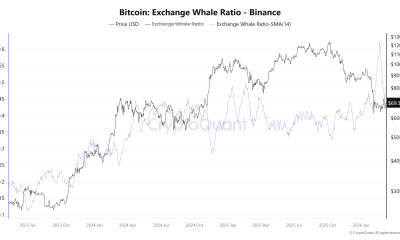
Three Binance Charts May Be Hinting at Bitcoin’s Next Move
-

 Politics2 hours ago
The House | The new register to protect children from their abusers shows Parliament at its best
-
 Business6 days ago
Trump demands Powell cut rates as Iran conflict raises energy prices
-

 Crypto World6 days ago
Senate Votes to Include CBDC Ban in Bipartisan Housing Bill
-

 Fashion2 days ago
25 Celebrities with Curly Hair That Are Naturally Beautiful


You must be logged in to post a comment Login