
Politics
Not Even Nato Chief Mark Rutte Is Safe From Trump’s Wrath Over Iran

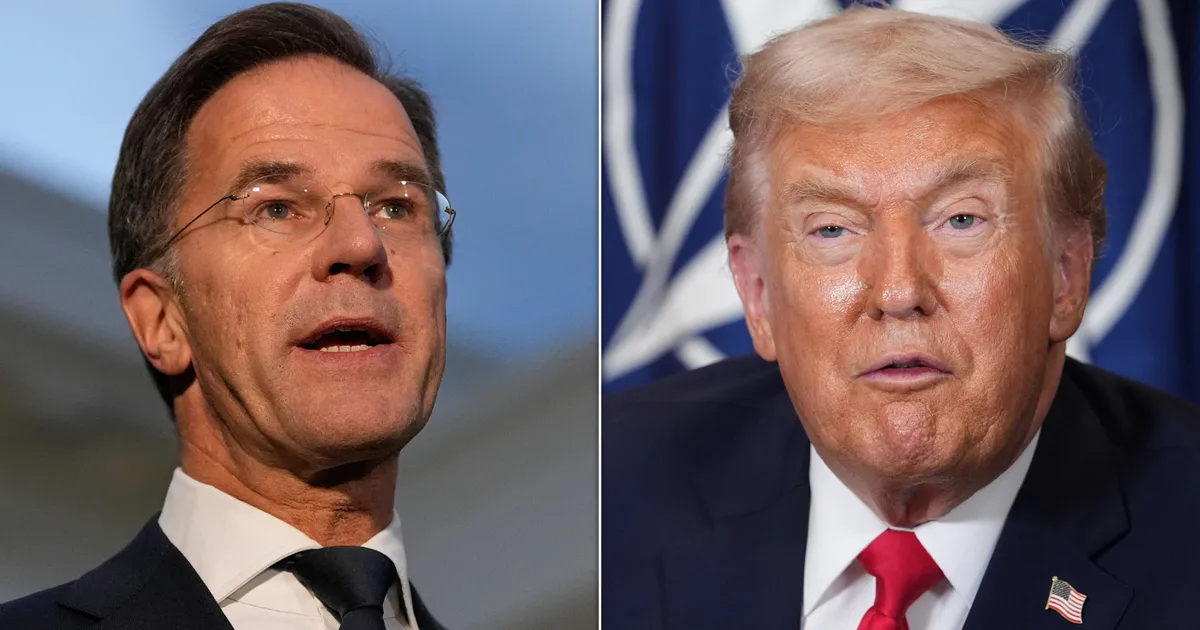
Donald Trump has hit out at Nato for not being “there when we needed them” shortly after intense talks with the alliance’s chief.
The president had a private meeting with Mark Rutte in the White House on Wednesday evening, but judging by his TruthSocial post, Trump was not happy with the way the conversation went.
The US president wrote: “NATO WASN’T THERE WHEN WE NEEDED THEM, AND THEY WON’T BE THERE IF WE NEED THEM AGAIN.”
He also revived his row with Nato members over his demand to own Greenland, the autonomous Danish territory, writing: “REMEMBER GREENLAND, THAT BIG, POORLY RUN, PIECE OF ICE!!!”
Rutte has bent over backwards to appease Trump since he returned to the White House last year.
Nato’s secretary general went viral when he called the president “daddy” in public after Trump compared Israel and Iran to unruly children last June.
His trip to the US this week was meant to try and smooth over relations with Washington after Trump repeatedly threatened to pull out of the defence alliance.
The president has fumed over the way several Nato allies did not send warships to force Iran to reopen the Strait of Hormuz as global oil prices were rising.
Trump has repeatedly ignored that the organisation is built on the idea of defending one another if attacked – not if launching an attack themselves.
The White House did not reveal what Trump and Rutte discussed during their meeting.
White House press secretary Karoline Leavitt said on Wednesday that Nato countries had “turned their backs on the American people” after the States had funded those countries’ defence.
She said Trump would have a “very frank and candid” conversation with Rutte.
The Nato chief later told CNN that he had “very frank” and “very open” talk with the president, despite Trump being “clearly disappointed” with allies.
He said he noted “the large majority of European nations have been helpful with basing, with logistics, with overflights” when it comes to Iran, so it’s a “nuanced picture”.
Rutte claimed the world was “absolutely” safer now after Trump’s five-week campaign against Iran, and credited that to the president’s “leadership” in weakening the Middle Eastern country’s nuclear capabilities.
He claimed Nato members do not see the war in Iran as illegal and that most agreed it was key to address Iran’s nuclear threats.
But UK prime minister Keir Starmer previously warned that Trump’s attacks on Iran have been “unlawful” and poorly planned.
Spanish prime minister Pedro Sanchez also accused the president of setting “the world on fire” and just showing up with “a bucket”, referring to Trump’s two-week ceasefire deal with Iran which kicked in on Tuesday.
Subscribe to Commons People, the podcast that makes politics easy. Every week, Kevin Schofield and Kate Nicholson unpack the week’s biggest stories to keep you informed. Join us for straightforward analysis of what’s going on at Westminster.


On Thursday, April 9, Schitt’s Creek star Dan Levy’s new show Big Mistakes was released on Netflix.
The multi-award-winning actor and writer, who also released comedy-drama film Good Grief with the streamer in 2023, worked with I Love LA’s Rachel Sennot to create the show.
“Blackmailed into working for some very dangerous people, two deeply incapable siblings become the most disorganised duo in organised crime,” its description reads.
Levy appears as a pastor in the eight-episode chaos-fest, which promises to combine his signature comedic flair with high-octane crime drama. The cast also includes Taylor Ortega, Laurie Metcalfe, and Jack Innanen.
Here’s what the critics have to say so far:
″…This is less a great premise than a passable excuse for Levy to create another bickering, boundary-decimating on-screen family. As Schitt’s Creek proved, it’s where he excels, and the dynamic between the repressed and dutiful Nicky and the thrill-seeking, acid-tongued Morgan is a joy to witness…
“The domestic cringe comedy at its heart means Big Mistakes is far from a major error, but it isn’t quite a triumph either. Perhaps that’s inevitable. They may seem like a safer bet for a risk-averse TV industry, but shows made by stars can rarely compete with the ones that make them.”

“Big Mistakes is a wild ride. Sharper rewrites and edits to plot points would have offered a more succinct narrative, allowing the comedic tone to shine through. Despite its muddled storylines, the tone, wit and characters give viewers several glimpses into Levy and Sennott’s quirky world.
“If nothing else, the show captures the thrills and horrors of siblinghood and why, so often, the people you can truly rely on are those who have experienced the best and worst parts of you.”
“Dan Levy’s glorious Schitt’s Creek follow-up is worth the wait… It’s a cracking crime caper that takes the family comedy of Schitt’s Creek and whips it into a wicked, pitch-black thriller…
“There’s barely a character you don’t want to see more of in the Morelli family, with matriarch Linda, played by Laurie Metcalf (Hacks) particularly strong…
“Put it all together and it’s like David Sedaris has teamed up with David Simon. The only mistake in Big Mistakes, therefore, has been to make us all wait so long.”
“The family bickering is funny, as is some of the slapstick, and there are flashes of Schitt’s Creek in the siblings’ fractious but affectionate dynamic. In its search for a darker side, however, it flounders…
“Big Mistakes is stylish and watchable, yet the mood is inconsistent, and for a show that is so predicated on tension, it is oddly laid back.”
“There’s nothing under the surface, but it’s an entertaining surface.
“If you embrace the catty and cute dialogue, rather than being annoyed by it, it’s easy to get caught up and entertained courtesy of the tight direction (starting with Dean Holland on the first two installments), editing that leaves no room for breath (or for fully realized characterization) and a score from Peaches and Nora Kroll-Rosenbaum that shifts into a Run Lola Run gear of pulse-pounding intensity when it wants you to be distracted by the implausibility of the circumstances. You might be annoyed by Big Mistakes, but you won’t be bored, and that’s something.”
“Big Mistakes can be perceptive and funny when it focuses on the chaotic family unit, especially when Metcalf is present…
“The season finale leaves us with reason to believe that a second season will do a better job integrating the crime stuff with the family stuff. I’d still rather see the version of Big Mistakes that didn’t have to.”
“Levy and Sennott have crafted a story that feels real and relatable, even as the circumstances spiral into situations most people can only imagine themselves in…
“With a dry wit and a balance of drama and comedy that is oftentimes reminiscent of Succession – if the Roys were a middle-class family from New Jersey – Big Mistakes is certainly worth a weekend binge.”
″[A] crime of a comedy…
“The Morelli sibs’ involvement gets more and more fruitlessly complicated, though Messrs. Ivanir and Kuzum get to stretch beyond what at first seem clichéd roles. And Abby Quinn is excellent as Natalie, the mom’s campaign manager and toadying child. But the consistent tone of “Big Mistakes” is rancor. Unrelieved.”
All episodes of Big Mistakes are available on Netflix now.

Before the direct action group was unlawfully banned, Palestine Action targeted giant insurance corporation Allianz for its support for Israel. Now, rather than follow the example of other firms and cut its ties to the genocidal colony, the company is suing six activists for occupying and throwing paint at its Guildford office during two anti-genocide protests in 2024 and 2025.
Allianz: a disgrace
Allianz reportedly ended its insurance of Israel’s biggest arms-maker Elbit in November 2025 after a sustained protest campaign, but maintains other contracts with firms involved in Israel’s weapons industry.
The firm has refused to pause its lawsuit until criminal trials related to the protests are concluded. The protesters have applied to the courts to force the firm to do so. One of them, Seren John-Wood, said that Allianz was seeking “unfair advantage”:
This is an unprecedented and unusual extra step that is being conducted parallel to criminal proceedings.
The burden of proof is significantly lower in civil courts. We believe that in a criminal court we will be found not guilty. In a civil court, they will have an extremely unfair advantage; we are unable to afford legal representation whereas, according to their own annual report, they made a record operating profit of €17.4bn (£15.1bn) last year. There is no legal aid available for civil courts.
Another, George Elliott, said that the firm had done more damage to its own reputation than the protesters had done to its offices:
Allianz brought on its own reputational damage and embarrassment, as well as any other alleged harm to its business and/or employees, by opting to insure Elbit Systems.
Featured image via the Canary
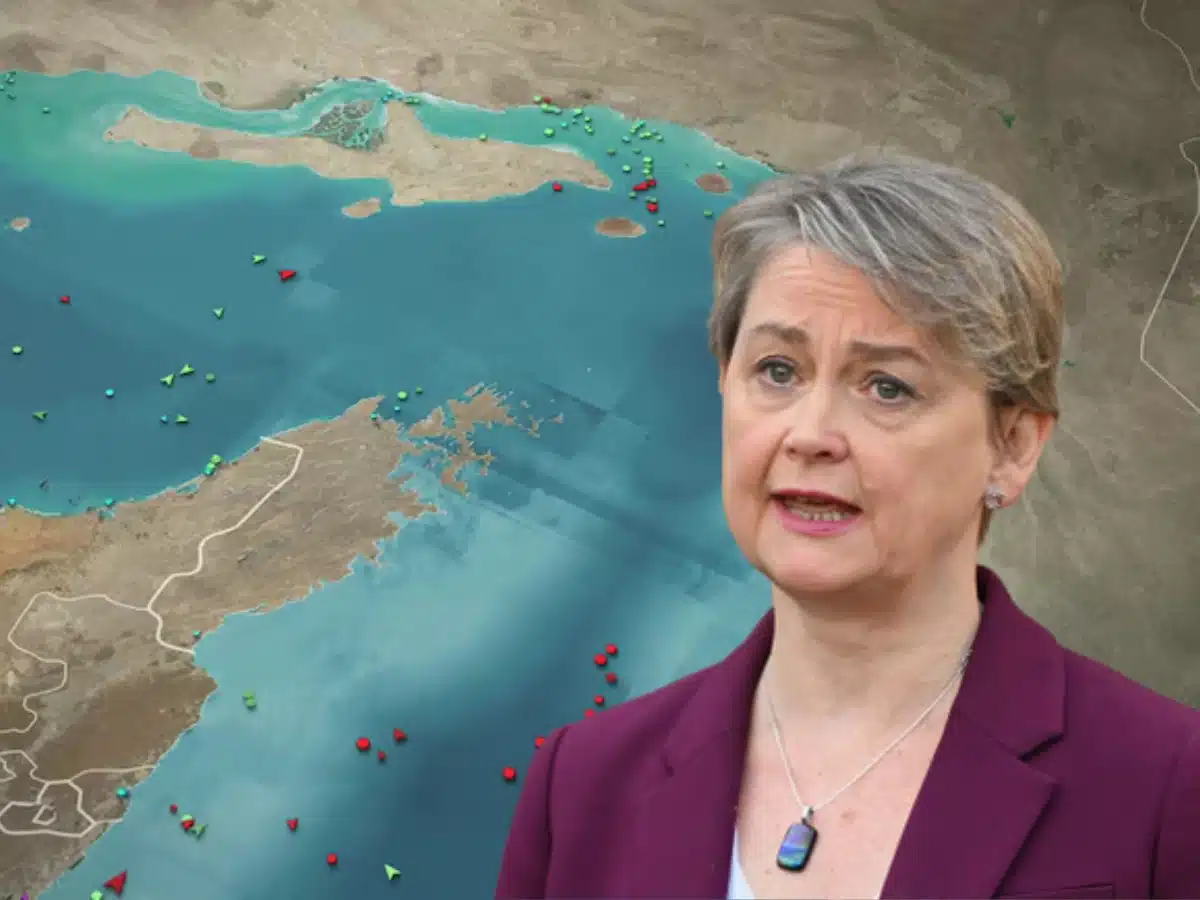
The US and UK-backed Israel breached the ceasefire reached on Wednesday by indiscriminately bombing Beirut in Lebanon, but it seems like our leaders, like Yvette Cooper, are more interested in reopening the Strait of Hormuz without the accountability of their main ally in the Middle East unleashing genocidal violence in Beirut.
The Strait of Hormuz
Labour ‘Friend of Israel’ Cooper is furious at Iran for closing a shipping lane but has nothing but lip service for Israel bombing Beirut, hitting 600 schools and 30 universities, and violating yet another ceasefire. Nothing on all the B-52 planes taking
Further, she knows full well that the Strait of Hormuz is actually open for peaceful nations – the Spanish, French, Portuguese, Japanese, and Chinese have all gotten their ships through. So the idea that the Strait is closed is simply not true.
Iran has re-closed the vital Hormuz Strait to oil tankers connected in any way to its aggressors and has again hit US facilities in the Gulf. Iran continues to allow vessels belonging to peaceful nations to pass.
When asked about Israel’s breach of the agreed ceasefire terms by bombing Lebanon on Wednesday and the Strait of Hormuz being opened, the Foreign Secretary, Yvette Cooper, said
We want the ceasefire to continue. We don’t want a return to conflict, and we crucially want to see the Strait of Hormuz reopened because this is crucial for the global economy and for tackling the cost of living crisis here at home, and no country should be allowed to hijack these international shipping routes that impact the entire world and its economy.
We do want to see the ceasefire extended to Lebanon. I am deeply troubled about the escalating attacks we saw from Israel in Lebanon yesterday. We are seeing the humanitarian consequences, the huge mass displacement of people in Lebanon, so we do strongly want the ceasefire extended to Lebanon but we also need to maintain that ceasefire that is applying currently accross Iran and crucially get the Strait reopened as well.
Foreign sec @YvetteCooperMP tells Sky News she is “deeply troubled” by the Israeli attacks on Lebanon and wants the ceasefire to be extended to the country.
She adds that “it is crucial that Iran is not allowed to introduce tolls on the Strait of Hormuz.” pic.twitter.com/JrCOpxglu9
— Sky News (@SkyNews) April 9, 2026
Lebanon strikes get lip service only
Cooper concentrates most of her wrath on Iran, closing the Strait rather than the British-backed Israel’s unspeakable violence that not only violated ceasefire terms but was a grotesque escalation.
Cooper went on to say she is speaking with the International Maritime Organisation in London about their proposal to get the first ships moving, the trapped ships that are trapped in the Strait of Hormuz, and it is also crucial that Iran is not allowed to introduce tolls, calling it an international transit through the high seas, so it cannot be allowed to apply tolls and restrictions on that route as it reopens.
Let’s first examine Cooper’s claim about the Strait. She may be familiar with the 1994 San Remo Manual on International Law Applicable to Armed Conflicts at Sea.
Well, according to the Conversation:
Under the law of naval warfare, states are generally divided between belligerents (those engaged in armed hostilities) and neutrals (those not involved in the war).
The line between belligerents and neutrals is not always an easy one to draw. In the Middle East, at a minimum, Iran, Israel and the US could be classified as belligerents.
According to the San Remo Manual, ships flagged to neutral states, including their warships, may exercise their navigational rights under general international law through a belligerent’s strait.
It is recommended that neutral warships give notice of their passage as a precautionary measure. A belligerent must not target neutral ships – they are not considered military objectives and must not be fired upon.
During this conflict, Iran’s territorial sea (which includes the waters within the Strait of Hormuz) counts as an area of naval warfare. The belligerent states are legally required to have due regard for the legitimate rights and duties of neutral states in an international strait.
Here is the UK’s problem, under this legal framework, the United Kingdom is not a neutral state.
By actively backing Israel’s military operations, providing weapons, intelligence, and diplomatic cover, the UK has made itself a party to the conflict. Cooper knows this and is conveniently glossing it over.
That means the UK is a belligerent state, just like the US and Israel. Had the UK chosen to act as a true neutral, rather than as a US vassal, it would have the legal standing to demand unimpeded transit through the Strait of Hormuz. But as a belligerent, it has no such right. Cooper cannot have it both ways, arming one side of a war while posing as a defender of international shipping law.
UK is supporting an illegal war
Contrary to Keir Starmer’s claims that the UK role is only defensive, the government has allowed US bombers to use its airbases at home and on the colonised Indian Ocean territory of Diego Garcia. The UK, whatever the government claims, is becoming more deeply entangled in this runaway war.
Sanam Naraghi Anderlini put it well on Channel 4 News. She said the Strait of Hormuz is actually open if you’re not part of the war. The Spanish, Portuguese, Japanese, and Chinese have all gotten their ships through. So the idea that the Strait is closed is just not true. It’s only closed if you are supporting the illegal war. Naraghi also pointed out that the US-Israel aggression has hit 30 universities and 600 schools.
When Channel 4’s Krishnan Guru-Murthy quoted Trump saying that some Iranians wanted the US to bomb it, she quickly responded that it was “egregious” and “absurd” to suggest that in a country of 93 million people suffering from toxins from petrochemical plants that were bombed, that they chose it.
#C4News “The strait of Hormuz is actually open if you’re not part of the war”
“The Spanish, Portuguese, Japanese, Chinese, have got ships through”
“The idea that the strait of Hormuz is not open is not true”
“It is closed if you are supporting the illegal war”
“They have hit… pic.twitter.com/HHNvyCFKve
— Farrukh (@implausibleblog) April 6, 2026
Labour Friends of Israel member Cooper should be ashamed. While Israel bombs Beirut and burns through yet another ceasefire, Britain’s Foreign Secretary saves her outrage for Iran closing a shipping lane. Cost of living crisis in UK is Labour’s making – not Iran’s – enough gaslighting.
Featured image via the Canary
Trigger warning: this article contains depictions of extreme racist language.
Journalist Sangita Myska has received foul, racist comments for daring to post footage of a disgusting racist tirade against a female British-Asian journalist in south London. But Myska also received a flood of support as hundreds condemned the racists and the politicians who had incited and enabled them.
Sangita Myska receives racist abuse
Sangita Myska posted a video of the verbal – and criminal – assault directed at BBC reporter Bhavani Vadde in Balham. The aggressor’s face was blurred out on Vadde’s wishes:
Appreciate your solidarity. Thank-you
— Bhavani Vadde (@BhavaniVadde) April 7, 2026
Britain is run by a government, with its own deep racist instincts, that appeases and panders to the racist right incited by Reform UK and others. So of course, among the mostly appalled and supportive comments – like turds on a pavement – were racists either adding their own filth or trying to justify the outrageous thug. And one set of comments stood out so much that Myska quoted it herself, with an ironic comment about being glad to be back home in England from a trip to Japan:
Good morning. It’s so good to be back home in Blighty 🙄🇬🇧 pic.twitter.com/sd7dvGZwwk
— Sangita Myska (@SangitaMyska) April 9, 2026
Most who saw this were rightly appalled and supportive, but some still couldn’t resist exposing their own rotted souls:
It must be awful for you, I think you would be much happier in your ancestral homeland. 👍
— Fellowship of the United Kingdom (@FellowshipofUK) April 9, 2026
You’re still not British btw
— Sensitive Young Saxon (@SYS_04_) April 9, 2026
They’re right. You’re not British, whatever it may say on that little bit of paper our treasonous politicians gave you. And you never will be.
You’re a parasite working to undermine us. You have a country and ancestral homeland, and you need to go there. Stop leeching off ours.
— Weird internet guy (@Weirdwebguy) April 9, 2026
Hearteningly, though, most gave the amoeba-brains the treatment they deserved – often with barbed humour:
This is mocking someone’s skin colour. Looks like my neighbours mum pic.twitter.com/Yb2tM839IG
— Klingonsmurf (@Klingonsmurfing) April 9, 2026
He’s a disgusting little incel, one who should probably receive a knock on the door in the very near future. pic.twitter.com/5CSh7bkqC5
— J Schwinger (@TheBottom_Lines) April 9, 2026
Awww look, the right wing, imbecilic cunts are out in force. Sad, pathetic bunch spending their time online and are then surprised that they feel miserable and bitter.
— REALNEWS24 (@neveragain499) April 9, 2026
Ah the smell of gammon in the morning 😳💜
Not the consensus of the masses
Spirant make it easier to read
Love and kindness to you 💜— Richard Marsden (@Delicaboy) April 9, 2026
Sangita Myska said she had received a flood of such abused since her return:
Thanks Lou. Something odd is happening. There’s been a torrent of it since I returned a couple of days ago.
— Sangita Myska (@SangitaMyska) April 9, 2026
She expressed her appreciation for the flood of support:
Alas, it seems I’ve been put on some sort of racist troll target list while away. Glad to be in the company of my lovely followers though – so thanks for the welcome back!
— Sangita Myska (@SangitaMyska) April 9, 2026
She even found time for a dig at former colleagues who smeared her after she was removed by LBC for daring to challenge an Israeli spokesman’s lies:
I couldn’t possibly comment…
— Sangita Myska (@SangitaMyska) April 9, 2026
And she was very clear where the blame lies for the emboldening of such monsters:
There are so many of them now – including in Parliament.
— Sangita Myska (@SangitaMyska) April 9, 2026
Happily – and contrary to her expectations – the idiots’ racism was too much even for Elon Musk’s ‘X’. The racist’s account has been suspended:
— Mak George (@MakGeorge) April 9, 2026
Featured image via the Canary

The BBC’s international editor warned that Donald Trump’s ceasefire deal with Iran is “fragile and tattered” after Israel launched strikes against Lebanon.
Tehran insists that its agreement with the US – and Israel – included an end to all attacks against allies in the region.
However, the White House is denying such a claim, with US vice-president JD Vance calling it a “misunderstanding” over the terms of their agreement.
Speaking on BBC Radio 4′s Today programme, the corporation’s international editor Jeremy Bowen said the ceasefire is “fragile and tattered” right now as a result.
He said: “I personally find it, having looked at the Middle East for many many years, Lebanon and Israel, I find it very hard to believe that that strike yesterday – hitting 100 targets in 10 minutes, causing massive damage and loss of life inside Lebanon – I find it hard to believe it is not connected to the fact that the Israelis want to continue the war against Iran.”
He also pointed out that the Pakistani prime minister Shehbaz Sharif, who mediated the ceasefire, posted on social media that Lebanon was part of the ceasefire when describing the original deal.
Bowen also noted that Israeli prime minister Benjamin Netanyahu has been insisting he will continue trying to “reshape the Middle East in Israel’s interest”.
The specialist took issue with Trump’s claim of “complete victory” over Iran, too.
He continued: “You can argue very strongly with the American characterisation that they’ve had scored a massive victory here because while they’ve had many tactical successes, they clearly strategically have not got that.
“But they have given [Iran] a hammering.”
Bowen said that, as a result, Tehran would not be willing to give up control of the major shipping lane, the Strait of Hormuz.
Iran effectively closed the waterway over the last five weeks in response to the US-Israel strikes, causing oil prices to shoot up around the world.
Bowen said: “So what Iran has now is the control of the Strait of Hormuz. They are aware of the power of that.
“And sure, they’re not going to give it up easily because without that, they give up their influence.”
Subscribe to Commons People, the podcast that makes politics easy. Every week, Kevin Schofield and Kate Nicholson unpack the week’s biggest stories to keep you informed. Join us for straightforward analysis of what’s going on at Westminster.
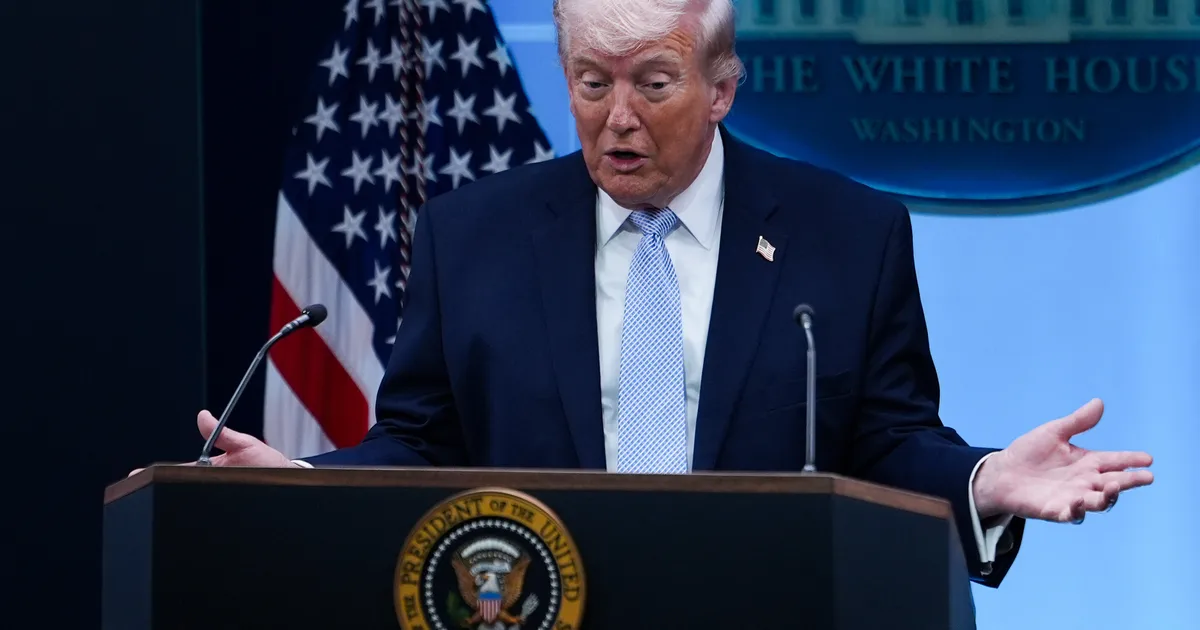
Iran has accused the US of trying to “have a cake and eat it at the same time” after the White House backed Israeli strikes on Lebanon.
Tehran argues that Lebanon was supposed to be included in its ceasefire deal with the US – and Israel – to halt all fighting in the region.
But Israel has been accused of a “massacre” in Lebanon by issuing air strikes on Wednesday which killed 182 people, according to the Iranian health ministry.
US vice-president JD Vance chose to stand by Israel last night, calling it a “misunderstanding”.
“I think this comes from a legitimate misunderstanding,” Vance told reporters. “I think the Iranians thought the ceasefire included Lebanon, and it just didn’t. We never made that promise, we never indicated that was gonna be the case.”
But Iran’s deputy foreign minister told BBC Radio 4′s Today programme that the attacks were a “grave violation” of any ceasefire agreement.
Saeed Khatibzadeh said Iran had sent a message to the Oval Office overnight which essentially said: “You cannot have a cake and eat it at the same time.”
He added: “You cannot ask for a ceasefire and then accept terms and conditions, accept all the areas that a ceasefire is applied to, and name Lebanon, exactly Lebanon in that, and then your ally [Israel] just starts a massacre.”
He claimed the US “must choose” if it wants war or peace, but “they cannot have it both at the same time”.
Asked if Iran would pull out of negotiations if the strikes continue, he said: “We are very much focusing on the wellbeing of the whole Middle East.”
He also defended Iran’s attempts to control passage through the major shipping lane, the Strait of Hormuz.
He said: “Iran said security for all or security for nobody. The Strait of Hormuz is purely in Iranian territory.”
The UK’s foreign secretary Yvette Cooper said Britain wants the ceasefire extended to cover Lebanon and that has been part of their discussions with the US.
She said the strikes against Lebanon on Wednesday were “completely wrong”.
“We’ve seen the mass displacement of civilians in Lebanon with significant humanitarian consequences,” she said.
“This escalation in damaging, it’s wrong… we want the ceasefire extended to cover Lebanon.”
Cooper also disputed the Iranian deputy foreign minister’s claims that the Strait of Hormuz is not in international waters but territory belonging to Iran and Oman.
The minister said freedom of navigation applies to all international transit routes under maritime law, claiming: “Countries cannot simply hijack those kinds of international transit routes and unilaterally apply tolls.”
Subscribe to Commons People, the podcast that makes politics easy. Every week, Kevin Schofield and Kate Nicholson unpack the week’s biggest stories to keep you informed. Join us for straightforward analysis of what’s going on at Westminster.
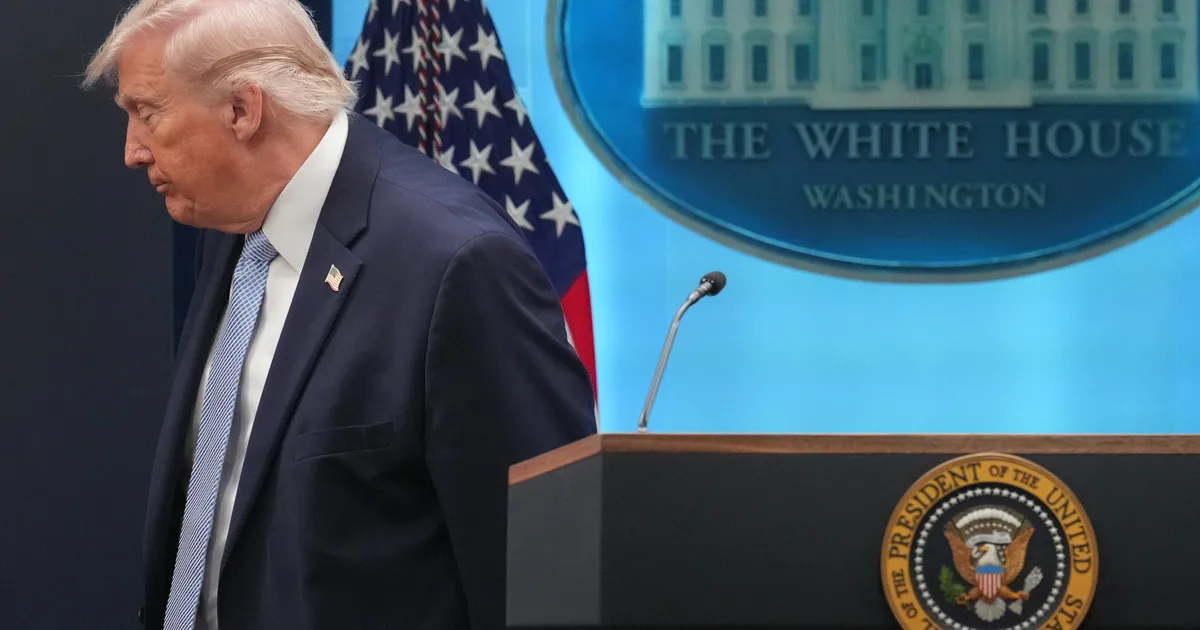
WASHINGTON — Even as President Donald Trump declares a victory in his war against Iran, what precisely the United States has won remains unclear, while the purported loser may be better off in key respects than it was 40 days ago.
“The world has just witnessed a historically swift and successful military triumph,” White House press secretary Karoline Leavitt proclaimed at a press briefing on Wednesday.
“Operation Epic Fury was a historic and overwhelming victory on the battlefield, a capital ‘V’ military victory,” Defence Secretary Pete Hegseth said at the Pentagon.
While the 39 days of air assaults by the United States destroyed much of Iran’s air force, navy and missile and drone capability, the war Trump launched without consulting either allies or Congress has ended — or has at least paused — with little clarity. Iran’s hard-line theocracy is still intact and still in possession of its enriched uranium. Seizing that was one of the many and various reasons Trump has given for waging the war. Further, there is not even a consensus on the terms of the ceasefire.
“It’s not at all clear what was agreed at this point,” said Mona Yacoubian, an Iran analyst at the Center for Strategic and International Studies. “No clear consensus on which of the 10 points both sides agree on, noting that the proposal is Iran’s.”
John Bolton, one of Trump’s first-term national security advisers and a longtime Iran critic, said he’s not sure there is even a temporary deal in place. “There really isn’t a ceasefire agreement yet. Too much is still disputed,” he said.
“The US is objectively worse off than before we started the war. … The fact that we are negotiating on the basis of Iran’s 10-point plan is a sure sign of defeat.”
– Robert Kagan, State Department veteran of the Reagan administration
At the heart of the confusion is what exactly Iran agreed it would give up in return for an end to the war. Trump himself referred to a “10-point plan” that Iran put forward that he called “a workable basis on which to negotiate.”
Iran’s plan, however, included provisions such as retaining control of and the right to monetize the Strait of Hormuz, the lifting of all US sanctions that had been placed on the country over two decades and a promise by the US never to attack again.
Trump and his aides quickly claimed that wasn’t the 10-point plan Trump meant, but a different plan that Iran had proposed, one more to Trump’s liking. Leavitt on Wednesday also said reporters should ignore statements coming from Iran entirely. “What Iran says publicly or feeds to all of you in the press is much different than what they communicate to the United States, the president and his team privately,” she said.
She would not elaborate or, for example, explain how, on the one hand, Trump could demand a “COMPLETE” opening of the strait on Tuesday evening but then tell ABC News Wednesday morning that he would be amenable to a “joint venture” with Iran to levy tolls on ships passing through, with both countries profiting.
Demanding money for passage through an ocean waterway — as Iran has been doing for weeks at Hormuz ― is unprecedented and flies in the face of the concept of freedom of navigation for commerce, which the United States has defended since its founding.
“When things are all over, I don’t think there will be much in the plus column except weakening their military for the moment,” said Jim Townsend, who has worked at both the Pentagon and Nato and is now with the Center for a New American Security.
Robert Kagan, a State Department veteran of the Reagan administration, said Trump did not merely fail to accomplish his claimed goals, but actually harmed American interests.
“The US is objectively worse off than before we started the war. Iran has gotten international sanction to charge tolls and control passage through the strait. Iran will use this to insist on sanction relief from any nation that wishes to use the strait. It will be backed in this by Russia and China. Iran has not conceded on enrichment. I don’t see how Trump stops Russia and China from replenishing Iran’s weapons supply,” he said. “China has become a major player in the Gulf in a way that it has never been before. The fact that we are negotiating on the basis of Iran’s 10-point plan is a sure sign of defeat.”
Trita Parsi, an Iranian native and an analyst with the anti-interventionist Quincy Institute, said the ambiguity of the war’s ending questions the wisdom of why Trump even started it or didn’t just simply declare victory after three days of attacks and walk away.
“He would undoubtedly have been in a better position if he had ended the war on March 3 or had not started the war in the first place,” Parsi said.
Subscribe to Commons People, the podcast that makes politics easy. Every week, Kevin Schofield and Kate Nicholson unpack the week’s biggest stories to keep you informed. Join us for straightforward analysis of what’s going on at Westminster.
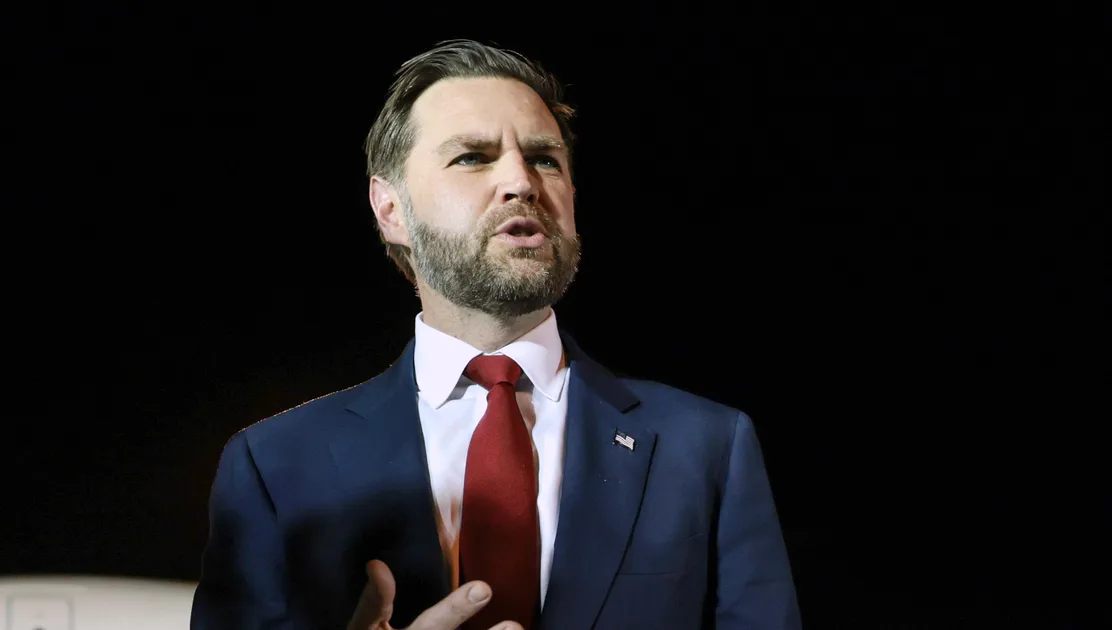
Vice President JD Vance provided a wild analogy on Wednesday involving his wife, Usha Vance, and skydiving, to describe his feelings about a key part of Iran’s 10-point proposal to end the ongoing war.
Speaking to reporters on the tarmac at Budapest Ferenc Liszt International Airport as he departed from Hungary, Vance was asked: “Do you see a scenario in which the administration may be willing to agree to allow Iran to continue enriching uranium for civilian nuclear purposes?”
Both the Trump administration and Israel have repeatedly cited the crippling of Iran’s nuclear program as a primary goal of the conflict.
“What the president has said is that we don’t want Iran to have the capacity to build a nuclear weapon,” Vance said. “The president has also said that we don’t want Iran enriching towards a nuclear weapon and we want Iran to give up the nuclear fuel. Those are going to be our demands during the negotiation.”
In a statement posted on social media on Wednesday, Mohammad Bagher Ghalibaf, the speaker of the Iranian Parliament, claimed the US and Israel had already violated portions of the two-week ceasefire agreement.
“As the President of the United States has clearly stated in his Truth, the Islamic Republic of Iran’s 10-Point Proposal is a ‘workable basis on which to negotiate’ and the main framework for these talks. However, 3 clauses of this proposal have been violated so far,” Ghalibaf wrote.
Vance took issue with one part of Ghalibaf’s statement, specifically the “denial of Iran’s right to enrichment, which was included in sixth clause of the framework.” To explain why, he offered this analogy:
“I thought to myself, you know what? My wife has the right to skydive, but she doesn’t jump out of an airplane because she and I have an agreement that she’s not going to do that because I don’t want my wife jumping out of an airplane,” Vance said. “We don’t really concern ourselves with what they claim they have the right to do. We concern ourselves with what they actually do.”
Users on social media were quick to call out the bizarre nature of Vance’s analogy:
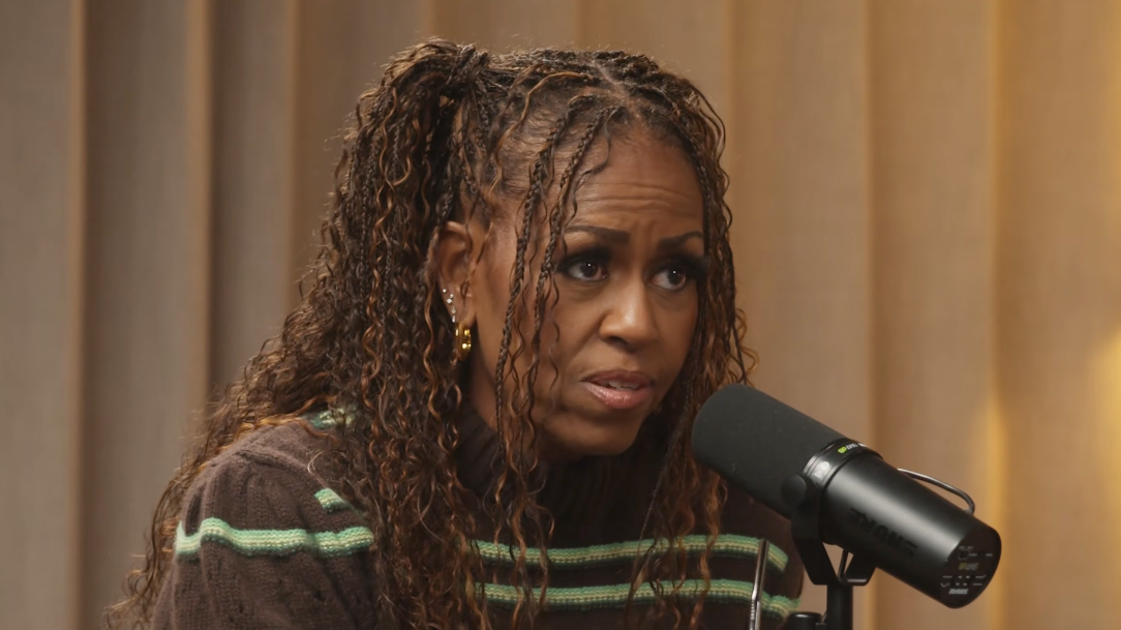
Former first lady Michelle Obama shone a light on the current state of the US on Wednesday, quipping that the country is in its “janky” era, but that Americans can grow from it.
“You know, there are versions of the country that happen, right? And the new version doesn’t make the old one bad,” Obama told comedian Hasan Minhaj on the show she co-hosts with her brother, IMO with Michelle Obama and Craig Robinson.
“It’s necessary for growth, and I think we’re in just a janky version, right?” she said.
Minhaj agreed and then asked, “May I curse, Mrs. Obama?”
“You may,” she replied.
“Yeah, shit is jank right now,” he said. “Super jank.”
Obama put an optimistic spin on things, adding that “with each version, we learn something about ourselves as a country.”
“Right now, I’m kind of digging the way folks are beginning to respond, right?” she continued. “I mean, Minnesota, powerful stuff. I mean, it was a powerful reminder of what a community of people can do and are willing to do to protect one another. You know, when you’re not so janky, you don’t have to prove that, right?”
The Trump administration notoriously deployed federal agents to Minnesota at the end of last year as part of its aggressive deportation campaign. The massive public outcry over the operation intensified after federal agents killed US citizens Alex Pretti and Renee Good in January.
Former President Barack Obama warned that month that Pretti’s killing should serve as a “wake-up call to every American, regardless of party, that many of our core values as a nation are increasingly under assault.”
Michelle Obama noted that as a country, “We haven’t been this janky for a while, and I think our muscle of understanding our truth just got a little lax.”
Subscribe to Commons People, the podcast that makes politics easy. Every week, Kevin Schofield and Kate Nicholson unpack the week’s biggest stories to keep you informed. Join us for straightforward analysis of what’s going on at Westminster.
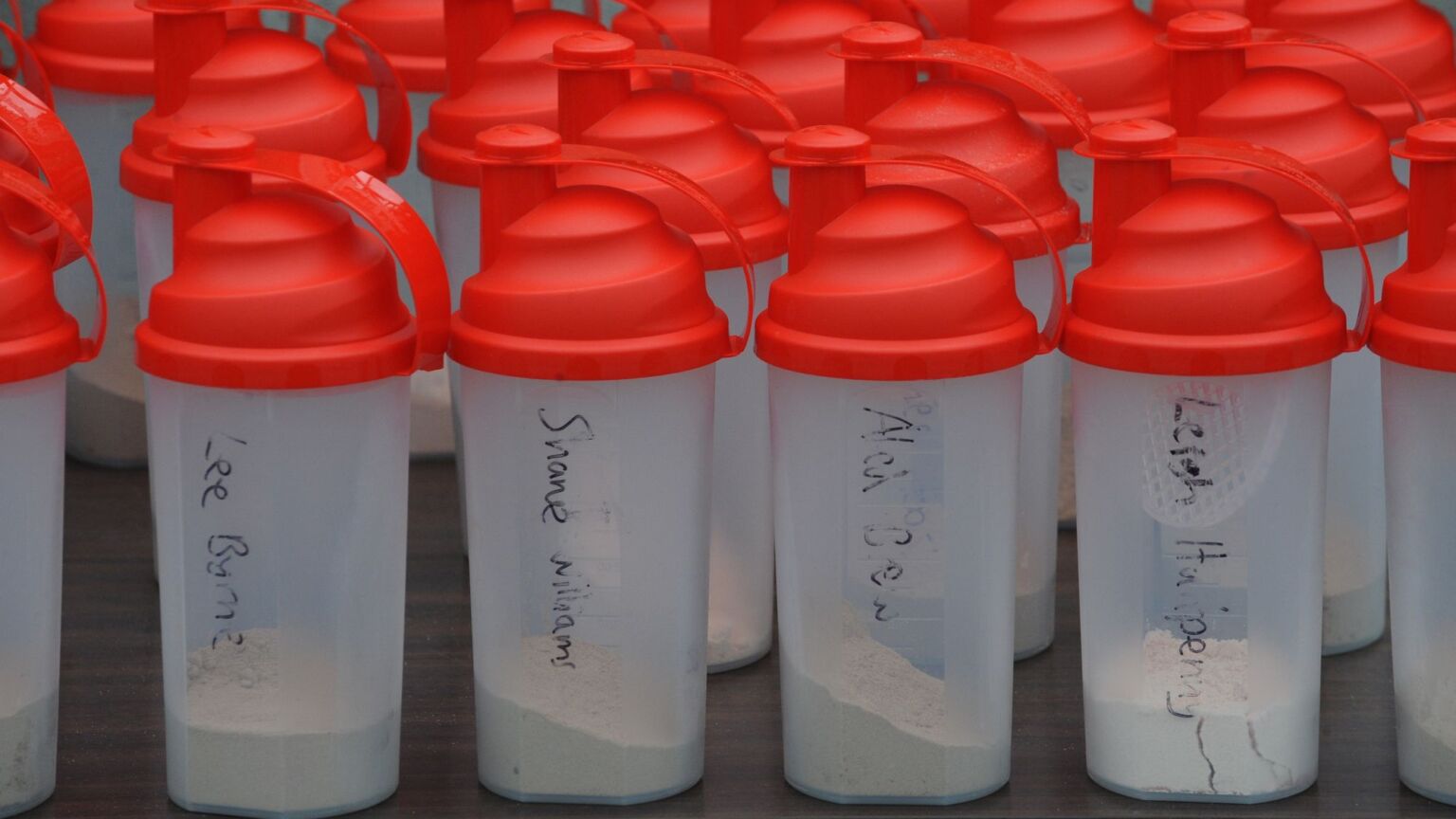
A British food company whose flagship product has been described as ‘a thin suspension of powdered grit in water’ – cloying, artificial and somehow both sweet and bitter – has just been sold for around €1 billion (£870million). This is Huel, bought last month by French yoghurt giant Danone.
Huel is not alone in raking in the big bucks despite dubious quality. From Cadbury’s £11.5 billion takeover by Kraft to BrewDog’s £1 billion valuation when it sold a large stake to private equity, some of Britain’s most underwhelming food and drink brands now command extraordinary market valuations. How do products this mediocre become so valuable?
Huel’s awfulness is no accident – it is the entire point. Huel, founded in Aylesbury in 2014, takes its name from a composite of the words ‘human fuel’. It appears to have been built around the idea that actually making food to eat with your loved ones is inconvenient, and that eating for pleasure is beside the point. The aim, instead, is efficiency: one part powder to five parts water, shaken and consumed while on the go.
When Huel was reviewed by the Guardian in 2014, the disgruntled reporter said it reminded her ‘of the medicine I had as a child for bottom worms.’ A reviewer for Vice later quoted someone calling it ‘late-stage capitalist nutrient paste’. Tellingly, defenders of Huel tend to praise it for convenience rather than taste, or else parrot the product’s claims to being a ‘healthy’ replacement for actual food – that is, despite the drink’s ingredients being processed beyond all recognition.
And yet, Huel is now worth around £870million. Danone didn’t purchase it because it tastes any good, but because it’s a scalable answer to the very modern desire to not think about eating. Let’s not forget that Danone itself had to recall baby formula over contamination concerns and has been accused of operating as part of a milk-price cartel. Even its press release about the deal confirms that this is primarily about scale, infrastructure and growth. What else could justify a food product so divorced from food?
Birmingham’s Cadbury is an even sadder case. This is a company that started out as something genuinely good. Built as a reaction to Victorian industrial slums, Cadbury gave its workers decent housing, open space, shorter hours and stability, all of which were exceptional for the time. The worst you could say about the company was that Cadbury’s Quaker roots meant no pubs in Bournville, the purpose-built village where factory staff lived.
But that time is long gone. Since Kraft acquired the company in 2010, Cadbury has been diluted in the same way that countless other heritage brands have been. Even before Kraft’s takeover, the widespread introduction of palm oil in the chocolate industry, as well as various other cost-saving changes, had already drawn global complaints. Cadbury Dairy Milk now offers ‘20 per cent minimum’ cocoa solids and ‘vegetable fats in addition to cocoa butter’. This only just meets the legal definition of milk chocolate. A product that was once high quality and distinctive now tastes totally generic.
This decline in standards didn’t come out of nowhere. Reformulations, shrinkflation and price rises have all contributed to the steady erosion of quality. Recently, Cadbury has also faced renewed accusations of child labour in its cocoa-supply chains. Though many still buy the brand out of habit, affection for the former British staple has certainly thinned out among the public.
When it comes to Scotland’s BrewDog, the problem is not so much taste or quality, but pretence. BrewDog positioned itself as a ‘punk’ alternative to corporate beer – something for the anti-establishment and rebellious. For a time, this worked. Then, perhaps unsurprisingly, that sense of ‘rebellion’ transformed into a rather un-rebellious business model. In 2017, BrewDog sold a 23 per cent stake to American private equity firm TSG Consumer Partners in a deal valuing the company at £1 billion. This deal was made explicitly to fund global expansion.
The fallout was huge for those small investors who bought into BrewDog through its ‘Equity for Punks’ scheme. Many now risk being left with nothing. But perhaps the warning signs were there all along. BrewDog has spent years mired in accusations of cultivating a toxic workplace, with former staff describing operating within a ‘culture of fear’. There have been many additional disputes over the company’s ethical and environmental claims. Ultimately, the story has become far less about the company’s mission than about the brand, the rollout and the money behind it.
Those blaming foreign ownership should know this is only part of the story. The aforementioned companies had their issues long before they were sold out of British hands. None of them was built around pride in craft, or even a serious interest in what they produce. Each represents a different route to the same destination: efficiency, dilution or branding overtaking substance.
The result is a food culture where the most valuable products are often the least worth eating.
Richard Crampton-Platt is a food writer and former restaurateur.

If Professor Jiang Xueqin Is Right… Bitcoin Goes NUCLEAR

NYMR launches fundraising effort to restore Bridge 42

Paysign: The Market Is Finally Repricing A Pharma Margin Story


-

 NewsBeat7 days ago
Steven Gerrard disagrees with Gary Neville over ‘shock’ Chelsea and Arsenal claim | Football
-

 Business6 days ago
No Jackpot Winner and $194 Million Prize Rolls Over
-

 Fashion6 days ago
Weekend Open Thread: Spanx – Corporette.com
-

 Business5 days ago
Expert Picks for Every Need
-

 Business3 days ago
Three Gulf funds agree to back Paramount’s $81 billion takeover of Warner, WSJ reports
-

 Sports5 days ago
India men’s 4x400m and mixed 4x100m relay teams register big progress | Other Sports News
-

 Tech2 days ago
How Long Can You Drive With Expired Registration? What Florida Law Says
-
Business4 days ago
No Jackpot Winner, Prize to Climb to $231 Million
-

 Fashion3 days ago
Massimo Dutti Offers Inspiration for Your Summer Mood Board
-

 Tech7 days ago
Commonwealth Fusion Systems leans on magnets for near-term revenue
-

 Fashion2 days ago
Let’s Discuss: DEI in 2026
-
Politics6 days ago
Wings Over Scotland | The quality of mercy
-

 Business4 days ago
Akebia Therapeutics, Inc. (AKBA) Discusses Pipeline Progress and Strategic Focus on Kidney Disease Treatments at R&D Day – Slideshow
-

 Fashion6 days ago
Statement Sunglasses: The Accessory Shaping Modern Fashion
-
Sports7 days ago
Justin Jefferson’s Situation Remains Unchanged after JSN’s Deal
-

 Crypto World20 hours ago
Bitcoin recovers as US and Iran Agree a Ceasefire Deal
-

 Politics6 days ago
East Jerusalem Palestinian families eviction orders
-

 Fashion7 days ago
Thursday’s Workwear Report: Merino Wool Blend Short-Sleeved Sweater
-

 Sports7 days ago
Which German players will make final cut?
-

 Fashion6 days ago
For Love & Lemons’ Spring 2026 Line is for the Romantics
You must be logged in to post a comment Login