Connect with us
DAPA Banner

Tech

A self-driving car in Texas hit and killed a mother duck, sparking neighborhood outrage

Published

on

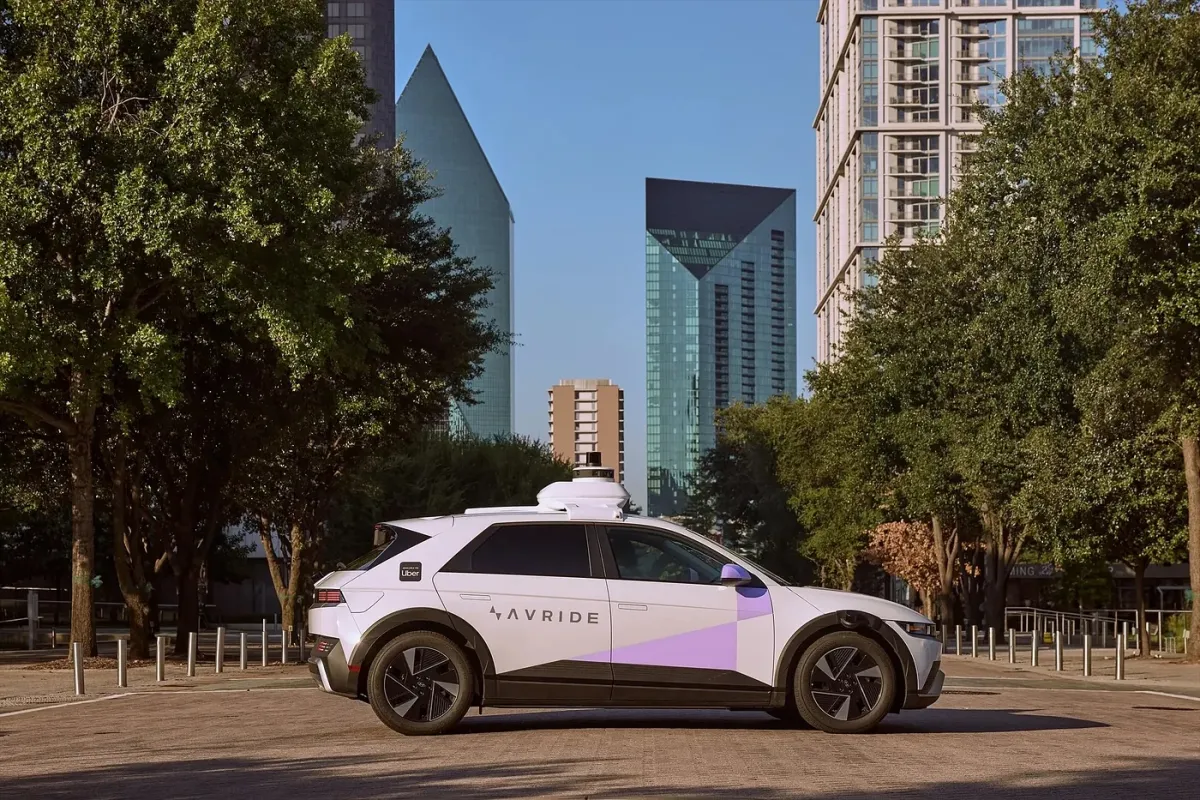
The death of a duck in the Austin, Texas enclave of Mueller Lake has neighbors raising concerns about autonomous vehicles and whether they belong there.

While humans are responsible for killing animals with their cars all the time, this incident has brought negative attention to the new technology. Local media picked up on the duck incident after a resident posted in a Mueller neighborhood Facebook group that an Avride autonomous vehicle (with a human safety operator behind the wheel) ran over and killed a duck, and did not stop afterwards. “It didn’t slow down or hesitate at all, just steamrolled through,” the post, which KXAN reported on, reads.

Residents’ familiarity with this particular duck, which was nesting in a pot located outside of a local Italian eatery, has added to the outrage and mistrust of the autonomous vehicle technology. For those concerned about the future of the duck’s eggs, local residents have them in an incubator, Axios’ Austin reports.

An Avride spokesperson confirmed with TechCrunch that the vehicle was in autonomous mode at the time. Avride hasn’t paused testing on public roads altogether. However, the company has adjusted its area of operations by excluding certain streets around the lake in the neighborhood where the incident with the duck occurred, according to spokesperson Yulia Shveyko.

Advertisement

The resident also claimed in their post that the vehicle failed to stop at a stop sign. Avride told TechCrunch it did not find evidence to support that claim. The vehicle came to complete and appropriate stops at all relevant stop signs.

Shveyko said the team has reviewed vehicle data and behavior, including replaying the scene multiple times in simulation. Avride is now evaluating potential improvements to the technology to help avoid similar situations in the future, she said. Notably, this includes running a series of controlled experiments in simulation to ensure that any changes do not negatively impact the vehicle’s safety performance in other scenarios.

Avride isn’t the only company testing or commercially deploying autonomous vehicles in the city. Zoox has been testing in the city. Tesla and Waymo, in partnership with Uber, also operate a commercial robotaxi service in parts of Austin.

Techcrunch event

Advertisement

San Francisco, CA
|
October 13-15, 2026

Source link

Advertisement
Continue Reading
Click to comment

You must be logged in to post a comment Login

Leave a Reply

Tech

Apple Appears To Have Discontinued Its Cheapest Mac Mini

Published

on


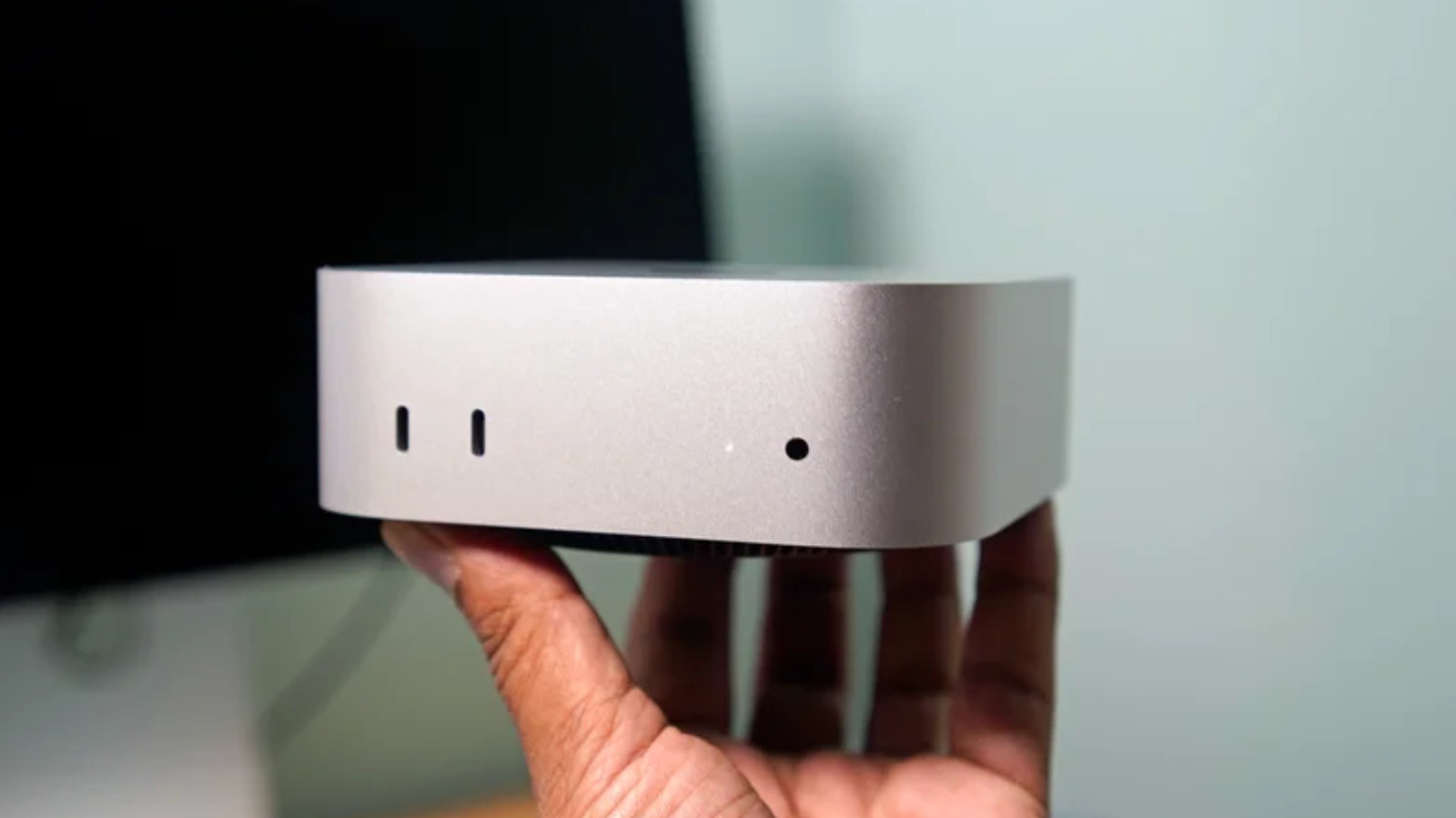
The AI industry’s demand for memory, storage and powerful chips has finally come for the Mac mini. Apple has stopped selling its cheapest $599 model of the Mac mini, based on changes to the company’s store page spotted by MacRumors. Only configurations that come with at least 512GB of storage and up are available, which means the Mac mini now effectively starts at $799. The tiny desktop’s popular use as a home for local AI agents likely played a part in the change.

Engadget has contacted Apple for confirmation that it’s discontinuing the entry-level Mac mini. We’ll update this article if we hear back.

Advertisement

When Apple started selling the redesigned Mac mini for $599 in 2024, it was one of the best deals the company had offered in years. With options for multiple tiers of Apple’s M4 chip, at least 16GB of RAM, at least 256GB of storage and enough ports to get things done, the Mac mini was remarkably capable. That also made it popular among the AI crowd, first for its ability to run local large language models, and later as a dedicated computer for AI agents like OpenClaw. A combination of demand from AI tinkerers and growing constraints around sourcing things like memory and storage may have motivated Apple to remove its cheapest model, at least for now.

CEO Tim Cook suggested as much during Apple’s most recent earnings call. “We think, looking forward, that the ‌Mac mini‌ and ‌Mac Studio‌ may take several months to reach supply demand balance,” Cook said. “Both of these are amazing platforms for AI and agentic tools and the customer recognition of that is happening faster than what we had predicted, and so we saw higher than expected demand.”

Apple has been better than most at weathering “RAMaggedon,” or at least hiding its effects across its product lines. When the company updated the MacBook Air with its M5 chip, it also bumped the storage to 512GB and the starting price to $1099, possibly in light of the changing cost of RAM and storage. In that case, the blow was softened by the availability of the MacBook Neo, which offered a lot of the power of Apple’s Macs for a much more affordable $600. There’s currently no equivalent for the Mac mini, though, and it’s not clear when, if ever, Apple will start selling something similar for that same cheap starting price.

Advertisement


Source link

Advertisement
Continue Reading

Tech

Adapting A 100-Year-Old Lens To A Modern Camera

Published

on

You can get all kinds of fancy lenses for modern cameras, with all sorts of mechanical and electronic wizardly to make them shoot better images. But what if you paired a vintage lens with a modern camera? It would take some work, as [Mathieu] found out, but you’d also get some interesting results.

The optic in question is a 100-year old lens—a Foth 50 mm f2.5 to be precise, originally used with a folding film camera. It was sourced from a market for just 3 euros. Notably, the lens was not designed for modern cameras, and so lacks an aperture and focusing mechanism. [Mathieu] thus had to fabricate something to fit the lens to a Sony FX3. A first attempt used an aperture adapter from Amazon and an elcoid adapter, but there were vignetting problems due to the lens placement in this case. Ultimately, [Mathieu] went with a special macro adapter that allowed him to control focus and tuck in an ND filter behind the lens, which made up for the lack of an aperture.

The vintage glass isn’t the sharpest lens out there, but that’s kind of what’s fantastic about it. The center of the frame is certainly focused, but it fades out softly towards the edges of the image, giving a cinematic, dreamlike effect. The bokeh in the background are particularly charming, too. As far as 3 euro lenses go, this one was a hit.

Advertisement

You can slap just about any lens on anything if you get creative with how you do it. Video after the break.

[Thanks to Stephen Walters for the tip!]

Advertisement

Source link

Continue Reading

Tech

The Mac Mini is sold out for "several months" as AI developers snap them up for local agent workloads

Published

on


“On the Mac Mini and Mac Studio, both of these are amazing platforms for AI and agentic tools,” Cook said. “And customer adoption of that is happening faster than we expected.”
Read Entire Article
Source link

Continue Reading

Tech

Apple's success is running into a familiar problem: not enough chips

Published

on


The quarter showed how dependent Apple has become on its silicon strategy. The iPhone 17 lineup, built on advanced processors made by TSMC using a variant of the manufacturing technology behind leading AI chips, continues to drive the bulk of revenue. iPhone sales reached $56.99 billion, slightly missing estimates, but…
Read Entire Article
Source link

Continue Reading

Tech

Are Red Light Cameras The Same As Speed Cameras?

Published

on


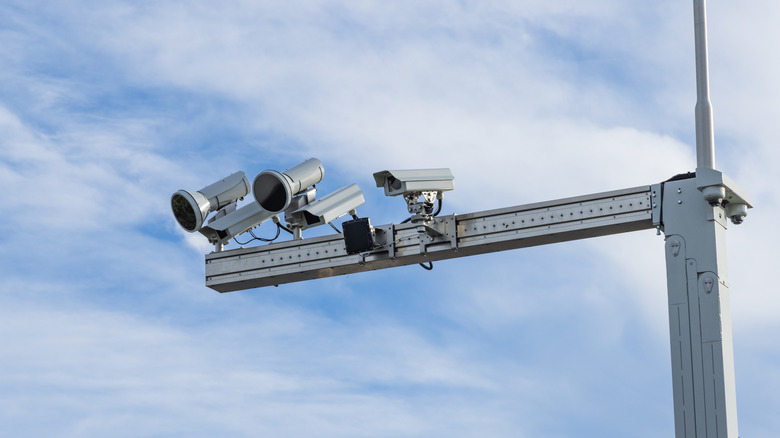
We see them every day with alarmingly increasing frequency — cameras that pop up on the side of the road or at intersections. Whether they’re used to issue tickets in speed and construction zones or relay license plate information, let’s face it: These aren’t going anywhere. It’s best to keep informed as to what they do, what they look like, and where to find them so you can avoid a potentially hefty fine.

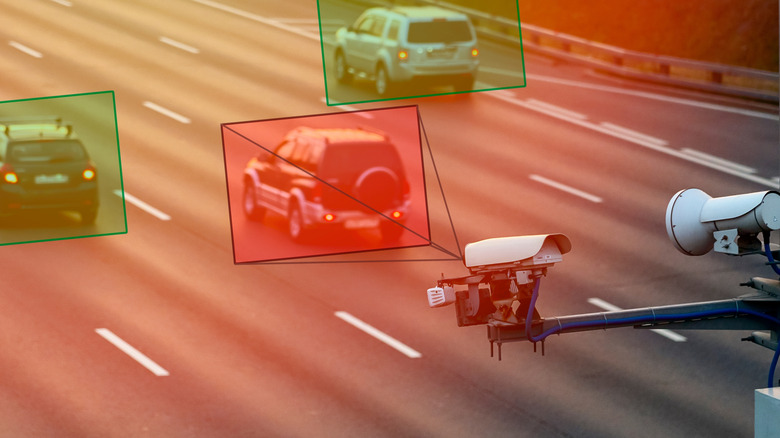
You’ll find no fewer than four types of traffic camera in the United States: Traffic-monitoring cameras, automated number-plate recognition (ANPR) cameras, speed cameras, and red light cameras. The first two cannot issue tickets, so we’ll be brief about them. A traffic-monitoring camera’s job is to detect where cars are to precisely time traffic lights and govern automated signage according to conditions. The ANPR camera identifies a car by its license plate, acting as a monitor to track movements.

Speed cameras and red light cameras, on the other hand, both function in similar ways in that they’re designed to prosecute drivers for disobeying traffic laws. The main difference between the two is simply where they’re placed and what laws they uphold. A red light camera, as the name suggests, sits at an intersection and monitors red light offenses. Speed cameras are typically situated at the sides of roads prone to speeding, like back roads and highways. These cameras issue automated tickets, which the registered vehicle owner receives in the mail. It’s a system not without its faults; for instance, a woman’s license plate matched a common novelty plate, and she was issued 15 traffic tickets. Let’s dive deeper and explore more about how these systems differ and what they can and can’t do.

Advertisement

How red light cameras work

Traffic-issuing red light cameras operate through a hard link to the traffic signal itself. When you pull up to the red light, the camera takes a picture of your car as it moves into position, then detects if the vehicle moves past the point where it’s then in the intersection. If the light is red in both phases, i.e. the car blew the red light, then the camera photographs the car a second time as it goes through the light. It then issues a citation to the registered owner of the vehicle.

This system was first implemented in New York City in 1994, a metropolitan area we all know for its infamous gridlock. The New York Department of Transportation took a hard look at statistics, recording fatalities occurring at intersections and asking the question, “Would an automated red light camera help stop speeders?” New York champions the system today with plans to expand it to 600 intersections. If you blow a light in the City and your car is captured by this camera, expect a $50 ticket in the mail.

Advertisement

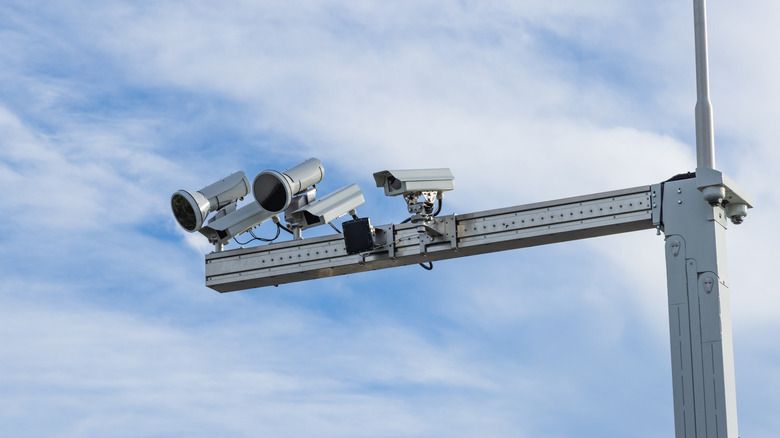
Typically you’ll find red light cameras situated at busy intersections, near school or work zones, or in major cities. They’re identified by the secondary camera unit that captures a picture of the car as it goes through the light, typically mounted on its own pole overlooking the intersection. The legality of red light cameras is often called into question, with specific rules varying on a per-state basis. Some states exclude them outside of metropolitan areas, and others don’t allow them at all.

Advertisement

How speed cameras are different

Speed cameras function the same in principle — if you’re speeding, it’ll take a picture of your car and mail you a ticket. But there are actually several types of speed cameras, each one operating using different methods. Most modern systems use a form of LIDAR and infrared photography to track and capture a car’s image, either by measuring its speed between two fixed points or by measuring its speed at a specific point — much like the ones used in Colorado. These are your fixed units, designed to run autonomously, as opposed to mobile units, which are set up by officials and, as the name suggests, are not static.

These types of cameras are generally what you’ll see in places like construction areas or school zones — any place with a consistent, reduced speed in comparison to the usual flow of traffic. Other areas include high-speed expressways and suburban areas with excessive rates of speeding violations. According to the U.S. Department of Transportation, their presence has reduced crash frequency by 54%, and accidents involving injuries and fatalities by 47% and 20%, respectively.

Different cameras operate using different methods, making detection an exceedingly difficult proposition. For instance, some speed cameras use lasers, whereas others use different bands of radar. Apps like Waze and Google Maps typically state fixed speed trap locations as a heads-up, but you’ll often find surprise mobile units in front of construction zones and the like. Just like red light cameras, the person who receives the ticket will be the one to which the vehicle is registered.

Advertisement


Source link

Continue Reading

Tech

Today’s NYT Connections Hints, Answers for May 2 #1056

Published

on

Looking for the most recent Connections answers? Click here for today’s Connections hints, as well as our daily answers and hints for The New York Times Mini Crossword, Wordle, Connections: Sports Edition and Strands puzzles.


Today’s NYT Connections puzzle is all over the place, My fellow journalists, pay special attention to words hidden in four words. They’ll end up in a journalism-related purple category. Read on for clues and today’s Connections answers.

The Times has a Connections Bot, like the one for Wordle. Go there after you play to receive a numeric score and to have the program analyze your answers. Players who are registered with the Times Games section can now nerd out by following their progress, including the number of puzzles completed, win rate, number of times they nabbed a perfect score and their win streak.

Advertisement

Read more: Hints, Tips and Strategies to Help You Win at NYT Connections Every Time

Hints for today’s Connections groups

Here are four hints for the groupings in today’s Connections puzzle, ranked from the easiest yellow group to the tough (and sometimes bizarre) purple group.

Yellow group hint: Sixth sense.

Advertisement

Green group hint: Bravo!

Blue group hint: Government groups.

Purple group hint: Extra, extra!

Answers for today’s Connections groups

Yellow group: Clairvoyant.

Advertisement

Green group: Staged performances.

Blue group: U.S. cabinet departments.

Purple group: Starting with newspaper names.

Read more: Wordle Cheat Sheet: Here Are the Most Popular Letters Used in English Words

Advertisement

What are today’s Connections answers?

completed NYT Connections puzzle for May 2, 2026

The completed NYT Connections puzzle for May 2, 2026.

NYT/Screenshot by CNET

The yellow words in today’s Connections

The theme is clairvoyant. The four answers are extrasensory, mental, psychic and telepathic.

The green words in today’s Connections

The theme is staged performances. The four answers are ballet, musical, opera and play.

Advertisement

The blue words in today’s Connections

The theme is U.S. cabinet departments. The four answers are Education, Interior, State and Treasury.

The purple words in today’s Connections

The theme is starting with newspaper names. The four answers are globetrotter, heraldry, Post-It and times tables.

Source link

Advertisement
Continue Reading

Tech

AI Performances And Screenplays Won’t Be Eligible For Oscars

Published

on


Sorry, Val Kilmer fans, but the late actor’s Oscar ship has officially sailed. On Friday, Reuters reported that AI-generated acting and writing won’t be eligible for Academy Awards. The new rules from the Academy ​of Motion Picture Arts and Sciences will take effect beginning with next year’s presentation, scheduled for March 2027.

The Academy’s updated rules state that while filmmakers can use AI tools, “synthetic” performers can’t win any awards. Ditto for AI-written screenplays, which must be “human-authored.” The Academy can request more information from submissions to confirm that they were created by humans.

A “performance” that won’t need further clarification is Kilmer’s fully AI-generated appearance in the upcoming indie film, As Deep as the Grave. The actor was initially cast in the movie but had to back out due to medical concerns. (He died in April 2025.) Although Kilmer never stepped foot on set, he will appear in “a significant part” of the movie, according to Variety.

Advertisement

“His family kept saying how important they thought the movie was and that Val really wanted to be a part of this,” said Coerte Voorhees, the film’s writer and director. “He really thought it was [an] important story that he wanted his name on. It was that support that gave me the confidence to say, okay let’s do this. Despite the fact some people might call it controversial, this is what Val wanted.”

Perhaps even more jarring than the AI-generated likeness of a dead actor is the work of a ByteDance tool that has also raised some alarm in the industry. A two-sentence prompt using Seedance 2.0 was all it took to generate a highly convincing 15-second clip of Tom Cruise and Brad Pitt duking it out on a rooftop. (C’mon, Pitt would totally kick his ass.)

The cinematic clip went viral, Hollywood experienced existential panic, and Washington even weighed in. The latest? ByteDance reportedly paused the tool’s rollout while the entertainment industry braces for a future where typing a few words could be all it takes to churn out a feature film.

Advertisement


Advertisement

Source link

Continue Reading

Tech

AirPods Max 2 review one month: Price, features, specs

Published

on

A month after Apple’s AirPods Max 2 went on sale, there’s a lot to like, but little of it is new, and there’s not much reason to upgrade from the original model.

That’s the uncomfortable truth that I came to after spending a few weeks with Apple’s premium headphones. But it also shouldn’t be a surprise for anyone who took even a cursory glance at the specs sheet.

Any second-generation product takes what the first-gen model did well and then builds upon it. But with AirPods Max 2, Apple took the easy way out. And it’s a real shame that it did.

AirPods Max 2 do improve upon the original model, bringing some AirPods Pro features along for the ride. Still, too many first-gen problems persist, setting users up for the same frustrations.

Advertisement

And that’s the problem here. Those buyers will spend $549 for a pair of AirPods Max 2 headphones. What they’ll get is great audio, but with issues that shouldn’t be there.

If you’re shopping for great audio with some striking design issues, I have good news for you. There are likely some great OG AirPods Max deals available. You should probably buy those instead.

AirPods Max 2 review: Familiar look, familiar mistakes

When I say that AirPods Max 2 look familiar, I’m not kidding. I’m not even exaggerating, because they’re identical.

That even extends to the colors on offer. There are still five for you to choose from. And they’re still Blue, Purple, Midnight, Starlight, and Orange.

Advertisement
Two pairs of matte black over ear headphones lying side by side on a colorful retro style desk mat with sunset and city skyline graphics and a keyboard in the background

AirPods Max 2 review: Space Gray and Midnight side-by-side

I’ve been using the Midnight headphones, and they have a slightly different hue from my original Space Gray model. Those also have a Lightning connector, but apart from that, they’re almost impossible to tell apart.

AirPods Max 2, of course, have a USB-C port for charging this time around. You can also use a USB-C to USB-C cable if you want to enjoy lossless audio.

Like the original and mid-cycle USB-C refresh, AirPods Max 2 use metal as their material of choice. That means they’re still heavy, weighing in at 386.2 grams or 13.6 ounces.

Advertisement

As someone who isn’t a fan of plastic headphones, I’m happy with the metal construction Apple uses. I also don’t mind the weight because it adds an air of quality to the headset.

What I don’t like is Apple’s continued use of a mesh headband. It’s notorious for stretching and sagging, and there’s little to suggest that AirPods Max 2 buyers won’t have the same issue.

The good news is that there are aftermarket accessories that help here. They attach to the headband and use another material to distribute the weight. You’ll likely spot one on my AirPods Max in some of the photos here.

Controls-wise, nothing has changed here. You’ll find holes for the microphone and for air movement on the left ear cup. On the right, there’s a USB-C port on the bottom.

Advertisement

Up top, Apple’s familiar Digital Crown is used for volume and playback controls. The remaining button is used to cycle between the active noise cancellation (ANC) and Transparency modes.

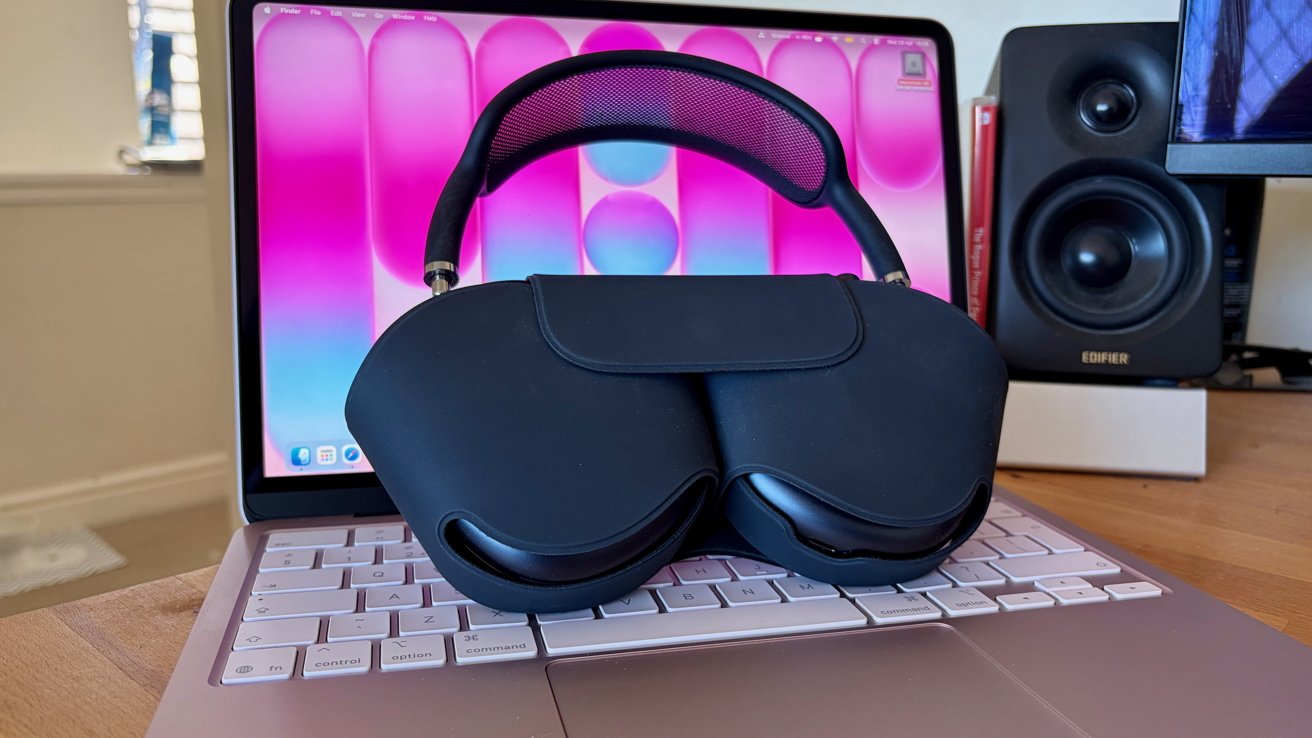
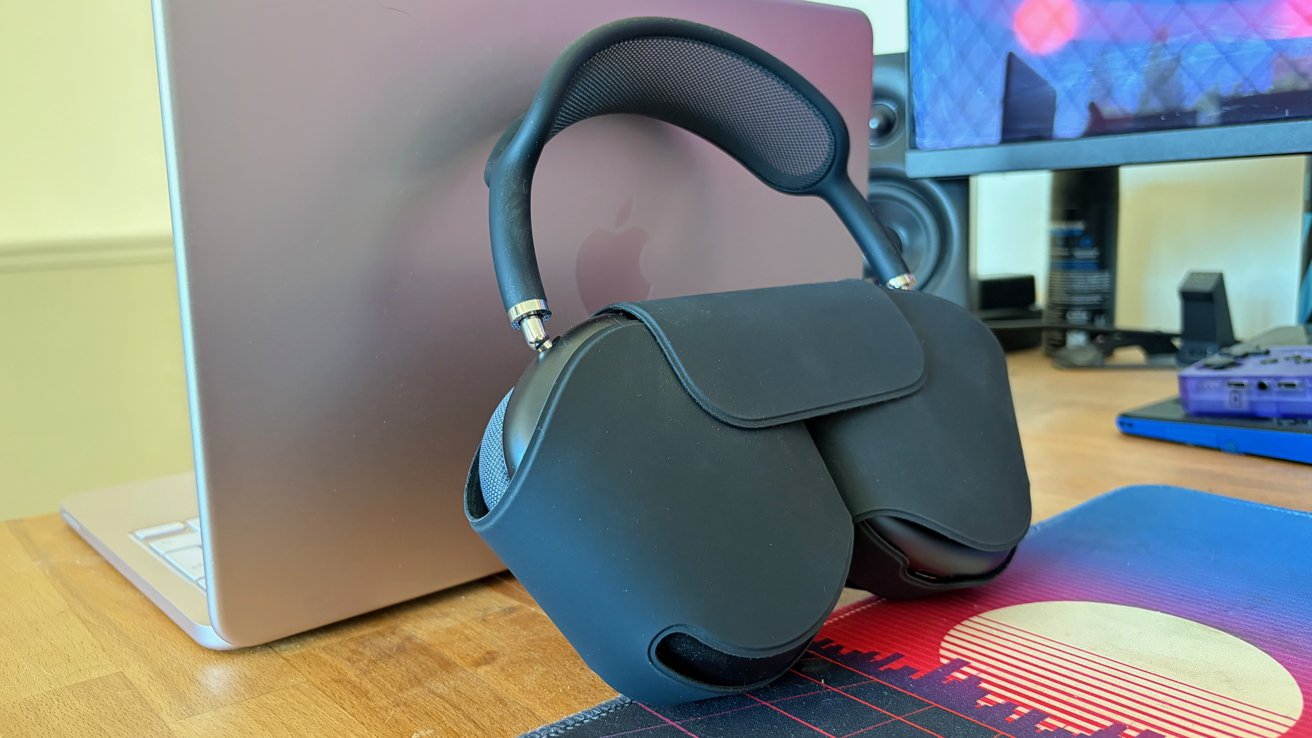
Finally, there’s the case. It’s the same as the original AirPods Max case and one of the main things I expected Apple to fix with this second generation.

Alas, it chose not to. And this case still does almost nothing to protect the headphones during transit. The top and bottom of the metal ear cups are left bare.

Unfortunately, the case is also the only way to put the AirPods Max 2 to sleep. Leave them out, and they’ll never slip into the deep sleep mode that preserves battery life.

Advertisement

That means you’ll need to fiddle with the case and its magnetic flap a lot. The lack of a way to sleep the headphones outside of the case is another issue I expected to be fixed this time around.

Again, alas.

AirPods Max 2 review: The H2 makes its presence felt

One of the few places where Apple has tweaked things is the use of a new H2 chip. The same chip first debuted in Apple’s AirPods Pro 2 from 2022, so it’s not new technology.
Black over-ear headphones in a protective case resting on a laptop keyboard, with a bright pink and blue abstract wallpaper on the screen and a black speaker in the background

AirPods Max 2 review: The familiar Smart Case makes a return

Advertisement

It’s new to Apple’s headphones, though, and brings with it some new features. Apple says the new chip is capable of improved audio processing. But as Andrew O’Hara said in his initial review, you’ll be hard-pressed to tell the difference.

Apple also says that AirPods Max 2 offer 1.5x more active noise cancellation than the previous generation. I can’t refute the claim, but AirPods Max were already class leaders here, and I’ve found AirPods Max 2 to be just as good.

Thankfully, you will notice a difference if you use any of these new features:

  • Adaptive EQ adjusts the sound based on the fit and seal between the ear cups and your head.
  • Live Translation that translates languages as someone speaks
  • Adaptive Audio that adjusts the ANC and Transparency modes based on the volume of your environment.
  • Conversational Awareness that lowers the volume when someone speaks to you and raises it when they’re done.
  • Personalized Volume automatically adjusts the volume after learning your preferences.
  • Head gestures so you can control Siri by shaking and nodding your head.
  • A Camera Remote feature means you can press the Digital Crown to take a photo using your iPhone.

Remember that these features are also available on AirPods Pro 2 and AirPods Pro 3. Some are even present on the entry-level AirPods 4 as well.

The H2 also handles all of the features AirPods owners have become accustomed to. Instant device pairing and switching are still present, and as welcome as ever.

Advertisement

Rounding out the features, Apple’s H2 helps AirPods Max 2 run for up to 20 hours between charges, even with ANC and Spatial Audio enabled. I’ve found that to be a reasonable expectation, and they charge quickly using a USB-C cable.

AirPods Max 2 review: Apple’s audio chops shine again

Apple knows how to make great audio. It’s proven it with all of its most recent AirPods wireless earbuds, and it proved it with the original AirPods Max.

With AirPods Max 2, it’s once again proven that few can compete with its wireless audio capabilities.

AirPods Max 2 sound excellent. They benefit from new high dynamic range amplifiers this time around, marking the one hardware change besides the H2 chip.
Advertisement
Black over ear headphones in a protective case resting against a closed Apple laptop on a wooden desk, with monitor, speakers, and colorful mouse pad in the background

AirPods Max 2 review: Apple’s best-ever headphones, just like its last

The result is the familiar, rich AirPods Max sound. Except, dare I say, turned up to 11 this time around.

Music sounds warm and full of body thanks to a strong bass performance when the audio calls for it. The highs may be a little on the brighter side than some might like, but that’s nitpicking.

With the excellent ANC enabled, AirPods Max 2 make it easy to fall into an album. It envelopes you. In a desert of lackluster wireless headphones, AirPods Max 2 are an oasis of crisp, clear sound.

Advertisement

But then, so are AirPods Max. Even over five years after their 2020 release, I’ve yet to find wireless headphones that have bettered them.

And yes, that applies to AirPods Max 2 as well. They’re every inch as good as AirPods Max, but better? I’ve yet to experience it, unfortunately.

Rounding things out on a more positive note, AirPods Max 2’s ANC and Transparency modes don’t disappoint. Again, Apple’s headphones surely sit at the top of the pile in both regards, although Sony continues to give it a run for its money.

AirPods Max 2 review: A missed opportunity

As I sit here, writing this review while listening to AirPods Max 2, I find myself disappointed. Not because they don’t live up to the original, but because Apple had such a solid foundation to build upon.

Advertisement

And yet, it chose not to.

As great as AirPods Max 2 sound, and as much as I enjoy listening to them, they’re almost impossible to recommend.

For existing AirPods Max owners, there’s little here to warrant spending so much money to upgrade. Not unless one of the new H2-powered features calls to you, and not when all of the same mistakes have been made.

They’re an easier sell to anyone considering AirPods Max 2 as their first Apple headphones. But you absolutely need to be aware of the problems before you put down your $549.

Advertisement

As I write this in 2026, AirPods Max 2 are likely the best-sounding wireless headphones I’ve ever worn. But whether they’re the best, overall, is a harder question to answer.
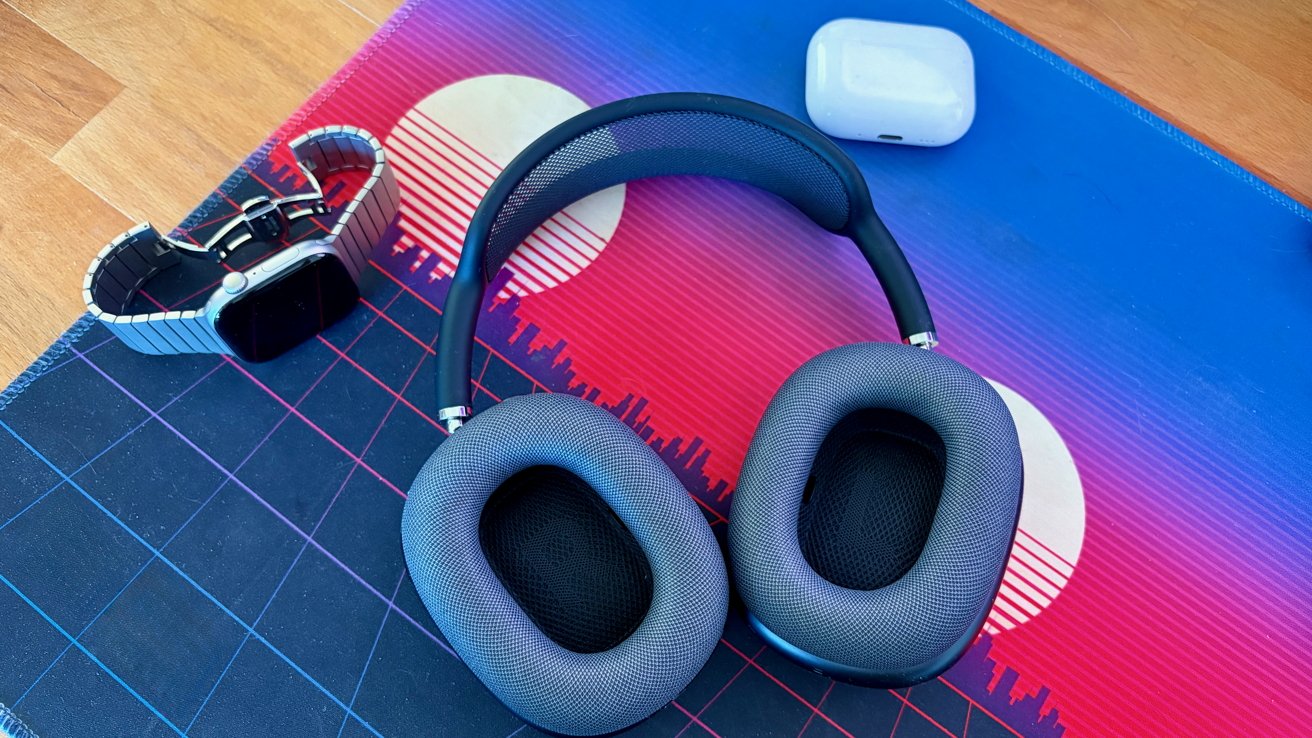
Over ear wireless headphones, a smartwatch with metal band, and a white earbud case resting on a colorful retro style mouse pad with a sunset and city skyline design

AirPods Max 2 review: Handy “L” and “R” markings help orientation

At $549, they’re a costly purchase. They don’t have a real case to keep them safe, and there’s no way to turn them off. They’re also heavier than most people will be used to, and the headband mesh will likely sag much sooner than it should.

If you’re still happy to throw down $549 for AirPods Max 2 with that in mind, more power to you. You’re going to get a pair of headphones that sound great with excellent ANC for your money.

Advertisement

Or you could save a hundred dollars or more and get the original. They’ll sound great.

AirPods Max 2 review: Pros

  • No wireless headphones sound better
  • Industry-leading ANC and Transprency mode
  • H2 chip adds some nice-to-have features
  • Instant pairing and device switching

AirPods Max 2 review: Cons

  • They still won’t sleep outside of the case
  • Smart case offers little protection
  • Same colors as last-gen model
  • Costly at $549

AirPods Max 2 rating: 4 out of 5

Scoring something like AirPods Max 2 out of five is difficult. Scoring anything out of five isn’t easy, but when you’re reviewing the successor to a previous release, things get more complicated. In the case of AirPods Max 2, Apple has a good pair of headphones on its hands. They sound great, and are about as premium-feeling as these things get.

On the other hand, AirPods Max 2 don’t improve upon AirPods Max in ways that I think they should have. The improvements that have been made are unlikely to change the game for most headphone buyers, too.

In choosing a score, I’ve gone with a 4 because, in isolation, AirPods Max 2 are a quality product. If AirPods Max didn’t exist, they’d easily get a 4 for their sound and build quality.

If you already own AirPods Max, consider the review score a 3 or 3.5, instead. AirPods Max 2’s score would be reduced by the lack of meaningful improvements to the original’s shortcomings.

Advertisement

For AirPods Max owners, there is little, if any, reason to upgrade to AirPods Max 2.

Where to buy AirPods Max 2

AirPods Max 2 are on sale now at Apple and other retailers, with Amazon and Walmart discounting the headphones slightly.

You can also pick up first-gen AirPods Max with USB-C for $449 at B&H Photo and Walmart while supplies last.

Our AirPods Max Price Guide offers easy price comparison across popular Apple resellers as well.

Advertisement

Source link

Continue Reading

Tech

Today’s NYT Wordle Hints, Answer and Help for May 2 #1778

Published

on

Looking for the most recent Wordle answer? Click here for today’s Wordle hints, as well as our daily answers and hints for The New York Times Mini Crossword, Connections, Connections: Sports Edition and Strands puzzles.


Today’s Wordle puzzle is a medium-tough one, with a few letters I rarely guess. If you need a new starter word, check out our list of which letters show up the most in English words. If you need hints and the answer, read on.

Read more: New Study Reveals Wordle’s Top 10 Toughest Words of 2025

Advertisement

Today’s Wordle hints

Before we show you today’s Wordle answer, we’ll give you some hints. If you don’t want a spoiler, look away now.

Wordle hint No. 1: Repeats

Today’s Wordle answer has no repeated letters.

Wordle hint No. 2: Vowels

Today’s Wordle answer has one vowel.

Wordle hint No. 3: First letter

Today’s Wordle answer begins with B.

Advertisement

Wordle hint No. 4: Last letter

Today’s Wordle answer ends with G.

Wordle hint No. 5: Meaning

Today’s Wordle answer can mean to convey or carry something.

TODAY’S WORDLE ANSWER

Today’s Wordle answer is BRING.

Advertisement

Yesterday’s Wordle answer

Yesterday’s Wordle answer, May 1, No. 1777, was PLUME.

Recent Wordle answers

April 27, No. 1773: EERIE

April 28, No. 1774: QUACK

April 29, No. 1775: RURAL

Advertisement

April 30, No. 1776: CROCK

Source link

Advertisement
Continue Reading

Tech

Does the Intuit Enterprise Suite (IES) interface dramatically differ from QuickBooks Online?

Published

on

This post is brought to you in paid partnership with QuickBooks

The Intuit Enterprise Suite (IES) interface doesn’t dramatically differ from QuickBooks Online. Core navigation, workflows, and accounting functions remain familiar. The main difference is added functionality for managing multiple entities, user permissions, and consolidated reporting. This means most users can adapt quickly while gaining tools to handle more complex financial operations.

Key takeaways

  • IES keeps familiar workflows but adds multi-entity functionality.
  • Navigation remains similar, with additional controls for managing entities.
  • Users adapt quickly by learning reporting and entity-level differences.

What is the difference between IES and QuickBooks Online?

Intuit Enterprise Suite (IES) builds on the structure of QuickBooks Online but is designed for businesses managing multiple entities or more complex financial operations. While QuickBooks Online focuses on single-company accounting, IES introduces entity-level controls, consolidated reporting, and more advanced user permissions without changing core accounting workflows.

How to adapt from QuickBooks Online to Intuit Enterprise Suite (IES)

Moving from QuickBooks Online to Intuit Enterprise Suite (IES) involves learning how to work across entities rather than relearning accounting basics. The steps below help users adjust quickly and avoid common confusion.

Advertisement
  1. Start with familiar tasks: Begin with workflows like invoicing, expenses, and reporting to build confidence in the system.
  2. Understand how entities are structured: Learn how companies are organized and how to switch between them when working.
  3. Recognize where workflows change: Identify tasks that now involve selecting an entity or working across multiple entities.
  4. Learn consolidated reporting early: Understand how to generate reports that combine data without merging records.
  5. Adjust to permission-based access: Get used to seeing only the data relevant to your assigned entities.
  6. Test common workflows across entities: Practice recording transactions and reviewing reports in more than one entity.
  7. Train users based on their role: Focus training on what each user actually needs rather than the full system.

What changes when moving from QuickBooks Online to IES?

Area What changes in IES
Company structure Manage multiple entities instead of one company
Navigation Familiar layout with added entity controls
Reporting Includes consolidated reporting across entities
User access More granular permissions across companies
Workflows Similar tasks with added entity-level steps

Key differences users notice when moving from QuickBooks Online to a multi-entity system.

Example: Adapting to multi-entity workflows after moving from QuickBooks Online to Intuit Enterprise Suite (IES)

A regional property management company previously used QuickBooks Online to manage a single entity. As the business expanded, it created separate legal entities for each property group, which led to multiple QuickBooks accounts and manual consolidation in spreadsheets.

The finance team moved to Intuit Enterprise Suite (IES) to manage all entities in one system. During the transition, they found that daily tasks such as raising invoices and tracking expenses felt familiar. The main adjustment was selecting the correct entity when recording transactions and learning how to run consolidated reports.

Within one reporting cycle, the team reduced time spent on monthly consolidation and eliminated manual spreadsheet work. Managers could review performance across all property groups without switching systems, while entity-level reporting remained unchanged for local teams.

Checklist: Validating your transition to Intuit Enterprise Suite (IES)

Use this checklist to confirm that your team has adjusted to the key workflow and reporting changes in Intuit Enterprise Suite (IES).

Advertisement
  • Confirm all entities are set up correctly and accessible in one system.
  • Check that users only see the entities they are assigned.
  • Run sample reports to compare entity and consolidated outputs.
  • Verify transactions are consistently recorded in the correct entity.
  • Test a full workflow across entities, from invoice to reporting.
  • Review dashboards to ensure they reflect expected performance.
  • Identify and remove manual consolidation processes.

Best practices and pitfalls for adapting to Intuit Enterprise Suite (IES)

Follow these best practices to help users adjust faster and avoid common transition mistakes.

  • Expect workflows to expand slightly when working across entities.
  • Don’t treat IES like a single-company system with extra tabs.
  • Align reporting structure early to avoid rework later.
  • Make sure teams understand when to work at entity or group level.
  • Don’t carry over manual workarounds that the system replaces.

Intuit Enterprise Suite (IES) vs QuickBooks Online FAQs

Is Intuit Enterprise Suite (IES) difficult to learn if I use QuickBooks Online?

No. Most users familiar with QuickBooks Online can adapt quickly because core workflows remain similar. The main learning curve comes from understanding how to work across multiple entities and how reporting changes when combining data from different companies.

Does Intuit Enterprise Suite (IES) look the same as QuickBooks Online?

The interface is similar in structure, with familiar navigation and workflows. However, IES includes additional controls for managing multiple entities, user access, and reporting, so some screens and processes include extra steps or options.

What is the biggest difference between IES and QuickBooks Online?

Advertisement

The main difference is multi-entity capability. IES lets businesses manage several companies within one system, including consolidated reporting and more advanced permissions, while QuickBooks Online is typically designed for single-entity use.

Will my team need training to use Intuit Enterprise Suite (IES)?

Some targeted training is helpful, especially for teams working across multiple entities or using consolidated reporting. However, users familiar with QuickBooks Online can usually transition quickly by focusing on how entity structure and reporting differ.

This content is paid for by the brands indicated. Digital Trends works closely with advertisers to highlight their products and services to our readers. Although this article is informational and not opinionated, it reflects thorough fact-checking by our team to ensure accuracy. Our dedicated partnerships team, not external advertisers, crafts all branded content in-house. For more information on our approach to branded content, click here.

Advertisement

Source link

Continue Reading

Trending

Copyright © 2025