

Politics
Polanski condemns Israel who condemns his condemnation


The Polanski-led Green Party will soon be voting on whether they should embed support for Palestinian resistance in their politics.
While Palestine is a distant country, it’s suffering is the direct result of actions taken by a close UK ally. Never mind Balfour, Britain’s ongoing involvement – from arms deals, bilateral trade, and media endorsements of Israel – means it’s responsible for the violence Palestinians experience daily.
Now, Israel has responded to the Green Party’s vocal opposition to its genocide in Gaza, condemning its leader. And its leader Zack Polanski has now let them know exactly what he thinks:
For years we’ve seen an ongoing genocide.
It’s been backed by right wing papers, the US President and by this Labour Government. pic.twitter.com/ESynwd21Ct
— Zack Polanski (@ZackPolanski) February 23, 2026
Anti-Zionism
Pressure group Greens for Palestine is urging the Green Party to declare itself “an anti-Zionist party”. The group has issued a statement in support of a motion which it calls “groundbreaking”. The motion also supports the boycott, divestment and sanctions movement and calls for the de-proscription of Palestine Action.
The Green Party motion is ‘Motion A105: Zionism is Racism’, which calls for:
– The Green Party to declare itself an Anti-Zionist Party
– The Green Party rejects attempts to normalise the racist subjugation and oppression of Palestinians; to equate anti-Zionism with antisemitism; to deny or minimise Palestinian human rights; to create hierarchies of racism; and to normalise or attempt to justify apartheid, ethnic cleansing or genocide.
– To reject the IHRA and JDA definitions which have been weaponized to silence legitimate criticism of the state of Israel.
– Full Boycott and Divestment from Israel.
– The Green Party calls for the release of all Palestinian prisoners of conscience (including Marwan Barghouti)
– The Green Party to declare support for a single democratic Palestinian State with Jerusalem as its capital.
– The Green Party calls for the de-proscription of Palestine Action.
– The Green Party calls for the release of all political prisoners detained for non-violent direct action in support of Palestinian rights.
Independent journalist Matt Kennard has endorsed the motion:
Lubna Speitan—Palestinian Green Party member and a member of the Greens For Palestine Steering Group—has proposed this important motion for the Spring Conference.
I endorse all of it. It should all be Green Party policy. Basic stuff for a progressive party.
Motion A105:…
— Matt Kennard (@kennardmatt) January 26, 2026
The Zionist response
As reported by the Telegraph, Israeli foreign minister Sharren Haskel described the Greens’ proposal as “horrific”. They also called the Greens “a racist and hateful political party”, stating:
This Green Party motion is one of the most hateful and racist documents I’ve ever read. It calls for the destruction of Israel and seeks to justify terrorism against Israel.
Its intent is to justify the destruction of the Jewish homeland and deny the right of Jews to a national home. The double standards are extraordinary as they demand a national home for Palestinians but not Jews.
The other way to look at this is that the Greens aren’t calling for an end to Israel; they’re calling for an end to the Israel caging the Palestinians in an open air prison.
And as Polanski himself said, it’s hard to take the Israeli government seriously when we just watched them commit a genocide.
Featured image via the Canary

Equity, the performers’ union, has announced it is boycotting the government’s survey in relation to BBC Charter renewal. It says it’s:
unfit for purpose in either detail or scope.
The union points to the survey’s complete absence of workforce consideration or representation, despite longstanding collective agreement arrangements with multiple trades unions which cover tens of thousands of BBC workers.
Equity is also encouraging its members to boycott the survey.
The union’s key criticisms of the survey are:
- Limited themes covered by questions.
- Public responses are to be aggregated by artificial intelligence software.
- Simplistic “agree or disagree” framing.
- Word limits where free text boxes exist, with limits of 50, 250 or 350 words for responses (many questions are almost 200 words long themselves).
- Airbrushing of workforce.
The BBC Charter
The Royal Charter is the constitutional basis for the BBC. It sets out the BBC’s objectives and purposes, as well as how it is governed and regulated.
The government’s survey launched just as parliament went into Christmas recess on 16 December 2025, with the consultation period closing on 10 March 2026. Although Equity is boycotting the survey, the union has actively engaged with other Charter renewal activity.
This includes sharing with the Department for Culture, Media and Sport (DCMS) a formal written submission covering the union’s policy proposals for the BBC – most of which sit outside the scope of the survey – as well as meeting with DCMS officials, BBC representatives and third parties.
Paul W Fleming, Equity’s general secretary, said:
Is the government setting out to do a W1A-esque satire of the Charter Renewal process? Its aim may be to ensure the BBC is accountable, yet this survey seems designed to actively avoid finding out what people think about the broadcaster and its future.
Not only is it restrictive, blinkered, and unfit for purpose in both detail and scope – it is contemptuous of the wide and varied BBC workforce, including directly employed, freelance and commissioned workers.
Creative workers will be dismayed at the missed opportunity to really delve into the purpose, position and possibilities for the BBC. And the fact that responses may be processed using artificial intelligence only adds insult to injury.
For these reasons, Equity is boycotting this survey, and we are encouraging our members to boycott it as well.
There needs to be an expansive consultation into the future of our public service broadcaster which genuinely seeks and listens to the views of the public, including the workers whose careers depend on the BBC.
Equity’s recommendations
Beyond the limitations of the survey, Equity intends to share with DCMS its key demands for a revitalised BBC. Chief among these is the recognition of trade unions as essential partners of the broadcaster to ensure good jobs – for employees as well as freelancers – to drive growth across the UK.
Equity is also asking for:
- A Workforce Covenant recognising that BBC commissioning and operational decisions must respond to the needs of the workforce as well as audiences, and imposing a legal duty to conduct workforce impact assessments and implement mitigation measures.
- A fair distribution of BBC investment across the nations and regions, starting with the Midlands.
- Workforce representation on the BBC Board.
- A substantial and guaranteed level of investment in audio drama series.
- A continuing or returning drama series that films for more than six months of the year in each of the UK’s Ofcom-defined reporting areas.
- An enforceable commitment to abide by an ethical and rights-based approach to AI, including seeking artists’ agreement to any use of generative AI and consulting relevant unions in that regard.
Survey questions
The 32 survey questions are available here: Britain’s Story: The Next Chapter – BBC Royal Charter Review, Green Paper and public consultation – GOV.UK
None of the questions ask about worker representation in the running or decision making of the BBC. The one question about workplace standards (question 5) does not allow a written response, restricting respondents to simplistic tick box answers.
The only direct reference to “those working for the BBC” is in relation to pay, which appears to be a reference to ‘talent’ salaries, ie a tiny minority of highly paid people (question 6).
Featured image via the Canary

There’s something particularly hard about hearing your child has been left out by their friends – perhaps it was a one-off where they sat alone at lunch, or maybe it’s the more pervasive kind of social exclusion where they’re left wondering: why don’t my friends want to play with me anymore?
Whatever it is, as a parent, you probably want to scoop them up and make sure nobody can ever hurt their feelings. But this isn’t possible – and actually, it’s how we support and guide them through these moments that ultimately helps them learn how to cope when future troubles strike.
If your young child’s going through something similar, we spoke to Kemi Omijeh, a BACP registered child and adolescent therapist, about how parents can best support their kids through these tricky social times.
1. Listening to them is crucial
When a child tells you they were left out, listening can be enough in some instances – “we shouldn’t underestimate the impact of listening, particularly active listening,” Omijeh told HuffPost UK.
“This means being fully present to hear what your child is sharing and offering them emotional validation and support.”
It can be very tempting to problem-solve and offer reassurance, but the therapist notes we run the risk of not giving our child’s emotions the time and space they deserve, and also not giving them the opportunity to process and resolve the challenge themselves.
She advises you could offer emotional validation instead, by saying:
- “That sounds really hurtful/sad/upsetting”
- “I can see why you’d feel upset/angry/left out”
- “It makes sense that you wanted to join in.”
2. Show curiosity
If your child opens up to you about feeling left out, gently show curiosity. You could say something like, “I wonder how that made you feel?” or, if they’re visibly upset: “I can see that you are sad telling me this story, were you able to share your sadness with anyone at school?”
“By focusing on emotional validation and giving them the emotional language to express themselves, your child can feel heard, understood, and emotionally held,” said Omijeh, and the experience may pass without needing intervention.
But if you support them through this moment, and the issue persists over a significant amount of time and it begins to impact your child’s day to day activities and emotional wellbeing, an intervention may well be needed – whether that’s speaking to their school or the parents of your child’s friends.
3. Focus on boosting their emotional literacy
To help your child have healthy and appropriate responses to life’s events, Omijeh suggests we can help build on their emotional literacy – the ability to understand, express and cope with emotions.
“In the context of feeling left out or not being chosen, we want to support our children to develop an internal sense of worth, language to express their emotions and advocate for themselves, and the ability to seek solutions where possible,” says the therapist.
Children who have a strong sense of self are less likely to take rejection personally, she adds, so it’s important to work on affirming and celebrating who they are and their interests. Expanding their social world by looking at clubs and special interest activities they enjoy can be helpful in achieving this.
You can also help build their self-esteem by giving specific and positive feedback about the positive things you observe them doing. So, for example: “You’re so thoughtful” or “I noticed that you helped your sister with that task, how helpful”.
You could also help your child explore and practice what they might say in a scenario where they feel left out by their friends. Role playing with toys can support this.
If they keep being left out, what’s the best course of action?
The therapist advises parents to pay close attention to the frequency and patterns of being left out, and then consider the context and ask these questions:
- Is this happening occasionally, or daily?
- Is it one peer, or the wider group?
- Is there teasing, humiliation, or power imbalance?
- Is my child withdrawing more generally?
- Is the school aware? Is it being addressed?
“Gather information with those questions in mind, without interrogating your child; instead create a safe, ongoing dialogue,” she suggests.
“Support your child’s agency and voice by asking them what they think might help?” The therapist adds it’s OK if your child doesn’t have a solution, but it’s important they are asked the question.
Once you’ve acquired all the information you need, speak to the school or childcare setting, focusing on the facts and the impact on your child. You can then invite the school to share their observations and work together to come up with a support plan.
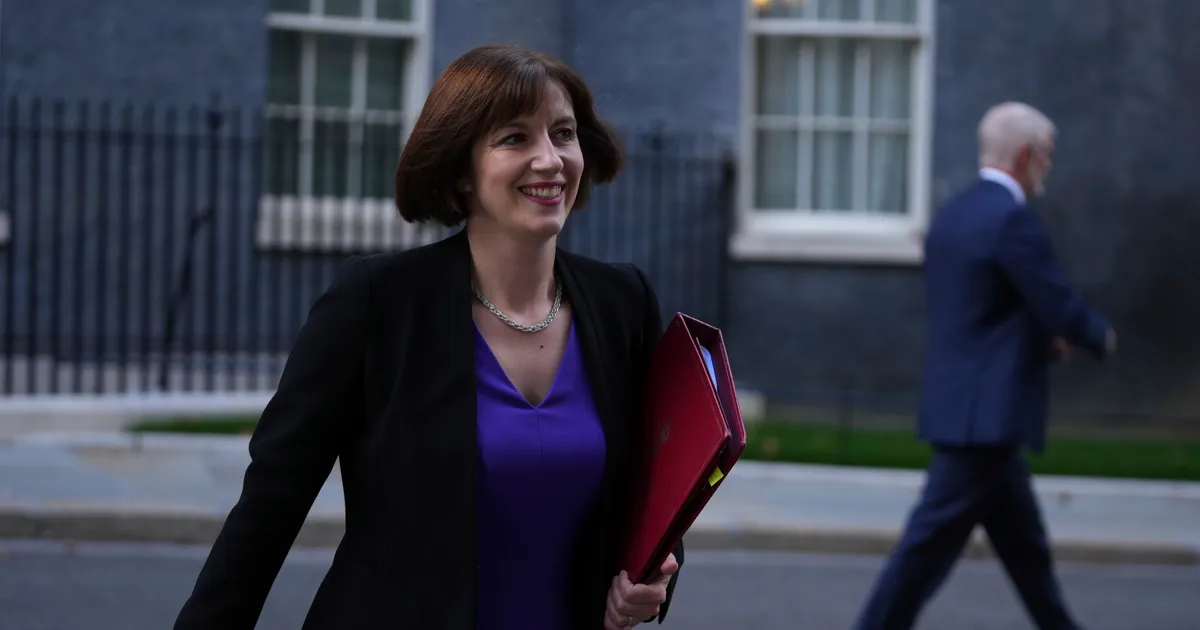
Labour has announced major reforms for children with special education needs and disabilities in England after years of being “sidelined”.
Education secretary Bridget Phillipson has today promised to overhaul the one-size-fits-all approach so children will receive more tailored support.
Here’s what you need to know and why it matters.
What Is SEND?
SEND stands for special education needs and disabilities, and applies to both children and young people who need extra support.
Just under a fifth of all pupils (1.7 million) receive some kind of support for SEND in England.
EHCP – education, health and care plans – are legally-binding documents, available for those who might need extra help than is usually provided in mainstream schools.
Local councils have to enforce EHCPs, which can apply to individuals up until they’re 25 years old as long as the person in question is still in education.
A total of 639,000 young people up to the age of 25 have EHCPs, including about 5% of all pupils (483,000).
Why Does The SEND System Need Reform?
The number of young people with EHCPs has more than doubled over the last decade, mostly due to the rise in autism diagnoses – and the system has buckled under this increased pressure.
The Covid pandemic has also driven up demand for speech and language services.
As Phillipson said, despite staff efforts, the “disadvantaged gap is still wide, children with SEND are sidelined and bright children from ordinary families are still not achieving all that they should”.
The National Audit Office said the system was “broken” in 2024 and it was “financially unsustainable for councils.
The Institute for Fiscal Studies (IFS) believes spending on SEND has increased by two-thirds in the last decade.
It’s expected to more than double in real terms between 2015 and 2028.
Meanwhile, EHCPs have been criticised for taking too long, offering inconsistent decisions, and difficult processes.
What Has The Government Announced?
Labour has announced major changes to its system which Phillipson said is one “for all children”.
She wants support to go from “birth to workplace”, saying the government will increase funding to where it’s needed most.
“We have a moral responsibility to work together on this,” Phillipson said.
Phillipson said: “The SEND system designed ten years ago for a small number of children is now broken. Parents end up fighting tooth and nail for entitlements on paper that don’t see them getting additional support. Children’s educations and lives have suffered.
“Today’s plans will take children with SEND from sidelined and excluded to seen, heard and included. Every child will get the brilliant support they deserve, when they need it, as routine and without a fight.”
Specialist And Targeted Categories
The government wants to put children with SEND into two categories, either Targeted, which is for those who are in mainstream schools, or Specialist, which is for the children with the most complex needs, by 2035.
More than a million other children with SEND will then be legally entitled to a school support plan, this time called Individual Support Plans (ISPs).
Only the Specialist children with especially complex cases will be entitled to EHCPs on top of their ISPs.
Children will gradually be moved onto ISPs from 2030 onwards, once that system is fully established.
No child in year 3 now, or older, will be forced to move on to an ISP if they don’t want to until the end of their time at secondary school.
They will be reassessed as they progress through their education from 2029.
Phillipson said these plans will be “guided by nationally defined and evidence-based specialist provision packages”.
Both EHCPs and ISPs will be digitised to reduce bureaucracy and increase transparency, too.
Extra Funding And Training
The government said it will announce plans to recruit 6,500 new teachers – one of its manifesto pledges – to accompany these reforms.
Phillipson added that it is crucial to start supporting SEND children early, so the government is investing £200 million in “start hubs” with SEND professionals.
Teachers and support staff will be trained to meet the needs of children with SEND based on the latest evidence, too.
Every school will be entitled to some funding from a £1.6 billion inclusion grant to deliver proven programmes like small group speech and language support.
Every secondary schools will have an inclusion base where they can deliver additional support and small group worth, due to the £3.7 billion investment to create more than 60,000 more specialist places.
The government hopes to offer more support for children with severe behavioural and processing needs too, with its £1.8 billion backed “experts at Hand” scheme.
Prime minister Keir Starmer has said he hopes these changes will stop children from having to travel miles away from home every day to go to a school which can meet their needs.
Draft packages will be published later this year with input from experts and parents.
Are These Reforms A Good Idea?
Specialists fear that these changes will not add up to much in reality.
Andrea Dixon-Boldy, founder of the SEN Parent Support Group, told HuffPost UK: “While the government presents a two‑tier, standardised model as transformational, the financial reality is that once the headline of billions is diluted across 24,000 schools and 152 local authorities, a typical school sees the equivalent of one extra TA and limited access to overstretched specialists.
“How does this meet our children and young people’s needs when they are already struggling?”
Similarly, SEN psychotherapist Gee Eltringham said “Giving every child a plan sounds positive, but without real and relevant training for the staff writing those plans or understanding the reasons behind why the child needs certain intervention, it risks becoming paperwork over practice.”
She said it was key to establish two priorities, one for children already in crisis and another group for those who can still avoid burnout and secondary mental health conditions.

Somaliland has granted the US access to its military bases and mineral resources. The deal comes just months after Israel recognised the new state. And colonial powers old and new, namely the UK and UAE, are in the mix too.
The new nation, a breakaway from Somalia, has only been recognised by Israel so far. The minister of the presidency Khadar Hussein Abdi said on 21 February:
We are willing to give exclusive [access to our minerals] to the United States. Also, we are open to offer military bases to the United States.
Adding:
We believe that we will agree on something with the United States.
Somaliland original declared autonomy from Somalia in the late 1990s. Israel’s recognition of Somaliland was slammed by Somalian officials at a UN session in December 2025:
Somaliland has huge strategic importance in the Horn of Africa, an area increasingly riven by regional and foreign ambitions.
Al Jazeera reported:
Somaliland lies across the Gulf of Aden from Yemen, where Houthi rebels have often attacked Israeli assets to show solidarity with Palestinians.
Adding that:
Somaliland officials have said their natural resources include lithium, coltan and other sought-after materials although independent studies are lacking.
But this isn’t just about local ambitions.
Israel and the Gulf cold war
Meanwhile Somaliland’s former president had demanded all details of a deal with Israel be disclosed. Muse Bihi Abdi said on 20 February:
The government has not yet disclosed what was agreed upon with Israel, and they are expected to do so.
If it turns out that the agreement violates our constitution, harms any Muslim, or fails to equally serve our mutual interests, then we will speak out about it.
The region was aggressively colonised by multiple imperial powers. As Middle East Eye (MEE) explained:
From 1884 until 1960, the region was governed by the UK as the Somaliland Protectorate, situated between Italian Somaliland (current Somalia) and French Somaliland (now Djibouti).
On 26 June 1960, Somaliland became independent from the UK. Five days later, it voluntarily united with Italian Somaliland to form Somalia.
These bitter colonial legacies endure alongside new extractive relationships.
Abraham Accords
Somaliland is one of several countries in the region which has signed up to the US-led Abraham Accords. The Accords require signatories to recognize Israel and normalise relations with the settler-colonial state.
MEE said that access to ports as well as proximity to Yemen and the Suez Canal were driving Israeli support. Israel’s close ally UAE has been engaging with Somaliland since the 2010s and has a port and a military base in the statelet.
The UAE’s cold war with Saudi Arabia, which is closer to the Somalian government, is also playing out through Somaliland, whose territory UAE has used to ship weapons to Sudan’s genocidal paramilitary Rapid Support Forces (RSF). MEE published a compelling breakdown of the competing actors, interests and networks in the region here.
The UK is watching and waiting
The UK, an old colonial power in the region, still has ambitions for Somaliland. While the UK has not formally recognised Somaliland, it was one of several European countries to sign an infrastructure deal in 2020.
And in 2023, Tory MP Gavin Williamson lobbied the House of Commons for the UK to recognise Somaliland:
I recognise that maybe a nation of 5.7 million people does not seem significant to Britain, but it is significant.
He said Somaliland:
plays a pivotal role in terms of Africa, and I urge this House to take the action that is required to support the Republic of Somaliland and make sure that we deliver for the people of Somaliland as they have defended what we value so dearly, which is democracy and freedom.
Berbera port
African media reported the UK, UAE and others were close to recognition in January 2026. A source told DNE Africa:
Yes, there are a number of countries that are currently pushing this. Some of them include the list that has been published. I don’t think the government is in a position to disclose the identity of the other countries at this stage.
The UK also has a financial stake in Berbera port, which is at the centre of UAE and Israeli interests in the region:
The UK’s stake in Berbera port is held through the government’s foreign investment arm, British International Investment (BII), which jointly owns the strategic Horn of Africa port with the UAE’s logistics behemoth DP World and the Government of Somaliland.
It is significant that the first country to recognise Somaliland was Israel. It sounds like the UK, UAE and US aren’t far behind. Its location has already made it a key meeting point for the neocolonial ambitions of global and regional actors. If national autonomy is what people of Somaliland desire – and they’ve waited 30 years to get it – they couldn’t do much worse than the combination of colonialist allies their leaders have aligned with.
Featured image via the Canary
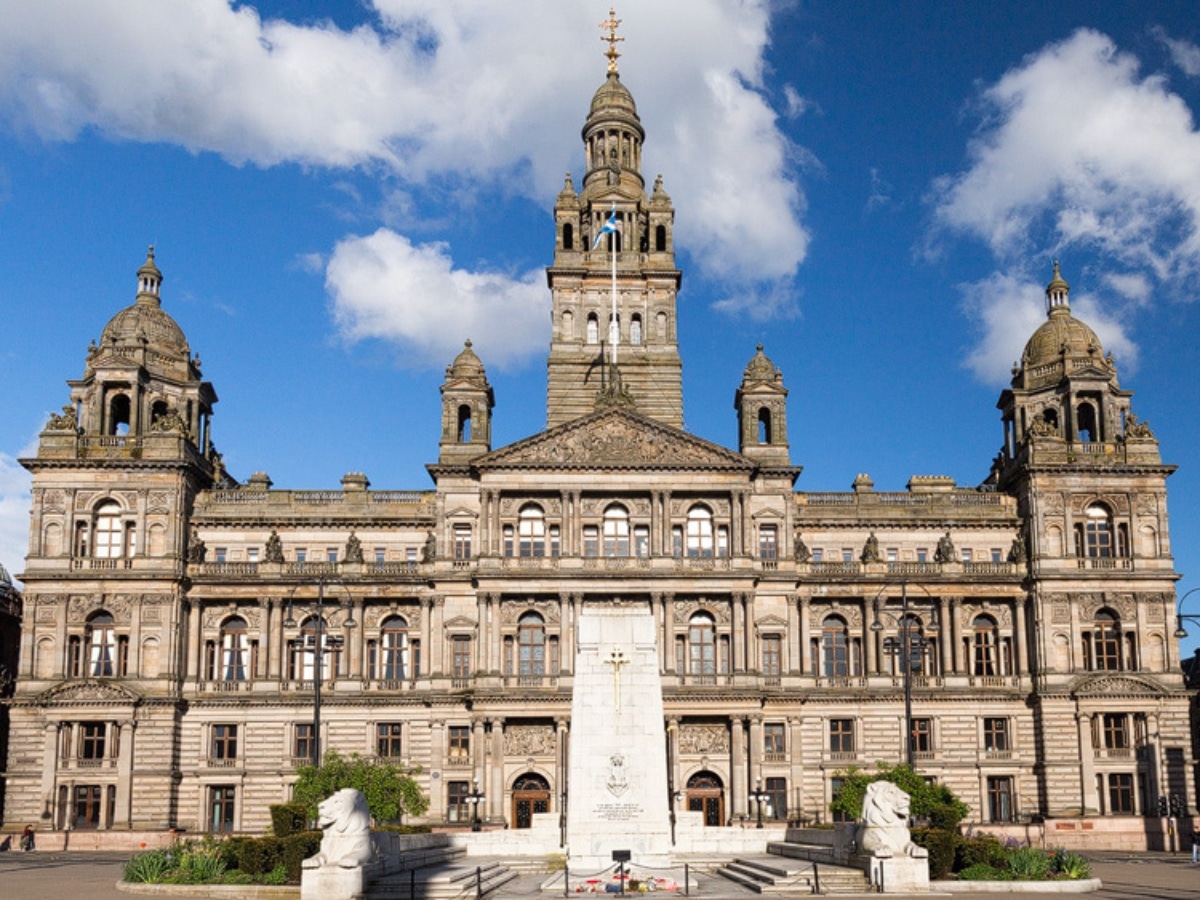
Members of Your Party Glasgow have announced they are to table a budget which refuses to cut services and builds towards returning public amenities into the hands of the people of Glasgow.
The party’s three councillors have agreed a budget proposal that includes transformative measures which could take steps to ending homelessness in the city, and moving workers to a four-day working week with no loss of pay.
In the line of fire are private contractors, who currently deliver council services at over-inflated prices, private landlords who exploit tenants across the city and worsen Glasgow’s housing crisis, and the Scottish government which has yet again left Glasgow in the lurch through systemic underfunding.
Key proposals from Your Party Glasgow councillors include:
- Bringing services in-house (£0): A cross-party working group will be established to investigate which roles should be brought back into council employ from overpriced contractors. This working group should include trade union representation from appropriate unions for sections under consideration.
- Re-establishing council housing (£150k): Funding to be provided for development of a route map to reintroducing council housing directly managed by Glasgow city council. This will ease the housing and homelessness crisis in the city and also investigate the purchasing of empty homes to be utilised for temporary homelessness accommodation as a first point of action on homelessness. Funding includes a budget for any required legal support for this work, which will be complete by the end of 2026.
- 4-Day Work Week for all Council Employees (£150k): Funding to be provided for development of a routemap to reduce staff working hours by 20%, while maintaining the same rate of pay. This will be completed by 2026 and will be led by a cross-party working group of councillors.
Current shortfalls will be met by increasing council tax by 5%. This is likely to be one of the lowest proposals in Scotland.
It is anticipated that a move to a four-day working week would save the council much more money than it would cost to implement due to a drastic reduction in staff absence, and an improvement in retention rate for the council.
Meanwhile, by bringing Glasgow city council services back in-house, councillors would be putting public services back into public control so they can be run in the interests of the people of Glasgow.
Restoring Glasgow’s council housing stock
The most eye-catching proposal is the attempt to move the council towards restarting a system of council house building and building up a stock of existing homes under council control – both of which will help to alleviate the worsening housing and homelessness crises engulfing the city.
Glasgow’s council housing stock was decimated as a result of a mass transfer of stock in 2003, followed by decades of private landlords and developers exploiting a lack of public interest housebuilding.
At present, Glasgow City Council owns no traditional council housing, despite over 600,000 people living in the city – and 8,446 homeless applications made in Glasgow in 2024/25.
Glasgow city council’s legal team has confirmed the budget proposals put forward by Your Party are competent and can thus be voted on by councillors of all parties on 24 February.
A proposal which would have seen fees doubled for the owners of short-term lets and HMO flats – both of which play a significant part in the city’s housing crisis – was ruled out by the council’s legal team.
Your Party’s three councillors are now appealing to representatives of other parties – including the ruling SNP council – to put the people of Glasgow first and back this budget, which will not do further harm to public services.
Councillor Seonad Hoy, Your Party councillor for Hillhead, said:
For years, Glasgow’s public services have been decimated by austerity, forced upon us by cuts to budgets handed down by the UK and Scottish Governments. As Your Party councillors, we are taking a stand against any further cuts.
We are putting forward a budget which includes proposals to empower council staff to work shorter weeks at no loss of pay, which has proven to lead to a happier, more productive workforce and cost savings where it has been implemented elsewhere in the UK.
We are also proposing to begin rebuilding council housing stock, initially by bringing empty homes back under the council’s control. This would enable the council to allocate housing to homeless households at a lower cost, and to provide a more seamless service to homeless people and families.
We hope that other parties are willing to engage with our proposals to allow these groundbreaking initiatives to progress.
In drafting the proposal, councillors were joined by a working group made up of volunteers from the party and other groups, including trade unions, who have worked to create this People’s Budget for ordinary Glaswegians.
Councillor Dan Hutchison, Your Party councillor for Govan, added:
Councillors shouldn’t be taking decisions based on how they manage decline. They should be taking them based on what’s best for their constituents, and the people of Glasgow. That is what we have put forward.
Our message to the SNP, Greens and others is clear: the ball is in your court. You can choose to further decimate the communities you represent, or invest in change. The choice is yours.
Featured image via the Canary

Parents have expressed concern after the government announced major changes to education, health and care plans (EHCPs), which almost 640,000 children with special educational needs and disabilities (SEND) currently have in place in England.
As part of new SEND reforms, the Labour government has pledged £4 billion to “make every school truly inclusive”, with mainstream schools receiving extra investment to help children get tailored support where and when they need it.
It has also promised £1.8 billion to create a “bank of specialists” like SEND teachers and speech and language therapists in every local area which schools can utilise on demand.
Going forward, the plan is for EHCPs – a legally-binding document outlining the needs of a child and what support is required to meet those needs – to be reserved for the most complex special educational needs, which can’t routinely be met in mainstream schools.
In addition to this, the government said there will be a new legal requirement for schools to create Individual Support Plans (ISPs) for all children with SEND.
“Every ISP will draw from a national framework of high-quality interventions that lead to the best education and life chances, personalised by the teachers and specialists who know children best,” the government said in a press release.
“The support ISPs set out will be easily available, without a fight, thanks to the government’s multi-billion-pound investment in services like speech and language therapy and small group teaching in schools.”
The transition from EHCPs to ISPs for children in mainstream schools will begin from 2030.
ISPs will be in place for children who are transitioning from an EHCP before they move to the new system, so there should be no break in support, the government said. EHCPs and ISPs will also both be digitised moving forward.
Parents react to the news
Andrea Dixon-Boldy, founder of the SEN Parent Support Group, which was set up as a result of her experience trying to access support for her child, told HuffPost UK: “While the government presents a two‑tier, standardised model as transformational, the financial reality is that once the headline of billions is diluted across 24,000 schools and 152 local authorities, a typical school sees the equivalent of one extra TA and limited access to overstretched specialists.
“How does this meet our children and young people’s needs when they are already struggling?”
She is concerned the reform “replaces enforceable, needs‑led provision with standardised pathways and school‑level responsibility, without the legal accountability or sustainable funding required to change children’s lived experience”.
SEN psychotherapist Gee Eltringham, who is a parent and founder of twigged, the parental support system for children with ADHD, said of the shift to ISPs: “Giving every child a plan sounds positive, but without real and relevant training for the staff writing those plans or understanding the reasons behind why the child needs certain intervention, it risks becoming paperwork over practice.
“ADHD is not ‘fidgeting so give them a fidget’. Dyslexia is not ‘slow so give more time’. What we need is trauma-informed, neurodiversity-affirming schools from Reception onwards. If we make mainstream environments genuinely understanding, we prevent crises and reduce the need to respond to burnout years later.”
She wants to see a 50-year cross-party commitment to creating inclusive schools, rather than short-term policy shifts.
“We must separate two priorities: children already in crisis, and those we can still reach early enough to prevent burnout and secondary mental health conditions,” she told HuffPost UK.
“Inclusion bases, exam adjustments and templates will not fix this on their own. Deep neurodiversity understanding and trauma-informed practice will. Children’s nervous systems cannot wait for political cycles, and waiting until 2030 for reform is not good enough.”
Anna Bird, chair of the Disabled Children’s Partnership, welcomed the extra investment promised, but said they are “deeply concerned” about plans to restrict access to EHCPs to those with the most complex needs.
She pointed out that there hasn’t been any mention of which children are considered to have complex needs, either. HuffPost UK has contacted the government for more insight on this.
“Parents and young people up and down the country face months of worry unless the government reassures them that all children whose needs cannot or are not met by individual schools’ plans will be able to get an EHCP,” she added.
Amanda Allard, director of the Council for Disabled Children, said they welcome the commitment to retain EHCPs for children and young people whose needs cannot be met through the new mainstream model.
“We know that many parents will welcome the legal requirement for schools to create Individual Support Plans (ISPs) for all children with SEND,” she added, noting that at the same time, parents “will be concerned to understand how accountability will work”.
Children’s Commissioner, Dame Rachel de Souza, called the changes “an opportunity to move to a system that acknowledges that every child, at some point in their lives, will require help and support”.
She added that “no child should fear losing support” so she will be working closely with ministers and families over the coming months to make sure that doesn’t happen.

The BBC has confirmed that it will be censoring an utterance of the N-word by an audience member with Tourette’s at this year’s Baftas in its iPlayer coverage of the event.
On Sunday night, Tourette’s campaigner John Davidson attended the Baftas alongside the cast and crew of I Swear, the 2025 film inspired by his life story.
Variety reported that, before the ceremony, the event’s floor manager told guests that they “might hear some involuntary noises or movements during the ceremony”.
This incident was included in the BBC’s coverage of the 2026 Baftas, which aired on a time delay of around two hours.

Alan West/Hogan Media/Shutterstock
At the time, Baftas host Alan Cumming acknowledged the “strong language in the background” and thanked audience members for “understanding and helping create a respectful space for everyone”.
He added later that night: “Tourette’s Syndrome is a disability and the tics you’ve heard tonight are involuntary, which means the person who has Tourette’s Syndrome has no control over their language. We apologise if you are offended tonight.”
On Monday, the BBC also apologised “for any offence caused by the language heard” and has since confirmed that it is being removed from the version of the Baftas ceremony streaming on BBC iPlayer.
“Some viewers may have heard strong and offensive language during the Bafta Film Awards,” a spokesperson told HuffPost UK. “This arose from involuntary verbal tics associated with Tourette syndrome, and as explained during the ceremony it was not intentional.
“We apologise that this was not edited out prior to broadcast and it will now be removed from the version on BBC iPlayer.”
The NHS’ official website describes Tourette’s syndrome as a “condition that causes you to make sudden, repetitive sounds or movements”, known as tics.
It also lists examples of tics including whistling, sniffing or clearing your throat a lot, making animal sounds, repeating a sound, word or phrase and swearing, though it’s noted that this is only in rare cases.
“Tics can be triggered by different things including stress, excitement or tiredness,” the NHS also advises.
Since the Baftas aired, the BBC has faced considerable backlash for cutting a pro-Palestine message from one winner’s acceptance speech, while leaving in the use of the N-word.
A rep for the broadcaster previously said: “The live event is three hours and it has to be reduced to two hours for its on-air slot. The same happened to other speeches made during the night and all edits were made to ensure the programme was delivered to time.”

If you ever find yourself confused by the complexities of the ever-evolving hierarchy of oppression, the ‘compassionate’ left is happy to fill you in. Certain identity markers – particularly race and gender identity – place you comfortably in the upper layers of the victimhood trifle. But having a life-inhibiting neurological disorder? That, it seems, gives you little more than the soggy sponge at the bottom.
Proof of this arrived last night at the 2026 BAFTAs. The best and brightest of the global entertainment elite gathered to sip champagne and receive accolades for various achievements in film and television. Also present was Scottish campaigner for Tourette’s Syndrome, John Davidson. The 54-year-old is both the executive producer and the subject of the biopic, I Swear, which depicts his personal struggles living with Tourette’s through the Eighties and Nineties. Like all of Davidson’s work, the film’s aim is to raise awareness for a condition that few people understand. It portrays the reality of the disability in unflinching detail. This includes his profane verbal tics at inopportune moments – known as ‘coprolalia’, which around 10 per cent of people with Tourette’s exhibit. Since Davidson does not have the ability to switch off his condition when the cameras are rolling, these very tics made several appearances over the course of Sunday evening’s BAFTAs.
As Sinners stars Michael B Jordan and Delroy Lindo, two black men, took to the stage to present an award, Davidson could be heard yelling the n-word from the crowd. Jordan and Lindo paused, then carried on with professionalism. Immediately afterwards, BAFTAs host Alan Cumming acknowledged the ‘strong and offensive language’, explaining that ‘Tourette’s syndrome is a disability, and the tics you’ve heard tonight are involuntary, which means the person who has Tourette’s syndrome has no control over their language… We apologise if you were offended.’
Throughout the night, somebody in the crowd – presumably Davidson – was also reported to have shouted, ‘Shut the fuck up!’, at BAFTA chair Sara Putt and, ‘Fuck you!’, during the presentation of the best children’s and family film award. Unsurprisingly, however, these were not the tics that drew the most attention online.
‘Calling black men the n-word is racism’, declared Dr Allison Wiltz, a ‘pro-black womanist writer and scholar’, in an X post which garnered thousands of likes. If Davidson ‘can’t control the slurs he says, he should watch from a separate area, not in the main audience where black people are exposed to slurs’. Note the word ‘exposed’ – as if Davidson’s disability were some viral infection he was selfish to leave the house with. ‘He could watch in a VIP side room while black people are on stage’, Wiltz added. ‘No way they should have someone in the audience who’s known for yelling slurs. There are some people who expose themselves in public’, she said. ‘We segregate them from children so they won’t be exposed to inappropriate things.’
Dozens of other race warriors joined the chorus. ‘Why would having Tourette’s make you blurt out racial slurs at black people on stage?’, tweeted one. ‘This is just overt racism, call it what it is’, said another. Soon a grim consensus formed – that Davidson’s outburst meant he should be excluded or segregated from an event like the BAFTAs. ‘Maybe he shouldn’t be invited to [a] space where black people are present’, opined one identitarian. ‘Ban that mentally ill racist from awards shows’, posted another.
It wasn’t just random X users displaying their ignorance of Davidson’s condition, either. As TV rent-a-gob Narinder Kaur insisted, Jordan and Lindo had been subjected to ‘racial trauma’. And so by inviting Davidson, BAFTA had continued in ‘a long tradition of prioritising white comfort’. ‘Black people are just supposed to be okay with being disrespected and dehumanised so that other people don’t feel bad’, claimed Jemele Hill, a contributing writer for the Atlantic.
Perhaps most upsetting of all were Oscar-winning actor Jamie Foxx’s throwaway comments on Instagram. ‘Nah he meant that’, Foxx said of Davidson. ‘Unacceptable.’ Foxx is a celebrity with huge influence and devoted followers. For someone with his sway to imply Davidson was hiding behind a neurodevelopmental condition as an excuse to express racism is beyond irresponsible.
For Jordan and Lindo’s part, it must have been deeply disturbing to have had a racial slur yelled at them on live television. But I would wager that navigating life with Tourette’s is far harder than any of the discomfort faced by the Hollywood set last night. Would Foxx really be willing to trade his life as a black multimillionaire filmstar for that of a neurologically disabled white man? Of course not. Because if he or any of the other ‘progressive’ elites who joined the pile-on against Davidson had an iota of actual compassion and empathy, they might have been forced to confront their own relative ‘privilege’.
I Swear is a heartbreaking watch at times. It shows how difficult it is to navigate daily life with involuntary verbal and motor tics, even today. What’s more, in Scotland during the Eighties and Nineties, understanding of Tourette’s was virtually non-existent. Davidson would involuntarily backhand friends and family in the face. He would shout insults at the police. He struggled to find employment. Yet since few understood his behaviour, he was bullied and beaten. His life, by anyone’s standards, has been incredibly difficult as a result of his disability.
‘Tourette’s is such an awful condition that most of the time I don’t want to be the centre of attention’, Davidson told the BBC. ‘I want to be able to walk down the street and not be noticed because I’m shouting or swearing.’
In fact, Davidson’s tics had made him so self-conscious that the premiere of I Swear was the first time he had been to the cinema since he was 10 years old. Yet as soon as he found himself in the company of the ‘enlightened’ woke elites for just a few hours at the BAFTAs, the self-satisfied, self-righteous identitarians were calling for him to be banished from public spaces, segregated from polite society, cancelled even – solely for his disability.
Since the post-BAFTA’s woke meltdown, a handful of people with Tourette’s – many of them black – have come forward to fight Davidson’s corner. Coprolalia ‘is something that is already very embarrassing for all of us’, explained one young influencer on TikTok. ‘It’s not something that somebody can control. It’s not something that somebody wants to say… You can’t be offended when a disabled person is disabled.’ Another stressed that coprolalia is not a case of people ‘saying their hidden thoughts and opinions… It’s the thing you want to say least in the moment.’ Hence why some Tourette’s sufferers might blurt out things like ‘I have a bomb’ at an airport, or request sexual activity that they don’t really want. It is almost certainly the case that Davidson shouted the n-word not because he meant it or he is racist, but because it would be the most embarrassing, excruciating thing possible to blurt out in the presence of black people.
Undoubtedly, the voices of reason will be lost beneath those of our official moral arbiters. After years of telling the rest of us to platform marginalised voices, to defer to ‘lived experience’, to generally ‘do better’, they have proven to be themselves shockingly ignorant of a condition that causes genuine hardship. There is no awareness that they themselves are ‘exclusionary’. Those who bristle about having to be in close proximity with disabled people will not stop to wonder if they, themselves, are the bigots. ‘The best at hate are those who preach love’, Charles Bukowski once said. Perhaps, too, those most quick to tell the rest of us to ‘educate yourself’ are the ones most in need of taking their own advice.
Georgina Mumford is a content producer at spiked.
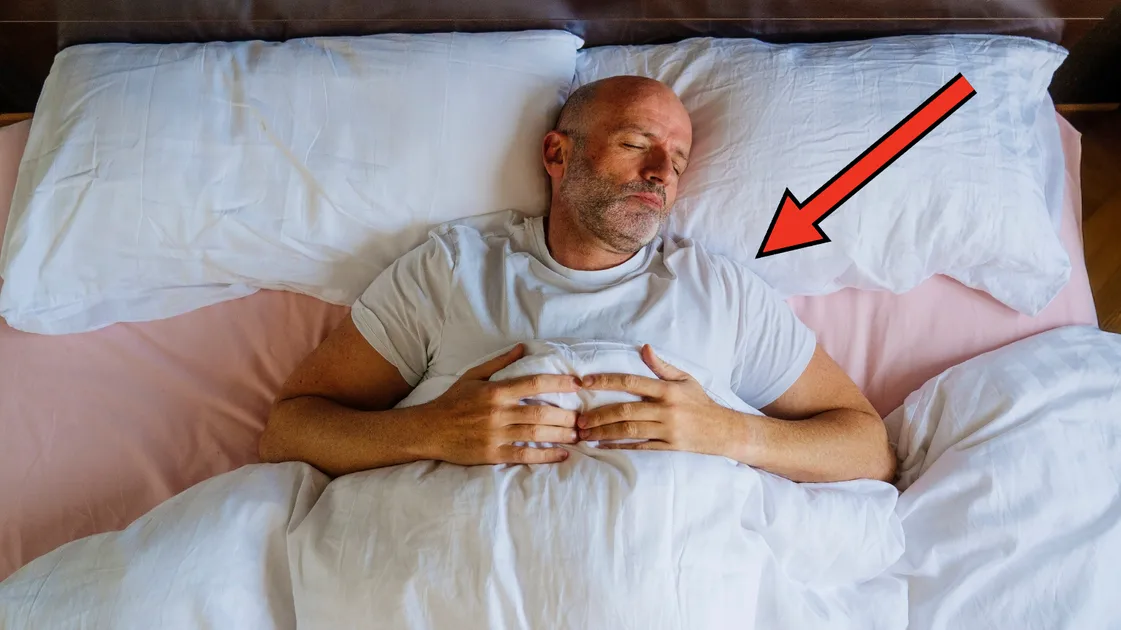
When you wake up in the middle of the night, do you find that you’re sleeping on your stomach or your side? Or do you consistently wind up on your back with the sole of one foot tucked against the calf of your other leg?
If so, you sleep like a flamingo. And if you’re on TikTok or Instagram, you might come across an influencer claiming this sleep position signals you’re stressed out or carry pain in your hips.
While this sleep position isn’t inherently dangerous – and, in fact, may be most comfortable for your body – it may suggest you need some extra support in certain cases, said Laura Nolan, a psychotherapist who specialises in somatic therapy. Here’s what to know.
Why do people end up in the “flamingo position”?
Nolan said she most commonly sees people sleeping this way when they have hypermobility, a condition in which joints stretch beyond their typical range of motion. Many people with joint hypermobility syndrome experience loose joints, joint instability and chronic pain.
“Hypermobility is linked to neurodivergence and many of the neurodivergent adults I work with report sleeping in more unconventional ways, including in the flamingo posture as well as with clenched fists or T. rex hands,” she said.
Sleeping in the flamingo position may be a habit acquired through experience and repetition. Or perhaps you wind up in this position because of chronic pain or a physical injury, Nolan added.
It’s also possible that consistently sleeping in this position – which could be unstable for some – could further strain your joints or even result in muscle stiffness, she explained. “Our bodies are complex,” she noted.
The flamingo position doesn’t immediately mean you are hurting your joints
The flamingo position isn’t an automatic red flag. Nolan said it’s entirely possible that this position is simply a cosy way for you to sleep. “It can be normal and healthy to sleep in the flamingo position,” she explained.
Jade Wu, a board-certified sleep psychologist, similarly said we naturally sleep in positions that are most comfortable to us. “Often being in this position simply shows that someone feels most comfortable doing it,” she added.
In fact, if you’re on your side with a leg up – a variation of side sleeping – the flamingo position may lower your risk of sleep apnoea and other breathing problems, Wu noted.
As a somatic psychotherapist, Nolan is more curious about what feels good about sleeping in this position rather than assuming you have “stuck stress” in the body or that something is wrong.
How to find a comfortable (and safe) sleeping position
Nolan encourages people to have a relaxed, easeful approach to sleeping. “Having too much scrutiny over how you sleep, including by thinking you are sleeping wrong or engaging in sleep perfectionism, will likely worsen sleep quality for those with existing issues,” she said.
Unless an orthopaedic health care provider or another physician has advised you to stop sleeping like a flamingo to avoid putting pressure on certain joints, there’s no need to stop, according to Wu.
Rather than forcing or training yourself to sleep in certain positions, get creative about how you can support your body while you snooze, Nolan advised.
For example, if you tend to sleep like a flamingo, consider adding a pillow underneath your knees. If you’re more of a T. rex sleeper, consider holding something in your hands, like a stuffed animal or pillow. “Be creative,” Nolan said.
If you feel stressed at bedtime, carve out some time to unwind – by practicing yoga, mindfulness or deep breathing – after dinner. Another technique Nolan recommends is progressive muscle relaxation, which involves tensing then relaxing various muscle groups. As you move between body parts, notice how each one feels.
“Remind yourself that stress is not all bad and we have many easy and quick ways of completing the stress response,” Nolan said.
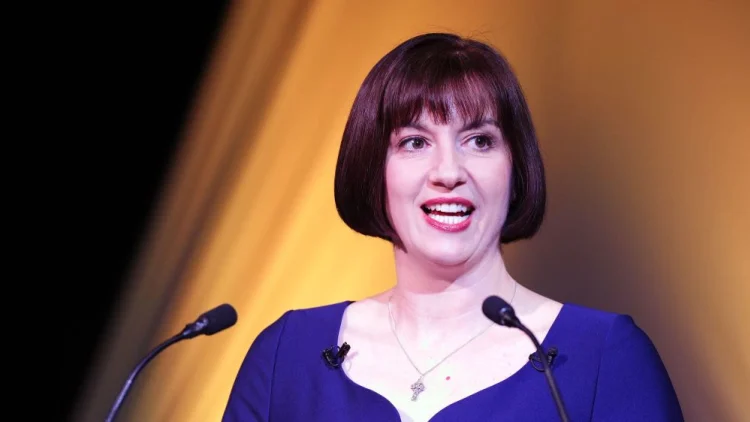
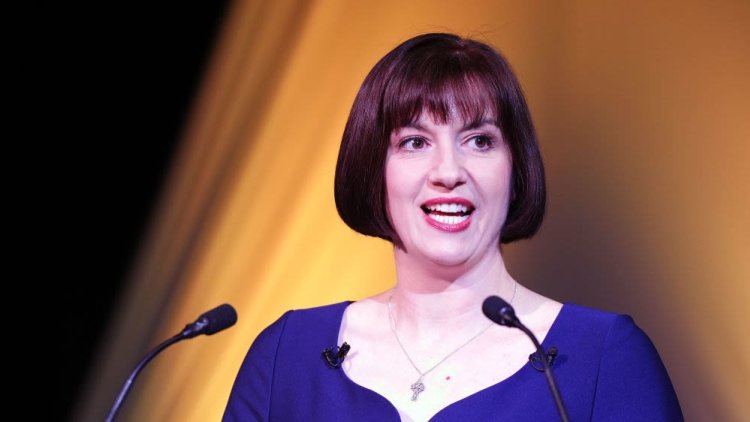
(Alamy)
5 min read
The government has set out highly-anticipated plans to overhaul the special education needs and disabilities (SEND) system, pledging that, under “decade-long reforms”, children with additional needs will “get the rights they deserve”.
Under the plans, announced by Education Secretary Bridget Phillipson on Monday, only those children with the most severe and complex needs will receive an education, health and care plan (EHCP). This is the current legal document that identifies the specific needs and sets out tailored support.
In practice, it means fewer children will be given ECHPs than would have been under the current system.
There is a cross-party agreement that the current SEND system is not sustainable, as it is putting extreme pressure on councils and resulting in long waits for parents trying to secure support for their children. The Labour government pledged to fix the system when it was elected in July 2024.
Speaking to reporters today, Phillipson said the changes would be a “really careful and phased transition” and would be a “decade-long reform”.
“I know that parents’ confidence is low in the system. That’s why the fact we’re taking our time to get this right is essential,” she said.
Why is SEND being reformed?
SEND has been a growing talking point in Westminster in recent years as pressure on the system has increased to extreme levels.
Under the current rules, pupils requiring extra support can be issued an EHCP, a legal document that identifies the specific needs and sets out tailored support.
Since 2018, the number of pupils with EHCPs has increased by almost 80 per cent, while funding to deliver the service has failed to keep pace, putting local government finances under significant pressure.
Nearly 80 per cent of local authorities told a recent Local Government Association survey that they would become insolvent in the next few years without reforms to the system.
At the same time, some parents are waiting months and sometimes years to secure support for their children.
What has the government announced?
Speaking today, Phillipson stressed that EHCPs for children with the most complex needs will remain.
However, fewer children will be granted EHCPs overall under the reforms.
The Department for Education estimates that around one in eight children and young people who currently have an EHCP will shift to new support between 2030 and 2035.
Instead, three layers of support will be available to those with additional needs, set out as “Targeted”, “Targeted Plus” and “Specialist”, the latter of which will be the basis of EHCPs.
The government has pledged £4bn over three years to improve SEND support in mainstream education settings.
Millions of children will also have access to a new, digital ‘Individual Support Plan’ (ISP), which will be put on a statutory footing, provided by the school and developed alongside parents.
The ISP will set out what support a child with additional needs requires from the school, and could include support from health professionals.
Phillipson insisted that the changes were about “improving” support, not removing it”.
The reforms announced on Monday will not come into effect until 2030 at the earliest.
The government is hopeful that the period of transition, in which the focus will be on training and investment to build capacity in the system, will allow for a smooth changeover.
What is the reaction so far?
The government had originally planned to publish the planned SEND reforms last year.
However, as PoliticsHome reported at the time, there was nervousness within government about a potential Labour MP backlash similar to the rebellion that forced Prime Minister Keir Starmer to abandon plans to reduce welfare last year.
In a bid to ensure Labour MPs feel that their concerns and points of view are being listened to throughout the process, Phillipson and minister Georgia Gould have held many meetings with Labour MPs in recent months to discuss the reforms.
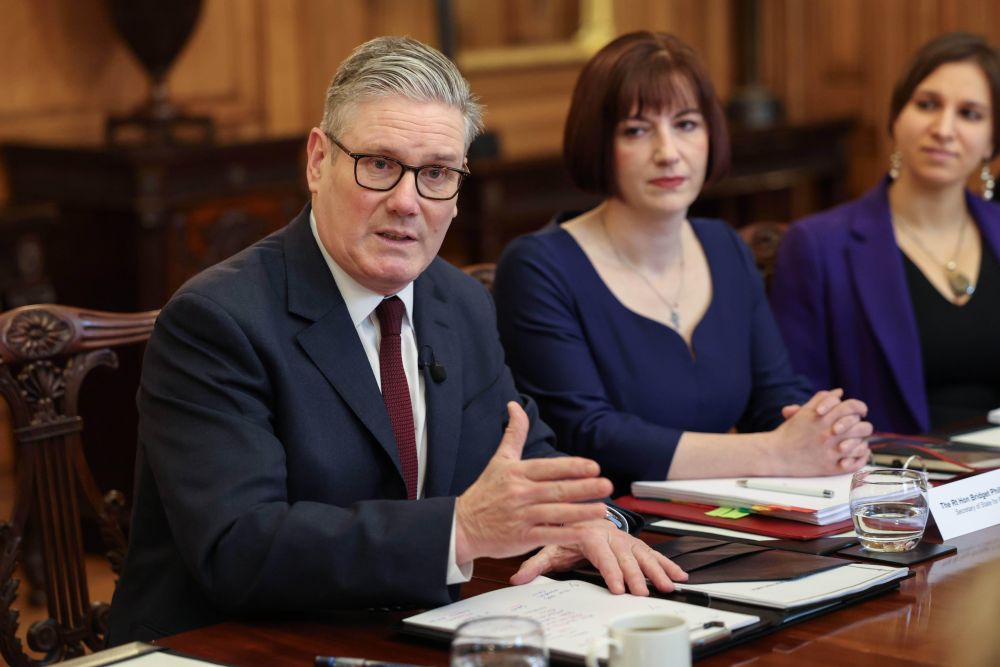
Asked by PoliticsHome on Monday what message she had for MPs worried about the changes, the Education Secretary said: “This is a once-in-a-generation opportunity to deliver a better system for children”.
“Opportunities like this really only come around once, and it’s a big responsibility on all of us to reassure parents, to explain the process of change that we’re embarking upon, and it’s a responsibility that I take incredibly seriously.”
Labour MPs will now take time to study the proposals in detail, while ministers will hope that they can win the support of as much of the Parliamentary Labour Party as possible.
One government source told PoliticsHome that they are not seeing this as the end of the conversation, and the Labour MP outreach that Phillipson has carried out in recent months will continue.
Paul Whiteman, general secretary of school leaders’ union NAHT, said that he was “cautiously optimistic” that the White Paper published today “contains the foundation of a successful new approach to SEND education”.
However, there are concerns that the funding announced may not be adequate.
Matt Wrack, general secretary of teachers’ union NASUWT, said that it was “absolutely ridiculous to suggest that SEND provision can be adequately overhauled with this low level of funding”.
Dani Payne, head of education and social mobility at the Social Market Foundation think tank, said that it was “good to see government take on an area that is both complex and politically challenging”.
“The government’s planned approach, of prioritising mainstream inclusion for pupils with SEND and strengthening universal support offers, is the right one.”

95% Crash on the Way?

Equity boycotts government BBC Charter Renewal survey calling it ‘unfit for purpose’

Suspended player sues WTA for $20M over steroid ban


-

 Crypto World6 days ago
Can XRP Price Successfully Register a 33% Breakout Past $2?
-

 Video4 days ago
XRP News: XRP Just Entered a New Phase (Almost Nobody Noticed)
-

 Fashion3 days ago
Weekend Open Thread: Boden – Corporette.com
-

 Sports7 days ago
GB's semi-final hopes hang by thread after loss to Switzerland
-

 Politics2 days ago
Baftas 2026: Awards Nominations, Presenters And Performers
-
 Tech7 days ago
The Music Industry Enters Its Less-Is-More Era
-

 Business6 days ago
Infosys Limited (INFY) Discusses Tech Transitions and the Unique Aspects of the AI Era Transcript
-

 Politics3 hours ago
Nick Reiner Enters Plea In Deaths Of Parents Rob And Michele
-

 Sports2 hours ago
Women’s college basketball rankings: Iowa reenters top 10, Auriemma makes history
-

 Entertainment5 days ago
Kunal Nayyar’s Secret Acts Of Kindness Sparks Online Discussion
-

 Video7 days ago
Financial Statement Analysis | Complete Chapter Revision in 10 Minutes | Class 12 Board exam 2026
-

 Tech6 days ago
Retro Rover: LT6502 Laptop Packs 8-Bit Power On The Go
-
 Sports5 days ago
Clearing the boundary, crossing into history: J&K end 67-year wait, enter maiden Ranji Trophy final | Cricket News
-

 Business1 day ago
Mattel’s American Girl brand turns 40, dolls enter a new era
-

 Business1 day ago
Law enforcement kills armed man seeking to enter Trump’s Mar-a-Lago resort, officials say
-

 Entertainment5 days ago
Dolores Catania Blasts Rob Rausch For Turning On ‘Housewives’ On ‘Traitors’
-

 Business6 days ago
Tesla avoids California suspension after ending ‘autopilot’ marketing
-
 NewsBeat11 hours ago
‘Hourly’ method from gastroenterologist ‘helps reduce air travel bloating’
-

 Politics7 days ago
Eurovision Announces UK Act For 2026 Song Contest
-

 Tech1 day ago
Anthropic-Backed Group Enters NY-12 AI PAC Fight