
Politics
police officer’s sex crimes reportedly in the ‘00s

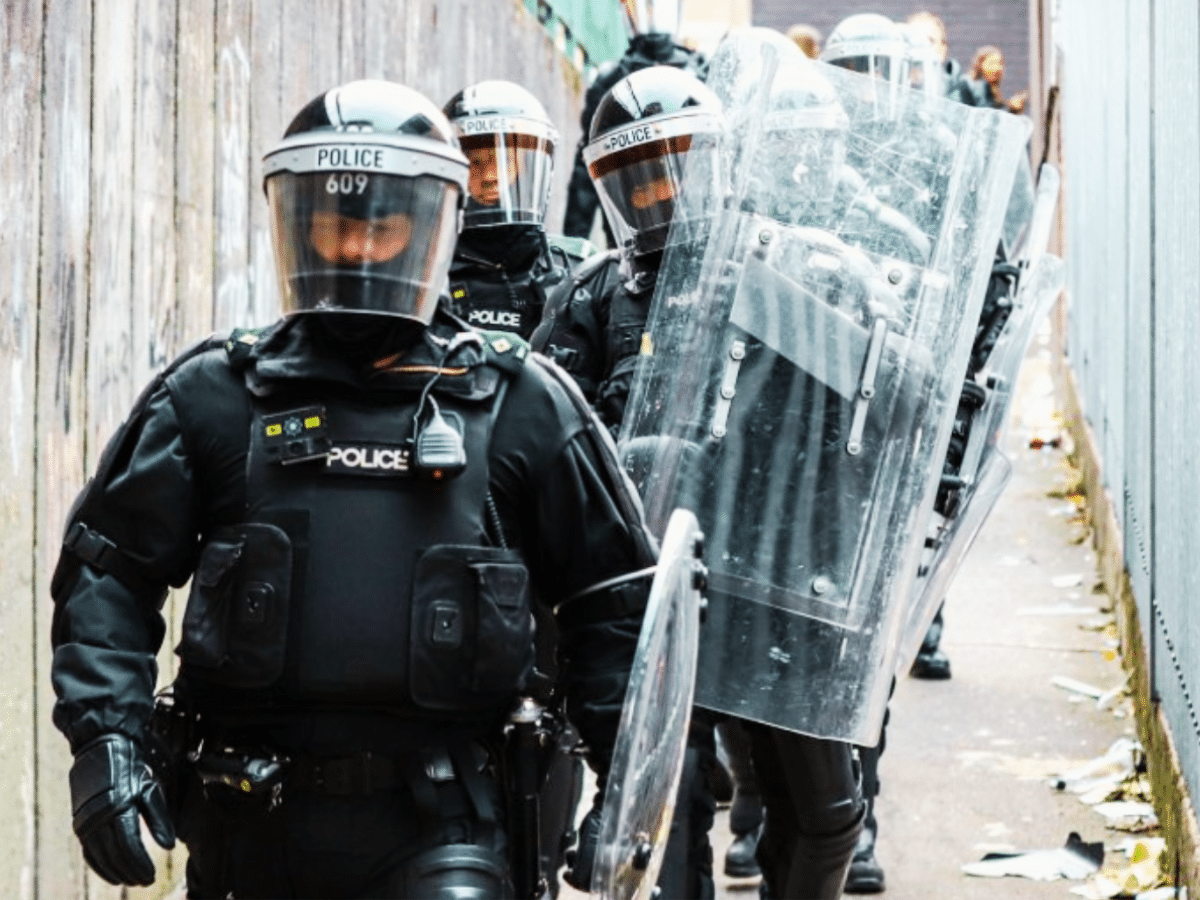
Nuala McAllister, a politician from Northern Ireland, has said that the number of serious sexual offences committed by a unnamed former police officer in Northern Ireland possibly run into the hundreds. She described the numbers as “absolutely huge“. The Alliance Party Assembly member for Belfast North serves on the Policing Board. This board is intended to hold police in the North of Ireland to account.
The alleged offender was a serving officer at the time of the alleged crimes, which victims say were committed across almost an entire decade between 2000 and 2009.
McAllister made these comments following the announcement by the Police Ombudsman, which said they would be:
…allocating all available resources to ensure [our investigation] will be victim-centred, effective and efficient.
Ombudsman vows to prioritise investigation
The ombudsman’s initial arrest of the officer was on 17 December 2025. Since then it has been compiling additional evidence. Ombudsman chief executive, Hugh Hume, has said:
We have identified multiple potential victims, together with a substantial number of witnesses. We have also seized a large volume of material, including a significant amount of digital evidence, during a search operation.
He went on to point out that the the sheer scale of the investigation may impact other commitments:
Our resources are finite and this means that the timeliness of our other casework may be affected. However, this is the reality of balancing the demands of our complaints across the Office with the need to progress this complex and expanding investigation. If we do not prioritise now, in the long term we risk compromising the service we provide to complainants and victims, and public confidence in this office and the PSNI.
Social Democratic and Labour Party (SDLP) MLA Colin McGrath suggested there’s already a risk of confidence in the ombudsman’s work being undermined, saying:
An ombudsman, whenever they are carrying out their work, should not have to prioritise their workload, they should be able to deliver their workload.
This is especially concerning because the officer was part of the Royal Ulster Constabulary (RUC) in 2000. This police force has a troubled history. The RUC was known for its sectarian (religiously biased) policing. Moreover, it collaborated with loyalist groups in the murders of Catholics.
In 2001, the force was renamed the Police Service of Northern Ireland (PSNI). However, the officer under investigation continued his crimes for nearly a decade. This raises doubt about the effectiveness of police reform. Furthermore, the lack of resources for the ombudsman to ensure accountability only adds to these concerns.
Off-duty cops phoning DV victims
The Ulster Unionist Party leader, Jon Burrows, claims the ombudsman is wasting too much time investigating “late paperwork.” This sounds a lot like the government’s ‘efficiency savings‘ rhetoric amid ruthless cuts to public services.
He did, however, provide some useful insights from his time as head of the PSNI Discipline Unit. He held this role in the period 2019-2021. He discussed the case of another officer involved in abusive behaviour. This officer attended domestic violence calls and interacted with vulnerable women.
Whenever they got back to their station and they were on their own and they get back home, they would take the mobile number of the victim and they would start sending them personal messages from their own phone on WhatsApp.
They would just start that relationship building. Someone who had literally just been the victim of domestic violence, is receiving hours later off-duty, the investigating officer contacting them.
Burrows appeared to suggest there is no existing policy against this. Or, at least if there is, it is not properly enforced.
There needs to be a red line by the Chief Constable, you never use your personal phone in messaging victims. It’s done through your official phone and recorded on the investigation log.
The PSNI appear to be struggling with issues around sexual offences, handling far more cases than those mentioned. The Ditch reported in February this year that:
There were almost 50 domestic abuse accusations against PSNI officers in the last two years – but just a single dismissal and 17 incidents when no further action was taken.
The allegations include physical abuse, coercive control, harassment and sexual abuse and were made against officers from constable to superintendent rank.
Of the 46 complaints since January 2024, 22 cases remain ongoing. Of the 24 concluded cases four officers resigned or retired while two were subject to action from management.
“No further action” was the most common outcome – accounting for 17 cases, or 71 percent, according to records released to The Ditch under freedom of information.
They also cited a VICE 2021 investigation which discovered:
…two-thirds of concluded PSNI domestic abuse complaints between 2015 and 2021 resulted in no further action.
A history of failing women
Of course, appalling sexual violence from police isn’t confined to Northern Irish officers. The Metropolitan Police gave us the vile David Carrick who in 2022 pleaded guilty to 49 charges, of which 24 were rape.
He had a history of indecent exposure that was overlooked during vetting, and by police disciplinary bodies.
These crimes, whether committed by Northern Irish or British officers, are not only avoidable, they are enabled by a culture of impunity, procedural laxity, and, above all, an ingrained institutional disregard and hatred towards women across our police forces.
Featured image via the Canary/Unsplash

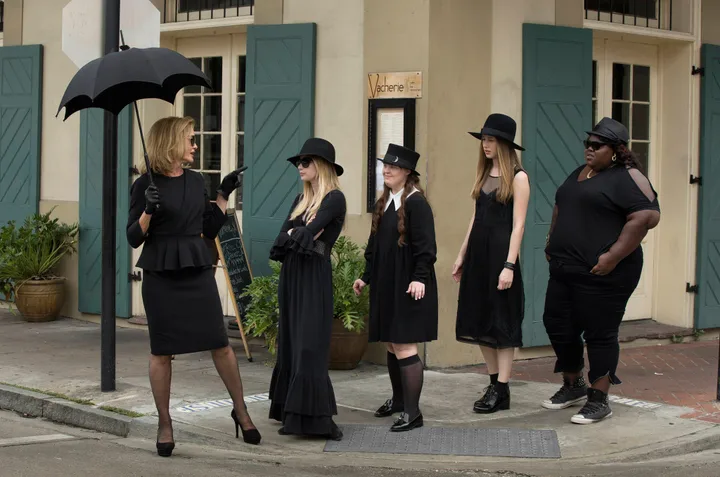
Since it premiered last month, Netflix’s deeply unsettling original series Something Very Bad Is Going To Happen has been a hit with both critics and viewers.
While early reviews for the eight-part horror show were mostly positive, the show itself has been hugely popular with Netflix users, consistently hovering around the top of the platform’s most-watched list ever since it premiered.
The series centres around a young couple gearing up for their wedding day, who are confronted with a series of increasingly horrific bumps in the road that leave them questioning everything about their relationship.
Horror fans have a seemingly-endless plethora of films to pick from when they’re looking for something new to watch, but when it comes to TV, there are considerably fewer offerings from the genre.
With that in mind, if you’ve already made your way through Something Very Bad Is Going To Happen and you’re looking for a new chilling binge-watch, we’ve rounded up 11 horror-centric TV shows available to stream now…
American Horror Story

Alright, we’re starting with the biggie – you can’t have a conversation about horror on TV without discussing American Horror Story.
With 12 iterations to pick from (varying in quality, it has to be said), the anthology series takes place in a completely different time and setting each time around, with many of the same actors playing all new characters from season to season.
High points include the camp-tastic witchiness of Coven, the sheer vampiric glamour of Hotel, the grit of NYC, the politically-charged Cult, the terrifying pinnacle of Asylum or the one that started it all, terrifying domestic drama Murder House.
Later this year, American Horror Story will return for its landmark 13th run, with franchise staples Sarah Paulson, Jessica Lange, Evan Peters, Angela Bassett and Kathy Bates all returning alongside new addition Ariana Grande.
Scream Queens

FOX Image Collection via Getty Images
A love letter to the slasher genre, Scream Queens was another of Ryan Murphy’s attempts at creating a TV horror, serving as a tongue-in-cheek meeting point of Scream, Halloween, Mean Girls and Heathers.
The dark comedy starred Murphy-verse regular Emma Roberts as clique leader Chanel Oberlin, with appearances from Glee alum Lea Michele, Oscar nominee Abigail Breslin and aforementioned American Horror Story newbie Ariana Grande.
While the show didn’t quite live up to the scale of previous Murphy projects like Glee or American Horror Story, it developed a cult following over the course of its two seasons in the mid-2010s.
Grotesquerie

Murphy tried his hand at horror once again during a fallow year for American Horror Story in 2024, that was every bit as star-studded as you’d come to expect from the TV super-producer.
While the principal actors included Niecy Nash-Betts, Lesley Manville and Nicholas Alexander Chavez (who, at the time, was fresh from his work as Lyle Menendez in the true crime anthology Monster), it also made use of some bold stunt casting, most notably marking the acting debut of one Travis M. Kelce.
The sinister series centres around a detective who teams up with a nun to get to the bottom of a series of crimes affecting their community, only for things to take an increasingly creepy turn.
Monster: The Ed Gein Story

Alright, one more Ryan Murphy show and then we promise we’re done.
Previous iterations of the Monster anthology series were more grisly true crime explorations than outright horror, but the graphic violence and gore of The Ed Gein Story definitely took the show in an even more frightful direction.
Gein’s crimes are believed to have been the inspiration for horror films like The Texas Chainsaw Massacre and The Silence Of The Lambs – not to mention Psycho, with director Alfred Hitchcock and actor Anthony Perkins appearing in Monster’s third season as minor characters, in a B-story about the creation of the iconic film.
It: Welcome To Derry

A TV off-shoot of the Andy Muschietti adaptations of Stephen King’s tome It has no right being as good as it is.
The critically-acclaimed prequel explores the seemingly cursed town’s origins, and how Pennywise began terrorising its residents by exploiting their deepest fears and anxieties for its own gain long before the events of It.
Gripping though it might be, Welcome To Derry is also really scary, so just prepare yourself for that.
Stream it on: Now, Sky and HBO Max
The Fall Of The House Of Usher

One for fans of gothic horror, The Fall Of The House Of Usher is a loose retelling of the Edgar Allen Poe short story set in the modern day, which incorporates other popular stories from the classic author’s oeuvre along the way including The Raven and The Tell-Tale Heart.
While the source material is one of the most famous haunted house tales ever, this new version is more in line with Succession or Industry, focussing on a wealthy family in charge of a corrupt pharmaceutical company Fortunato Pharmaceuticals, which befalls a series of mysterious tragedies in quick succession.
The Haunting

The Fall Of The House Of Usher creator Mike Flanagan is no stranger to horror, though, previously overseeing the anthology series The Haunting for Netflix.
Back in 2018, The Haunting Of Hill House proved to be absolute nightmare fuel, as siblings return to their haunted childhood home to confront their past demons (including the deeply upsetting Bent-Neck Lady) once and for all.
Like with American Horror Story, follow-up The Haunting Of Bly Manor featured several of the same actors in a whole new – but just as terrifying – haunted house setting.
Guillermo Del Toro’s Cabinet Of Curiosities

Best known as the auteur behind the expansive and surreal films Pan’s Labyrinth, The Devil’s Backbone, The Shape Of Water and, more recently, Frankenstein, Guillermo Del Toro has made a shift to TV work in the 2010s.
As well as his Tales Of Arcadia series with Netflix, in 2022, he put out the anthology miniseries Cabinets Of Curiosity.
Each episode of the eight-part miniseries told its own stand-alone story (in the style of The Twilight Zone or Black Mirror) hosted by the Oscar-winning filmmaker himself, with instalments putting a new spin on horror tropes like paintings coming to life, demonic conjurings and unrelenting ghosts from the past.
Look out for appearances from Harry Potter’s Rupert Grint, The White Lotus’ F Murray Abraham and Downton Abbey’s Dan Stevens, among others.
Stranger Things

While perhaps not a horror in the traditional sense, Stranger Things incorporates elements from the genre (particularly from films that popped off in the 1980s, when the show is set) alongside sci-fi, mystery, action and traditional coming-of-age teen dramas.
There are also countless several deliberate homages to Stephen King over the course of its five seasons, with the horror author previously giving the show his personal seal of approval.
Black Mirror

Dystopian anthology series Black Mirror is probably most well-known as the show that warns about the perils of technology and social media – but make no mistake that when it decides to go full horror, it can really get in your head.
Among its most frightening offerings include early offerings White Bear, Men Against Fire, Playtest and Metalhead, plus the deliberate horror homages of Demon 79 and Loch Henry.
Meanwhile, even the more allegorical stories like Be Right Back, The Entire History Of You and the “Christmas special” White Christmas will leave you with a chill that lingers longer than you might think.
Goosebumps

Then again, maybe you prefer your frights a little less on the disturbing side.
Streaming service Disney+ currently has two stand-alone series based on those R.L. Stine books that had you hiding under the covers back in the 90s, telling two distinct stories that make for more family-friendly viewing than every other suggestion we’ve laid out here.

President Donald Trump has survived political scandals, crises and low approval ratings the likes of which no previous president could withstand. So it may be hard to believe that ol’ Donny Trump won’t, yet again, wriggle his way out of another disastrous drop in his political standing.
But this time it really may be different.
Trump’s Iran war has, even more than anything before, sent his approval rating in a nosedive. Poll aggregators now put him below 40% approval for the first time in his second term as multiple polls have shown his approval in the low-to mid-30s. His net approval is at -21.4, according to FiftyPlusOne.
“When compared to past presidents, Trump’s ratings are the lowest of any president at this point in their term, going back to FDR,” pollster G. Elliott Morris wrote at his Strength In Numbers site on Friday.
Trump’s ability to change his position when things get rough has earned him the nickname TACO (Trump Always Chickens Out).
But his shambolic address to the nation on Wednesday demonstrated that he can’t TACO his way out of this one: Amid unconvincing boasts that the US is “winning bigger than ever before,” Trump offered no clear rationale for the war and no plan or strategy to end it or resolve the vast economic disruption created by Iran’s closure of the Strait of Hormuz. It didn’t work. The stock market dropped and the price of oil spiked as soon as he finished speaking.
The speech showed that Trump is stuck. He is constitutionally incapable of accepting that he made a mistake by attacking Iran with no plan for keeping 20% of the world’s oil — not to mention around 20% of the world’s fertiliser — moving through the strait, or to take action to rectify it. Instead, he now claims that it’s “somebody else’s problem” and, in his speech to the nation, called on European and Asian countries to “grab it and cherish it.”

Alex Brandon/Bloomberg via Getty Images
Since this isn’t going to happen, the only other options are likely desperate. Trump could escalate and invade Iran with ground troops, which will make the energy crisis catastrophically worse. Or he could unilaterally deescalate, end the war and cede control of the strait to Iran, which would likely mean Iran operating a tolling system to exit the Persian Gulf, as it has already begun to do, and a continued reduction in oil flowing through.
“No matter how we exit this, we’re in a much worse scenario for the oil market than we were before,” oil analyst Rory Johnston said on his podcast “Oil Ground Up” on March 31.
This is politically toxic for any administration. But it is even worse for Trump personally, as his second term has been plagued by one unpopular initiative after another.
Trump’s Liberation Day tariffs, since ruled unconstitutional, caused instant market chaos. His mass deportation campaign of attacking US cities with paramilitary forces turned his most popular position into a net negative.
His bungling of the Epstein Files turned his own brand of conspiracism against him. His Big Beautiful Bill slashed health care spending, causing millions who get insurance through the Affordable Care Act to lose it due to huge price spikes.
That last point is key to his biggest problem: most of his major actions have caused price increases, in complete contradiction to his core campaign promise to lower domestic costs. His on-again, off-again tariffs led to widespread price increases on a range of goods while his immigration crackdown has led to increased costs in fields like in-home elder care and agriculture. Meanwhile, the full impact of the Iran war on prices, particularly for petrol, has not yet come close to being felt.
Trump and his economic advisers are already trying to claim that these price effects are merely temporary. During his Wednesday speech, Trump said that when the war ends, “gas prices will rapidly come back down.” National Economic Council Director Kevin Hassett said on Friday that “energy prices are going down as this quiets down,” pointing to lower oil futures prices for autumn shipments.
But this is just the same happy-talk that Trump offered during the early stages of COVID about cases “going down” and promises that the virus would just “disappear.” If anything, oil prices are currently being traded based on “irrational optimism,” Johnston said on his podcast, adding that “futures markets are grievously underpricing.”
This is exactly the opposite of what voters who swung to Trump in 2024 wanted. The top issue in that election, particularly for swing voters, was the cost of living and inflation. That single issue helped Trump build a coalition that gave him a popular vote majority for the first time in three elections. But that victory made him think he had a mandate to do whatever he wanted, and he promptly went about ignoring voters’ main concern.

Justin Sullivan via Getty Images
The response from voters is about what you’d expect. Working-class Black and Latino voters who swung to him in 2024 are now moving away from Trump and Republicans, according to a March 2026 study by the Center for Working-Class Politics. This flip showed up in recent elections like the 2025 New Jersey and Virginia governors’ races, where the Democratic candidates won big in heavily Latino areas that had swung to Trump just one year earlier.
Young people aged 18-34 moved towards Trump in 2024 and gave him positive approval numbers at the beginning of his term, but a recent CNN poll found 80% now disapprove. Similarly, 73% of independent voters now disapprove of Trump, according to that same CNN poll.
It is not surprising that Trump is growing more and more unpopular as he has somehow brought about all of the worst problems that vexed past presidents all by himself. He has created, on his own, Joe Biden’s inflation, Jimmy Carter’s energy shock (caused by a conflict in Iran, no less) and George W. Bush’s catastrophic war of choice in the Middle East.
With the downing of an American jet over Iran, he may also replicate the disaster Carter faced with an Iranian hostage crisis. And he has done it all by launching his own war of choice, after campaigning on a promise of no new wars. It is hard to imagine a worse series of political decisions.
With the midterm elections a scant seven months away, things look bleak for Republicans in November. Even if they lose only the House, that will effectively end congressional blessing for Trump’s authoritarian power grab — and, in all likelihood, condemn his final two years in office to investigation, impeachment and repudiation.
Subscribe to Commons People, the podcast that makes politics easy. Every week, Kevin Schofield and Kate Nicholson unpack the week’s biggest stories to keep you informed. Join us for straightforward analysis of what’s going on at Westminster.
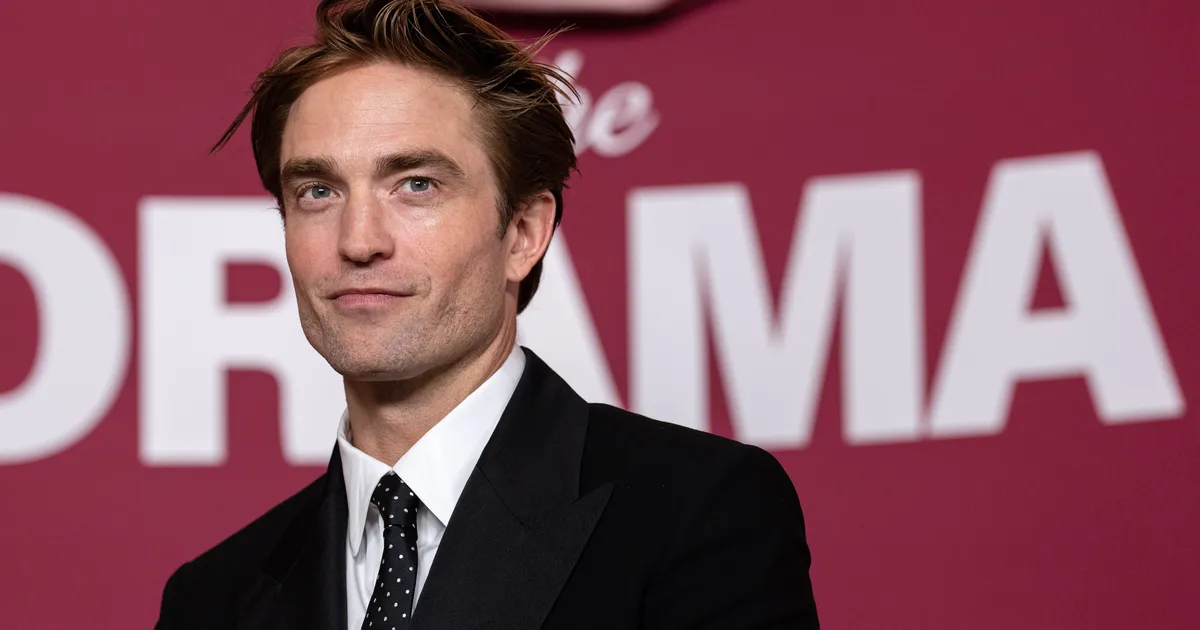
Robert Pattinson has shared the “number one thing” that helps him choose whether a project is right for him and his career.
When asked by HuffPost UK what he looks out for in a script that’s important to him, the 39-year-old said: “If, when you’re reading, you want to read it out loud immediately, that’s always the number one thing.”
Robert was speaking at the official launch of beer brand 1664’s new Good Taste platform at London’s Town Hall Spaces in King’s Cross as its first global brand ambassador.
Robert, who was wearing Dior for the occasion, added: “If there’s one line where I’ll want to say it to people around me… no one has any idea why it’s interesting, it’s totally out of context, but I want to just keep repeating this one line, like ‘Look at that, look at that!’”
Another big thing he looks out for? “Something which feels a little bit dangerous and [could] cause a bit of a frisson.”
They play two people in a relationship that starts to buckle in the run-up to their wedding under the weight of a very perturbing revelation concerning the bride-to-be’s past.
That sounds pretty frisson-esque to us… but we’ll have to wait until the film’s April 3 UK release date to find out more.
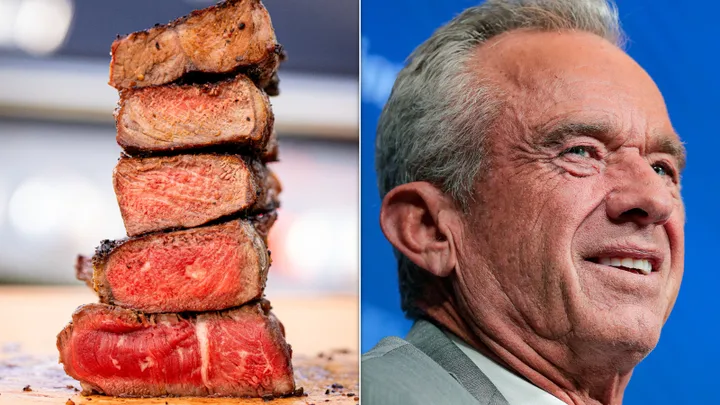
In February, Secretary of Health and Human Services Robert F. Kennedy Jr. shared a video of him eating steak, exercising shirtless and drinking whole milk in a hot tub with ’00s-era musician Kid Rock. The internet’s response to the video was largely bewilderment and mocking, but whether or not the pair succeeded in looking cool, they certainly telegraphed an attempt at masculinity.
The video draws a straight line between the person responsible for US food and health policy and the “manosphere,” as some call it — the side of the internet that largely consists of fitness videos aimed at young men but is also known for introducing its followers to misogynistic, homophobic and antisemitic ideas. So, it might be worth paying attention to what he — and other men in the public eye — wants to be seen eating.
Research shows that not only do men tend to eat more meat than women globally, but also that men are more reactive and defensive to messaging that suggests they lower their meat consumption, be it for personal health or ethical, animal welfare or climate-related reasons.

The beef-loving, vegetarian-hating dad guy is a pop culture trope at this point: Think Parks and Recreation’s Ron Swanson, or Homer Simpson, who famously said, “You don’t win friends with salad.” Cartman of South Park once said, “If you don’t eat meat at all, you become a pussy” (which, in the show’s context, turned out to be kind of literally true). In any case, you can bet that the manliest man dudes, whether aspirational or not, will be offended and maybe even downright hostile if presented with a meatless plate.
“If you go to women and say, ‘[Meat] is really bad, you should probably think about cutting down,’ women will tend to respond by cutting down,” said Sophie Attwood, a psychologist and behavioral scientist whose work focuses on food choice as it relates to human health and environmental sustainability. “Whereas, if you do that to men, what happens is they push back, go right into defence mechanisms — and then they increase intake.”
It’s a generalization, she qualifies, but one that she attests to seeing replicated consistently in the research. This led her to wonder: Why exactly are men so connected to meat?
Daniel Rosenfeld, a UCLA psychologist who studies eating behavior and morality, offers some theories.
“There isn’t 100% certainty on why the meat-masculinity association exists, but a good account is one of historical and evolutionary narrative. We have this image in our heads that as humans, Homo sapiens, we are traditionally hunter-gatherers, from pre-agricultural times, and that’s kind of the glorified era of what our instincts tell us to do, in a lot of people’s minds,” Rosenfeld explained. This provides some justification for seeing divergent gender roles as something natural and inherent, rather than socially imposed.
“Men fall into the ‘hunter’ category in our minds, and women the ‘gatherer’ category. And so that’s one explanation for why people view it as manly to eat meat, because meat comes from animals that we have to hunt,” Rosenfeld said. Eating an animal signifies dominance over nature (even though you probably bought it from a store rather than hunting and killing the animal yourself), and for many, masculinity and dominance are inseparable.
Conversely, “a salad or tofu or other plant-based foods can be viewed as having more feminine attributes because those are gathered and not hunted,” he said.
Rosenfeld uses the term “narrative” intentionally — it’s less about any actual anthropological fact than it is about our beliefs. Modern scientists generally agree that early humans ate majority plant-based diets, and the meat they did eat was often collected by scavenging rather than hunting. It’s a far cry from the 18.5 pounds of meat consumed by the average American every month, but the reality hasn’t stopped modern humans from trying to replicate our “fantasy image,” as Rosenfeld puts it, of humans (and human men especially) as big consumers of meat.

Stephen Lovekin via Getty Images
Consider the paleo diet, which includes meat and is quite literally meant to mimic hunter-gatherer diets. Or, at the more extreme end, the “carnivore diet,” whose proponents claim that, actually, early humans ate entirely or almost entirely meat and that modern humans ought to as well for optimal health (despite heaps of scientific evidence suggesting otherwise).
Another idea that Rosenfeld said may influence the meat-manliness connection “can be an association of meat and protein, and protein and muscle, and muscle and manhood.”
We can see both of those ideas coming into play in pop culture and public figures like the Liver King, a manosphere influencer who wanted his fans to believe that his muscular stature was purely a result of following an “ancestral lifestyle,” i.e., eating plenty of raw organ meat, before eventually being exposed for his use of steroids. In “American Canto,” her book about their personal relationship, journalist Olivia Nuzzi described RFK Jr., saying, “like all men, but more so, he was a hunter.” It’s an evocative description, but also a literal one: Kennedy is into falconry. It’s hardly a coincidence that the man currently leading American food and nutrition policy fits the mould of masculinity, especially in such a way that’s both flashy and traditional.
Regardless of where the association comes from, it still doesn’t completely explain why men can be so defensive of their meat-eating, even when it comes up against established science or their own values. We may get a hint, however, by zooming out.
A recent study out of Germany found that men of lower socioeconomic status tend to consume the most meat. Another study, from 2024, found that gender differences in meat consumption were the widest in the most gender-egalitarian countries (Scandinavian nations take the top spots, while the US and UK fall around the middle). It seems that when men are (or believe themselves to be) socially or economically disempowered, meat becomes more meaningful.
In the US today, it’s hardly a secret that men are falling behind women in categories like education, employment and even health. A generation or two ago, it was not only possible, but common, for a man to support a wife and kids on the income from a single, even blue-collar, job. Men today may still feel that being a “provider” is intrinsic to their identity, even as it becomes impossible for them to provide in the same way they saw their grandfathers doing. So if you’re not a provider, what are you? Are you really a man?
Attwood notes that diet is uniquely important in identity construction — not just for meat-eating men, but other kinds of people, like, say, environmentally conscious academics and vegan journalists. “If you’re under threat, your identity is under threat. So your whole thing is about trying to neutralise the threat and reassert the identity, which means you are going to hang on to these symbols to use to communicate to others,” she said.
Some aspects of masculine identity can be considered neutral or even positive, like the desire to provide for others materially. But traits like dominance are inherently hostile, falling into that bucket we call “toxic masculinity.” And these ideas are so culturally embedded that we see them playing out in pop culture and even in policy.
With the release of the latest USDA food pyramid, which features a cartoon T-bone in its illustration of nutritious foods, RFK Jr. announced the end of the nation’s “war on protein,” waged by liberal food policy and “big villains” like the American Heart Association. Never mind that most Americans are already eating too much protein, or that in the last decade, food companies have quadrupled the amount of high-protein products on the market. Never mind that virtually every major health authority agrees that red meat and full-fat dairy are associated with poor health outcomes, especially regarding the very same chronic illnesses our health administration claims to be targeting. And definitely never mind that the very same federal agency just last October announced a battery of plans to “strengthen the American beef industry,” suggesting an entirely different motivation for pushing meat-eating on the general population.
Because what matters here isn’t scientific fact, it’s the story being told. Meat eating is good and natural, and anyone who tells you otherwise is a “villain” to be defeated. Making America Healthy Again means embracing tradition and rejecting any nutritional science that challenges it. Making America Great Again means taking our rightful place as the world’s most powerful nation, able to dominate all the rest. And if anyone suggests you swap in plant-based protein every so often? What they’re really telling you is to stop being a man.
Or so the story goes, anyway.

As we’ve reported, Israel has passed a law which will permit them to execute Palestinian prisoners. In response to this, Katharina Amanda Adler created a petition on the Parliament website. Should this petition hit 100,000 signatures, it will be considered for a debate in Parliament. Currently, it’s fast approaching that target:

You can sign the petition here.
Drop the law
The petition contains the following message:
The UK Government must act urgently to urge the Israeli Government to stop the proposed law which would permit the execution of Palestinian Prisoners, past, present and future.
We believe that such a law would constitute complete violation of the Geneva Convention and International Human Rights Law. UN experts have called for these proposals to be dropped.
We call on the UK Government apply considerable and substantial political pressure and the leverage of its international obligations to prevent the Israeli Government from passing this law.
Novara’s Rivkah Brown highlighted the following:
But what’s interesting about this bill is that it proposes lowering the evidential threshold for prosecution. Read this chilling paragraph (from https://t.co/2S1o0UKwE0) pic.twitter.com/hYgbYee1t8
— Rivkah Brown (@rivkahbrown) April 1, 2026
Now, how did we get to the point where it was acceptable to say that an Israeli court might “deviate from the rules of evidence” when trying 7 October prisoners? Well, military courts have been bending the rules of evidence for some time, hence their 95%+ conviction rate.
But this bill’s evidence-bending has a much more specific context. Since 7 October, pro/Israeli academic and legal groups have been creating a body of literature claiming that 7 October is unlike any other conflict situation, because so much evidence was destroyed.
This, they say, means the rules of evidence should be suspended. But the absence or destruction of forensic evidence is always a problem in conflict situations, not just 7 October. This is Jewish-Israeli exceptionalism extended into the legal sphere.
Israeli politicians celebrated the passing of the law in the most obscene fashion imaginable:
BREAKING:
Israel’s parliament has officially passed a law imposing the death penalty by hanging for Palestinian detainees.
At least 10,000 Palestinian prisoners could be at risk of execution. pic.twitter.com/XPn84ATiGJ
— Current Report (@Currentreport1) March 30, 2026
🚨Israel just passed the death penalty law against Palestinians & non-Jews only. This is how the deputy head of Israel’s parliament celebrated with her settler husband celebrated recently. pic.twitter.com/DvCkNKypgA
— Muhammad Shehada (@muhammadshehad2) March 30, 2026
Israel — Call it what it is
The UK’s Green Party are among those calling out the new law:
Israel’s new law imposing the death penalty on Palestinians convicted of fatal attacks is a dangerous development of its apartheid system.
It is discriminatory, racist, and cruel.
Expressions of concern are not enough. The Labour government must act to end Israel’s impunity. pic.twitter.com/R9ICMuXFAN
— The Green Party (@TheGreenParty) March 31, 2026
With the Greens out-performing Labour in the polls now, this could put pressure on Keir Starmer to actually do something for once.
And remember, you can sign the petition here.
Featured image via The Cradle
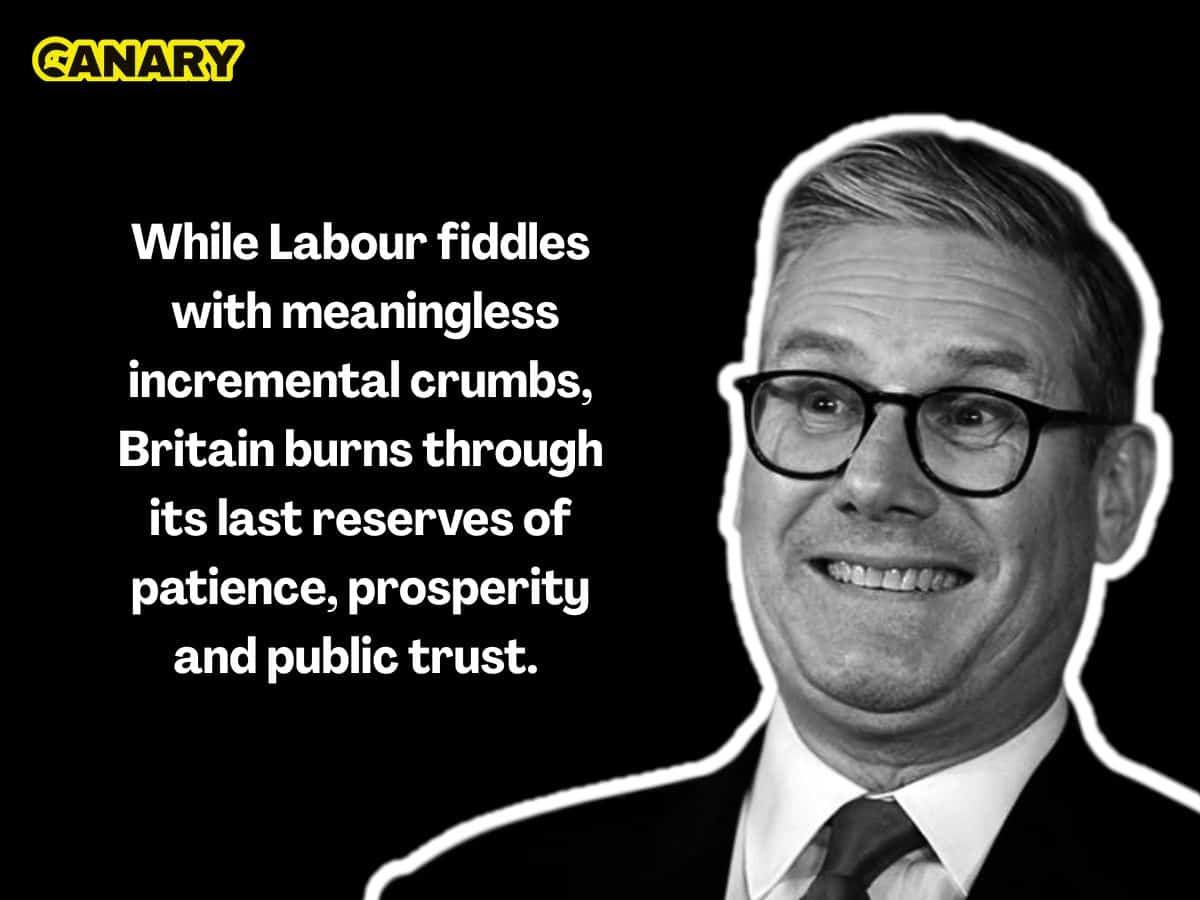
April Fools’ Day has passed. Yet here we are in 2026, with a Labour government that campaigned on hope and renewal, reduced to celebrating a measly £117 energy bill cut like it’s the second coming — while warning us things might get worse again in just three months because of the Epstein war on the other side of the world that was started by a pair of narcissistic pound shop dictators.
It’s a bit like throwing a tea towel over a leaking roof and calling it “resilience building”.
The National Living Wage is up to £12.71; already, eye-watering prescription costs have been frozen, and a shiny new £1 billion Crisis and Resilience Fund for the truly desperate has been rolled out with the fanfare of a slightly damp firework.
Rachel Reeves probably stayed up all night practising her victory lap in the mirror, but this is the political equivalent of offering a couple of paracetamol to someone with a severed artery and then wondering why they’re still bleeding out.
Don’t get me wrong, a piddly pay rise for the precariat is better than a kick in the teeth. If you’re one of the 2.4 million scraping by on the old rate, that extra £18 or so a week might just cover the difference between choosing between heating and eating.
But let’s be honest here. This is a cheap sticking plaster on a gaping gunshot wound, and the gun is still smoking thanks to years of Tory wreckage, Brexit self-harm, and now the lovely gift of rising oil prices courtesy of the Zionist-incited chaos in the Middle East.
Labour is fiddling
Labour’s timid fiscal rules — choking public investment, an obsession with “stability” over justice, and a foreign policy that talks peace whilst facilitating the fucking great big child-killing US bombers flying above me every day and night — are guaranteed to leave poor and working people exposed to global shocks.
If I can get my head around this, it should be a breeze for a Labour government that promises so very little of worth and somehow still manages to deliver even less.
While Labour fiddles with meaningless incremental crumbs, Britain burns through its last reserves of patience, prosperity and public trust.
The Starmer project was always about making Labour safe for Middle England dinner parties rather than dangerous to the interests of the powerful.
Labour’s April Fools’ package is emblematic: modest, reversible, and fundamentally unambitious.
Starmer, Reeves, and the rest of the bland beige brigade can keep talking about “realistic” and “responsible” politics.
The rest of us will keep pointing out that realism, right now, demands radicalism. The house is on fire. Handing out cups of water and calling it a strategy isn’t strong leadership, it’s absolute surrender.
If this government doesn’t start delivering the scale of change the country desperately needs — and I see no evidence that it ever will — 2026 won’t be remembered as the year living standards turned a corner. It will be remembered as the year the promise of a Labour government quietly died of caution.
Outflanked
Labour campaigned in 2024 as the party of “change”. Now they’re being outflanked on the left by the Greens — the party once dismissed as sandal-wearing tree-huggers — and on the right by Reform’s hateful populist circus.
Polling in the teens while Reform and Greens carve up the disaffected vote isn’t just a temporary blip for the Labour Party. It’s the bill arriving for years of triangulation, purged Corbynites, broken pledges, and the failures of capitalism.
The Greens aren’t perfect, of course. Let’s not pretend otherwise.
The recent anti-Zionism motion has resulted in an internal battle between a largely pro-Palestine base and concerns about an antisemitism spillover.
Does this sound vaguely familiar, Corbynites? Surely the crucifixion of JC serves as a brutal reminder of what happens if you dance to the tune of pro-Israel lobbyists and fold to the concerns of barely-left-of-centre do-gooders that socialism means nationalised gulags.
The Greens also still face the brutal arithmetic of first-past-the-post — brilliant in small pockets, but so much harder to scale nationally without tactical voting or serious reform.
And yes, some of the Green appeal is protest — people venting frustration rather than signing up for every single policy detail.
A mess of their own making
The rise of Zack Polanski and the Greens isn’t despite Labour’s failures. It’s because of them.
When a government elected on a ticket of hope delivers cautious continuity with slightly kinder rhetoric, disillusioned progressives don’t just stay home. They go looking for fire.
The Green Party really is providing it — huge membership surges, historic by-election shocks, and a message that actually sounds like it believes in something bigger than not being the Tories.
The Green surge shows there is a genuine hunger for radicalism on climate justice, economic fairness, and genuine public investment. It proves voters will reward boldness, even with an utter clusterfuck of an electoral system like ours.
But it also highlights how quickly a weak Labour government can squander a huge mandate by governing like ever-so-slightly embarrassed social democrats in a neoliberal straitjacket.
Starmer can keep muttering about focus groups and fiscal credibility, and I am absolutely sure he will.
The rest of us can sit back and watch the Greens hoover up the energy, ideas, and young voters his government has so carelessly alienated.
Featured image via the Canary

On 4 April, we reported that a Reform UK candidate was exposed for posting positively about Enoch Powell. That candidate was Brett Muscroft, and we’ve since learned he isn’t the only Powell fanboy that Reform are set to run in the upcoming local elections:
Next we have Arnold Tabor, candidate for South Elmsall and South Kirkby on Wakefield Borough Council.https://t.co/13Vjo9Eeuw
— HOPE not hate (@hopenothate) April 1, 2026
Oh, and Tabor is also a fan of Oswald Mosley.
British fascists
Enoch Powell is the ex-Tory MP who delivered the notorious Rivers of Blood speech, in which he warned that migration would lead to death and mayhem. Of course, you could see why a Tory at the arse end of Empire would think this, because whenever Britain colonised a country, bloodshed inevitably followed. There’s a difference between what the Empire did, however, and with a normal family moving here to get working class jobs in the care and service sectors — the state of affairs that the government encouraged to keep our economy moving.
The Tories ended up sacking Powell for his speech, anyway. As we covered, Nigel Farage would seek Powell’s endorsement in in the 1990s, and also asked him to run for his UKIP party. As such, it’s no surprise that Reform UK candidates would also admire the man.
If you’re unfamiliar with Oswald Mosley, meanwhile, the BBC described him as follows:
During the 1930s Mosley led Britain’s virulently anti-Semitic fascist movement, whose streetfighters – known as blackshirts – were notorious for their violence against Jews and left-wing opponents. He was on friendly terms with Mussolini. And Hitler was guest of honour at his second wedding.
Oh, and that wedding took place at the home of Nazi Propaganda Minister Joseph Goebbels.
In other words, Mosley was the British fascist who failed to achieve what his buddies Hitler and Mussolini did.
And that’s who Reform’s candidate admires.
An English fucking Nazi.
Arnold Tabor
On to the candidate at hand, Hope not Hate reported:
Tabor keeps a low public profile. But his YouTube comments tell you plenty.
Posting as “Fluffy McSpankins”, he’s called for migrant boats to be attacked at sea and covered up, saying the UK should “sink the boats” and “show we are heartless”.
Tabor also has a plan for the migrants who do make it to the UK, a “huge walled workhouse city” with “no pay only a roof over their head and 2 meals a day”, conditions that sound a lot like slavery in the 1800s.
This is the Empire mindset we were talking about. Or the last paragraph is, anyway. For all their many, many faults, we don’t think Mosley or Powell would have identified themselves as “Fluffy McSpankins”.
Praising Hungary’s authoritarian Viktor Orbán, McSpankins said:

It’s unclear if he wants someone like Mosley or Powell, or if he wants some sort of mutant combination of the two.
Hmm — a politician who’s both a wannabe authoritarian and a failed Tory — who does that sound like?
Oh yes, that’s right, isn’t it — Farage was a Tory himself up until the 90s.
Reform — Rivers of turds
As we’ve reported, Reform’s local election campaign has turned into an absolute shitshow:
And as Hope not Hate signed off:
In his candidate announcement, Tabor acknowledged that he was not a “polished career politician”.
Well, yes. But then again some things famously can’t be polished…
— HOPE not hate (@hopenothate) April 1, 2026
At this point, it seems that Reform have given up on vetting their candidates; that or they’ll take whoever they can get. It’s a grim state of affairs if it’s the latter, because it means the party is openly tolerant of British fascism within its ranks now.
Featured image via Wikimedia

There are many important factors to consider when thinking about healthy ageing, not the least of which is fall risk.
One in four adults over 65 falls each year, according to Centers for Disease Control data from the US, and many of those people require hospitalisation, medical attention or lifestyle changes due to injury.
“One of the biggest issues that we worry about as geriatricians in older adults is falls because they can cause a lot of injuries,” said Dr. Maureen Dale, an associate professor of geriatric medicine at the University of North Carolina at Chapel Hill School of Medicine.
Falls can cause hip fractures, vertebral fractures or worse, all of which can hugely impact day-to-day life for older adults, she added. “And so preventing falls is really important in our patients as we age, and one of the best ways to prevent falls is to make sure people have good balance.”
This is particularly important for post-menopausal women who may have low bone density, said Dr. James F. Wyss, a spine and sports medicine physiatrist at the Hospital for Special Surgery in New York.
“Lots of times, the focus on preventing a fracture is addressing bone density and strength training. But the greatest way to prevent a fracture is to prevent a fall,” Wyss said. “Sure, it’s great if you can get your bones stronger through strength training or a medication, but if you don’t fall, you’ve eliminated the risk altogether.”
Being able to balance for a few seconds is fine, but research shows that adults should be able to balance for longer. Here’s what to know.
You should be able to balance on one foot for at least 10 seconds
“People should be able to stand on one foot for about 10 seconds and be able to hold their balance,” Dale said. “If they can’t do that, that’s worth talking to their primary care provider or physician about to think about things that they can do.”
There are often medical interventions that can improve balance, she noted.
While 10 seconds is the goal, the longer you can balance – even up to 30 seconds – the better, noted Janice McGrail, a physical therapist at Mass General Brigham’s Spaulding Rehabilitation.

Not being able to balance for 10 seconds can signal potential health issues
Research shows that if you can’t balance for 10 seconds, you’re at a higher risk of falls, according to Wyss. And if you can’t hold your balance for five seconds, you are at an even higher fall risk.
Being unable to stay steady on one leg can also be a sign of other medical issues.
“Sometimes it’s just that people have a little bit of weakness in their leg muscles and need to work on an exercise program or a physical therapy program that focuses on strengthening those leg and core muscles that help support our balance,” Dale said.
Stability issues may be caused by medications, Dale noted. Certain vitamin deficiencies can also be the culprit, Dale added, such as a vitamin B12 deficiency.
“And then sometimes we find that people have sensory changes, so decreased sensation in their feet and legs that can impact their balance as well,” Dale noted.
Your doctor can help determine the cause of your balance issues and work with you toward a solution.
“There are a lot of things that we can do to help support and promote healthy balance in people. So that’s why the starting point really is talking to your primary care provider,” Dale explained.
There are ways to safely practice balancing at home and ways to prioritise it throughout your life
It’s simple to start working on your balance – as long as your doctor says it’s safe to do so.
You can begin by building balance work into daily habits such as standing on one foot as you brush your teeth or as you wait for your lunch to heat up in the microwave, according to McGrail.
Depending on how steady you feel, you can also try standing with one foot in front of the other like you’re walking on balance beams.
It’s important to practice this safely so you don’t end up falling, McGrail said.
“When I’m giving someone an exercise to do at home for balance, I always tell them to stand at the kitchen counter [if you’re microwaving food] or at the sink counter if you’re brushing your teeth … so that you have something in front of you that you can hold on to if you need to,” McGrail said, adding that you should also put a chair behind you so that if you fall backwards, you “can just sit in the chair rather than ending up on the floor.”
If you aren’t ready to try standing on one foot, you can practice balancing by walking on your toes or heels throughout your house, Wyss said.
Folks who can easily balance on one leg while brushing their teeth or microwaving food can take it one step further and incorporate balance into their workout regimen, such as doing bicep curls while balancing on one foot, Wyss suggested.
“It’s 40s, 50s that I start tell people, ‘All right, start incorporating a little more balance training into your routine,’” Wyss explained.
Regular exercise three times a week is also a good way to improve and maintain your balance, according to Dale. Additionally, programs like tai chi, yoga and a physical therapy program known as Otago have been shown to also improve stability.
It’s never too late to work on your balance, McGrail stressed. As long as you’re up and moving, you can make small steps to improve it.
If you need support from a doctor or physical therapist, reach out and they can help prescribe you a safe balance-building program. Even if you’re not yet at an age where you worry much about balance, it’s still important to see your doctor regularly and manage any chronic medical issues that could contribute to balance issues down the road, Dale said.
“Making sure that we’re managing diabetes and heart disease and vascular disease are important things to keep us healthy now and to keep us healthy and well-balanced later,” Dale said.
Additional comment from Dr Shelley Galpin, a lecturer in Media, Culture, and Creative Industries at King’s College London.
Adapting a book for a TV show or movie means some readers are sure to be disappointed (take, for instance, Emerald Fennell’s controversial Wuthering Heights).
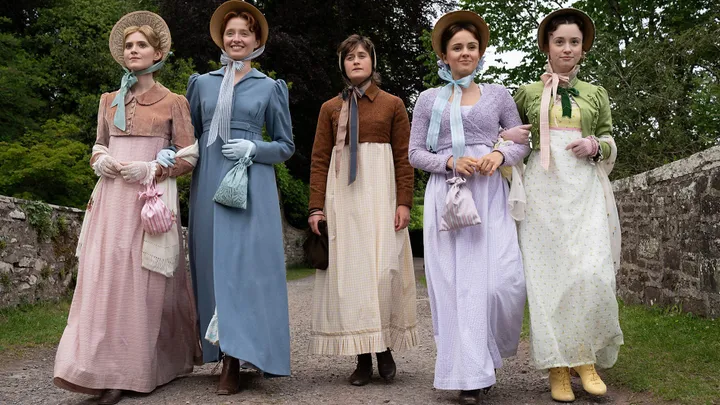
The BBC’s The Other Bennet Sister is no exception. Focused on Mary, the largely forgotten sibling in Jane Austen’s Pride and Prejudice, the series takes significant enough liberties with the author’s original work for some readers to dub it “fanfic”.
Personally, I’ve never seen that as much of an insult (what are Clueless or Bridget Jones if not very well-done Austen fan fictions?).
If anything, though it has its flaws, I think The Other Bennet Sister is a fun, highly watchable series that fits as neatly into the book’s premise as a mid-2020s TV show can.
It’s not the best screenwriting, I grant you. But the 1940 Pride and Prejudice film adaptation, which included the lines “At this moment, it’s difficult to believe that you’re so proud.” “At this moment, it’s difficult to believe that you are so prejudiced”, made a (clunky) point.
The book is all about how we see and unfairly judge one another, including as a reader. And speaking to HuffPost UK, media, culture, and creative industries lecturer Dr Shelley Galpin said, “The [BBC] series works well as a development of those ideas”.
Of course, Lizzie misunderstands Mr Darcy and Wickham in turns, and Mr Darcy is unkindly snobbish about the Bennets.
But we know that because Austen explicitly paints the picture for us. Her real art is in making us question the characters the book itself portrays negatively: if Mrs Bennet is so irrational and silly, how come the far better-off Mr Bennet married her – and why do some of her schemes, like sending a rain-sodden Jane off to sneeze over the nearest herd of poshies, kind of work out?
Why didn’t Lizzie, or most readers, trust Charlotte Lucas when she (rightly) said Mr Collins was perfect for many of her needs?
Not to pummel the remains of a long-dead horse further into the ground here, but the book makes us ask: were we proud, or prejudiced, when we read it?

I was pleased to see that the Richared E. Grant Mr Bennet’s head-in-the-sand approach to raising children is a lot more explicit than in, say, the 2005 film (even if Mrs Bennet, played by Ruth Jones, is more flatly harsh – both Dr Galpin and I felt the speech she gives at the end of the show was not quite enough to redeem her being “such a nightmare” the rest of the time).
Other characters were reframed, too.
“I definitely felt that some of the more irritating or comic character elements were softened a little [in The Other Bennet Sister] – Mary and Mr Collins were both a little less ‘preachy’ and lacking in social awareness than in their original iterations, so I felt that some artistic license was taken with the characterisation, but this is perhaps consistent with the show centring on Mary’s view of the world more,” said Dr Galpin.
“I… liked the slight rehabilitation of Mr Collins, who is, at the end of the day, trying to do the right thing, even if he is far from the ideal romantic hero.”
Mary, whom I always saw as quite similar to the shy, bookish, devout Fanny Price protagonist in Mansfield Park, was well overdue for a similar reinterpetation, though Dr Galpin pointed out that her TV self might be closer to the original novel than I realised.
“It struck me as I watched it that Mary is essentially playing the ‘Lizzie’ role from P&P. In Austen’s novel, Lizzie is supposed to be a little awkward and lacking in social niceties (in comparison to perfect Jane!) and less attractive than her sister.
“She also continually irritates her mother by making supposedly imprudent marriage choices. Mary essentially steps into this persona in the series. The rivalry with Caroline Bingley also echoes Lizzie’s role in the original novel,” she said.
So, when the BBC show depicts Mary as strong-willed, ambitious, self-aware, and bloomingly confident once she reaches London, it’s not a correction of Jane Austen’s book but a natural extension of it.
It makes as much sense as a spin-off TV series as Mr Collins’ (relatively) successful marriage, or Caroline Bingley’s genuinely well-meaning Wickham warning, do in the novel; not what we were led to expect initially, but hey, what sucker doesn’t question their first impression?
That’s Austen, baby – and in my opinion, the witty, touching, and fun BBC adaptation has bottled it perfectly.
On Tuesday the resident doctors start a six day long strike. It’s the 16th strike since this pay and conditions dispute started. At the beginning, there was a lot of public sympathy for the doctors, but I think that sympathy is waning. They saw Wes Streeting award a 29.4 per cent increase last year and now question why the resident doctors are coming back for another 22 per cent when no other group of public sector workers, including nurses, have had anything other than a low single digit increase. Don’t get me wrong, I think doctors do deserve to be paid well – they do a tremendous, high pressured job. But so do teachers. So do police officers. So do prison officers, and none of those groups are paid as well as doctors.
The government offered them a good deal, which the BMA negotiators recommended the BMA should put to their members, but the left wing clique that now control the BMA doctors committee refused to. It’s about time the BMA members revolted. The BMA, contrary to their perception, is not a professional body, it is a left wing trade union. The doctors are lions who are being led by donkeys, and very soon I suspect the ordinary BMA members will come to realise this. I wonder how solid this latest strike will be. It could be that quite a few doctors have had enough and will decide to go into work. That is often the way a strike will crumble.
The starting year one salary for a resident doctor is £38,800. Under the government’s pay deal that would go up by more than £2,000 to £41,200. Teachers start at £30,000. Police start far lower than that. And what’s more, the pay progression for doctors is much faster than for other public sector employees. And no one mentions to outstanding pension entitlements, which also ought to be factored in.
Now get this. The BMA itself has offered its own staff a pay rise of 2.75 per cent. This is lower than inflation. Quite how they can look their staff in the eye. I do not know. There is a word for the BMA. Hypocrites.
Wes Streeting is absolutely right to be resolute. I suspect he rather regrets bowing to their demands last year now.

Is Starbucks Open on Easter Sunday 2026? Most US Locations Serving Coffee with Varying Hours
Bitcoin Whales Are Losing $200 Million Daily As Market Fear Rises

Parkland Survivor’s ‘Biggest Concern’ In Zendaya’s New Movie


-

 NewsBeat3 days ago
Steven Gerrard disagrees with Gary Neville over ‘shock’ Chelsea and Arsenal claim | Football
-

 Business3 days ago
No Jackpot Winner and $194 Million Prize Rolls Over
-

 Fashion2 days ago
Weekend Open Thread: Spanx – Corporette.com
-
Entertainment6 days ago
Fans slam 'heartbreaking' Barbie Dream Fest convention debacle with 'cardboard cutout' experience
-

 Crypto World4 days ago
Gold Price Prediction: Worst Month in 17 Years fo Save Haven Rock
-

 Tech6 days ago
The Pixel 10a doesn’t have a camera bump, and it’s great
-
Crypto World5 days ago
Dems press CFTC, ethics board on prediction-market insider trades
-

 Tech6 days ago
Avatar Legends: The Fighting Game comes out in July and it looks pretty slick
-

 Business3 days ago
Login and Checkout Issues Spark Merchant Frustration
-

 Sports16 hours ago
India men’s 4x400m and mixed 4x100m relay teams register big progress | Other Sports News
-

 Tech6 days ago
Apple will hide your email address from apps and websites, but not cops
-

 Sports5 days ago
Tallest college basketball player ever, standing at 7-foot-9, entering transfer portal
-

 Tech5 days ago
EE TV is using AI to help you find something to watch
-

 Politics6 days ago
Should Trump Be Scared Strait?
-

 Tech5 days ago
Flipsnack and the shift toward motion-first business content with living visuals
-

 Fashion6 days ago
The Best Spring Trends of 2026
-

 Tech5 days ago
How to back up your iPhone & iPad to your Mac before something goes wrong
-

 Sports6 days ago
Women’s hockey camp eyes fitness boost, tactics ahead of WC 2026 campaign | Other Sports News
-
 Crypto World7 days ago
Bitcoin’s Six-Month Losing Streak: What On-Chain Data Says About the Market’s Next Move
-
 Politics6 days ago
BBC slammed for ignoring author of The Fraud
You must be logged in to post a comment Login