
Politics
Politics Home | Arthritis UK to shine a light in Parliament on young people living with arthritis



In the UK, there are about 10,000 children and young people living with a form of arthritis
In every constituency, there will be young people having to navigate the difficulties of growing up with this chronic illness. This is why Arthritis UK is bringing a young people’s art exhibition to Parliament next week to shine a light on their experiences so that they receive the recognition and care they deserve.
Juvenile Idiopathic Arthritis (JIA) is a form of inflammatory arthritis diagnosed in people under the age of 16. Receiving a diagnosis at such a young age can be an overwhelming experience, and this disease impacts all stages of what can be considered a balanced and fair upbringing.
For young people, having arthritis translates into missing school or playtime for medical appointments, having to learn complex medical terminology alongside completing homework, balancing fatigue with maintaining a healthy social life, and isolation proven to impact relationships and family planning.
Arthritis UK believes that the needs of young people living with arthritis have been neglected, leading to poor diagnosis and poor outcomes from a lack of support, and stigma. This World Young Rheumatic Disease Day (WORD Day) (18th March), the charity is calling on MPs to challenge the common misconception that arthritis is ‘just an old person’s disease’.
Prime Minister Keir Starmer has a personal connection to the cause, often speaking about his own mother’s diagnosis of Still’s disease, which is a form of JIA.
In the run-up to the WORD Day, Arthritis UK is proud to welcome just a fraction of the children and young people across the UK living with JIA into Parliament to celebrate the opening of an art exhibition, ‘Inside Arthritis’. The exhibition will be displayed in the Upper Waiting Hall (9th to 12th March), and parliamentarians will have the chance to hear first-hand the very real challenges and needs of these young ambassadors.
The artwork displayed in the exhibition has been sourced from Arthritis UK’s ‘Joint Creativity’ art programme. ‘Joint Creativity’ educates young people about the science behind their condition through fun and accessible mediums. These interactive sessions are an opportunity to connect with a community that understands the difficulties of growing up with a chronic illness, which can often be an isolating experience.
Arthritis can equally impact mental health as much as physical health, with a recent report from Arthritis UK, Left Waiting, Left Behind, revealing that one in four people living with arthritis experience anxiety most of or all the time.
Therefore, having a creative outlet can make understanding these processes less intimidating and encourage young people to feel in control of their condition.
This is true for Penny, 14, from Kent, who lives with JIA and has been a longstanding art club attendee and said:
“Joint Creativity made me feel less alone because I was meeting other young people with JIA, talking with others who really understand because they are going through the same things.
“There’s still a misconception around JIA because people still think that arthritis is something that only affects older people. I think the fact younger people get it needs to be more well-known because that awareness would bring more understanding.”
Arthritis UK, the UK’s leading arthritis charity, works to ensure that all people living with arthritis and other musculoskeletal conditions are cared for and represented. Whether that be through funding world-leading research, provision of health information to patients and professionals or through services, such as the Young People and Families Service.
Deborah Alsina MBE, Arthritis UK’s Chief Executive, will be speaking at the opening event and looks forward to hearing the empowering young artists’ stories first hand.
Deborah said: “’Inside Arthritis’ is a great opportunity for parliamentarians to hear first-hand from young people about the stigma and challenges of living with arthritis.
“Like the Prime Minister, many of us know someone living with arthritis, the resilience it requires and the knock-on impact it can have on quality of life and mental health. This is particularly acute for those affected earlier in life; one study has shown nearly 60 per cent of children and young people with Juvenile Idiopathic Arthritis had or required mental health support.
“Current polices and services do not adequately reflect the impact on both the individual, family and society. We hope that by hearing from our inspirational young people, parliamentarians will be inspired to help us advocate for greater change and, in doing so, tackle the misconception that arthritis is an older person’s disease.”

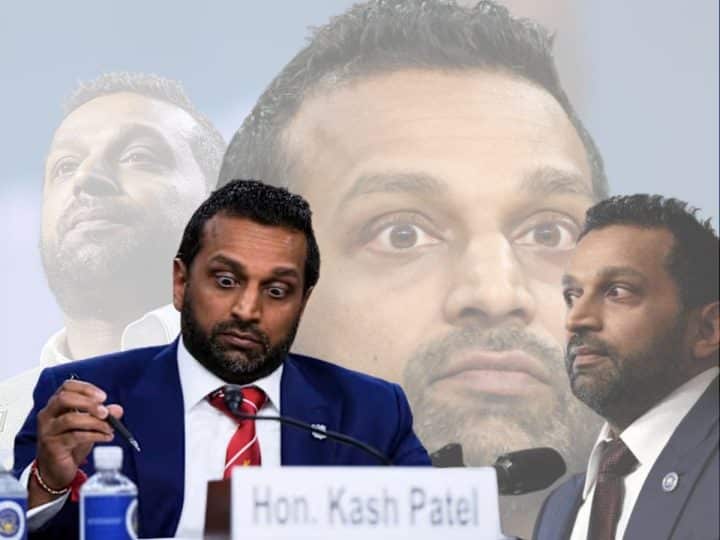

Kash Patel — Clearly, people who are suffering from alcoholism and poor mental health should receive support. Part of this help should be ensuring they’re not actively in charge of law enforcement agencies.
And yet:
“On multiple occasions” Kash Patel has reportedly gotten so drunk that the FBI couldn’t wake him, and at least once considered smashing down his front door to make sure he was still alive, according to this new story. https://t.co/SKrbIWYpUX pic.twitter.com/oWVeFs1VHR
— Aaron Reichlin-Melnick (@ReichlinMelnick) April 17, 2026
Kash Patel has now responded to the claims made against him.
You may be unsurprised to discover his response has reassured precisely no one.
Febrile Bottle Inspector
The article from the Atlantic contained revelations like the following:
In Friday, April 10, as FBI Director Kash Patel was preparing to leave work for the weekend, he struggled to log into an internal computer system. He quickly became convinced that he had been locked out, and he panicked, frantically calling aides and allies to announce that he had been fired by the White House, according to nine people familiar with his outreach. Two of these people described his behavior as a “freak-out.”
It would later turn out that a simple technical error had locked Patel out. This was something he could have confirmed himself if he hadn’t gone all Fear & Loathing in Las Vegas.
I’m going to be completely real and admit that I did once react to being locked out of my work computer by freaking out and assuming I’d been fired. This, of course, is why I’m not pursuing a senior administrative position within the FBI. That and all the terrible stuff they do (more on that in a bit).
The Atlantic also reported:
The IT-lockout episode is emblematic of Patel’s tumultuous tenure as director of the FBI: He is erratic, suspicious of others, and prone to jumping to conclusions before he has necessary evidence, according to the more than two dozen
People are saying that “jumping to conclusions before he has necessary evidence” should rule him out of an FBI position; clearly those people are unfamiliar with the work this agency does.
The Atlantic added:
Several officials told me that Patel’s drinking has been a recurring source of concern across the government. They said that he is known to drink to the point of obvious intoxication, in many cases at the private club Ned’s in Washington, D.C., while in the presence of White House and other administration staff. He is also known to drink to excess at the Poodle Room, in Las Vegas, where he frequently spends parts of his weekends. Early in his tenure, meetings and briefings had to be rescheduled for later in the day as a result of his alcohol-fueled nights, six current and former officials and others familiar with Patel’s schedule told me.
No wonder he’s paranoid if he’s got the beer fear.
Simultaneously, it’s no wonder he needs to drink if he’s anxious all the time.
It’s a vicious circle, and one which won’t find remedy as long he’s in such a high-pressure position.
Kash Patel — Response and perspective
Memo to the fake news – the only time I’ll ever actually be concerned about the hit piece lies you write about me will be when you stop. Keep talking, it means I’m doing exactly what I should be doing. And no amount of BS you write will ever deter this FBI from making America
Many responded in turn with images of Patel celebrating with the American Winter Olympic hockey team:
Yeah whatever you say bro https://t.co/76kYNXUwlS pic.twitter.com/T0uhbKmlYE
— Wu Tang is for the Children (@WUTangKids) April 18, 2026
Patel also revealed new information in responding to the claims:
Amazing https://t.co/DSQSzwu7XJ pic.twitter.com/qKBKeWCslI
— nikki mccann ramírez (@NikkiMcR) April 18, 2026
The question is this: is Patel is really not good enough for the FBI?
The actual FBI
In an article titled “How the FBI Created a Terrorist”, the Intercept wrote about how the FBI targeted a Muslim man with a schizoaffective disorder:
FBI employees talked about how Osmakac didn’t have any money, how he thought the U.S. spy satellites were watching him, and how he had no concept of what weapons cost on the black market.
The source of their amusement was also their primary source of concern. Osmakac was, in the FBI’s own words, “a retarded fool” who didn’t have any capacity to plan and execute an attack on his own. That was a challenge for the FBI.
The piece additionally reported:
In constructing the sting, FBI agents were in communication with prosecutors at the U.S. Attorney’s Office for the Middle District of Florida, the transcripts show. The prosecutors needed the FBI to show Osmakac giving Amir Jones money for the weapons. Over several conversations, the FBI agents struggled to create a situation that would allow the penniless Osmakac to hand cash to the undercover agent.
“How do we come up with enough money for them to pay for everything?” asks FBI Special Agent Taylor Reed in one recording.
“Right now, we have money issues,” Amir admits in a separate conversation.
Their advantage was that Dabus, the informant, had given Osmakac a job. If they could get Dabus to pay Osmakac, and then make sure Osmakac used his paycheck to make a payment toward the weapons, the agents could satisfy the Justice Department. “Once he gives it to him, it’s his money, whether we orchestrated it or not,” Reed says.
Reading all that, you could wonder if it’s better for the FBI to be less efficient?
The reason it probably isn’t is that they’ll still do all the same reprehensible shit; they’ll just suffer fewer consequences, because no one in charge cares anymore.
Either way, Patel needs to be given the boot ASAP.
If you think he’s paranoid now, just wait until he finds out about the X-Files.
Featured image via Gage Skidmore (Wikimedia)
By Willem Moore
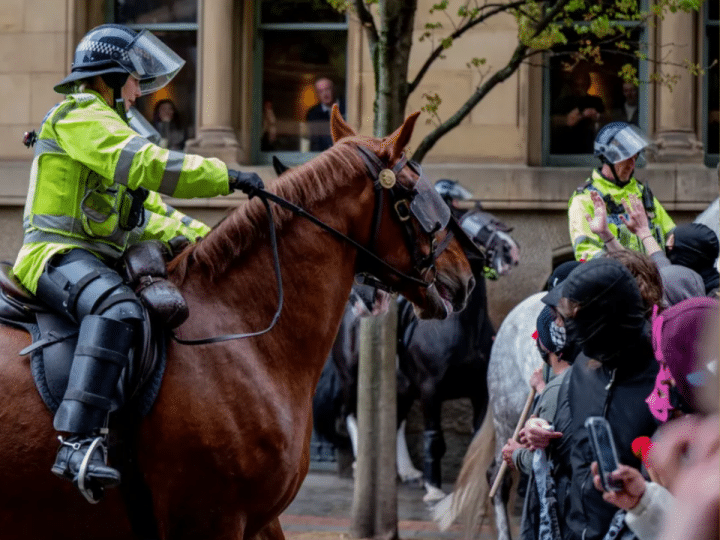

Anti-fascist campaigners have condemned Greater Manchester Police’s “despicable” and “extreme” violence against peaceful activists protesting against yesterday’s white supremacist march in Manchester.
In a statement, the Northern Police Monitoring Project (NPMP) group and Resist Britain First slammed physical and chemical attacks on non-violent protesters by police concealing their identities and numbers — who then prevented paramedics and ambulances reaching their victims. The groups also pointed out that the force showed no apparent shortage of resource when it came to restricting and attacking anti-extremist counter-protesters — yet allowed fascist marchers to roam and attack with impunity:
Britain First March and the ‘Resist Britain First’ Counter Demonstration — Manchester City Centre, 18 April 2026
Today, the Northern Police Monitoring Project were present as Resist Britain First mobilised in significant numbers to oppose the racist and fascist group Britain First, as they marched through the centre of the city.
What we witnessed raises yet more serious and urgent concerns about the despicable conduct of Greater Manchester Police, and the many forces deployed alongside them from across the country.
AN EXTRAORDINARY DEPLOYMENT OF RESOURCE
At a time of deep and sustained austerity – when public services are being cut to the bone and communities across Greater Manchester are suffering – GMP showed no shortage of resources today. The scale of the policing was staggering.
POLICE VIOLENCE AGAINST ANTIFASCIST PROTESTERS
Officers behaved thuggishly, with consistent and serious aggression and violence -overwhelmingly directed at antifascist counter-protesters, not at the far-right fascist marchers they were facilitating. This included numerous punches, kicks and violent attempts to remove masks, in some cases causing injuries, as well as repeated use of batons and PAVA spray, and the deployment of horses against protesters.
A number of officers were observed without visible badge numbers, in clear breach of police regulations. This is not an oversight -it is a pattern with a long and troubling history in public order policing. Officers who conceal their identity while using force are officers who believe they are answerable to nobody. Today’s behaviour suggests that belief is well founded.
The use of PAVA spray was particularly alarming. A chemical irritant that was only approved for police use in 2014, PAVA causes intense burning to the eyes, skin and respiratory tract – and poses serious risks to anyone with asthma or other respiratory conditions. It is not a neutral or routine tool.
It was deployed repeatedly, in significant volume, without warning, and without lawful justification. Officers were observed spraying PAVA into the eyes of antifascist demonstrators at close range, and in a number of cases deliberately attempting to remove eyewear from protesters – apparently with the sole intention of maximising the harm caused. This is not policing. This is targeted cruelty.
NO DUTY OF CARE
As people sustained serious injuries, officers were observed actively blocking medical assistance from assisting injured protesters. GMP appeared to have no regard whatsoever for its duty of care to those in its custody or in its presence – at least not if they are antifascists. This constitutes a serious breach of GMP’s legal obligations, whilst also making, clear that they function not to protect people, but to maintain and abuse control by any means necessary.
We also observed, not for the first time, the police’s disregard and disrespect for the protected role of Legal Observers. This is a serious concern given the important role that Legal Observers play in independently documenting and witnessing police conduct on behalf of those whose rights are at risk.
ENABLING FASCISM
Let us be clear about what today was really about. GMP’s operational priority was to facilitate a racist and fascist organisation marching through the centre of our city, and to suppress and contain any opposition to that march. This was the active enabling of fascism – using public money, public officers, and significant violence against the public. While antifascists were being punched, kicked and PAVA-sprayed, far-right streamers were left free to harass and incite antifascists, and film injured protesters receiving treatment. The contrast could not have been clearer: there should be no doubt about whose side the police are on. Despite this extraordinary effort, the antifascist counter-protest vastly outnumbered Britain First. The people of Manchester made their position clear.
The statement ended with a message for complicit corporate media – and for Greater Manchester mayor Andy Burnham, who has defended the police against accusations of misconduct and brutality:
MEDIA FAILURE
We are deeply concerned by the failure of local and national media to report critically on what happened today. Uncritically reproducing GMP press lines while ignoring the documented violence of officers is not journalism – it is the laundering of institutional propaganda. Equally, the failure to accurately report the scale of the antifascist mobilisation – which dwarfed Britain First in numbers – serves to falsely legitimise a movement that was comprehensively rejected by the people of Manchester today. The public deserves better.
A MESSAGE TO ANDY BURNHAM
Andy Burnham, as Mayor of Greater Manchester, has been a consistent and vocal advocate for GMP – championing ever-increasing budgets and defending the force at every turn. We ask him directly: is this what he wants to see? Officers injuring protesters, blocking medical care, and chaperoning an explicitly racist and fascist organisation through his city? He must answer for the institution he funds and champions.
POLICING AND FASCISM
Today made visible something that many already know: the line between policing and fascism is vanishingly thin. When the police protect fascists from the communities they threaten, we must name that for what it is.
WHO PROTECTS THE FASCISTS?
THE POLICE PROTECT THE FASCISTS.
The Canary’s reporters at the scene captured some appalling scenes of the police’s actions:
View this post on Instagram
View this post on Instagram
View this post on Instagram
View this post on Instagram
In a separate statement, NPMP condemned the “extreme” police violence and said it is holding an event for victims in the city next Tuesday 21 April 2026:
NPMP Statement on the policing of the RBF counter demonstration on 18th April 2026
Solidarity with all those who came out yesterday, especially those harmed by the police

While we all saw the extreme violence used by the police, we also engaged in and witnessed may acts of community care and rapid solidarity responses. Our gratitude to each and every person who stood their ground, supported others, provided medical support, ran to get more medical supplies, helped people stay hydrated, get to safety and were holding formal medic and legal observer roles

If you were harmed by or witnessed the police violence and want/need to be in community or get some understanding around complaints processes — you are so welcome to join our community solidarity space! This Tuesday, 5.30-7.30, Windrush Centre. More info on our grid.
Featured image via the Canary
By Skwawkbox
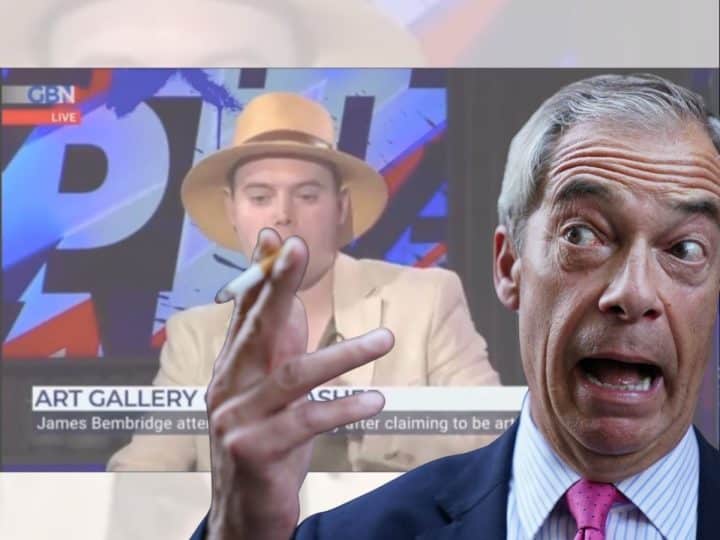

On 14 April, we reported that Reform UK were running a candidate who wanted to “salt the earth” upon which the NHS stood. Surprisingly, they are apparently now investigating said candidate:
Reform investigating candidate @TheBembridge over alleged posts he 'hates NHS' and thinks nurses eat too muchhttps://t.co/R34o7HipV6
— Reform Party UK Exposed
 (@reformexposed) April 18, 2026
We don’t say ‘surprisingly’ because we agree with his comments; we say it because Reform have turned a blind eye to much worse candidates than this guy.
Reform — Death to the NHS
The candidate in question is James Bembridge — deputy editor at Country Squire magazine. The following comment is the one which has attracted the most controversy:

As it turns out, Bembridge had some other choice comments. In March 2021, he said:
I’m not sure why applause is so readily given to NHS nurses who claim to be driven to using food banks when, looking at them, they are presumably eating them out of business
The “applause” reference is because this comment was made during the pandemic.
That’s right.
While you were celebrating nurses, Bembridge was ridiculing their weight and income.
While nurses were saving lives, he was writing about being whatever the fuck a ‘country squire’ is.
If you’re wondering how his writing reads, by the way, the following is from an obituary he penned in 2022:
At 5 pm on Wednesday, March 15, 2017, Isobel Weber died much as she lived: dressed in high fashion, sipping champagne and surrounded by no one.
Turn the clock back two years, and I’m sitting with her in the Kronenhalle restaurant, Zurich, struggling to make sense of what she’s saying. Her lips are moving, but they’ve just had about 5 vials of filler pumped into them.
What use, I am moved to ask myself, does a wheelchair-bound sexagenarian have for lips like those? I suppose younger women do it to swell out their CVs for the job that men’s wives no longer perform. But Isobel?
So Bembridge was pondering why the deceased had got lip filler when she presumably wasn’t angling to suck his dick.
If this is Bembridge’s job, we can say with absolute certainty that the people of Britain will never gather en masse to applaud him for performing it.
Bembridge was most recently seen campaigning with London mayoral hopeful Laila Cunningham:
Hi @policylaila, see @TheBembridge is there with you.
Any comment on these? pic.twitter.com/DLtnHUbxDc
— Reform Party UK Exposed
(@reformexposed) April 18, 2026
Cunningham hasn’t answered the above.
This isn’t surprising, because she’s famous for not answering questions:
"If the Tories are so bad, why is Reform UK filling themselves full of them?"
Laila Cunningham: I can't answer that. pic.twitter.com/fxdPli1XKY
— Mukhtar (@I_amMukhtar) January 10, 2026
Investigation
My London report that Reform are now looking into Bembridge:
Reform UK has confirmed that it is looking into the allegations. Mr Bembridge has not yet responded to the LDRS request for comment.
They added:
At the June 2024 general elections, Reform UK pledged an extra £17 billion for the NHS. It said that the NHS needs a new funding model and that it must use the private sector to relived pressure on the over-stretched service.
In other words, Reform have pledged to give a £17bn bung to the private sector.
We doubt the Bembridge investigation will result in a suspension. After all, Reform suspended campaign manager Adam Mitula for holocaust denial, and we recently learned he’s still managing campaign business – now as an election agent.
Reform don’t keep attracting candidates like the following by accident:
- Reform activist said ‘Hitler was right’.
- Reform candidate exposed as a horny nincompoop.
- Another Reform candidate has praised Enoch Powell.
- Reform welcomes ‘shoot the p*kis’ scandal ex-Tory.
- Video emerges of Reform’s ‘Nazi salute’ candidate drink driving.
Featured image via GB News
By Willem Moore
It’s hard to know where to start with the Sunday Mail’s lead story today.


Especially if one doesn’t want sent to prison.
So we hope you’ll forgive us if we’re extra-careful.
The article contains things even we’d never read before.

The Mail has redacted some of the names, but – well, we’re not going to say any more about that. The anonymity order protecting the complainers who made the false allegations about Salmond operates in such a way that a judge can essentially imprison anyone on a whim, with no proper legal process.
(Contempt of court is not technically a criminal offence, so all the legal protections that normally apply to those accused of a crime are thrown in the bin.)
But what leaps out from the document is how much the people in the WhatsApp group loathed the greatest leader in the SNP’s history, to the point where they wanted to see him die in prison for crimes he didn’t commit.

So much so that they were willing to completely make things up.

Once again, readers, we ask you to bear in mind what we can’t tell you. While some of these messages are shocking in their own right, if we were allowed to reveal who was saying them and what those people went on to become, the idea that there WASN’T a conspiracy against Salmond, led from the very top of the SNP, would be instantly obviously farcical.


The messages published by the Mail – and the paper holds several damning ones that it has chosen, or been advised by its lawyers, NOT to publish – show a group of people who explicitly say that they DON’T think they were victims of any crime, but who nevertheless were willing to act in concert with each other in order to have Salmond imprisoned anyway.


(There must be a shorter way to say that last sentence, you’d think.)

Three of the people whose names AREN’T redacted in the Mail’s piece and which feature prominently are Peter Murrell (then CEO of the SNP), Sue Ruddick (then Chief Operating Officer of the SNP) and Ian McCann (then Compliance Officer of the SNP). Apart from Nicola Sturgeon, they were the party’s three most senior executives at the time.


It speaks volumes for the total corruption of the Scottish establishment that Nicola Sturgeon feels sufficient impunity to continue to insist, absurdly, that the three top officers of the party she led – one of whom she also shared a home and a camper van with – would for even the briefest moment have countenanced embarking on such a momentous endeavour without, at the very least, her full knowledge and backing.


And yet nor has she spoken a single word in criticism or condemnation of any of them. Not once has she suggested any of them might have “gone rogue” or exceeded their remit, even after Salmond was cleared of every single charge the WhatsApp group managed to concoct.
On the contrary, everyone associated with the conspiracy has been defended and/or rewarded by her, even when found to have acted with the most appalling incompetence and/or malice.

Nor even would revulsion at Salmond’s (imaginary) crimes serve as an explanation for the depth of animus. Because remarkably, this week Wings was contacted by a former SNP activist with this story:
“The plot against Alex Salmond had been going on since at least 2013. I was a mature student and just prior to graduation I campaigned in the Mark McDonald by-election. I’d responded to a call from Alex stating that we needed campaigners to go to Aberdeen as the seat was crucial to maintaining the majority.
I lived in Broughty Ferry at the time and was part of that branch, and told them I was available to assist in Aberdeen for a few days if needed.
I was told that Shona Robison would pick me up. She arrived in a smallish silver 4×4 and we headed off to Aberdeen. I’d never met her before, or anyone official in the SNP. We talked about a local Labour issue that had involved my university, and we talked about the people that we both knew.
Before we had got to Tealing, she said to me “What do you think about Alex Salmond?”
It was Alex Salmond that drew me in to the SNP – I hung off his every word. Then she turned around to me and said “He’s not very well liked within the party”.
I was stunned, he’d just brought the SNP to a huge victory, I remember thinking at the time “I’ve never met you before, I could be anybody”. He was First Minister, she was Minister for Sport. I remember thinking the exchange was bizarre.
Then we got to Aberdeen, Sturgeon was there. I only saw her for about 2 mins and I think she went off with Shona to campaign. I remember we arrived at a Spar opposite some tall flats in Mastrick and met up with Shona and maybe about 8-10 other campaigners having lunch. I remember Shona ate a long egg baguette.
I’m a heavy smoker but I’m conscious of the smoke, so I stood a few metres back, they were sat on some benches opposite these flats, and then she does it again to those that were sitting with her – “What do you think of Alex Salmond?”, and then the exact same line repeated that “he’s not very well liked within the party”.
I nearly choked on that cigarette, but what I noticed was that this was obviously a well-rehearsed routine.
When Alex he talked about conspiracy, this strange encounter always comes to mind, this was 2013, the SNP were on a crest of a wave, I remember thinking that Shona was a block of wood, and did she really think that she was responsible for the SNP’s current success. I’ve always seen her as glaikit and a hanger-on that was in the right position at the right time.”
[PLEASE NOTE: To the limit of Wings’ knowledge, Shona Robison had no involvement in the criminal allegations against Alex Salmond.]
It’s an astonishing story. At the time Alex Salmond had led the SNP to its first ever election victory, then to an unprecedented Holyrood majority, and then to an independence referendum, and yet one of his own ministers – a close ally and longstanding personal friend of Salmond’s deputy, who would succeed him if he fell – was touring the country dripping poison in the ears of groups of activists even as the party tried to defend its fragile Parliamentary majority.


If that was how senior SNP figures (Robison would go on to become Deputy FM after Sturgeon’s resignation, having thrown her “dear friend” under the bus when it was politically expedient) were treating Salmond when he and the SNP were the undisputed masters of all they surveyed in Scotland, it doesn’t take a massive leap to imagine how gleefully they would seize on the opportunity to stick the knife in him a few years later.
We’re not allowed to tell you all the things that are missing from the Sunday Mail story, readers. But if you’ve got any wits about you at all, it already tells you everything you need to know about how Alex Salmond was utterly betrayed and then driven into the grave not by his political enemies, but by the people around him.
And perhaps even more painfully, so was the cause of Scottish independence.


Reap and ye shall sow. Remember all the occasions Keir Starmer urged Boris Johnson and Rishi Sunak to resign and take responsibilities for the failures or misdeeds of their governments? If you play holier than thou, the don’t be surprised when people hold you to the same standards as you held other people to.
Keir Starmer constantly reminds us that he was a top barrister. Top barristers know that ignorance is no defence in a court of law. It follows therefore, that it is no defence in the court of public opinion.
If it really is true – and I have my doubts – that no one in Number 10 knew that Peter Mandelson had failed his vetting, then that says an awful lot about the way Keir Starmer runs his government. What you don’t know can’t hurt you seems to be maxim.
It stretches credulity to the extreme to believe that Olly Robbins didn’t feel it was worth mentioning to anyone in Number 10 that he had overruled the official vetting process. Surely, an experience civil servant like him – and remember he was a spook at one time – would have at least informed the Cabinet Secretary, who would then have been duty bound to inform the prime minister?
It may be now that Starmer’s habit of throwing people under the bus to save his own skin might catch up with him. He despatched Chris Wormald, the previous Cabinet Secretary with no notice whatsoever to give the impression he was making a new start in the running of the Number 10 operation. He’s now done the same to Olly Robbins. Neither man owes Starmer anything and it there are already rumours that Robbins is determined not to be the Fall Guy for all this. Wormald may also like to exact a little revenge.
A former No 10 Chief of Staff told me on Friday he found it inconceivable the PM would not have been informed. Another former adviser told me: “It is well documented that this PM reads all advice notes, hardly ever marking them but returning them to red box without comment. Hard to believe that the PM sat in his downing st bunker reading every bit of advice bar this one. And if it was not sent to him, it is difficult to believe that he runs Whitehall so badly that they only send him notes with good news. He can’t be reading much at the moment if that’s the case.” Ouch.
If the system really does allow a senior civil servant to overrule security vetting, the system stinks. And if Olly Robbins defence really is that it would have been inappropriate to tell the Foreign Secretary or Prime Minister he had done so, we have a civil service that has gone rogue.
In the end the buck stops with the man at the top. Starmer will do his best to wriggle out of this on some kind of technicality, but the trouble is that the whole country knows the hole think stinks. We see you, Prime Minister.
He has undoubtedly misled Parliament. It doesn’t matter that it may not have been deliberate. He failed to check his facts at the time and ask any questions about the vetting process. When he was informed what had happened on Tuesday evening, he didn’t rush to Parliament and clarify and correct what he had said. If The Guardian hadn’t got the scoop, none of us would be any the wiser. By not going to Parliament on Wednesday morning, that in itself is a breach of the Ministerial Code and would require his resignation. Boris Johnson resigned over something far less serious, when he misled Parliament over Partygate. Starmer’s problem is that this involves national security, not eating cake.
What may save Starmer’s skin in the short term is the lack of any other obvious leader to take over. Burnham is not in Parliament, Angela Rayner is still under investigation by HMRC and Wes Streeting’s opponents are trying to smear him, depicting him as Mandelson’s protégé. Shabana Mahmood may be popular in Parliament, but Labour Party members won’t vote for something they see as more right- wing than Wes Streeting.
What a pickle.
And he’s only got himself to blame. We were told in July 2024 that the adults were back in the room.
Oh how we now laugh.
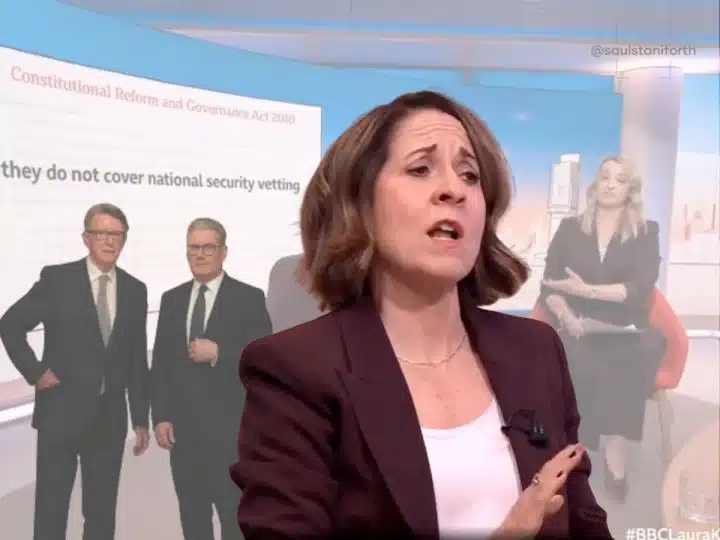

Starmer — On 17 April, it emerged that Peter Mandelson had failed vetting for the ambassador to the US position.
In one sense, this was unsurprising, because he was Peter Mandelson, and he literally should have failed the vetting process as soon as he entered his name.
On the other, it was really quite shocking, because it meant Starmer’s government was seemingly more lazy and corrupt than the Tories.
Since then, Starmer and his few remaining allies have tried to convince us that actually Number 10 knew nothing, and this whole affair is merely the grossest incompetence imaginable.
The problem is that this line of defence has failed to hold up to scrutiny, and now ministers are squirming on the telly when asked about it:
Liz Kendall is asked about David Maddox asking Number 10 about Mandelson failing the vetting months ago, despite the PM saying he only found out last week.
Kendall refuses to comment, saying she can't speak on behalf of number tens director of communications. https://t.co/DzX9KJxMMW pic.twitter.com/pDW1k0ytsc
— Saul Staniforth (@SaulStaniforth) April 19, 2026
Truth economics
In the clip above, host Trevor Phillips says to Kendall:
All right, on September the 11th last year, a journalist called David Maddox wrote to the director of communications at Number 10, Tim Allan, saying that he’d been told by two sources that Mandelson had not cleared vetting, asking for a comment. Here’s Allan’s reply. Basically, he says, vetting was done by the Foreign Office in a normal way. Was Allan being, as they say, economical with the truth, or did he just not know that there had been a problem with the vetting?
Kendall responded:
You will have to ask those questions to Tim Allan yourself. I’m not going to speak on behalf of him and I don’t think that’s fair that I do.
She’s literally doing the media round on the week of what may be Starmer’s biggest scandal; surely she could have come prepared? This is especially true given that Allan isn’t even in government anymore, so he probably won’t be answering any questions himself.
Phillips continued:
He was responding for the Prime Minister to a journalist. The Prime Minister is now saying he didn’t know anything about this vetting.
A somewhat panicked Kendall responded:
Let me go back to what I said. All ministers were told that he had got developed vetting status. We were not told… that the Foreign Office took that decision, whereas the UK security… advised against. We were not told that. We’re just coming back to the same issue here, Trevor.
And if we had known that, he wouldn’t have been appointed in the first place.
The problem, Liz, is that Starmer saw fit to appoint Mandelson before the vetting was even complete. So he would have been appointed. And this makes it look like Starmer wanted him in the role regardless of how the vetting process shook out.
It’s a problem other ministers have struggled to explain:
So we're being asked to believe that Starmer announced the appointment of Mandelson before the security vetting had been completed and didn't then enquire about the vetting at any point subsequently, and according to Darren Jones this means due process was followed at all times pic.twitter.com/WckCGE8rbC
— Saul Staniforth (@SaulStaniforth) April 17, 2026
It’s also a problem we knew before now, begging the question: why didn’t Starmer confirm if Mandelson was even vetted?
— Politics UK (@PolitlcsUK) March 11, 2026
 NEW: Peter Mandelson was given access to highly-classified Government briefings before he had completed formal vetting pic.twitter.com/M11hCPrjpm
Starmer in deeper
This problem goes back further than Maddox too:
Starmer's team were warned in 2023 that Peter Mandelson was a major security and vetting risk.https://t.co/4Ztk2ue5Tp
— (((Dan Hodges))) (@DPJHodges) April 19, 2026
Starmer had every reason to suspect that Mandelson wouldn’t pass vetting.
Now, we’re supposed to believe Mandelson was vetted, and no one even bothered to confirm if he’d passed?
As Paul Holden, author of The Fraud, wrote:
So Starmer’s team were briefed by ACTUAL security services about Mandelson risks in 2023/24, which they ignore. Simultaneously, Labour Together, (“provisional wing of Starmerism”) got private firms to investigate journalists and treat THOSE lunatic conspiracies seriously?
If accurate, looks like sec services pointed out potential concerns about Russia and Mandelson. That are ignored. But the mad inventions linking me and other legit investigate journalists to “pro-Kremlin” networks are treated to so seriously they’re reported to GCHQ.
So we know Starmer’s people were spying on journalists and also that they did a piss poor job vetting Mandelson (at the very least).
As such, it’s easy to come to the conclusion that the Starmer operation is a recklessly criminal enterprise.
We’re sure no one will face consequences, but clearly these things must be crimes, or the rule of law is a joke.
And this is how ridiculous the government looks when it tries to defend all this:
Liz Kendall denies that giving a top govt job to a man sacked from the cabinet twice, who was best pal with a billionaire paedophile, in any way put the UKs national security at risk. pic.twitter.com/U8zYjZ1bhQ
— Saul Staniforth (@SaulStaniforth) April 19, 2026
There’s more
As Saul Staniforth documented, Kendall had more shameless moments too:
Liz Kendall says Epsteins victims are being ignored in all of this
So #trevorphillips calls out Starmers hypocrisy – if the victims should be front & centre why did the PM appoint Mandelson originally?
Kendall tells us Starmer cares so much about violence against women & girls pic.twitter.com/HRsxTIoLN7
— Saul Staniforth (@SaulStaniforth) April 19, 2026
This is like saying we need to think about Jerry as you’re feeding him to Tom.
To end with some levity, Kendall also said:
Liz Kendall says Keir Starmer is a man of honesty and integrity. https://t.co/10b0kEIKss pic.twitter.com/sULBhDjaxO
— Saul Staniforth (@SaulStaniforth) April 19, 2026
What do you mean she wasn’t joking?
Featured image via BBC
By Willem Moore


Content Note: this article contains an account of sexual assault
Like others on the far right, Tommy Robinson has tried to depict himself as a great defender of British women. As we’ve reported, Robinson’s credentials on this front don’t hold up to scrutiny. This is especially true now that Robinson is throwing his weight behind Conor McGregor, who was found to have raped Nikita Hand in a civil case:
Tommy Robinson has never cared about protecting women and girls. He uses their trauma to push a racist agenda. He doesn’t truly care about rapists. Otherwise, he wouldn’t support rapist like Conor McGregor.
He was ordered to pay £206,000 plus costs to Nikita Hand. pic.twitter.com/Fkq7WkpLGU — Mukhtar (@I_amMukhtar) April 18, 2026
Grim
The rape that McGregor subjected Hand to was incredibly violent. As the BBC reported:
Ms Hand, a mother-of-one, told the court how McGregor had pinned her to a bed before assaulting her.
She was left with extensive bruises and abrasions over her body, including on her hands and wrists.
There was a bloodied scratch on her breast and tenderness on her neck after she said she was placed in a “chokehold” by McGregor.
He denied causing the bruising, saying it could have happened after she “swan dived” into the bath in the hotel room.
Ms Hand was taken in an ambulance to the Rotunda Hospital in Dublin the next day where she was assessed in the sexual assault treatment unit.
A paramedic who examined Ms Hand told the court that she had not seen “someone so bruised” in a long time.
Dr Daniel Kane, a gynaecologist and forensic examiner, told the court how he had to use forceps to remove a tampon Ms Hand said she had been wearing on the night of the assault, which had been “wedged inside”. A paramedic who examined Ms Hand on the day after the alleged attacks said she had not seen a patient as bruised as Ms Hand was in a long time.
As can be seen in his tweet, Robinson is urging McGregor to “lead” Ireland. This isn’t a random request, as McGregor did launch a failed presidential bid in 2025. It’s certainly grim, however, given McGregor’s past. And it makes it abundantly clear that Robinson has zero respect for women.
This isn’t Robinson’s only ongoing controversy either.
Tommy Robinson — at war with his followers
On 16 May, Robinson is throwing another racism festival in the UK. His ‘Unite the Kingdom’ rally in 2025 saw over 100,000 pissed up gobshites descend on the streets of London. Among the groups speaking were Generation Remigration, who argue that Britain should deport its entire non-white population.
This is the meaning of ‘remigration’, by the way, and it’s something Robinson supports:
He’s 100% correct, the time is now . REMIGRATION https://t.co/jGwMGkz8dF
— Tommy Robinson
(@TRobinsonNewEra) January 23, 2026
There would be no way to enact remigration without violence. The victims of this policy would oppose it, and so would many white British people — namely the ones who are normal about this stuff.
Given this, you can understand why Robinson’s supporters would think violence is the answer to the problems he’s presenting. Robinson, however, is now falling out with those who are demanding that the movement take the next logical step:
STOP WHAT YOU’RE DOING!
THE FASH BROMANCE OF THE CENTURY IS ON THE ROCKS! Remember I said after Danny ‘Temu Tommy’ Thomas tried to confront me (& ended up confessing to sexual exploitation Well tragically it’s got worse — . (@LouiseRawAuthor) April 18, 2026

 ), he was getting flack for being an embarrassment?
 pic.twitter.com/jIRRB2EmPT
We guess the moral of the story is you shouldn’t talk up violent revolution if you don’t want your revolting supporters to violently revolt.
Summer of scam
If you’re wondering why Tommy Robinson won’t go all the way, it’s because doing so would make it harder for him to constantly rinse his supporters for donations:
Tommy Robinson tells his email list they are "desperately short of funds" for his next event.
A reminder that last time he did this, in the coming weeks his son was bragging on Instagram about flying in private jets and staying in mansions and luxury resorts. pic.twitter.com/ksvQcMMBd0 — Gadget (@Gadget440) April 18, 2026
Robinson has attached himself to more than one scam. The greatest scam of all, however, is the idea that he gives a shit about anyone besides himself.
This is especially true when it comes to women.
Featured image via Russian Presidential Press Office (Wikimedia)
By Willem Moore
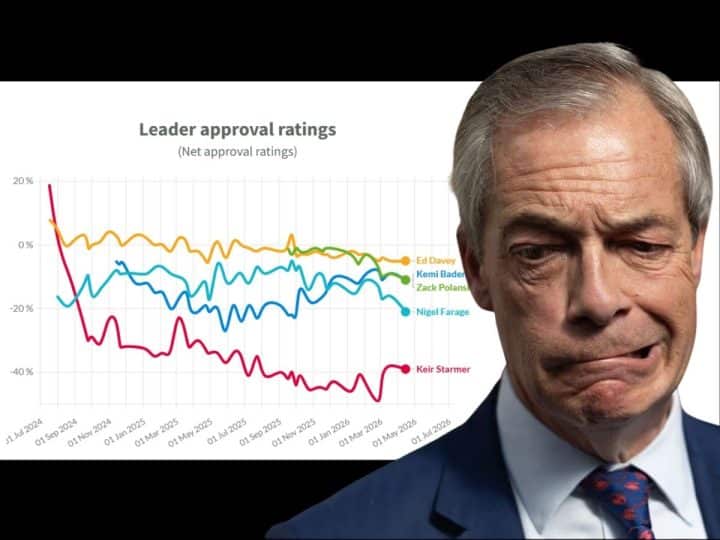

Nigel Farage has been on something of a journey over the past few decades. To begin with, he was widely perceived as a joke — one which the BBC couldn’t stop telling. Even after Farage was successful in pushing the public towards Brexit, he wasn’t able to convert that momentum into electoral success. Since 2024, however, things have changed.
The public now see the Tories and Labour as two sides of the same coin, and they want an alternative. Given the media attention he’s received, many decided that Farage was the alternative in waiting, if only because he was the only outsider politician they were aware of.
Since then, however, Farage has squandered much of that energy by inviting Tories into his party. Now, Farage and Reform’s polling are starting to reflect this:
— Politics UK (@PolitlcsUK) April 18, 2026
NEW: Nigel Farage has recorded his worst approval rating since becoming an MP pic.twitter.com/Nbm1WwuFKu
Approval
Of course, leader approval ratings aren’t the best indicator of how well a party might do. Voters largely didn’t like Jeremy Corbyn at the beginning of the 2017 election, but when they saw what Labour were offering compared to the Tories, he managed to close the gap. As Ed Sykes reported for the Canary in 2017:
But while his critics talked him down, Corbyn himself was out campaigning. And it turned out, as the table suggests, that the more voters actually got to see him free of the distorting prism of a hostile media, the more they liked him.
In the end, Corbyn’s Labour gained 30 seats, reversed decades of Labour decline, and won the biggest increase in the party’s share of the vote since 1945. And the evidence suggests that Labour did well because of Corbyn – and in spite of his critics. That’s something they would do well to remember whenever the next election is called.
As Sykes notes, the media face increased restrictions during an election. This benefitted Corbyn and Labour in 2017: the question is will it benefit Reform?
Perhaps not, because Reform have struggled to land on a coherent message when it comes to policy and candidates.
They claim to be a party of everyday people, and yet they’re running candidates who want to dismantle the NHS.
They claim to be anti-waste, and yet one Reform council spent tens of thousands of pounds on unnecessary flags.
They began as an alternative to the Tories, and yet they’re stuffed full of — you guessed it — Tories.
Reform are already struggling to answer these questions, and things will only get worse in a general election:
"If the Tories are so bad, why is Reform UK filling themselves full of them?"
Laila Cunningham: I can't answer that. pic.twitter.com/fxdPli1XKY — Mukhtar (@I_amMukhtar) January 10, 2026
As we’ve reported, it’s already getting pretty bad in the local election campaign — especially when it comes to candidate selection:
- Reform activist said ‘Hitler was right’.
- Scottish Reform nosedive following candidate chaos.
- Reform welcomes ‘shoot the p*kis’ scandal ex-Tory.
- Reform UK accused of ‘nil vetting’ as another racist candidate exposed.
- Farage heckled at Reform’s Jimmy Saville-aping London launch.
Farage — Bad to worse
As London Economic have reported, three polls this week showed that Reform have slumped from their 2025 highs of 30%:
Reform drops to 25% in this weeks voting intention their lowest since April 2025. They lead the Tories by 3 & Labour by 4
N = 2,011 | 10-13/4 | Change w/ 8/4 pic.twitter.com/DNZVf9Incv
— Luke Tryl (@LukeTryl) April 15, 2026
 REF UK 25% (-5)
 CON 22% (+3)
 LAB 21% (+1)
 GREEN 13% (+1)
 LIB DEM 12% (nc)
 OTH 3% (nc)
 SNP 2% (nc)
Westminster Voting Intention:
RFM: 26% (-4) Via @tweetfreshwater, 10-12 Apr. — Election Maps UK (@ElectionMapsUK) April 16, 2026
LAB: 22% (+4)
CON: 19% (+1)
GRN: 15% (=)
LDM: 13% (=)
Changes w/ 27 Feb – 1 Mar.
Westminster Voting Intention (Prompts for Restore):
RFM: 21% (-4) Via @FindoutnowUK, 15-16 Apr. — Election Maps UK (@ElectionMapsUK) April 16, 2026
CON: 18% (+2)
GRN: 18% (-1)
LAB: 17% (+1)
LDM: 11% (+1)
RES: 9% (+1)
SNP: 3% (=)
Changes w/ 25 Mar.
Regarding the above, London Economic said:
a poll from Find Out Now also found a four-point drop for Farage’s gang. Whilst this one didn’t show any significant boost for Labour, the kicker here was further down, where Rupert Lowe’s Restore Britain were on 9%. This gives credence to the idea Restore could leech support from Reform, opening the door for Labour, the Tories and the Greens.
This certainly could be how things shake out. The other option would be that Restore Britain stand down for Reform UK like how Farage’s Brexit Party stood down for the Tories in 2019.
It’s hard to tell which might happen, because the politicians drawn to Restore are the ones who are too right-wing and anti-social for Reform. In other words, they may be incapable of backing down, even if doing so would secure an electoral victory for the British far right.
Back to what’s causing Reform’s decline, it doesn’t help that people are becoming increasingly aware of who funds Farage and Reform:
EXCLUSIVE: Reform chief Nigel Farage's half a million pounds from foreign sources since becoming MP
Of Farage’s 28 benefactors, 20 are based abroad – or 71%https://t.co/zvye6Pk8I8
— dave lawrence

 (@dave43law) April 18, 2026
This isn’t a good look for a supposedly patriotic nationalist, is it?
There are also outside forces dragging down Farage’s reputation — among them the unpopularity of Donald Trump and the fall of global allies like Viktor Orban:
A combination of a Badenoch comeback and the Trump impact on Farage
This coupled with people hearing Reform policy and the unfunded chaos based on fantasy data it always is. https://t.co/5wNBANlItL — dave lawrence
(@dave43law) April 18, 2026
What goes up
For a while, it seemed like Reform could have risen to the same 40% highs that Labour and the Tories achieved in the past. Thankfully, it looks like 30% was the ceiling. Even more thankfully, it seems like a sizeable proportion of that 30% simply supported an alternative to the status quo — not Reform specifically.
Given Reform’s many contradictions, it seems like they’ll struggle to do anything besides bleed support at this point. We just hope they lose as much as possible before the local elections to limit how much damage they can cause.
For an idea of what Reform councils look like in practice, please read the following:
- Reform councillor reposts that Labour MP ‘should be shot’.
- Reform councillor dramatically quits over council tax betrayal.
- What a surprise – Reform councillor attends just one meeting and sends two emails in six months.
- Reform councillor fined £40,000 for hiring ‘illegal’ workers.
- Reform councillor would like to see wage cuts to fund his pay rise.
Featured image via Opinium
By Willem Moore
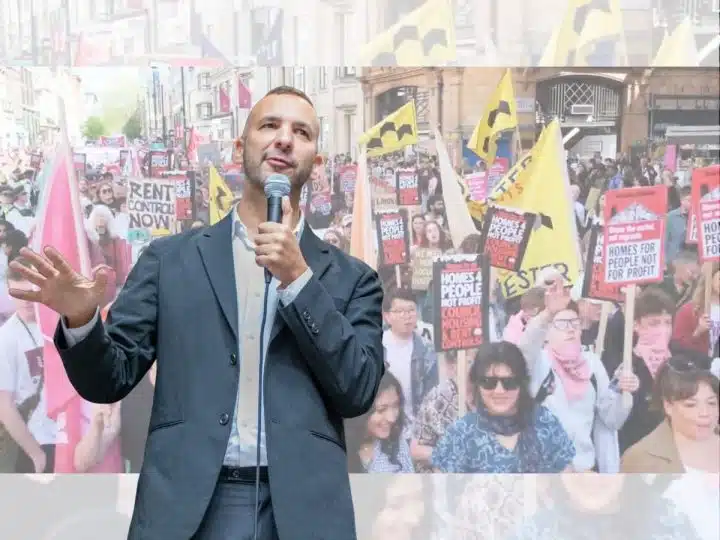

On 18 April, the renters of London took to the streets to fight for their rights. Among their demands were calls for rent controls and council homes. One politicians who agrees with this message is the Green Party’s Zack Polanski:
Yes!
This is exactly it!
Council homes – not the luxury flats sold off to foreign investors. And it's beyond time for rent controls! — Zack Polanski (@ZackPolanski) April 18, 2026

 https://t.co/qiSS2M15nN
Zack Polanski — Get organised
Speaking on the issues capital-dwellers face, the London Renters Union have said:
Is your rent too high? You’re not alone. Londoners face the highest rents in Europe. Many of us live with the threat of eviction or in unsafe housing.
The housing market is stacked in favour of landlords and investors who profit at our expense. Our rigged housing system is making our city more unequal.
Unless we make big changes, many of us will be stuck renting overpriced and poorly maintained housing for the rest of our life.
As we reported, Polanski has spoken out on these issues before. Specifically, he took issue with housing minister Matthew Pennycook siding with landlords over the everyday people they’re lording it over:
Labour's housing minister's opposition to rent controls welcomed by the country's largest private landlord.
Who's side are Labour on? Renters or landlords. The answer is here. pic.twitter.com/olVzEIVTki — Zack Polanski (@ZackPolanski) April 15, 2026
He’s also on message when it comes to the key demands of London’s renters:
Build council homes.
Bring in rent controls.
Time to end Rip off Britain.https://t.co/9SpVlVBrsV
— Zack Polanski (@ZackPolanski) April 10, 2026
Demands
The call for better conditions goes beyond council homes and rent controls, with the London Renters Union listing the following additional demands:
Decent standards in housing
Good standards for all rented properties, with full monitoring of property conditions and redress processes that have the needs of renters at their heart.. …
Indefinite tenancies
Government should implement promised end to no fault (Section 21) evictions immediately, remove end dates from tenancies, place limits on rent rises.Housing justice for people living in temporary accommodation
All temporary accommodation must be safe, secure, within peoples home borough and be part of a quick, clear path to a permanent home. All landlords providing temporary accommodation must be held accountable.No discrimination in access to housing
End DSS discrimination by landlords and letting agents against people receiving benefits and renters with children, stop racist discrimination in housing and any discrimination on grounds of identity.No borders in housing
End right to rent and nationality requirements for social housing, no border checks in licensing or enforcement regimesPublic housing available to all
End right to buy, fund councils to build and renovate good quality housing for their waiting lists, prioritising anyone vulnerable and in needHousing for people not profit
End the politics and culture of property as investment rather than to house people and bring homes into democratic public ownership.
Alternatives
Much like Zack Polanski said, Labour have sided with landlords on the issue of rent controls. Somehow, however, the other parties are worse.
As we reported, a Reform housing spokesperson argued that the UK had introduced too many regulations after the Grenfell disaster. He additionally dismissed what happened to the victims, saying flippantly that “everyone dies”. The Tories, meanwhile, are the ones who oversaw Grenfell and then dithered on taking action.
In the future, then, renters will have a choice between:
- More of the same.
- More of the bad old days.
- More money in their pockets because they’re not being tipped upside down and shaken for change by their landlords.
Featured image via Barold
By Willem Moore

‘Shocked’ Max Verstappen pays tribute to driver killed at Nurburgring

DIY UPS Keeps Home Assistant Running

MY FINAL BITCOIN WARNING!!! *this is big*


-
 NewsBeat7 days ago
Pep Guardiola and Gary Neville agree over Arsenal title problem that benefits Man City
-

 Crypto World6 days ago
The SEC Conditionalises DeFi Platforms to Be Avoided for Broker Registration
-

 Fashion2 days ago
Weekend Open Thread: Theodora Dress
-

 Crypto World6 days ago
SEC Signals Exemption for Crypto Interfaces From Broker Registration
-

 News Videos4 days ago
Secure crypto trading starts with an FIU-registered
-

 Sports2 days ago
NWFL Suspends Two Players Over Post-Match Clash in Ado-Ekiti
-

 Crypto World5 days ago
SEC Proposes Certain Crypto Interfaces Don’t Need to Register as Brokers
-

 NewsBeat5 days ago
Trump and Pope Leo: Behind their disagreement over Iran war
-

 Business1 hour ago
Powerball Result April 18, 2026: No Jackpot Winner in Powerball Draw: $75 Million Rolls Over
-

 Politics2 days ago
Palestine barred from entering Canada for FIFA Congress
-

 Crypto World2 days ago
Russia Pushes Bill to Criminalize Unregistered Crypto Services
-

 Sports6 days ago
NWFL opens Pathway for new Clubs ahead of 2026 Season
-
 Business3 days ago
Creo Medical agree sale of its manufacturing operation
-

 Politics6 hours ago
Zack Polanski demands ‘council homes not luxury flats for foreign investors’
-

 Crypto World6 days ago
Trump whales load up ahead of Mar-a-Lago luncheon.
-
 Entertainment6 days ago
Brand New Day’ Footage Reveals the Devastating Impact of ‘Now Way Home’
-
Business6 days ago
Kering slides after Morgan Stanley downgrade, Gucci woes loom
-

 Tech6 days ago
Google adds E2E encryption to Gmail for iOS and Android enterprise users
-
 Crypto World7 days ago
Sei Network Enters Quiet Reset Phase as On-Chain Metrics Signal a Slowdown in 2026
-

 Tech6 days ago
Apple glasses won’t go brand shopping like Meta did with Ray-Ban and Oakley
You must be logged in to post a comment Login