Politics
Politics Home Article | Aid spending is not only our responsibility but in our best interests


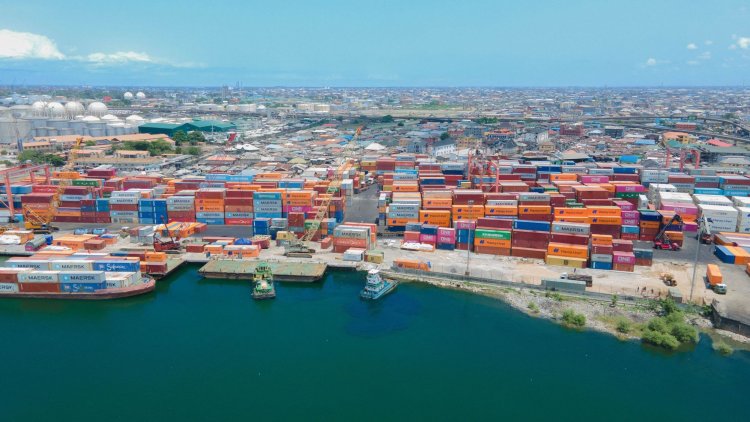
The Apapa Container Port on the Lagos Waterfront in Nigeria (Malik Buraimoh/Alamy)
5 min read
Aid spending has its critics. It always has, not helped by a decade or more of politicians being unclear on the case for it. Some say it doesn’t work, and nothing gets any better.
I have always believed the argument for international development is simple. There is a moral mission and responsibility to reduce poverty around the world. But this is indivisible from the UK’s interests, especially in a world as contested and fractured as we see today.
There is a simple strapline: tackling global challenges in the national interest. Supporting stronger economies, safer countries, better health systems, and a more viable planet – all of these things affect us at home. If we spend it well, aid is an investment in the world’s future and our own. If we fail, risks for the UK rise.
The current Ebola outbreak, migration driven by conflict, and fertiliser shortages leading to food insecurity, make this clearer than ever. This requires a new approach, working in partnership with developing countries rather than dictating to them. Spending the money we have in a smarter and more effective way.
In a politically and economically complex context like Nigeria, which I visited earlier this month, the benefits of the money we spend are obvious.
Trade between the UK and Nigeria was £7.6bn last year, supporting thousands of jobs in the UK. Nigeria is our largest export market in Africa. When President Tinubu visited the UK earlier this year, we secured big economic gains.
A record-breaking order for British Steel, supported by UK Export Finance, will help rehabilitate the Lagos ports and fund jobs for a critical industry in the UK. We announced the expansion of leading Nigerian banks, fintech firms and creative business into the UK.
All of this is enabled by smart, strategic spending of our development budget. Not delivering services or doing what other governments can or should do, but providing technical exchanges.
Nigeria is buzzing with energy and ideas. With UK support acting as an early catalyst, we are backing firms, like financial platform Moniepoint, as they scale up and create new financial services and hundreds of jobs in the UK. We’ve agreed a new UK-Nigeria Growth Programme to bring in more investment, remove barriers to trade, and help businesses grow.
Partnerships are also about sharing our expertise, making the most of British know-how and experience. Experts from the Bank of England are working closely with Nigerian counterparts to strengthen monetary policy, and improve conditions for investment, providing opportunities for British businesses.
That might sound dry, but what it results in is more investment, more jobs, more growth, more money in people’s pockets.
That shift is exactly what our partners have told us they want to see. Development is no longer about one country stepping in to fix another’s problems. It is about working together, as equal partners, to tackle shared challenges.
It is good for Nigeria. And it is good for the UK, too.
If we spend it well, aid is an investment in the world’s future and our own. If we fail, risks for the UK rise
It’s not just our economies that benefit. In an interconnected world, instability radiates across borders. Nigeria and its region are under threat from Islamist terror groups, as we see in the central Sahel, with the expansion of armed groups who operate across the borders of Mali, Burkina Faso and Niger. We know that working together to tackle these issues stands us in far better stead than if we faced them alone. With such strong links between our people, we all have a stake in Nigeria’s stability. Our defence and development experts work in close partnership with the Nigerian authorities to go after these groups, as well as support local communities and economies.
In parts of northern Nigeria affected by conflict and insecurity, UK programmes are tackling the root causes of conflict, violence and extremism, while reducing emerging threats and humanitarian pressures. That is not just about local security. It helps prevent the spread of terrorism, making people safer there and protecting us at home.
In Kaduna, northern Nigeria, UK support to strengthen the country’s health systems is increasingly visible on the frontline, where a primary healthcare centre serving around 20,000 people is delivering improved local health services and care. Our work over the past two decades has enabled Nigeria to reduce deaths from preventable disease and childbirth and build resilience. Globally, investment into partnerships like Gavi, the vaccine alliance, have helped vaccinate over a billion children and save around 18 million lives.
Working together to build strong health systems is vital. We need resilience not just to save lives abroad, but to protect people at home.
Nigeria is just one example of many. In Ghana, UK tax experts are helping the government raise domestic revenue, improving their economic stability. In Chad, our humanitarian funding helps refugees fleeing the appalling conflict in Sudan to stay safe and rebuild their livelihoods without making dangerous and costly journeys.
So, the moral mission has always been at the core of international development. But it is the pragmatic, smart choice too, as an investment in all our futures to make the world and the UK a better place.
Baroness Chapman is a Labour peer and minister for International Development

You must be logged in to post a comment Login