Politics
Politics Home Article | Are The Lib Dems Still Haunted By Tuition Fees?


5 min read
The issue of student loans has recently exploded into life, with the government’s decision to freeze the repayment threshold prompting outrage and a debate about major reform. Now that more than 15 years have passed since their highly-damaging tuition fees U-turn, are the Lib Dems ready to talk about student loans again?
Ahead of the 2010 general election, the Liberal Democrats, under then-leader Nick Clegg, made a bold and memorable promise: a Lib Dem government would scrap university tuition fees.
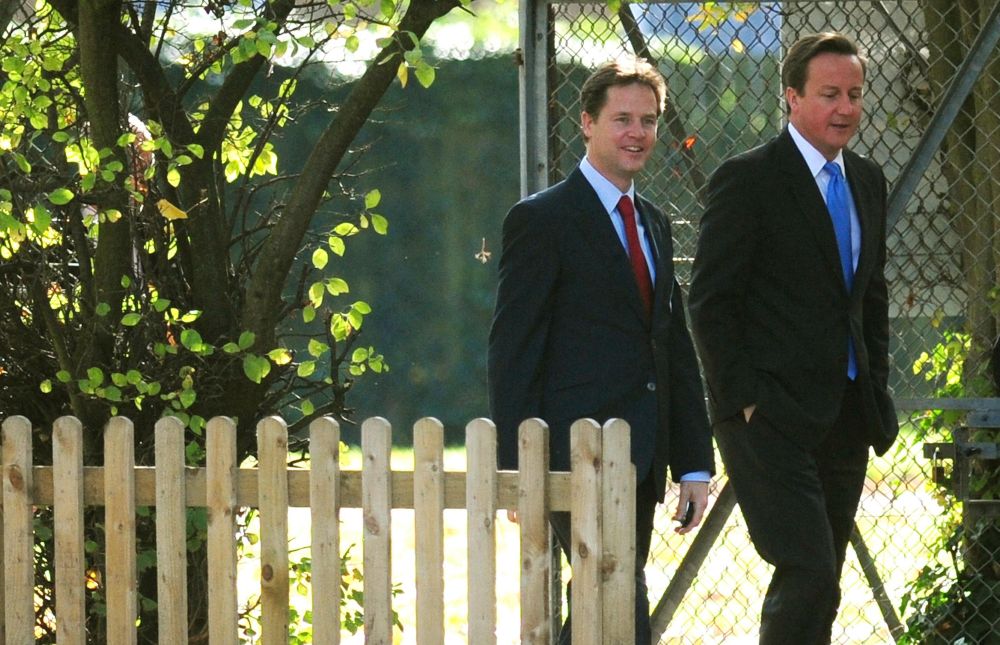
But just seven months after Clegg’s party entered government as part of a coalition with David Cameron’s Conservatives, a motion to increase tuition fees in England to £9,000 was narrowly passed in the Commons.
The move split the parliamentary party, with more than half of Clegg’s MPs voting against the policy or choosing to abstain. Clegg, then the deputy prime minister, was moved to film an apology video in 2012, telling the camera through a downcast expression: “We made a pledge, we didn’t stick to it, and for that I am sorry.”
The U-turn was later seen as a key, if not the main, reason for the party’s subsequent collapse. At the 2015 general election, the Liberal Democrats won 8 per cent of the national vote share, down from the 23 per cent it won five years before.
The pain didn’t end there, though. The broken promise haunted the party long after it left office. Tim Farron, the Lib Dem MP for Westmorland and Lonsdale since 2005, admitted to PoliticsHome that he was “nervous” about the issue when he became party leader in 2015.
Fast forward to 2026, and the Lib Dems have seemingly taken a major step forward in exorcising the ghost of the tuition fees U-turn by announcing their boldest universities policy since falling out of office.
The party has announced that it would reverse the decision by the Labour government to freeze the threshold at which graduates repay their student loans, as well as write off student debt for public service workers, and reverse the National Insurance increase and international student levy to help improve university finances.
PoliticsHome reported at the time of the announcement that there was some nervousness among party figures about making the topic a major policy focus, even 15 years on from the U-turn.
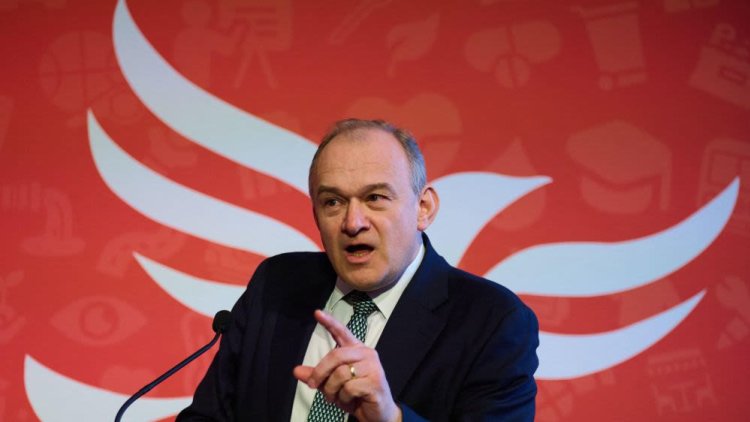
The Lib Dem MP for St Neots and Mid Cambridgeshire, Ian Sollom, who is leading on the policy for leader Ed Davey, acknowledged that student finance is an area “where we are still building trust”.
“We know that there will be a trust issue for many graduates around this particular issue,” he told PoliticsHome.
However, Sollom said that part of the way to build that trust is to “not go out and oversell what we have got”. He described the plans announced earlier this year as “pragmatic” and wants the policy to speak for itself.

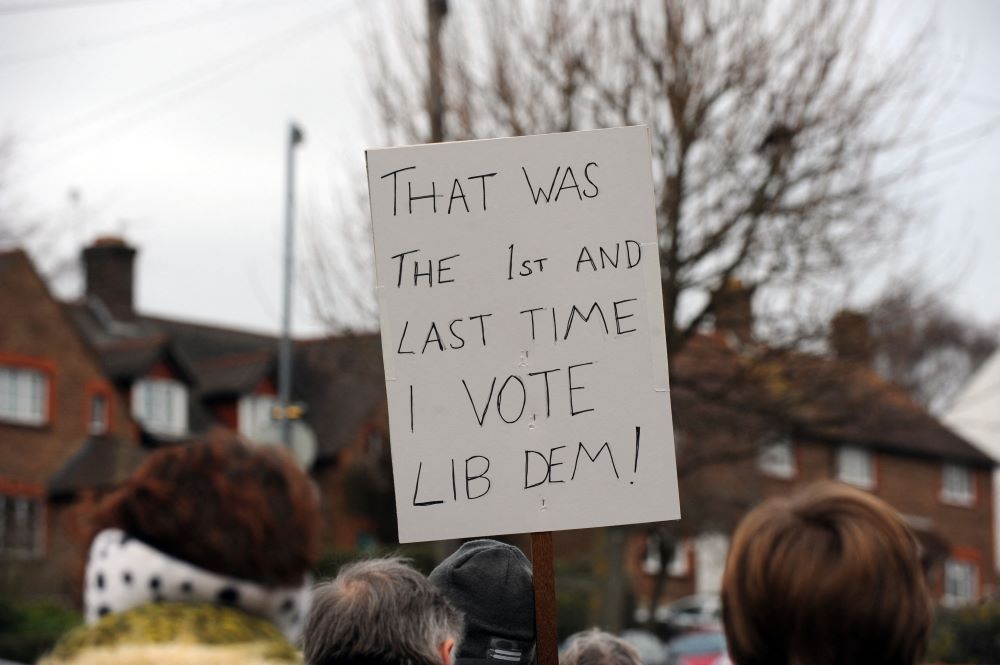
He added that “a lot of graduates have been prepared to put their misgivings about the Liberal Democrats behind them and actually have forgiven us or moved past those issues”.
“On this particular issue, it is important that we are mindful that we let this cohort down before and we…absolutely don’t want to do that again to the very same people,” he told PoliticsHome.
Why exactly does Sollom think the memory of the Lib Dems’ coalition U-turn lingered for so long?
“If I knew the answer, we might be able to make more progress,” he said.
“Like it or not, as a party, it was the defining thing that people associated the Lib Dems with in the period of coalition.”
Farron, who voted against the move in 2010, believes that the issue is no longer a problem for the Lib Dems.
“Even though I voted against the tuition fee rise, it was a thing that I was nervous of when I was leader, but that’s nearly 10 years ago,” he told PoliticsHome. “It’s right that we moved on. It doesn’t mean that it doesn’t matter, but it doesn’t constrain us now.”
Farron added: “That nervousness is a thing that those of us who spend a lot of time talking about politics might care about, but not 99 per cent, and so there’s a real liberation.”
Lib Dem MP Bobby Dean, who was at university himself when the rise in tuition fees was announced, told PoliticsHome that now is “absolutely the right time” for the party to take up the mantle on this issue, adding “a lot of time has passed since [the] coalition government”.
“If we’re going to be a serious national party with a serious national offer, then we can’t stand here and worry about the impression of a policy area from 15 years ago.”
Chris Annous, senior associate at More in Common, told PoliticsHome that people in Westminster can overplay the extent to which the rest of the country cares about decisions made by the coalition government.
“I don’t think many students now attribute their tuition fees to Liberal Democrats, because it’s been 15 years since that decision was made. They [fees] have increased further. The party’s not been in government for a long time.”
He added: “The impact of the coalition is not as extreme or perverse as many people in politics or Westminster like to assume.”

More in Common polling conducted in April last year found that the tuition fee increase was neither the most well-known nor most disliked coalition policy among respondents who were considering voting Lib Dem. Asked what coalition government decisions Lib Dems should be most proud of, respondents saw the bedroom tax and privatisation of Royal Mail in a more negative light than the tuition fees rise.
Amira Campbell, President of the National Union of Students, said it is not “impossible” for Davey’s party to rebuild trust with students.
“But it is certainly not an easy task. Students need tangible proof that they have a plan for real change and will actually deliver for them if given another chance.”
Campbell said that politicians from other parties “simply dismissing” the Lib Dems on the subject of student finance because of decisions taken fifteen years ago is “not only frustrating, but disrespectful to students”.
“Every party that has been in government over the last 28 years, since tuition fees were introduced, is at fault for the mess we are in,” she told PoliticsHome.

You must be logged in to post a comment Login