Politics
Politics Home Article | Everything We Just Learned About Government Plans For Digital ID


(Alamy)
5 min read
The government has launched its long-awaited consultation on digital ID. Here is what we learned, as well as questions that remain unanswered.
Speaking at a Downing Street press conference on Tuesday afternoon, the cabinet minister tasked with leading the rollout of digital ID, Chief Secretary to the Prime Minister, Darren Jones, said that the planned scheme could save “tens and tens of billions every year”.
The government has said that the consultation, which is expected to last for eight weeks, will go further than those before it. It will include engaging with a ‘People’s Panel’, which Jones himself today admitted was “a gamble”.
The Keir Starmer administration is trying to rebuild public support for the policy after the initial announcement last year had a rocky landing.
Legislation implementing digital ID is expected to be put to Parliament later this year, with work on the app to begin in 2027.
Will digital ID be compulsory?
In January, PoliticsHome revealed that the government was scrapping plans to make the new digital ID scheme mandatory amid warnings, including from many Labour MPs, that going ahead with the compulsory element would be strongly opposed by the public.
While the public will still be required to carry out some digital right-to-work checks, they will be able to do so using other documents, like a passport of eVisa.
The consultation being launched today will ask the public how the government can ensure that everyone who wants to use the scheme can do so after concerns were raised about accessibility.
Jones today told the House of Commons that it “must be for everyone” and the government “will help those who are less confident with technology or don’t have other forms of ID like a passport”.
Ministers are consulting on at what age someone should be able to obtain a digital ID.
What will a digital ID look like?
The digital ID will be held in an app on a smartphone or tablet, with the government today publishing a working prototype of the digital ID system, pictured below.

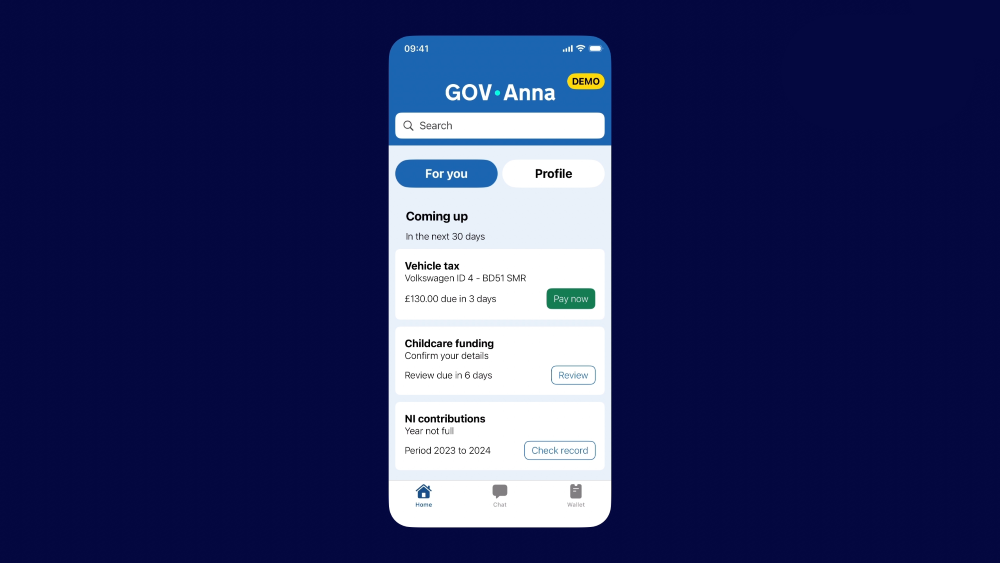
Jones also said on Tuesday that the NHS app “will be separate” from the government’s digital ID, as the NHS app is “already pretty well developed”.
Ministers are also consulting the public on what information digital ID should contain, which will go a long way to determining how it will appear on a user’s screen.
Digital ID will make processes “fairer”
While the government initially focused on digital ID as a way of tackling illegal migration, since then, the emphasis has shifted to making aspects of everyday life easier, with ministers using examples like filing a tax return and managing free childcare.
“The status quo is a legacy system of call centres, paperwork, and the need to tell your story, multiple times, to the different parts of government, with hours on hold and not knowing where you are in the process,” Jones said today.
“The whole point with this is that it should be easy, simple, and accessible to everybody.”
Jones claimed that digital public services could also be cheaper to run and more efficient.
“We cannot continue on this two-track process where services in the private sector, in banking and shopping, and all the other things that we do in our day-to-day lives are fast, easy, and digital, and then when you come to the public sector, they’re slow, clunky, and disjointed.”
What will the scheme cost?
It is still unclear how much the digital ID system will cost to develop, with today’s consultation claiming it was “not yet possible to quantify or assess the full impacts of the system”.
The government has previously pushed back against the Office for Budget Responsibility (OBR) forecast that the policy would cost £1.8bn over the next three years, arguing that the design of the scheme is yet to be decided on.
Today, Jones said the government had already carried out estimates showing that digitising customer services could save “tens and tens of billions of pounds every year” that is currently being spent on “very unproductive call centres, lots of paper shuffling, slow processes”.
Jones claimed that a digital ID could “free up taxpayers’ money” to go on frontline services like the NHS or “give back to taxpayers in the years ahead”.
‘People’s Panel’ to “help debate difficult questions”
Jones also confirmed that the government will go beyond a typical consultation, announcing the creation of a ‘People’s Panel’ on digital ID, with 100-120 people to be randomly selected, bringing together people across the country from different backgrounds.
Jones told reporters that the panel was a “gamble” as it would mean the government “kind of giving up control of it around the process”.
He said the panel would “help us debate the difficult questions, find ways forward and help us build a system that will win the trust and support of the public at large”.
Speaking at an event hosted by the Institute for Government think tank (IFG) in January, Jones said he believed the policy would grow in popularity over the next 12 months as people realised how it would positively impact their day-to-day lives.
