Politics
Politics Home Article | How The Greens Won The Gorton And Denton By-Election


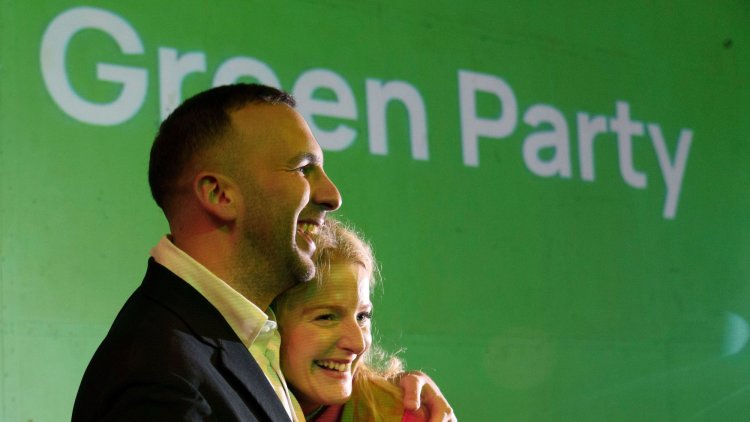
Green Party candidate Hannah Spencer celebrates with party leader Zack Polanski after winning the Gorton and Denton by-election, February 2026 (AP Photo / Jon Super / Alamy Live News)
5 min read
The Green Party’s historic by-election victory in Gorton and Denton sent shockwaves across British politics. Campaign insiders tell PoliticsHome how they pulled it off
The Labour Party had represented the Manchester Gorton area in Parliament since the days of Ramsay MacDonald.
Today, Keir Starmer’s party is reeling after its vote collapsed in the Gorton and Denton by-election, forcing the party into third place behind the Greens and Reform UK.
A by-election defeat of this kind – falling into third place in a Labour-held seat – has not happened since 1982. Green candidate Hannah Spencer, who won around 40 per cent of the vote, has clearly demonstrated the threat that Zack Polanski’s “eco-populist” party poses to Labour’s left flank.
Green insiders believe the party’s victory in Gorton and Denton came down to three crucial factors.
Burnham’s blocking
The first was the decision by Labour’s National Executive Committee (NEC) officers to block Andy Burnham from standing as the party’s candidate. Allowing Burnham to run as a parliamentary candidate would have triggered an expensive and risky contest for the Manchester mayoralty. He is also widely seen as a potential challenger to Starmer.
“When there was an announcement that he wasn’t going to stand, that just increased our confidence further,” a senior Green Party source told PoliticsHome.
Labour instead selected Angeliki Stogia, a local councillor who has lived in Whalley Range since 2004 and has strong links to the constituency but little media profile.
PoliticsHome also understands that the Muslim Vote – an organisation that encourages politicians to put Muslim issues, such as being pro-Gaza, at the forefront – was contemplating endorsing Labour if it had selected Burnham. Instead, it threw its weight behind the Greens after the news Burnham was blocked, even before Polanski’s party had selected a candidate.
The endorsement was instrumental in persuading George Galloway’s Workers Party of Britain to stand aside, which potentially freed up almost 4,000 votes on the left according to the party’s 2024 vote share. Jeremy Corbyn, whose slate won the Your Party elections this week, also backed the Greens in the by-election.
“People were also looking at who’s the best-placed [to defeat Reform]. Many people did believe that was the Green Party,” a senior Green campaign source told PoliticsHome.
“The Labour Party did try to muddy the waters hugely, making a fake tactical voting website, creating a bar chart where Labour were in first place, but just missing the Green bar entirely to look like it was only Reform and Labour… which was hilarious. But people didn’t buy that.”
The Green campaign
The Greens also won thanks to their industrious campaigning operation.
Miles Thorpe, who managed the party’s campaign, had been responsible for the successful election of Carla Denyer in Bristol Central, who beat Labour in 2024 with a 10,000 majority. Each week, Thorpe was spotted with hundreds of activists gathered around him in parks and car parks, instructing activists on canvassing strategy.
“He is very focused, good at prioritising, great at recruiting and motivating volunteers and creating a fun team spirit,” said a Green Party source who knows Thorpe well.
Thorpe was undoubtedly helped by thousands of activists who specifically targeted Burnage, Levenshulme and Longsight – three areas with young and diverse populations, broadly sympathetic to the Greens electorally.
On polling day, the party had 2,000 volunteers across the constituency to get the vote out. Labour MPs were resigned to the fact that they had even lost the “poster board” war across the constituency.
“We were by far the most active campaign,” Ellie Chowns, Green MP for North Herefordshire, told PoliticsHome. “We had huge numbers of people. We had so many volunteers… The scale and the scope of the campaign, I think, in and of itself helped persuade people.”
Green Party organisers urged activists to use Ecanvasser, an app that helps parties to record voter profiles and political tendencies. “We could see that during the campaign things were progressing well,” said a Green Party source. They were increasingly confused by Labour briefings that the seat was winnable for Starmer’s party.
Labour sources, meanwhile, have been confused by the result. A Labour MP said: “Were our 9,000 votes primarily Pakistani Muslims – or did they put Labour stakes in their gardens and then vote Green?” They added that the Greens “won the bar chart war” in the style of the Liberal Democrats.
“On the Gorton side, ordinary voters would clearly think the Greens were the ones to stop Reform because it was shown in people’s windows,” the MP concluded, referring to voters displaying Green posters. They attributed the Greens’ win to the party’s early success in ensuring support was clearly on display.
The Muslim vote
The third and perhaps most controversial reason for the Greens’ success was their ability to galvanise the Muslim vote.
Muslim voters have represented the backbone of Labour’s electoral base for decades. The UK constituencies with the largest Muslim populations have tended to return Labour MPs – until the notable exception of George Galloway’s 2024 Rochdale by-election win and Jonathan Ashworth’s Leicester South defeat at the general election. Since the 2023 Gaza war and Labour’s response to it, Muslim voters have felt increasingly apathetic towards the party.
Meanwhile, the Greens have become popular with Pakistani and Bangladeshi voters – who, according to the most recent data, are the predominant Muslim group in Gorton and Denton. A YouGov survey conducted in October found that more than half of this cohort (58 per cent) felt positive about the Greens, compared with 31 per cent who felt positive about Labour.
The Greens managed to lean on networks such as the Muslim Vote, who took Muslims from Madina Mosque in the constituency to go out and vote.
The party was also criticised for printing leaflets in Urdu, with literature claiming that Polanski’s party was the only outfit to stop Islamophobia and offer a strong voice for Muslims.
But Abubakr Nanabawa, head of media at the Muslim Vote, told PoliticsHome he believed it showed the Greens’ willingness to communicate with minority populations.
“It showed the Greens wanted to communicate with us,” he explained, referring to Muslim voters. “It showed that they want to represent us as well. It was a sign of respect. I don’t think it was the reading of the Urdu, it was just the existence of the Urdu.”
Ultimately the Greens believed their message of “hope” resonated with Muslims and that they represented the three key priorities of Muslim voters – the NHS, the cost of living and Gaza.
Additional reporting by Sienna Rodgers
