Politics
Politics Home Article | Manchesterism and industry: reversing deindustrialisation?


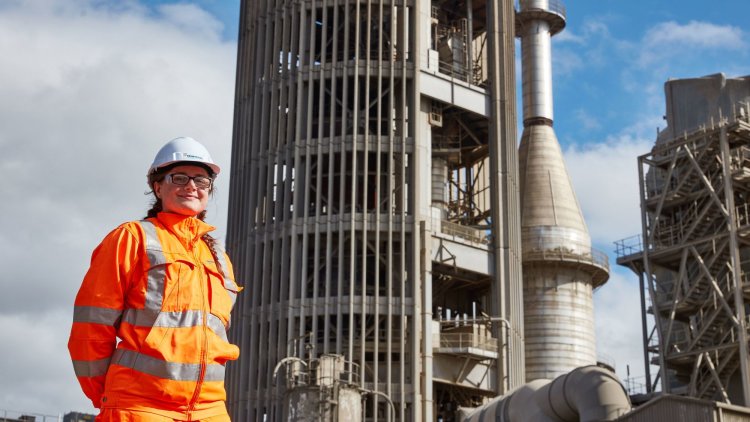


As UK cement and concrete plants close and sales fall for a fourth consecutive year, Robert McIlveen, Senior Director, Communications and Public Affairs, Mineral Products Association, explores what Andy Burnham’s reindustrialisation drive must do to halt the decline of Britain’s foundational industries before it can build new ones
“…a concrete plan to reindustrialise the birthplace of the industrial revolution, bringing high-value employment to all parts of Greater Manchester.” – Andy Burnham launching his plan for Greater Manchester’s economy in January 2026
As the trade body for mineral products, we always welcome a concrete plan, cementing our place, in aggregate. There is always mortar do (say it out loud). But that’s usually where the political attention paid to the materials that build everything usually ends – a turn of phrase.
Andy Burnham’s emerging vision for Britain has included a very welcome focus on re-industrialisation. A big part of that needs to be stopping the drift to deindustruialisation we are experiencing right now. UK industry has faced a tough few years and getting policy right in this area could save thousands of good jobs that exist now, as well as help grow those of the future.
New industrial strategy?
Burnham’s victory speech the morning after the Makerfield by-election referred to “a new drive of reindustrialisation across the North of England and indeed the rest of the country” before highlighting procurement as an area where Government can make a difference.
This could be a welcome evolution from the existing Industrial Strategy, which paid scant attention to preventing the decline of existing industries on which that growth rests. In our sector, cement and concrete were ultimately included in the list of foundational materials, but are still facing serious threats to competitiveness that are not being tackled at the pace or with the seriousness they need. Other parts of the sector were ignored entirely – including the aggregates that go into asphalt for roads, ballast for rail and are combined with cement to make the concrete that forms the houses, workplaces and infrastructure we all need.
“For too long, UK public procurement policy has been based on chasing cut-price deals around the world, rather than helping our own British-based suppliers become more stable and competitive.” – Burnham’s speech on 29 June
The public sector represents about 40 per cent of the market for mineral products, so procurement is a powerful lever to pull. Making sure that local and national government are not undermining jobs in the UK to save fractions on cost is an obvious place to start, from an absurd recent story of a Scottish council buying Angolan granite after rejecting a quarry a few miles away, to tackling the uneven playing field on carbon costs that is driving a surge in cement imports.
A fresh start?
But before we get to long-term growth, we need short-term survival – the first rule of growth is not to shrink. Sales in our sector have fallen for four consecutive years, with no sign of improvement this year. This has a real impact on jobs, as plants are mothballed. Among MPA members we have seen closures of concrete batching plants – where cement and aggregates are mixed into the back of a concrete mixer truck before being delivered to local sites. These are down from nearly 900 pre-pandemic to just over 700 today.
To be clear, these are not old-fashioned jobs that we have evolved past as the economy becomes ever more high-tech. To build the gigafactories, data centres, and the infrastructure for defence, energy and water that we clearly need, we need secure, domestic, sovereign supply of essential materials.
There are things Burnham could announce that would help. An updated set of national guidelines for essential minerals – the last guidance for local authorities expired in 2020 – and requiring major projects to declare their material needs would help bolster confidence to invest. Making sure the new Carbon Border Adjustment Mechanism is watertight – and in particular, doesn’t offer plants that don’t declare their emissions a generously low default option – can help secure the UK’s cement capacity from fast-rising imports from countries with no carbon price and weak regulation. None of these would cost any money.
High value jobs
High-value jobs already in the economy are under threat from the UK’s lack of competitiveness. This is particularly acute in energy intensive industries such as cement and lime, where the UK’s much higher industrial energy costs are driving production to lower-cost competitors overseas. But it is also true throughout the sector, where investment drives jobs and confidence to invest is low.
There are 89,000 jobs in our whole sector, largely concentrated outside the Southeast of England, ranging from quarry workers to concrete pre-casters and cement technicians to truck drivers delivering ready-mixed concrete, crushed rock, mortar or any number of products. The sector provides above-average wages and has productivity 35% above the national average, generating £75,000 per job. These are good jobs, providing essential materials for the whole economy; they should be supported through tough times.
Talk of reindustrialisation needs to not just be starry-eyed about growth in new sectors. The first rule should be to halt deindustrialisation in key sectors that everything else relies on, securing jobs and the UK’s sovereign capacity in essential materials. A real success for Manchesterism would see new industries springing up all over the country, on the literal foundations of our existing essential industries.

You must be logged in to post a comment Login