Politics
Politics Home Article | Pilot training paywall threatens Britain’s aviation ambitions


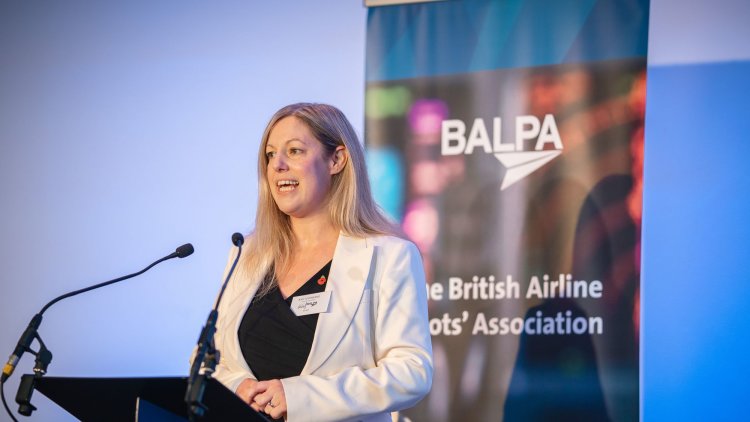
Amy Leversidge, General Secretary of the British Airlines Pilots’ Association (BALPA)
Britain’s aviation sector is expanding, but the six-figure upfront cost of pilot training is locking out talented candidates. BALPA General Secretary Amy Leversidge argues that without funding reform, the economy will pay the price
Every flight is a promise of something new. A deal struck, a market opened, a well-deserved holiday. Britain’s aviation sector is expanding, and the government’s ambition is for it to expand still further. More connections. More opportunity. More of what aviation, at its best, has always delivered.
Amy Leversidge, General Secretary of the British Airline Pilots’ Association (BALPA), does not dispute any of that. What she wants parliamentarians to understand, however, is a problem hiding in plain sight: the profession that will power that future is, for many, simply out of reach.
Leversidge, who took over as General Secretary in January 2024, has a clear-eyed view of how pilot training in the UK currently works, and how badly it needs to change.
The problem begins with cost. Becoming a commercial airline pilot requires completing a demanding training programme that can cost well over £100,000. Doctors, solicitors and civil engineers all face significant training costs, but have mechanisms to pay that sum back over years. For pilots, no such mechanism exists. Applicants must find the money themselves, largely in full and upfront.
An aspiring pilot has no access to the student loan system and high street banks have withdrawn career development loans for pilot training. What remains are a couple of airline-funded cadet schemes, massively oversubscribed.
“The largest cadet scheme gets 100 applications for every place. That is not a queue of people who should all be pilots, but among them are people who absolutely should be,” Leversidge says. “Unfortunately, there will be many great potential pilots among the 99 per cent who fail to secure a place on a cadet scheme, but they will be out of options, at the end of the road. They are simply priced out of being a pilot. Right now, we are forcing too many to take their talents elsewhere.”
If the sector that connects us to the world can’t draw on the full range of talent in this country, both growth and opportunity suffer
Some assume this is a problem of standards, that the profession is rightly exclusive. Leversidge addresses this directly.
“When you are six or seven miles up in the air, you need absolute confidence in the pilots flying the plane. The training to become a commercial airline pilot is demanding and exacting, as it should be. Every pilot in the sky today has earned their licence, that must never change. The only hurdle we want to remove is the six-figure paywall.”
“Aspiring pilots must have the skills, strengths, talent and determination to train and work as a pilot and have enthusiasm for aviation,” Leversidge continued. “Let’s not keep on that list of demands that they also need to have access to over £100,000 for their training. We don’t want to lose potential talent from our profession, and decision-makers shouldn’t want that either, given the core air transport sector’s £14bn annual contribution to the UK economy.”
It hasn’t always been this way. Cadet schemes were once far more commonplace. Banks lent money for pilot training. There were routes in for able, ambitious people who needed a little help to pay their way. Those routes have narrowed dramatically, leaving the profession accessible largely only to those who can self-fund.
“This isn’t a pathway, it’s a paywall,” Leversidge asserts.
The timing of this matters. Airport expansion will substantially increase demand for pilots in the years ahead. At the same time, the number of BALPA members reaching the mandatory pilot retirement age of 65 will double by 2030. With the vast majority of UK commercial airline pilots holding BALPA membership, that seems a reliable measure of the looming wave of retirements.
“I want MPs and peers to understand the scale of the opportunity we are missing,” Leversidge says. “The ambition the government has for aviation and the contribution it can make to greater economic growth in the future requires a skilled aviation workforce to deliver it. We need to be working together – BALPA, industry, the government – to ensure we are training the right number of pilots for the future, and that those training spots are secured on talent alone.”
A solution is ready and waiting. An apprenticeship for pilots has been designed, developed, and approved. It would allow airlines to train pilots through the apprenticeship system, making the profession accessible in the same way apprenticeships have broadened access across other skilled sectors. Some refinements will be needed to make it work for industry and pilots alike, and those conversations are happening, confirms Leversidge.
“The apprenticeship could genuinely prove a breakthrough, and we back it,” Leversidge says, “but BALPA is not wedded to one particular mechanism. Pilots are practical people, and BALPA just wants something that works. Whether that is the apprenticeship, access to student loans, more airline-funded schemes, or a return of bank lending, we are open-minded.”
The apprenticeship is currently on pause, though the aviation minister has stated to parliament that restarting it is a cross-government priority. “We know the goodwill is there,” Leversidge acknowledges, “but goodwill needs to turn into action, and soon.”
This issue cuts across two of the government’s central priorities: economic growth and widening opportunity. Aviation is one of the UK’s most powerful drivers of growth, but its ability to deliver that growth relies on a steady supply of skilled pilots. Right now, talented young people are being priced out of that profession altogether. Leversidge sums it up, “If the sector that connects us to the world can’t draw on the full range of talent in this country, both growth and opportunity suffer. That should worry everyone in parliament.”
“We are not asking for anything that doesn’t already exist for other professions,” Leversidge makes clear. “We are asking to be treated the same.”
Aviation is full of promises, to the businesses that depend on it, the families it connects, the young people who dream of a career at its heart. Pilots stitch the world together, and BALPA believes that the profession deserves a funding system that reflects that. “Keeping those promises depends on whether we are willing to open the doors that funding reform would unlock,” says Leversidge, “and that is a choice that parliament and government can help make happen.”
For more information please email Stuart Bonar, Head of Public Affairs, at [email protected].

You must be logged in to post a comment Login