Politics
Politics Home Article | Rachel Reeves Hopes For Low-Key Spring Statement After Budget Chaos


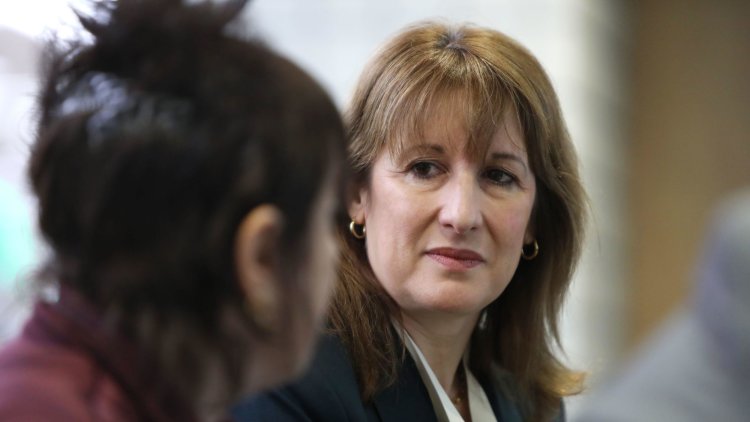
The Chancellor is set to deliver her Spring Statement next month. (Alamy)


5 min read
Chancellor Rachel Reeves is hoping that next week’s Spring Statement will be a boring affair after the chaos of the November Budget.
According to Treasury sources, Reeves wants to keep the drama to a minimum when she stands up in the House of Commons to update the House on the state of the economy on Tuesday.
Speculation and confusion were rife in the run-up to the November Budget, with the government abandoning reported plans to raise income tax and moving to reassure the markets that it was not planning to break its own fiscal rules.
There was further chaos on the day when the Office for Budget Responsibility (OBR) accidentally published details of the government’s spending plans before Reeves could announce them to MPs. The OBR error resulted in Richard Hughes resigning as chair of the independent watchdog.
The 2025 Spring Statement ended up being unexpectedly eventful, with Reeves making a late decision to reduce welfare spending to meet her self-imposed fiscal rules.
Here’s what to look out for ahead of next week.
What is the Spring Statement?
It is one of two fiscal events the government ordinarily holds each calendar year. The other is the Autumn Budget, which historically has been used by chancellors to make the major policy announcements.
The Spring Statement is usually a less consequential event, updating MPs on the OBR’s latest forecasts for the UK economy in areas like growth, borrowing, tax and spending.
However, while the Autumn Budget is generally a more significant moment in the political calendar, the Spring Statement has sometimes been used to announce policies with significant financial consequences, often due to unpredictable or unusual economic circumstances.
For example, a year ago, Reeves revealed details of government plans to reduce Personal Independent Payments (PIP). These welfare reforms, originally designed to bring down government spending on benefits, grew into a major row within the Labour Party, forcing Prime Minister Keir Starmer to scrap the plans later in the year.
Why is this Spring Statement different to the last?
At the last Spring Statement, the OBR also provided its latest assessment of whether the Labour government was on track to meet its own “iron-clad” fiscal rules.
Starmer and Reeves created these self-imposed rules to reassure voters and the markets that they could be trusted to run the economy responsibly, and they have remained key to Labour policy-making since the party entered office in July 2024.
These rules state that the Treasury must ensure that day-to-day spending is covered by taxes and that debt is falling as a percentage of GDP by the end of this parliament.
However, the government announced late last year that this particular OBR assessment would only be published at the Autumn Budget, rather than twice a year. As a result, next week, there will be less scrutiny of whether the government is on track to meet its fiscal rules.
That said, you can expect Reeves to point to Office for National Statistics data published last month, estimating that the Treasury had a £30.4bn budget surplus — £15.9bn more than the year prior, and the largest since monthly records began in 1993.
What are economists saying about next week?
William Ellis, a senior economist at the Institute for Public Policy Research (IPPR), said the Autumn Budget had the long-term aim of creating “a more stable and predictable economic environment” so that the 2026 Spring Statement could be a “non-event”.
“Nothing we’ve seen or heard so far suggests any likelihood of changes to current spending plans, or to tax, so soon after the Budget. That’s made possible by the Chancellor’s decisions in November, setting the public finances on a better footing by sticking to the fiscal rules, doubling headroom and lowering borrowing costs.”
Chaitanya Kumar, head of economic and environmental policy at the New Economics Foundation (NEF), said having the OBR update on the government’s fiscal rules just once a year means there is less chance of “manic policy making”.
“This sort of back and forth between the OBR and the Treasury didn’t really make for good policy making because, ultimately, you want to take decisions that will have impact in the medium-long term, at least through the course of the Parliament, and you don’t have to keep making changes every six months,” said Kumar.
He added that there had been no “significant headwinds” impacting the economy since November that would force the government into major policy decisions.
This was echoed by Nick Ridpath, research economist at the Institute for Fiscal Studies (IFS), who said there had been “far fewer economic developments since November than there had been in the year before”, contributing to a “quieter” environment for the Spring Statement.
“The combination of relatively limited economic developments and this boosted headroom means it’s very unlikely that the government will be sort of forced into changing any policy.”
So what can we expect in the Spring Statement?
With this in mind, there are not expected to be major policy announcements on Tuesday.
Instead, Reeves will focus on talking up the government’s handling of the economy, referring to recent stability, her increased financial headroom, and inflation being projected to keep falling. The Chancellor will also likely focus on the cost of living, with Ofgem announcing on Wednesday that the energy price cap will fall by 7 per cent from April.
Her opponents will likely raise unemployment hitting a five-year high of 5.2 per cent.
However, economists like Paul Johnson have said that major announcements this week about reforms to Special Education Needs and Disabilities services (SEND), as well as Starmer indicating that he would like to spend more on defence, mean Reeves may be forced to set out tweaks to spending plans.
“The reason that I thought the announcement [on SEND] was interesting is that we were supposed to have had a spending review last summer, which was supposed to set spending numbers for the rest of the parliament, and yet yesterday we got an extra billion or so for SEND,” Johnson told PoliticsHome.
He added that this could store up future problems for Starmer and Reeves as they are “already right up against it in terms of their spending numbers at the end of the parliament”.
“If you look at the if you look at the details of their spending plans, it looks like they’re going to be cutting, cutting public service spending in the election year,” he said.
