
Politics
Politics Home Article | Students Urge Government To Make Registering To Vote Easier

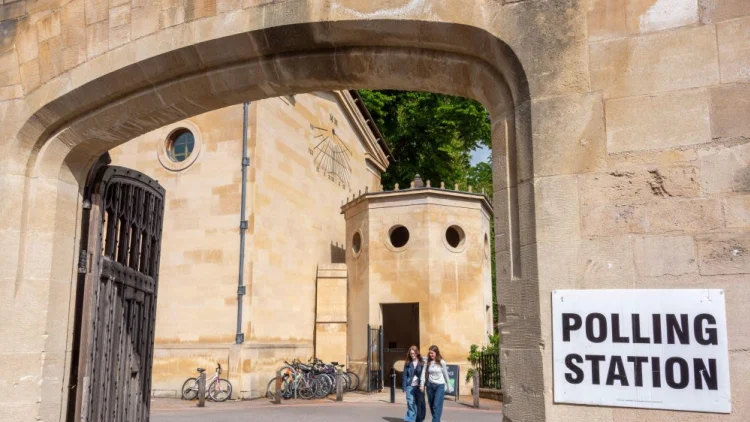

(Alamy)
4 min read
Students have launched a campaign urging the government to make it easier for those attending university or college to register to vote.
The National Union of Students UK (NUS) and Purpose Union are calling on ministers to roll out a nationwide auto-enrolment system that would “remove the needless barriers for universities and colleges”.
The push is backed by the Greens, with Brighton Pavilion MP Siân Berry saying “it is more important than ever that students and young people have a say in their futures.”
Launching the campaign, the NUS pointed to recent auto-enrolment trials at individual educational institutions that successfully boosted voter registration, such as a 2023 trial at the University of Nottingham, which increased voter registration applications from under 1,000 to over 23,000, representing 64 per cent of all students.
As part of this scheme, new and returning students were asked during the online registration process for the academic year whether they would be happy for their data to be shared with their term-time local council to allow voter registration.
While such a trial was a success, the NUS has warned that implementing auto-enrolment can be arduous and expensive for institutions when done individually, as it means setting up their own data-sharing arrangements with local authorities where their students live.
The NUS is calling on ministers to invest in a technical solution that would allow student data from across the country to be funnelled into the existing Individual Electoral Registration (IER) hub, which in turn would make it easier for students to join the electoral register.
The Labour government is committed to lowering the voting age to 16, but there are concerns about low levels of engagement among young people.
In 2023, the Electoral Commission found that around 60 per cent of adults under 20 were not registered to vote.
The Electoral Reform Society (ERS) says starting university is a “crucial point where many young people can either drop off the electoral register or miss being added altogether”.
“Auto-enrolling students as part of a wider automated voting scheme would help ensure that young people are correctly registered come polling day and able to cast that all-important, habit-forming first vote. This will ultimately increase participation in elections and strengthen our democracy,” ERS Chief Executive Darren Hughes told PoliticsHome.
The NUS is pushing the government to deliver this reform in the next year to ensure that students have the opportunity to take advantage of it before the next general election. While the next election is currently scheduled for 2029, there is speculation that Prime Minister Andy Burnham might be tempted to capitalise on positive polling and go to the country sooner.
NUS England President Favour Samuel said: “If the government doesn’t act soon, we risk another general election with unequal democratic processes which disproportionately prevent young people, minorities, and private renters from voting.”
Samuel added: “We want to see the government invest in a simple technical solution which would streamline the process, remove the needless barriers for universities and colleges and enable every young person to exercise their right to vote.”
Green MP Berry told PoliticsHome: “As the climate crisis, housing and living costs for young people intensify, it is more important than ever that students and young people have a say in their futures.
“The Labour Party has a responsibility to follow through on its commitment to improve voter registration rates, and I welcome this call from NUS and Prospect Union for the government to invest in student auto-enrolment.”
A Ministry of Housing, Communities and Local Government spokesperson told PoliticsHome: “We want to make sure registering to vote is easier for all – which is why we have said we will work towards a new automated voter registration system to make the process easier.
“Through the Representation of the People Bill, we are also making changes before the next general election which will make better use of data across government so that eligible voters can be easily identified and supported to register to vote.”


Did you know that eating sugar-free chewing gum can help if you’re struggling with constipation?
Yep – doctors say the process “tricks your body into thinking it’s eating,” which helps to get things moving again.
Speaking of moving, chewing gum might have another purpose, too. Some research has found it could help to make our walks faster and more efficient.
Why might chewing gum make my walk more efficient?
A 2018 paper found that, compared to those who didn’t chew gum, people who tried the minty method while walking had higher heart rates, burned more energy, walked further, and strolled faster.
These results seemed especially strong among middle-aged and older people (men, in particular).
We don’t know exactly why chewing gum seemed to speed up people’s pace.
But the researchers wrote, “one possible mechanism is cardiac-locomotor synchronisation (CLS) or cardiac-locomotor coupling”.
CLS happens when a person’s heartbeat thumps in time with their steps, and vice versa. It’s a phenomenon which seems to be stronger in middle-aged and older people.
“Gum chewing increased the heart rate, and CLS possibly led to increases in the physical functions of walking distance and steps,” the study authors said.
A separate 2019 study found that people who chewed gum faster seemed to walk more quickly, too, “with increases or decreases in a person’s chewing rate leading to similar changes in their stepping rate (and hence walking speed)”.
They said that this change may happen as “the neural drive related to chewing entrains the muscles involved in the basic gait action of stepping”.
Oh! Anything else?
Yes. If you want to walk more quickly, swinging your arms seems to help, too.
Milica McDowell, a physical therapist and author of Walk: Rediscover the Most Natural Way to Boost Your Health and Longevity – One Step at a Time, told TIME that the movement turns your torso, bringing the rest of the body along with it.
“The arms are sort of like the conductor – they lead the rest of the coordination,” she said.

This week you might have seen a heartbreaking story being shared, in which a leading medical expert warned that three toddler deaths in the past two years in Australia had been linked to excessive cow’s milk consumption.
The young children had developed infections, but also had extreme iron deficiency anaemia, where a lack of iron in the body leads to a reduced number of red blood cells – the condition had been linked to them drinking too much cow’s milk.
Dr Sally Campbell, a haematologist at Queensland Children’s Hospital (QCH) told ABC: “They were drinking more than one litre of cow’s milk per day. This resulted in them developing extreme iron deficiency anaemia and, sadly, dying.
“They had a virus or something else that tipped them over the edge, but the cause of their severe iron deficiency anaemia was from excess cow’s milk.”
She added that a virus can be “life-threatening when you’ve got a chronic anaemic state” as “the ability of your body to cope, when you have a quarter of the amount of red blood cells that you should have, deteriorates”.
Similar cases have occurred in the UK, too. Reports suggest Anaya Khaanan, who was almost two, died after developing severe anaemia caused by a predominantly milk-based diet.
It’s certainly an issue doctors are seeing – albeit a rare one.
Dr Arindam Das, a paediatrician verified on the healthcare review platform Doctify, told HuffPost UK he recently helped a toddler with a significant nutritional complication associated with excessive milk consumption.
The child experienced swelling, rather than the more typical symptoms like tiredness or pallor that are usually associated with anaemia. Dr Das said they had “severe iron deficiency anaemia together with a low blood albumin level in the context of excessive milk consumption”.
“This is a recognised but relatively unusual complication,” he added.
What parents need to know
It’s understandable that you might have been left worried about how much milk your child is consuming, and whether they’re getting the right nutrients more broadly, but Dr Asiya Maula, private GP at The Health Suite, said “parents should not conclude that cow’s milk itself is dangerous”.
The issue is when cow’s milk is drunk in excess, replacing meals and crucial nutrients.
“From the age of one, it is a valuable source of protein, calcium and vitamin A,” Dr Maula told HuffPost UK. “The concern is when a toddler drinks so much that it repeatedly replaces meals and iron-rich foods.
“Cow’s milk contains very little iron and is extremely filling. A child who fills up on milk may have little appetite left for foods such as meat, fish, eggs, beans, lentils, green vegetables and fortified cereals.
“Over time, that can leave them short of the iron needed to produce healthy red blood cells.”
A Perth-based study of 10,000 women and their babies found that, by age three, more than 56% of children had low iron, with almost 20% having very low iron and 2.6% suffering with severe iron deficiency anaemia.
In the UK, severe cases are uncommon, Dr Das said, but they can be “significant”.
How much cow’s milk should babies and toddlers drink?
Babies under 12 months should not have cow’s milk as their main drink, said Dr Maula.
“Breast milk or suitable infant formula should remain their main milk source, although cow’s milk can be used in cooking from around six months,” she explained.
“From the age of one, NHS advice is to offer around 350ml of milk a day, or roughly two portions of dairy foods such as yoghurt and cheese.
“If a toddler is routinely drinking well over 500ml of cow’s milk a day, particularly instead of meals, it is worth discussing this with a health visitor, GP or dietitian,” added the GP.

Narisara Nami via Getty Images
What are the signs of iron deficiency in young children?
Iron deficiency can, initially, be quite subtle. “Parents might notice their child becoming unusually pale, tired, irritable or lacking in energy,” said Dr Das.
“They may have a poorer appetite or be less interested in their usual activities.”
When anaemia becomes more significant, it can start to cause breathlessness, a fast heartbeat, difficulties with concentrating, poor growth or unusual cravings for non-food substances, he added.
And, in the case of the toddler he recently treated, “although it is much less common, new unexplained swelling around the eyes, feet or abdomen should always prompt medical assessment, rather than simply being assumed to be dietary”.
As iron supports normal immune function, severe iron deficiency anaemia can leave a child less resilient when illness strikes. Dr Maula notes recurrent infections have many possible causes and do not automatically mean iron deficiency – but it’s certainly worth getting checked out.
My child drinks a lot of milk. What should I do?
First of all, don’t panic – and there’s no need to suddenly eliminate cow’s milk either, the doctors stressed.
“For most children over one, milk is a healthy and useful part of their diet,” said Dr Das. “If a toddler is drinking excessive amounts, I would gradually reduce this and offer milk at defined times, such as with meals, rather than allowing them to continually fill up on it.”
If your child is thirsty between meals, water is the best drink to offer them. Dr Maula also advised moving away from using baby bottles, where age-appropriate.
Offer plenty of iron-rich foods throughout the week. The NHS lists red meat, beans (ie. chickpeas and kidney beans), nuts, dried fruit, fortified cereals and soy bean flour as being good sources of iron.
Dr Maula recommended combining plant-based sources such as beans, lentils or fortified cereals with vitamin C-rich foods, which help the body absorb iron.
She warned against offering iron supplements without medical advice, as too much can be harmful, and added: “If there are symptoms, feeding concerns or a very restricted diet, speak to a GP, who can arrange a blood test if appropriate.”
Urgent help should be sought if a child is unusually drowsy, very breathless, collapses, has blue or grey lips or appears acutely unwell.
Dr Das concluded: “The message I would give parents is: milk is good, but more milk is not necessarily better. It should complement a varied diet, not replace it.”
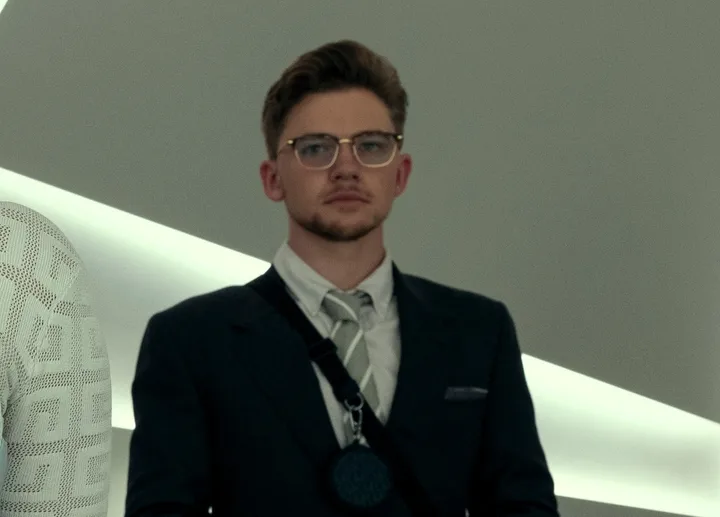
Ryan Murphy’s new series The Shards brings Bret Easton Ellis’ semi-autobiographical thriller to life in a new, seductive drama.
The show is set at a 1980s elite Los Angeles prep school and follows a fictionalised version of the author in his younger years.
His cliquey, privileged high school social group is thrown into turmoil when a mysterious new student arrives at the same time that a serial killer known as The Trawler starts to stalk his beloved city.
True to form for a Ryan Murphy production, the cast is made up of regular collaborators, rising stars and nepo babies.
For those who are already hooked on The Shards, here’s where you’ve seen the cast before…
Igby Rigney

Igby takes the lead as author Bret Easton Ellis, in this adaptation of his 2023 semi-fictional novel.
Before being cast in The Shards, the actor was best known for appearing in Mike Flanagan’s spooky Netflix shows, having starred as altar boy Warren Flynn in Midnight Mass, leukaemia patient Kevin in The Midnight Club and Camile’s assistant Toby in The Fall Of The House Of Usher.
His other credits include playing Kevin in the comedy The Sex Lives Of College Girls, Dr. Scott Marcus in Grey’s Anatomy and a friend of one of the survivors in Devil in Disguise: John Wayne Gacy.
Kaia Gerber

Kaia Gerber is one of the aforementioned nepo babies involved in The Shards. While once known as simply the daughter of supermodel Cindy Crawford, Kaia is now a star in her own right.
As an actor, Kaia has appeared in the films Bottoms with Ayo Edebiri and Rachel Sennott and Outcome with Keanu Reeves and Cameron Diaz, as well as Mother Mary alongside Anne Hathaway earlier this year.
On TV, she has a recurring role in the Apple TV+ comedy Palm Royale as optimistic manicurist Mitzi, appeared in the comedy Overcompensating as campus queen bee and played herself in Hacks.
The Shards is not her first Ryan Murphy project, either.
Kaia previously played the bloodthirsty ghost Ruby in 2021’s American Horror Stories and pre-med student Kendall in American Horror Story: Double Feature.
Since Kaia shares more than a resemblance to her gorgeous supermodel mother, she has also modelled in print and on the runway for the likes of Versace, Calvin Klein and Jimmy Choo.
Homer Gere

As the surname indicates, Homer is the son of Pretty Woman star Richard Gere and his second wife, Licence To Kill actor Carey Lowell.
Richard was previously married to Cindy Crawford in the early 1990s, so audiences are loving watching the two A-listers’ kids sharing the screen together over 30 on.
The Shards marks Homer’s first leading role, although he did have a small part in the third series of Euphoria.
He appeared in the Zendaya-led show as Dylan Reid, the fictional heartthrob who stars in L.A. Nights, and later becomes romantically linked to Sydney Sweeney’s Cassie.
Evan Rachel Wood

Bad Robot/Kobal/Shutterstock
Evan Rachel Wood is a Golden Globe nominee who has consistently been working in Hollywood since the age of nine.
As a kid, she starred in Practical Magic with Nicole Kidman and Sandra Bullock, before her breakout in 2003’s teen drama Thirteen.
Best known for her work in indie cinema, Evan’s film credits include the Ryan Murphy-directed Running With Scissors, The Beatles musical Across The Universe and the Oscar-nominated The Wrestler.
Her most high-profile TV gigs include playing vampiric Sophie-Anne Leclerq in True Blood and android host Delores across all four seasons of Westworld.
Evan has also appeared in numerous music videos, most famously Green Day’s Wake Me Up When September Ends alongside her ex-husband Jamie Bell.
Wes Bentley

Lorey Sebastian/Dreamworks/Kobal/Shutterstock
Wes Bentley is best known for his Bafta-nominated role as the plastic bag-watching Ricky in American Beauty, as well as playing Head Gamemaker Seneca Crane in The Hunger Games and, more recently, lawyer Jamie Dutton in Yellowstone.
He has also had roles as Legion in Ghost Rider, geographer Doyle in Christopher Nolan’s sci-fi Interstellar and Julia’s now-husband Erik in Mission: Impossible – Fallout.
Wes frequently works with Ryan Murphy and has guest-starred in three seasons of American Horror Story. He appeared in Freakshow as the man with two faces, Edward Mordrake, in Hotel as Detective John Lowe and in Roanoke as actor Dylan Conrad.
Owen Painter

You may recognise Owen Painter for playing Pugsey’s pet zombie Slurp, who is secretly the brilliant former Nevermore student, Isaac Night, in the Netflix series Wednesday. You may also know him for his work in the fifth season of The Handmaid’s Tale as Jaden, a young Guardian serving in a Gileadean border region to Canada.
Owen also had a recurring role in the comedy-drama Tiny Beautiful Things, as a younger version of Nick Stahl’s character, Lucas.
Jordan Roth

The Shards marks a rare acting role for Jordan Roth, who is primarily known as a seven-time Tony Award-winning theatre producer who has worked on shows like Hadestown, Moulin Rouge!, Kinky Boots, and Angels in America.
However, his previous acting work has included playing himself in the TV musical series Smash, as well as appearing as a Broadway correspondent for various TV news and print outlets.
An avid art and fashion collector, Jordan has also walked the runway for the likes of Thom Browne and has appeared in Vogue and L’Officiel.
Hayes Warner

Jason Koerner via Getty Images
The Shards marks the first acting role for pop star Hayes Warner.
Hayes’ career gained momentum in 2024 when her brutally-honest revenge song Breadcrumbs went viral on TikTok.
Since then, her other pop-rock hits have included Predator, Oh! and Ziz, and she has racked up 50,000 monthly listeners on Spotify and over a million views on YouTube.
Daniel Dale

Although The Shards is Daniel Dale’s most high-profile role to date, he may well be a recognisable face to fans of several Apple TV+ dramas.
He starred in the first series of Your Friends & Neighbours as Tori’s boyfriend Dale, and in Maximum Pleasure Guaranteed as camboy Sky.
Before landing those Apple TV+ dramas, Daniel had minor roles in The Good Wife spin-off Elsbeth and the forgotten Kyle Mooney horror-comedy Y2K, which also starred Rachel Zegler and Jaeden Martell.
Gus Halper

Sarah Shatz/Lionsgate/HBO/Kobal/Shutterstock
The Shards marks the second time Gus has worked on a Ryan Murphy project this year after a guest appearance in The Beauty.
Gus found fame when he portrayed convicted murderer Erik Menendez in the miniseries Law & Order True Crime: The Menendez Murders (a separate project to Ryan Murphy’s own controversial Netflix miniseries Monster, which focused on the Menendez brothers).
On the big screen, he has had minor roles in the action thriller Cold Pursuit starring Liam Neeson, the Paul Feig-produced Holler and the biopic Rustin, for which Colman Domingo earned an Oscar nomination for his work as the civil rights activist Bayard Rustin.
Ivy Wolk

Comedian and actor Ivy Wolk became known during the pandemic for her provocative online content, which frequently ruffled feathers.
After making a name for herself online, her first notable on-screen role came in 2022, when she was cast in the Judd Apatow comedy The Bubble. She followed this with roles in Tim Robinson’s comedy Friendship, the motherhood drama If I Had Legs I’d Kick You, and Anora, which won five Oscars, including Best Picture and Best Actress for Mikey Madison.
As for her TV work she appeared in the Disney+ comedy English Teacher as a sardonic student, and in crime comedy Deli Boys as the kidnapped daughter of a casino boss.
The Shards is currently streaming on Disney+ with new episodes dropping weekly
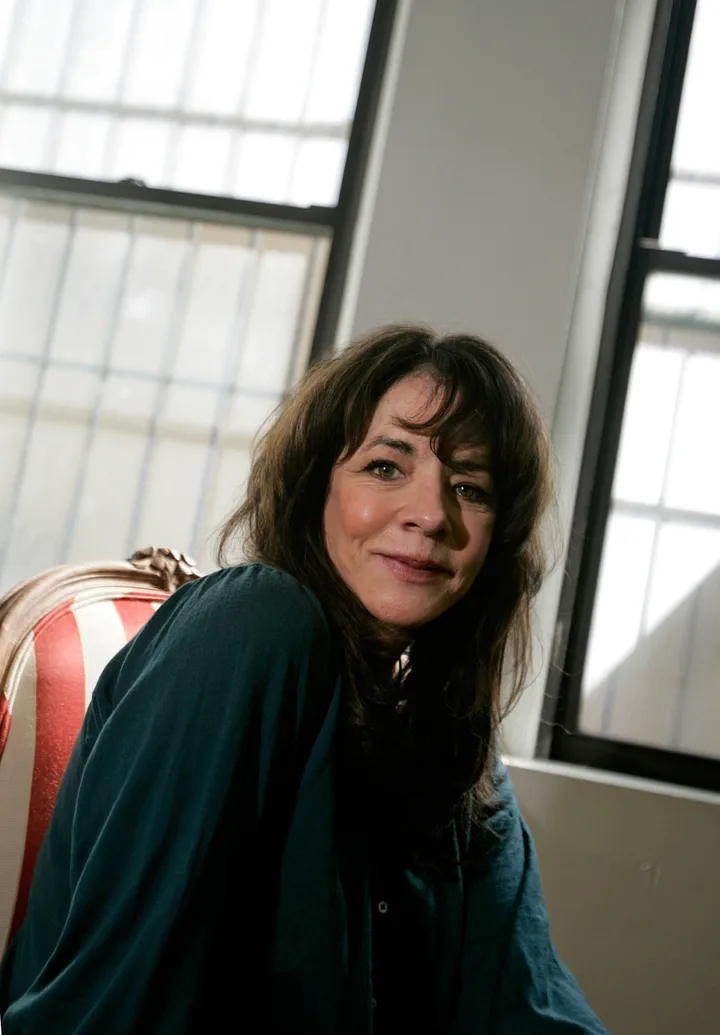
Grease star Stockard Channing has opened up about what she has described as her “reclusive” life in London.
The 82-year-old actor recently wrote an essay for the Sunday Times, in which she spoke about what spurred her move across the pond.
“Since just before Covid I’ve been living in London,” Stockard explained. “My partner, Daniel [Gillham], died in 2014 and it was more devastating than I realised; it had a lag effect.
“The pattern of my life shifted, so I shifted my life from Maine.”
“I’ve lived alone since I lost Daniel and I’m happy being a recluse,” she continued. “I was married four times before Daniel and they all represent epochs of me.”

“Children were thought about and, yeah, I think about them now because it’d be great to have someone taking care of me,” she added. “But, hey, children can be just as selfish as everybody else out there.”
Stockard was married four times before ending up with Daniel Gillham, who was a cinematographer. Her previous husbands were Walter Channing Jr., Paul Schmidt, David Debin and David Rawle.
The Oscar nominee and her late partner never married, something she attributed to her previous relationships.
“What have I learned from my divorces? I know that nobody gets married to get divorced. I don’t think I’ll get married another time,” Stockard wrote in an essay for The Guardian in 2006.
“I’ve been living with my partner [cinematographer Daniel Gillham] for over 20 years, so… It would feel quite silly, actually.”
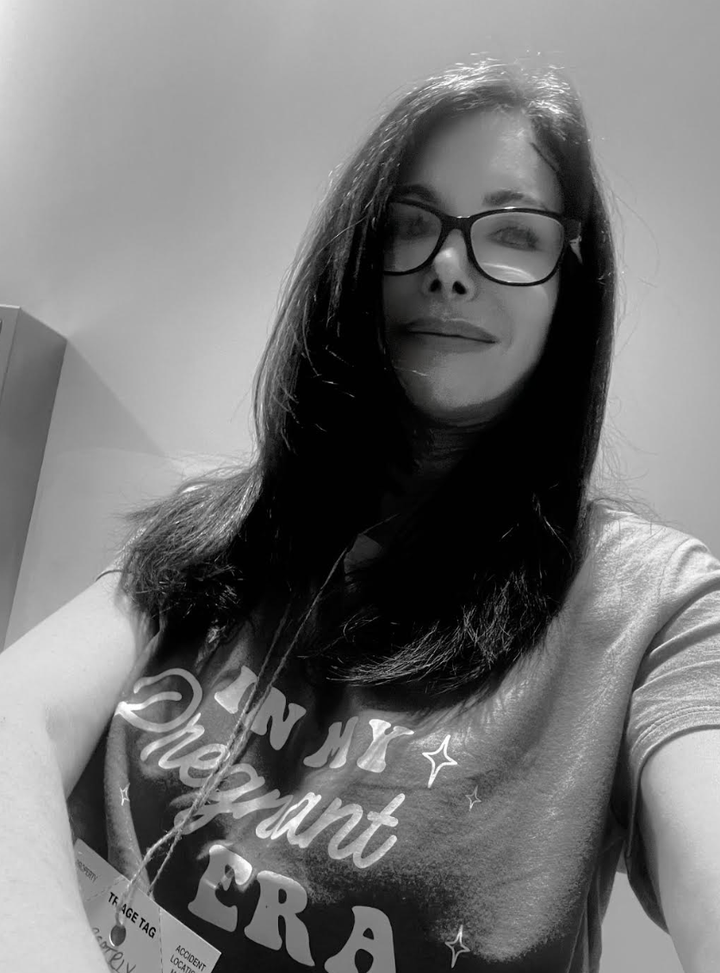
I clutched my pregnant belly and looked around the room. Nearby, nursing students moved briskly through a crowd of emergency patients, checking vitals, calling out to each other. I knew I wasn’t their most urgent triage priority, certainly not compared to the bleeding patients on gurneys around me moaning, “Help me … can someone please help me?”
“We’ve called OB/GYN, and they’ll be here as soon as they can,” a young nursing student promised me.
I closed my eyes and sighed. Help was on the way.
At some point – I couldn’t tell you exactly when – my hand stopped seeking out my baby bump for reassurance, and located something else instead. It was small and square and adhered discreetly to my skin beneath my maternity shirt: an oestrogen patch, oozing a steady dose of this miraculous hormone into my bloodstream.
Because I wasn’t pregnant – I was pretty much the exact opposite. I was in the relentless grip of menopause, and I was playing a pregnant woman as part of a disaster simulation at a nursing school. The bloody patients calling out for help? They were mannequins, and their pleas were being remotely broadcast through microphones from a nearby control room. My baby bump? A prosthetic that had been velcroed in place.
“Thanks everyone,” one of the managers in charge of the set called out, causing a few of us to break character with nervous laughter.
I did need help – that part of this scenario was entirely true. Most urgently, I needed financial help. So this simulation was one of many part-time jobs I’d taken on after severe menopausal symptoms had, at least in part, driven me to quit my full-time job as a medical writer months before.
The $160 estrogen patch had been on a national shortage. I had called around to several pharmacies before I was lucky enough to score one, out of pocket. The last time I felt this desperate for something this scarce was in fifth grade, when I competed with every other kid in my class for a Cabbage Patch Kid. Now, apparently, we had grown up and aged into hormone patch kids.
To understand how I ended up here – menopausal, underemployed and incubating a pretend baby – you’d have to go back a few years, to a time when we were still wiping down our groceries and wondering if it was safe to touch the mail.
The truth was, the pandemic had spoiled me.
I am not going to say I enjoyed the pandemic, although I know I wasn’t the only one who guiltily noticed certain silver linings (serial plan cancellers and Zoom stockholders, I’m looking at you!).
However, for me and the other women going through what my mother once quaintly called “the change of life”, the pandemic had, if you’ll forgive the expression, masked our pain.
In my case, the menopausal symptoms snuck up so stealthily I didn’t realise what they were at first. Because I had never carried a baby or birthed a child, I felt no particular grief around my uterus being closed for business. And as a person whose knowledge of menopause had been mostly limited to cringy jokes about hot flashes, I was wildly unprepared for the range of symptoms it could cause. Itchy skin? Joint pain? Heart palpitations? Worsening of ADHD? Really?
Meanwhile, the pandemic had basically put the whole world on pause, providing a work-life ratio that for me, for once, tipped towards life. Not only were we allowed to bring our laptops out into the fresh air while identifying white-breasted nuthatches, we were practically required to.
It shouldn’t have taken a devastating viral outbreak for it to happen, but for women like me, many of whom were also navigating the difficult realities of nest-leaving children and ageing parents, the pandemic offered a slow-paced, surprisingly gentle sanctuary in which to endure the hormonal crash-and-burn.
However, when the N95 masks eventually came off and companies began to wrench employees back into the daily grind, I found myself unable to change out of a gardening apron and back into a suit jacket.
I tried to make it work, but my company abruptly switched me from the job I’d had for years – one I knew well and felt confident doing – to a new position in which I felt completely out of my depth. It was yet another major “change of life”, and for me, two of those were one too many.

Courtesy of Jennifer Byrne
Where once my job had consisted of writing long-form feature stories – work that played to my strengths – I was now tasked with summarising highly technical scientific manuscripts about gastroenterology.
The job also required me to promote these stories by crafting social media posts featuring a carefully curated selection of emojis. Between interpreting Ph.D.-level content about gut microbiota alterations and making sure I had pasted in at least two poop emojis, I had to vacillate daily between the functional intelligence of a postdoctoral researcher and a sugar-overdosed toddler.
And I was already vacillating plenty on my own. I was experiencing what I would only later realise were the hallmark signs of severe menopause: brain fog, debilitating insomnia, memory issues and anxiety. Oh, the anxiety! I’d always been sensitive to criticism, but now the very sight of red strikethrough in my articles was enough to make me cry, which, for a professional writer, is a bit like a surgeon fainting at the sight of blood.
What I didn’t do (what never even occurred to me to do) was tell anyone at work what was happening. I’m a Gen X woman. There are lots of great things about Gen X women, but the way we tend to quash our feelings in the name of being “chill” or “low-maintenance” is not one of them.
We were raised to act tough, swallow our pain, and wash it down with water from the backyard hose. So I “hung in there” like that infamous motivational-poster kitten and said nothing. What would I even have said? When it came to understanding what was going on with me at the time, I was probably more clueless than anyone else.
I will never forget the day I realised I wasn’t going to be able to keep hanging in there. I had taken a much-anticipated day off and was preparing for a relaxing trip to the beach. All of a sudden, ping! – a notification from my boss landed in my work inbox. It was flagging one of my social media posts for various keyword- and emoji-based offenses. He had copied our entire team.
And here’s the thing: he wasn’t wrong. I was struggling, legitimately, and it was showing up in my work. From my employers’ perspective, I was simply an employee adjusting poorly to a minor workplace shake-up. From where I sat, though, I was a hormonally imbalanced mess who was having a very private midlife meltdown in full view of my peers.
I’d like to say I was able to brush it off and enjoy my day at the beach. Maybe a former version of me could have. However, this version of me could not.
“Wish you were here!” The souvenir shop postcards declared, and I felt directly called out, because in a very real way, I was not there.
I’m going to quit this job, I told myself, the words coming to me as if spelled out in the summer sky like an aerial banner for all-you-can-eat clams. Maybe not today, but soon.
And not long after that, I did.
I had no real plan, other than a couple of freelance clients, a sparse 401k, and a vague, possibly delusional conviction that bold moves pay off.
The move did not pay off – at least not right away. I forced myself to go for long walks to cheer myself up, only to come home crying. I made cautious forays onto LinkedIn, where any promising job posting had already been picked to the bone, and where any actionable information about which blurry-faced potential employer had viewed my profile would cost me $29.99 a month.
Then one night, half-watching Jeopardy!, I learned that standardised patients – people trained to simulate medical conditions for student clinicians – were a thing. I looked it up, found a help wanted ad, and applied.
There was something about this work that appealed to me in a way that was vaguely embarrassing. Sure, it provided money, but it was more than that. Someone in the room would be tasked with listening carefully, taking notes, asking follow-up questions. After months of feeling untethered and invisible, being paid to be on the receiving end of empathy felt like the best job in the world.
I would later learn that my decision to quit my “real” job wasn’t as unusual as it seemed. According to a 2023 Korn Ferry survey of more than 8,000 women, 13% have left their jobs due to menopausal symptoms, and an additional 15% have seriously considered it. And yet, somehow, we are still treating this as a personal failing rather than a systemic one. My employer was not particularly cruel or negligent. That is exactly the point.

Courtesy of Jennifer Byrne
During my exit interview, the HR representative – a woman around my age – shared a sympathetic laugh with me about some of our shared menopausal symptoms. I told her I thought companies should offer more support for women going through this transition at work. She smiled in the way people smile when they agree with you but can’t do anything about it, and moved on to the next question.
I still haven’t quite figured out exactly what this next stage of my life will look like – only that I intend to keep writing my way through it. The past several months have not been easy. They’ve been filled with 4am insomniac fears of financial ruin, a professional identity that is as all over the place as my hormones, and an accusatory voice deep inside of me that is convinced that I’m not just a person who quit, but a quitter. My insomnia and anxiety have left me looking and feeling about 1,000 years old.
Still, I don’t regret my decision. I’m starting to find my equilibrium. The supplemental hormones are slowly doing their job. The freelance bylines are starting to accumulate. In the meantime, I keep muddling through – held together with my patches and willpower – hoping for the best.
Back in that simulation, the kind-eyed nursing student told me help was on the way, and for a moment, even though I knew it was pretend, I felt the tiniest bit better.
That’s all most of us are asking for. We want someone who’s going to listen – who’s not going to squirm and change the subject, or tell us to just power through it. We don’t need to be the top priority; we just don’t want to be the last.
Jennifer Byrne is a freelance writer and journalist whose work has appeared in The New York Times, The New Yorker, The Guardian, The Cut, The Boston Globe, McSweeney’s, Popular Science, Atlas Obscura, and elsewhere. She received a 2022 prose fellowship from the New Jersey Council for the Arts. She is currently at work on a memoir. She lives in New Jersey.
Do you have a compelling personal story you’d like to see published on HuffPost? Find out what we’re looking for here and send us a pitch at pitch@huffpost.com.
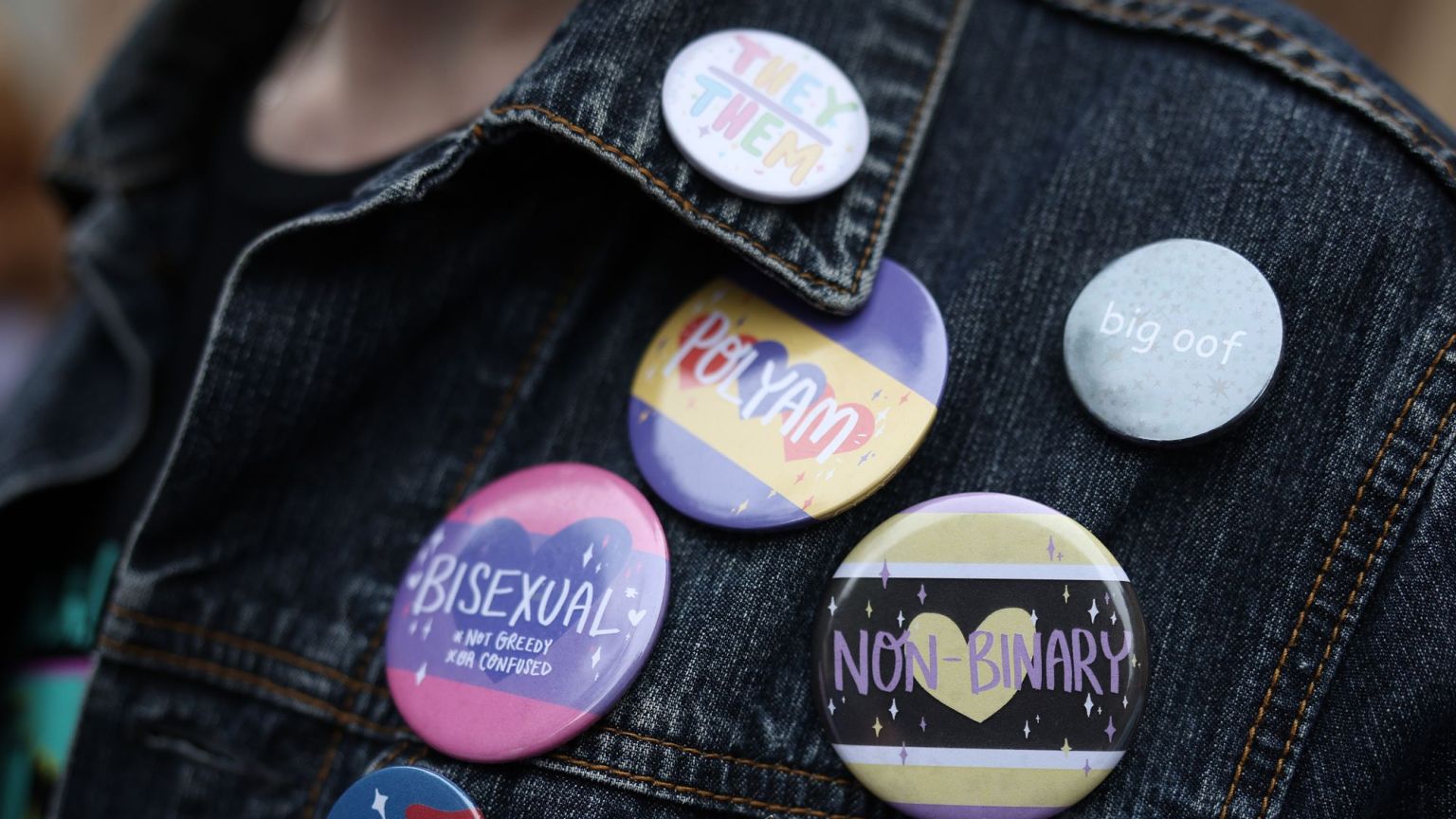
In recent decades, and especially in recent weeks, we have heard much about the plight of victimised, marginalised minorities, and the belief that they ought to be afforded special treatment and extra privileges by way of recompense. The Jason Arday debacle is a reminder of this chronic state of affairs.
Many white people without mental-health issues will have looked on with envy and resentment at the attention lavished on this black, autistic sociology professor. And with marginalised status seeming to bequeath myriad advantages, such as elevated social standing, it’s no wonder others might want to get a piece of the action by believing, proclaiming or pretending that they too are disabled and disadvantaged.
That is plausibly one reason for our mental-health crisis. Many causes have been advanced for the exponential rise in people suffering from mental-health issues in recent years, such as the rise of social media and smartphones, better diagnosis and wider acceptance of neurodiverse conditions or the Covid-19 lockdowns. But one statistic published last week seems to confirm what many have long suspected: that it represents a hysterical epidemic, one spread through social contagion, legitimised by our culture and medical establishment, and turbocharged by identity politics.
According to an essay by Uta Frith published in Psychological Medicine, primary-care diagnoses of autism increased ninefold from 1998 to 2018. That trend, which began before smartphones or lockdowns, correlates with the dual ascendancy of our therapy culture and identity politics. The trend has continued to this day, to such a degree, says Frith, that autism has become an inflated ‘catch-all diagnosis’ that risks becoming useless.
This is no idle claim by Dame Uta Frith, emeritus professor at the Institute of Cognitive Neuroscience at University College London, the person who pioneered much modern-day research into autism. As she elaborated in an interview in The Times on Monday, for many people, such a diagnosis ‘does give some kind of privileges. They can tell other people to “jolly well take account of my disability”, except they don’t want to call it a disability. It’s “my difference, and you should be nice to me”.’
The idea that mass delusions can have a political catalyst is not new. In her 1997 book, Hystories: Hysterical Epidemics and Modern Culture, Elaine Showalter not only noted that ‘hysterical epidemics require at least three ingredients: physician-enthusiasts and theorists; unhappy, vulnerable patients; and supportive cultural environments’, but also that ‘syndromes multiply as they interact with social forces’ such as religious beliefs or political agendas.
In our case, that political agenda is a quest for minority status and victimhood; those forces are an Instagram culture of narcissistic exhibitionism; and there is an even longer-standing pressure felt by young people to dwell on their problems, believe themselves to be fragile and vulnerable, and seek sympathy from strangers for their predicament. This would explain why referrals for ADHD have risen by more than 400 per cent in the past five years. It would also account for an associated new fashion, highlighted by Kathleen Stock last week, for ostensibly healthy young women now to use walking sticks.
Our ‘mental-health crisis’ should be seen in the context of the trans hysteria of the past decade, another part-political fashion transmitted through social contagion and enabled by those in positions of authority. Claiming mental ill-health now provides an opportunity for many people to become honorary disabled or metaphorically black.
In praise of doubt
It has become common these days to deride the New Atheism that was all the rage in the Noughties. One frequently hears it dismissed as a facile episode typified by juvenile invectives that themselves had a whiff of religious fervour. New Atheism – so often directed against poor old, harmless, hopeless Christianity – did nothing to confront the Islamic fanaticism that only worsened in the 2010s, critics say. And was clueless in foreseeing or gainsaying the new wave of irrationalism then insidiously corroding the West from within: woke hyperliberalism.
There was an unmistakable air of bellicosity about the New Atheists, it is true, and this was easily mistaken for dogma. And the death last week of the philosopher Anthony Kenny, at the age of 95, is a reminder of the value of employing and demonstrating another, more amenable, sentiment: doubt.
Kenny’s 1979 book, The God of the Philosophers, re-examined the conflict between free will and divine omniscience, revisiting the quandary first attributed to Epicurus: how can an all-loving, all-powerful God let evil happen? God can be one or the other – all-loving but impotent, or all-powerful but indifferent – but He cannot be both. As Kenny argued:
‘If God is to be omniscient, and to have infallible knowledge of future human actions, then determinism must be true. If God is to escape responsibility for human wickedness, then determinism must be false. Hence in the notion of a God who foresees all sins but is the author of none, there lurks a contradiction.’
As he concluded: ‘There cannot, if our argument has been sound, be a timeless, immutable, omniscient, omnipotent, all-good being.’
It was through such patient logic that Kenny, who had been a Catholic priest, lost his faith. At the same time, he preferred to call himself an agnostic rather than an atheist, as the former label was more appropriate to his doubting method. In a world full of too much certitude, it was an admirable stance.
Why we miss Rod Liddle
Many people who don’t pay close attention to politics may have been surprised at the abundance of tributes to the late Rod Liddle. I dare say even he might have found the outpouring of grief ‘mawkish’, or ‘a moronic inferno’. But he was loved by many because he was that rare combination in a columnist: he dared to tell the truth, he wrote beautifully and he made people laugh.
In my lifetime I can count only two other columnists who met those three criteria: Auberon Waugh and Michael Wharton (aka ‘Peter Simple’), both of the Daily Telegraph. Like Rod, they could be vituperative and unpredictable, could goad and enrage exactly the right type of sanctimonious prigs, and could make the reader feel that he or she was not alone in a world seemingly gone mad. Rod belonged to that elite who could be simultaneously flippant and earnest.
Whereas Wharton railed against the Hampstead socialists, Liddle similarly became my friend in print – and I dare say many of yours – for inveighing against our asinine, faux-left, north London bien pensants. In that respect, he represented a strange sort of continuity.
While Rod was a rarity, he wasn’t a one-off. Here’s hoping we’ll see his type again soon.
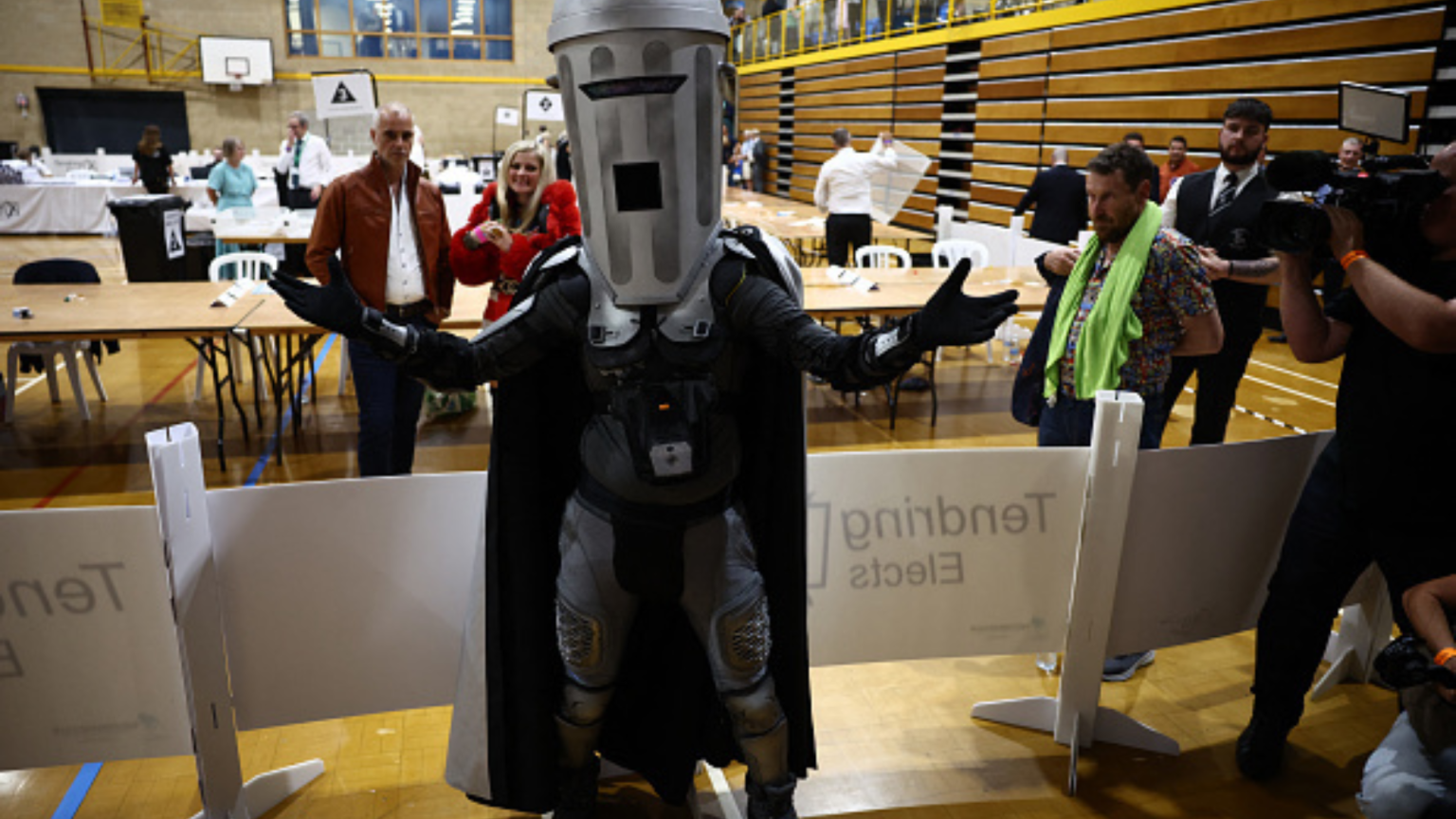
So the bin has been put out. Count Binface – the Oxbridge-educated cracker of shite jokes who gets a weird kick from standing in elections – has lost to Nigel Farage in the Clacton by-election. As every sane person knew he would. Commiserations to the not-so-sane who swell the ranks of the tosserati, like the windbags over at academic mag The Conversation, who got craft-beer Britain jizzing with eager glee with their headline: ‘Could Count Binface actually win?’ When did the educated become so dumb? Come get your trash, Remoaners, he’s cooked.
The result is exactly as those of us whose brains weren’t melted by Brexit expected. Farage, leader of Reform UK, retook the seat with 63 per cent of the vote. He secured the ballots of 22,239 people, a thousand more than he got in the General Election in 2024. Binface won 9,455 votes, which has caused excitement in that section of society that donates to Wikipedia and tweets ‘DYING’ about every Marina Hyde column. ‘What a slap in the face for Farage!’, they’re probably saying on Bluesky. Dream on. What the Clacton spat really revealed is the staggering lameness of the flagging anti-populist crusade.
That Count Binface got fewer than 10,000 votes is hilariously underwhelming when you consider the entire cultural establishment waved pom poms for him. The by-election was triggered by Farage himself. In response to media stories about his allegedly shady finances, he stood down in Clacton in order that he could stand again, his point being that it should be voters, not SW1 dirt-diggers, who decide his fate. In a shameful snub to the people of Clacton, the other parties refused to stand. Instead they threw their weight behind a man with a bin on his head. He became the running dog of the elite, and still he couldn’t break 10k.
Binface was the ideal mouthpiece for Britain’s death-rattling political class. His real name is Jonathan David Harvey. He’s 46 (maaate). He went to Oxford. He’s a longstanding regime comedian, penning safe gags for knackered shows like Have I Got News For You. He poses for selfies with Ian Hislop for heaven’s sake. And – you won’t believe this – he hates Brexit. One of his policy proposals is to have a referendum on whether we should have another referendum. My splitting sides. Little wonder this state-sanctioned edgelord, this lapdog in a leather cape, was embraced by the elite as the ideal shit-stirrer to send down to Clacton.
The chattering-class swooning over Binface was insane. ‘I am supporting Count Binface’, said Lib Dem leader Ed Davey. The then PM, Keir Starmer, backed him too. Then there was all the maniacal cackling in the ‘liberal’ media. Every bald podcast dad frothed over the prospect that Farage might ‘lose to a bin’. Is Binface ‘the hero the country needs?’, wondered a nutter at the Guardian. Alastair Campbell and Rory Stewart – the kings of turbo-smug centrism – gushingly interviewed him, which I guess is a step up from gushingly interviewing former psycho jihadists whose armies butchered ‘infidels’. Better a man in a bin talking shit than a man in a mask slaughtering Christians.
Binfacemania went global. The New York Times ran piece after piece on the ‘trashcan’ threatening to unravel Mr Brexit. Time did a fawning interview. What united the Binface fanatics, from Westminster to Manhattan, was the dream of giving British populism a black eye. They hoped the trashcan piss-taker would dent Reform and rap the knuckles of the knuckle-draggers who vote for it. Some said Binface was the ‘anti-establishment candidate’. LOL, he was the precise opposite. He was the tinman mercenary of an establishment that dreads nothing more than the anger of working-class voters.
There was something breathtakingly classist in the Binface spectacle. Sending an Oxbridge comic and loather of Brexit to a working-class seaside town where close to 70 per cent of people voted Leave – it wasn’t even subtle, was it? (During his Rest is Politics interview, Binface quoted The Iliad in its original Homeric Greek, and quick as a flash the hosts said: ‘I don’t think you should go round the streets of Clacton spouting [Greek], ha ha.’) To turn Clacton into a stage for bourgeois snark, and its inhabitants into NPCs in an Oxford graduate’s elaborate and unfunny joke, was pretty sick-making actually. It was snobbery in the rags of satire. The working classes are more than the fleshy punchline to woeful middle-class humour.
The bin metaphor was perfect, because that’s what these people would like to do with working-class votes for populism – bin them. Indeed, Starmer openly said to the people of Clacton: ‘Put your vote in the bin.’ He meant ‘Vote Binface’; he really meant ‘Stop casting your ballots for things that I disapprove of, you morons’. It was anti-populism summed up: swarms of sarcastic grads telling working-class people to flush their stupid views down the toilet. But it didn’t work. Count Binface might have honked the moral horn of the transatlantic haters of populism but he ran aground against the common sense of the good people of Clacton. Who’s laughing now?
spiked is funded by readers like you. Only 0.1% of regular readers currently support us. If just 1% did, we could grow our team and step up the fight for free speech and democracy.
Become a spiked supporter and enjoy unlimited, ad-free access, bonus content and exclusive events – while helping to keep independent journalism alive.


2 min read
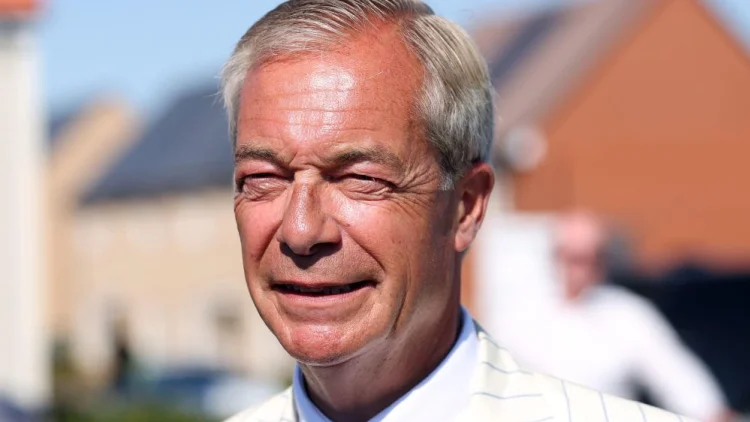
Nigel Farage will continue as the MP for Clacton after winning the by-election he triggered.
Farage secured a comfortable victory in the Essex constituency, winning around 63 per cent of the vote.
Novelty candidate Count Binface came second with 26 per cent of the vote.
Farage resigned as an MP and triggered the by-election in July amid growing pressure over a £5m donation he received from crypto-billionaire Christopher Harborne weeks before announcing his intention to run in the 2024 general election.
His failure to declare the donation led to an investigation by the parliamentary standards watchdog.
The investigation is set to continue once Farage returns to Parliament, and could result in suspension and another by-election if he is found to have broken the rules.
Speaking in July, Farage described the by-election as “people versus the establishment”, adding that the “people of Clacton” would be “the judges” of his actions.
“It’s a chance to stick two fingers up to the entire establishment, to frankly tell them where to go, and that is why I will be putting my name forward to stand in this by-election,” he said.
A Farage victory in Clacton was widely regarded as almost certain despite his personal ratings taking a hit in recent weeks. The seaside town is often described as one of the most right-wing constituencies in the country and a major Reform stronghold.
Labour, the Conservatives and the other mainstream political parties announced early in the campaign that they would not stand candidates to go up against Farage, arguing that the by-election was unnecessary and a waste of money.
That left a long list of independent and novelty candidates, including Binface, whose policies included hosting Eurovision 2028 in Clacton and relocating Parliament to the Essex village of Weeley, the Monster Raving Looney Party and Everyone Is God Party.
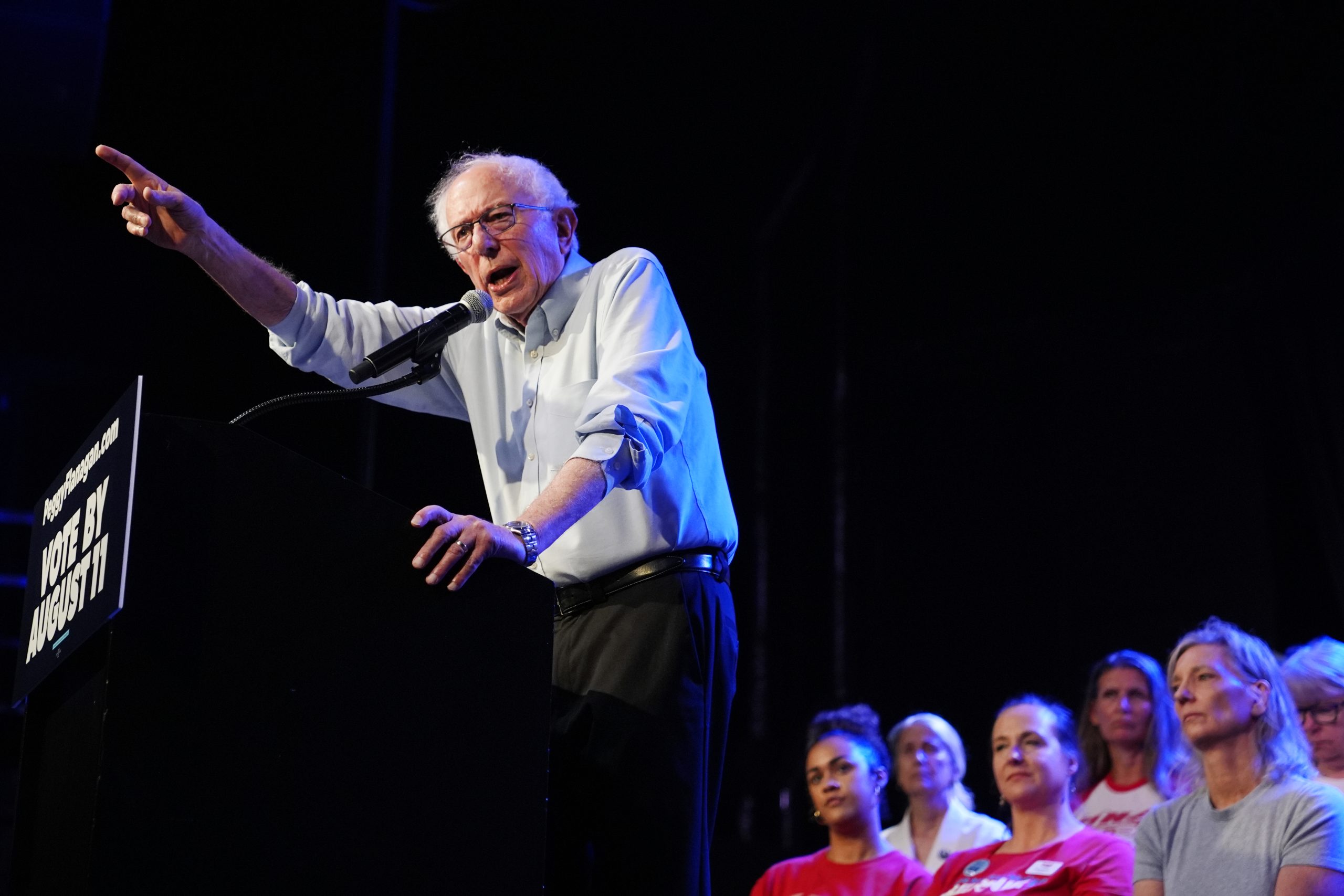

Sen. Bernie Sanders says he can’t be everywhere at once — even though some of his allies want him to be.
Democratic socialist Francesca Hong lost by less than 4,000 votes in Wisconsin’s gubernatorial primary, an outcome several high-profile progressives are blaming on Sanders and other top national progressive leaders for staying out of the race. Some said his endorsement alone could have helped bring in badly needed resources for Hong. Others said the Vermont senator has a responsibility to play widely across the battle map.
Sanders, in an interview, touted a series of progressive wins Tuesday night and brushed off the criticism.
“My response is that we have limited resources and capabilities, and there are a lot of really great candidates who have run for office who we have not endorsed,” Sanders told POLITICO on Wednesday.
“We can’t endorse every single candidate,” he added. “So, you know, we have to pick and choose and I think that Hong ran a very, very great, and very strong, grassroots campaign, got a lot of people involved and I applaud her for that.”
Hong ultimately lost to Milwaukee County Executive David Crowley, a major victory for establishment Democrats who worried she wouldn’t be able to win a general election in a top battleground. It was a notable blow for the far left that overshadowed progressive Lt. Gov. Peggy Flanagan’s win in the Minnesota Senate race the same night.
Sanders and other progressive leaders “have a responsibility, whether they like it or they don’t,” to help steer candidates in the movement, said Cenk Uygur, a progressive activist who co-founded the Young Turks and Justice Democrats. “If they endorse people, it makes a difference. If they don’t endorse people these days, sometimes it makes a bigger difference. Because there’s a certain expectation, and when they don’t deliver on that expectation, it gives people pause. So it feels like, to some degree, they’re shirking their responsibility.”
Uygur also criticized Sanders for saying on a podcast ahead of the primary that he was “not that familiar” with the Wisconsin race.
“I love Bernie, but that’s not true. Sorry, brother, but you have a giant team. Of course somebody on your team knows who’s running for governor in Wisconsin.” Uygur told POLITICO on Thursday.
One Democratic operative working on progressive campaigns, granted anonymity to speak candidly about the electoral dynamics, also rejected Sanders’ argument, noting the senator won Wisconsin’s presidential primary in 2016.
“He knows Wisconsin very well,” the operative said, adding: “What resources? You’re not cutting checks. [Sanders] endorsing somebody raises the money.”
Sanders in the interview noted primary wins from Flanagan, Rebecca Cooke in Wisconsin’s 3rd District and Matt Little in the crowded race for Rep. Angie Craig’s Minnesota seat — all Democrats he endorsed.
“Needless to say, I’m feeling really very good,” Sanders said. “The American people are catching on that we have an economy that is rigged, the very rich are getting richer while working families are struggling.”
But the Wisconsin governor primary result Tuesday exposed a critical vulnerability for a movement that has largely relied on Sanders and a handful of other headline-grabbing stars, such as Rep. Alexandria Ocasio-Cortez (D-N.Y.), to help seal the deal in contentious races as progressives look to prove they can play in competitive seats. The underdog wing of the party, some progressives argue, can’t be selective about where it’s playing if they want to take on a vast and well-funded establishment.
The bulk of the blame is being laid at Sanders’ feet in part because the movement he turbocharged in 2016 has struggled to land on a clear successor. Some progressives argue there’s an overreliance on Sanders and leaders such as Ocasio-Cortez.
Our Revolution, a group born from Sanders’ 2016 campaign but that the senator no longer associates with, blasted the broader progressive ecosystem for not doing more for Hong in a post early Wednesday morning, as the returns in Wisconsin showed Crowley was poised to defeat Hong. Several groups that have backed insurgent progressives in other races declined to join Our Revolution in getting involved in the governor’s race.“We cannot build progressive power while gatekeeping our own movement through the eyes of the establishment,” the group posted.
Sanders pushed back: “Our Revolution is an organization I’ve not had any interaction with, any participation with … for I think nine years,” he said in response. “They do what they want and they say what they want. They have nothing to do with me.”
Our Revolution declined comment on Sanders’ remarks and on its post.
Nina Turner, a former Our Revolution leader and Sanders 2020 co-chair who had backed Hong, said support from “more well-known, more popular, actively elected progressive types … probably would have” made a difference in Hong’s race. She declined to call anyone out specifically for not getting involved.
“The progressive movement is going to have to reckon with how we continue to win around certain personalities,” Turner said. “I don’t think the movement should put all our hopes and dreams on certain personalities to come out or to not come out, because it is their choice and they have a right to their choice, even if I don’t agree with it.”
Rep. Ro Khanna (D-Calif.) was one of the few national progressive figures who had endorsed Hong. He has employed a far more aggressive endorsement strategy than Sanders this primary season and said he sees an advantage to backing candidates early, despite the potential headwinds facing long-shot contenders, as long as they align with him on policy.
But he wasn’t willing to play the blame game in the aftermath of Wisconsin’s primary, saying in a text message that: “We have so many candidates running and I believe progressive leaders have been doing an extraordinary job lifting them up.”
A spokesperson for Ocasio-Cortez, who has also faced criticism for not backing for Hong, declined to comment.
Not everyone on the left believes Sanders and other progressive stars could have swung a race in which several other factors were working against Hong. The candidate did very little traditional advertising. She faced a barrage of negative press over controversial past social media comments that put her on defense over everything from public safety to Thanksgiving. Several candidates likely siphoned away votes from both Hong and Crowley — including two who dropped out after voting began: Lt. Gov. Sara Rodriguez and former Lt. Gov. Mandela Barnes.
Dillon Sheehan, the chapter secretary for the Madison Area Democratic Socialists of America, which endorsed Hong, said “it’s entirely possible” big-name progressives like Sanders could have “put her over the edge.”
But “we need candidates who can win without Bernie’s endorsement, he’s not going to be able to endorse forever,” Sheehan said. “I think what this shows is that even without his endorsement, without Alexandria Ocasio-Cortez’s endorsement, [Hong] did fantastic.”

Submersible Drone Analyzes Ice | Hackaday

Watch Sky News
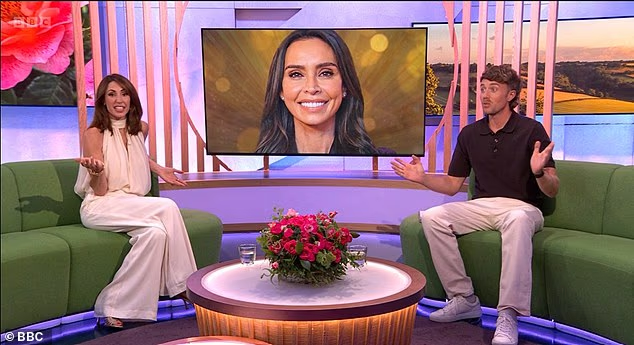
The One Show’s Alex Jones and Roman Kemp are stunned as 20th anniversary special is interrupted by emergency wildfire phone alert with confused hosts mistaking it for a fire alarm


![Who's your favorite girl in Digital Circus? [Money Money Green green meme] #shorts #trend](https://wordupnews.com/wp-content/uploads/2026/02/1771002718_maxresdefault-80x80.jpg)

-

 Fashion13 hours ago
Weekend Open Thread: Ann Taylor
-

 News Videos7 days ago
Can Astrology Help Find Gold and Silver Trends? A Financial Astrology Guide
-

 Business6 days ago
Datadog: Best Of Breed For Multiple Reasons
-
 Business6 days ago
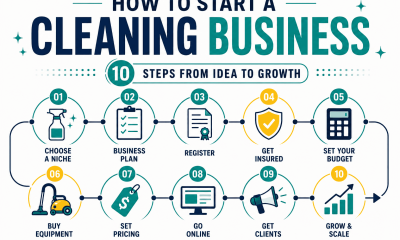
How to Start a Cleaning Business: A Step-by-Step Guide
-

 Business6 days ago
BDC Weekly Review: Private BDC Q2 Numbers Are Strong
-
 Business4 days ago
Oil Price Today (August 11): Crude oil rises to $88 after Trump’s compensation demand dents Hormuz opening. Here’s why
-
 NewsBeat3 days ago
Communication cards help banking customers access services or report scams
-
 Fashion6 days ago
Amazon Sundays: Closet Care Before Fall
-
 Business6 days ago
5 Things You Must Know About Jorge Messi, the Father and Longtime Agent Who Shaped Lionel Messi’s Career
-
 Politics7 days ago
Be quiet, Miriam! – spiked
-

 Politics5 days ago
Ben-Gvir’s crocodile project halted but abuses at Ketziot Prison continue
-

 Business7 days ago
Mutual Fund Manager Scoops Up Beaten-Down Stocks
-
 Crypto World4 days ago
Why Did Nvidia Stock Fall on Monday Despite a $500 Billion Wall Street AI Deal?
-
 Crypto World4 days ago
Revolut wins French banking licence, creates second EU banking hub
-
 Politics6 days ago
The Church of England’s ruinous reparations racket
-

 Crypto World7 days ago
Bitcoin ETFs draw $853.5M in five-day inflow streak
-
 Entertainment6 days ago
Will Ferrell’s New Netflix Series Just Became One of the Streamer’s Biggest Hits of 2026
-

 Politics5 days ago
Saudi Arabia used 86% of missile stockpile defending Iran attacks
-
 Politics7 days ago
Calls to permanently pedestrianise central Belfast following festival success
-

 Crypto World7 days ago
A Deep Dive Into One Of The Most Significant Hacks In Recent Memory
You must be logged in to post a comment Login