

Politics
Politics Home Article | The disproportionate benefits of backing the Port of Dover

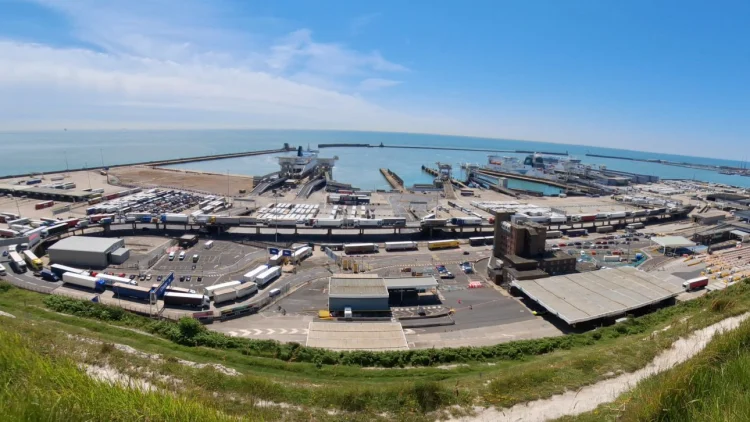

Handling more than £144bn of trade annually, the Port of Dover is “probably the single most economically consequential piece of UK national infrastructure” says CEO Doug Bannister
From enabling the fast transit of food and medicines across the Channel to ensuring that manufacturers receive critical “just in time” car parts, the Port of Dover impacts all our lives on a daily basis.
“It’s the most efficient and reliable route for conducting that trade,” says Doug Bannister, who has been CEO of the Port of Dover since 2019. “It’s a joy and a privilege but it’s also an incredible responsibility for all of us who work here to make certain that this iconic, world-class gateway operates seamlessly for the benefit of everyone.
“Because of its scale and the implications of that scale to the economy, society and the prosperity of the nation, it is probably the single most economically consequential piece of UK national infrastructure.”
Founded by Royal Charter in 1606, the Port of Dover is the UK’s busiest international ferry port, providing a fast, efficient and sustainable connection to mainland Europe. More than 2 million freight vehicles pass through its gates annually – substantially more than any other port in the country.
The Port operates for 364 days of the year, welcoming around 10 million passengers and handling more than £144bn of trade annually. A third of all trade in goods between the UK and the European Union comes through Dover.
As the government seeks to reset and deepen its trading partnership with the EU, the Port of Dover has an essential role to play in helping to deliver long-term economic growth and trade resilience for the UK. The Port is a growth-enabling asset, capable of unlocking trade, jobs, tourism, investment and innovation.
“We reach every corner of the UK so we’re able to open up access to markets that other routes and other supply chains cannot do,” says Bannister.
The future growth of the Port undoubtedly depends on targeted investment in upgrading and improving onsite and offsite infrastructure.
The Port is hugely supportive, for instance, of the Lower Thames Crossing, a new 14-mile A road that will link the A2 in Kent and the M25 in Essex through the longest road tunnel in the UK.
“It is going to provide a step change in how people travel around the nation – and crucially it’s going to provide a much more robust link between the Port of Dover and destinations north of London,” explains Bannister.
He would like the government to commit to the dualling of the last seven miles of the A2 into the Port to ensure the strategic resilience of the route for international travel – a move that could unleash disproportionate benefits for national trade. Another ask is to assist the private sector in investing in “suitable, secure, safe overnight lorry parking” in Kent to serve freight traffic passing through the Port, thereby providing even greater reliability and robustness to the supply chains using the route.
“Taking a system-wide view of these key infrastructure interventions could unlock exponential potential,” he says. “It would be a step change in how trade and travel between the UK and the continent works.”
The need for both frictionless and secure borders is paramount – not only for border compliance but to enhance operational efficiency, customer experience and long-term national competitiveness. The Port has already introduced an innovative digital solution for the EU Entry Exit System (EES), an EU-wide digital border management system for non-EU passengers. A new processing facility has been built at the Port’s Western Docks, currently being used just for coaches and foot passengers, but the Port’s £40m investment is also to be used for tourist cars later this year.
“The efforts that our government is making in improving the relationship with the EU, looking at reducing the administrative burden around things like the SPS [sanitary and phytosanitary] checks and making travel and trade more conducive for the British economy and society are great aims – aims we’ve got an interest in and want to support,” says Bannister.
“From a trade perspective, getting closer to Europe, making these positive moves towards closer working relationships and easing the flow of trade will unlock tremendous potential for the economy here.”
The electrification agenda is another priority. The International Maritime Organisation (IMO), the EU and the UK have all put forward maritime carbon emission tax plans that will significantly affect shipping lines and ultimately consumers through higher prices on the shelves. The EU has already introduced its scheme and the UK will implement theirs from 2028 but the IMO’s global version has been delayed.
However, because of the higher intensity of the Dover routes (130 ferry crossings a day) and Dover’s role in serving the whole of the UK, Bannister says that electrifying the route would have a disproportionately positive impact and keep prices down. He believes that establishing a “green shipping corridor” at Dover is not only in the interest of the UK economy and key supply chains but is also urgent and necessary.
The Port has set clearly staged targets to reach net zero and has reduced its carbon footprint by more than 98 per cent since 2007. One ferry operator already operates hybrid ferries on the 22-mile route across the Channel and the Port is in discussions with another operator on the short straits route between Dover and Calais about transitioning to a fully electric service.
“The key to us is getting an appropriate supply of commercially viable electricity to the ships,” says Bannister. “At the moment we’ve got a supply of eight megawatts of electricity into the Port but to electrify short straits shipping we’d need around 170 megawatts. It’s not clear to us when the grid will be able to supply that degree of electricity to us at a price that would be economical to use.”
Despite the challenges it is clear that getting the right supportive policy framework in place for the Port is crucial.
“I have a greater sense that the government is looking more favourably towards Dover being the jewel in the crown around supply chain, trade and travel resilience,” says Bannister.
“The future for the business conducted through the Port is bright. The moves that our government is making to create a closer relationship with the EU unlock vast possibilities and the investments into key infrastructure will have a profound effect on supply chains and travel.
“Driving carbon out of travel is hugely exciting for efficiency and productivity – and, of course, the impact on climate. And then finally, we’re walking into a whole new chapter with the use of digital and technology and artificial intelligence. The Port of Dover is just starting to leverage what these profound new tools will be able to offer to us and, by implication the nation as a whole, and that is exciting.”

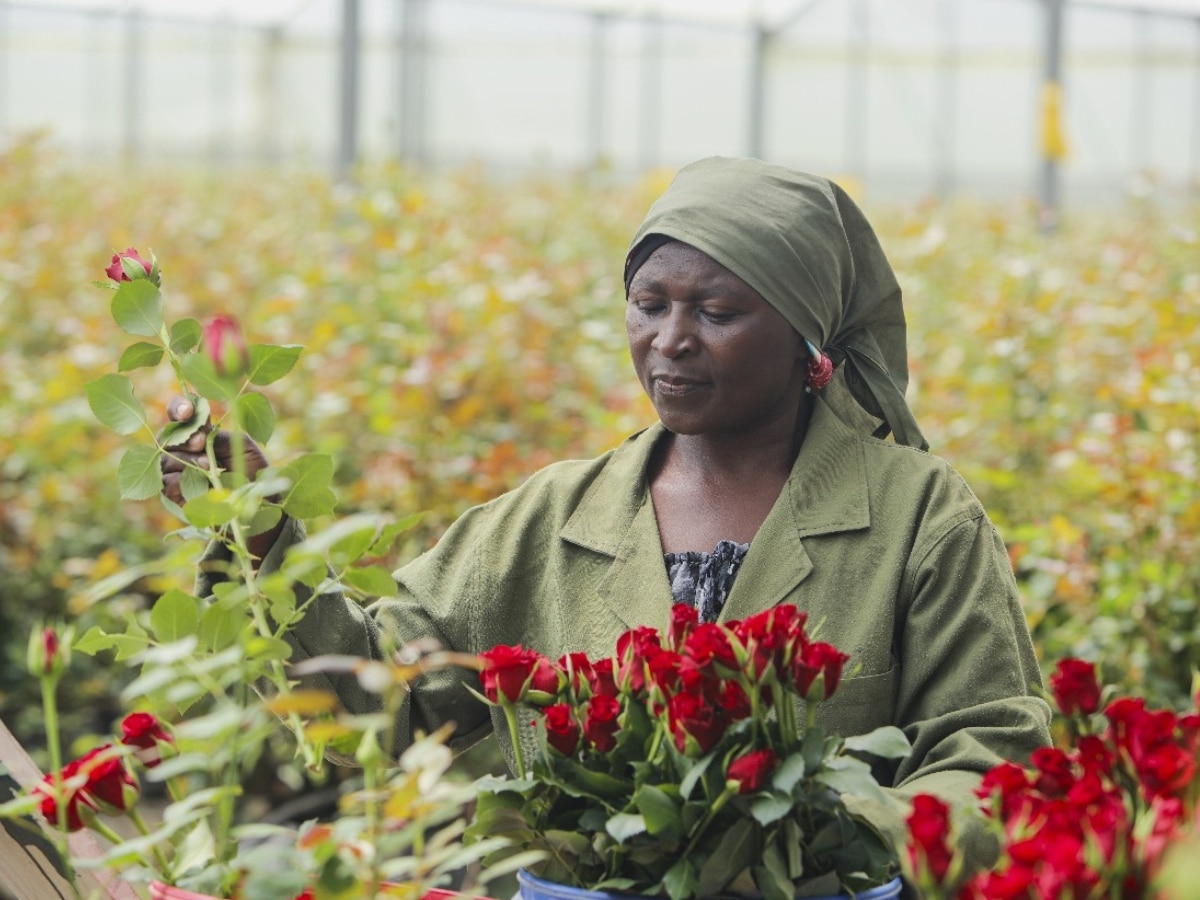
Ahead of Mother’s Day (Sunday 15 March), the Fairtrade Foundation commissioned a new Kantar survey. It reveals only 4% of UK adults are aware that most of the flowers sold at this time of year come from East Africa (mainly Kenya and Ethiopia). Over 80% of flowers sold in the UK are imports, with around half grown in East Africa, 12% in the Netherlands and 9% in Colombia.
Flowers remain one of the UK’s favourite Mother’s Day gifts. 39% of people plan to buy them this year, rising to 70% of 25-34 year olds and 61% of 16-24 year olds. However, the survey highlights a striking lack of awareness of the people and places behind the stems.
Flower growers’ working conditions
Many flower workers in Kenya, Ethiopia, Colombia and Ecuador – most of them women – face low pay, long hours, unsafe working conditions and exposure to harmful chemicals. On average, flower workers in Kenya earn £2 a day or less.
More than three quarters (76%) of people in the UK aren’t aware that most flower growers working in East Africa earn below the living wage for their work growing the flowers we buy at this time of year.
90% were concerned about the human rights and environmental challenges in the industry, including low pay and exposure to pesticides, faced by flower growers working overseas, and two thirds of people are interested in finding out more about the people who grow their flowers (rising to 88% of 25-34 year olds).
Choosing flowers with the Fairtrade Mark on their packaging means they have grown on Fairtrade-certified farms. These have met strict standards, including rules on health and safety including pesticides and protective equipment.
Up to 70% of workers on flower farms in Kenya are women. On Fairtrade-certified farms, workers – most of them women – benefit from stronger protections and investment in their wellbeing.
At Shalimar Flowers Farm in Naivasha, Kenya, Fairtrade Premium funds have supported leadership training, childcare and skills development. As Rebecca Amoth, who works as a flower grower on the farm, explained:
When I started working here, it was common to hear cases of harassment. Women were afraid to speak up, and even more afraid to dream… Today, more women are stepping into leadership. And when something isn’t right, we speak up.
Rebecca has also been able to access subsidised childcare because of Fairtrade sales – paying just £0.90 a month instead of the £12 charged by private facilities. Fairtrade Premium funds have helped train workers like her to develop new skills and earn additional income to support their families. Rebecca explained:
I’ve paid school fees without stress, and I’m building a permanent home.
Fairtrade flowers
Fairtrade flowers are grown with respect for people and for the planet, making them a good option for those looking to buy flowers this Mother’s Day. 57% of people (60% of women) surveyed agreed, saying that knowing flowers were Fairtrade would make a Mother’s Day gift feel more meaningful. However, over half of UK shoppers (57%) are unaware that Fairtrade flowers are widely available to buy, in supermarkets and online retailers.
Responding to the findings, Marie Rumsby, director of advocacy at the Fairtrade Foundation, said:
Women make up a large proportion of the global flower workforce, yet too many are still in low-paid, insecure and unsafe roles.
This Mother’s Day, we’re urging people to support the women behind our bouquets – by choosing Fairtrade flowers and by signing Fairtrade’s petition to demand business that’s fair to people and planet – these simple acts will help protect the women who grow the blooms we love.
Our research shows UK shoppers care deeply about how their flowers are produced, but they aren’t getting the transparency they deserve. People want to make ethical choices, yet the reality of low pay, long hours and unsafe conditions is too often hidden from view.
Businesses and government must step up to ensure the people behind our flowers are protected and treated with dignity.
Right now, companies can still operate without taking full responsibility for what happens in their supply chains. That’s why Fairtrade is calling for a strong, mandatory human rights and environmental due diligence law – one that ensures workers are safe, paid fairly and able to speak up without fear.
This Mother’s Day, look for the Fairtrade Mark on your flowers to support the people who grow them. And as the government concludes its Responsible Business Conduct Review, we urge ministers to put fairness for farmers and workers at the heart of UK supply chains.
The government is in the process of updating its National Baseline Assessment of progress against the UN Guiding Principles on Business and Human Rights. And it’s due to release the outcome of its Responsible Business Conduct Review later in March. As the government finalises its Review, Fairtrade is urging ministers to introduce a strong, mandatory human rights and environmental due diligence law so companies take responsibility for conditions in their supply chains.
Call for government action
Against this backdrop, the research shows strong public backing for tougher action: 82% of UK adults surveyed believe both the UK government and businesses should do more to prevent human rights abuses and environmental harm in their supply chains.
To amplify the call for government legislation, on Tuesday 10 March a digital van will tour Westminster displaying messages to the minister for trade, Chris Bryant. The messages come from Fairtrade’s CEO, Fairtrade farmers and workers, fair fashion campaigner Venetia La Manna, and the CEO of the Co‑op. They all urge the introduction of a responsible business law (also known as a Human Rights and Environmental Due Diligence law).
Alongside this, Fairtrade supporters are sending around 1,000 postcards directly to the minister to reinforce the message.
In the UK, shoppers can buy Fairtrade flowers online at Arena Flowers and Bloom & Wild, or in supermarkets like Aldi, Asda, Co-op and Lidl.
Emily Pearce, Co-op’s senior sustainable sourcing and international development manager, said:
It’s clear from the research that flowers remain a firm Mother’s Day favourite. At Co-op, we’re proud to be making it easier for our members and customers to choose Fairtrade as the UK’s largest retailer of Fairtrade flowers, sourcing 112.5 million stems last year alone.
We have been supporting Fairtrade for more than 30 years, championed by our passionate members.
We see first-hand the difference it can make and whilst there is still much to do to address unfairness in global food supply chains, we know that through our commitment, our members and customers are contributing to a fairer deal for the farmers and workers producing these beautiful blooms.
The global cut flowers trade is worth over $30bn. Last year in the UK, florists saw a more than fivefold transaction uplift on the Friday before Mother’s Day.
Featured image via the Fairtrade Foundation
I have a treat for you. Clyde Best is a true West Ham legend. He can legitimately be described as Britain’s first star black footballer, and a real role model for the black players that followed him into the professional game in the 1970s and 1980s. He came to this country as a 17 year old from Bermuda in 1968 and played for West Ham from 1969-76, before playing for various teams in the NASL in the USA,
On 25 March, a new documentary will be premiered at Sadlers Wells East in Stratford. It’s called ‘Transforming the Beautiful Game – The Clyde Best Story’. It will have daily showings from 25th-28th March. Sadlers Wells East is the theatre on the right as you walk up to the London Stadium from the station.
After each screening, Clyde Best, Ade Coker and others will join a panel to discuss the documentary and the issues raised.
I’ve seen the documentary and it is absolutely superb. It features many players like Viv Anderson and Ian Wright, who say they couldn’t have had their careers without Clyde.
Last week Clyde came into the LBC studio and I recorded an hour long interview with me for my IAIN DALE ALL TALK podcast. We don’t normally film these, but in this case, I decided we would film it so I could share it with you.
So you can watch above, or if you prefer you can listen on the podcast HERE from 1am on Wednesday 11 March.
And if you want to attend one of the screenings you can buy tickets HERE.
The PR blurb for the docuentary describes it thus…
He was a striker, and at 17, he debuted alongside Sir Geoff Hurst for West Ham United. Despite constant racism, he rose to stardom—playing 218 first-team games and scoring 58 goals over his career. On Easter weekend in 1972, West Ham United became the first team ever to start three Black players in one game, making English League history: Clive Charles, Ade Coker, and Clyde Best. His untold story is featured in the new upcoming documentary Transforming the Beautiful Game, a powerful testament to resilience, quiet revolution, and a legacy that reshaped the future of the global game.
The Clyde Best Story features never-before-seen archival footage from historic matches involving the Bermuda National Team, West Ham United, and the NASL, paired with in-depth interviews with football legends including Ian Wright, Geoff Hurst, Viv Anderson, Garth Crooks, Rodney Marsh, Howard Gayle, and Harry Redknapp. Additional voices—Randy Horton, Bobby Barnes, Patrick Horne, Carlton Cole, Paul Davis, Ade Coker, Kasey Keller, and Clyde Best himself—add depth, perspective, and authenticity to the story.


Samurai suit of armour and helmet: Iron, silk, wool, leather, gold and lacquer, 1519 (helmet), 1696 (armour) and 1800s (textiles) | Image by: Charlie J Ercilla / Alamy

5 min read
From elaborate displays of armour to exquisite costumes and art, this spectacular exhibition enabled me to see the full extent of the mastery and enduring influence of my Japanese forebears, the samurai
I was pleasantly surprised when The House magazine asked me to review the samurai exhibition at the British Museum. I had already been meaning to see it, particularly because of my great-grandmother who was Japanese and whose family had been samurai.
In the 1860s my great-grandfather had set up a trading company in Fuzhou (Foochow), a port in southeast China. It was there that he became friends with a Japanese artist who had left his homeland during the Meiji Restoration, and his sister, who later became my great-grandfather’s wife.
The emperor Meiji had ended over 250 years of Tokugawa shogunate rule, returning authority back to the emperor (the restoration is one of several periods covered in this excellent exhibition). This action catapulted Japan out of its isolation and, in an astonishingly tiny number of years, transformed Japan from a closed and feudal state into a modern, industrial and military power. It also ended the authority of the samurai and withdrew their extensive and arbitrary rights.
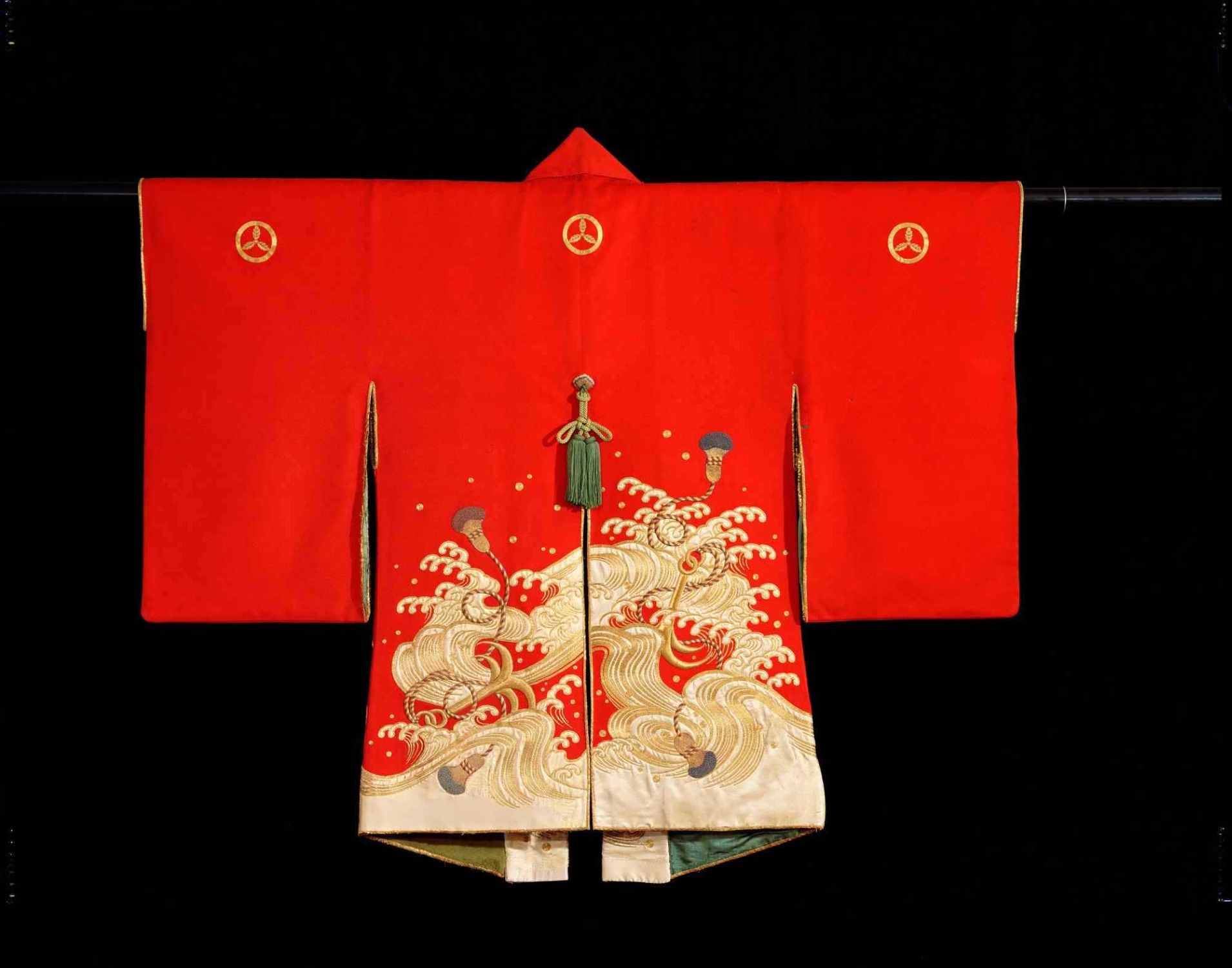
Photo © John Bigelow Taylor
The exhibition charts the development of the samurai from loose collections of warriors into what eventually became a highly structured organisation in the 11th and 12th centuries, loyal to their shūgo (lord), up to their eventual demise in 1868. In fact, in their last 250 years, there were few battles to fight and many of them became more like civil servants, organised into a hierarchy and running different domains for their lord. Samurai had to adhere to their code: courage, righteousness, benevolence, respect, honesty, honour and loyalty.
As I walked around the exhibition, I became aware that the term ‘samurai’ is more commonly used in the West than in Japan. Instead, the usual Japanese term is musha for warrior – or bushi to describe the ruling class.
The pursuit of perfection is apparent in everything they did
The exhibition also carefully pointed out another misunderstanding – that samurai warriors mainly used their swords in battle. Their main weapons and the ones they trained on endlessly were in fact the pike (yari) and the bow and arrow (yumi and ya). The exhibition is filled with such weapons, including their swords (katana).

And contrary to the generally accepted view that woman stayed at home looking after the household, the exhibition reveals how many women were trained in weapons and martial arts. Tomoe Gozen was one such female warrior, an expert in bow and sword in around 1180. There were also a couple of vivid paintings of a female warrior slicing through a soldier.
Yet samurai weren’t just warriors – in fact, in the last 200 years before the Meiji Restoration, the country was pretty stable, with very little warfare. This led to them becoming artists, writers and poets, and the displays of their work were compelling. Perhaps the most illuminating was the painting of the formal procession of the courtesans in Edo (Tokyo), as well as books and paintings about the sexual proclivities of this warrior class.
The museum had also gathered together a fascinating and stunningly elaborate array of Japanese armour. Similarly exquisite, but more understated, were the various costumes and beautiful clothes.
This spectacular exhibition enabled me to see how detailed and precise the culture of the samurai was.
From their armour and paintings to their books and swords, and even a deeply structured tea ceremony, the pursuit of perfection is apparent in everything they did – not just as armoured warriors engaged in the brutal art of war. In fact, this pursuit of perfection led even to the steel in their swords being of probably the highest quality in the world.

My great-grandfather’s brother-in-law, I understand, was one of those samurai who had become a full-time artist having moved to China – and which in turn led to their meeting.
As I wandered round the exhibition, I noticed how many young children were peering intently at the armour on display, even holding an imaginary katana above their heads. After all, much samurai culture has become part of modern western culture. You only have to look at the American film industry to see the extent of its influence. From The Magnificent Seven to Darth Vader’s helmet, cloak and lightsaber, we in the West of all ages remain fascinated by this unique group of people.
That’s why I recommend that anyone who can, should take the time to see this exhibition, and I congratulate the British Museum for putting it on.
Iain Duncan Smith is Conservative MP for Chingford and Woodford Green
Samurai
Curated by: Rosina Buckland and Joe Nickols
Venue: British Museum – until 4 May 2026

Nigel Farage and Robert Jenrick are “cutting fuel prices for the day at a petrol station in Derbyshire.” They’ve branded up a petrol station for it…

Exercise is amazingly good for your brain. Even a 10-minute walk might help to improve your mood, focus, and reaction time; 150 minutes of activity a week could keep your mind younger for longer.
A new paper published in Brain Research has suggested that short bursts of exercise could increase people’s brain-derived neurotrophic factor (BDNF), linked to the health and growth of brain cells.
BDNF has been described as a “fertiliser for the brain”.
15 minutes made a lot of difference to unfit participants
In this research, the scientists took participants (aged 18-55) who weren’t physically active and asked them to take part in a 12-week programme with short cycling sessions, three times a week.
They looked at factors like the participants’ VO2 max (or their ability to use oxygen efficiently during exercise) and BDNF, both before and after the 12-week scheme.
They also completed tasks which were designed to test their attention, reaction times and memory.
And scientists looked at the activity in their prefrontal cortex, which is linked to focus, decision-making and impulse control, too.
After their training, the participants’ base-level BDNF was roughly the same as when they started.
But after a 15-minute workout, they saw a higher spike in BDNF than the participants had had when they started. This positively correlated with VO2 improvements, linked to overall aerobic fitness.
These higher BDNF levels brought on by exercise were linked to better focus, attention, and inhibition.
This might help to explain why exercise is so good for our brains
“We’ve known for a while that exercise is good for our brains, but the mechanisms through which this occurs are still being disentangled,” the study’s lead author, Dr Flaminia Ronca, said.
“The most exciting finding from our study is that if we become fitter, our brains benefit even more from a single session of exercise, and this can change in only six weeks.”
An overhaul of the family courts system means that children will be better protected from abusive parents under a new law that MPs are set to debate today at a second reading of the Courts and Tribunals Bill.
Under the new Courts and Tribunals Bill, the government will revoke the law that judged a child should have contact with both parents, which campaigners argued has put the rights of abusive parents over a child’s safety.
The move follows a decade-long campaign by Claire Throssell MBE, whose two sons — Jack, 12, and Paul, 9 — were both killed by their father despite her warnings he was a danger to them. She has since campaigned to prevent unsafe child contact with dangerous perpetrators of domestic abuse.

The Women’s Aid ambassador said:
For a decade, I have been campaigning with Women’s Aid to change the family courts system to make sure that no child is ever again placed at risk of further harm from abusive parents.
Seeing that the presumption of parental contact will finally be repealed, and in the memory of my sons, Jack and Paul, is deeply meaningful.
No child should have to hold out a hand for help in darkness, saying that they were hurt by someone who was meant to protect them. No parents should have to hold their children as they die from the abuse of a perpetrator, as I did 11 years ago.
Family courts dismantle ‘pro-contact’ culture
The Victims’ Commissioner for England and Wales, Claire Waxman OBE, paid tribute to Throssell’s “extraordinary bravery and determination in the face of unimaginable grief and pain”.
She welcomed the government’s landmark decision which marks a decisive shift away from a pro-contact culture in family courts that has historically placed children at risk of harm from abusive parents, Waxman explained.
She said:
[Throssell’s] success in removing this dangerous presumption from family law is a vital step in dismantling the dangerous ‘pro-contact’ culture that is so deep-rooted in our courts.
This is a hard-won victory for Claire, but more importantly, it is a lasting legacy for Jack and Paul — ensuring a new era of protection and justice for every woman and child seeking safety from abuse.
The presumption of parental involvement was introduced into the Children Act 1989 to help ensure children could maintain a relationship with both parents after separation.
However, evidence shows the current process can leave children at risk of harm from abusive parents.
The current law contains safeguards that allow involvement to be restricted where it harms a child’s welfare, but repealing this provision is what campaigners have advocated for.
Featured image via Unsplash/Suzi Kim

Over 100 Labour MPs have co-signed a letter to the CEO of Travelodge to request a meeting to discuss a sexual assault that occurred in the hotel chain. According to the letter, a woman was sexually assaulted after making a solo booking at the hotel – only for staff to give her attacker a key to her room. The perpetrator of the sexual assault, Kyran Smith, told staff he was her boyfriend and needed another key card. Despite not being present on the booking, the hotel gave him that key which enabled his abuse.
Smith has since been convicted and sentenced to 7.5 years in prison. Nevertheless, the letter addressing this serious incident also refers to a woeful response from Travelodge in light of their security error was to offer a measly £30 compensation to the victim.
Travelodge have serious questions to answer
However, as these Labour MPs highlight, the Travelodge played an intrinsic role in enabling this abuse and their remedial response should be far stronger. Once again, corporates have little compassion for ordinary people even whilst they play a hand in their very real trauma.
A woman was sexually assaulted in a Travelodge. Staff gave her attacker the key to her room after he pretended to be her boyfriend. She was offered £30 in compensation. Appalling.
Along with 100 Labour colleagues, I’ve written to Travelodge’s CEO & asked to meet. pic.twitter.com/1pxjVqZvn3
— Anneliese Midgley MP (@anneliese_midge) March 8, 2026
This letter paints an appalling image of this corporate hotel company. It details how the abuse was able to have taken place, and highlights how little safeguarding is present for women, or frankly anyone, staying at Travelodge’s across the country. Apparently, despite the victim of assault having made a solo booking, the hotel staff didn’t think it was appropriate to double-check the abusive man’s claim by speaking directly to the guest. No, a man walking in and laying claim to her is enough to invade her privacy without question, according to shady-as-fuck Travelodge.
The MPs listed four areas of focused discussion:
We would also welcome the opportunity to discuss:
- Travelodge’s security policies and procedures relating to providing a key card and/or room number to someone not named on a booking
- Travelodge’s safeguarding training processes
- Any training relating to Violence Against Women and Girls that Travelodge provides for staff
- Changes that Travelodge will make to the above to ensure the safety of women staying at your hotel chain
I’m a signatory.
This case is sickening. My thoughts are with the victim following this sexual assault.
We need urgent answers from @TravelodgeUK who did not take VAWG seriously.
What are their security procedures? How do we stop this happening again? https://t.co/kCE2ImnOmP
— Dawn Butler ✊🏾💙 (@DawnButlerBrent) March 9, 2026
‘We want to apologise to the victim’
Travelodge have said that they recognise the £30 compensation offer was ‘inappropriate’. Since, they have told the BBC:
The safety and security of our guests is our priority and we were deeply concerned to hear of this distressing incident and our sympathies are with the victim.
We want to apologise to the victim for the way this incident has been handled.
Travelodge adopts industry standard security procedures which were followed at the time of the incident in 2022.
We will carry out a full review of our room security policies to learn from this incident and further strengthen our procedures.
We covered the rising fear in women and girls as figures continually rise back in October, pointing out how men are seemingly more emboldened than ever. Discussing this terrifying rise, we wrote:
Domestic abuse is a serious issue, accounting for 54% of rape crimes between April 2024 and March 2025, with the remaining being committed by men over the age of 16. There is also a marginal difference between the likelihood of being attacked by a stranger or an acquaintance, making it a minefield for vulnerable women and girls.
In the last 20 years, sexual offences have increased: from 970 against young girls under-13, and 8,192 against women over 16 to 5,067 and 49,075 respectively. When looking at all rapes, crimes have increased by 511%.
In fact, rape offences doubled between 2014 to 2019, rising from 29,420 to a horrifying 59,999. There is a slight reduction seen in 2020/2021 down to 55,685, during COVID and lockdown periods, before shooting up to 70,031 the following year.
Women have enough to fear without fearing our safety and security in hotels
Privacy and security are human rights and protected by civil law. Nonetheless, women and girls have continually suffered abuse at some point, if not multiple times in their lifetimes. Abusive men have long believed they can do whatever they want to their victims, often getting off on the most invasive and traumatising ways they can do so.
This incident is horrifying and will spark fear in every woman across the country. Equally terrifying is the feeling that other men may see this and get ideas of their own, leaving more women in harm’s way. The fact Travelodge’s security procedure is supposedly ‘industry standard’ suggests this must be levelled across the hotel industry as a whole.
Therefore, Labour MPs are completely right to press this deplorable incident, but they must push further. We hope they push hard against the Travelodge to take action that truly shows they recognise the trauma inflicted by the sexual assault they played an essential role in making possible. As a woman myself, I know that I won’t feel safe until I hear all hotels have safeguarded against this life-changing risk of abuse.
Frankly, I’d have thought something as egregious as this could not be possible in the first place. More fool me, I guess.
Featured image via the Canary

The stars of Heated Rivalry are calling out toxicity within the show’s fan community.
On Monday evening, leading man Hudson Williams – who portrays Shane Hollander in the Canadian sports romance – had a message for viewers who have been posting “bigoted comments of any kind” in an attempt to put cast members or characters down.
“Don’t call yourself a fan if you share racist/homophobic/biphobic/misogynistic/ageist/ableist/parasocial/bigoted comments of any kind,” he told his Instagram followers. “None of us need your hateful ‘love’.”
Hudson added: “We all respect and support and love each other and are on the same side. If you can’t accept that [get the fuck outta here].”
François Arnaud, better known to Heated Rivalry fans for his portrayal of Scott Hunter, also shared the same message at around the same time.

Based on Rachel Reid’s Game Changer romance novels, Heated Rivalry became an international sleeper hit after premiering on the Canadian broadcaster Crave towards the end of 2025.
The six-part series stars Hudson and Connor Storrie as its central couple, playing hockey stars Shane Hollander and Ilya Grigoryevich Rozanov, two rivals who are embroiled in a passionate romance away from the public eye.
Heated Rivalry has gone on to become an unexpected global phenomenon, making household names of its previously-unknown central actors ahead of its UK premiere on Sky and Now back in January.
A second season, unsurprisingly, is already in the works, though fans could be in for a bit of a wait before it arrives.
“This time last year I’d written five of these, and this time this year I’ve written zero of them,” series creator Jacob Tierney told Variety at the end of 2025. “So it’s going to be a little bit later, but it’s still going to be soon.”
Meanwhile, Connor and Hudson have teased a “hotter, wetter, longer” season two, which is expected to begin shooting in the summer before debuting in the spring of 2027.

“Hasslers,” or people who repeatedly “create problems or make life more difficult” for you, can literally age you, a new study published in PNAS found.
Stating that relationships like these are “not rare,” the researchers added that they are “disproportionately experienced by individuals facing greater social and health vulnerabilities, and consequential for ageing”.
And the more of these sorts of relationships, the worse the health outcomes seem to be.
How do “hasslers” affect our health?
This research showed that for every “hassler” in a person’s life, biological ageing sped up by 1.5%, or nine months.
The authors think this could happen because negative interactions chronically strain the body’s hypothalamic-pituitary-adrenal (HPA) axis, which helps to regulate stress hormones like cortisol and adrenaline.
And, they posit, the chronic stress of talking to “hasslers” leads to lasting inflammation, which is linked to ageing if it lasts when the body doesn’t need it.
This could, they say, be an example of allostatic load; a form of “wear and tear” that happens when we try repeatedly to adapt to ongoing stress.
That might be why people with more “hasslers” fared worse, on average, on measures like self-reported health, psychiatric symptoms, epigenetic inflammation scores, and waist-to-hip ratio.
How common are hasslers?
Almost 30% of us have one or more in our lives, the paper stated.
But some people are more likely than others to have “hasslers”.
Who’s most likely to have hasslers?
What types of hasslers are there?
This study looked at kin and nonkin hasslers as well as spouse hasslers.
In this research, only the first two were found to affect participants’ biological ageing.
“Ties characterised by obligation, shared space, or structural interdependence, such as parents, children, coworkers, or roommates, are more likely to be hasslers than voluntary, self-selected ties such as friends, church members, and neighbours,” the paper reads.
Kin hasslers are the most linked to accelerated ageing, while nonkin hasslers seemed to affect mortality-sensitive metrics the most.

Donald Trump has decided to ease oil sanctions after a one-hour call with Vladimir Putin about the Iran war.
The US president announced on Monday that while the US had sanctions on “some countries”, he would “take those sanctions off until the strait [of Hormuz] is up”.
While he did not specify which countries he was referring to, Trump’s declaration came shortly after he had a lengthy chat with the Russian autocrat – who has been trapped under heavy trade sanctions ever since invading Ukraine in 2022.
After the US-Israel strikes on Iran, Tehran retaliated by effectively closing the Strait of Hormuz which carries a fifth of the world’s oil supply.
Oil prices have started to rise as a result and there are fears of a global economic shock.
Only on Sunday, Trump said the soaring cost of oil was a “very small price to pay for peace”.
But on Monday evening, he effectively undid years of united work in the west by easing sanctions around Russia’s oil industry, which fuels its war machine.
It is the world’s second-largest oil exporter and holds the world’s biggest reserves of natural gas.
Doing a deal with the US while it tears the Middle East apart is an eyebrow-raising move from Russia, too.
Tehran has been an ally to Moscow for years while it’s been isolated on the world stage, even providing weapons for Russia to use against Ukraine.
Putin also condemned the death of Iran’s supreme leader, Ayatollah Ali Khamenei, who was killed in the US-Israeli strikes at the start of the war, just over a week ago, as “murder”.
Evidently, Putin has decided to look past that indiscretion so he can benefit from Iran’s decline.
Putin’s foreign affairs adviser Yuri Ushakov said the conversation between Trump and his Russian counterpart was “frank and businesslike”.
He claimed Putin had “voiced a few ideas aimed at a quick political and diplomatic settlement” of the conflict after speaking to Gulf leaders and Iran’s president.
Meanwhile, Trump offered his assessment of the situation “in the context of the ongoing US-Israeli operation”, according to Ushakov.
They had a “specific and useful” exchange of views and discussed Venezuela “in the context of the situation in the global oil market”.
Trump kidnapped Venezuela’s president and Putin’s ally Nicolas Maduro in January and has since sent US companies in to “restore” its oil industry.
Putin also suggested Russia was prepared to supply oil and gas to Europe.
Trump already gave Moscow a boost last week by granting India a temporary waive to purchase some oil from Russia while its usual supply from Iran is disrupted.
The president also touched on Putin’s ongoing war in Ukraine, claiming they spoke about the “never-ending fight” in the “positive call”.
Ukrainian president Volodymyr Zelenskyy said this week that Kyiv is ready for US-backed peace talks with Russia “at any moment.
However, Ukrainian officials have pointed out that the US is now distracted with the conflict in the Middle East right now.
The conflict is also expected to reduce the number of weapons available to Ukraine to defend itself against Russia.

Legend Biotech Corporation 2025 Q4 – Results – Earnings Call Presentation (NASDAQ:LEGN) 2026-03-10

DeFi Insurance Is The Final Frontier Of Onchain Finance

Bob Dylan Is One of Only 2 People To Achieve This Incredible Oscar Feat


-
Business4 days ago
Form 8K Entergy Mississippi LLC For: 6 March
-

 Fashion4 days ago
Weekend Open Thread: Ann Taylor
-

 News Videos1 day ago
10th Algebra | Financial Planning | Question Bank Solution | Board Exam 2026
-

 Crypto World21 hours ago
Paradigm, a16z, Winklevoss Capital, Balaji Srinivasan among investors in ZODL
-

 Tech5 days ago
Bitwarden adds support for passkey login on Windows 11
-
 Sports5 days ago
499 runs and 34 sixes later, India beat England to enter T20 World Cup final | Cricket News
-

 Sports3 days ago
Three share 2-shot lead entering final round in Hong Kong
-

 Sports2 days ago
Braveheart Lakshya downs Lai in epic battle to enter All England Open final | Other Sports News
-

 Business6 days ago
Guthrie Disappearance Enters Fifth Week as Family Visits Memorial
-
 Politics4 days ago
Top Mamdani aide takes progressive project to the UK
-

 NewsBeat5 days ago
Piccadilly Circus just unveiled ‘London’s newest tourist attraction’ and it only costs 80p to enter
-

 Entertainment3 days ago
Hailey Bieber Poses For Sexy Selfies In New Luscious Lip Thirst Traps
-

 Business2 days ago
Search for Nancy Guthrie Enters 37th Day as FBI Probes Wi-Fi Jammer Theory
-
 NewsBeat12 hours ago
Pagazzi Lighting enters administration as 70 jobs lost and 11 stores close across Scotland
-

 Tech22 hours ago
Despite challenges, Ireland sixth in EU for board gender diversity
-

 Crypto World6 days ago
New Crypto Mutuum Finance (MUTM) Reports V1 Protocol Progress as Roadmap Enters Phase 3
-

 Tech5 days ago
ACIP To Discuss COVID ‘Vaccine Injuries’ Next Month, Despite That Not Being In Its Purview
-
Entertainment5 days ago
Harry Styles Has ‘Struggled’ to Discuss Liam Payne’s Death
-

 Business17 hours ago
Search Enters 39th Day with FBI Tip Line Developments and No Major Breakthroughs
-
 NewsBeat5 days ago
Good Morning Britain fans delighted as Welsh presenter returns to host ITV show