Politics
Politics Home Article | The illegal gambling market: real risk, real harm


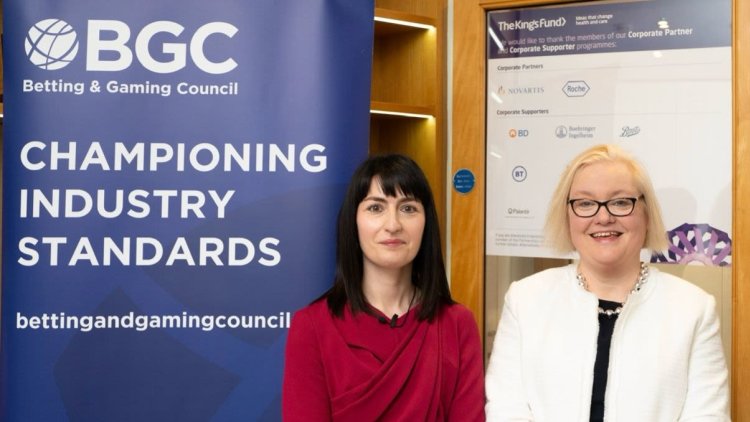
Grainne Hurst, Cheif Executive of the Betting & Gaming Council, and Baroness Twycross, Parliamentary Under Secretary of State and Minister for Gambling
The illegal gambling market was the dominant theme at this year’s Betting and Gaming Council AGM. Industry leaders warned that unlicensed operators are already attracting millions of British gamblers – and that recent tax changes risk accelerating the shift away from the regulated market
The warning at the centre of this year’s Betting and Gaming Council’s (BGC) Annual General Meeting was stark. As speakers repeatedly highlighted, 1.5 million people in Britain are already gambling on unlicensed sites and staking around £10bn a year outside UK regulation.
That concern is only set to intensify in the coming weeks as the Government considers further regulatory changes. In particular, Financial Risk Assessments (FRAs), which would require customers to provide detailed financial information such as bank statements and will only drive more customers towards unlicensed operators.
Chaired by broadcasters Gloria de Piero and Liam Halligan, the event began with a keynote from the Gambling Minister, followed by a discussion with BGC Chief Executive Grainne Hurst. A panel on the illegal market and the Gambling Commission’s assessment of the challenge followed, alongside research, polling and personal testimony from across the industry highlighting the scale of the problem.
The Gambling Minister on the illegal market
Baroness Fiona Twycross, Parliamentary Under Secretary of State and Minister for Gambling, opened proceedings by addressing the tensions in current policy. She acknowledged that the gambling duty changes announced in November’s Budget were “extremely challenging for the sector, particularly for online operators,” and that they would “significantly affect business decisions and staff.” She defended the government’s position, arguing the changes were necessary to support public finances and would raise over a billion pounds a year for the Treasury.
The minister was clear: “Illegal gambling causes harm to vulnerable consumers,” she said, adding that it also damages the regulated sector. She announced an additional £26m for the Gambling Commission over the next three years and publicly confirmed the establishment of an Illegal Gambling Taskforce. This will bring together major companies including Google, Mastercard, TikTok and Visa alongside law enforcement and advertising bodies with a focus on illegal payments, advertising and cross-agency collaboration. She also announced a forthcoming consultation on the banning of unlicensed sport sponsorships, including in the Premier League. For many in the industry, this welcome action on enforcement will sit uneasily alongside tax policy that they believe is actively driving consumers toward the harmful black market.
“We are at a crossroads”


Betting and Gaming Council, with hosts
Liam Halligan and Gloria de Piero
BGC Chief Executive Grainne spoke openly about the sector’s strengths and the challenges it faces. “Betting and gaming is a genuinely enjoyable experience for 22 million people every month in the UK, and the vast majority do so safely and responsibly,” she said. “That often gets lost or forgotten by anti-gambling campaigners, by some politicians, by some in the media – but it is a great part of our British culture.” The regulated sector supports over 109,000 jobs, contributes £6.8bn to the UK economy and currently generates £4bn in tax revenue each year.
More than one in five adults aged 18 to 24 who bet are already using unsafe, unregulated sites – including via secure messaging apps – and illegal operators aggressively target those who have self-excluded from the regulated market.
By contrast, problem gambling rates stand at just 0.7 per cent according to recent NHS surveys – the result, the BGC argues, of a regulatory system that has worked. New polling by Anacta found that 52 per cent of people who bet believe higher taxes will make punters more likely to use unlicensed sites. 66 per cent say the increases will make betting and gaming less enjoyable, and 57 per cent already think UK gambling is too heavily regulated.
A key concern is the ease of access to illegal sites. “My eight-year-old son could go onto Google and type in ‘non-GamStop casino’ and pages and pages of it would come up – which it shouldn’t,” Hurst said. “Most of these sites look professional and trustworthy, just like any of our members’ sites. It’s hard to tell the difference.” The BGC simultaneously launched its ‘Spot The Black Market‘ interactive game, designed to help identify which sites are legitimate and which are unlicensed.
Hurst reserved her sharpest words for the government’s own Budget documentation, which she said admitted its policies would drive an additional £500m into the black market. “I find it incredulous that the government actually admitted their policies will drive another £500m into the black market – but that seems to be a price worth paying. What world are we living in where that is a sensible, coherent policy?” The regulated sector, she argued, has reached a critical point: “It’s a bit like a Jenga tower – you build it up, build it up, and at some point it’s not going to last.”
Shadow Secretary of State warns of regulatory threat
In a video message pre-recorded for the AGM, Shadow Secretary of State for Culture, Media and Sport Nigel Huddleston MP was unambiguous. “Britain should be proud of having one of the most robust regulated gambling markets in the world,” he said. “But that balance is now under threat.” Pointing to shop closures and sponsorship decisions already being reconsidered, he warned: “If you make the regulated market less competitive – if you squeeze it too hard through tax and regulation at the same time – then you do not eliminate gambling. You displace it towards the harmful, illegal black market. That’s not a theory. It’s reality.” His message was direct: “Tax policy is not separate from consumer safety – it is part of it.”
Getting the balance right
The morning’s panel, ‘Getting the Balance Right: Tax, Regulation and the Growth of the Illegal Market’, brought together Chris Sanger of EY, Ian Angus of the Gambling Commission, Simon Zinger of Entain, David Williams of Rank Group, and Jordan Lea, CEO of Deal Me Out.


Williams, Simon Zinger, Liam Halligan &
Gloria De Piero
Jordan Lea, who spent years caught in the illegal market before channelling that experience into consumer advocacy, pointed to research from Yield Sec which he said suggests that the black market may now account for 10 to 12 per cent of all gambling activity in Britain – up from just 0.5 per cent five years ago. “I’m extremely concerned that the tax is not a migration – it’s a flood,” he said. His personal experience of being targeted by illegal sites after signing up to GamStop “time after time” put a human face to the statistics.
Ian Angus of the Gambling Commission was direct: “The threat of the illegal market is higher than it was previously. We do expect illegal gambling to grow as a result of the Budget.” On the limits of the £26m, he was frank: “Irrespective of how much money is thrown at us, we can’t do it alone. The tech firms have to do more.”
David Williams of Rank Group argued the black market is a symptom of policy going wrong. With the annualised effect of the increase to 40 per cent Remote Gaming Duty adding £46m to Rank’s cost base – against a digital operating profit of £33m – he was stark: “No business can withstand that without significant changes. And those changes involve people.” Simon Zinger of Entain warned the £26m was “a drop in the ocean” against illegal operators with “massive spending power,” while Chris Sanger of EY pointed to Poland, where every one percentage point tax increase led to a 1.74 per cent reduction in the regulated market. “We’re about to go through a 19 per cent change. That is a huge shift.”
By the end of the discussion, the consensus was clear across the panel: urgent, coordinated action is needed to prevent the illegal market from continuing to grow.
Gambling Commission outlines next steps
Tim Miller, Executive Director of Research and Policy at the Gambling Commission, delivered a speech that was both honest about the challenge and forward-looking. “Britain has one of the most diverse, competitive and successful gambling markets in the world, while also being one of the most strongly regulated,” he said. “When I talk to international regulatory colleagues, they speak enviously about what’s been built here since the 2005 Act. We need to protect it.”
Miller called for action on both supply and demand: “If we are to really have an impact on the illegal market, we also need to look at the demand side,” Miller said. “What actually encourages people to move to the illegal market, and what can be done to keep them in the licensed market.” He announced that the Commission would begin exploring regulated crypto assets as a consumer payment option for licensed gambling, responding to evidence that cryptocurrency is one of the primary routes driving gamblers to illegal sites, and called for a period of regulatory stability: “Getting into a position where we are on an endless treadmill with reform will not take us any further forward.”
Closing remarks
In her closing address, Grainne Hurst was firm. “The illegal black market is the single biggest threat facing our industry, and that threat is growing in scale, in sophistication and in harm. Unless we all act collectively and decisively, the harmful illegal market will be the only winner.”
The BGC’s response is a five-pillar strategy – strengthening the evidence base, deepening understanding of illegal networks, exposing the organisations behind illegal sites, supporting enforcement and raising public awareness. “We will not be passive observers while criminals undermine the sector,” Hurst concluded. “We will lead, we will support enforcement, and we will hold others to account if they fail to act. This is truly a fight that we cannot afford to lose – and it’s one that the BGC is determined to win.”
For more information about the Betting and Gaming Council, visit www.bettingandgamingcouncil.com.

You must be logged in to post a comment Login