Politics
Politics Home Article | The SSEP could be the key to reindustrialising Britain’s heartlands


Credit: Adobe Stock


Britain is about to make some of the biggest infrastructure decisions of a generation. The Government should harness the opportunity do more than deliver clean, secure energy.
The Strategic Spatial Energy Plan (SSEP), which will set out where and when the country needs new energy generation and infrastructure through to 2050, presents a significant opportunity to Andy Burnham’s government.
The National Energy System Operator has submitted six potential pathways to government. Ministers will now select a preferred pathway, before consulting on it in early 2027. The immediate focus will understandably be to decide how much offshore wind, nuclear, solar, storage and other technologies Britain needs, and where they should be connected to the grid.
The question for Burnham’s government is how much of the economic value created by this enormous investment will Britain capture?
Given the significant pressures on energy bills across the UK and Burnham’s determination to concentrate on cost of living support, there will no doubt be a temptation for Ministers to prioritise the lowest cost pathway, focussed in southern areas where demand is highest and utilising cheaper imported technology.
This would be a false economy. Hundreds of billions of pounds will be spent in transforming the energy system, representing an extraordinary industrial opportunity. It can create demand for British manufacturing, engineering, innovation, port developments and skills.
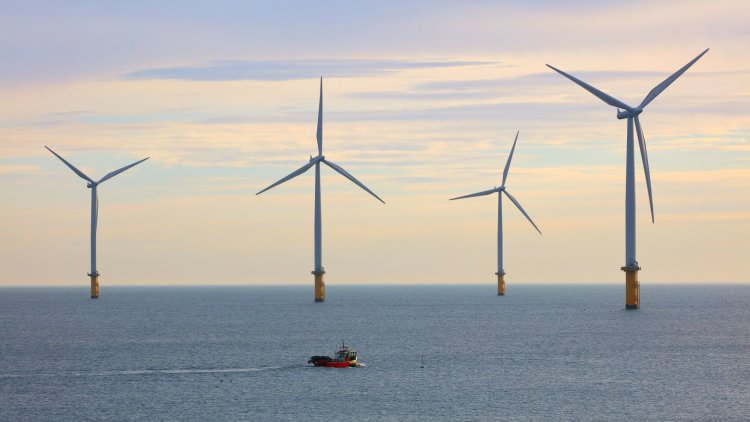
Offshore wind demonstrates both the opportunity and the challenge.
Government already recognises the sector’s potential to support manufacturing, ports and jobs; the latest offshore wind auction was associated with £3.4bn of private investment and up to 7,000 jobs.
The long term nature of the SSEP can give companies the confidence to invest in factories, ports, research and skills if they have reassurance that there will be a sufficiently large and predictable market for their products. The SSEP can help provide that certainty.
This is where energy policy and industrial policy need to become much more closely connected.
The government’s Industrial Strategy identifies clean energy industries as a growth opportunity, and the SSEP should become one of the mechanisms through which that ambition is delivered. That means thinking strategically about the energy sector in terms of industrial clusters, supply-chain capacity and regional growth.
It also means recognising that innovation is not simply about developing new technology. It is about creating the conditions for companies to commercialise it at scale.
For floating wind, for example, Britain has an opportunity to build capability in areas such as foundations, mooring systems and dynamic cables. This activity can be spurred in areas such as Aberdeen, Northumberland and South Wales that desperately need industrial revitalisation. But that opportunity will not materialise automatically. It requires a credible pipeline of deployment and a policy environment that rewards investment in domestic capability.
The SSEP therefore needs to be judged against more than the traditional energy metrics of cost, carbon and security. Its success should also be measured by how much industrial capability it creates and how much economic value is captured.
If the government gets this right, the energy transition can become something more than a route to net zero. It can catalyse multi-generational reindustrialisation across Britain’s heartlands.

You must be logged in to post a comment Login