Politics
Politics Home Article | The UK’s critical whole energy system


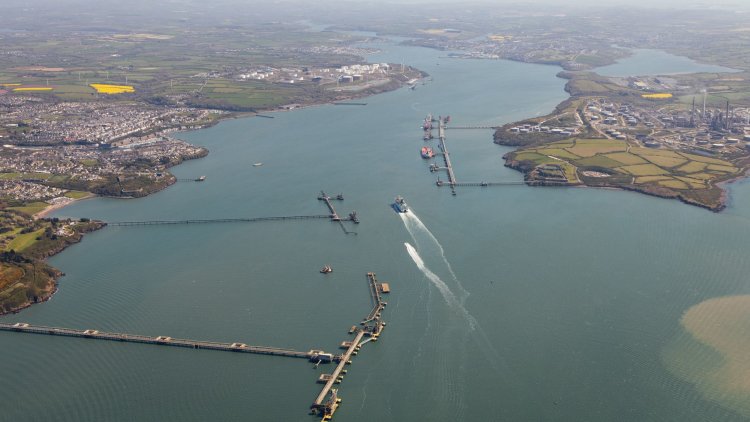
Milford Haven Waterway, Wales


Tom Sawyer, CEO
| Port of Milford Haven
Energy security concerns amid global instability underline the urgent need for a whole-system approach – integrating oil and gas, hydrogen and renewables – to deliver a resilient future
Recent instability in the Middle East has served as a stark reminder that energy security cannot be taken for granted.
Against this backdrop, the UK stands at a decisive point.
The challenge is no longer simply to decarbonise individual sectors or maintain strong domestic and international supply chains, but to integrate them.
A whole-system approach – spanning oil and gas, hydrogen and renewables – must guide UK and Welsh government policy in the short to medium term if we are to deliver energy security, affordable prices and net-zero simultaneously.
Oil and gas remain foundational.
They underpin industrial activity, provide system flexibility and support thousands of skilled, well-paid jobs – including around 5,000 Welsh jobs linked to the Milford Haven Waterway alone.
In the near term, domestic gas production from the North Sea continues to play an important role in shielding the UK from external shocks.
Along the Haven, increased import capacity further strengthens gas resilience for both Britain and Europe.
At the same time, UK oil refining capacity is under significant pressure, following the closure of two British refineries in the past year alone.
However, the infrastructure, workforce and capabilities built around these sectors must now be harnessed to support future resilience.
Hydrogen is central to that future.
The UK government’s target of up to 10 GW of low-carbon hydrogen production by 2030 reflects its strategic importance.
Hydrogen offers a bridge between existing energy systems and future demand, particularly for hard-to-abate sectors such as heavy industry and transport.
Along the Haven, major projects led by MorGen Energy and RWE are progressing and could deliver up to a fifth of the national target.
At the same time, renewable electricity must continue to scale.
For South Wales and the South East of England, floating offshore wind (FLOW) will form the backbone of a future power system, while solar, marine energy and other emerging technologies will diversify supply and strengthen resilience.
Projects such as the Dragon Renewable Energy Park demonstrate the value of this multifaceted approach.
The importance of energy and carbon storage cannot be underestimated.
With the right regulatory and policy support, the Milford Haven CO2 Project can provide a vital pillar of Wales’ and the UK’s industrial future.
This is where a whole-system approach becomes critical.
Electricity generation, hydrogen production, fuel distribution, carbon capture and energy storage must be developed in tandem.
Ports such as Milford Haven sit at the heart of this integration.
As energy hubs, they connect offshore generation with onshore demand, enable fuel diversity, and provide the infrastructure needed for FLOW, hydrogen and CO2 shipping.
The UK government’s ambition to become a clean energy superpower recognises the need for a coordinated, system-wide transition.
But for success, policy delivery must go further.
We need accelerated grid capacity and stronger policy support for CO2 shipping to unlock significant infrastructure investment – in excess of £1bn on the Haven alone.
This will support regions like ours, where multiple technologies can co-exist, and our skilled workforce, natural assets and existing infrastructure can scale effectively.
The prize is significant.
A fully integrated energy system will enhance national resilience, support high-value jobs, and provide a more balanced and secure energy mix.
Oil and gas, hydrogen, renewables and storage all have a role to play – but only if they are deployed as part of a coherent strategy that recognises their interdependencies.
In the short to medium term, the task is clear: build on existing strengths while investing in future capability.
That means supporting oil and gas, accelerating hydrogen and storage deployment, and scaling renewables – all within a coherent, whole-system framework.
Energy security and energy resilience are not competing priorities; they are one and the same.

You must be logged in to post a comment Login