Politics
Politics Home Article | UK “Stands Ready” To Support Emergency International Energy Reserves


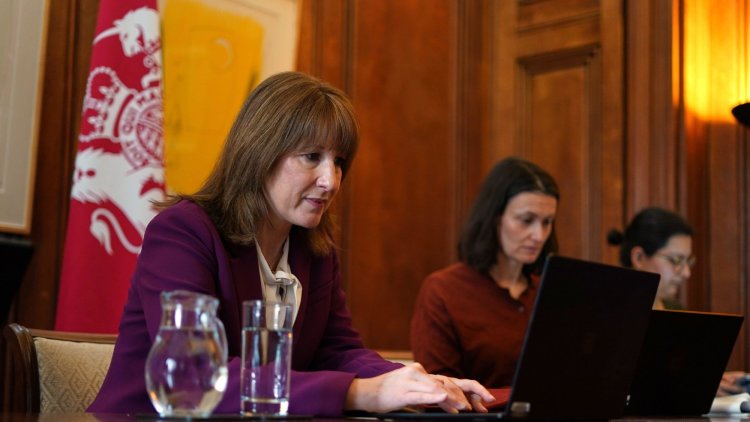
Chancellor Rachel Reeves joined a virtual meeting with G7 finance ministers to discuss the situation in the Middle East (Alamy)


3 min read
Chancellor Rachel Reeves has confirmed the UK is ready to back a coordinated release of International Energy Agency oil reserves to help stabilise fuel prices, as the Middle East conflict continues.
Reeves gave a statement to the House of Commons after meeting with G7 finance ministers on Monday afternoon, as part of wider efforts to coordinate an international economic response to the Iran conflict’s impact on global energy security and markets.
The Chancellor said that in the meeting, she emphasised the need for “immediate de-escalation” of the conflict and a return to the diplomatic process.
She sought to reassure the public as the UK braces for further energy price shocks and market volatility. Oil prices have spiked in the Middle East, and oil shipping routes have been disrupted as the conflict between Iran, the US and Israel continues.
“I know that families and businesses will be concerned about the impact of this conflict on them,” Reeves said, before confirming that the UK is ready to support a coordinated release of collective International Energy Agency oil reserves.
Reeves said she has explicitly asked the Competition and Markets Authority (CMA) to be vigilant across energy prices, including essentials like road fuel and heating oil, stressing she will “not tolerate any company exploiting the current crisis to make excess benefits at consumers’ expense”.
The move is intended to reassure motorists and households that the government is monitoring supply‑chain pricing and looking to prevent opportunistic price gouging at a time of heightened energy insecurity.
The Chancellor also announced that the Treasury has approved Ministry of Defence (MoD) access to the Treasury’s special reserve to fund additional military capabilities in the Middle East.
She said this would ensure that “no net additional costs of these operations will be funded by the MoD, but instead will be funded by the Treasury”.
Reeves said the UK will also play its part as the global hub of maritime insurance, and is due to meet with the chair of Lloyds of London later on Monday to discuss how to support the continued passage of maritime trade.
Highlighting the importance of boosting domestic energy resilience, Reeves confirmed that the government will publish its response “in the coming days” to the Fingleton review of nuclear regulation, a key step she said will help “build nuclear power more quickly”.
Reeves said inflation was likely to rise in the coming months, but financial markets were continuing to function normally. In response to her statement, Shadow Chancellor Mel Stride said: “These are very serious and concerning times, and the developments in the Middle East are already having profound consequences for our economy.
“Oil prices have surged above $100 a barrel for the first time since the 2022 energy crisis. That alone is enough to have huge knock-on effects for households and businesses.”
He accused the government of making the economy “weaker” and pointed out that inflation remains elevated.
“That is far from ideal, given the threat of a significant further spike in energy prices,” he continued.
“And of course, extraordinarily, the Chancellor has just now reconfirmed that the government will press ahead with a rise in fuel duty later this year, and borrowing is running higher than was forecast when the government took office.”
