Politics
Politics Home Article | Vetting System “Needs Improvement”, Senior Green Admits


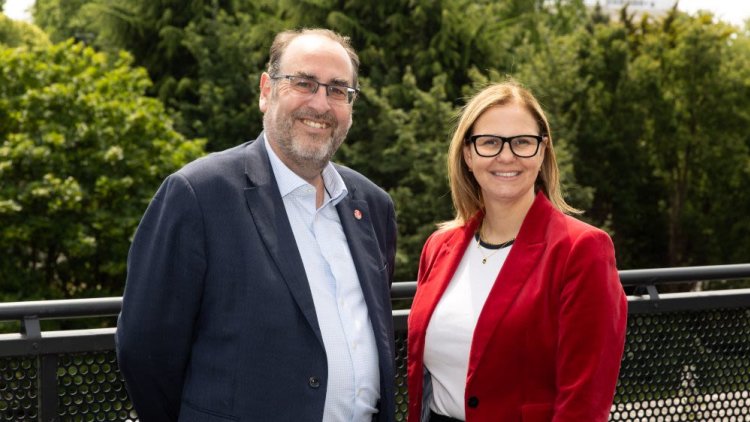
Mayor Helen Godwin has appointed Green councillor Tony Dyer as her deputy (West of England Mayoral Combined Authority/Freia Turland)
6 min read
The Green Party’s vetting system “needs improvement”, a party leader has told PoliticsHome, amid reports of anti-semitism within Zack Polanski’s ranks.
As speculation over Keir Starmer’s future raged in Westminster last week, PoliticsHome travelled to Bristol to speak with West of England Labour mayor Helen Godwin, and her newly-appointed second Tony Dyer: the first appointment of a Green Party politician as deputy mayor of any combined authority.
On Friday, the Green Party said its former Makerfield by-election candidate, who withdrew from the race hours after he had been announced, had apologised for sharing social media posts which described an attack on ambulances run by a Jewish charity as a “false flag”. Before the news broke, Dyer conceded that the party’s vetting system needed work, citing its large membership and the fact that it had fielded 4,500 candidates.
With the recent local elections reinforcing an increasingly fragmented landscape, partnerships between potential rivals such as the one between Dyer and Godwin are likely to increase. Ahead of the local elections, Labour pushed an anti-Green campaign highlighting allegations of antisemitism against councillor candidates. How do the duo still maintain a good working relationship?
Dyer explained, “both parties are as good as each other at dishing out different things” and “unfortunately, it’s just the way electoral politics works sometimes”. However, he believes that their collaboration in the West of England demonstrates “that regardless of the outcome of elections, we are able to work together for the benefit of the region, the city and our residents.”
Godwin added that on a personal level, “WhatsApp is our saviour”, explaining that if something is likely to cause friction between their parties, “we’ll try and get ahead of it by talking to each other first”. Dyer’s appointment followed Godwin appointing a Liberal Democrat deputy mayor in the previous year.
On 7 May, the Greens took control of Hackney, Hastings, Lewisham, Norwich and Waltham Forest. With the party having less experience than others in local authority administration, some have questioned whether there will be a repeat of the Bristol bin scandal, in which Green-run Bristol city council, of which Dyer is leader, proposed a once-a-month bin collection. The idea, proposed as part of a consultation, was later scrapped after intense backlash from residents and opposition parties.
Dyer reflects on this: “The main thing I’ve learned taking over as a Green leader is we were perhaps a little bit naive about some of the things we put into the public domain.”
“We maybe put things into the public domain, possibly too early in the process, before we had eliminated numerous options.”
Dyer told PoliticsHome that the same bin-scandal hit Bristol council would soon be offering training and support to new Green councils nationwide “to give them the benefit of what we’ve learned and done here in Bristol, how to work with other political parties”.
Speaking to PoliticsHome ahead of the local elections, Green leader Zack Polanski acknowledged that the Greens may face issues when it comes to vetting candidates due to the speed of the party’s growth.
Following the admittance, several cases came to light of candidates making antisemitic comments or posts on social media, with former Green leader Caroline Lucas writing on X that some of the statements were “totally unacceptable and require immediate attention”. Then came the news from Makerfield.
Speaking to PoliticsHome, Dyer said, “the vetting system needs improvement”.
“It’s worth pointing out we had 4,500 candidates, so the number of candidates [that have] actually been identified as potentially posting or being involved in antisemitism is a tiny fraction, but that’s still a fraction too much. Where that has happened, that’s then going through an investigation process by the party.”


Does the Green Party have an antisemitism problem?
Dyer said that all parties, particularly those with large memberships, are “almost certain” to have those joining with a “particular agenda”.
“What we have to be clear about is making sure that we make it clear that that is not acceptable, whether it’s antisemitism or whether it’s Islamophobia or whether it’s racism or anything along those lines, not just the Greens, but all political parties, we have to step on that and and stamp it out and make sort of people aware that’s not what we stand for as a party. We cannot accept it within those we choose to be our representatives or candidates, and we shouldn’t accept from any of our members, either.”
While the Greens had a great night on 7 May, the Labour Party suffered catastrophic losses across the country, including in the party’s heartland of London.
On almost 1,500 Labour councillors losing their seats, Godwin said it was “really really sad”, adding “there’s a message there, and that message is for government”.
In the aftermath of the results, close to 100 Labour MPs publicly said they had lost confidence in Starmer’s leadership of the party, with several ministers later resigning, followed by Health Secretary Wes Streeting.
Godwin does not blame Starmer himself for the loss of councils, but feels “this government has taken too long to get up and running”, adding, “we spent too much time diagnosing and explaining how bad things are and not actually saying here’s what we’re going to do.”
The local elections have also left a fragmented reality across most of the country, especially in cities like Birmingham. Godwin told PoliticsHome that working cross-party is something that has been the reality in her part of the world for several years, with Labour, the Liberal Democrats and the Greens all working together.
“What’s interesting for me now as a mayor is seeing for the first time, some of my colleagues up in the North are going to have different party makeup within their combined authorities.”
In the West of England combined authority, Godwin explained, there are no Labour-run councils: “So we have to do things quite differently. So we’re quite keen to demonstrate how that can be done, and share our experience with others, and it does involve putting sometimes party politics aside and just genuine placemaking.”
Dyer also believes that a multi-party political system and working cross-party will give more reassurance about long-term change and policies are less likely to just follow political cycles.

You must be logged in to post a comment Login