Politics
Politics Home Article | What Is The Iran War Doing To UK Energy Bills?


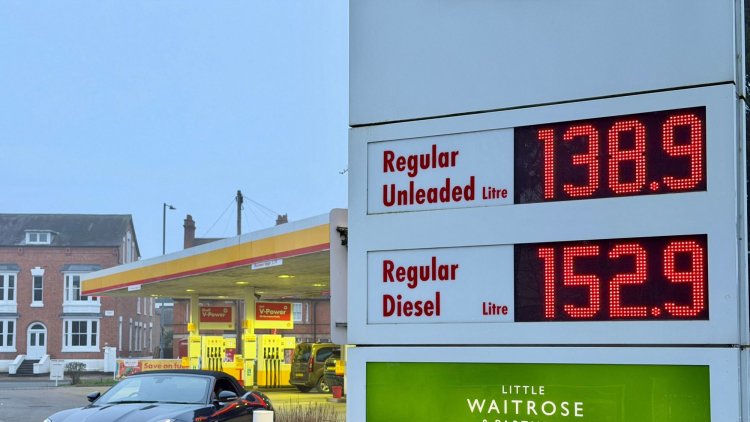
Prices at the pump in the UK have already started to rise following the US-Israeli attacks on Iran. (Alamy)


5 min read
The conflict in Iran has triggered concern about an energy bill shock in the UK. How likely is a spike in prices? And what could the government do to mitigate it?
On Monday, US President Donald Trump claimed that the US and Israeli war with Iran was “very complete, pretty much”. Speaking to CBS News, he said: “They[Iran] have no navy, no communications, they’ve got no air force.”
His comments came amid growing warnings, both in the US and around the world, about the impact the conflict was having on global energy prices.
Despite Trump’s claim, the conflict in the Middle East remains ongoing.
Keir Starmer has warned that the UK market is exposed to international shocks, as it was at the onset of Russia’s invasion of Ukraine. Speaking earlier this week, the Prime Minister said, “the longer this [conflict] goes on, the more likely the potential for an impact on our economy, impact into the lives and households of everybody and every business”.
Why is the Iran war impacting energy prices?
Both Iran and Oman control the Strait of Hormuz, a vital shipping lane responsible for around a fifth, or 20 per cent, of the world’s oil supply. A significant amount of the world’s gas supply also passes through the Strait.
Traffic in this crucial shipping lane has fallen sharply since the US and Israel started bombing Iran, with Tehran threatening to attack ships trying to pass through it.
Iran has also conducted strikes on other oil-rich countries in the region it views as allies of the US, including Saudi Arabia and the United Arab Emirates (UAE).
Disruption to these key sources of energy means international prices rise, resulting in reliant countries, which include the UK, having to pay more.
How has it impacted the UK so far?
Oil prices soared to almost $120 USD a barrel at the start of the week, the highest level since Vladimir Putin launched his attack on Ukraine in 2022.
They have since dropped to around $90 USD a barrel, but prices remain high and are expected to be volatile.
In the UK, household energy bills are protected by the Ofgem cap until the end of June, meaning people will not see a change to what they pay for energy in their homes in the short-term. However, if global prices remain high, then the cap could rise from July.
There has been an immediate impact on motorists, though. On Monday, RAC reported that the average diesel price had increased by 9.43p to 151.81p a litre as a result of the conflict in the Middle East, with average petrol prices rising by 4.95p to 137.78p a litre.
Could this be as severe as the Ukraine/Russia spike?
Adam Berman, director of policy at Energy UK, told PoliticsHome that while it “too early to tell” what long-term impact the Iran war will have on energy prices, it is currently “nowhere near the peaks of the energy crisis” triggered by Russia’s invasion of Ukraine.
“That was a different order of magnitude to where we are today, and the [Iran war] crisis would have to carry on for a very sustained period, or perhaps even worse, for that to happen,” said Berman.
“I do think that it’s worth us recognising that we have a long way to go until we are in a similar situation.”
Adam Bell, former government energy adviser and director of policy at Stonehaven Consultancy, agreed that while the country should expect “an uncomfortable bump”, there is currently no reason to believe it will be as bad as the shock resulting from the war in Ukraine.
“We can assume that it will be unpleasant for a while. It might interact with the government’s plans to raise fuel duty, depending on how long it goes on,” said Bell.
“But I find it hard to see it enduring all the way up to September.”
Simon Francis, co-ordinator at the End Fuel Poverty coalition, sought to stress that there is immediate concern for 1.5m UK households that use oil to heat their homes, and which “will have seen energy prices kind of going up pretty much overnight”.
“We’ve had people get in touch with us saying they’ve seen 50 per cent increases… Those households are already struggling.”
He predicted that energy bills “are going to go up fairly significantly” from July once the current price cap expires, and said that ministers must use the time between now and then to work out what their response will be to protect people from higher bills.
What has the government said?
The government argues that the best way to avoid a shock to UK energy prices is to help bring about de-escalation in the Middle East.
However, on Wednesday, Chancellor Rachel Reeves acknowledged that the government may have to step in to protect energy bills, telling the Treasury select committee that “nothing is off the table”.
‘We are looking at a whole range of different scenarios,” she told MPs.
“One reason why any future package, if it were necessary, would be more affordable is that we are now less reliant on international energy price movements than we were before Russia invaded Ukraine, because we have invested more in homegrown, renewable energy.”
She added: “We are looking at targeted support as well as broader measures, but it is just too early to say what is needed.”
In Prime Minister’s Questions today, Starmer suggested that the planned rise in fuel duty in September may not go ahead, saying: “We will keep the situation under review in light of what’s happening in Iran.”
The UK has joined other countries in releasing 400m barrels of oil to the international market as part of a collective bid to boost supply and keep prices down.
