Politics
Politics Home Article | What You Need To Know About The Spring Statement


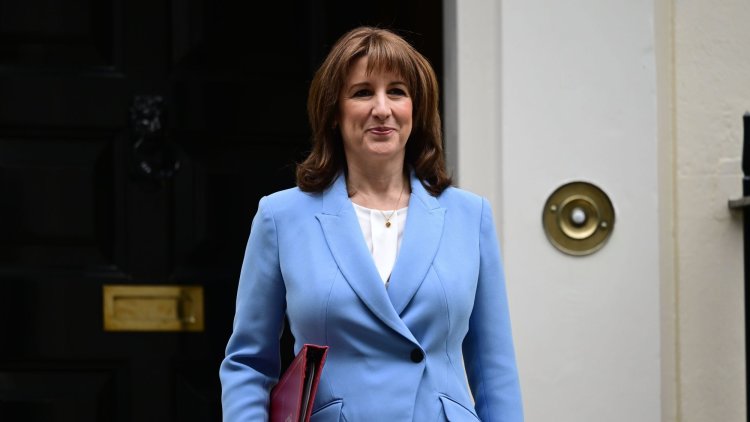
Chancellor Rachel Reeves delivered her second Spring Statement on Tuesday afternoon. (Alamy)


4 min read
As expected, Rachel Reeves’ Spring Statement was a relatively low-key affair — but there was a major elephant in the room in the form of conflict in the Middle East.
On Tuesday, the Chancellor made a House of Commons speech on the state of the economy, which contained no new policy announcements.
It had been no secret that the government had wanted this year’s Spring Statement to be low on drama, with Treasury sources telling PoliticsHome in the run-up to today that the aim was for little excitement, in contrast to the chaos of the November Budget, which saw a U-turn on income tax and the Office for Budget Responsibility (OBR) accidentally disclose details of government policy before Reeves could announce them to MPs.
The Labour government has sought to stress the importance of economic stability at a time of international tumult.
“My plan is the right one; I’m in no doubt about how great the rewards we can be if we stay the course,” Reeves told MPs in the House of Commons on Tuesday.
“Stability in our public finances; interest rates and inflation falling; living standards rising; more children lifted out of poverty; more appointments in our NHS; more investment in our infrastructure; a growing economy; and more money in the pockets of working people.
“These are the right choices.”
However, while there were some signs of green shoots in the UK economy, the latest OBR forecasts, published on Tuesday, also highlighted some of the challenges facing the government, not least how war in the Middle East could soon impact prices in the UK.
What did we learn in the Spring Statement?
One piece of good news for the Labour government is that borrowing is expected to fall from 5.2 per cent of GDP in 2024-25 to 1.6 per cent in 2030-31, according to the OBR. This is faster than the independent watchdog previously forecast in November.
Inflation is also expected to continue coming down, from 3.5 per cent in 2025, to 2.3 per cent in 2026, to 2 per cent in 2027.
You can expect the Keir Starmer government to make a big deal of this projection, with tackling the cost-of-living being a key part of its agenda.
In less positive news, however, the OBR expects growth to remain broadly unchanged overall between now and 2030, at levels which the Chancellor herself admits she is determined to outperform. Growth has been downgraded from 1.4 to 1.1 in 2025 by the OBR, before hitting levels slightly higher than expected later in the forecast period.
The watchdog also said that unemployment would continue to rise and hit 5.3 per cent later this year, driven by a fall in demand for new hires. However, the level is expected to decrease every year until reaching 4.1 per cent in 2030.
Reeves told MPs: “I’m not satisfied yet with these forecasts; I know that the economy is not yet working for everyone, and that the deep economic scars left by the party opposite [Conservatives], and their mates in Reform, are still blighting the lives of too many people.”
The latest data on welfare spending will also provide a headache for Reeves. According to the OBR, welfare spending will rise by nearly 6 per cent to £330bn this year, driven by pensions and health-related benefits. It is expected to hit £407bn in 2030-31.
The government tried to reform benefits last year but was forced to abandon the plans in the face of a large Labour backbench rebellion.
The elephant in the room
Crucially, the OBR analysis was carried out before the eruption of war in the Middle East, meaning its economic projections could quickly become out of date.
The watchdog itself acknowledged this uncertainty in its report published on Tuesday, writing: “Conflict in the Middle East, which escalated as we were finalising this document, could have very significant impacts on the global and UK economies.”
The escalating conflict in the region, centred on Iran, has already resulted in major spikes in global energy prices. These rises could later be felt by consumers in the UK in ways similar to when Russia’s invasion of Ukraine triggered significant inflation. UK wholesale gas prices had risen by around 100 per cent in the last 48 hours at the time of writing.
Reeves told MPs the government’s emphasis on economic stability was “even more important” given the rapid developments in the Middle East.
“It is incumbent on me and on this government to chart a course through that uncertainty, to secure our economy against shocks and protect families from the turbulence that we see beyond our borders,” the Chancellor said.
