Politics
Politics Home Article | Why The Iran War Is Making Food In The UK More Expensive


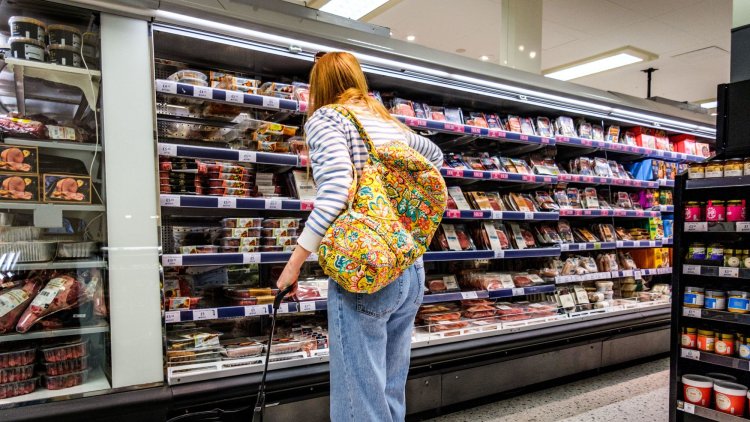
The British Retail Consortium expects food inflation to rise sharply to around six to eight per cent by next year. (Alamy)


5 min read
Fuel and energy are not the only essentials impacted by the Iran war, with experts warning that grocery prices could rise sharply in the next 12 months.
Last week, Chancellor Rachel Reeves met with supermarket bosses to discuss the impact of the ongoing conflict in the Middle East on supermarket prices.
On Tuesday, Reeves expressed her strongest criticism yet of the US decision to launch strikes on Iran, saying it was “folly” to attack the country without a clear strategy.
“Obviously, no sensible person is a supporter of the Iranian regime, but to start a conflict without being clear what the objectives are and not being clear about how you are going to get out of it, I do think that is a folly, and it is one that is affecting families here in the UK but also families in the US and around the world, she told The Daily Mirror.
Reeves is dealing with inflation across the board as a result of disruption to global trade caused by the war.
Petrol prices climbed shortly after the US and Israel first launched strikes on Iran, while Tehran’s threat to attack ships passing through the Strait of Hormuz, a vital shipping lane responsible for significant portions of the world’s gas and oil, has led to a sharp rise in global energy prices.
The government has made support available for people reliant on heating oil, but is under increasing pressure to announce a wider package of support to protect household bills.
But the cost-of-living headache doesn’t stop there. The Food and Drink Federation (FDF) trade body recently warned that UK food inflation could reach as high as 9 per cent by the end of 2026 as a result of the conflict in the Middle East.
Why is the Iran war affecting UK food prices?
The disruption to vital trade flows in the Middle East is not just impacting oil and gas, which food producers use for energy and transport, but also a key nitrogen-based fertiliser called Urea.
Urea, which relies on gas, is vital to global food production as it is widely used in the agriculture sector to grow crops — particularly at this time of year, spring.
Pressure on urea supplies means farmers will have to pay more for it, which in turn will lead to higher prices for the consumer.
According to Harvir Dhillon, economist at the British Retail Consortium (BRC), “you can already see an uptick in food price inflation” in the latest United Nations data, “and it will likely continue”.
He explained that it will take a few months before the impact is properly felt, telling PoliticsHome: “If we assume that the trajectory of food prices will follow something similar to what we saw following Ukraine-Russia… food inflation pretty much starts to increase more or less three or four months after that point.”
The National Farmers’ Union (NUF) has warned that farmers are “under immense pressure”.
“Farmers and growers are having to shoulder increased costs of fuel and fertiliser, often only being made aware of the price they will pay once products have been delivered onto farm,” said NFU president, Tom Bradshaw.
“If these cost pressures persist — which span the whole food supply chain — food inflation could rise, as recent reporting suggests.”
The Bank of America has estimated that global urea prices have increased by up to 40 per cent since the start of the Iran war.
In the UK, estimates vary in terms of how this will impact the cost of food at home.
The FDF, which represents 12,000 food and drink manufacturers nationwide, has predicted that food inflation will hit 9 per cent by the end of the year.
The BRC currently believes that it will peak slightly lower, between 6 and 8 per cent, and slightly later, in early 2027.
What action could be taken?
The government continues to argue that the best way to protect people from the economic impact of the Iran war is to re-open the Strait of Hormuz as soon as possible.
Later this week, Prime Minister Keir Starmer and French President Emmanuel Macron will co-host a meeting of world leaders to discuss restoring freedom of navigation in the vital shipping lane as soon as conditions allow it.
The UK government has said it does not support President Donald Trump’s decision to blockade ships entering or exiting the strait after peace talks between the US and Iran failed to produce an agreement.
Ultimately, ninisters have no direct control over food prices in the UK as they are largely driven by global forces.
Affected sectors say the government can ease the overall financial pressure by providing relief elsewhere, with the BRC calling for retailers to be given support with their energy bills, and the NFU urging ministers to reduce electricity charges for farmers using glasshouses to grow.
In the long-term, MPs like Alistair Carmichael, chair of the food and rural affairs select committee, argue that the UK must think seriously about improving its food security so that it isn’t “left swinging in the wind” every time there is a global supply shock.
“I have been banging on about food security and resilience in supply chains for a long time, and we have always spoken about that in the context of production,” the long-serving Lib Dem MP told PoliticsHome.
“Why we need to have a critical mass of livestock, why we need to have land for cultivation, and the rest of it.”
He said boosting domestic food production should be a key priority for the government as it seeks to bolster national defence.
The MP was echoed by the NFU’s Bradshaw, who told PoliticsHome: “In the long-term, it all comes down to resilience.
“We need to find ways to prevent UK farm businesses from becoming collateral damage of global politics. This is about ensuring we have a stable homegrown food sector which can withstand shocks from global volatility and continue to produce food for the 70m consumers of the UK.”
A government spokesperson said: “We are taking the effects of the Iran war very seriously and are actively monitoring the potential impact of the conflict on the food and farming sector.
“We expect no change to food availability and are continuing to meet with stakeholders, including farmers’ unions, to share information on rising fuel and oil prices – ready to act to protect our rural communities.”

You must be logged in to post a comment Login