Politics
Politics Home Article | Women in Westminster: In Conversation With Layla Moran MP


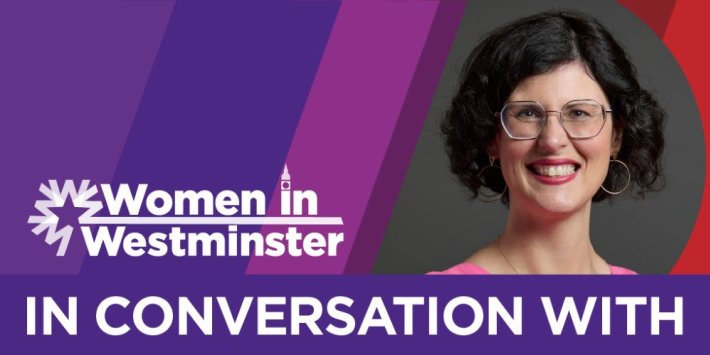


In a system that often rewards performance over purpose, Layla Moran MP is arguing for something different – politics that feels human again and politicians willing to stand up and show why that matters. As part of our Women in Westminster series, we sat down with Moran to discuss why care, vulnerability, and collaboration matter more than ever in public life
A sense that politics is founded on empathy rather than performance is a conviction that runs through everything Layla Moran MP says during her sit-down conversation with Women in Westminster. For the Oxford and Abingdon MP, caring is not an indulgence, and vulnerability, handled honestly, is never a liability.
Indeed, politics, she argues, has perhaps lost public trust in part because it has forgotten how to think about people before power. It is a trend that she would like to see reversed, and she believes women MPs may have a critical role to play.
“We know very well that women are socialised to think about the needs of other people before their own,” Layla Moran MP tells Women in Westminster. “The thing that is perceived as one of our weaknesses elsewhere in the workforce, actually in politics, might make us uniquely powerful.”
Moran’s own political instincts were shaped early. She grew up largely outside the UK, watching British politics from a distance. Margaret Thatcher is someone she remembers her parents discussing, but it was Shirley Williams who left the deeper mark.
What Moran admired about Williams was her thoughtfulness, her intellectual rigour, and the way she prosecuted arguments without cruelty. Later, the Liberal Democrat MP discovered another facet to her story – that Williams was doing all of this while caring for bereaved children within her own family.
“There was a line in her autobiography,” Moran recalls, “about politics not being everything – that there are parts of life that matter more. That stayed with me.”
Moran also cites Hanan Ashrawi, a rare female leader in Palestinian politics, as another significant influence who embodied a politics that was serious and humane. What connects both women, she reflects, is a “refusal to treat politics as a game.”
That personal and moral seriousness is something that Moran is striving to bring into Westminster. However, she is concerned that the space for thoughtfulness is increasingly squeezed out by a political culture where honesty often takes a back seat to political point scoring.
“The more I understood politics, the more I realised there were things about this place that are bonkers,” she says of the culture in Westminster. “And most people here know they’re bonkers. I just wish we’d say it more and be a bit more honest about who we are.”
That honesty, she believes, is not self-indulgence or a display of weakness. Harnessed properly, vulnerability is an asset – and one she would like to see others tap into.
“I’m here because of those issues, not just in spite of them,” she explains, talking about some of the personal challenges she has faced. “And actually, everyone’s got their thing. And everyone’s got their vulnerabilities, but also that’s where your strength comes from. So, bring yours.”
It is a principle Moran herself has tested repeatedly, most recently through her work as Chair of the Health and Social Care Select Committee, looking at the social care system. It is an area she describes as both culturally invisible and politically avoided. Caring, she notes, has long been treated as something families simply absorb, often without recognition or support.
“Taking care of your elderly parents or your disabled child is something families just do,” she says. “So, what is the role of the state? Where there are no carers, it’s to make sure no one is left behind. And where there are carers, it’s to support them to do what they instinctively want to do anyway and to value that properly.”
She is frank that solving social care will require money, time, and cross-party consensus. However, she cautions that Westminster is currently ill-suited to long-term thinking and collaboration with increased divisiveness in parliamentary culture.
“Cross-party working is at one of the lowest ebbs I’ve seen,” she observes. “New MPs are understandably loyal to their parties, but it takes time to realise that the real work gets done across party lines.”
Moran’s belief in collaboration is not abstract. Some of her proudest work, she says, has come through select committees and all-party groups – spaces where politics briefly steps away from spectacle. It is an approach that has also shaped her work to help find workable and compassionate solutions to the conflict between Israel and Palestine.
“I will never stop being Palestinian,” she tells us. “That means I don’t get to walk away from Israel-Palestine as a lot of people do.”
That perspective shapes how she speaks and how carefully she chooses her words. Her calculation, she explains, is never about personal advantage or political positioning, but about whether what she says moves the conversation even marginally closer to a sustainable peace.
“I want the solution,” she says. “So, when I speak, I’m not thinking about what’s best for my party or me or what will get me in the news. I’m thinking about how I can lead in a way that gets people to think a little bit more sensitively so we’re less divided and actually thinking about proper solutions.”
As a recent parent, Moran reveals that she has a new, deeply personal motivation driving her work to find a better future for Palestine.
“I’d love to bring my child one day to show them the house of my grandfather, my great-grandfather, and say, ‘This is where your grandmother came from,’” she tells us. “I feel very far away from that, but I want to be able to say to them, ‘I tried my best to make that happen for you.’”
For all her honesty, Moran is clear-eyed about the brutality of politics. She knows the personal cost of openness, particularly in an age of clipped quotes when vulnerability can be weaponised by opponents. But she is clear that sometimes that cost is one worth paying.
“I’ve learned over the years that thick skin is not really thick skin; it still hurts. But I also know that pain is temporary,” she says. “I still think you’ve got to be brave. Because not doing it would be even worse.”

You must be logged in to post a comment Login