
Politics
Politics Home | Crisis after crisis: why supply chain resilience is a matter of national preparedness



Global instability has exposed the fragility of the UK’s supply chains and the urgent need for a more resilient industrial base. Innovation‑led onshoring, alongside friendshoring with trusted partners, offers a pragmatic route forward.
Recent developments in the Middle East, particularly the escalation involving Iran and its implications for global energy markets and the Strait of Hormuz, have once again brought supply chain resilience into sharp focus. In an uncertain world, supply chain resilience is a question of national preparedness – and this should be reflected in our industrial policy beyond any immediate response to address the impacts of the crisis.
As the Chancellor highlighted in her Mais lecture, we need to pursue growth that is both secure and resilient, and this means “attend[ing] to the strength of our supply chains, and tak[ing] an active interest in where things are made, and who makes them”.
But in many ways, this is not a new issue. Businesses have been grappling with increased supply chain risk since the Covid-19 pandemic, which was followed by successive geopolitical shocks – on top of the disruption after the UK’s exit from the European Union.
A recent report by the Society of Chemical Industry (SCI) and the National Preparedness Commission sets out the scale of the challenge starkly. It concludes that the UK’s industrial base is increasingly vulnerable, with a heavy reliance on imports for materials and products essential to daily life – including energy, healthcare, food production and communications. The report warns that if imports are disrupted by conflict, trade restrictions or infrastructure failure, key industries could struggle to function, with potentially severe economic and societal consequences.
So, to quote the Chancellor once more, how do we avoid “excuses to put off the hard work of reform” and ”focus on the causes, as well as the symptoms, of our vulnerabilities”?
Foundational sectors as the backbone of resilience
At the heart of supply chain resilience are the UK’s foundational industries: the sectors that provide the basic inputs on which much of the wider economy depends. Chemicals are a clear example. Used in the vast majority of manufactured products and critically important to advanced manufacturing, defence and life sciences, disruption in chemical supply chains cascades rapidly across sectors such as construction, automotive, healthcare, agriculture and nutrition.
The SCI report reinforces this point, highlighting the long-term erosion of end-to-end manufacturing capability in the UK. Over time, this hollowing out of industrial capacity has increased dependence on complex international supply chains for critical inputs.
Strengthening supply chain resilience, therefore, starts with recognising the strategic importance of foundational sectors and acting on it.
Onshoring where innovation provides an advantage
One part of the solution lies in onshoring – a targeted effort to rebuild domestic capability where the UK has, or can develop, a competitive advantage. Innovation is central to this approach. Advanced manufacturing processes, digitalisation and sustainable production methods can enable high-value industrial activity to take place in the UK, even in sectors that are traditionally energy and resource-intensive.
BASF believes that innovation can help decouple growth from resource consumption, improving efficiency while strengthening resilience across the value chain. By investing in new technologies and processes, it is possible to support domestic production of critical inputs in a way that aligns with the UK’s net-zero ambitions and delivers on growth. This is the focus of our R&D in the UK through the British Alliance for Research and Innovation, centred around our partnership with Imperial College London.
Resilience and sustainability are increasingly intertwined. Policies that support innovation-led onshoring can help address both challenges simultaneously. The UK is already supporting research into advanced manufacturing methods for the chemicals sector. What is now needed is a clear and credible pathway to deploy these technologies at scale, enabling domestic production of future-proof solutions that support growth, resilience and net-zero. Companies such as BASF, working with partners, have practical experience of the barriers that currently limit deployment, as well as insight into the wider policy framework needed to accelerate it.
Friendshoring with trusted partners
And while a strategy for onshoring production in specific areas would aim to enhance the UK’s competitiveness, it would be impossible for those efforts alone to deliver resilience. Modern supply chains will remain international, particularly for industries such as chemicals with complex, multistage value chains.
This is where “friendshoring” – deepening supply chain integration with close allies where economic, regulatory and political ties are already strong – offers a pragmatic complement to domestic capability building.
This is particularly relevant for the UK’s relationship with the EU. Recent data shows increasing UK reliance on chemical imports from the EU, underlining the importance of smooth trading arrangements and regulatory alignment. A reset in the UK‑EU relationship, coupled with a renewed government commitment to reducing friction and duplication, would support both competitiveness and resilience across manufacturing supply chains.
A strategic priority for policymakers
Supply chain resilience is no longer a niche industrial issue. It is a matter of economic security, national preparedness and long-term competitiveness. By strengthening foundational sectors, supporting innovation-led onshoring, deepening partnerships with trusted allies and ensuring regulation supports investment, the UK can build supply chains that are better equipped to weather future crises and deliver on sustainable, secure and resilient growth.


Joe Kent, Director of the National Counterterrorism Center, resigned on Tuesday, saying that the war on Iran was started due to ‘pressure from Israel and its powerful American lobby‘ and he could not support it in “good conscience.”
After much reflection, I have decided to resign from my position as Director of the National Counterterrorism Center, effective today.
I cannot in good conscience support the ongoing war in Iran. Iran posed no imminent threat to our nation, and it is clear that we started this… pic.twitter.com/prtu86DpEr
— Joe Kent (@joekent16jan19) March 17, 2026
Kent wrote to Trump:
This echo chamber was used to deceive you into believing that Iran posed an imminent threat to the United States,” . “This was a lie and is the same tactic the Israelis used to draw us into the disastrous Iraq war that cost our nation the lives of thousands of our best men and women.
Joe Kent is a Gold Star husband; his wife Shannon was killed in 2019 while serving as a CIA officer in Syria — another illegal war by the USA. Kent said the war was also “manufactured by Israel.”
Kent said high-ranking Israeli officials and influential members of the American media mounted a “misinformation campaign” that undermined Trump’s America First platform and “sowed pro-war sentiments to encourage a war with Iran.”
Iranian American Trita Parsi of the Quincy Institute retweeted Kent’s resignation, saying, “This is big”.
This is BIG! https://t.co/qTVhLBrkue
— Trita Parsi (@tparsi) March 17, 2026
Republicans who have been critical of Trump’s illegal war celebrated the move by Kent.
MAGA podcaster Auron MacIntyre said Kent had paid a dear price for his service.
Kent is a highly respected MAGA veteran who has paid a dear price of his service
The letter claiming that the war was manufactured by Israel is particularly brutal https://t.co/FQ6K1RZuqt
— Auron MacIntyre (@AuronMacintyre) March 17, 2026
Another MAGA podcaster David J. Reilly, said: “God Bless you, man.”
Maybe we were too hard on @joekent16jan19…
God bless you man. https://t.co/g1KGomzYa3
— David J. Reilly 🇺🇸 (@realDaveReilly) March 17, 2026
There was some criticism of Kent for his complicity in imperialism, too.
Caribbean Lives Matter called out Kent for praising Trump’s assassination of Soleimani and accusing him of being an imperialist with blood on his hands.
You praise Trump for the assassination of Soleimani as if that wasn’t a direct act of escalation that brought the U.S. to the brink of war with Iran..youre just another imperialist with blood on his hands.
— Caribbean Lives Matter🇻🇪 (@Liberation_Blk) March 17, 2026
Iranian general Qasem Soleimani was in Iraq as part of a peace mission to Saudi Arabia, with the full agreement of the Iraqi government, when he was assassinated by a US drone strike on the orders of Trump during his first term.
Joe Kent had indeed praised Trump for this extrajudicial killing. He said:
In your first administration, you understood better than any modern president how to decisively apply military power without getting us drawn into never-ending wars. You demonstrated this by killing Qasem Soleimani and by defeating ISIS
Featured image via UPI
Politics
Politics Home Article | Red Wall Labour MPs Urge Government To Stick With Immigration Reforms


5 min read
Labour MPs on the right of the party are urging Keir Starmer to stick with a planned tightening of immigration laws after Angela Rayner called the reforms “un-British”.
The chair of the party’s Red Wall Caucus has told PoliticsHome that Labour will “never rebuild trust” in constituencies in her part of the country until it is seen as having tackled the issue.
On Tuesday night, Rayner, who is seen as a frontrunner to succeed the Prime Minister, criticised the direction of the government in her most significant intervention since resigning from cabinet in September.
Speaking to a reception hosted by the soft left Labour group Mainstream in a Westminster pub, she said the “very survival” of Labour is at stake as the party faces the electoral threat of both Nigel Farage’s Reform UK and Zack Polanski’s Greens.
“There is no safe ground for us, and we’re running out of time. The change that people so desperately wanted to see needs to be seen. It needs to be felt,” Rayner said.
The influential backbench MP also specifically criticised new restrictions on settlement policy being brought forward by Home Secretary Shabana Mahmood.
Under the changes, set to come into force on Wednesday, migrants will need to wait longer to qualify for permanent settlement in the UK.
Rayner said the plan to extend the automatic qualifying period for awarding Indefinite Leave to Remain from five to 10 years would “pull the rug” from migrants who have already arrived in the UK, and represent “not just bad policy but a breach of trust”.
Over 100 Labour MPs recently signed a letter organised by backbencher Tony Vaughan urging the Starmer government to rethink the tightening of immigration rules.
The PM has been urged by the left of Labour to pursue a more progressive agenda after the party suffered a seismic defeat to the Greens at last month’s Gorton and Denton by-election.

However, Mahmood has today been backed by Labour MPs who say the reforms are key to defeating Reform in their areas.
Jo White, Labour MP for Bassetlaw and chair of the Labour Red Wall Caucus, told PoliticsHome: “My constituents tell me this is the most important issue that this government has to sort out. We can only move on when they have confidence that the government has done what’s needed, whether it’s the small boats or dealing with the high numbers who have come here in recent years.
“My constituents are calling for fairness, and diverting from this means we will never rebuild trust in constituencies like mine.”
She added: “Recent history has already shown that Labour cannot win a general election without the Red Wall MPs, and seats on the opposition benches will mean that we will never deliver on the economic and social change that we all believe in and desire.”
The ‘Red Wall’ is a phrase commonly used in Westminster to describe post-industrial seats in northern England and the Midlands that have been seen as key to recent election results.
Luke Akehurst, MP for North Durham on the right of Labour, said he was “extremely disappointed” by Rayner’s public intervention on Tuesday night.
“All the polling shows these policies are popular across the electorate,” he told PoliticsHome.
“They aren’t the cause of Labour’s poll malaise, which is driven by the cost of living. Being credible on controlling immigration is critical to Labour’s ability to hold marginal red wall seats at the next elections.”
Henry Tufnell, Labour MP for Mid and South Pembrokeshire, said his colleague must “back Shabana” and her reforms, saying “the country wants it, and we need to deliver, otherwise Reform will do something much more extreme.”
Mahmood herself doubled down on the asylum reforms in a speech last week, warning concerned Labour MPs that the current system is “eroding trust” with the public.
“Hard-working people across this country engage in the daily struggle to make ends meet.
“They see a state that they pay taxes towards, yet it is unable to stop the flow of dinghies across the channel. They see a state that is paying billions towards hotels. It doesn’t look fair because it’s not fair, and it erodes their trust in government,” the Home Secretary said.
Speaking to PoliticsHome this afternoon, an unnamed Labour MP in the Red Wall group said Mahmood’s reforms are “not just about me keeping my seat at the next election, it’s what’s morally right”.
Another Labour MP added: “If we can’t deliver the changes that the public supports, then we can’t govern. The government’s immigration policy can’t be changed by Angela Rayner in the basement of some dingy pub.”
An MP in the party’s Blue Labour group, which advocates more socially conservative positions, told PoliticsHome: “We can’t – must not – retreat into our comfort zone as a party. The country wants these reforms.”
There were suggestions this afternoon that Downing Street could dilute the reforms after Rayner’s intervention, with a spokesperson telling journalists that it was “considering responses” to a Home Office consultation, and would “respond in line with our principles and values”.
However, a government spokesperson later stressed that its position “has not changed”.
“We will always welcome those that come to this country and contribute to our national life. But the privilege of living here forever should be earned, not automatic.
“But between 2021 and 2024, this country experienced levels of migration it had historically seen over four decades. We must be honest about the scale and impact of hundreds of thousands of low-skilled migrants getting settlement,” they said.
The government has sought to clarify that the consultation relates to whether transitional arrangements should be used for migrants who are already in the UK but have not yet received settled status.

Reactions have poured in from all official, sporting, and legal levels following the Confederation of African Football’s (CAF) decision to declare Senegal the loser of the 2025 Africa Cup of Nations (AFCON) final against Morocco (3-0). This decision has reignited a larger question: who holds the authority to make such decisions, the referee or the committees?
The decision issued by the Appeals Committee has sparked widespread division within football circles and opened the door to conflicting legal interpretations, all of which agreed on one point: what happened transcends the mere result of a match.
AFCON mess
International sports lawyer Ali Abbas described the decision in press statements as “shocking and illegal,” arguing that the Appeals Committee exceeded its authority by interfering in the outcome of a match decided on the field.
He explained that the basis upon which the committee relied—according to the CAF statement—relates to Article 82, which penalizes refusal to play. However, he emphasized that the assessment of such refusal remains solely with the match referee.
The legal expert stated:
The referee is the only one authorized to end the match or declare a team withdrawn. Since he decided to resume the match until its conclusion, no judicial body has the right to change the result afterward.
Temporary rejection and complete withdrawal
From another perspective, regulations expert Mohamed Bayoumi offered a more detailed analysis of the legal loopholes, emphasizing that what occurred did not constitute a “complete withdrawal” justifying a forfeit loss.
He explained that the regulations—specifically Articles 82 and 84—stipulate that a team must remain absent from the field for 15 minutes before being considered withdrawn, which did not occur in this match.
He added:
Senegal returned and completed the match, and the game ended normally on the field. This is the fundamental principle of football.
Precedent
Notably, this decision brought back memories of the CAF Champions League final between Wydad and Esperance, a precedent highlighted by Ali Abbas, who argued that African football “has not learned from its past mistakes.”
He continued sharply:
We are facing a legal farce… and a decision more serious than the previous one, which will have major repercussions for the reputation of African football.
Amid this controversy, the next step seems almost certain, as the Senegalese Football Federation is heading towards escalating the matter to the Court of Arbitration for Sport in Lausanne.
According to Abbas, Senegal’s chances of winning the case “exceed 90%,” while Bayoumi asserts that the court will review the entire file, not just the Appeals Committee’s decision, which opens the door to its annulment or amendment.
Between a decision issued by the Confederation of African Football and an anticipated appeal before the Court of Arbitration for Sport, African football faces a new test, one that concerns not only the outcome of a title but also the credibility of its legal system.

Palestinian-American Leqaa Kordia has been released by Immigration and Customs Enforcement (ICE) after being held in an ICE prison for a year. But she says she is not free. Not yet.
Kordia was one of around 100 victims arrested for peacefully protesting outside Columbia University against Israel’s genocide in Gaza in 2024. No one was charged. But ICE then imprisoned her in March 2025 on the ridiculous grounds that Homeland Security claimed she was “found to be providing financial support to individuals living in nations hostile to the U.S.”. She had sent money to relatives overseas to help support them.
Kordia was hospitalised after suffering a seizure in detention and an immigration judge ordered her release on bond after New York mayor Zohran Mamdani asked for her release during his recent meeting with Donald Trump.
ICE: all their victims need to be released
On her release, Kordia said that she might be physically free – but is not really free until all ICE’s victims are released:
I’m just breathing the air right now but I’m not free inside until everyone is free and I’m holding them in my heart. We’re gonna keep fighting … there is a lot of injustice in this place.
Trump’s racist deportation gang has expelled more than 675,000 people from the US since he re-entered the White House. More than 68,000 others are held without charge in ICE and Customs and Border Patrol detention facilities. The Trump regime boasts of these numbers. ICE has murdered, or tried to murder, members of the public and smeared them as “domestic terrorists”, Yet it continues to avoid accountability for its crimes with the collusion of the federal government.
A relative of Kordia said that the impact on her had been “unimaginable“:
This past year has taken an unimaginable toll on Leqaa and our entire family. We are grateful to our community that stood beside us every step of the way, and for the countless prayers offered during this past Ramadan — those moments of sincerity and hope carried us through some of our darkest days.
Immigrant rights lawyer Sarah Sherman-Stokes said her legal team was “elated and relieved” but that the fight goes on for her and other victims:
We are elated and relieved that Leqaa can finally return home to her family in New Jersey after a long year in ICE detention. This is an important step in restoring Leqaa’s rights as she continues to be unlawfully targeted by the government for her advocacy for Palestinian rights.
We will continue this fight in both immigration and federal courts for as long as it takes, not only for Leqaa but for the freedom of all people facing unjust retaliation for speaking out against genocide.
Travis Fife, another lawyer working for Kordia’s freedom, added:
Today we are celebrating the long-delayed news that Leqaa will be reunited with her family in New Jersey. Since her detention over one year ago, the government has taken every effort to deny her basic rights and freedom, blocking her release not once but twice. Leqaa going home today is the bare minimum. We must continue to assert the fundamental First Amendment principle that the government cannot abuse power to punish people for using their voice.
Leqaa Kordia is not the only person who is unfree outside a prison. As Nelson Mandela said, “our freedom is incomplete without the freedom of the Palestinians”. While the Palestinians and other oppressed peoples remain under the heel of imperial powers, none of us are really free.
Featured image via the Canary

!function(n){if(!window.cnx){window.cnx={},window.cnx.cmd=[];var t=n.createElement(‘iframe’);t.display=’none’,t.onload=function(){var n=t.contentWindow.document,c=n.createElement(‘script’);c.src=”//cd.connatix.com/connatix.player.js”,c.setAttribute(‘async’,’1′),c.setAttribute(‘type’,’text/javascript’),n.body.appendChild(c)},n.head.appendChild(t)}}(document);(new Image()).src=”https://capi.connatix.com/tr/si?token=19654b65-409c-4b38-90db-80cbdea02cf4″;cnx.cmd.push(function(){cnx({“playerId”:”19654b65-409c-4b38-90db-80cbdea02cf4″,”mediaId”:”d2d19fbf-a695-40d5-b02e-ab88cdb588de”}).render(“69bace84e4b0411b809f0986”);});

!function(n){if(!window.cnx){window.cnx={},window.cnx.cmd=[];var t=n.createElement(‘iframe’);t.display=’none’,t.onload=function(){var n=t.contentWindow.document,c=n.createElement(‘script’);c.src=”//cd.connatix.com/connatix.player.js”,c.setAttribute(‘async’,’1′),c.setAttribute(‘type’,’text/javascript’),n.body.appendChild(c)},n.head.appendChild(t)}}(document);(new Image()).src=”https://capi.connatix.com/tr/si?token=19654b65-409c-4b38-90db-80cbdea02cf4″;cnx.cmd.push(function(){cnx({“playerId”:”19654b65-409c-4b38-90db-80cbdea02cf4″,”mediaId”:”df6f3d37-9392-45ec-8349-004cc0b0a4bd”}).render(“69bace84e4b0411b809f0981”);});

Donald Trump has issued a bizarre threat to his “non-responsive” allies who are not supporting the US’s war against Iran.
The president has called for Nato members to send warships to the Strait of Hormuz, the major oil shipping lane which Iranian forces have effectively closed by targeting all vessels which pass through there.
But allies, including Britain, have refused to get drawn into the wider war even as the cost of oil continues to climb.
So the president fumed on TruthSocial: “I wonder what would happen if we ‘finished off’ what’s left of the Iranian Terror State, and let the Countries that use it, we don’t, be responsible for the so called ‘Strait?’
“That would get some of our non-responsive ‘Allies’ in gear, and fast!!!”
Trump also attacked Nato on Tuesday, claiming the defensive alliance had abandoned the US “in its time of need”.
Speaking from the Oval Office, he insisted “we don’t need any help” from Nato, before adding: “But they should’ve been there.”
The president has also lashed out repeatedly at the UK in particular for not backing the US’s strikes.
Keir Starmer rejected America’s first request to use British military sites to attack Iran before granting permission to a second query, asking to use the bases for “defensive” and “limited” strikes.
Trump has raged about this decision, claiming this week that the UK-US relationship was “always the best” until “Keir came along”.
He said the war a “great test” of the so-called “special relationship” with America.

The gutter press are back demonising disability benefit claimants again – just as the Department for Work and Pensions (DWP) are trying to push through benefit cuts.
The Daily Mail ran with the breathless headline:
One in 10 working age Brits are on disability benefits with 1,000 successful claims A DAY – as pressure piles on Keir Starmer to face down Labour MPs on cutting welfare bill
However, if you can suffer through reading the bile, you’ll see where they got this maths from. There are 43.4 million working-age people in the UK. As of January this year, there are 3.93 million claimants on PIP, which is clearly not 10%.
Unusually for the Mail, I’m sure, they’ve been sneaky cunts. What they’ve done is taken all PIP claimants ever, since the benefit began in 2013, which is 4.5 million. From that, they’ve made an estimation that there are 1,000 claims a day.
DWP claimants: it should be much higher
The thing is, this is true. But it should be much higher.
For starters, that 1,000 is the number of successful claims. The Mail article glosses over the fact that, in those 13 years, 4.4 million claims were denied. It also completely ignores the scale of the backlog to even get PIP.
As the Canary has previously reported, the DWP has diverted staff from dealing with new claims to make it look like they’ve got a handle on the backlog of reassessments. Up until October 2025, there were 40,000 new claimants waiting for their claim to be processed. As a result, clearance for new claims fell by 25%, despite there being 6% less claims than the year before. This also means the decision time has risen, from 14 weeks in October 2024 to 16 weeks in October 2025.
There’s also the fact that just 3.9 million people claim PIP. The DWP and press make this sound like a huge number, but it’s only a fraction of how many disabled people there are in the country. 16.8 million people self-identify as disabled in the UK, so that’s less than a quarter of them claiming PIP.
There might be a huge uproar over ‘1 in 10 people claiming PIP’, but disabled people make up 25% of the population. It should be 1 in 4.
Why now?
It’s also a question of why now? Why is the Mail deciding to publish what they’re packaging as massively informative about the ‘ballooning welfare bill’ on a random day in March? Well, because we have to look at what was happening last year in March.
This time a year ago, Labour was declaring its new war on disabled people with the cuts announcement coming on 18 March 2025. All around this, we saw weeks and months of ramped-up hate levelled at disabled benefits claimants. Labour tried every dirty trick in the book with giving the press sound bites of wild claims about benefit claimants.
In fact, Labour minister Wes Streeting made this exact claim almost a year to the date of this article being published. The Labour cuts, of course, didn’t all go through, because disabled campaigners rallied, leading to Labour MPs to ‘rebel’.
However, it coming back again isn’t a coincidence. A year on, Labour are still trying to push through its cuts on disability benefits.
Labour is ramping up hatred again
A big reason for the campaigning against cuts last year was that the DWP wanted to change the criteria for who can qualify. This is something that’s still being considered by the Timms Review, for both new and existing claimants. The review is typically a complete fucking shambles, by the way.
Whilst the DWP attempts to make it harder for those with mental health and neurodivergent conditions to claim, the Department of Health is carrying out reviews into whether the conditions are overdiagnosed. This is despite 32 health professionals calling out Streeting’s bullshit on this.
Alongside this, the department is cutting the amount a disabled person who can’t work is entitled to. In April new claimants will be entitled to £200 less a month. This, according to the DWP will ‘tackle perverse incentives’ to not work, such as y’know being able to afford to keep a roof over your head.
The department also wants to eventually move the ‘UC health element’, which people get when they can’t work, over to PIP, which has nothing to do with work and is a harder benefit to qualify for, even before they tighten the criteria. Of course, this will push disabled people into further poverty.
Demonisation of poor people
At the end of the day, the welfare system is supposed to be there to help those who need extra support. We should be proud to support so many people. But instead, in a system where the rich hold all the cards, it’s the poorest in society who are blamed.
Yes, 1000 people a day do qualify for PIP, but we should be supporting far more. And so many will be left without support if the DWP has their way. The press needs to take a long hard look at the way they report on welfare cuts, because they’ll be complicit in a fresh wave of welfare deaths.
Featured image via the Canary

Israel has openly admitted that it will not allow displaced Lebanese people to return home, which is the textbook definition of ethnic cleansing.
UPDATE: Israel says displaced Lebanese people won’t be allowed to return home
🔴 LIVE updates: https://t.co/xF53WiBO7j pic.twitter.com/4lK2SzLwtE
— Al Jazeera Breaking News (@AJENews) March 16, 2026
So far, the IDF has displaced over one million people in Lebanon as it expands its illegal ground invasion.
So while we’re fighting Israel’s war, they displace 1 Million people in Lebanon and they won’t be allowed to return home. https://t.co/6EV4BZRei2 pic.twitter.com/4Nj2JKkumw
— Maze Love (@MazeLove14) March 16, 2026
But the world should have expected this, given that the Zionists have forcibly displaced the entire population of Gaza since October 2023. Not to mention its previous invasions of Syria, Egypt, and Lebanon.
that’s called ethnic cleansing. https://t.co/Kic52sbf6q
— 17 years of song a day (@songadaymann) March 16, 2026
Nakba
But Israel set the precedent right back in 1948 during the Nakba – when it ethnically cleansed 700,000 Palestinians and almost totally destroyed Palestinian society.
Another Nakba. https://t.co/3FH8xraXVr
— Phryne Astynome (@PAstynome) March 17, 2026
This is ethnic cleansing. Under the Genocide Convention, it is a form of genocidal violence aimed at destroying the foundations that constitute a group. https://t.co/T3LOF9VJyv
— Dr Nafeez Ahmed (@NafeezAhmed) March 16, 2026
The very creation of the Zionist state included the forced expulsion of hundreds of thousands of Palestinians. So how could we ever expect a normal society that doesn’t rely on blood and violence to come from that?
Greater Israel
Israel has been talking about its ‘Greater Israel’ project since 1967.
It’s about invasion, occupation, genocidal war mongering expansionism of the likes not seen since Hitler pic.twitter.com/j8BEb9h2Uz
— Gus Lefty Aussie Patriot (@GusLefty) March 16, 2026
It is used to refer to the territories Israel illegally stole in 1967: the Palestinian territories, the Golan Heights in Syria, and Egypt’s Sinai Peninsula.
However, the Zionists have also referred to it to as including all of Palestine, Lebanon and Jordan, along with significant parts of Syria, Iraq, Egypt and Saudi Arabia.
You’re still called an alarmist anti-Semite if you correctly state their long-term trajectory is of slowly but surely taking over the entire levante region and beyond. https://t.co/JrUkvgXKds
— Orikron 🇵🇹 骆培思 (@orikron) March 17, 2026
In 2024, Bezalel Smotrich, Israel’s finance minister, advocated for the expansion of their borders. He said:
It is written that the future of Jerusalem is to expand to Damascus, invoking the “Greater Israel” ideology.
According to Middle East Eye, he then suggested that:
Israel would gradually grow to encompass not only all Palestinian territories but also parts of Jordan, Lebanon, Egypt, Syria, Iraq and Saudi Arabia.
Additionally, during Israel’s genocide in Gaza, an IDF soldier wore a patch showing a map of “Greater Israel” on his uniform. This map included parts of Syria, Iraq, Egypt, and Saudi Arabia.
For a long time now, Israel has made its intentions clear. It’s textbook colonialism wrapped up in ‘never again’.
textbook imperial invasion and colonisation, while the world sits back. “Never again” and yet it still happens right in front of our eyes https://t.co/MbcRsdgFnw
— φ🕊️ (@bjorkspears) March 16, 2026
Destruction
Now, Israel is carpet bombing Beirut in the same way it did to Gaza.
Israel just demolished a big residential building in central Beirut.
Israel has illegally and forcibly displaced one million people from South Lebanon. Many sheltering in central Beirut
Israel is now bombing central Beirut
Israel is a terrorist state
— Philip Proudfoot (@PhilipProudfoot) March 18, 2026
The illegal terrorist state has proven it can take out military officials with extreme precision – to the point of being able to target specific apartments in buildings.
Despite this, the genocidal entity still feels the need to wipe out whole apartment blocks – just because it can.
Israel just demolished a big residential building in central Beirut.
Israel has illegally and forcibly displaced one million people from South Lebanon. Many sheltering in central Beirut
Israel is now bombing central Beirut
Israel is a terrorist state
— Philip Proudfoot (@PhilipProudfoot) March 18, 2026
It has no regard for human life – at least not Black and Brown lives.
Israel is a terrorist state. https://t.co/28n3RfO2bC
— Eamon Melia (@EamonMelia) March 16, 2026
Israel and the US are committing 9/11 style massacres every single day – yet still, pointing it out is ‘AnTIsEmITiSm’.
But I say, my arse. The world should not need any more proof that Israel is the problem.
Featured image via AFP News Agency/YouTube

Have you ever asked yourself how news reaches your phone so fast today?
Why do updates appear instantly on apps, websites, and social media? Many readers ask these questions because news platforms now work in a very different way compared to earlier days.
Digital media has brought new ways for people to read, watch, and understand news quickly and comfortably. It allows news organizations to share information with people in many places at the same time. Because of this change, modern news platforms are becoming more reader-friendly, interactive, and informative.
Digital media also allows readers to participate in the news experience. People can comment, share opinions, and discuss topics with others. This creates a friendly connection between journalists and readers. News platforms now focus on delivering clear information in ways that fit daily life.
The Growth Of Digital News Platforms
Digital technology has opened many new opportunities for news organizations. Today, most people read news on smartphones, tablets, or laptops. This makes information easy to access at any time during the day.
Digital news platforms now publish stories faster and reach more readers than before. Online platforms also allow updates in real time, which helps readers stay informed about current events.
Faster News Delivery
Digital tools help journalists publish updates quickly. News stories can be written, edited, and shared within minutes. Readers receive fresh information almost instantly.
Online news platforms often use notifications, alerts, and social media updates to inform readers. This keeps audiences connected with important events as they happen.
Some benefits of faster news delivery include:
- Readers receive updates quickly
- Information spreads across different regions easily
- Audiences stay informed throughout the day
Wider Audience Reach
Digital media helps news platforms connect with readers across different countries and cultures. A single article can reach thousands or even millions of readers online.
People can access news from anywhere with an internet connection. This creates a shared space where information flows between communities and audiences.
News platforms also publish content in multiple formats such as articles, short videos, and live updates. This allows readers to choose how they prefer to receive information.
The Role Of Interactive Features In News Platforms
Digital news platforms now include interactive tools that make reading more enjoyable. These tools allow readers to take part in conversations and share their thoughts.
Reader Comments And Community Discussions
Comment sections allow readers to share opinions and ideas about news stories. Many readers enjoy participating in conversations and learning from different viewpoints.
Community discussions create a sense of connection among readers. People feel that their voice matters and that they can contribute to public discussions.
This interaction also helps journalists understand what readers care about most.
Multimedia Content In Modern News
Modern news platforms include images, short videos, audio clips, and infographics. These elements help explain complex topics simply and clearly.
For example, a video clip can show important moments during an event. Infographics help readers understand numbers and facts easily.
Multimedia storytelling makes news more informative and enjoyable to read.
How Technology Supports Modern Journalism
Technology has become an important part of journalism. It helps reporters gather information, verify details, and present stories clearly.
Smart Tools For Journalists
Journalists now use digital tools that help them write, edit, and publish content efficiently. These tools assist in organizing information and maintaining accuracy.
One helpful concept that many writers discuss today is humanize ai. This idea focuses on using technology in a way that keeps writing natural and friendly. News articles still feel like they are written by real people who care about clear communication.
Writers use digital tools to support their work while keeping the human touch in every story.
Data And Visual Storytelling
Modern news platforms often include data and charts to explain important topics. Visual storytelling helps readers understand information quickly.
Charts, graphics, and visual summaries make articles easier to read and follow. They also help readers remember important details.
Technology allows journalists to combine text with visuals so that information becomes clearer and more interesting.
How Digital Media Builds Reader Trust
Digital media has also helped strengthen communication between news platforms and their audiences. Readers appreciate platforms that share information openly and clearly.
Transparency In Modern Journalism
Online platforms often update articles when new information becomes available. This helps readers stay informed with the most recent details.
Journalists can also share background information, interviews, and additional sources. This builds trust and helps readers understand how stories are created.
Accessibility For Everyone
Digital news platforms work hard to make content easy for all readers. Many websites now offer features such as adjustable text size, audio versions of articles, and mobile-friendly design.
These features allow people of different ages and reading preferences to enjoy the news comfortably.
Digital media also makes it possible for readers to explore topics that matter to them and learn more every day.
Final Thoughts
Digital media has changed modern news platforms in many positive ways. News now reaches readers quickly, clearly, and in formats that fit daily life. Online platforms connect journalists and audiences through comments, multimedia storytelling, and interactive discussions. Technology also supports writers while keeping articles natural and easy to understand. As digital media continues to grow, news platforms will keep finding helpful ways to share information and bring readers closer to the stories that matter to them.

Joe Kent, Trump’s Counterterrorism chief resigns citing Israeli lobby

NHL’s top 12 UFAs of 2026: Latest rumours, reports

Exclusive: MacBook Neo beats Dell laptop on Windows 11 benchmarks


-
 Crypto World5 days ago
HYPE Token Enters Net Deflation as HyperCore Buybacks Outpace Staking Rewards
-

 Fashion5 days ago
Weekend Open Thread: Addict Lip Glow
-

 Tech3 days ago
Your Legally Registered ‘Motorcycle’ Might Not Count Under Proposed US Law
-
Sports4 days ago
Why Duke and Michigan Are Dead Even Entering Selection Sunday
-

 Sports7 days ago
PWHL, Senators discussing plan to keep Charge in Ottawa
-

 NewsBeat7 days ago
Residents reaction as Shildon murder probe enters second day
-

 Business3 days ago
Search for Savannah Guthrie’s Mother Enters Seventh Week with No Arrests
-
 Tech1 day ago
Are Split Spacebars the Next Big Gaming Keyboard Trend?
-

 Business4 days ago
US Airports Launch Donation Drives for Unpaid TSA Workers as Partial Government Shutdown Enters Fifth Week
-
Crypto World4 days ago
Coinbase and Bybit in Investment Talks: Could Bybit Finally Enter the US Crypto Market?
-

 Business4 days ago
Country star Brantley Gilbert enters growing non-alcoholic beer market
-

 Business2 days ago
Australian shares drop as Iran war enters third week
-

 Crypto World2 days ago
Crypto Lender BlockFills Enters Chapter 11 with Up to $500M in Liabilities
-

 Sports5 days ago
College Basketball Best Bets: Conference Tournament Semifinal Picks
-

 Politics9 hours ago
The House | The new register to protect children from their abusers shows Parliament at its best
-
 Crypto World7 days ago
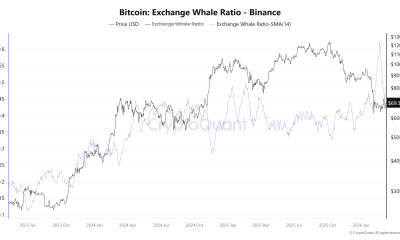
Three Binance Charts May Be Hinting at Bitcoin’s Next Move
-

 Business6 days ago
Trump demands Powell cut rates as Iran conflict raises energy prices
-

 Crypto World6 days ago
Senate Votes to Include CBDC Ban in Bipartisan Housing Bill
-

 Fashion2 days ago
25 Celebrities with Curly Hair That Are Naturally Beautiful
-

 NewsBeat6 days ago
Deane Road crash near Bolton colleges and university


You must be logged in to post a comment Login