
Politics
Politics Home | Cruelty Free International calls for government action on animal testing strategy



The publication of the UK’s strategy to replace animals in science was a good start. Now it is time to deliver.
The UK can be a global leader in regulatory science innovation and animal protection. To achieve this, the government must ensure that its Strategy to Replace Animals in Science delivers real, measurable progress and establishes the foundations for fundamental change.
In 2026, Cruelty Free International (CFI) will be pushing ministers to deliver the commitments it has set for this year, in full and on time, while asking them to plan to go much further in the longer term.
We will provide clear, factual analysis of progress made and key milestones reached, identify gaps where ambition or detail falls short, and hold the government to account for timely delivery on their commitments. Through rigorous scrutiny and constructive advocacy, we will demonstrate the need for a programme of change that not only delivers the strategy as written but also lays the groundwork for advancing beyond it.
The strategy could be a landmark moment, but only if it is delivered in full and on time
- The publication of the UK strategy signals a turning point in how we approach science, innovation and public health.
- It offers genuine potential to accelerate the phase-out of animal testing and to modernise the science – bringing forward ethical, innovative and human-relevant methods and ultimately delivering better outcomes.
- This can only be achieved through sustained implementation and delivery, appropriate resourcing, expert oversight and proper accountability.
Analysing what the strategy actually commits the government to deliver
- CFI is thoroughly analysing the key commitments, setting out what it promises, what it enables, what the impact will be, what is required to deliver it, and how it could be made even more impactful.
- Crucially, our analysis aims to highlight both the opportunities and shortcomings of the strategy, to demonstrate that we can and should be optimistic while ensuring that we hold the strategy to the highest scrutiny, and never stop demanding greater ambition until every experiment on animals has ended.
Accountability to drive public trust and scientific progress
- Without transparent reporting and accountability, the strategy will remain a list of aspirations rather than a roadmap for action with clear and concrete deliverables driven by targets, milestones and robust timeframes.
- The strategy must not gather dust on the shelf. It must be a living and active document that is a tool for driving change.
- We will push the government to deliver on its commitment to set up clear and impartial accountability processes of its own, but will also take responsibility for holding them accountable in a positive, constructive yet challenging way. This will include pushing for stronger mechanisms for transparent monitoring, and asking for clear and enforceable milestones, confirmed targets, and independent assessment of progress.
- Responsible ministers must be held accountable for making every effort to meet targets and, where possible, to push beyond them. We will make the case for clear ministerial duties to drive action from the government.
- There should also be a regular and transparent process for updating timelines, targets, and milestones.
- A key element of accountability is the inclusion of civil society organisations to draw in their trusted expertise and encourage public confidence. Systems and processes for accountability must therefore include transparent mechanisms for involving key stakeholders such as civil society organisations and NGOs.
The UK must be more ambitious if it wants to lead internationally
- The strategy should be a baseline from which to build UK leadership on the international stage and not a ceiling for ambition.
- With ambitious and potentially far-reaching commitments in the United States and the European Union, the UK risks falling behind international peers unless it accelerates innovation in human-relevant science and takes bold steps to accelerate the uptake of non-animal approaches throughout the sciences.
2026 deadlines in the Strategy
Actions that must be started in the first half of 2026:
- Publish areas of research interest for non-animal methods
- Quantify annually the inclusion of second species testing in clinical trial applications
- Initiate provision of ministerial leadership on the development and adoption of non-animal methods
- Initiate formal involvement of DSIT in the direct commissioning and receipt of advice from the Animals in Science Committee
- Enable better advice on non-animal methods
- Restart the survey on public attitudes to animal research
- Establish KPIs with which to assess the delivery of this strategy
Measures the government must deliver by the end of 2026:
- Create a Preclinical Translational Models Hub
- Establish the UK as a global leader in the science and regulatory application of non-animal methods
- Increase the visibility of available non-animal methods to facilitate their uptake
- Accelerate uptake of non-animal methods through reform of animals in science regulation
- Establish a UK Centre for the Validation of Alternative Methods (UKCVAM)
- Prepare specific projects to help secure international acceptance of new test methods, after UKCVAM is established
- Publish regulatory agency-accepted non-animal methods and priorities for future development and validation
- Establish a programme to support the upskilling of regulatory assessors
- Establish data‑sharing frameworks to support equitable access to public and private data sources
- Enhance data curation and quality control, and develop regulatory frameworks for data use
- Develop mechanisms to enable regulators to provide pre‑submission feedback
Work that must begin once 2026 funding is released by the government and research funders:
- Increase investment in the development of non-animal methods
- Enable funders to thoroughly scrutinise the apparent need for animal research in funding decisions
- Provide foundational training for early-career researchers in non-animal methods
- Expand challenge‑led innovation for non-animal methods
- Increase investment in data‑driven biology
We welcome the strategy’s ambition in setting a framework of commitments to guide action in the short to medium term, some of which will require urgent work and rapid delivery. It represents a strong start for the government, and an approach that could put the UK in a leadership position if words are matched by actions. Now it must deliver. In many ways, the real work starts here and must continue well beyond these first deadlines.
For more detail or to support our work, visit www.crueltyfreeinternational.org or email [email protected].


The post Why Zack Polanski hates horse racing appeared first on spiked.
Politics
Politics Home | What the closure of a local betting shop tells us about the pressures on our high streets
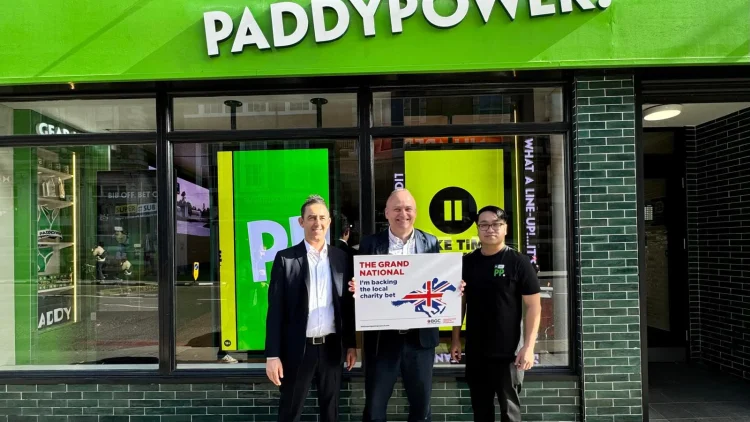

Neil Coyle, taking part in the Betting and Gaming Council’s ‘Grand National Charity Bet’ campaign

Reflecting on the closure of a local betting shop, Neil Coyle, Labour MP for Bermondsey and Old Southwark, explores what it reveals about national policy decisions, and warns that rising costs risk undermining high streets, local jobs, and community contributions across constituencies like his own.
In Westminster, colleagues often talk about “backing the high street”. Southwark Park Road is a high street under pressure in my constituency and provides just one example of how national decisions play out in real communities.
People’s changing shopping habits and the shift toward online services are hitting high streets. When national policy changes affect an industry, the impact can also be felt quickly on the high street too.
One business that previously seemed resilient is the betting shop. While other retailers have struggled with the shift online, some believed that betting shops would weather all storms.
Sadly that’s not the case on Southwark Park Road which has recently seen a Paddy Power close its doors for the last time. Some colleagues will cheer, ignoring the local jobs lost, the genuine community it served and the loss of rent and rates. Another gaping hole on the high street is nothing to celebrate.
At the Budget, the Chancellor set out the aim of raising revenue while protecting high streets. That balance is never easy to strike and sometimes national decisions land unevenly locally.
Too often, people discuss online betting and high street betting shops as if they’re separate worlds, as if you can squeeze one without touching the other. In my experience that simply isn’t how business works. Many of the same companies operate both online and on our high streets. They work from the same balance sheet, the same costs, the same tax bill.
So when online gambling taxes rise, that pressure travels to the high street. And when a shop closes, the impact is immediate and local. Jobs are lost. Footfall drops. The high street becomes that bit quieter, that bit emptier, that bit more neglected.
The Paddy Power shop on Southwark Park Road was a long-standing local business employing local people and contributing to the rhythm of the high street. Its loss will be felt by the staff first, but it won’t stop there. I’ve visited betting shops locally over the years, including this one. Not just to understand how they operate but to meet the people who keep them running day in, day out. I met the staff who take pride in their jobs and care about their customers.
Some of my visits have also been part of something positive for the local area through the Betting and Gaming Council’s ‘Grand National Charity Bet’ campaign. Through these charity bets, money has gone directly to good causes in Southwark, supporting local organisations that do vital work in my community including a children’s summer activity group and an asylum charity.
In other words, these shops haven’t just provided regulated leisure and local jobs; they’ve also helped channel support back into the community through fundraising linked to one of Britain’s biggest sporting events. An event that also brings people out to watch in our pubs, boosting the hospitality sector too. One regional pub group manager told me recently that Cheltenham sees a £400,000 rise in takings across her network of bars.
In Bermondsey and Old Southwark, betting shops employ about 80 people and contribute roughly £2m a year in tax. Those are real jobs, in a real local economy. When a shop like this goes, that money doesn’t reappear somewhere else on the same street.
Sadly, this isn’t an isolated incident. More than 2,300 betting shops have closed across the country in five years, with over 10,000 jobs lost. That’s a quiet hollowing out of regulated high street businesses, happening in towns and cities nationwide.
People have strong feelings about gambling. We should take harm seriously, and we should keep improving protections, especially for the minority of punters at risk. But we also need to be grown-up about what betting shops actually are. They are regulated, licensed leisure businesses, used by millions, employing local people, paying tax, and operating under very strict rules – I once had to leave a bookies as children are strictly forbidden from entering and I’d wandered in on Grand National day carrying my (then) two-year-old daughter!
The snobbery in parts of Westminster, and the commentariat, about betting shops appals me. You hear it in the way some people speak, as if these are shameful places that shouldn’t exist, or as if the people who use them are a problem to be managed rather than citizens to be respected. That’s a world away from the lived reality in communities like mine.
My colleague Mary Glindon MP made the point clearly: “Fairness on the high street must include betting shops.” They’re part of the everyday fabric of town centres. They employ local people. They sit alongside other leisure businesses, and they’re regulated tightly.
The wider contribution matters too. Betting shops support around 42,000 jobs, while the industry as a whole supports more than 100,000 jobs nationwide. The sector contributes around £4bn a year in tax, alongside tens of millions in business rates to local councils. It also provides vital funding for sport, from horseracing to football, darts and rugby league, as well as boosting hospitality in particular.
None of this is theoretical.
When taxes rise, cuts have to come from somewhere. Physical shops are often the first to feel it, because they have rent, staffing, and business rates. It’s also easier to shut a shop than to quietly unwind a digital operation.
If we are serious about backing our high streets, policy needs to reflect how businesses actually operate, and it needs to assess where the pain will land.
The closure on Southwark Park Road should be a warning. If we increase costs across a sector without thinking through the impact, we don’t just hurt one part of an industry. We weaken the very high streets we say we want to protect, and we risk losing the local jobs, community presence, and even the charitable support that has, in recent years, helped good causes right here in Southwark.
Neil Coyle
Labour MP for Bermondsey and Old Southwark
Politics
The House | Without relentless focus, the Women’s Health Strategy will fall short of its promise

4 min read
The government’s fresh attention on women’s health is great, but the reality is it’s unlikely women will ever be prioritised.
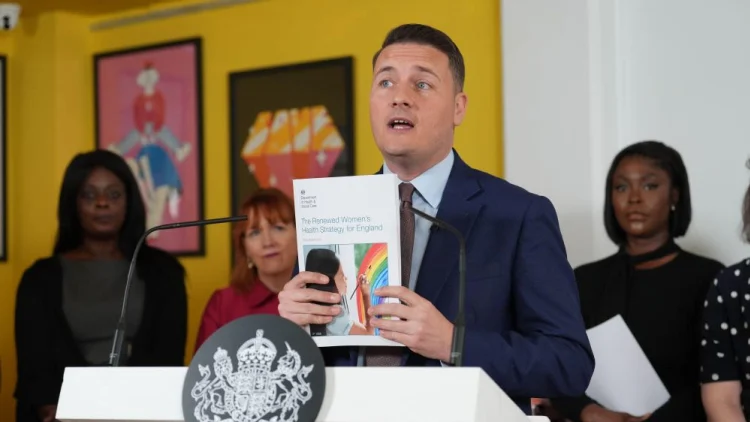
Health Secretary Wes Streeting has launched a renewed women’s health strategy, promising to “tackle the issues women face every day and ensure no woman is left fighting to be heard”. Accompanied by campaigner Vicky Pattison sharing her personal story, it was clear the Health Secretary meant business.
This took me back nearly 7 years to my interview to become a previous health secretary’s lead policy advisor. Our 30-minute slot was squeezed into 10 minutes. He cut straight to the chase: “Why do you want this job?”
“I want to transform women’s health,” I said.
“Out of everything, why that?” he asked.
That question itself is part of the problem.
I was conscious of stories from friends and loved ones demonstrating how women were being underserved. From the friend who almost died giving birth because her concerns weren’t listened to, despite being a medical professional herself.
To another dealing with crippling endometriosis pain and fertility problems that went undiagnosed. To a family member who spent 5 years fighting to get a chronic autoimmune disease diagnosed. It was clear women were not being heard, and their pain wasn’t being taken seriously.
Something needed to be done.
I got the job, and we made plans. But then came a general election, and then the response to Covid became the focus. Still, I knew we needed to keep women’s health policy alive. This was spurred by a conversation in the department about waiting lists, when one health official suggested ignoring gynaecological condition numbers altogether as they weren’t “life-threatening”. The health secretary thankfully refused.
In early 2021, still amid the Covid response, we launched a public call for evidence. I was determined that it would reach as many people as possible. Because whatever any politician of any political party says, the women’s health agenda is and will never be prioritised. That’s the reality, whether we like it or not.
I knew that, therefore, we needed a mandate from as many people as possible to keep our plans going, regardless of what else demanded the government’s attention.
Women had plenty to say. We received 100,000 responses, which shaped the first-ever Women’s Health Strategy for England, published in July 2022, just before summer recess and the end of the Boris Johnson government.
Was the strategy perfect? No. There was much more that campaigners, colleagues, and I wanted to include. Some internal battles were lost, and less funding was secured than desired. Some hard-earned political capital was expended, which did, however, mean that some big battles were won, too.
From baby loss certificates to equality of IVF for female same-sex couples, to women’s health hubs across the country. More importantly, we engineered a systematic shift. We put the life cycle approach front and centre, rather than looking at issues in isolation. There was a section on ‘women’s voices’ acknowledging that women weren’t being listened to. A section on ‘education and training for health and care professionals,’ recognising this is where change must start. Vitally, there was a section on ‘research and evidence’ — a woefully underserved area in women’s health.
I left government a few months after publication, extremely conscious of leaving the strategy in others’ hands.
Campaigners kept up pressure, and former colleagues kept the momentum going. But government priorities fell elsewhere, and progress has been more limited than it should have been.
It’s truly encouraging that this Labour government has published its own women’s health plan, continuing with the direction we set in 2022 in many areas. The focus on tackling medical misogyny and putting women’s experiences at the heart of NHS assessments is welcome. There has also been a pledge to protect and prioritise funding for women’s health specialist services.
The renewed strategy fairly suggests that while the first one had “the right problem statement, it had nothing like the means to deliver real and lasting change,” and, listening to Streeting, I genuinely believe he wants to see full systemic change.
But it will need relentless focus and drive to keep this agenda moving. It requires passion and political authority to drive it forward, and no fear about burning bridges or political capital —someone who, despite everything else happening, will keep this going in the background.
Without that, despite goodwill and intentions, this publication will sit on a shelf. And that, for women, will be yet another disappointment.
Emma Dean is a Senior Partner at Portland. She was previously a Special Adviser in the Department of Health and Social Care, and led on the first Women’s Health Strategy for England.
Politics
The House | Who does the public think should be allowed to come to work in the UK? Let’s ask them
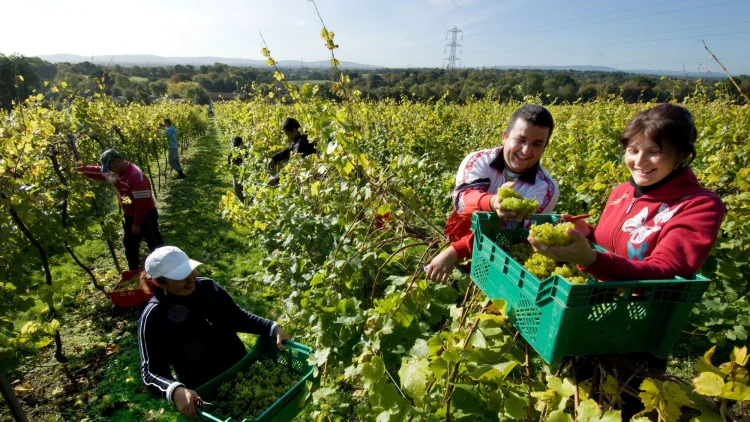
Romanian workers harvest the grape crop in an English vineyard in Sussex (Alamy)

3 min read
Immigration is one of the major policy challenges facing the government and a core strand of the scrutiny work we undertake on the Home Affairs Committee.
It is also something that the people we represent as MPs really care about. Wanting to explore new ways to engage with the public to ensure that these voices were included in our work, we went outside of Westminster and into communities to really get to grips with how immigration questions were perceived and experienced.
Working with partners at Demos and Kings College London, we have set up a programme of deliberative engagement events across the country. At each one, around 30 people come together, reflecting the make-up of the local area, including different political opinions and backgrounds. Experts on immigration then highlight the various factors that need to be weighed up and answer any questions people may have. Participants discuss the issues together before developing and agreeing on the principles that they think should underpin government priorities and policies.
Of course, it’s impossible to cover every element of immigration over the course of one weekend. So we asked, in light of the government’s commitment to cut net migration, how should work-related immigration be reduced? This policy not only determines who can come here to live and work but also has wider impacts – on public services, the economy and social cohesion.
We are going into this with an open mind. We want to understand where there are points of consensus and where there may be disagreement. Do different areas of the country have different concerns or are there common themes nationwide? Are we getting it right in understanding what is really important to our voters and how we explain and manage the difficult policy trade-offs?
The first event took place last month in Seaton Delaval, in the North East of England, and I want to sincerely thank all those who took part. There was possibly some initial scepticism about how the discussion would go. It can be a daunting prospect to come into a new environment and discuss such a potentially heated topic with people you have only just met. The main concern was whether their voices would be heard – would this just be a day of discussion in Seaton Delaval or would it have an impact in Westminster? On the Home Affairs Committee we will be taking note of what we learn and making sure it is central to how we continue scrutiny of the government’s approach to work-based immigration.
But the value isn’t just in what we as politicians can gain from it. There was a real sense that those who took part had gained new perspectives and improved understanding of the complex factors that go in to deciding the UK’s approach to work visas. This came not only from understanding the range of potential consequences of immigration decisions, but in engaging with and learning from each other. There was a real willingness to understand things from someone else’s viewpoint, to listen and discuss.
We will be holding further sessions in the coming months, in Scotland and the East Midlands, ahead of publishing our findings in September.
Robbie Moore is Conservative MP for Keighley and Ilkley, and a member of the Home Affairs Committee
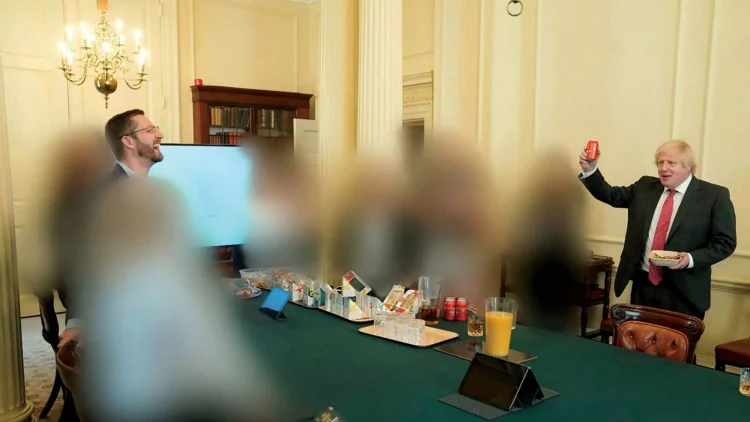

19 June 2020: No 10 gathering to celebrate the PM’s birthday | Image by: Gavin Rodgers / Alamy

4 min read
Politicians making a meal of it. This week: when Boris Johnson was ambushed by a birthday cake
“Surprise!” A 52nd birthday is not one of the big ones, and I had been grateful for the books and DVDs that had greeted me that morning when I woke. I had not, heading downstairs in search of breakfast, been expecting my wife to jump out at me with a candle-laden cake.
So, I did experience a moment of sympathy for Boris Johnson, whose own birthday surprise, way back in the 2020 Covid lockdown, would ultimately see him fined by police. After all, as arch-Johnson loyalist Conor Burns would explain when the prime minister’s birthday had become a national scandal, “it was not a premeditated, organised party. He was, in a sense, ambushed with a cake”.
(Before we go any further, let’s note one clear political lesson immediately: if Conor Burns is running your media strategy, you’re in trouble. With allies supplying descriptions of your troubles this vivid, who needs enemies?)
For those struggling to remember exactly which illegal Downing Street party this was, on 19 June 2020 staff were invited into the cabinet room for lunchtime drinks and sandwiches to mark the prime minister’s 56th birthday. It was a surprise gathering for Johnson, who had been out visiting a school. Also ambushed were Rishi Sunak and senior civil servant Simon Case, who had turned up expecting to join a meeting about Covid. Adding a touch of sophistication was interior designer Lulu Lytle, who had been measuring up the Downing Street apartment for wallpaper, gold or otherwise. Performing the ambush was a union jack cake.
Photos of the event suggest “awkward workplace gathering” rather than “bacchanalian orgy”. And while it was a great deal more party than anyone else in Britain was allowed that month, it was pretty mild by Downing Street standards. The previous evening, we now know, had seen a pizza’n’prosecco event that ran until 3am, featuring karaoke, vomit and a “minor altercation”.
The ironic icing is that the originator of ‘cakeist’ political philosophy was undone partly by the having, and then eating, of an actual cake
It’s understandable, then, that Johnson didn’t think the gathering was that big a deal. Indeed, one of the things that has always outraged him was that his birthday celebrations had been reported when they happened, without exciting any adverse comment. The brief, muted celebration had been a nice piece of colour in stories about the government’s battle against the killer disease. It wasn’t until January 2022 that the story came back to bite the prime minister, as an element of the Partygate scandal.
Which brings us, I considered as I nibbled my own delicious, moist, birthday cake, to the second lesson: context matters.
When Johnson’s birthday was first reported, it was part of a narrative: a stoic prime minister leading a national battle against a virus that had nearly killed him. Who could begrudge his team a moment of levity? The second time the cake ambush came up, it was part of a story of a chaotic administration that had imposed heartbreaking restrictions on the nation while its own members were indulging in drives to Barnard Castle, office affairs and an awful lot of parties.

The ironic icing is that the originator of “cakeist” political philosophy was undone partly by the having, and then eating, of an actual cake.
But for his fans, the tragedy of Johnson is that he was a Merrie England leader who was at his most popular at a moment of national misery.
For a few weeks in 2020, he looked like he might have proved his critics wrong: he really was the man to steer the ship through the storm. He had, in adversity, found his finest hour.
And then he was undone, ambushed by a cake.
Politics
The House | “Critical Friend”: Chief Inspector John Tuckett Resets Role Of Borders Watchdog


New independent chief inspector of borders and immigration John Tuckett

9 min read
Former submarine commander turned independent chief inspector of borders and immigration John Tuckett tells Sienna Rodgers he is resetting the watchdog’s relationship with the Home Office after years of tension
John Tuckett spent much of his career in the Royal Navy, but witnessing the rescue of 60 migrants crammed into a rubber dinghy from one of the world’s busiest shipping lanes brought home the stakes at play in his new job.
“When you see things at first hand, it obviously hits you more so than when you read about it in the newspapers or see pictures,” explains the new independent chief inspector of borders and immigration (ICIBI). “Seeing the kind of conditions they’re in, it really strikes you very forcibly what they’re experiencing.”
Since starting the ICIBI job in October, the 74-year-old has been busily visiting frontline outposts: aboard a rescue boat going out from Ramsgate; to Manston, where small boat arrivals are first processed; to asylum accommodation sites such as Wethersfield; and to detention centres where foreign national offenders are kept.
It has been particularly intense over the last few weeks: “I haven’t spent two consecutive nights in the same bed. It’s been all over the place.”
Born to research chemist parents, Yorkshire-bred Tuckett read natural sciences, later narrowed down to chemical engineering, at Cambridge, before enlisting.
Entering as a welfare executive officer, he spent 17 years in the Royal Navy and rose to the rank of submarine commander – which required passing the famous ‘Perisher’ course, one of the toughest military tests in the world.
There are documentaries from the 80s showing young men who look twice their age, sweating under the pressure of it, fag in hand (yes, in the submarine). Its name is both a play on ‘periscope’ and because if an applicant fails, their submarine career ends that day, and they never go aboard again.
“I can still remember it vividly,” Tuckett recalls. “I’d say it was probably the most challenging course, intellectually, physically and mentally, that I’ve ever done…
“You were organised into teams of six students, and you then had a senior officer called your teacher, and teacher’s role, frankly, was to put you under pressure to see whether you could make it or not. And if he thought you could take more pressure, he applied more pressure, and he went on applying it.”
Some could bear it; others would quit or be thrown off the course. “It taught me a huge amount and about planning, managing people, managing yourself,” he says. On the ‘Hunter Killers’, nuclear-powered subs not carrying Trident missiles, he would be away for two or three months at a time.
Did he have to manage dangerous situations? “Oh, yes, lots and lots. Someone used to say that being a submariner was 95 per cent sheer boredom, four per cent interesting, and one per cent sheer bloody terrifying when everything went wrong. And it’s not a bad analysis.”
The House suggests it sounds a bit like the Home Office, and Tuckett laughs.
“I’m my own person. I’m John Tuckett. I’m not David Bolt. I’m not David Neal. And I’ve made it my job to try and build a new relationship”
The inspector says the Home Office is currently trying to drive “a very complex day-to-day operation”, which is “overlaid by an awful lot of change”, while “it is itself suffering, experiencing, financial cutbacks as part of the Spending Review settlement”.
“It’s a classic change challenge,” he summarises. “There is a natural bandwidth to what any organisation can do in both doing the day job, the operation side of it, and undertaking major change as well.”
“But it is particularly challenging given the size and political sensitivity of the whole immigration agenda,” Tuckett continues. “People use the word toxic. It is a toxic environment. It only takes one little thing to go wrong, and suddenly it becomes headline news.”
Implementing the rule change that will see asylum claimants have their cases reviewed every 30 months, for example, “will be a challenge” – and one that the ICIBI expects to look at.
But with no reports published under Tuckett so far, the press attention around him has focused on the revelation at his appointment that he was resident in Finland with his wife and children, and believed he could work partly from home. Keir Starmer was forced to clarify that Tuckett had to do the job here.
“I do the job full-time in the UK, and I’m speaking to you now from my UK base, my UK home. I still have a family home in Finland, and my wife is out there, and I meet her there as and when I can. But I do this job here totally from within the UK,” Tuckett tells The House today.
Three-quarters of his staff – about 26 currently – are home-based, including some who go to the London office when required. “The vast majority of our work is done like we’re doing now – on Teams. Absolutely the vast majority of it, whether that’s internal or external work. Though, when we’re doing inspections, the teams will physically go out to a site and talk with people face-to-face, and that’s very, very valuable.”
And are the costs of commuting from Finland and the UK accommodation being paid out of his own pocket, rather than expenses? “Absolutely, yes.”
Notably, Tuckett reveals that his first six months in this role have not included a meeting with Shabana Mahmood. He is not fussed, however.
“The Home Secretary is a very, very busy person indeed,” he says. “I’m quite comfortable with not meeting her at the very, very early stage. In some respects, it’d be much more valuable if I met her at this stage now, when I’ve got some understanding of the system and I can feed back.”
“The word inspection is a bit of an unfortunate one. It immediately gets people on the defensive”
Instead, Tuckett says he has developed a “delightful” relationship with her two relevant deputies – migration minister Mike Tapp and border security and asylum minister Alex Norris.
“Both of them have been highly supportive,” Tuckett reports. “One of the things I’ve tried to do right from the start is to build relationships with the Home Office at the senior levels, not only with the politicians but with the permanent secretary and the second permanent secretary and all the director generals.”
This approach is all part of his mission to overhaul the relationship between the body he now leads – the only one officially tasked with scrutinising the UK’s border and immigration functions – and the Home Office, after it blew up under the Conservatives.
David Neal, the ICIBI appointed by Priti Patel in 2021, took such a critical approach that it got him the sack. He described the conditions at Manston as “wretched”, slammed the Bibby Stockholm barge failure as a “shambles”, and openly complained when Patel and Robert Jenrick neglected to meet him.
David Bolt, who preceded Neal and also served as interim chief following his departure, was candid too: he said last year he did not think the government’s ambition to end the use of asylum hotels by the next election would be achieved, and was not optimistic about its “smash the gangs” goal either.
“There has been some degree of not so… how do I put it? Not-so-positive relationships in the past, and there is a bit of legacy from those still around. But I’m my own person. I’m John Tuckett. I’m not David Bolt. I’m not David Neal. And I’ve made it my job to try and build a new relationship based on: how do we work together?”
Tuckett sees his role as one of a critical friend: “I don’t see any problem with the phrase.” He even baulks slightly at the term “inspection”: “The word inspection is a bit of an unfortunate one. It immediately gets people on the defensive.”
Neal, who was critical of Home Office redactions to his reports supposedly on grounds of national security, has called for the ICIBI to be able to publish reports independently – as other inspectorates are empowered to do.
Although five completed inspections are still awaiting publication, including one from May 2025, Tuckett does not make the same demand. “That’s how the system works. There are arguments for it. There are arguments against it.” Redactions for security reasons are “a very sensible measure”, he adds.
Tuckett “can’t really comment” on why relations broke down under Neal but insists he is going to follow exactly how his role is described in the UK Borders Act that created it.
“My role is very clearly laid down in statute, which is to bring about an increase in the efficiency and effectiveness and the consistency of the functions carried out by the Home Office teams,” he says. “Sounds an awful phrase, doesn’t it? ‘Efficiency, effectiveness and consistency.’ But that’s what the act says.”
As part of this reset, he will produce shorter reports and speed up their delivery. “Rather than have long inspections that would last upwards of six, seven months at a time before a report was produced, I’m trying to shorten that.” His predecessors, he says, “selected a fairly broad range of a subject and then let the inspection go wherever the evidence took them” but “I’m not doing that”. This will make the inspectorate “agile and versatile”.
The ICIBI’s “prime customer” is clearly no longer the immigration advisers, think tanks and journalists who lap up reams of data and pounce on criticisms of government, but Home Office teams.
Yet even Tuckett does not sound particularly optimistic about the chances of smashing the gangs. Small boat arrivals to Britain are, he says, “a bit like a mutating Covid virus”.
“You don’t quite know where it’s going to come up next, in what kind of variant. At some stage, I’m sure, the gangs behind the migrant boats – there will be ways and means found of thwarting their efforts. But then the illegal migrants will just find other ways of coming across.
“We’ve seen that in previous years – the shift from whether they were coming across in lorries, that went down, and now they’re coming across in boats. And what will happen after that? Well, we’ll just have to wait and see.”


Every Londoner has experienced boxes piled up by the door, a lease that expires on Friday, and the knowledge that you haven’t really arranged for a moving car. The worst mistakes are made when you put things off till the last minute, and moving house is no exception. Whether you’re moving a studio flat in Hackney or a four-bedroom apartment in Wimbledon, you should carefully weigh your options before selecting a man and van London operator or a comprehensive removal company.
There is more to this than just either/or. There are real benefits to both methods, and the best choice will depend totally on your situation, your possessions, your goals, and the actual size of your budget.
Let’s break it down honestly.
What Is a Man with a Van Service?
Typically, it’s one driver, one van, and sometimes a second pair of hands. You book them by the hour or the job, they turn up, load your things, drive to the new address, and unload. Simple. No account managers, no lengthy quote processes. Many operators work independently, which keeps their prices lean. They’re particularly common for smaller moves, such as moving a room, a flat, a handful of bulky items, and in a city where people rent and relocate constantly, this kind of flexible service has become genuinely popular.
Pros
The cost is the most important thing. A man with a van in London will almost always charge less than a moving firm, and occasionally by a lot. Availability is usually decent too; a lot of people can book on short notice, which is great for the crazy world of London rentals. And the plan is surprisingly simple. You agree on a fee and move.
Cons
There is a huge range in quality. Some operators are great, but some aren’t. Insurance may not cover much or anything at all, which is quite important if something gets broken while it’s being shipped. One car and one worker are not enough for major removals; you will have to make multiple journeys, which reduces the hourly rate. If not handled carefully, artwork, antiques, and pianos can be very dangerous.
What Is a Removal Company?
A removal company brings a structured, professional operation to your move. Multiple staff, a larger vehicle or several, proper packing materials, and comprehensive insurance as standard. Many offer packing services too, where their crew wraps and boxes everything before it moves. It’s a different experience entirely, less personal, more systematic.
Pros
Reliability is the headline benefit. Reputable firms are accredited, insured, and experienced with complex moves. If you’re relocating a full family home, they’ll have the manpower to handle it in one efficient run. They’ll manage items you’d be nervous about yourself. And if anything does go wrong, you have proper recourse, something that matters enormously when you’re talking about furniture you’ve spent years accumulating.
Cons
Price. A full removal company in London will cost considerably more, and they usually require advance booking. For a small flat move, it can feel like overkill. Some larger firms are also less flexible date changes and last-minute adjustments can come with fees attached.
Key Differences Between Man with a Van and Removal Companies
The difference between the two is in their size, organization, and responsibility. A removal business sends a team of people, bigger trucks, and a formal structure that includes written estimates, contracts, and insurance documents that you can see. A van operator offers agility and cost savings, but with less formality around liability.
Packing is another differentiator. Removal companies often include or offer packing as part of their service. With a van hire, you’re generally doing it yourself. Neither approach is wrong, but factor in how long packing will actually take you.
Which Option Is Better for Different Moving Scenarios?
Moving a single room or studio flat? A man with a van is almost certainly the right call. It’s proportionate, affordable, and perfectly adequate.
Moving a three-bedroom house with a loft full of accumulated life? Go with a removal company. The logistics justify the cost.
Long-distance moves, say, London to Edinburgh, tend to favour removal companies too. The combination of distance, volume, and the need for solid insurance makes their structured offering worth every extra pound.
Student moves, short-notice relocations, and single-item deliveries sit squarely in van-hire territory. The whole man with a van vs removal company debate often resolves itself once you honestly assess the volume of what you’re actually moving.
How to Choose the Right Service for Your Needs
Begin with an honest list. Determine how much space you have by going into each room and opening every cupboard. Many people rent a van that is two sizes too small because they are unaware of how many things they have.
Check insurance carefully. Whatever service you choose, confirm exactly what’s covered and for how much. Don’t assume. Ask directly.
Read reviews that are specific to your type of move. Generic five-star ratings mean little. Look for accounts that mention flat moves, family homes, or long-distance jobs and see how the service handled complications when they arose.
For anyone doing a broader UK moving services comparison, the most useful resource is often someone who’s recently moved in London and used both. Their experience will tell you more than any checklist.
In Conclusion
The man with a van vs removal company question doesn’t have one universal answer. It has your answer shaped by what you’re moving, how far, and what you can spend. For small, uncomplicated moves, a man with a van in London remains an excellent and practical choice. For anything larger or more complex, the structured reliability of a removal company is worth the premium.
Book early, ask the right questions, and don’t leave it until Thursday evening.
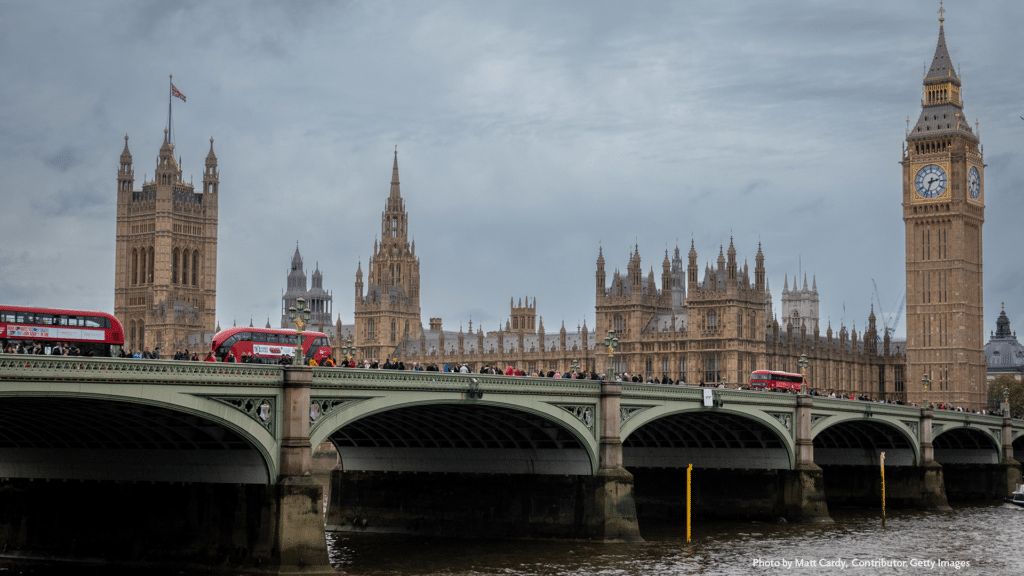
Joël Reland argues that the UK government’s plans for closer EU alignment may prove more difficult than anticipated.
The government is sending ever stronger signals about its plans for closer alignment with the EU. At the start of the month, the Prime Minister promised that this summer’s UK-EU summit “will not just ratify existing commitments made at last year’s summit” but “be more ambitious” in seeking “closer economic cooperation” with the EU.
Then, last weekend, briefing emerged which suggests that a forthcoming bill could grant ministers powers to adopt EU law in a range of sectors much wider than those where the UK committed to alignment at last year’s summit.
But there remains a curious disconnect between the government’s ever-bolder rhetoric on alignment, and its actions. Our new divergence tracker shows that, in many of the areas where the government has previously expressed in interest in closer alignment – like chemicals, products and vehicles – it is doing little to close regulatory gaps.
Take chemicals, where a new ‘PFAS’ plan (seeking to address the widespread presence of harmful, long-lasting ‘PFAS’ substances in everyday goods) is strikingly less ambitious than the EU’s. The EU has restricted the presence of PFAS in items including toys, food packaging, consumer textiles, cosmetics and some firefighting foams. The UK plan proposes only one consultation (on firefighting foams).
Meanwhile, a recent piece of legislation ends the ‘automatic’ requirement for the Health and Safety Executive (HSE) to consider all hazard opinions published by the European Chemicals Agency – which could exacerbate existing gaps on substance restrictions.
On product safety, last year the government gave itself powers to replicate EU rule changes under the Product Regulation and Metrology Act (PRMA), yet those powers have only been exercised once – to mirror EU rules on noise emissions testing for outdoor equipment. The government says that this avoids ‘unnecessary divergence’ in product standards which ‘could negatively impact on growth’ – which begs the question of why they have not sought to align in the many, many other areas of divergence (on everything from toy safety and online marketplaces to charger types and vehicle emission testing) that could have similar effects.
What explains this inaction? It does not seem to be for want of trying – the government bothered to pass the PRMA after all. Rather, it seems to be down to a lack of anticipation about the practical difficulties. The UK seemed to initially think that ‘voluntary’ alignment – where it unilaterally mirrors EU rule changes – was a stealthy way to plug regulatory gaps without inviting charges of becoming a rule taker. But it is in fact proving a Sisyphean task.
In any given sector, the UK simply does not have the administrative capacity to keep pace with all EU rule changes. The EU is a well-oiled administrative machine which has been doing this work for over half a century. It has a large bureaucracy and suite of regulators to oversee reforms.
The UK, by contrast, will have only a few officials in a range of different departments tracking EU legislative developments. That is enough to spot some of the most critical reforms on the horizon, and perhaps belatedly initiate a handful of pieces of mirror legislation – but nothing more. What’s more, voluntary alignment does not remove any of the trading red tape which Brexit created – it only avoids the creation of additional frictions over time.
The government seems to have belatedly realised this, and instead alighted on ‘dynamic alignment’ as an alternative. Under this model, as per the SPS deal, the UK explicitly becomes a ‘rule taker’ – obliged to adhere to more or less the full gamut of EU law in the sector in question (including as it evolves over time) – and in return most of the Brexit-induced red tape is wiped away.
But this, too, risks being another unsatisfactory halfway house. Practically, the UK will need to do a lot of work to implement EU legislation and then maintain dynamic alignment in future. The UK must, from scratch, build significant institutional capacity to implement large swathes of EU law which it has not kept pace with, and then ensure future updates are promptly adopted.
Alignment is a job for life. Even states like Norway, which have been doing it for decades, can find it challenging – ending up with backlogs that can antagonise relations. The struggles which the UK has had in implementing even basic voluntary alignment suggests that it is far from ready for the job.
And politically, there are clear limits to how far the EU will let the UK ‘cherry pick’ the parts of the EU market to which it can dynamically align. The current set of deals under negotiation will add only a fraction of a percent to GDP by 2040, and there are very few other areas where the EU will be open to alignment, unless and until the UK accepts free movement of people and payments into the EU budget – as the precedent of Switzerland demands.
The government may soon come to find that dynamic alignment is another red herring in its attempts to offset the costs of Brexit: a high-effort, low-reward strategy which consumes a lot of administrative bandwidth while barely moving the economic dial.
By Joël Reland, Senior Researcher, UK in a Changing Europe.
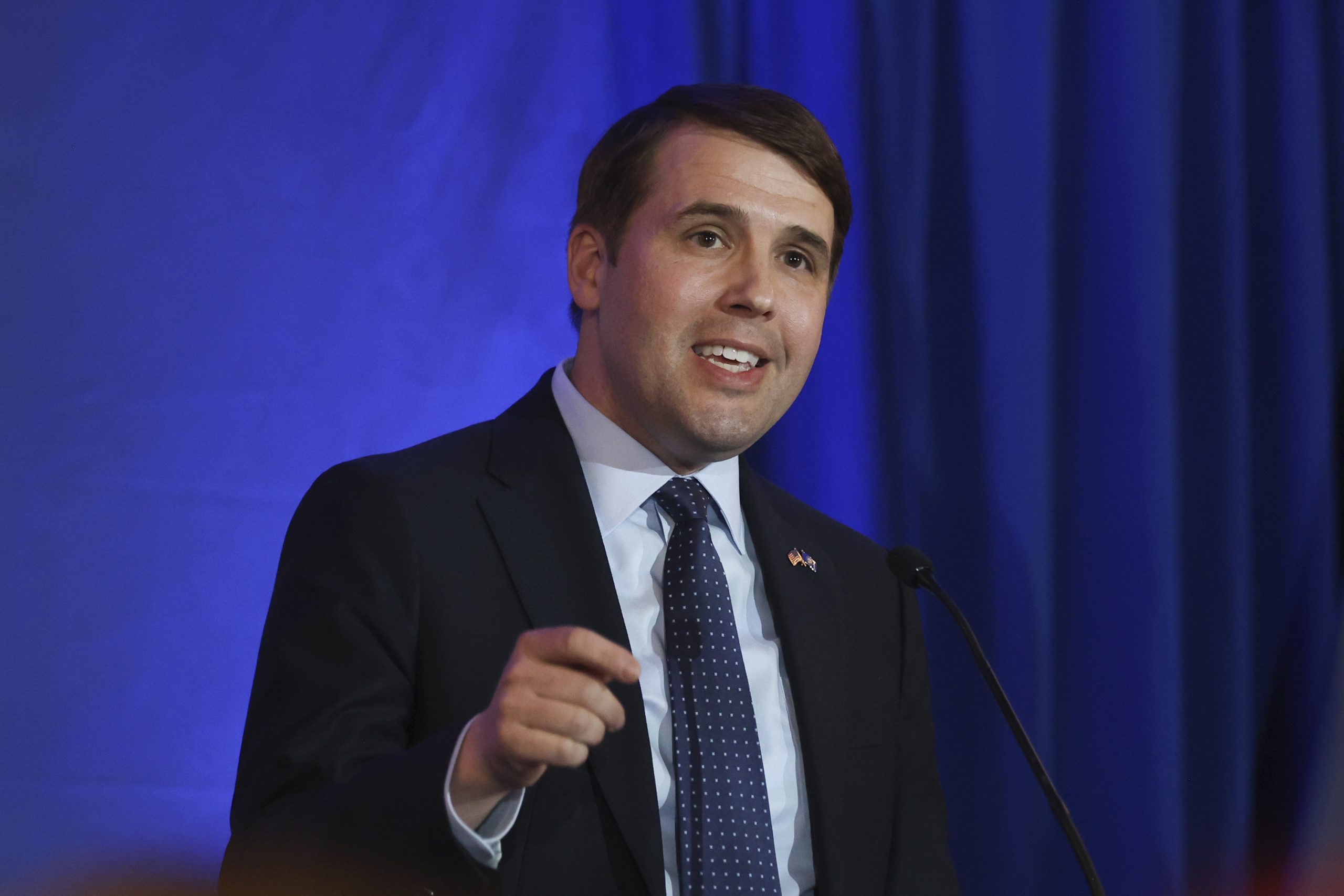

Rep. Chris Pappas (D-N.H.) holds a sizable cash advantage over his GOP rivals in the race for New Hampshire’s open Senate seat.
The Democrat raked in $3.3 million to his campaign account over the first quarter of the year as he vies to succeed retiring Sen. Jeanne Shaheen (D-N.H.). Pappas, who faces only nominal opposition for his party’s nomination, entered April with $4.2 million in his war chest, according to his Federal Election Commission filing.
Pappas’ leading GOP competitor, former Sen. John E. Sununu, raised $1.1 million directly to his campaign account and had nearly $1.9 million in cash on hand. He spent just $349,000, per his filing — a significantly lower burn rate than Pappas, who spent $2.3 million over the last three months.
Sununu’s primary rival, former Sen. Scott Brown, lagged even further behind. Brown raised a modest $321,000 and entered the second quarter with $783,000 in his campaign coffers. He spent more money than he brought in, according to his filing.
Pappas leads both of his potential Republican opponents in hypothetical polling match-ups of the general election, though his margin against Sununu is slimmer.
Sununu, who has the backing of the national GOP establishment and President Donald Trump in a state Republicans hope to flip, holds a wide lead over Brown, a former Trump ambassador, in polls of the GOP primary.
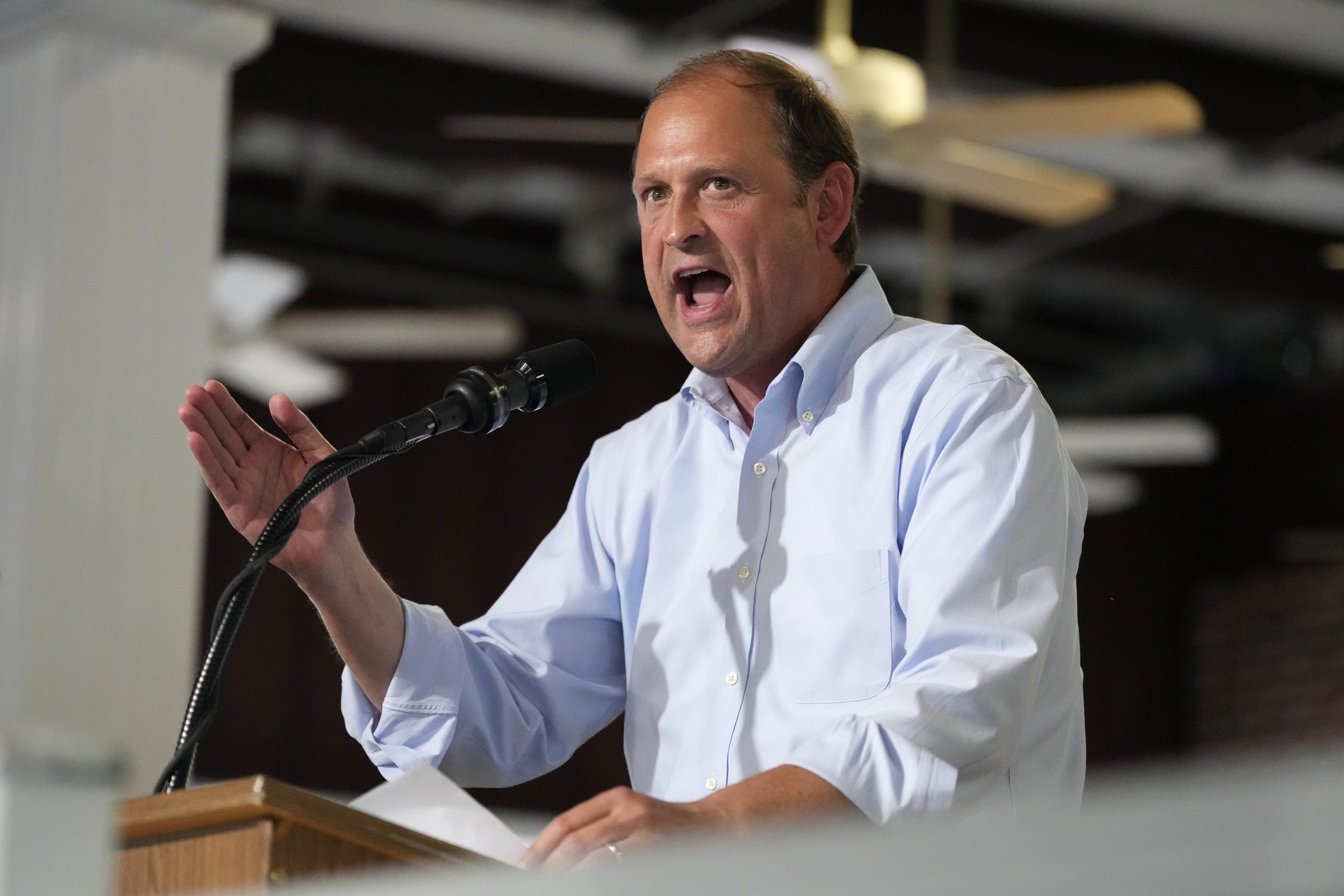

Rep. Andy Barr maintained his cash advantage over his GOP rivals in the race to succeed retiring Sen. Mitch McConnell in Kentucky.
Barr raised nearly $1.5 million over the first three months of the year and started April with almost $4.2 million in his war chest — more than five times that of his next-closest rival, according to filings from the Federal Election Commission.
Businessman Nate Morris reported raising $1 million and had roughly $580,000 in his campaign coffers to start the second quarter. But nearly half of that — $450,000 — was a personal loan, per his filing. Morris has now loaned himself $4.9 million over the course of the campaign.
Former state Attorney General Daniel Cameron posted another modest haul; he raised $456,000 and had roughly $765,000 in cash on hand.
Barr holds a slim lead in public polling of the contentious primary for McConnell’s seat that has seen all three major candidates scramble to distance themselves from their former boss and embrace Donald Trump. The president has not endorsed in the race.

(CAKE) tops $1.60, bullish sentiment grows amid rising Open Interest

Why Zack Polanski hates horse racing

Irish Fixtures Announced for COED Slowpitch European Championship 2026


-

 Politics6 days ago
US brings back mandatory military draft registration
-
 Sports6 days ago
Man United discover Nico Schlotterbeck transfer fee as defender reaches Dortmund agreement
-

 Fashion6 days ago
Weekend Open Thread: Veronica Beard
-

 Politics6 days ago
Malcolm In The Middle OG Turned Down ‘Buckets Of Money’ To Appear In Reboot
-

 Politics4 days ago
World Cup exit makes Italy enter crisis mode
-

 Crypto World7 days ago
Canary Capital Files SEC Registration for PEPE ETF
-

 Business6 days ago
Tesla Model Y Tops China Auto Sales in March 2026 With 39,827 Registrations, Beating Cheaper EVs and Gas Cars
-

 Crypto World3 days ago
The SEC Conditionalises DeFi Platforms to Be Avoided for Broker Registration
-

 Crypto World2 days ago
SEC Signals Exemption for Crypto Interfaces From Broker Registration
-

 News Videos1 day ago
Secure crypto trading starts with an FIU-registered
-
 NewsBeat3 days ago
Pep Guardiola and Gary Neville agree over Arsenal title problem that benefits Man City
-

 Business6 days ago
OpenAI Halts Stargate UK Data Centre Project Over Energy Costs and Copyright Row
-

 Business5 days ago
Ireland Fuel Protests Enter Day 5 as Blockades Spark Shortages and Government Prepares Support Package
-

 Crypto World5 days ago
Federal judge blocks Arizona from bringing criminal charges against Kalshi
-

 Politics6 days ago
LBC Presenter Mocks Trump Over Iran War Failures
-

 NewsBeat2 days ago
Trump and Pope Leo: Behind their disagreement over Iran war
-
 NewsBeat4 days ago
JD Vance announces ‘no agreement’ with Iran over nuclear weapons fear
-

 Crypto World2 days ago
SEC Proposes Certain Crypto Interfaces Don’t Need to Register as Brokers
-

 Tech6 days ago
A version of Windows 10 released a decade ago is now eligible for additional security patches
-

 Business5 days ago
IMF retains floor for precautionary balances at SDR 20 billion
You must be logged in to post a comment Login