Politics
Politics Home | Ed Davey: Hillary Clinton Told Me To “Stand Up To Bullies” Like Reform UK



9 min read
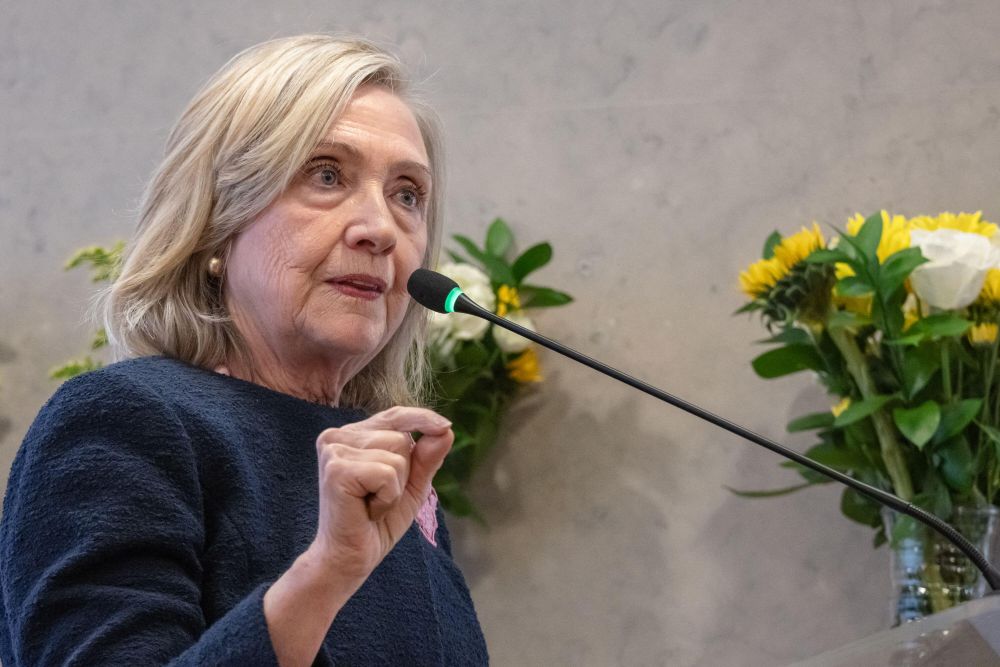
Former US presidential candidate Hillary Clinton privately urged Liberal Democrat leader Ed Davey to “stand up to bullies” like Reform UK during a recent visit to London.
In an interview with PoliticsHome ahead of the 7 May local elections, Davey revealed that he had a “long chat” with the former US secretary of state when she spoke at a business reception in the capital late last year.
“We talked about how we need to fight Reform in the way they need to fight Donald Trump, and she gave me some choice advice, which I’m not going to repeat because that would be unfair on her,” he said.
When pressed, he added: “She said you have to be very strong and stand up to bullies and don’t cave in and cosy up to them. She didn’t say she was criticising Keir Starmer, but I think the approach we [the Lib Dems] have taken, and the approach that someone like the Liberal Prime Minister of Canada, Mark Carney, has taken, is the sort of approach she will endorse.”
He described Clinton as “very friendly and very warm”: “You could tell that she realised that we had shared values.”
Davey sat down with PoliticsHome a month out from voters going to the polls for highly-anticipated elections in Scotland, Wales and council areas across England.
Ahead of those elections, the Lib Dems have sought to frame themselves as part of the broader pushback against the rise of the populist right, taking strong positions against Trump and his actions in Iran, and calling on King Charles and Queen Camilla’s planned visit to the US to be cancelled over the US president’s treatment of the UK.
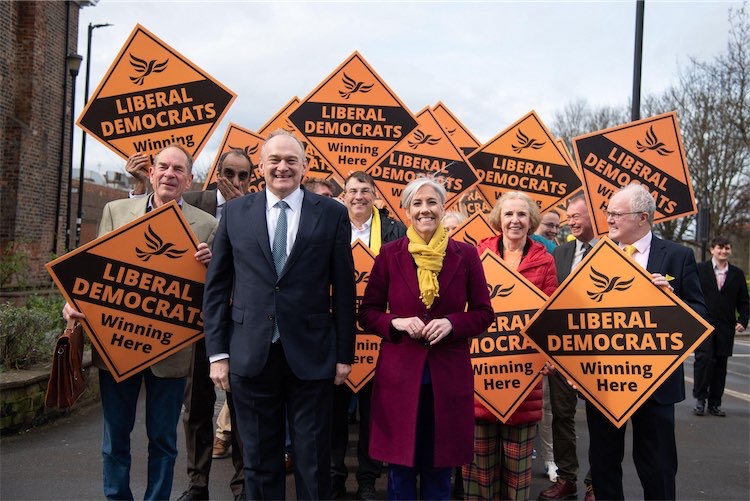
Speaking at the party’s local election campaign launch in Birmingham on Friday, Davey accused Nigel Farage’s Reform of “importing the divisive, nasty politics of Donald Trump into the UK”, adding: “This does not sit well with British values.”
The Lib Dem leader said he hopes that the Democratic Party defeats the Republicans in the US midterm elections in November, and while he joked that his party was “pretty busy in the UK at the moment”, he said they do have a “good relationship with a lot of Democrats”.
“We’ve helped Democrat politicians in the past,” he said.
“They have a good relationship with our party. We had a good relationship with a few Republicans, but I’m afraid lots of Republicans from that great party have now backed the MAGA movement and now support Donald Trump and some of his nasty, divisive, damaging policies.”
As well as Canadian Prime Minister Carney, Davey praised the “strong leadership” of Spanish Prime Minister Pedro Sánchez, who on Wednesday issued a thinly veiled swipe at the Trump administration by saying Spain “will not applaud those who set the world on fire just because they show up with a bucket”.

With Trump continuing to be a deeply unpopular figure in the UK, Davey hopes that his party’s opposition to the US president will boost Lib Dem prospects on 7 May.
Last month, The Spectator obtained internal plans revealing a belief among Lib Dem strategists that their position on the Iran war will pay dividends at those elections, with a memo reading: “For the first time since the Iraq war… we have a chance to turn a distinctive and principled Liberal Democrat position on foreign affairs into significant election gains.”
However, despite leading the Liberal Democrats to their best general election result two years ago, Davey is heading next month’s locals under pressure from restless Lib Dem MPs who complain that the party is drifting and failing to capitalise on the 2024 success.
The polls are the polls, but the elections are the elections
Most opinion polls show that the Lib Dems have hovered around 12 per cent of the national vote since the 2024 general election, with no significant increase.
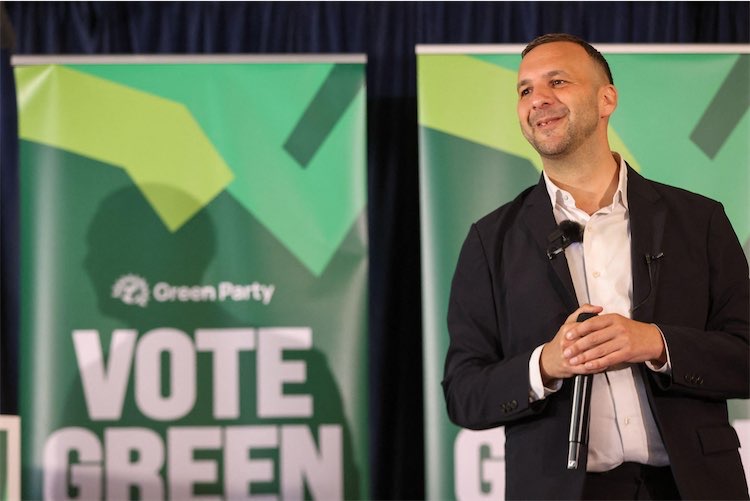
Last month, PoliticsHome reported concern within the party that a handful of Lib Dem MPs could be tempted to join Zack Polanski’s surging Greens.
“I’m restless like they are… I share their restlessness,” Davey told PoliticsHome, while stressing that his MPs and the party “work really well together”.
However, in a bid to face down his critics, the Lib Dem leader pointed to his electoral record.
“The polls are the polls, but the elections are the elections,” he told PoliticsHome.
“Winning elections is what we’ve done under my leadership. If we make net gains in May, it will be the eighth year in a row we’ve made net gains, the sixth under my leadership. It’s never happened before. That’s a continual increase, year on year.
“This year we could well beat Labour and the Tories for the number of councillors we elect for the second year in a row, and it’s never happened previously.”
He insisted that the Lib Dems are “still the most united parliamentary party” despite recent negative briefings.
“Labour could have a leadership election after May, the Tories could. They’re certainly losing MPs to Reform, and then Reform is losing those MPs on the other side. We haven’t, we won’t, and we will work really well together. I am determined to lead us into the next election and show that we have the ideas for our country,” he said.

One complaint among uneasy Lib Dems is that the party currently lacks a clear identity and target audience, having spent recent years focusing its electoral strategy on former Conservative voters in the south of England.
According to Davey, the party now has an opportunity to pick up former Green supporters who care deeply about the environment but are not as left-wing as the party’s self-described eco-populist leader, Zack Polanski.
“You’re going to see a fracturing of the Green Party in the sense that there’s a lot of the former Greens before this Corbynista push, who were much more middle of the road,” he said.
“Their focus was on the environment… The stuff that they [the Greens] are now talking about, they don’t really buy… they don’t like what they’re seeing.”
The discussion heading into 7 May has been dominated by the rise of the Greens and Reform, and their threat to the historic two-party dominance of Labour and the Conservatives.
However, the Lib Dems are hopeful of making gains across the country next month, including in East and West Surrey, Hampshire, Portsmouth, and some areas in the north of England, such as Stockport and Newcastle.
Asked what distinct message the Lib Dems are offering to voters, Davey told PoliticsHome they were positioning themselves as “local champions” who will fix church roofs – a deliberate echo of Conservative leader Kemi Badenoch, who mockingly described a Lib Dem “somebody who is good at fixing their church roof” last year.
At the campaign launch on Friday, PoliticsHome spoke to Lib Dem councillors and candidates who felt that while it was unlikely they – or any party – would win outright control of Birmingham Council, the Lib Dems could be left in a good position to play a “leading role” in the administration after the elections.
The question of who Davey would be prepared to work with could be one he faces increasingly in the future, as the fragmentation of UK politics into a multi-party system shows no signs of going away.
Davey was clear that his party has ruled out working with Reform, and the leader of the Scottish Liberal Democrats, Alex Cole-Hamilton, has ruled out entering a coalition with the Scottish National Party (SNP).
However, the party has not ruled out a coalition with Labour, the Green Party, independent candidates, or Plaid Cymru in Wales. Jane Dodds, the leader of the Welsh Liberal Democrats and the only Lib Dem member of the Senedd, said this week that the Lib Dems would only work with Plaid Cymru if they “confirm that they will not spend a penny of government money on independence”.
Asked whether his party might enter an agreement with the Welsh nationalist party, Davey said he had not spoken to Dodds about it yet.
“I’d be really surprised, given our opposition to independence,” he said.
“You would have to speak to Alex Cole-Hamilton and Jane Dodds, because they will run those negotiations. They’re devolved administrations.”
Liberal Democrat MP Roz Savage told The House magazine in March that the party “needs a plan” for a coalition scenario after the next general election, having been “badly burned” by their experience sharing power with David Cameron’s Conservatives.
Asked whether any resulting coalitions from the May elections could provide test cases for where Lib Dems could work with other parties after a general election, Davey said: “Good question, but I am very focused on the local elections and the next general election, maximising Liberal Democrat victories.”
The challenge for Davey and his party, however, is that the 7 May elections are so unpredictable that they are struggling to predict where they might make the strongest gains.
“It’s complicated, because you’ve got the two old parties’ votes collapsing,” the former cabinet minister said.
“Where we’re strong, we’re big beneficiaries of that, but then there’s Reform coming in… And so we’re finding it quite difficult to read the canvassing, because the Reform vote is a little bit shy.”
Davey suggested the Lib Dems could cause “a bit of a surprise” in Birmingham, pointing to the fact that his party are fielding an expanded list of 101 candidates in the city and describing local campaigners as having “really gone for it”.
In the bid for attention in an increasingly fragmented political landscape, Davey intends to continue carrying out publicity stunts for the cameras. Most recently, he was pictured playing chess with Hull City Council leader Mike Ross at the Hull campaign launch last week.
Davey – similarly to Chancellor Rachel Reeves – played chess competitively until he was about 12 years old, though he said he would “not put myself up as a great chess player” anymore.
“Playing the long game, that’s the key thing in chess,” he said.
“You play all your moves, you don’t get worried if you make a sacrifice here, you work out where you’re going to go.”

You must be logged in to post a comment Login