Politics
Politics Home | Former AI Minister Warns Social Media Ban Could “Cut Off” Education For Young People


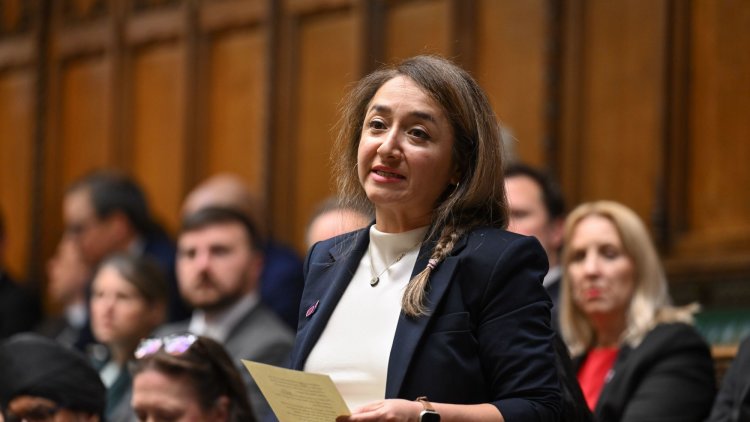
Feryal Clark was parliamentary under-secretary for AI and digital government until September 2025 (Alamy)


6 min read
Labour MP and former AI minister Feryal Clark has warned that restricting young people’s access to social media could “cut off” vital education resources for disadvantaged or vulnerable children, as parliamentarians consider whether to introduce a ban for under-16s.
Clark, who served as AI minister until the ministerial reshuffle in September 2025, is co-chair of the Digital Creators All-Party Parliamentary Group (APPG) alongside Conservative peer Ed Vaizey. This week, the group launched an inquiry into how creator-led content can support young people’s education and personal development, as the debate continues in Westminster over online harms and youth access to digital platforms.
In January, the government announced a consultation on the impact of mobile phones and social media on children, following a ban on large social media platforms for under-16s in Australia at the end of last year.
On Wednesday evening, peers voted for the second time in support of an amendment to the Children’s Wellbeing and Schools Bill to ban social media for under-16s, put down by Conservative peer Lord John Nash after wider pressure from campaigners and some politicians for tougher safeguards. It is the second time peers have defeated the government over the proposal, with the bill now set to return to the Commons.
Opinion polls have found that a ban on social media for under-16s is popular with the public, and Labour MPs have reported receiving a large number of emails from constituents pushing for them to support a ban. Recent outrage over X’s AI tool, Grok, being used to produce non-consensual sexualised images of adults and children, fuelled calls for the Labour government to regulate childrens’ exposure to the internet.
However, there is scepticism among cabinet ministers about how it would work in practice, with an early Whitehall assessment of Australia’s ban identifying problems like young people moving to other unregulated platforms and being allowed to use their parents’ social media accounts. The House magazine reported in January that Prime Minister Keir Starmer, Education Secretary Bridget Phillipson and Technology Secretary Liz Kendall all believe the UK should wait to see how it plays out in Australia before making a decision.
Speaking to PoliticsHome before the Lords vote on Wednesday, Clark said she found the Nash amendment “unhelpful” and argued that the government and MPs needed to listen to the voices of children and families, but also of digital creators who share educational content for children.
“I really value the input, the contribution and the educational content,” she said.
The former minister said she first became aware of the importance of digital creators while serving in the Department for Science, Innovation and Technology between 2024 and 2025.
“When I was in the department, when we were looking at the AI copyright bill, I just couldn’t see their voice anywhere, considering they contribute hugely to our economy and employ thousands of people,” she said.
Clark said that while concerns about the “full impact” of addictive algorithms on children were valid, policymakers risked overlooking the benefits of online educational content.
“I am concerned that we’re lumping everything together,” she said, adding that digital platforms can help address inequalities in access to education. At a session with the APPG on Wednesday morning, a group of digital creators told PoliticsHome that long-form education content on platforms such as YouTube should be treated differently from short-form videos on platforms like TikTok.
Clark added that she wanted to consider “some of the really important uses of technology that have been instrumental in bridging that gap in society for those young people who don’t have access to tutors, who don’t have parents at home all the time who can help them with their homework, who need that additional help”.
Clark echoed concerns by other MPs, including Labour MP Josh Dean, who have pointed out that plans to expand the vote to 16 and 17-year-olds must be factored into the government’s consultation on a potential ban on social media for under-16s.
Educational creators told the APPG that their videos are already playing a significant role in the classroom, with schools and teachers actively recommending their content for revision and learning, despite barriers to forming formal partnerships with education providers.
“When you’ve got schools and teachers directing their students to this content, where they see the value of it, we then have to ask ourselves a question of why are we looking to put something in place that will cut off these young people from it?” Clark said.
She was also critical of attempts to legislate via amendments, including the Nash amendment aimed at curbing under-16s’ access to social media.
“Legislating on such an important area shouldn’t be done just through an amendment,” she said.
“It just really irritates me. I find it really unhelpful. If you want an issue to be killed off, the best way to do it is that way. We need to understand the evidence, we need to make the best laws. It is the issue of our era, and we’ve got to get it right.”

Content creators themselves told the APPG that their work is filling gaps left by the formal education system. Katie Estruch, who has more than 100,000 subscribers producing biology revision content, said students and parents turn to her videos when they feel that the provisions from their schools are inadequate.
“They might have a teacher who is long-term sick, or they think they haven’t got a good teacher compared to someone else, or their school can’t afford to pay for practicals that a private school might be able to do multiple times,” she said.
She described her videos as a “resource for free that helps to bridge that gap”, adding that they are particularly valuable for neurodivergent students who can find classroom environments overstimulating.
Dr Tom Crawford, who teaches at Cambridge and Oxford and has built a large online following, said digital content can be transformative for students outside mainstream education.
Describing one student who had been homeschooled after experiencing bullying, he said that the student had passed his entire GCSEs and A-levels by watching YouTube videos.
“That’s obviously one specific case, but imagine someone who can’t go to school for various reasons: without that, he wouldn’t have passed these GCSEs, and obviously wouldn’t now be studying Maths at Cambridge,” he said.
“There are going to be quite a lot of individual stories like that with our audiences, and just generally across the country, where this is actually how they learn, or how they get excited about learning.”
Dr Lauren Bull, safeguarding lead at Chelsea and Westminster NHS Foundation Trust and TedxNHS speaker, wrote in The House that a ban was necessary to safeguard children from online harm.
“Delaying exposure to highly polarised, adult ideological content gives young people the time to develop the cognitive and emotional capacity required to critically evaluate what they encounter,” she said.
Bull argued that Louis Theroux’s recent “manosphere” documentary had “brought into view what many of us working on the frontline have been witnessing for years”.
“For doctors, teachers, and youth workers, this is not a sudden crisis. It is a predictable outcome,” she wrote.

You must be logged in to post a comment Login