Politics
Politics Home | Labour MP Calls For Pension Triple Lock Reform To Fund Defence Spending Boost





4 min read
A Labour backbencher has called for the pension triple lock to be reformed to help fund a rise in defence spending.
Graeme Downie, who was elected as the Labour MP for Dunfermline and Dollar in 2024, wrote in The House this weekend that the government should be brave enough to ask older people who “benefited financially from peace” to make a greater contribution to future national security.
“If there is to be a true whole of society approach to defence, and younger people could be expected to die, what are older people willing to sacrifice?” he wrote.
Prime Minister Keir Starmer is under pressure to expedite plans to raise defence spending amid warnings that international conflicts pose an increasing threat to the UK.
As things stand, the government is committed to spending 2.5 per cent of GDP on defence by 2027, with the target of reaching 3 per cent in the next parliament.
Starmer has recently indicated that he is willing to go further, but is facing growing calls, including from senior Labour figures, to detail how he will boost Britain’s military and defences in the face of Russian aggression and other threats.
This week, Lord George Robertson, the former Labour defence secretary whom Starmer asked to carry out the Strategic Defence Review, accused the government of “corrosive complacency” and was particularly critical of “non-military experts” in the Treasury for not giving the Ministry of Defence the money it needs.
There have been calls for the Labour government to reduce welfare spending as a way of raising defence spending.
Downie agrees that welfare should be looked at as a way of raising additional funding for national security, but said the focus should be on changes to the pensions triple lock.
Under current policy, pensions are guaranteed to rise by the highest of inflation, average earnings and 2.5 per cent.
The triple lock has enjoyed cross-party support for many years, partly because older people are seen as a key voter group.
Chancellor Rachel Reeves this week said Labour was “not changing” its triple lock policy, while Nigel Farage’s Reform UK recently said that it would keep the guarantee in place following suggestions that it would be willing to reform the policy if elected to government.
However, there are warnings that factors like people living longer, falling birth rates and high inflation levels mean the policy is unsustainable in the long term. There is also an argument that to maintain the triple lock in its current form would be unfair, given the financial challenges faced by younger generations.
“If ‘tough’ choices are needed, then we must not duck from the most difficult,” wrote Downie.
“We must be brave enough to ask those who benefited financially from peace to contribute to the future security of their grandchildren and great-grandchildren.”
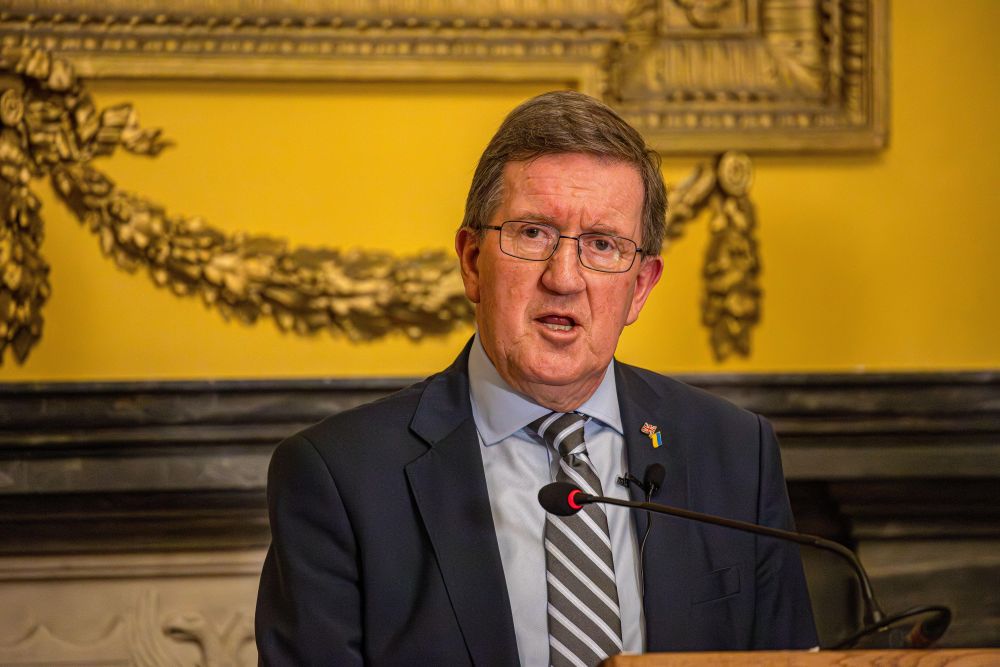

The Labour MP wrote that not increasing defence spending is not an option for the UK in an increasingly dangerous world, but the government “must be creative in finding routes” to greater funding, arguing that further borrowing or tax rises are not the answer.
He added that it would be unwise to focus on welfare cuts that impact young people, as the health and skills of young people will be “vital” to improving Britain’s defensive capabilities.
“History teaches us that armies don’t win wars, economies do, and poverty harms our economy by reducing the numbers for a capable workforce as well as fighting soldiers,” he said.
The Labour MP wrote that welfare reductions like reinstating the two-child cap would raise around £3bn a year by 2029-2030, “barely touching the sides of what is needed” while “harming people in poverty”, while the OBR estimates that the pension triple lock will cost upwards of £15bn more per year by this point than when it was created.
“If that means reforming, not abolishing, sacred cows such as the pensions triple lock while still protecting pensioners living in poverty, or accessing wealth built up in housing or other assets accumulated during these years of peace, then surely that is a sacrifice worth it for our future freedom?”

You must be logged in to post a comment Login