

Politics
Politics Home | The cost of getting it wrong: whoever leads Labour must get EU reset right




Dave Bench, Chief Executive
| CropLife UK
The government’s proposed UK-EU SPS agreement could reshape British farming for years to come, but concerns remain that rapid regulatory alignment with the EU risks damaging UK growers, productivity, and long-term investment
The past few weeks in Westminster have carried a tone of chilling familiarity. And while the government tussles over by-election selections and the arcana of Labour leadership rules, serious and consequential conversations are taking place behind the closed doors of Whitehall and the chancelleries of Europe. Chief among these is the government’s much-touted reset with the European Union. As we saw from the King’s Speech on the 13 May, with the announcement of the European Partnership Bill, the proposed UK-EU Sanitary and Phytosanitary (SPS) agreement remains at the heart of the government’s legislative and diplomatic agenda. With the attention of SW1 focused on the policies and personalities of rival leadership hopefuls, this agreement, which will shape the way we eat, grow, and sell food for the next decade, is not receiving nearly the attention it deserves. If the government’s ambitious timetable is to be met, we could be little more than a year away from the deal taking effect. The government has one chance to get this right.
The SPS agreement sounds technical, but in reality it is intensely political. Its stated aim is to reduce costs to consumers by reducing friction at the border. However, this comes with a significant trade-off in regulatory freedom. Since leaving the European Union, Great Britain has been able to make decisions about the use of genetic technologies and the regulation of Plant Protection Products (PPPs) independently of EU institutions. This has enabled UK regulators to bring innovative products to market more quickly and to better reflect the unique growing conditions of the British Isles. Divergence has been Fabian in nature, as much of the regulation currently in use is simply transplanted EU law; however, a rapid boomerang back to EU decision making would have a major impact. A closer relationship with our nearest trading partner is vital, but the pace of these negotiations risks seriously undermining the potential benefits.
This is not entirely new information. In January this year, the Andersons Centre report, commissioned by CropLife UK, produced a report highlighting the risks to farmers and growers of an SPS cliff-edge scenario. The findings were stark. In the “immediate alignment” scenario modelled by Andersons, UK crop production falls by around 3 – 6 per cent in the first year, while total income from farming drops by 7 – 11 per cent, a hit of between £500m and £810m, with growers losing access to key tools on which they currently rely. That translates into double-digit income losses for some crops, with wheat volumes down by 9 – 16 per cent, potatoes by 4 – 6 per cent, and apples by 3 – 7 per cent, alongside pressure on berries and leafy salads. Since the report was published, the wider landscape for growers has become even more challenging, with rising input costs adding further strain. CropLife UK has been clear that it supports a deal that cuts red tape and smooths trade, but a deal that automatically overrides legitimate GB science-based decisions on plant protection products and maximum residue levels would be devastating for British farming. The government, and any future government, must ask whether it is willing to sacrifice farmers and rural communities in order to secure this deal as quickly as possible.
The good news is that none of this is inevitable. The Andersons’ work for CropLife UK is clear that the greatest damage comes from an “immediate alignment” model, and that a managed approach to alignment under an SPS deal would greatly mitigate the shock to production and incomes. Managed alignment, in political terms, means three simple things: respecting legitimate GB decisions; ensuring UK involvement in EU decisions relating to UK-specific conditions and varieties; and building in realistic transitional periods so that EU approvals or Maximum Residue Level (MRL) divergences do not remove essential tools from farmers overnight. This is not a call for lower standards, but for evidence-based, predictable processes that allow growers to plan, invest, and maintain yields while moving together towards high, shared outcomes on food safety, the environment, and trade.
If Labour wants to be trusted on both the economy and Brexit, whoever leads the party needs to be bold and explicit about any SPS deal. They must fight for an agreement that reduces barriers to trade with our neighbours without embedding automatic alignment that undermines British growers’ ability to compete and invest.
For the Labour leadership, the future should be to commit to an SPS agreement with sensible transition periods and managed alignment on plant protection products and MRLs, rather than overnight overrides of GB rules. Insist on genuine UK involvement in any EU decisions that would subsequently apply here, including proper consultation and impact assessments for UK farming. Use the European Partnership Bill to create a combined regulatory regime that reflects new technologies and UK agronomy, and stress-test any draft text with growers and the wider food chain before signing, not afterwards.
Click here to read the Andersons Centre report.

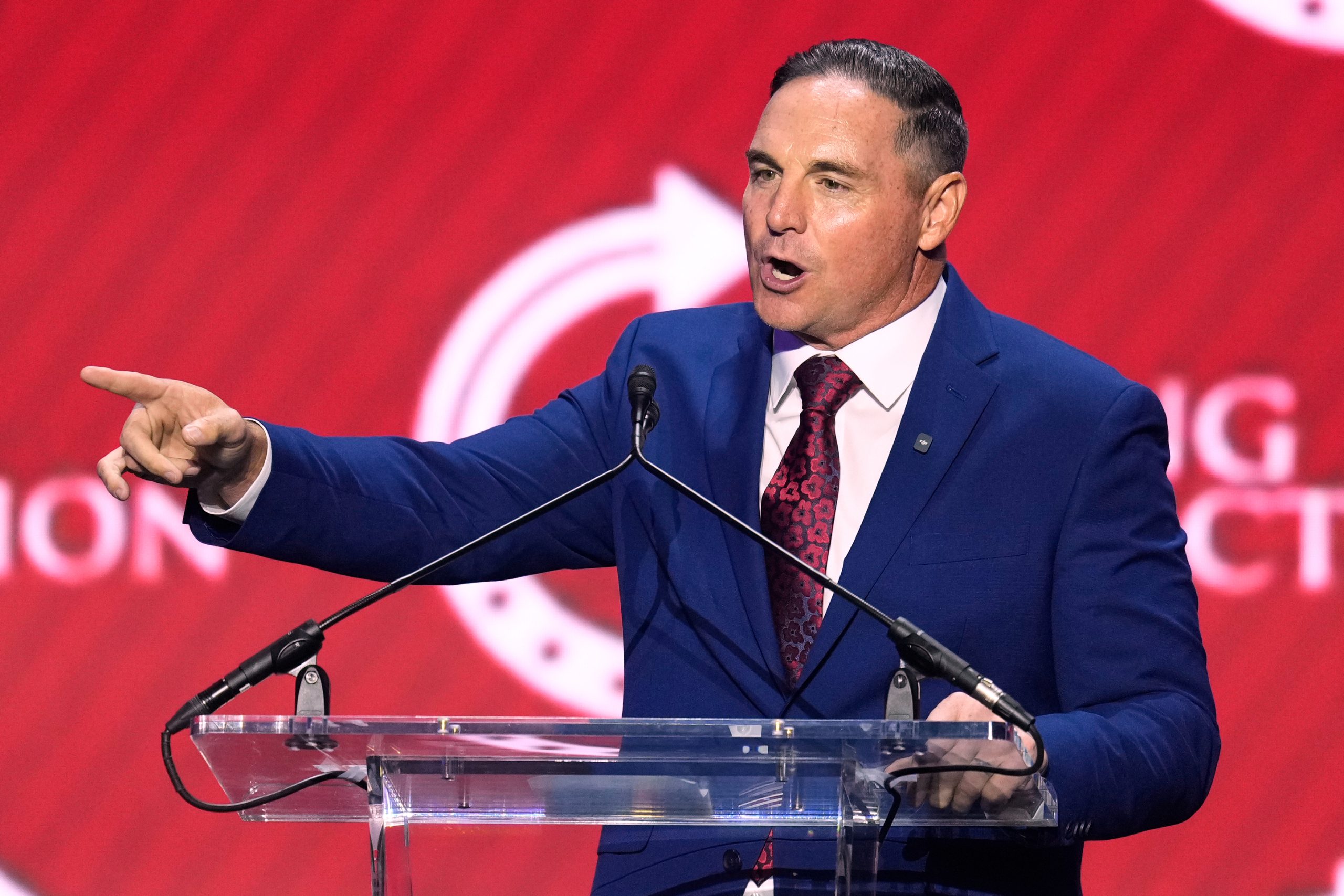

Former Arizona Cardinals kicker Jay Feely cruised to victory in Arizona’s 1st District on Tuesday, one of the nation’s most competitive battlegrounds.
Feely, a close ally of President Donald Trump, leveraged Trump’s endorsement to topple former state Rep. Joseph Chaplik.
He’ll face a steep challenge defeating the Democratic nominee in November: The 1st District, which spans the affluent suburbs north of Phoenix, is one of House Democrats’ top targets after Trump won it by just three points in 2024. Feely is looking to keep the seat under GOP control amid a midterm year that presents major headwinds for the party.
During the primary, Chaplik, a member of the Arizona Freedom Caucus, attacked Feely for being insufficiently conservative on gun rights and for his humanitarian work in Haiti. But Feely, one of Trump’s occasional golf partners, leaned on his proximity to the president.
“Who can call [Trump] and who can get him to answer? That’s me,” Feely said in a debate. “He will take my call and he will listen. I have the ability to have the ear of the president.”
Feely, a former professional football player who counts Tom Brady among his college roommates, first announced his candidacy for GOP Rep. Andy Biggs’ seat in the 5th District. But after Trump backed former Pinal County sheriff Mark Lamb in that race, Feely switched to the 1st District, where he earned the president’s dual endorsement, alongside former state GOP chair Gina Swoboda.
“Both fierce advocates of Make America Great Again, Jay and Gina have been with us from the very beginning, and either one would be an incredible Representative,” Trump said in January on Truth Social.
In February, Swoboda dropped her candidacy for the 1st District and instead ran for secretary of state, leaving the path clear for Feely.
As a member of the National Republican Congressional Committee’s MAGA Majority fundraising program, Feely will likely be a top recipient of outside Republican spending in the months leading to November.
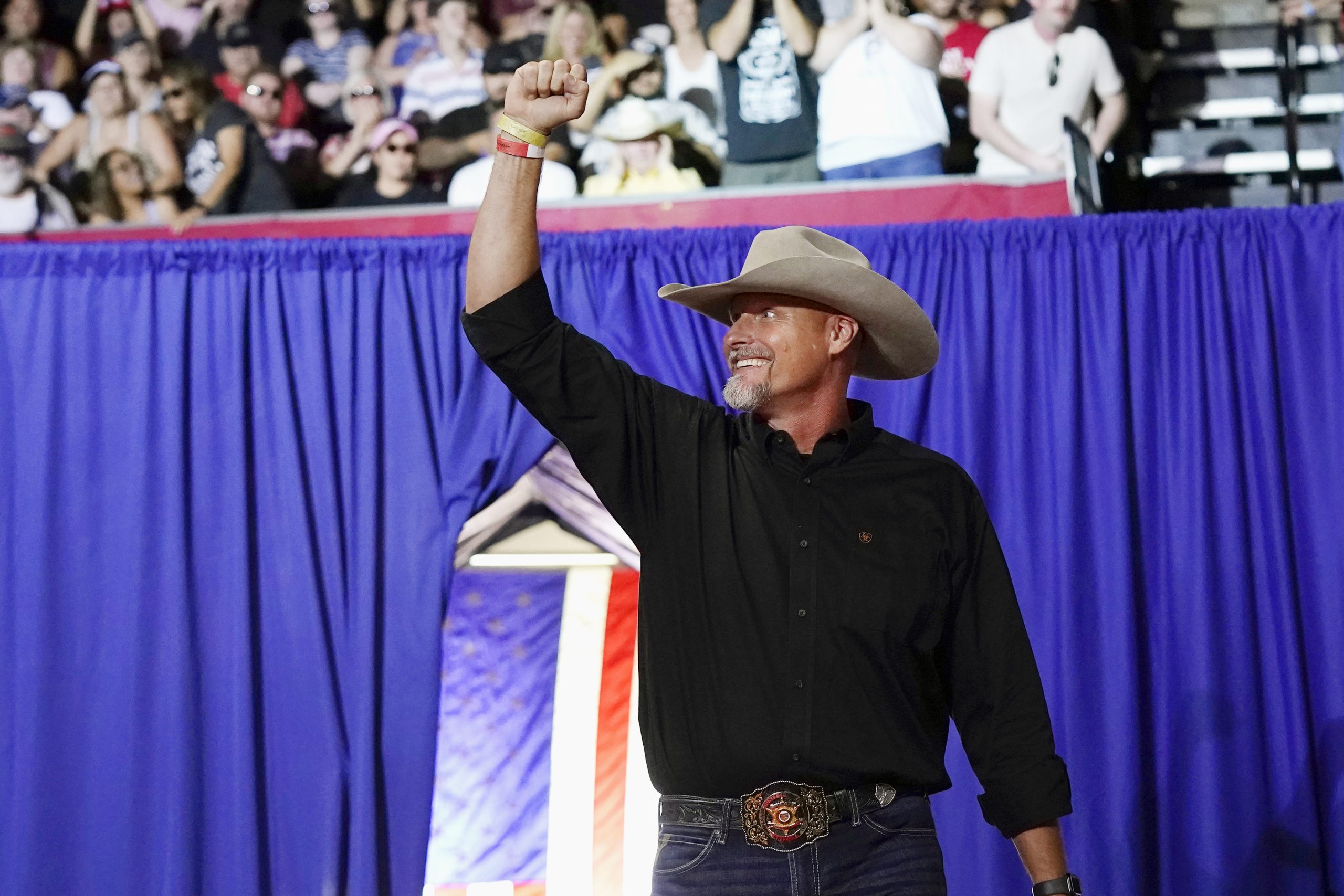

A scandal-plagued House candidate powered by President Donald Trump’s endorsement won a messy primary Tuesday.
Mark Lamb, the former Pinal County sheriff, overcame a late push from self-funding candidate Daniel Keenan in Arizona’s 5th District. Lamb will enter November as the heavy frontrunner in the deep-red Phoenix-area district to replace Rep. Andy Biggs (R-Ariz.), who is running for governor.
Keenan had poured nearly $2 million of his own cash into the campaign and attempted to make Lamb’s alleged sexual misconduct and abuse of power central to the race. Lamb has denied the allegations.
But Lamb — bolstered by Trump and Arizona-based Turning Point USA — managed to ward off the attacks.
The race’s outcome reveals the strength of Trump’s endorsement, and it’s the latest example of how willing GOP primary voters have been to accept scandal-ridden candidates favored by the president.
Lamb, who served as sheriff until 2024, earned national notoriety as a gun-toting critic of the Biden administration’s immigration and border policy. He secured Trump’s backing for the 5th District contest last year.
Then in May, the Arizona Republic launched a multi-part investigation alleging that Lamb engaged in a yearslong pattern of sending sexual images and instigating intimate encounters between him, his wife and others. One woman involved, Jillian Stannard, accused Lamb of encouraging her husband to have sex with other women, including Lamb’s wife. She also alleged that Lamb threatened her, saying there would be consequences, when Stannard raised concerns to religious leaders.
Screenshots the Republic obtained of messages with another woman, Tammy Peacock, suggest Lamb — then a sitting county sheriff — threatened to leverage Arizona’s revenge porn law against her.
In a statement last week, Lamb spokesperson Ed Morabito told POLITICO that “these allegations are false and come from long-discredited political opponents.”
Lamb did not lose any significant endorsements in the wake of the scandals — Trump reinforced his endorsement in mid-July — even as Keenan made the allegations central to his campaign.
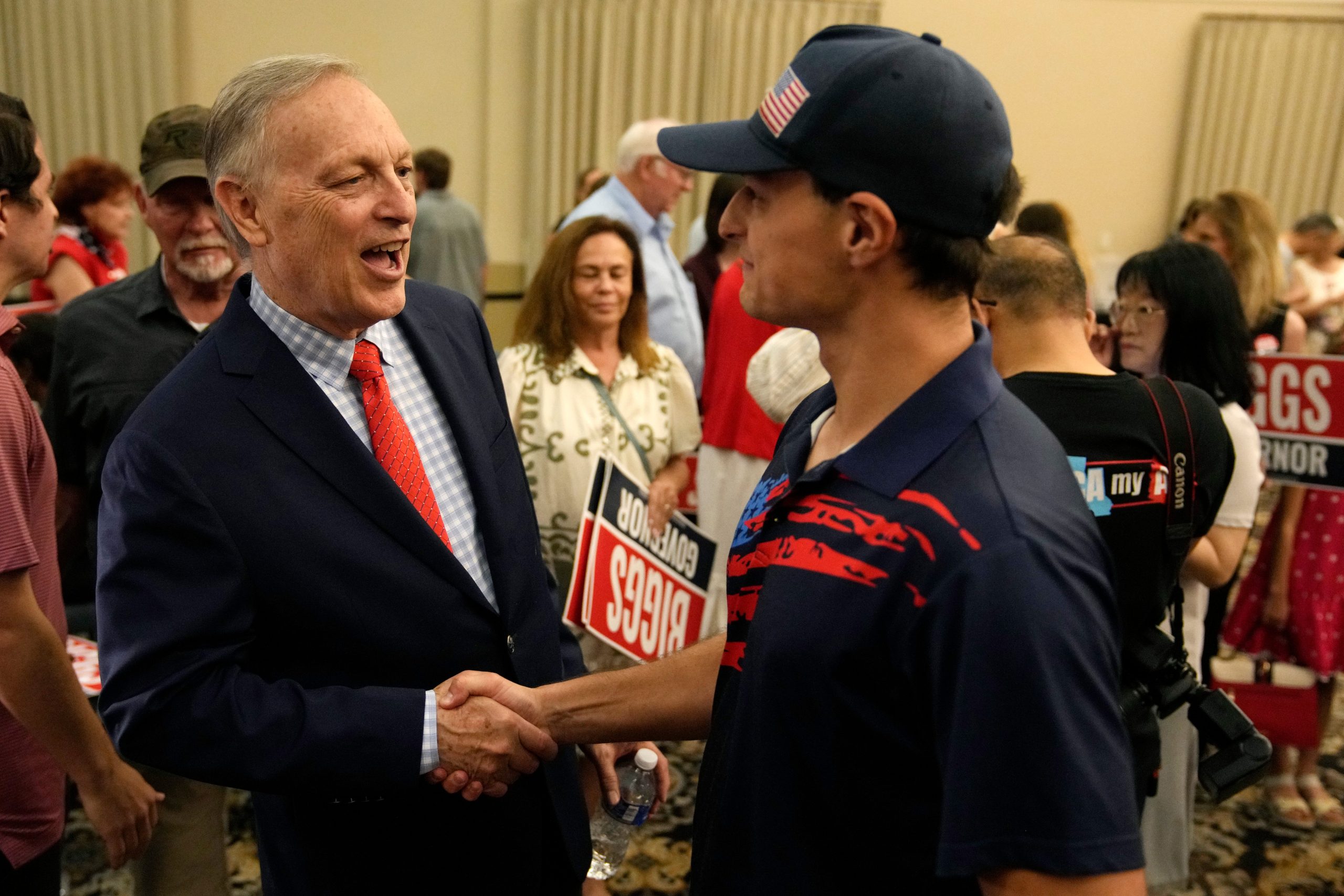

Trump-endorsed Rep. Andy Biggs has won the GOP primary to face Democratic Gov. Katie Hobbs in November, setting up a marquee governor’s race in one of America’s most competitive states.
Biggs, a former chair of the hardline House Freedom Caucus and a close ally of President Donald Trump, easily dealt with his only serious challenger, Rep. David Schweikert, on Tuesday. Before the primary results were official, he had already begun pivoting to the general election against Hobbs, who is seen as one of the most vulnerable Democratic governors this fall.
Republicans feel bullish about their odds of flipping the governorship, after Trump carried the state by five points in 2024. But even though Trump won last time, the state has gradually shifted to pure tossup territory over the past few years, electing Democrats to both Senate seats, as well as the attorney general and secretary of state’s offices.
Hobbs had already shifted her focus to Biggs as well. Her campaign has amassed a significant warchest for the race and has already started running ads. Biggs, given his lack of a significant primary challenge, has been able to hold onto more cash than his GOP rivals, but is still behind Hobbs.
The race will test whether Republicans, who are starting down a potentially bruising midterm cycle, can reclaim the top office of a state that has long been a place of success for the party.
During the Republican primary debate, Biggs spent more time talking about his working relationship with House Minority Leader Hakeem Jeffries and Arizona Democratic Sen. Mark Kelly than he did flexing his endorsement from Trump or highlighting his House record, including his time atop the Freedom Caucus. Instead, he tried to refocus on his bipartisanship in Congress and his leadership in the state legislature.
“I know how to reach across the aisle,” Biggs said during the debate.
But he will still have to contend with many of his past stances, including his role in trying to overturn the 2020 election.
And Hobbs is already working to ensure voters know where Biggs stands on key issues as a longtime member of the House, including his anti-abortion positions and his role in 2020. Her campaign has repeatedly attacked him as “too extreme” for the state and has dubbed him “basement Biggs” for keeping a relatively low profile throughout the GOP primary.
‘When you think that you’ve lost everything’, sang Bob Dylan, ‘you find out that you can always lose a little more.’
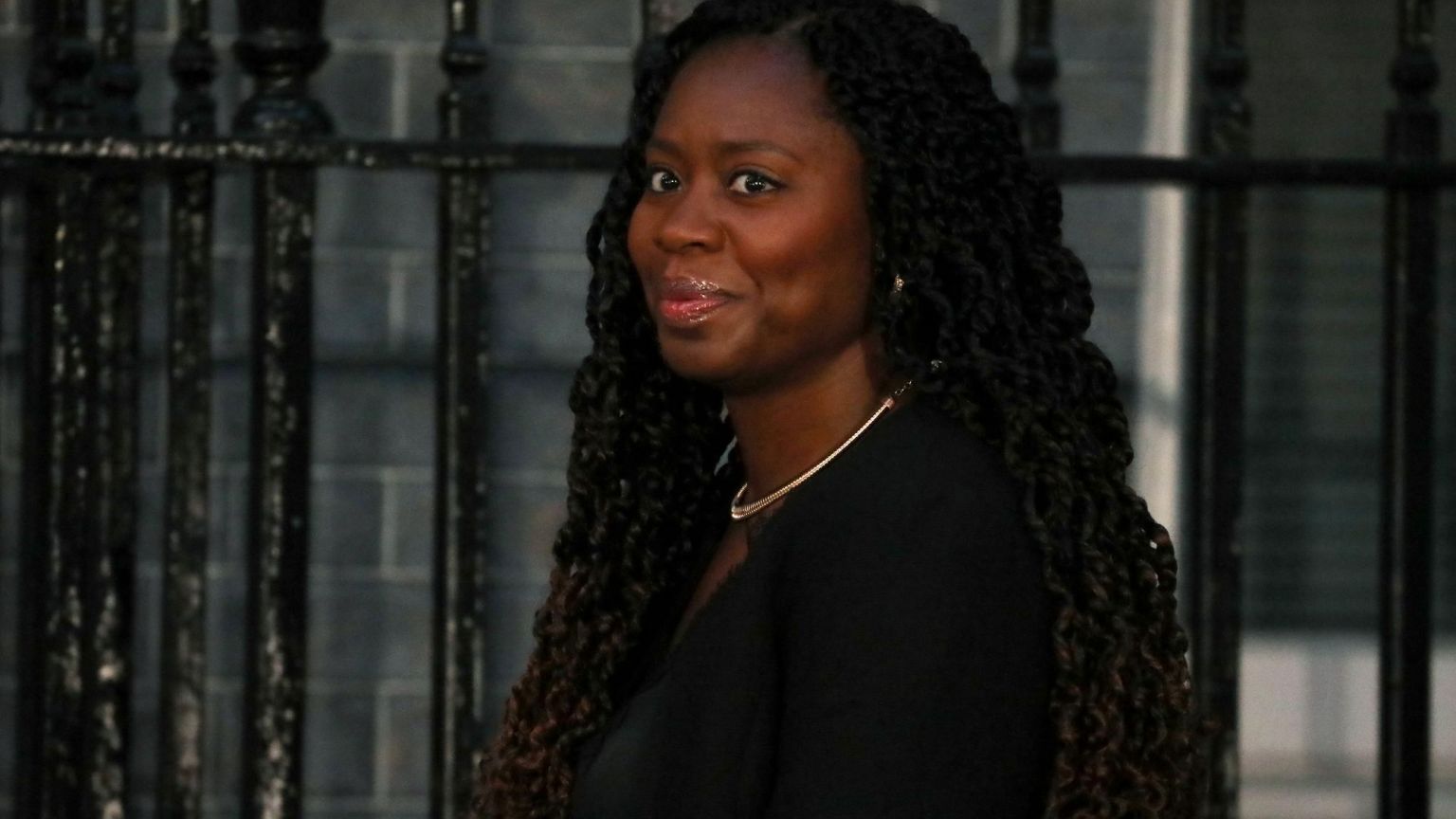
Ahead of Andy Burnham announcing his new cabinet, the widely held view among right-thinking people was that nothing was more important than Ed Miliband losing his job at the Department for Energy Security and Net Zero. Surely no one could be worse than this fanatic? Miliband not only lost his job but will now spend much of his time abroad in his new role as UK foreign secretary. Happy days. Alas, those who couldn’t think of anyone worse to be in charge of the nation’s energy supply had forgotten about Miatta Fahnbulleh, former chief executive of the New Economics Foundation and Britain’s new Minister for Energy Security and Net Zero, with the emphasis heavily on ‘Net Zero’.
Fahnbulleh has accused Zack Polanski of stealing her vision of a green economic revolution and she has a point. The economically illiterate, tree-hugging, anti-growth agenda that the New Economics Foundation (NEF) has been pushing for the past 40 years is indistinguishable from that of the current Green Party. Indeed, the NEF sprang out of what was then known as the Ecology Party in the 1980s. For years, it provided a little light relief in the think-tank world, with its happy-clappy focus on ‘wellbeing’ over wealth and its hare-brained policy proposals, such as setting up its own rival to Uber and creating local currencies like the Brixton Pound.
According to the NEF’s Happy Planet Index 2012, Rwanda was a better place to live than Luxembourg, and Costa Rica was the greatest country in the world. How we laughed! The think-tank’s obsession with climate change seemed to be motivated by a perverse desire for the sacrifices it assumed would have to be made. Privation was a feature rather than a bug of its efforts to save the planet. In 2009, it dished out carbon ration books, which limited people to a certain number of showers, baths and toilet flushes per week to get them ready for the future. In 2010, it followed up its book, Growth Isn’t Working, with the sequel, Growth Isn’t Possible. In the same year, it called for a 21-hour working week to help tackle unemployment and ‘over-consumption’ and to ‘help to engineer a “steady-state” economy’.
As the 2010s wore on and the public began to see what an economy without growth actually looked like, the NEF quietly pivoted away from wanting a ‘steady-state economy’. By 2020, it was complaining that the UK’s GDP per capita was slightly lower than it had been in 2008 (for which the NEF blamed the government’s failure to ‘invest in insulation and renewables’), but it never lost its fondness for terrible policies. Rent controls? Yes please! A wealth tax? You bet! Price caps? Of course! No wonder Fahnbulleh thinks Polanski has stolen her ideas. (Having your ideas stolen by politicians is kind of the point of think-tanks, by the way.)
The NEF worldview is driven by a way of thinking that is not so much ‘new economics’ as anti-economics. Its belief that a 21-hour working week will reduce unemployment shows that it has fallen for the lump of labour fallacy – the false notion that there is a fixed, finite amount of work available in an economy. Its idea of replacing fiscal rules with ‘fiscal referees’ appointed by the government – who, the NEF assumes, will give governments greater latitude for borrowing – ignores the fact that the bond markets do a ruthlessly efficient job of refereeing already. The Bristol Pound and similar local currencies rest on the foolish belief that places get rich by not trading with outsiders.
Immerse yourself in the world of the New Economics Foundation and you will be transported to a parallel universe in which Britain is a night-watchman state practising ‘trickle-down economics’, ruthlessly cutting benefits and doing sod all about the ‘climate crisis’. Despite public spending rising from 40 per cent to 46 per cent of GDP and the national debt trebling since 2007, the NEF has consistently maintained that Britain is labouring under ‘austerity’. Despite income inequality falling to the lowest level in 30 years, the NEF’s current chief executive, Danny Sriskandarajah, insists that this is ‘a time of rising inequality’ and that we are ‘living through an inequality crisis’.
This is the organisation that Miatta Fahnbulleh ran between 2017 and 2023, when it dropped the silly but endearing hippy stuff and became a run-of-the-mill left-wing think-tank. Now she is at the heart of government and her latest successor has congratulated Andy Burnham for ‘calling time on trickle-down economics’ and for going ‘beyond aggregate growth’.
As for Net Zero, there can be no doubt that Fahnbulleh is at least as zealous as her old boss, Ed Miliband. In an article written in 2019, in which she claims that British governments on the left and right have ‘spent decades following a neoliberal recipe of tax cuts, reduced social welfare benefits, and deregulation’, she called for Net Zero to be achieved ‘within 10 to 15 years’, which would be ruinously expensive if it were not utterly impossible. She is a staunch supporter of the Green New Deal, which the NEF helped devise back in 2008. She has applauded Extinction Rebellion and used to be the chair of the Croydon Climate Crisis Commission. If she’s using the issue of climate change to climb the greasy pole, she has been playing a very long game.
Instead, there is every indication that Fahnbulleh is a true believer, a dyed-in-the-wool climate ideologue with delusional economic beliefs for whom no cost is too great for the prize of decarbonising the United Kingdom. She genuinely believes that energy costs are too high because we are over-reliant on fossil fuels and wants to make a ‘big sprint’ towards a Net Zero electricity grid by 2030.
Don’t assume that things cannot get worse. Things can always get worse.
Christopher Snowdon is director of lifestyle economics at the Institute of Economic Affairs and the co-host of Last Orders, spiked’s nanny-state podcast.
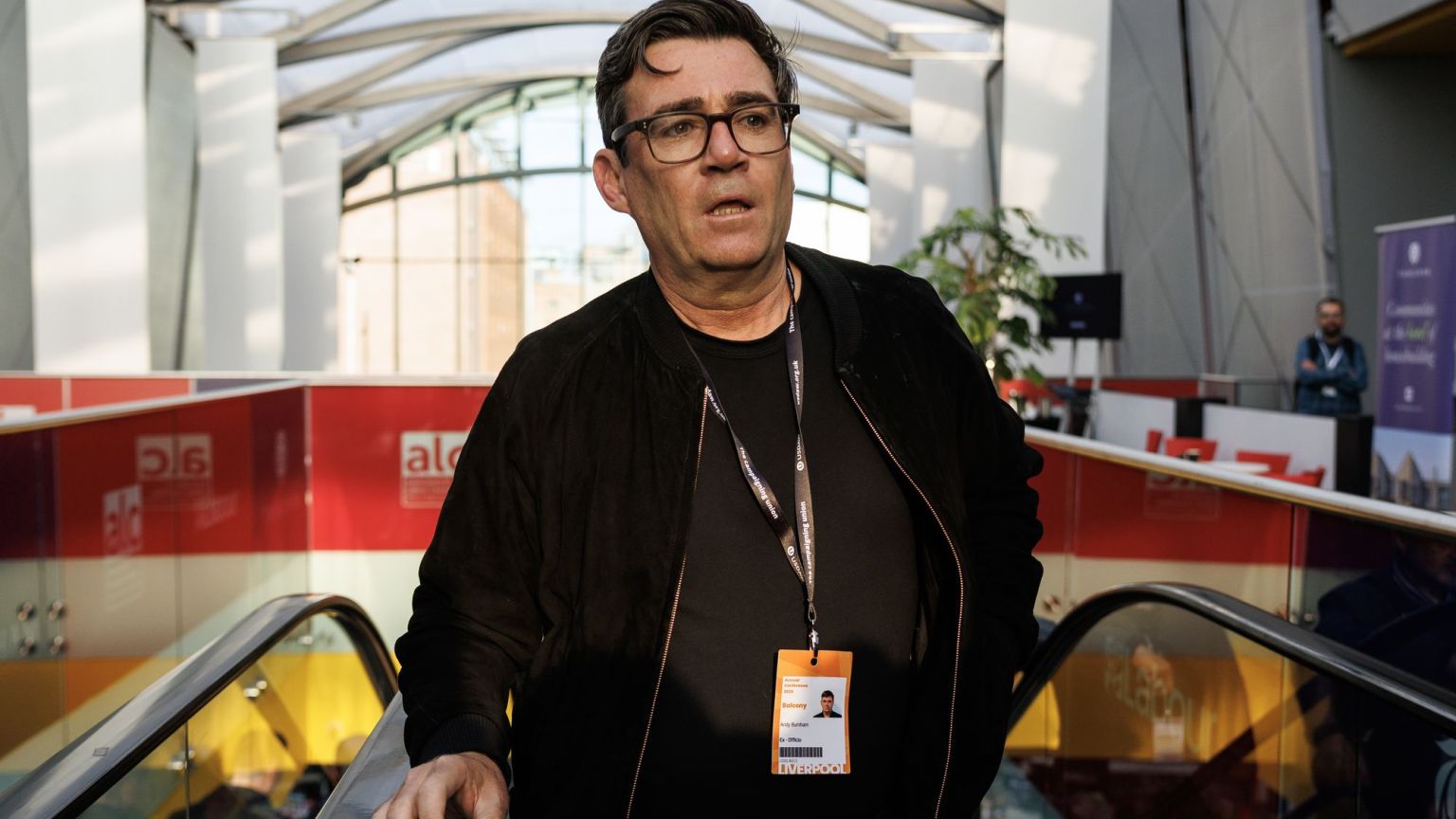
Andy Burnham has pledged to do politics differently. He certainly wants to change the look of politics, if not necessarily the substance. In his inaugural speech yesterday, out went the official lectern. So too, it seems, will the protocol of formal dress normally associated with high office. Burnham let it be known last week that he intends to wear a suit and tie only in the House of Commons.
So, we face the grim prospect of the UK prime minister conducting affairs of state in ‘figure-hugging’ black t-shirts, jogging bottoms and expensive trainers, as though permanently recovering from a rave in Manchester’s Northern Quarter. The tieless days of Tony Blair and Alastair Campbell may soon come to look positively Edwardian. Whether nose piercings and neck tattoos make an appearance in cabinet meetings remains to be seen.
Does any of this really matter? Isn’t attachment to the suited-and-booted look merely a fogeyish affectation, the last refuge of people who still iron their handkerchiefs?
Not really. Clothes are never just clothes. They are statements of intent. They tell us how an institution sees itself and how seriously it expects to be taken. Burnham’s determination to import work-from-home aesthetics into the highest offices of state is a strangely adolescent gesture. The office becomes an extension of the sofa. Government becomes just another Microsoft Teams meeting.
For centuries, the workplace has deliberately distinguished itself from the home. The transition from private to public life was symbolised by changing how one dressed. We still understand this instinctively. We put schoolchildren into uniforms not because wearing blazers improves their maths skills, but because uniform marks the transition from the private world of the family into the public world of shared rules, responsibilities and expectations. Dressing differently encourages behaving differently.
That principle once applied even more strongly to high office. Putting on the suit, the gown or the uniform was never simply about appearances. It was a ritual acknowledgement that the office mattered more than the individual occupying it. Ministers were expected to adapt themselves to the institution rather than expecting the institution to adapt to their personal brand.
Burnham’s declaration implies the opposite. The message is that public office should accommodate the lifestyle preferences of those who hold it. It reflects the broader cultural assumption that institutions should become more ‘authentic’, more casual and more like us, rather than expecting us to rise to their standards. It is a curious inversion. The prime minister is no longer expected to look like the prime minister – instead, he is expected to look like everybody else.
Dress codes have always signalled seriousness. Judges still wear robes. Military officers still wear uniforms. Diplomats still dress with painstaking formality because clothes communicate respect – for the occasion, for the office and for those with whom they are dealing.
Nobody imagines that a well-cut suit makes someone more competent. But it does say that the occasion deserves more than whatever happened to be hanging over the back of the chair. Winston Churchill famously wore his informal ‘siren suit’ during the Blitz without diminishing his authority. But Churchill understood that this exceptional clothing reflected exceptional circumstances.
Dress also marked the divide between the old Britain of duty and the new Britain of perpetual youthfulness. Tony Blair and Alastair Campbell understood perfectly well that loosening the tie was never just about comfort. It symbolised a broader rejection of the formality and restraint of the pre-New Labour world. Politics would become more informal, more conversational, more relaxed – and, inevitably, more personal.
Since then, every institution has been encouraged to ‘dress down’, flatten hierarchies and blur distinctions. Universities resemble tech start-ups. Bank managers look like marketing executives. Senior civil servants often dress like they are on their way to Glastonbury. The assumption is always that informality breeds creativity, even though it more often breeds familiarity and lowered expectations.
There is, after all, a reason why nobody wants to see airline pilots flying in hoodies or surgeons operating in cargo shorts. Uniforms and conventions reassure us because they communicate professionalism before a word has been spoken. We instinctively associate standards of appearance with standards of conduct, even if we know intellectually that the relationship is imperfect.
None of this means politicians need to resemble Victorian undertakers or City solicitors. But symbols matter because politics itself runs on symbols. Ceremonies, traditions, robes, despatch boxes, Black Rod and yes, even suits and ties, all remind us that democratic government is larger than the personalities temporarily passing through it.
Andy Burnham’s wardrobe may seem a trivial matter. Yet it reflects a deeper instinct of contemporary politics. The irony is that, in trying so hard to look ordinary, politicians risk making the extraordinary responsibilities of government appear ordinary, too.
Keir Starmer proved that a suit and tie are no guarantee of good government. But it is difficult to believe Britain will be better governed by a prime minister who looks as though he’s just nipped out of PureGym.
Neil Davenport is a writer based in London.
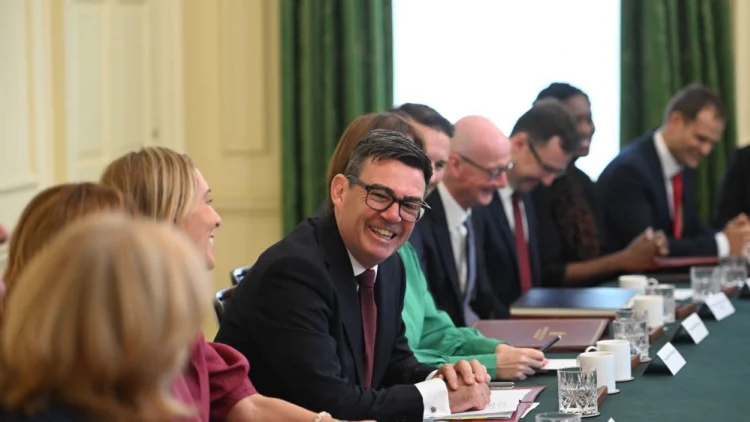

Andy Burnham appointed his cabinet on Monday (Alamy)
2 min read
Andy Burnham’s Cabinet has been described as a northern takeover of government. Analysis shows one part of the north in particular is on the rise.
After taking office on Monday, the new Prime Minister gave high-profile ministerial jobs to fellow northern Labour MPs like Angela Rayner and Lucy Powell. There are also seats at the Cabinet table for Lou Haigh and Anneliese Midgley, who both played key parts in Burnham’s journey from the Manchester mayoralty to Downing Street.
Burnham’s northern roots, particularly “Manchesterism”, are an important part of his political identity.
He has set up a new Downing Street base in Manchester, ‘No 10 North’, where he intends to work at least one day a week, starting on Friday, and where he could host foreign leaders.
It’s not just the politics of these places and his devolution agenda, but the cultural side, too, like his love for Everton FC, rugby league and The Smiths.
A comparison of Burnham’s Cabinet with Keir Starmer’s top team when he stood down to make way for his successor shows that specifically the northwest – the PM’s home region – is the big winner in terms of senior ministerial representation.
Burnham has appointed six Labour MPs representing seats in part of the country: Education Secretary Powell; Communities Secretary Rayner; Chief Whip Midgley; Business Secretary Jonathan Reynolds; Environment Secretary Angela Eagle; and Culture Secretary Lisa Nandy.
This compares to two MPs in Starmer’s cabinet at the time of his resignation who were from constituencies in the northwest.
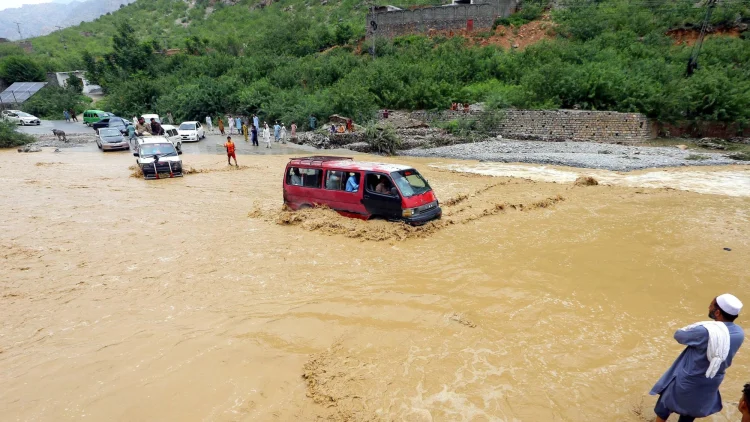
Heavy monsoon rains triggering flash floods in Pakistan, July 2026 (Pakistan Press International / Alamy)
5 min read
Too often, political debate about migration begins with a boat, a border crossing or an asylum claim.
But when Abdihakiin Hassan Jiirow gave his testimony to our recent APPG inquiry on Climate Change and Migration, he did not offer such a simple explanation for how and why people move. He described drought and the loss of livestock; he spoke of flooding, insecure shelter, food shortages and scarce clean water; he talked about interrupted schooling, and persistent violence from militias and non-state actors.
For him and for many others, those pressures accumulated until the conditions necessary for ordinary life had broken down. At that point, remaining at home was no longer a meaningful choice. His testimony should change how we discuss climate migration.
That is the central argument of Before the Border, the new report from the All-Party Parliamentary Group for Climate, Nature and Security. It is also why the government’s new Climate Security Taskforce must be matched by a permanent capability able to identify emerging risks and act before crisis becomes displacement.
Climate change does not operate as a single trigger sending people directly towards Britain. It acts through systems. Drought, flooding, extreme heat and environmental degradation interact with poverty, conflict, weak governance and failing infrastructure.
Movement is usually internal or regional. People travel first to the nearest town, city or neighbouring country where they hope to find safety, employment or essential services.
But geographic distance is not strategic distance. When host communities are overwhelmed, public services fail, food prices rise and governments lose legitimacy, the consequences can reach the UK through humanitarian crises, conflict, disrupted supply chains, pressure on allies, organised crime and irregular migration routes.
The principal security threat is not the person who moves. It is the unmanaged systems failure that removed their choices.
Our evidence also showed what can happen when some of those choices are restored. Ahmad Ouwier arrived in Jordan as a Syrian refugee. He moved from informal work into information technology and entrepreneurship, founded a business, and created opportunities for refugees and Jordanian citizens.
His story shows that resilience depends upon institutions as much as individuals. Ability and ambition can still be frustrated by restrictions on documentation, lawful work, education, finance and company registration.
Shahd Smadi made the same point when speaking about displaced young Syrians. They do not want to remain permanently defined by vulnerability or treated solely as recipients of aid. They want education, skills, lawful employment that facilitates agency and ability to further the social and economic future of the country hosting them – the opportunity to potentially contribute rather than permanently consume.
These testimonies illustrate two paths. Where institutions collapse, displacement can become prolonged, destabilising and intergenerational. Where people retain access to education, water, lawful work, finance and functioning local government, mobility can become a form of adaptation – a means of rebuilding lives and strengthening receiving communities.
This is not only a humanitarian issue. It is a matter of preventive security.
Britain already possesses expertise across government, the intelligence community, local authorities and universities. What it lacks is a permanent mechanism capable of combining that knowledge, identifying where climate pressures are converging with fragility and translating warning into action.
Our report therefore recommends a UK Climate Security Intelligence Team: a small, cross-government capability focused not on producing more reports but on improving decisions.
It should identify where pressures on water, food, livelihoods, infrastructure and public trust are approaching critical thresholds. It should assess those already displaced, but also those trapped because they lack the resources to move. Every warning should be linked to a practical policy choice – diplomatic engagement, adaptation finance, humanitarian assistance or conflict prevention.
This capability must work with countries, not impose solutions upon them. The climate security intelligence model developed with Jordan and funded by the UK Foreign, Commonwealth and Development Office demonstrates the value of nationally owned systems combining environmental data with local knowledge and political analysis.
Satellite data can reveal rainfall decline, vegetation loss or rising temperatures. It cannot explain whether a family will adapt, move, become vulnerable to exploitation or lose faith in the state. Effective warning requires both data and human judgement.
Britain must also recognise its own exposure. Flooding, coastal erosion, extreme heat and infrastructure disruption will increasingly affect where people can live and whether receiving communities can absorb internal movement. Managed retreat and local resilience are now matters of national preparedness.
Migration policy will remain necessary. Borders will still require management. But a government that begins its response only when people reach a border has begun too late.
The risks posed by climate change and ecological collapse have been recognised in the National Security Assessment; and the new Climate Security Taskforce is a very positive move. Government now needs to establish a permanent warning capability, and the financial strategy and parliamentary accountability required to turn awareness into action.
Security policy is ultimately about preserving choices before events remove them. Acting before the border means helping communities remain safely where they are, enabling movement where necessary and preventing environmental stress from becoming institutional collapse, conflict or coercion.
Climate change is already reshaping mobility. The question is whether Britain will manage the consequences intelligently and early, or continue paying more to confront them after prevention has failed.
Barry Gardiner is Labour MP for Brent West and chair of the APPG on Climate Nature and Security, and Prof Tim Clack is an associate fellow of the Centre for Historical & Armed Conflict Research
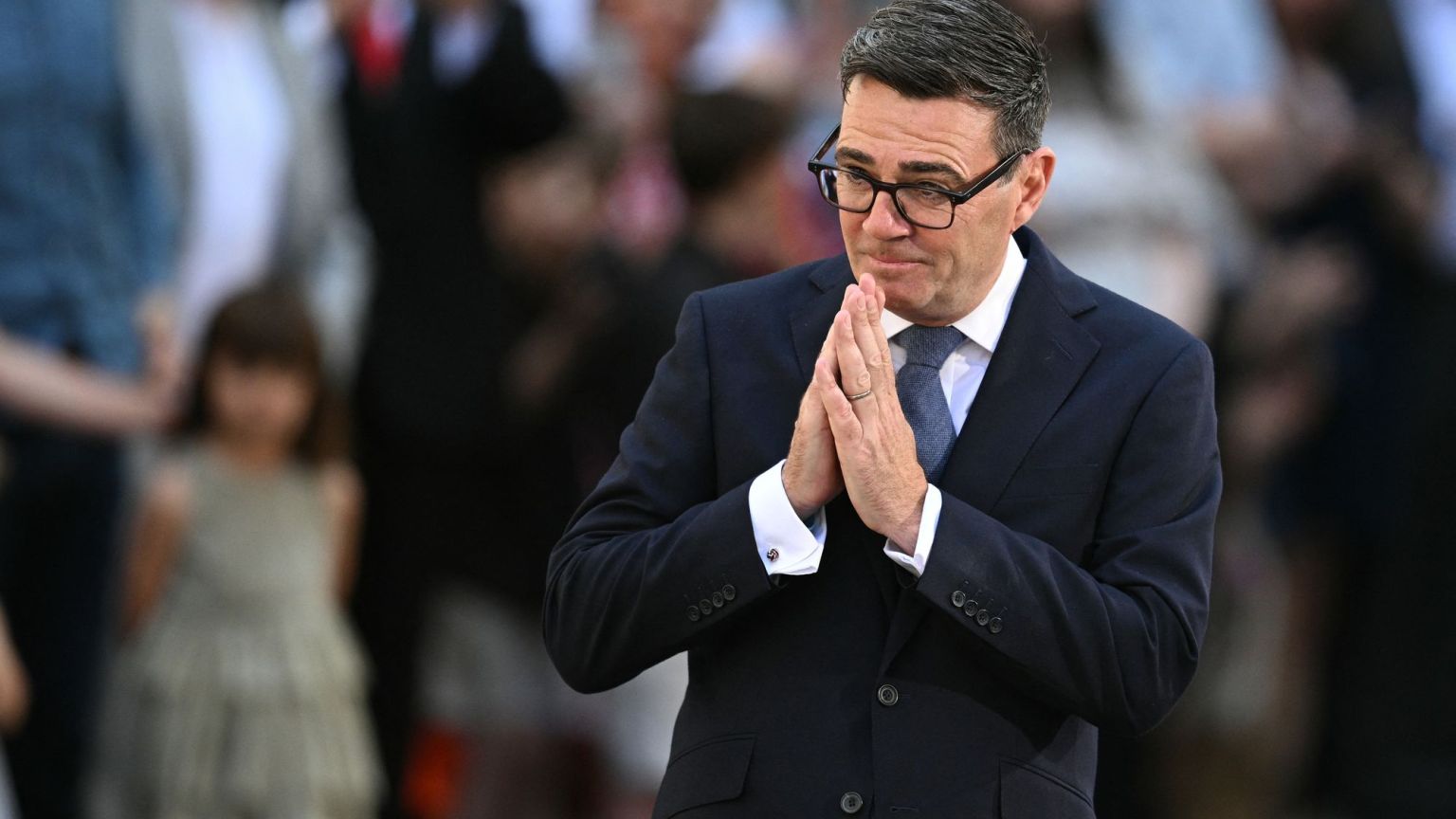
Andy Burnham was born in January 1970, in the Liverpool suburb of Aintree (famed for its racecourse and its iron). His dad was a telephone engineer, his mother a GP’s receptionist. It is my regrettable but inevitable duty to have to inform you that he joined the Labour Party when he was 15 years old. He has a Roman Catholic background, but then this shouldn’t really surprise us, as so much of progressivism is homily and responses – it requires no thought at all.
A lot has been written about Burnham lately, and he has certainly talked at great length, but very little information has been imparted. He is like a book that you’ve forgotten you’ve read. You recall the cover, the sensation of turning the pages, but nothing about the story.
As you will know, the new UK PM appears to be a very ordinary man, and in fact almost painfully well-adjusted in his demeanour. Ordinariness should be a virtue in a prime minister, particularly after the run of freaks and geeks we’ve had over the past decade. But it is not. And actually, he is stranger than we think – not in himself, no, but in the aura he creates and its curious effect on others. He is a very weak flavour of a man, which makes his elevation to saviour by Labour MPs all the more depressingly baffling. It’s like being tied up awaiting a terrible fate when the door bursts open and you cry, ‘Thank heavens, it’s Superman!’, when in fact it’s the bassist from the Inspiral Carpets. Labour MPs seem to rate his modestly impressive achievements as mayor of Manchester rather higher than they deserve.
When Keir Starmer came to power, even though I was certain it would mean disaster and would end pretty much the way that it has (though sooner than I anticipated), I kept schtum. I couldn’t help doubting myself. Maybe I’ve judged this wrong, I thought. Remember, at the dawn of Starmer, all those articles by folk supposedly in the know about those ruthlessly efficient, pragmatic political masterminds Morgan McSweeney and Sue Gray?
Reading those, I pondered that perhaps I’d overlooked something. And it would be a mistake to underestimate the intelligence and acumen of your political opponents, wouldn’t it? But this fair-mindedness has now become far harder to sustain. It is very difficult to compose a thought along the lines of ‘Perhaps the mighty brains of Lucy Powell and Chris Bryant know something I don’t?’. I find that there are limits of Pollyanna-ishness which I cannot cross.
This time round, I feel so confident in my prediction that I’m going to put it on paper. Here it is: Andy Burnham will be a disaster. He cannot succeed because he is totally out of step with reality. Even with the most favourable prevailing political conditions, he would fail. And the prevailing conditions are awful.
Andy Burnham as the answer to Britain’s problems? He is comically unequal to the task. The solutions he is unveiling as I write – there should be more mayors, we must have a second No10 in Levenshulme, there’s been too much Thatcherism! – are risibly out of touch. It is like somebody presenting at an emergency room, projecting blood and vomit from every orifice, and being sent away with a couple of Nurofen.
But before we get on to that Burnham policy agenda, let’s examine the tone of its delivery. Apparently, the feeling in Labour is that Starmer was far too doomy and gloomy at the kick-off back in 2024, what with Rachel Reeves circling overhead cawing like a constipated crow. So, in the time-honoured political tradition of overcompensating for a predecessor, Andy is going to be breezy, bright and light.
He has a low bar to clear – to be less annoying than Keir Starmer. Unfortunately, Andy is just as annoying, but in a different way. Starmer makes one want to vomit. The Burnham aesthetic brings on more of a dry heave. He is reminiscent of Chorlton from Chorlton and the Wheelies, but without Chorlton’s innocence. Worse, he has obviously started to believe in his own myth, peacocking and preening and taking everybody and everything for granted.
We’ve had much evidence of self-adoration in the three weeks of his run-up. Excruciating social-media content has abounded. Scrutiny from journalists, even friendly ones, would be far too much of a downer. Instead, Andy has popped up on Reddit for an ‘Ask Me Anything’, in which he answered only the questions he liked the sound of. He ran away from journos after his one public speech of this little interval, but agreed to be grilled by… Gary Lineker. And he chatted on the street to the people of Cardiff, the poor sods. Haven’t they suffered enough? He described this stunt as evidence of him ‘doing politics differently’, as if speaking to members of the public was a spiffing new idea nobody had ever previously considered. I suspect that people don’t care how politics is done, as long as it is done competently. This obsession with tone is a sure sign that there is no actual content.
When the accusation of not being ‘serious’ is made against politicians, I flinch a bit. Neither seriousness nor its lack intrinsically counts for very much. If the person concerned has an easy, affable manner or if they are a crabby, snappy downer, what does it matter? The only important consideration is that they perform effectively and display good judgement. Starmer, like Boris, Truss and Rishi, was dumped not because of his demeanour – though obviously it didn’t help – but because he kept making really bad decisions. The public is remarkably tolerant of weird and unpleasant politicians who govern wisely, though it’s been a long time since that was tested. The current Andy vibes – big head swelling, big mouth running on – are inappropriate, yes. But they wouldn’t be a problem if his worldview were closer to reality.
Which brings us back to Andy’s policy platform, such as we know it. Burnham refuses to acknowledge that anything has happened since about October 1990 (the height of Madchester, appropriately). He is still 20 years old, still the bright northern lad at Cambridge with hair horns and the coolest girlfriend, and the Beautiful South are still at No1 with ‘A Little Time’. John Major, Tony Blair, Gordon Brown and the long list of subsequent nits – no, didn’t happen.
Britain in 1990 is a world that many would wish to return to. But you have to face reality to deal with reality. ‘Britain took a series of wrong turns in the 1980s’, says Andy, 36 years later, as if the Eighties were a few months ago. While I am all for long-term thinking, this is fascinatingly nonsensical. And why stop there? Down with Stafford Cripps! Kick out Bonar Law! It is bizarre, this throwing back of our current malaise to the most recent period that we were governed remotely competently.
It takes blinkers of a most peculiar kind to look at Britain in 2026 – benefits bill bringing us to the verge of bankruptcy; mass immigration, both legal and illegal, destroying the social framework of centuries; staggering rates of taxation choking any hope of economic recovery – and conclude that the problem is Margaret Thatcher. But she remains the indivisible, indigestible block in the guts of the ageing British progressive. They can’t let Maggie go. Things are bad? It must be because of Thatcher, not the subsequent 36 years of progressive rule. In fact, in what passes for Burnham’s mind, the problem must be that her successors were not progressive enough. So he has to correct that.
This is quite frighteningly infantile when you stop to think about it. Burnham is running an ancient mental model that simply cannot be updated by new facts – Windows 3.0 in the age of Windows 11. I told you he is stranger than he seems. His amiable envelope disguises this madness. He may be strikingly inane in his tone, but he is strikingly insane in his thinking.
He has kept details of his actual plans very vague. What do we know? Apparently, he intends to take the political fight to Reform UK head on – with policies such as increasing immigration by admitting the Boriswave at terrifying cost, genuflecting to Hamas and immiserating the final remaining pockets of wealth that are keeping the entire show just barely on the road. He seems to desire the return of British Leyland, which will somehow empower the working class.
And this wonky Weltanschauung is why he cannot succeed. His in-tray is heavy with 2026 problems, and he has a 1990 mind (maybe even a 1978 mind). The first horrible exogenous atrocity of his premiership – and there will be many, things being as they are – will confront him with contemporary reality, but he will be unable to process it.
In fact, the happy-chappy banter already clashes in a very ugly way against the substance, such as it is. ‘We got that wrong’, he mumbled earlier this month, in his apology to Hamas and their British-born proxies.
And who has he assembled as his team? Louise Haigh, a convicted fraudster as the first secretary of state – but this doesn’t seem to matter somehow. Loopy Net Zero fanatic Miatta Fahnbulleh as energy secretary. His director of political strategy is Matthew McGregor – a name which sounds like a spoof version of Morgan McSweeney. Maybe he can be followed by Michael McClaren or Mitchell McFarlane? McGregor is a disastrous quango progressive, all up for the repatriation of ISIS brides and a former head honcho of sinister outfits 38 Degrees and the egregiously misnamed Hope Not Hate.
Burnham is laughably unqualified for the job of prime minister, a job he has been wafted into not by the public but at the urgent demand of the tragic one-term Weebles on the Labour backbenches. His arrival in Westminster has been incredible to behold. Andy Burnham, the also-ran non-entity who falls apart at the suggestion of a difficult question, whose only mark in government in the New Labour era was the MRSA scandal… this is Labour’s messiah?
It can only end in disaster, because neither he nor they can face the reality of what they have done to Britain. They are living in a false paradise. In the words of Charlene in the spoken section of her 1982 No1 smash, ‘I’ve Never Been To Me’:
‘Hey! You know what paradise is? It’s a lie. A fantasy we create about people and places as we’d like them to be.’
Of course, Andy Burnham is not the answer to Britain’s decline. That would take superhuman powers of forbearance and a revival of Victorian-era levels of dedication and enterprise. It also requires honesty and judgement – two interlocking qualities that this trivial twit does not possess and cannot hope to provide. The best we can hope for is that the Burnham era is the final stop of the cognitive dissonance roadshow. That it’s the last splutter of progressivism – and the terminal stage of the final Labour government.
Gareth Roberts is a screenwriter, author and novelist, best known for his work on Doctor Who. This is an edited extract from his ‘Working Class Zeroes’ series on Substack.

3 min read
Prime Minister Andy Burnham’s plan to scrap digital ID has created confusion in Whitehall and resulted in an apology to officials working on the scheme.
Before entering office on Monday, Burnham announced that he would abandon the Keir Starmer policy and redirect the resources to tackling cost-of-living pressures.
Speaking in his first Cabinet as PM on Tuesday, he said the decision was about “reprioritisation”, after announcing that money saved by ditching the scheme would be put towards cutting VAT from household energy bills.
On Tuesday morning, the Permanent Secretary in the Cabinet Office, Cat Little, apologised to department officials who had been working on digital ID for not being told about the decision before it was announced, PoliticsHome understands.
Little told officials that what remains of the scheme will move to an expanded Department for Digital, Culture, Media and Sport, headed by Lisa Nandy.
This detail has led to questions over what part of the policy is actually being discarded.
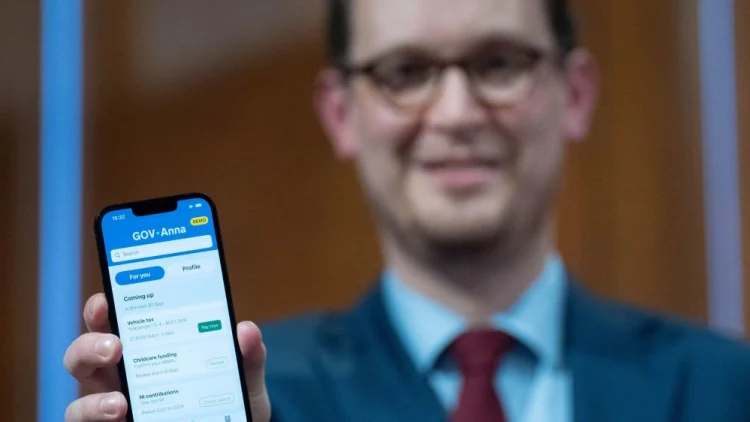
The new Burnham administration has said that it remains committed to the existing Blueprint for Modern Digital Government, including the GOV.UK app, GOV.UK OneLogin and the Government Wallet, with a digital driving licence expected shortly. Digital inclusion work will continue, building on the 2025 Digital Inclusion Action Plan.
Insiders have told PoliticsHome that the government has already spent around £15m on developing the policy since it was announced by Starmer in September last year.
The Institute for Government’s Heloise Dunlop said the money that has already been spent on the policy “is unlikely to be insignificant, given the size of the team and extensive consultation process”.
She told PoliticsHome it was “not clear how the government was going to fund digital ID: the policy was not yet fully finalised, there was no clear idea what online services would be included in the join-up, and the OBR had said no specific funding had been allocated for digital ID in the spending review”.
On Tuesday morning, Darren Jones, a Starmer ally who Burnham sacked from Cabinet on Monday, and who led on digital ID while in government, posted on X that the policy of scrapping digital ID to fund energy bill cuts was “unfunded” as the latter is based on unspecified departmental cuts.
“The government will have to set out how it will pay for its new policies at the budget,” he wrote.
Helen Miller, director of the Institute for Fiscal Studies, added: “At last year’s Budget, the OBR estimated that the [digital ID] programme could cost a cumulative £1.8bn between 2026–27 and 2028–29, and the Treasury estimates that today’s VAT cut will cost £850m this year.”
Miller said that the numbers mean that the government “will therefore still need to make around £850m of as yet unspecified cuts from other departmental spending to pay for this”.
If the tax cut remains permanent, Miller said, “the government would have a range of options for how to pay for it in future years”.
“This could include departmental spending cuts, but it is unlikely these can be justified solely by scrapping digital ID. Much of the cost of this scheme was likely to be upfront investment to set it up over the next few years, such that scrapping it cannot fund a permanent tax cut.”
The Starmer government hoped that introducing digital ID would help modernise the state and make public services more efficient.
However, it polled negatively once announced, with Labour MPs complaining that the early communications strategy focused too much on how it could help combat illegal migration, with not enough messaging about how it could improve the everyday lives of voters.
In January, PoliticsHome revealed that the Starmer administration was abandoning plans to make the scheme mandatory amid warnings, including from many Labour MPs, that going ahead with the compulsory element would be strongly opposed by the public.
Lord Ashcroft KCMG PC is an international businessman, philanthropist, author and pollster. For more information on his work, visit lordashcroft.com
As Lady Bracknell didn’t quite say, to lose one prime minister before they have served four years may be regarded as a misfortune; to lose five in a row looks like carelessness – or worse. Some argue that a nefarious combination of factors including Brexit, the media, the centralised state, unaccountable elites, the bond markets and political and cultural polarisation has made the job of leading Britain more or less impossible. Did Keir Starmer lose his job because he wasn’t very good at it, or because it can’t be done? And as Andy Burnham settles in at Number 10, do voters think Britain is ungovernable? Or just that it has been badly governed?
We can look in detail at three arguments: that it is impossible to maintain a governing coalition while making painful decisions in office; that the cost of living crisis and the 24-hour news cycle have made people too impatient for change; and that voters are unwilling to accept the consequences of trade-offs between taxes and state spending, while populist parties claim this circle can be squared.
The starting point is that Keir Starmer’s defenestration followed two disastrous sets of local elections – not to mention hundreds of polls – suggesting that he was leading the Labour party down the road to defeat. It is worth noting that Labour started 2025 with a slender polling lead; by the end of that year they were in third place, with Reform well ahead.
Since January 2025 my monthly surveys have asked people what they have noticed that the Labour government had done since taking office. Crucially, they were not choosing from a pre-defined list – they could write anything. This gives us a record of what voters observed month by month over the Starmer premiership. The chart below shows the fifteen most frequent answers over that time and the proportion of respondents mentioning them in each survey.

This suggests that Starmer’s time as PM falls into three chapters. The focal point of the first chapter is the decision to means-test the winter fuel allowance (the fact that the policy was announced in the government’s first month in office and still dominated recall six months later suggests the second half of 2024 can be considered part of this phase). The chapter closes with the U-turn following Labour’s hammering in the 2025 local elections.
The second chapter opens in July 2025 and still has the Winter Fuel Allowance as the most-noticed action, albeit being mentioned less frequently, with small boat crossings consistently in second place. This chapter ends in December with some spikes relating to Rachel Reeves’ budget. The final chapter, covering 2026, does not have a clear-cut narrative: there is not a consistent most-noticed action.
Some of the successes the government claim – such as raising the minimum wage, cutting NHS waiting lists and improving workers’ rights – appear in the chart. But none of these ever attracted the notice of even ten per cent of respondents or made it into the three most noticed actions in a month. This itself says a lot about a government which was never able to articulate a clear vision or plan. Instead, the government allowed itself to be defined by the decision on the winter fuel allowance. Historians of Starmer’s premiership will puzzle over the decision to spend so much political capital on a policy which would save, in the context of government spending, a tiny amount of money – especially as few people were demanding any such action.
Another way to look at the things people noticed about Starmer’s government is to group them into the following four categories. Inevitably, deciding which actions fall into which category is somewhat subjective, but the goal is to look at general trends rather than precise figures.
- Unforced errors, of which winter fuel is the most obvious, but which also includes scandals and other policy U-turns. (This doesn’t include things which simply proved unpopular or turned out badly).
- Occupational hazards, such as difficult trade-offs inherent in governing modern Britain, and the consequences of issues facing the country. Generously interpreted – and whether or not we agree with the policies – increasing employers’ National Insurance contributions and failing to stop the boats could be included here (the former as an unpalatable choice to raise substantial revenue, the latter as something any government would face)
- Achievements, which the government’s supporters could reasonably cite as examples of progress (whether or not they are objectively popular or successful). The Renters’ Rights Act could fall into this category.
- Nothing – that is, not noticing any government actions. This gradually decreases over time.
If we found that occupational hazards dominated public awareness when Starmer’s decline set in, this might support the idea that maintaining a coalition while making tough choices is impossible. If it also showed government achievements being widely noticed during this period, it would boost the argument that voters are too impatient for change. But as we can see, our chart shows neither of these.

The first chapter, to around May 2025, is dominated by unforced errors. These are also the plurality right up to the end of 2025. By the time the writing was on the wall in early 2026, the story of the government had been one of avoidable mistakes rather than the occupational hazards of modern government. Achievements do not comprise more than a quarter of the noticed actions until March 2026; their rise in the last few months was too little and too late to salvage Starmer’s premiership.
What about the second strand in the argument that Britain is ungovernable: that the public has unreasonable expectations about the speed of change? Earlier this month we asked people whether they believed real progress on the country’s problems could be made in a couple of years with the right policies, would take at least a full government term, at least ten years, or if the problems ran so deep that they were beyond fixing. The chart below shows how these responses break down among people currently intending to vote for each of the five largest parties; it also shows the distribution of opinions among people who are not likely to vote for anyone.

The most significant thing about this chart is how little views on this question vary between parties. Populist party supporters are more likely to believe that quick progress is possible, but even then, only one in three Green or Reform voters expect to see real change within a couple of years. A clear majority (the yellow and orange bars) of supporters of each major party think that real progress will take more than two years; a different clear majority (the green and yellow bars) believe that a government should be able to achieve real progress in a full term.
If we can take this at face value, this suggests that most people would not have expected to see major progress by the time Starmer resigned (although people might be less patient in practice than they say they are).
In January 2025, we asked people whether they thought the Labour government was making progress and achieving good things; had yet to achieve much but they were giving them the benefit of the doubt; or wasn’t going to achieve anything good and they wanted them out as soon as possible. At that time, 41 per cent of people were giving the government the benefit of the doubt and a further ten per cent believed that the government was making progress. Thirty-eight per cent felt that the government wasn’t going to achieve anything. When we asked the same question a year later, these figures were 31 per cent, 10 per cent and 48 per cent, respectively.
This is striking: one in four of those who started 2025 willing to give Starmer the benefit of the doubt began 2026 having concluded that they’d seen enough to know they wanted the government out. The following month, more agreed that the government had no direction (46 per cent) than it had the right direction (28 per cent) or the wrong direction (15 per cent) combined. Seen in this way, and against the background of a 2025 dominated by unforced errors, the criticism was not that the government had failed to reach its destination; it was that the government didn’t seem to know what the destination was, let alone how to get there.
Finally, what about the idea that voters are under the illusion that the government can spend more on public services without raising taxes? Labour certainly did little to dispel this notion in the 2024 election campaign, but is the wider argument well founded?
We can discern some clues by looking at voters who hold all three of the following views: that the incoming Labour PM should stick to the 2024 manifesto promises not to increase income tax, VAT or National Insurance; that it is more important to spend more on public services than to cut taxes, borrowing or other public spending; and that austerity is a way of protecting the well-off at the expense of the less well-off, rather than just meaning the country not spending more than it can afford. In other words, people who want higher spending on public services but will not accept it being paid for by increases in the main taxes or spending cuts elsewhere.
In our poll, 17 per cent of people hold these views, but it is not just a question of numbers. If they are mostly dedicated non-voters, they are much less important for a governing coalition. However, if they are largely the kind of swing voters any government needs to stay in power, then any electoral coalition is built on sand. In fact, neither is true: these views are held by 17 per cemt of voters and non-voters alike. The chart below illustrates current voting intention among people holding these views:
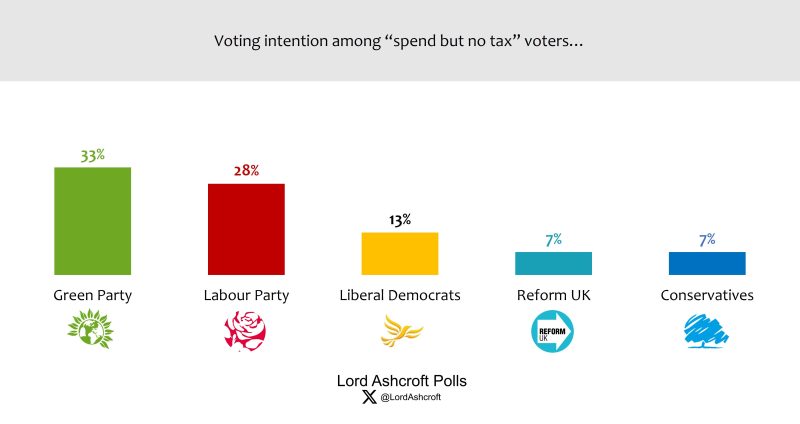
Perhaps not surprisingly, such voters are overwhelmingly in the left bloc of British politics. If governing coalitions are unstable because they cannot match their voters’ expectations, it is a bigger problem for those built around the left.
Starmer’s defenders sometimes argue that he is the victim of voters’ unwillingness to show any patience or accept tough choices. Yet his political downfall is attributable to neither of those, but to avoidable mistakes. In the end, his premiership was a demonstration of bad governance, not of an ungovernable country.
There are lessons in this, both for our new PM and the parties currently in opposition. Some of Starmer’s unforced errors can be traced back to a manifesto which dodged difficult choices, meaning the government came to office with neither a clear direction nor any clarity as to the change voters had given their blessing to. Those same manifesto pledges largely tie Burnham’s hands: 54 per cent of people, and 44 per cent of current Labour voters, expect him to adhere to the 2024 promises on tax. Even if he can avoid the unforced errors and communicate a plan in the way his predecessor could not, he will soon reach the next obstacle – that Labour doesn’t have a mandate to make the sort of tough choices the country needs if economic growth does not allow the government to have its cake and eat it.
Full data at LordAshcroftPolls.com
The post Lord Ashcroft: Another new prime minister. But is the UK ungovernable? appeared first on Conservative Home.
How Much Has the Iran War Cost the US? Defence Secretary Puts a Number on It

3 Cowboys in need of contract extensions, 3 different paths

Interlune extracts helium-3 from ordinary helium, demonstrating a process it plans to use on the moon

Renter of Home in Anne Heche Crash Denies Settlement With Son

No Jackpot Winner as $257 Million Prize Rolls Over to $269 Million Monday Draw

Weekend Open Thread: Staud – Corporette.com

Financial Audit Reveals Shocking Salary #shorts

Ripple XRP BYEBYE USDT WE CALLED IT $100 FIRST THEN COLLAPSE INSTITUTIONS CONFIRMED CHOSEN ONE YES!

After Transmigration, She Loses Weight & Builds Financial Independence | Ep15 (ENG DUB)
-
 NewsBeat5 days ago
London Mayor Sadiq Khan handed a peerage by Keir Starmer alongside 15 other Labour figures… just days before the PM leaves No10
-

 Fashion4 days ago
Weekend Open Thread – Corporette.com
-

 Politics4 days ago
The House | The City of London can help the new chancellor deliver growth in every postcode
-

 Politics7 days ago
Young campaigners urge incoming PM to act on outdoor junk food ads
-
 Crypto World5 days ago
Two July Windows Left: The CLARITY Act’s Senate Fight and What Failure Means
-

 Crypto World6 days ago
CFTC blocks Kalshi from unwinding Michigan trades after court order
-

 Crypto World4 days ago
Ripple Payments Joins MiCA With 14 Firms, Does It Mean Anything For XRP?
-

 Business6 days ago
Nvidia Stock Slips After Big Tuesday Rally as Huang Confirms Vera Rubin Chip Is Now in Production Today
-

 Politics3 days ago
Democrats look to World Cup watch parties to register thousands of voters
-
 Entertainment6 days ago
Disney’s Most Ambitious Failed Star Wars Attraction Is Coming to SDCC
-

 Crypto World4 days ago
Ripple wins EU-wide access as ESMA adds it to MiCA register
-

 Crypto World19 hours ago
Grayscale Files For Worldcoin ETF, WLD Registers Sharp Rise
-

 Crypto World5 days ago
Injective Submits SEC Transfer-Agent Registration to Onchain Ownership Records
-

 Business6 days ago
Palantir Shares Rise After Expanded Nvidia Partnership and Fresh Analyst Upgrades Ahead of Earnings Day
-

 Tech1 day ago
Sail Virtually Aboard The “Itanic” With IA-64 Emulator
-
 Tech1 day ago
Turtle Beach Command Series KB7 review: a nifty screen-equipped gaming keyboard
-

 NewsBeat5 days ago
Registration is now open for March for Men with Kev 2026
-

 NewsBeat2 days ago
Unregistered fitter used Gas Safe logo on business flyers
-
 Sports6 days ago
New Cornerback Enters Vikings Trade Rumor Mill
-

 News Videos5 days ago
Money | Class 12 Economics | CBSE Board Exam 2026-27
You must be logged in to post a comment Login