
Politics
Rafe Fletcher: Statist Singapore builds homes whilst statist Britain just plans

Rafe Fletcher is the founder of CWG and writes The Otium Den Substack
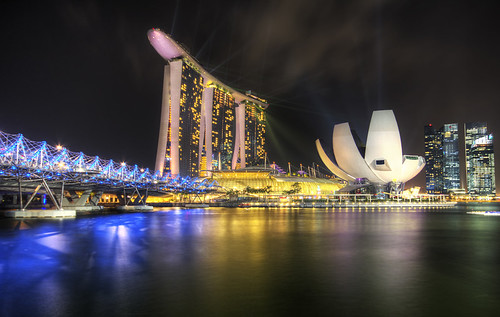
You can regularly eat and drink for free in Singapore.
Just turn up at one of the British property seminars that pepper the city’s function rooms. Developers and agents swallow the cost of a few freeloaders because it has been a fruitful market. Singaporeans are the second largest group of foreign home owners across England and Wales.
Demand isn’t spurred by colonial nostalgia. Rather, Singaporeans can buy a second home in Britain with far less hassle than in Singapore. And developers welcome the liquidity lacking in those supported only by a British-earned income. Just as a punitive tax regime leaves British buyers short of a deposit, so builders find construction can leave them short of a profit once they have navigated nebulous planning diktats.
Confronting the resulting housing bubble may look awkward for the Conservatives. Even in 2024, 37 percent of outright homeowners voted for them, a 12-point lead on Labour in second place. But the consequences of ducking the issues are starker. Those homeowners will see values deplete anyway under Labour’s trajectory of making everyone poorer. And the Conservatives will make no inroads with a generation shut out of the housing market.
It’s a lesser problem in Singapore where 90 per cent of citizens are homeowners. A product of mass public housebuilding under the Housing and Development Board (HDB). Only Singaporeans are eligible to buy these properties. Buyers draw upon their Central Provident Fund (CPF), a forced personal savings system to put down a deposit on HDBs’ subsidised values. Mortgages are offered with fixed interest rates of 2.6 per cent.
The HDB market is heavily restricted. They can’t be purchased by non-citizens and Singaporeans can only own one unit at a time. Re-sales are prohibited for five years, so there’s no “flipping” on the back of sudden value increases. If Singaporeans want to buy a second home, they must enter the fully private market, which constitutes just 20 per cent of the country’s housing stock. Doing so incurs 20 per cent stamp duty on any second property and 30% on additional ones after that.
Hence why buying in Britain is much more attractive where non-resident stamp duty is only two percent. With far lower tax rates and HDBs available at 3.8 times average income, Singaporeans have the means to buy British stock. Penalising such foreign buyers may play well optically. But as it is, they’re vital in getting homes built. Britain’s largest developer Barratt Redrow recently blamed a lack of them for missing its sales target. International capital helps developers meet affordable housing provisions under Section 106 of the Town and Country Planning Act. Without buyers for higher-price units, the think-tank Onward reports that the cost of delivering new homes often exceeds their capital values.
Section 106 is one of many regulatory hurdles strangling supply. Onward’s research shows that small and medium-sized (SME) developers have been effectively priced out of the market. In the late 1980s, SMEs delivered about 40 per cent of new homes; by 2007, 30 per cent; and today just 12 per cent. They don’t have the scale or balance sheet to weather the costly and cumbersome planning permission process.
Mired in such regulation, Britain’s housing policy is hardly less statist than Singapore. But that statism resides in obstructiveness instead of forcefulness. Singapore can build because the state owns 90 per cent of the land (HDBs and most private housing are on 99-year leases). A situation engineered through the Land Acquisition Act of 1966 that empowers the government to buy any land it wishes at current market value. It is frustrating for golfers as the city-state’s few remaining courses are forcibly purchased to make way for new housing. But it gives the government total control over the supply-chain and costs.
A similar land grab is probably only contemplated by Zack Polanski in Britain. And it’s more likely to resemble Zimbabwe if it comes under the Greens. But there are other lessons Britain can learn from Singapore.
Firstly, provide tax-free incentives for young people to save for a house. Robert Colville writes in The Times that Brits with student loans are paying 50p in tax from every pound they earn over £50,000 and 71p over £100,000. Getting a deposit together is often hopeless for even top-earning graduates without help from the bank of mum and dad. Something like Singapore’s CPF would allow workers to save into a specific house-buying account. It need not be compulsory nor state managed. But it should be ring-fenced and explicitly linked to first-home purchase.
Secondly, remove uncertainty. Singapore’s Urban Redevelopment Authority fixes land use, density and infrastructure expectations in advance. Builders operate within known limits. They don’t have to contend with Section 106-esque regulations that leave developers unsure if local housing associations will even buy the affordable housing they’re obligated to provide. Get things built first.
Finally, Britain needs to stop concerning itself with fringe measures that play only to the politics of envy. I recently went to an event at the Seven Palms complex on Singapore’s Sentosa island, an enclave of wealthy foreigners. It had the ghostly feel of many of London’s high-end developments, with owners mostly in absentia. We may criticise the atmosphere created by such projects but they’re incidental to the wider problem. It’s virtue signalling rather than serious policy.
Britain’s housing crisis is not unique amongst developed nations. But alongside an acute supply shortage, it faces weakening demand. If the most talented young people don’t believe there’s a realistic route to buying, they will leave. And house prices will fall anyway while the country gets poorer. Fixing things now may unsettle Conservative voters who sit on high paper valuations. But a reckoning will come anyway. Perhaps those free evenings out in Singapore will start to dwindle.
Singapore shows the benefits of a government that acts forcefully. Britain shows the consequences of a government that meanders – forcing risk onto developers, disincentivising building and earning, and pandering to NIMBYism. Noel Skelton’s property-owning democracy was once an inspiration to a young Lee Kuan Yew.
The Conservatives need to reclaim that legacy to feed aspiration rather than resentment.

Politics
What does ‘greater ambition’ in UK-EU relations look like – and what are the chances of it?
Carolyn Rowe, Ed Turner, Tobias Hofelich and Jannike Wachowiak consider what a more ambitious UK-EU relationship could look like and the key challenges and opportunities it would present.
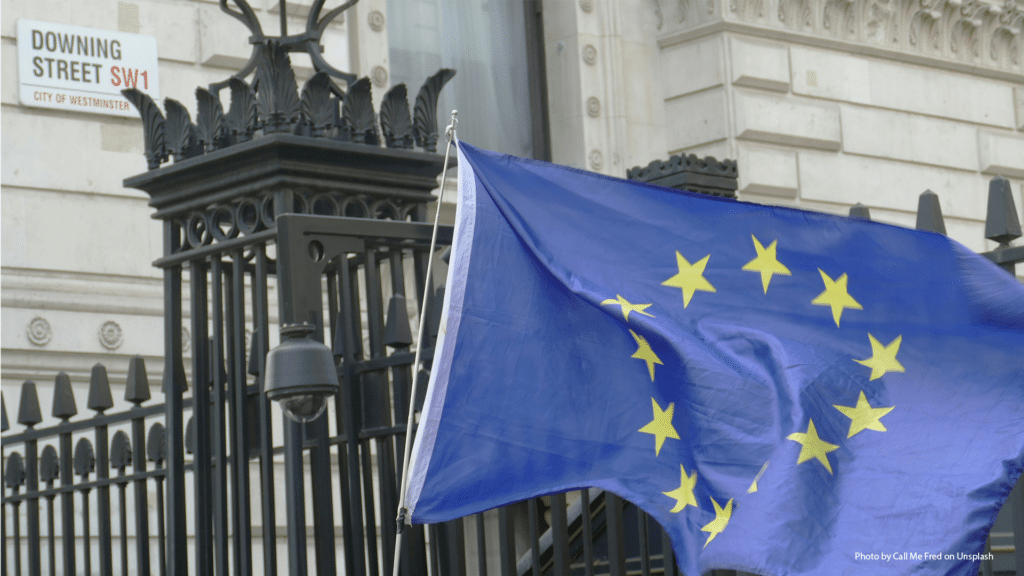
In May 2025, EU and UK leaders agreed a roadmap to soften the edges of the Trade and Cooperation Agreement (TCA). At the time, the summit agenda was widely considered a pragmatic way forward, evidencing a new era of UK-EU relations under Keir Starmer, and part of a wider ambition to ‘reset’ that framework. But the world has not stood still. With Trump upending the global order and threatening European allies, the incrementalism that has characterised the rapprochement so far, looks a little like ‘fiddling while Rome burns’. How can the two sides be more ambitious in recalibrating this relationship?
While the stakes are certainly higher, it is far from certain whether the EU and the UK will be able to use the second proposed summit this summer to add new substance to their existing agreements. One key issue is bandwidth (or the lack thereof). Officials on both sides are mainly focused on implementing the Common Understanding agreed at last year’s summit. Following a slow start in the second half of last year, EU and UK officials are now getting into the meat of talks on a food and drinks deal and work towards the linking of their emission trading systems. These talks are deeply technical and, whilst there has been some squabbling over the finer detail, agreement should be possible. But on the much-touted youth experience scheme, particularly regarding university tuition fees, the negotiating partners remain far apart. Unless a landing zone can be found, the whole ‘reset’ could still come tumbling down: the EU has linked a solution on youth mobility to other areas where the UK is demandeur.
Another issue is around who takes initiative. The EU sees the ball as being in the UK’s court: i.e. if the UK wants a different relationship, it is up to them to make a clear ‘ask’. As the Commission’s chief spokesperson put it as recently as February, the forthcoming 2026 summit will be ‘the occasion to discuss with UK what, exactly, they have in mind, and how they propose to go about it’.
It is far from clear, however, that UK’s proposals would fly in Brussels. While the Chancellor’s Mais lecture identified deeper UK-EU relations as one of the UK’s biggest opportunities for economic growth, the government’s desire to pick and choose access to some areas of the single market (while rejecting the free movement of people and regular financial contributions à la Switzerland) is likely to be met with little enthusiasm in Brussels.
One way forward would be for the UK to present proposals which align directly with the EU’s stated ambition to strengthen relations with the UK on issues such as energy, people-to-people contacts, resilience and security. This is most likely in the deepening of UK-EU defence cooperation. Of all of the many challenges facing the EU at present it is on defence, primarily, where the UK is seen as part of the solution.
This could mean negotiating an agreement on the Ukraine loan which will be open to purchases from third countries who either have a SAFE agreement or are ‘providing significant financial and military support to Ukraine’ and agree to share ‘fair and proportionate financial contribution to the costs arising from borrowing’. A successful agreement would restore confidence and prepare the ground for a resumption of the collapsed SAFE talks.
On resilience, there is much more that could be done to coordinate policies and approaches in areas like supply chain security, investment screenings, and critical infrastructure. The UK could work with the EU towards greater ‘resilience’ as a wider European project, in which a broad alliance of like-minded EU partners such as the UK, Canada, Australia and Norway are incorporated into these new frameworks on a structured basis. A more ambitious agenda could focus on enhanced coordination in areas such as supply chain security, investment screening, and critical infrastructure. The people-to-people dimension of the relationship could also be strengthened. EU officials have indicated an interest in seeing UK participation in Creative Europe, an EU programme that supports cultural projects and the mobility of creatives.
Timing is crucial. Partly because of the rapidly evolving global context and partly because of domestic factors which, otherwise, might block progress. On the EU side, the negotiations on the next Multi-Annual Financial Framework (MFF) will take up EU bandwidth throughout 2026 and into 2027. So, too, will the 2027 French Presidential Elections. What is more, EU member states are currently debating policies with potentially far-reaching consequences for the UK: ‘Made in EU’ targets could, in the future, shut out certain British products and technologies from European supply chains. There is never a perfect time to move forward on UK-EU relations, but these externalities create urgency from the British perspective.
On the UK side, no significant advance in the UK-EU relationship will happen unless the Prime Minister decides to throw his political weight behind it and make the case at home and in Brussels. Currently, Keir Starmer’s government is cautious, but worries about fragmentation to the left, or even a leadership contest with candidates outbidding each other to appeal to a pro-European party membership, may change the dynamic.
No matter who leads Labour, forging a genuinely strategic partnership that matches the geopolitical challenges of the moment will require political direction and courage, as well as a willingness to take the conversation to Brussels and member states. With this in mind, the months leading up to the next summit will be a stress test for the seriousness of the Prime Minister’s EU ‘reset’ ambitions.
By Carolyn Rowe, Head of Department, Society & Politics at Aston University and Co-Director of the Aston Centre for Europe; Ed Turner, Reader in Politics at Aston University and Co-Director of the Aston Centre for Europe and acting chair of the International Association for the Study of German Politics; Tobias Hofelich, Research Associate, Aston University; and Jannike Wachowiak, Research Associate, UK in a Changing Europe.
This blog draws on a series of roundtables organised by the Aston Centre for Europe and UK in a Changing Europe in March 2026. The discussions were supported by funding from the German Academic Exchange Service (DAAD).
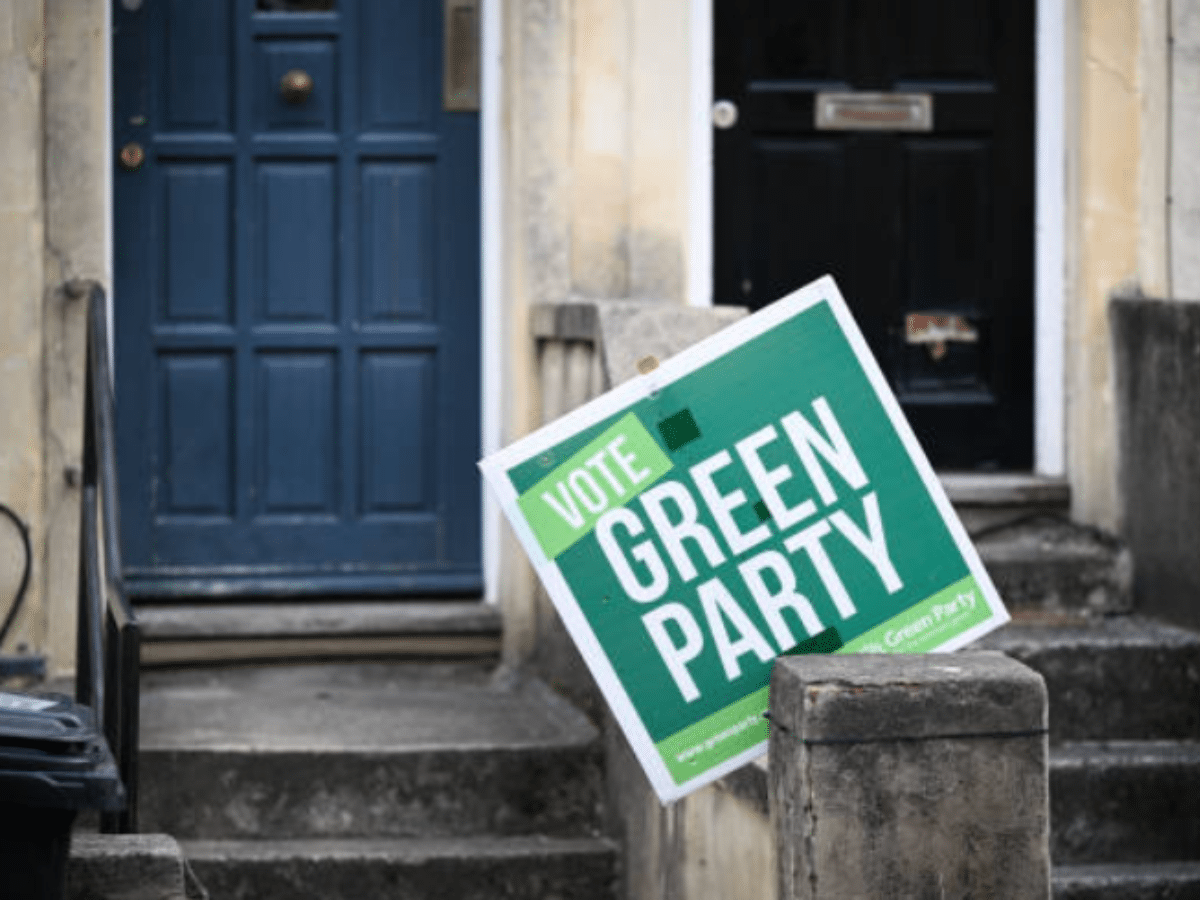
A recent poll of the London region suggests the Green Party could make significant gains in the May 7 local elections. It predicts a serious blow to incumbent Labour councillors who have long held a majority. In fact, well over a third of wards are projected to turn green as voters are set to abandon Starmer’s Labour Party.
Likewise, the poll reveals that far-right Reform UK’s chances in the region are thankfully much lower than previously feared. The map shows Reform UK appear to be contenders in roughly 10% of seats in the region. This is particularly likely in eastern and southeastern areas of London.
However, the party set to have the biggest defeat with likely hundreds of councillors unseated is the Labour Party. If the polling is indeed accurate, Labour would be lucky to win even a quarter of the seats in the UK’s capital.
Oh, how the corrupted are falling – and what a beautiful sight it is!
Green Party set to inflict a huge loss on Labour
Labour currently has 1,046 elected councillors in the London region with more sitting councillors than all other parties combined. Nonetheless, in a clear show that the British public have lost hope in establishment parties, they appear likely to make huge losses both to the Green Party and Reform UK.
In fact, the Labour Party’s poor performance has allowed the Tories to gain ground—despite over a decade of harmful austerity policies and their disastrous showing in the 2024 general election. Essentially, Labour’s authoritarian and Orwellian policies make even a pile of shit like the Conservatives seem more appealing by comparison.
Thankfully, the Green Party have leaned further into socialism and are likely to be rewarded for their principled efforts.
Needless to say, the battle is a close one with recent polls for seats across the UK show the Green Party with a marginal lead but Reform closely behind. Nevertheless, a trend is appearing to show Reform losing support whilst the Greens are seen to gain, which highlights how hate can only be defeated by solidarity and compassion:
‼️BREAKING | Greens surge into LEAD (1st!!)
🟢 Grn: 21.4% (+2.1)
➡️ Ref: 20.9% (-1.4)
🔵 Con: 20.5% (+0.2)
🔴 Lab: 17.0% (-0.4)
🟠 Lib: 9.2% (-1.9)Poll: @LordAPolls, 26-30 Mar (+/- vs 19-23 Feb) pic.twitter.com/oDVw4cDaFC
— Stats for Lefties 🍉🏳️⚧️ (@LeftieStats) April 5, 2026
2024 saw huge gains for billionaire-owned, far-right Reform UK which escalated fears that the far-right were likely to take power in 2029. Thankfully, those fears seem exaggerated, as UK voters make a clear choice between love and hate – and love appears to be winning.
‼️POLL | Who would you rather have in power?
🟢 Green Party – 57%
➡️ Reform UK – 43%Overwhelming majorities of Labour (81%) and Lib Dem voters (79%) would pick Greens over Reform.
Source: @LordAshcroft, 26-30 March pic.twitter.com/9PYhJBobIU
— Stats for Lefties 🍉🏳️⚧️ (@LeftieStats) April 5, 2026
Green leader Zack Polanski has recently posted on X following a “remarkable poll” from Lord Ashcroft, stating that the Greens are clearly replacing Labour:
Remarkable poll this evening from Lord Ashcroft. The Greens in joint 1st place.
We are replacing Labour and ready to take on Reform in the local elections on 7th May.https://t.co/0qbagSvIYp pic.twitter.com/9leBG92kPd
— Zack Polanski (@ZackPolanski) April 5, 2026
Vote splitting on the far-right – few to split with on the left
Undoubtedly, far-right competition from Restore Britain is driving Reform UK’s declining support, with Restore Britain projected to capture 8% of the vote. Even more disheartening, voters find Restore Britain more appealing than Your Party, which is only expected to secure a measly 1% of seats.
No surprise really, given Corbyn and his team’s inability to figure out what they actually are as a party whilst they stand deselected Tories:
🚨 NEW: A new poll shows Restore Britain would get 8% of the vote
➡ Reform UK: 25%
🟢 Green Party: 19%
🔵 Conservatives: 16%
🌹 Labour: 16%
🔶 Lib Dems: 10%
🇬🇧 Restore Britain: 8%
🟣 Your Party: 1%Via @FindoutnowUK, 2948 sample, 25th March
— Politics UK (@PolitlcsUK) March 26, 2026
These polls show that hate can be defeated through positive policies that put people above power and profit. In turn, this will undoubtedly see a sigh of relief from socialists across the country. They have long insisted that the real cure for the harms we see in our communities and across the UK is for unapologetic, unbending socialist policy.
It’s clear the left faces little competition: Labour abandoned left-wing voters long ago, and the Greens are offering them a political home. In fact, their gains are likely to come whilst engaging with working agreements with progressive candidates in the London region. These include both in Camden and in Southwark.
Therefore, if these arrangements succeed, this election will see solidarity push back against the malicious bile of the far-right.
Even better, it might even win.
Featured image via the Canary


4 min read
As a keen swimmer all my life, I am deeply concerned about the state of school swimming and water safety in this country. For an island nation, surrounded by rivers, lakes and 11,000 miles of coastline, the ability to swim is not optional. It is a vital life skill, as fundamental as learning to read or write. Yet every year, far too many children leave primary school unable to stay safe in the water.
Recent figures paint a stark picture. National data from Sport England shows that around one in four children finishes year 6 unable to swim 25m, and around one in five children can’t demonstrate basic water safety competence.
In some areas – particularly those with higher deprivation – the proportion rises far higher, with less than 40 per cent meeting the national curriculum standard. This inequality matters and it is completely unacceptable.
Children from lower‑income families, who are less likely to access private lessons, are disproportionately represented in drowning statistics.
It is a societal failure when the children who most need these life‑saving skills are the least likely to acquire them.
The challenges that schools face are well known. The closure of hundreds of local pools has made accessing lessons increasingly difficult. Transport costs for schools are rising, swimming teachers are in short supply and the timetable pressures on headteachers are immense.
Many schools simply do not have a suitable pool within a practical travel distance. For others, the nearest facility is over‑subscribed, ageing, or not designed with school groups in mind.
These barriers have real consequences. When a child misses out on swimming in primary school, the opportunity rarely comes back. And when a generation of children loses vital water safety skills, we collectively carry the risk.
We are seeing the impact already: too many drowning incidents, widening health inequalities, and increased inactivity among young people. If we do not act now, the long‑term social and health costs will be severe.
So, first and foremost, £400m has been pledged for grassroots sport – and it’s essential that this goes to swimming pools.
Next, the current review of the national curriculum must elevate the importance of swimming and water safety. School swimming has been part of the PE curriculum for over 30 years, but too often it is treated as an afterthought.
At the APPG, we believe school swimming should be treated with the seriousness it deserves. Ensuring every child learns to swim must be a shared responsibility between government, local authorities, schools and the wider aquatics sector. But government must set the tone by embedding swimming firmly in statutory expectations and providing the means for schools to comply.
The introduction of the government’s new online reporting tool for school swimming is a welcome step. For the first time, schools have provided their swimming results directly to the Department for Education. This tool promises to give us a clearer picture of where children are falling behind, where provision is strong, and where targeted support is urgently needed.
I urge the government not only to continue this work, but to publish the findings so that councils and schools can work together with experts such as Swim England and the Swimming Alliance to direct support most effectively using accurate, up-to-date data. Good policy requires good evidence.
The future of school swimming and water safety depends on decisions made now. We face a widening gap between children who can swim and those who cannot; between communities with modern, accessible pools and those where facilities have disappeared; between schools equipped to deliver high‑quality lessons and those struggling even to secure pool time.
We cannot allow postcode or income to determine a child’s chance of staying safe in the water. With the right investment, clear expectations and open reporting, we can reverse the decline.
The curriculum review is an opportunity – perhaps the most important in a decade – to ensure every child has the chance to learn this life-saving skill. It is an opportunity we must seize.
Phil Brownlie is senior head of public affairs for Swim England
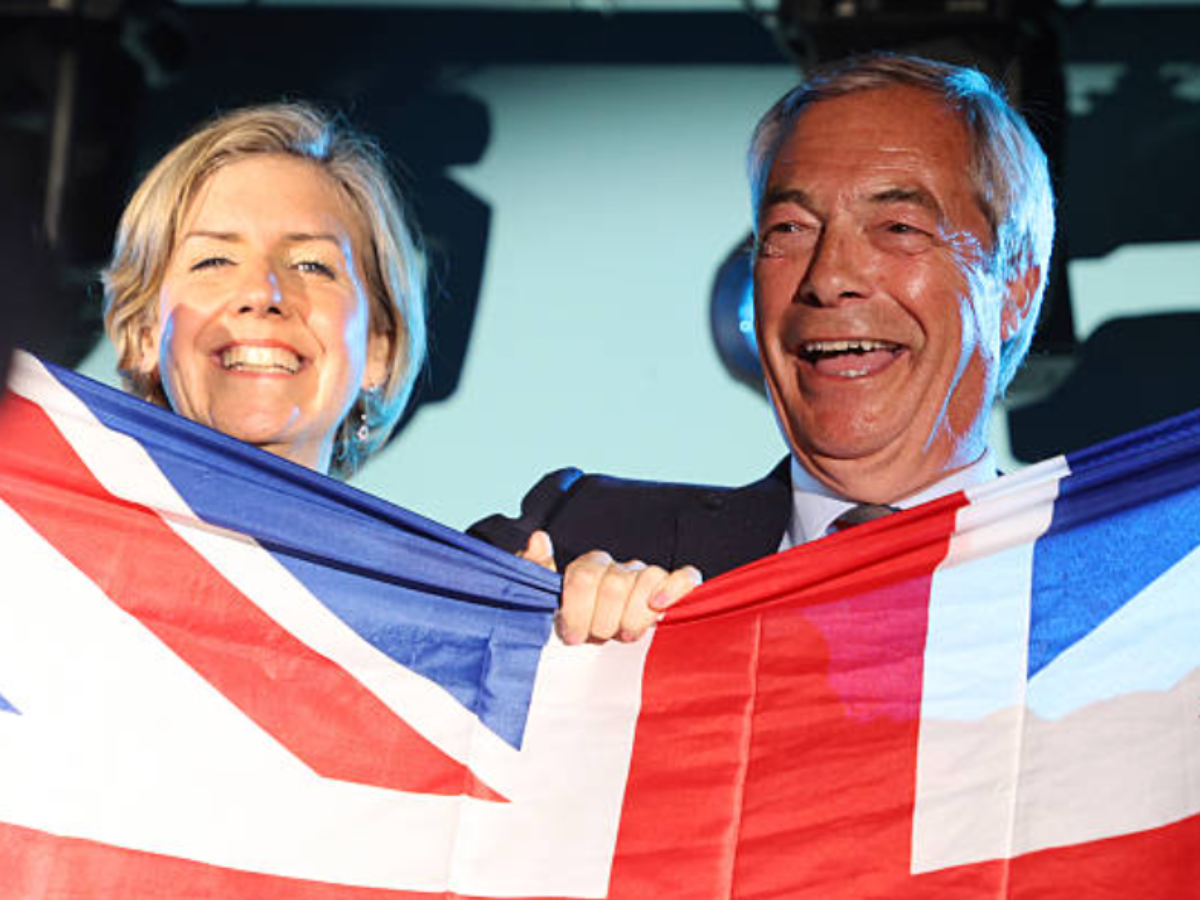
Reform – the UK media’s darling – is currently being given a platform to air cruel statements about slavery and reparation demands on most UK news channels and platforms.
A resolution adopted by the UN General Assembly declared the transatlantic slave trade and the associated system of racialised chattel enslavement to be the gravest crime against humanity, a text that saw the UK and Ukraine abstain, as the measure passed with 123 votes in favour and only three countries, Argentina, Israel, and the United States, voting against.
Reform have corporate media in the palm of their hand
Zia Yusuf’s face has been on various videos this morning, expressing how aghast he is!
‘For countries to be turning up and demanding reparations now is a racket’
Reform UK Shadow Home Secretary Zia Yusuf slams the ‘insane’ demands of nations requesting reparations from the slave trade.
‘We will not allow this country to be slapped around on the world stage’… pic.twitter.com/BDnhXRbowQ
— Talk (@TalkTV) April 7, 2026
‘We’re not going to allow Britain to be slapped around. British taxpayers will no longer be an ATM for ethnic grievances around the world.’
Reform UK’s Home Affairs spokesperson Zia Yusuf discusses Reform UK’s plan to ban visas from countries demanding reparations from Britain. pic.twitter.com/Cj3P5MQ5XH
— GB News (@GBNEWS) April 7, 2026
🔴 Zia Yusuf says ‘enough is enough’ after Britain paid £6.6bn in foreign aid over two decades to countries demanding compensation
🔗: https://t.co/ecHX1keSjM pic.twitter.com/ySgyr5KlvW
— The Telegraph (@Telegraph) April 6, 2026
Darren Grimes is also at hand to indulge Yusuf’s xenophobia.
Reform will reject the global grifters pic.twitter.com/EM8yOH6hIe
— Darren Grimes (@darrengrimes) April 7, 2026
What opposition?
The mainstream media is doing exactly what it is supposed to be doing. It is lending credence to voices talking about a symbolic vote by the UN General Assembly, to channel the indignation that people are feeling at the state of the world.
For fuck sake, Trump is literally threatening nuclear armageddon – but let’s please give a mic to Farage and his fan boys, Yusuf and Grimes, to see how they feel about the UN’s PR.
As Professor Kehinde Andrews pointed out on his podcast Make It Plain, the UN resolution is useless. It is not legally binding. The General Assembly has no power. The Security Council – with its five permanent members who have veto power, including the UK and US – is where real decisions are made. This resolution changes nothing.
Andrews notes that when Britain abolished slavery, it gave the largest payment in history, about 5% of GDP, to slave owners. The enslaved got nothing.
Britain’s industrial revolution was because of slavery. As Professor Kehinde Andrews put it: gold, silver, indigo, tobacco, sugar, cotton.
Those six commodities make the industrial revolution happen. Without those commodities, there is no Industrial Revolution. It is that simple.
Outright lie
So when Reform UK talks about the “bank being closed” and threatens to ban visas over a UN press release, they are defending a lie. Full stop. The lie that Britain’s wealth is clean.
The media run Reform’s theatre of indignation because that is their job.
As Professor Michael Parenti documented in Inventing Reality, the media treat mass atrocity as if the victims were just unfortunate figures in a “tragedy ordained by destiny”, never naming the perpetrators, never counting the debt, never asking who still profits.
Parenti wrote:
The most effective propaganda is that which relies on framing rather than on falsehood. By bending the truth rather than breaking it,using emphasis, nuance, innuendo, and peripheral embellishments,communicators can create a desired impression without resorting to explicit advocacy and without departing too far from the appearance of objectivity.
How apt is this analysis to the Gaza genocide, slavery, austerity deaths – the list is long and bloody.
Featured image via the Canary

14 peace campaigners were arrested during a 6 hour blockade of the main gates at RAF Lakenheath on 7 April. RAF Lakenheath is used exclusively by the United States Air Force and is sending fighter jets to the Iran war.
The peace protesters used heavy-duty locks to attach themselves to a car, a large multi-coloured peace symbol and each other. They completely blocked the main gates of RAF Lakenheath from 6am. Peace campaigners also shut down a second gate into RAF Lakenheath for 4 hours from 6am to 10am.
This non-violent direct action follows a week-long International Peace Camp at the base that ended yesterday, Monday 6 April. Although the RAF is the official owner, the US Air Force has exclusive use of the airbase. And it’s using it to send fighter jets to the war in Iran.
RAF bases Lakenheath and nearby Mildenhall have also supported Israel’s genocide in Gaza and nuclear bombs returned to Lakenheath last summer. Marie Walsh, a retired teacher from Didcot said:
We are here to interrupt business as usual, and to say in the name of humanity ‘STOP’.
One of the lock-on protesters, Rajan Naidu from Birmingham said:
Though being on British sovereign territory, this base is used by the US to pursue an illegal war of aggression, raining death and misery on the people of Iran. The base is also being used to aid and abet Israeli war crimes and genocide against the Palestinian people. Britain, by allowing these crimes against humanity is complicit in them, and therefore culpable for them.
RAF Lakenheath and Trump’s war on Iran
Well over 100 fighter jets and bombers have deployed from RAF Lakenheath for the attack on Iran. RAF Mildenhall has also had active involvement in the illegal war of aggression by providing refuelling for bombers deploying to West Asia.
Lakenheath Alliance For Peace has kept a list of warplanes deploying from Lakenheath and other airbases.
The Military Aviation YouTube channel filmed and published three Israeli F-35I arriving at RAF Mildenhall on 16 February and then departing for Israel on 18 February. The Israeli media had reported the delivery of the new aircraft on 20 January. Israel has used the F-35I in attacks against Gaza, Yemen and Iran.
LAP believes US nuclear B61-12 bombs have already arrived at RAF Lakenheath.
Nukewatch UK collected evidence of US B61-12 nuclear bombs coming to Lakenheath. Nukewatch is a network of volunteers that monitors and tracks movements of weapons of mass destruction in order to break the secrecy and inform the public about nuclear weapons in the UK.
Featured image via Lakenheath Alliance For Peace
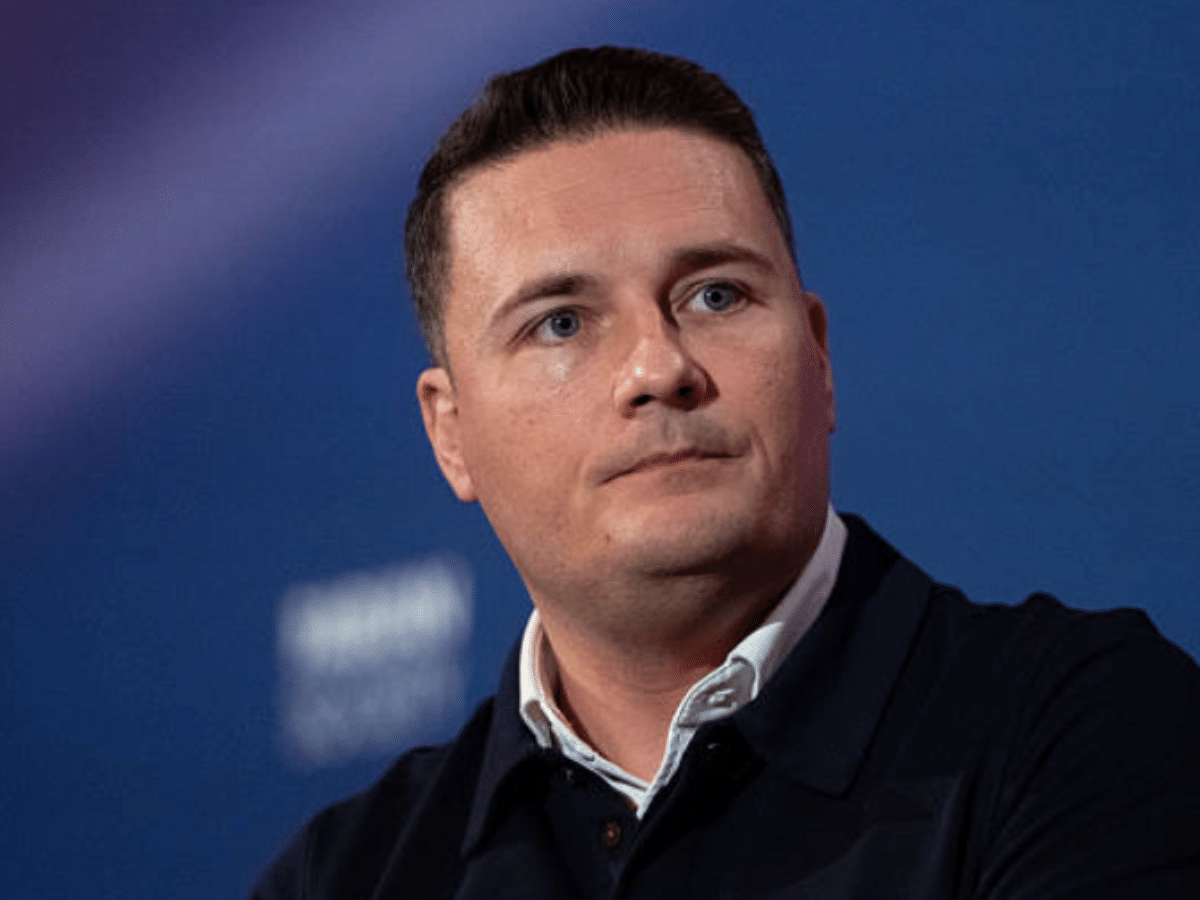
Pink News have run an article penned by Labour’s Wes Streeting. The health secretary ostensibly addressed young people who are worried about the fact that his party has gutted both health and social support for trans people.
Pink News describes itself as the “world’s largest and most influential LGBTQ+ led media brand”. Of course, to anyone who has followed Pink News‘ rapidly falling quality of content and shift towards a “reporter free newsroom” will be unsurprised that it’s scraping the barrel for articles now.
However, even for the Daily-Mail-but-Pink, platforming a transphobe like Streeting is lower than low. This is a man who lied through his teeth about the number of trans kids who took their own lives because of the puberty blocker ban. Worse still, he called reporting on those statistics “dangerous”.
And now we’re meant to listen to him lying through his teeth about caring?
Streeting – ‘about you, rather than to you’
The health secretary begins his article by stating that:
If you are a young person questioning your gender, or a parent watching your child struggle with who they are, this moment of reassessing how NHS gender services are accessed and deployed may feel frightening.
You might be worried about what comes next. You might feel uncertain, unheard, or invisible in a debate that too often talks about you, rather than to you.
So let me begin here: you matter. Your feelings are real. And you deserve care, dignity and understanding.
Not once, in this entire piece, does Streeting refer to the trans kids he’s talking to as ‘trans kids’. He calls them young people “questioning” their gender.
He says [trans kids] deserve dignity, but he won’t even acknowledge their identity. The closest he manages is “every trans person, every child deserves to feel safe”.
‘I remember what it felt like’
This refusal of acknowledgement makes his subsequent speech about his own sexuality particularly two-faced:
I know, from my own life, how powerful and sometimes overwhelming questions of identity can be.
Growing up gay, I remember what it felt like to wonder if I would be accepted, whether I would be safe, and whether the world would make space for me as I was.
Streeting grew up gay, fearing that he wouldn’t be accepted. I wonder if he is capable of the empathy to imagine himself in trans kids’ place now?
To the trans kids who have had their medication pathways ripped away from them on blatantly ideological grounds, Streeting isn’t showing the “love, acceptance and support” of his “amazing family and friends”.
To those trans kids he calls “questioning”, is Streeting meaningfully different from the politicians who talked about gay people as “a pretended family relationship” when he was growing up?
Is his government’s guidance urging a “very careful approach” when a child “asks” to socially transition in schools closer to championing LGBTQ+ rights, or to Section 28’s ban on teaching materials that “intentionally promote homosexuality”?
‘Support is not on hold’
Streeting goes on to talk about the pause on the PATHWAYS puberty blocker trial for a review of “aspects of its design and safety”. Of course, he fails to mention that the review was proposed by a man who happened to be recused due to his openly transphobic social media posting immediately afterwards.
The health secretary also states that:
At the same time, there is a proposal to stop routinely offering puberty blockers and hormone treatments to under-18s while more evidence is gathered about long-term effects.
A masterclass in the use of the passive voice there. Likewise, Streeting also masterfully neglected to mention that the proposal was based on a study that used a bizarre set of inclusion criteria that just happened to rule out almost all positive evidence for said treatments. Funny that, isn’t it?
In spite of these pauses and halts on treatment, the health secretary nevertheless tries to insist that:
Support is not on hold.
Young people referred to services are being seen by mental health and paediatric teams, with help available while you wait for specialist care.
What use is mental health care to the trans boy who is being forced to undergo puberty because of his government’s transphobic ideology? Counseling doesn’t stop his hips from widening or his chest from growing.
What use is mental health care to the trans girl whose voice breaks because the blocker trial is on hold? Every time she speaks in a tenor from now on, as the dysphoria bites, she’ll know whose fault that is. Will she take solace in the fact that some sniveling prick of a health secretary said her feelings are valid?
‘Questioning the government’s commitment’
At the end of his marathon of hypocrisy, omissions, and outright lies, Streeting widens his address:
I also want to speak to the wider LGBTQ+ community, and to anyone questioning the government’s commitment.
I hear those concerns. I understand why trust feels fragile right now.
But let me say this clearly: every trans person, every child deserves to feel safe, respected, and included in our society and in the health system that serves them. That is not up for debate.
There will be disagreements of course. This is a deeply complex area, and people come to it with different perspectives and experiences.
People are questioning this government’s commitment because, among many other reasons, every LGBTQ+ individual in the country watched the prime minister go from saying ‘trans women are women’ to saying the exact opposite, overnight.
We’re questioning your commitment because we watched you, Wes Streeting, call for the segregation of trans people. We watched you lie about the suicides caused by policies that you inherited and endorsed.
Social murder
There’s something uniquely loathsome about the sucking moral vacuum in the shape of a man that is Wesley Paul William Streeting.
There’s a level of open lying in his dealing that speaks to his utter contempt for other people. This is a health secretary who claims to hate NHS privatisation. However, he takes tens of thousands in donations from the private providers his party is selling the service to.
Likewise, this is a health secretary who tries to tell the public to hate the doctors for striking. Meanwhile, he bleats to the doctors that they should undermine their union. And, of course, who could forget his taking a massive MPs’ pay rise whilst threatening to rip training positions away from doctors?
Streeting is a politician who uses being gay as part of his justification for the blatantly transphobic things he does. And yes, calling for trans segregation and removing our healthcare is transphobic, even if Pink News platforms his claims to care.
In sociology and political theory, the concept of ‘social murder’ refers to an unnatural death caused by the structure of society itself, and by the politicians that help shape that structure.
There’s a part of me that wonders if Streeting is ever kept awake at night by the thought of the kids who died at his far-removed hand. I doubt it.
Featured image via the Canary
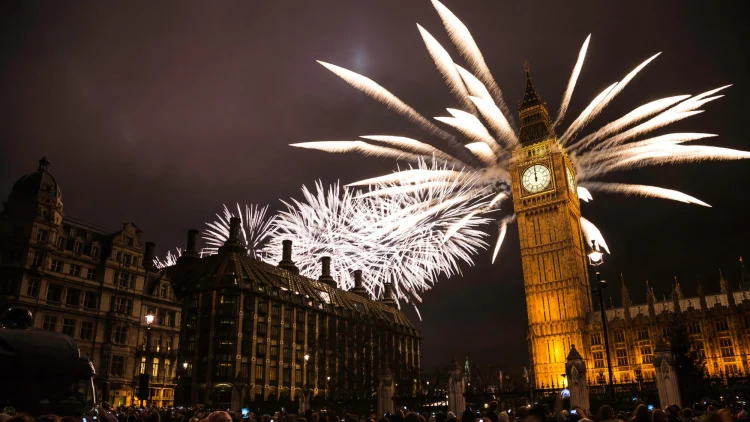
An MPs’ debate on the sale of fireworks was held in Westminster Hall in January (Alamy)

4 min read
Exclusive: The government is carrying out a consultation on whether to implement tougher laws on the public sale of fireworks.
PoliticsHome understands that it will look at whether to update the list of banned fireworks, review the requirements for the broad category of lower-risk fireworks to ensure they are proportionate to the risks they pose, and reduce the noise limit for consumer fireworks.
The consultation, which is part of the Labour government’s ‘Safer Streets’ policy, is expected to seek input on how the British public can balance the enjoyment of fireworks with reducing harm and distress to vulnerable people and animals.
Some types of pyrotechnics have also been linked to anti-social behaviour, which has been subject to increasing concern from MPs in recent years.
In December, two petitions – one calling for reducing the maximum noise level for consumer fireworks from 120 to 90 decibels, and the other in support of limiting the sale of fireworks to those running local council-approved events only – reached more than 376,000 signatures taken together.
Both petitions were debated by MPs in January, in which business and trade minister Kate Dearden said she would be “working at pace” in the department on “building the evidence base” and “speaking to as many people as possible”.
A survey by the Social Market Foundation think tank in 2024 found that only 15 per cent of the public were satisfied with the existing regulatory framework for the use of traditional fireworks, while 91 per cent of respondents were open to partial replacement of traditional fireworks with ‘alternative’ displays like lasers, drones, or silent fireworks.
Labour MP for Luton North, Sarah Owen, introduced a Private Members’ Bill in 2024 to ban the sale of the loudest fireworks to the public and ensure fireworks can only be purchased from licensed shops.
Although the bill did not pass, it received cross-party support, and she has continued to campaign for tougher laws on firework sales.
Responding to the government consultation, Owen told PoliticsHome: “This is a huge step forward for the thousands of people and many brilliant charities who have campaigned for a change in the noise limits on fireworks.
“From veterans to pet owners to parents to children with SEND and older people, we know the havoc nuisance fireworks cause. In towns and cities, this anti-social behaviour isn’t limited to festive periods any more, but all year round and round the clock. It erodes trust both within neighbourhoods and their local authorities. This is therefore very welcome news from the government.
“It is so welcome that finally a government has been brave enough to take note and now people have a chance to really be heard in this consultation.”
Conservative MP Simon Hoare, who supported Owen’s latest bill on the issue, said: “This is great and welcome news. The days around 5 November have, for too many communities, become a nightmare, particularly for pet and livestock owners.
“Anything that can be done to improve the situation has my unqualified support “
The consultation will seek public and business views on the impact of fireworks and the potential consequences of tighter regulations, with some industry opposition expected.
In a letter responding to a previous Westminster Hall debate in January 2025, representations of the British Fireworks Association (BFA) described fireworks as a “cherished British tradition” that millions of people use to “celebrate responsibly and considerately”.
“Further restrictions would unfairly penalise this law-abiding majority for the actions of a criminal minority,” it said.
The group argued that reducing the noise limit for fireworks from 120dB to 90dB – roughly equivalent to the sound of a lawnmower – would “remove almost all legal products from the market, effectively ending the trade by stealth”.
The BFA has also argued that tougher restrictions would lead to the development of a black market in fireworks that would make it more difficult for the police to monitor and would introduce more dangerous, non-compliant explosives into communities.
Additional reporting by Adam Payne
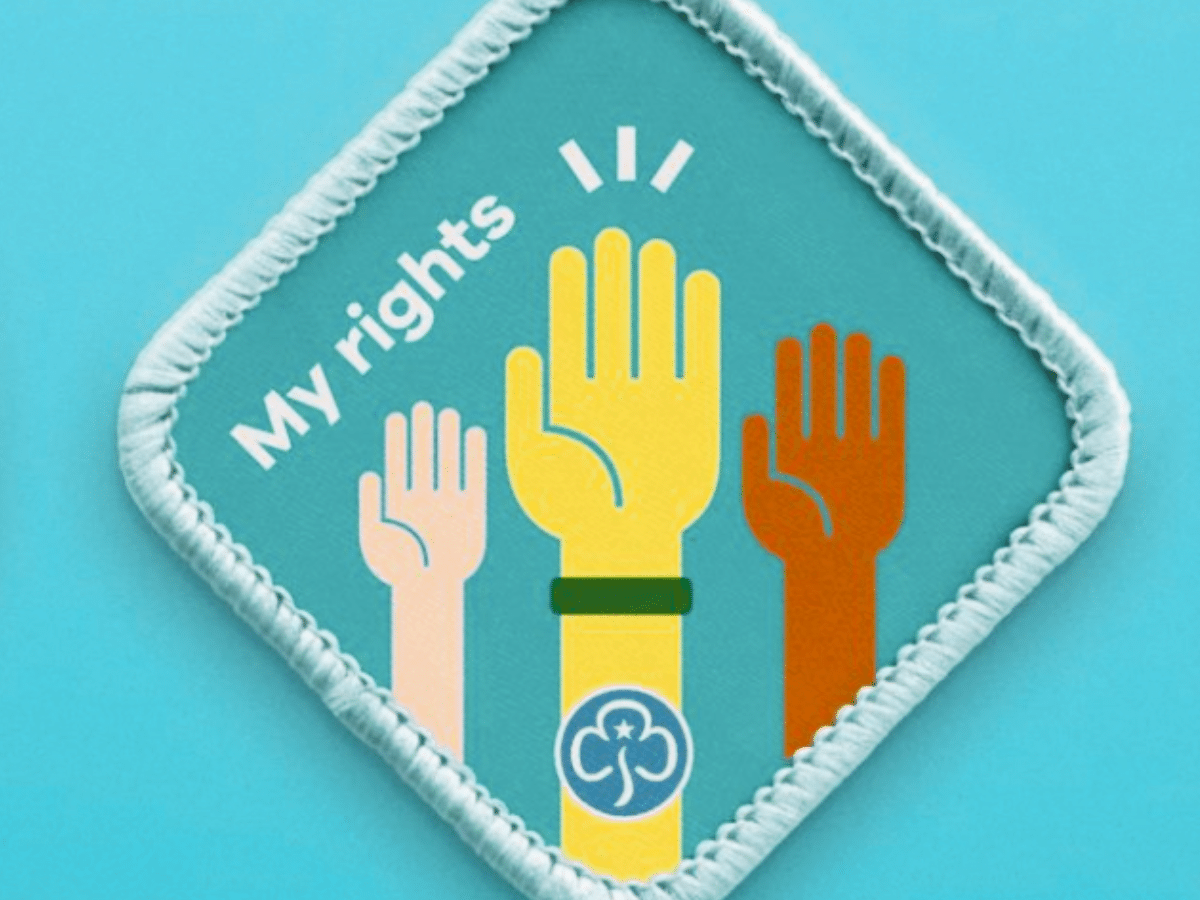
Parents and volunteers have spoken out about the impact of a recent ban on trans women and girls from participating in Guide groups.
It follows an announcement in late 2025 that “trans girls and young women will no longer be able to join Girlguiding.”
Now, the organisation has said that existing Guides will also have to leave when new policies come into effect in September 2026.
Parents devastated
Speaking to the Guardian, parents and volunteers have described the change in policy as ‘deeply distressing’. They are also concerned it will have a ‘catastrophic impact’ on their children.
One mother, who has two daughters in the Guides, commented on her eldest’s indecision, knowing her younger sister can no longer participate in their local group:
It’s a very tricky position for her to be in … Girlguiding has taught her values of kindness and compassion, and now she’s being told those values have limits and that limit is your younger sister. It’s very difficult.
In a statement released last year, Girlguiding claimed to have made decision ‘with a heavy heart’. One volunteer responded:
We know Girlguiding didn’t want to do this but we still want to hold them to account for the decisions they’ve made and make it really clear they are hurting people.
Principles contradicted
Pressure from the government, the Supreme Court and TERF groups has left Girlguiding struggling to maintain its own principles. Last year’s statement concluded with the claim:
For over 100 years, we have been a welcoming space for all girls to have new experiences, support their communities, build friendships and grow their confidence.
While Girlguiding may feel a little different going forward, these core aims and principles will always endure and we remain committed to treating everyone with dignity and respect, particularly those from marginalised groups that have felt the biggest impact of this decision.
Unfortunately, solidarity with a marginalised group counts for little in an announcement that they are to be excluded. The Canary‘s Maddison Wheeldon wrote in March 2026:
One of the Girlguiding mottos is: ‘We help girls know they can do anything’. As long as they’re the right kind of girls.
Protests organised
On 12 April, Guiders Against Trans Exclusion (GATE) are organising protests in six cities across the UK. So far, protests have been confirmed in London and Edinburgh, with more expected to follow.
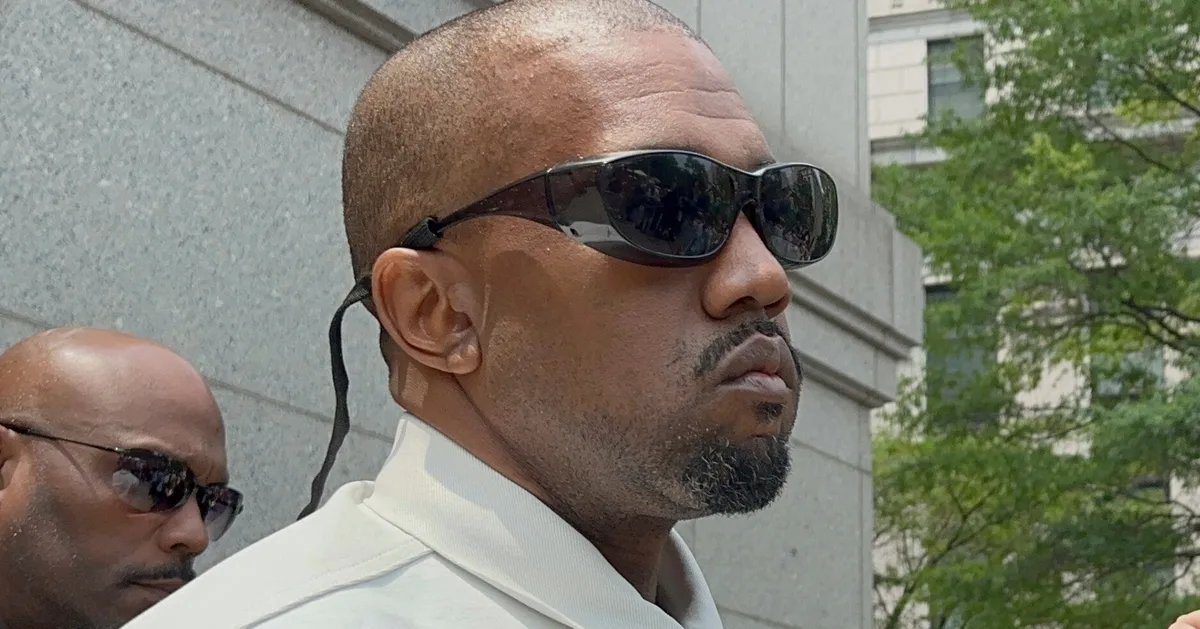
The US rapper Ye has been banned from travelling to the UK ahead of his scheduled performances at this year’s Wireless music festival.
Ye – formerly known as Kanye West – had been booked to headline all three nights of the London festival in July, leading to widespread controversy due to his past antisemitic comments and actions.
London mayor Sadiq Khan and UK prime minister Keir Starmer were among those to raise questions about the booking, as well as many leading UK-based Jewish groups, some of whom went as far as questioning whether the Grammy winner should even be allowed to travel to the UK.
It’s now been revealed that Ye’s performances will no longer be able to go ahead, due to his right to travel to the UK being nixed by the Home Office.
Government sources told HuffPost UK that the decision was made on the grounds that his presence in the UK “would not be conducive to the public good”.
After the release of a single titled Heil Hitler, his Australian work visa was also cancelled last year.
Ye – who was diagnosed with bipolar disorder in 2016 – issued a public apology for his behaviour in a full-page magazine ad in January 2026 addressed “to those I’ve hurt” with his antisemitic outbursts.
In the public statement, he explained had his comments had come during a months-long manic episode where he said he had “lost touch with reality”.
Following the controversy around his planned Wireless sets, Ye issued a fresh statement, saying: “I’ve been following the conversation around Wireless and want to address it directly. My only goal is to come to London and present a show of change, bringing unity, peace, and love through my music.
“I would be grateful for the opportunity to meet with members of the Jewish community in the UK in person, to listen. I know words aren’t enough – I’ll have to show change through my actions. If you’re open, I’m here.”
Ye previously dismissed the suggestion that his apology was a “PR move” intended to help him “release music” and “operate [his] businesses” as he had before the backlash he sparked controversies 2025.
“This isn’t about reviving my commerciality,” he told Vanity Fair. “This is because these remorseful feelings were so heavy on my heart and weighing on my spirit.
“I owe a huge apology once again for everything that I said that hurt the Jewish and Black communities in particular. All of it went too far. I look at wreckage of my episode and realise that this isn’t who I am.
“As a public figure, so many people follow and listen to my every word. It’s important that they realise and understand what side of history that I want to stand on.”

The post Scott Mills: why the BBC is always in crisis appeared first on spiked.

What does ‘greater ambition’ in UK-EU relations look like – and what are the chances of it?

Terence Crawford names the 3 fights he wants to see happen this year

Starfish Space raises $110M to scale up its satellite servicing missions


-

 NewsBeat5 days ago
Steven Gerrard disagrees with Gary Neville over ‘shock’ Chelsea and Arsenal claim | Football
-

 Business5 days ago
No Jackpot Winner and $194 Million Prize Rolls Over
-

 Fashion4 days ago
Weekend Open Thread: Spanx – Corporette.com
-

 Crypto World6 days ago
Gold Price Prediction: Worst Month in 17 Years fo Save Haven Rock
-

 Business2 days ago
Three Gulf funds agree to back Paramount’s $81 billion takeover of Warner, WSJ reports
-

 Business3 days ago
Expert Picks for Every Need
-

 Sports3 days ago
India men’s 4x400m and mixed 4x100m relay teams register big progress | Other Sports News
-

 Business5 days ago
Login and Checkout Issues Spark Merchant Frustration
-

 Sports7 days ago
Tallest college basketball player ever, standing at 7-foot-9, entering transfer portal
-

 Crypto World7 days ago
Bitcoin enters the public bond market as Moody’s gives a first-of-its-kind crypto deal a rating
-
Crypto World7 days ago
Bitcoin stalls below key resistance as technical signals skew bearish
-

 Tech5 days ago
Commonwealth Fusion Systems leans on magnets for near-term revenue
-
Business2 days ago
No Jackpot Winner, Prize to Climb to $231 Million
-
 Politics7 days ago
Starmer’s centre has collapsed, and the left was right all along
-

 Crypto World6 days ago
Ripple rolls out enterprise crypto treasury platform for corporates
-

 Fashion1 day ago
Massimo Dutti Offers Inspiration for Your Summer Mood Board
-
Crypto World7 days ago
AI Memory Rout Wipes 9% Off Nvidia Stock: Chart Says More Pain Ahead
-

 Crypto World6 days ago
Why It’s Partnering, Not Issuing
-
 Sports7 days ago
How to teach yourself the perfect impact position with every club
-
 Sports6 days ago
Steal Gary Woodland’s subtle power move for longer drives
You must be logged in to post a comment Login