Politics
Rear-Facing Car Seats Could Save Kids’ Lives In Car Accidents

Parents in the UK are being urged to keep their children rear-facing in car seats until they’re at least four years old.
Rear Face For Safety said children are up to five times safer travelling rear-facing than forward-facing and is trying to raise awareness of this to save lives and prevent life-changing injuries.
Jenny Everson has firsthand experience of the power of rear-facing. She was driving along a 50mph road in December 2023, when a speeding driver crossed through a gap in the central reservation and collided head-on with her car.
Jenny and her mother, who was travelling in the front passenger seat, were both knocked unconscious by the impact and suffered serious injuries which required lengthy rehabilitation in hospital.
But Jenny’s son Marlo, who was almost three at the time and travelling in a rear-facing car seat, escaped with only minor injuries.

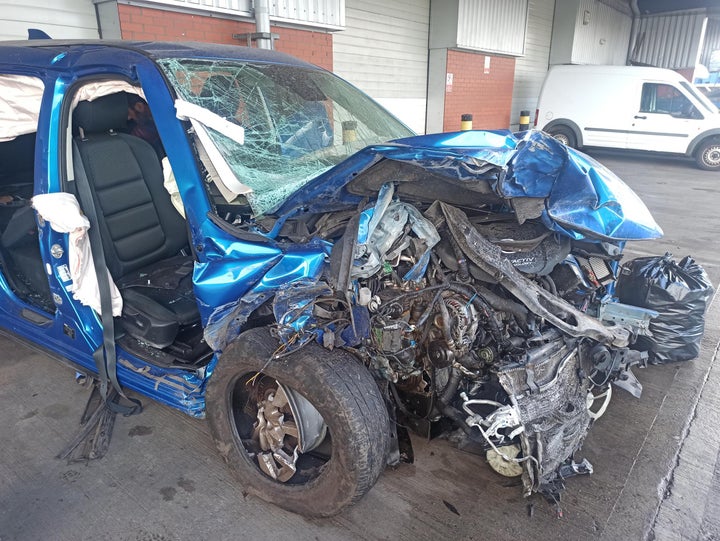
“Had it not been for Marlo’s rear-facing seat, I was told by emergency services he likely wouldn’t be here now,” Jenny said.
“I will be forever grateful I did my research as I’m sure his seat saved his life, or at the very least saved him from serious injury.”
She is now on a mission to raise awareness of the importance of rear-facing seats, adding that “if telling our story helps save just one child’s life, then it’s worth it”.


Why is rear-facing safer?
In the UK, it’s a legal requirement for babies under 15 months of age to travel rear-facing. This is because infants’ heads are proportionally heavier than older children’s compared to their bodies, so their necks are more delicate.
According to Halfords, having the car seat in a rear-facing position protects them better in the event of a crash. Yet a 2024 survey by the retailer found nearly a quarter (22%) of parents are breaking the law by having their infant forward-facing.
Some parents switch to forward-facing once their children’s legs become longer or when they become toddlers. But experts want to challenge this view.
They stress that in a frontal collision, rear-facing seats offer enhanced protection for a child’s head, neck and spine by distributing crash forces across the back of the child car seat.
The NHS-run Bedfordshire Luton Children’s Health Service recommends for children to use a rear-facing seat until they’re four years old as they have “less developed skeletons”.
Dr Maria Klingegård, traffic safety researcher at Folksam, said: “Children are not just small adults. They need extra support. A rear-facing child restraint system provides robust protection that is forgiving for misuse, offers synchronised support for the head and torso, and protects the neck.”
She highlighted how Sweden has “among the lowest fatality rates for small children in cars”, which she claimed is “largely because most parents use rear-facing restraints for older children up to four or five years of age, or longer”.
Data suggests around 22% of UK children aged two to four travel rear-facing, compared with 83% in Sweden.
Dr Neale Kinnear, a leading UK behavioural scientist, road safety expert and father-of-two, said: “Many families in the UK remain unaware of the safety benefits or assume that turning children forward-facing earlier is the norm internationally.
“What matters is making sure parents have access to clear, consistent and evidence-based information so they can make informed choices.
“Rear-facing travel is one practical and evidence-informed step that can help better protect children.”
You must be logged in to post a comment Login