

Politics
Return-To-Work Mandates Are Already Impacting UK Mums


During (and after) the pandemic, it felt like the nation’s approach to flexible work shifted in a positive direction.
A large number of employees were given more freedom to work from home, benefiting a wide range of people – from those with chronic illnesses, mental health conditions and disabilities, to those with caring responsibilities.
But a new report reveals a trend that will concern a large number of people who are currently benefitting from this: flexible working appears to be silently being reversed.
A new Flex Appeal report, in conjunction with market research company Vivid Interface, polled 2,959 working mothers in January and found 35% reported increased office attendance expectations in the last year.
Campaigners are warning the move – dubbed the “silent re:flex” – could force even more mothers out of the workplace. (We say even more because Pregnant Then Screwed data suggests up to 74,000 women lose their job for getting pregnant or taking maternity leave each year, and ONS data previously found 84% of the 1.75 million people who’ve given up work to care for their family are women.)
Why is flexible work taking a hit?
Perhaps it should come as no surprise. KPMG’s 2024 CEO Outlook report revealed 83% of CEOs expected a full return to the office within three years. Return-to-office mandates are also on the rise – yet they are increasingly met with resistance, particularly from parents.
Flexible work encompasses when, where and how a person works – and includes options like compressed hours, part-time work or flexitime, as well as options for remote working.
There are some who oppose the latter element in particular and are extremely vocal about it. Reform leader Nigel Farage said he believes we need an “attitudinal change to the idea of working from home” and “it’s a load of nonsense” that people are more productive at home.
The Apprentice star Lord Alan Sugar has also shared his support to get workers’ “bums back into the office”. Last year, the former boss of Marks & Spencer and Asda, Lord Stuart Rose, even went as far as suggesting working from home was “not doing proper work”.
A King’s College London analysis of the long-term impacts of flexible work arrangements through a case study company found productivity increased by 10.5% after transitioning to fully remote work during the pandemic.
Yet there was one caveat: employees who began with in-person training before switching to remote work showed higher long-term productivity and lower attrition rates than those who started remotely (suggesting initial in-person onboarding can be beneficial).
Most mums need flexibility at work because of childcare responsibilities
Research by Flex Appeal, founded by Anna Whitehouse (aka Mother Pukka), found almost half of mums (42%) want more flexibility than they currently have, and nine out of 10 (93%) need it due to childcare responsibilities.
There are other benefits to being able to work from home, too. Those who have flexible working in place say it reduces exhaustion from commuting, gives them more energy outside of work and lowers stress levels. Another important consideration during a time of rising maternal burnout.
Discussing the prevailing anti-flexible work rhetoric, Whitehouse said: “I am sick and tired of hearing privileged billionaires bleating about how important it is that we get people back to the office – as if the party is finally over and we need to pull our socks up and get back to work.
“Mothers’ flexible working rights are being rolled back silently in plain sight with more and more employers calling for increased office time, meanwhile mums are still not finding jobs that are flexible enough around childcare, and when they do, their careers are suffering for it.” (Three-quarters of mothers with flexible work believe it is limiting their career progression, according to the latest survey.)
Flex Appeal wants to see flexible working advertised upfront in job listings, and companies offering a ‘flexible first’ approach. Ahead of the government consultation into flexible working, it also wants recognition of the flexible working roll-back that one-third of mothers are already experiencing.
The reality is, without flexible – specifically remote – work, many mothers would be forced to quit their jobs because typical working hours simply do not fit around the school day.
What’s more, wraparound childcare comes at extra cost and securing it can be a major headache when school clubs only have limited capacity and slots become available at some obscure hour on a random weekday night – getting your hands on a Glastonbury ticket is probably easier.
That’s not even taking into account the huge swathes of time kids have off school in a year versus the standard amount of days (28, usually) most full-time workers get as paid annual leave.
Of the mothers surveyed, 20% said they have complete flexibility at work, while 38% said they have partial flexibility.
Many mums reported a negative attitude towards flexible working in their organisations. Only 14% said they feel comfortable asking for flexible working, and one in five (20%) say their workplace is explicitly unsupportive.
Almost one in three mums (29%) said their flexibility arrangements are informal, leaving many powerless to fight back if managers make a U-turn.
“It’s not just women who are negatively impacted, either; businesses are losing highly qualified, skilled, experienced employees every day because of rigid, out-of-date policies,” Whitehouse continued.
“Flexible working can and does work, but more needs to be done to implement it.”


Miriam Margolyes proved she wasn’t going to let anything stand in the way of being as unfiltered as ever during a recent public appearance with Queen Camilla.
On Tuesday, the Bafta winner attended an International Women’s Day event at St James’s Palace, where fellow guests included Dame Helen Mirren and Hannah Waddingham.
During the event, Miriam was greeted by the Queen, kissing her on the cheek and telling her: “Hello darling, how are you?”
“Will you tell His Majesty that we love him and we want him to get better?” Miriam then asked, before insisting the monarch should “take no notice of anyone who criticises him, because he’s just wonderful”.
“I will bear that in mind,” Queen Camilla responded, before thanking her and moving further down the line of guests.
While Miriam primarily identifies as a socialist, she has expressed her admiration for King Charles on numerous occasions in the past.
In 2023, the former Harry Potter star appeared on Waitrose’s Dish podcast, where she revealed that she once told Queen Camilla (with whom she was swimming at the time, apparently): “I hate it when the newspapers say horrible things about Prince Charles because he’s so sweet and so good and he worries about the country.”
Last year, she also wrote in her Little Book Of Miriam: “I like and respect him, although I am politically a socialist. He cares about the planet, the country, all the people of the United Kingdom.
“He is human and honest, fundamentally serious but with a glorious sense of humour.”
“I am not his friend,” she then insisted. “To claim that would be an impertinence. But I know enough to believe in his decency and kindness, and when I read some of the ghastly stuff newspapers write, I rush to defend him wherever I can.
“I value his worth. We are lucky to have such a king. I wish him health and strength and a long and happy life with his beloved queen, who is totally delicious.”
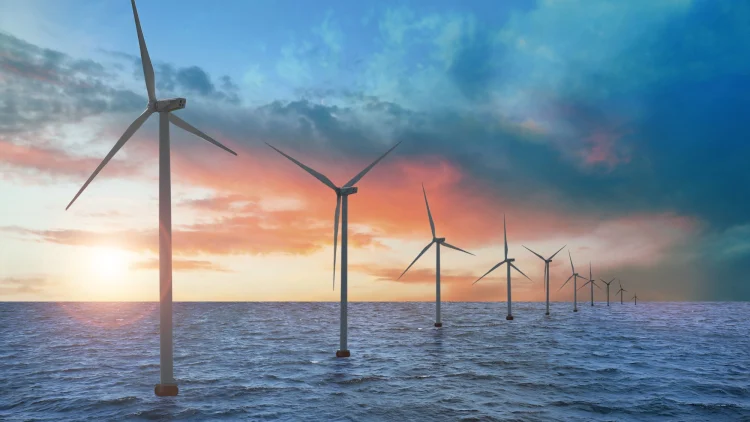


The recent Contracts for Difference Allocation Round 7 has put wind in the sails of
offshore renewables. The Offshore Renewable Energy (ORE) Catapult is now working
to shore up the supply chain by bolstering the circular economy for offshore wind
With the excellent news of Allocation Round 7’s bumper budget allocation, delivering 8.4GW of contracts for new offshore wind turbines in Britain’s waters, attention is now turning to how the supply chain can be turbocharged to get them built.
Meeting the government’s ambitious 2030 offshore wind deployment targets of 43-50GW will require up to 12 million tonnes of steel, 9-12 million tonnes of concrete, and vast amounts of copper, aluminium and rare earth elements.1 The government is already pulling levers to help the supply chain scale up to meet this demand; Great British Energy has announced £300m in capital grant funding to build UK manufacturing capacity for key constrained components in offshore wind and enabling electricity networks sectors.
But delivering these targets sustainably demands more than just new turbines – it requires a coherent strategy for the end-of-life management, reuse and recycling of wind turbine components. Effective circularity in wind supply chains can unlock economic, environmental and strategic benefits that support the government’s broader industrial and net-zero objectives.
The UK’s earliest commercial wind turbines are now approaching the end of their expected operational lifespans, creating an urgent need to prepare for the decommissioning challenge, which will only increase over the coming years.
Embedding circular economy principles – reducing, reusing and recycling – across the wind sector preserves finite resources, reduces carbon emissions, and strengthens supply-chain resilience. It also aligns with UK industrial growth priorities by stimulating new manufacturing and recycling businesses. For example, emerging partnerships like the ‘Re-Rewind’ initiative are exploring how to create the UK’s first circular supply chain for rare earth magnets, a critical material in turbine generators, reducing dependence on imports and supporting future turbine manufacturing.
A series of collaborative initiatives highlights the sector’s commitment to these goals. The ‘Regulations to Ensure Sustainable Circular Use at End-of-Life for Wind’ (RESCUE) project, led by ORE Catapult alongside the University of Leeds, University of the West of England, University of Birmingham, EMR and Ionic Technologies, aims to identify regulatory barriers and opportunities to establish a robust end-of-life materials network.
The early discovery phase of RESCUE revealed that current waste and resource regulations risk stifling innovation needed for reuse, repair and recycling. The implementation phase seeks to address these barriers through collaborative governance, capacity building and regulatory sandboxes that pilot circular solutions.
Complementing this work, the University of Leeds policy briefing on enhancing resilience and circular economy in wind supply chains highlights that the existing policy landscape – spanning over 170 regulations, standards and planning frameworks – remains fragmented.
For Parliament, supporting circular wind strategies is not merely environmental stewardship. It is strategic industrial policy – strengthening UK supply chains, mitigating material risks, and ensuring that as turbines are built, they are also responsibly retired and recycled, contributing directly to the Clean Power 2030 agenda.
On Monday 16th March, ORE Catapult will be hosting a Parliamentary Reception in the Terrace Pavilion to launch its latest RESCUE report. Please join us to hear more about how circularity in offshore wind will not only benefit our energy security and clean power targets, but also boost regional growth in key coastal constituencies.
For more information about our reception, please email [email protected].
Reference
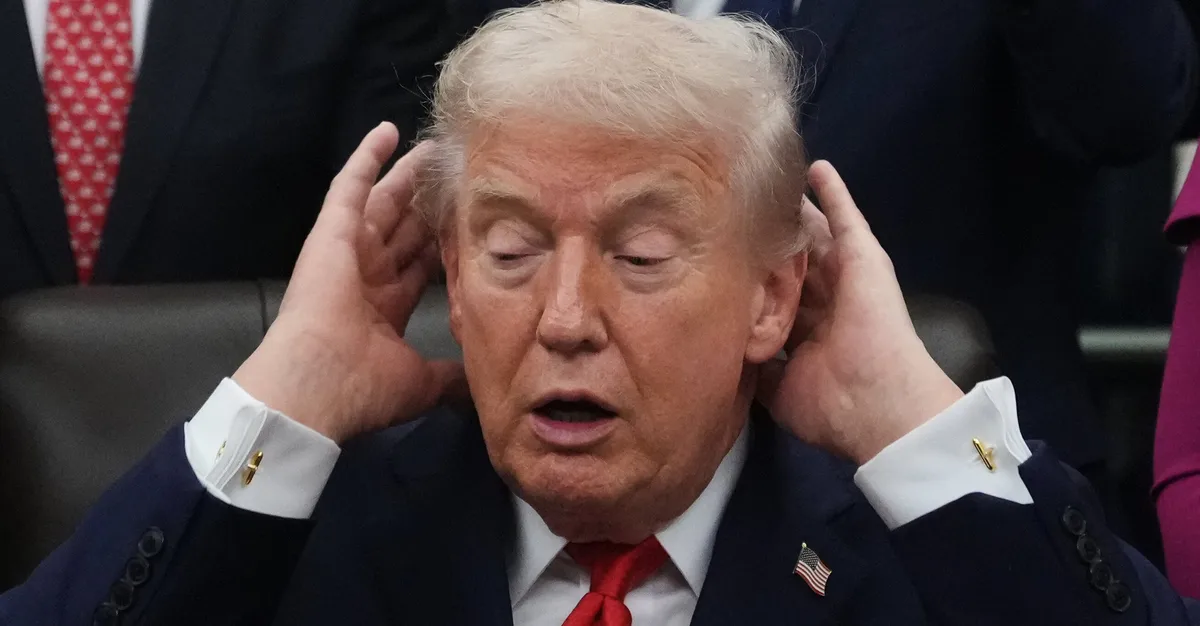
On Monday, though, the Journal reported that multiple other figures in Trump’s orbit are now walking around in presidentially purchased Florsheims — which retail for about $145.
Transportation Secretary Sean Duffy, Defence Secretary Pete Hegseth, Commerce Secretary Howard Lutnick, White House Communications Director Steven Cheung, White House deputy chief of staff James Blair and speechwriter Ross Worthington have all been on the receiving end of Trump’s shoe giving, the Journal reported.
Outside of the White House, Fox News’ Sean Hannity and Sen. Lindsey Graham (Republican, South Carolina) are also walking the walk in Trump-approved shoes, it added.
“All the boys have them,” a female White House official told the Journal.
“It’s hysterical because everybody’s afraid not to wear them,” another told the Rupert Murdoch-owned newspaper.
At one point, “Vance lifted his leg in the air to show the president the pair he was wearing,” said Times reporter Katie Rogers.
Last year, Vance recalled Trump chastising him and Rubio for their “shitty shoes” and then making a crude gag about penis size.
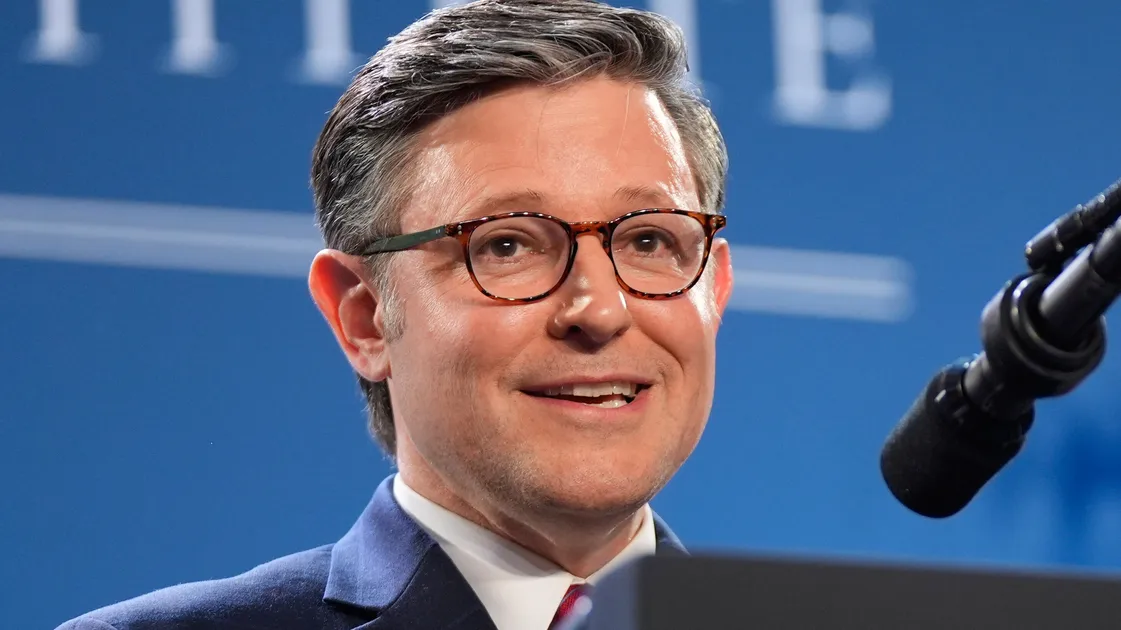
House Speaker Mike Johnson (Republican, Louisiana) on Tuesday said the US should not be involved in nation-building in Iran, claiming “we are the good guys” one day after President Donald Trump called his deadly ongoing war there “the beginning of building a new country.”
Johnson was asked during a fireside chat in Doral, Florida, by NBC News reporter Scott Wong, less than two weeks after joint US-Israeli strikes killed Iran’s Supreme Leader Ayatollah Ali Khamenei, if he thinks nation-building is something “we should be involved in.”
“I don’t think it’s our role,” Johnson said on Tuesday.
He also argued the US has “a very important role to play in the world,” citing support from his “colleagues at the G7, the G20” forums and members of parliament in Western nations as purported proof that “everyone around the world” agrees with America’s role.
Johnson said, “And we have held this position since World War II. [Former President] Ronald Reagan used to quote [Pope] Pius, I think the 12th, who said the leadership of the free world was placed upon the shoulders of the United States of America after World War II.”
“It is not a position that we sought or asked for, but that’s how it developed,” he continued. “And we emerged as a superpower, and we are the good guys. We are the defenders of freedom and liberty, and freedom-loving people all around the world benefit from a strong America.”
The Iran War has already cost at least seven US military service members and more than 1,200 Iranians their lives. Among them were 175 people who were killed in an airstrike on the Shajarah Tayyebeh school in Minab, most of them schoolgirls under the age of 12.
Critics were appalled that Johnson so leisurely deemed his administration “the good guys.”
“Why do I have the feeling that the mothers of the kids killed at the Minab school would strongly disagree with that,” wrote one user on X, with another person commenting: “No one in the history of history who has said ‘We are the good guys’ is actually the good guys.”
Others pointed to new polls showing many voters feel the war makes America “less safe.”
One Quinnipac survey conducted March 6-8 showed 55% of the 1,002 registered voters who were polled do not believe Iran posed the “imminent threat” that the White House has maintained, and that 74% opposed sending U.S. troops into Iran.
Trump has yet to rule out doing so, and while he initially claimed major combat operations would only take weeks, he later said, “Wars can be fought ‘forever.’” Johnson said Tuesday that regime change would be “great,” but that it’s up to the besieged Iranians to accomplish it.
“They need to rise up, as the president has tried to encourage, and they need to take that opportunity and secure that for themselves,” he added. “I am sure that there [are] friends and allies around the world who will help in some ways, but it is not America’s responsibility to do that.”

A suspect has been charged with attempted murder following an incident outside Rihanna’s house in California last week.
On Monday, the Los Angeles Police Department confirmed that the Pon De Replay singer’s home had been targeted by a woman who fired numerous shots in the direction of the property from outside of it over the weekend.
Days later, 35-year-old Ivanna Lisette Ortiz was charged with attempted murder, as well as 10 felony counts of assault with a semiautomatic firearm and three felony counts of shooting at an inhabited dwelling or camper.
BBC News reported that her bail is set at $1.875 million (around £1.4 million), and that she is facing a potential life sentence.
“Opening fire in any populated neighbourhood is extremely dangerous, puts lives at risk and will be fully prosecuted,” the Los Angeles County District Attorney Nathan J. Hochman was quoted as saying.
“This careless violence will not be tolerated in our community. Such shooters will find their next destination to be our jails and prisons.”
After allegedly fleeing the scene, Ortiz’s white Tesla was found around eight miles from Rihanna’s property, after which she was arrested and detained.
It’s also been reported that Ortiz had previously shared a number of social media posts referencing Rihanna.
Rihanna and her partner A$AP Rocky are both believed to have been at their home at the time of the shooting.
In September of last year, the couple welcomed their third child, a baby girl who they named Rocky Irish Mayers.
They were already parents to two sons, three-year-old RZA and two-year-old Riot.
Best known for her hits like Umbrella, We Found Love and Work, Rihanna has pivoted away from music in the last decade to focus on her hugely successful makeup and lingerie businesses.
She has continued to sporadically release music and perform in the last 10 years though, most notably headlining the Super Bowl Halftime Show in 2023 and landing an Oscar nomination for her contribution to the Black Panther: Wakanda Forever soundtrack.
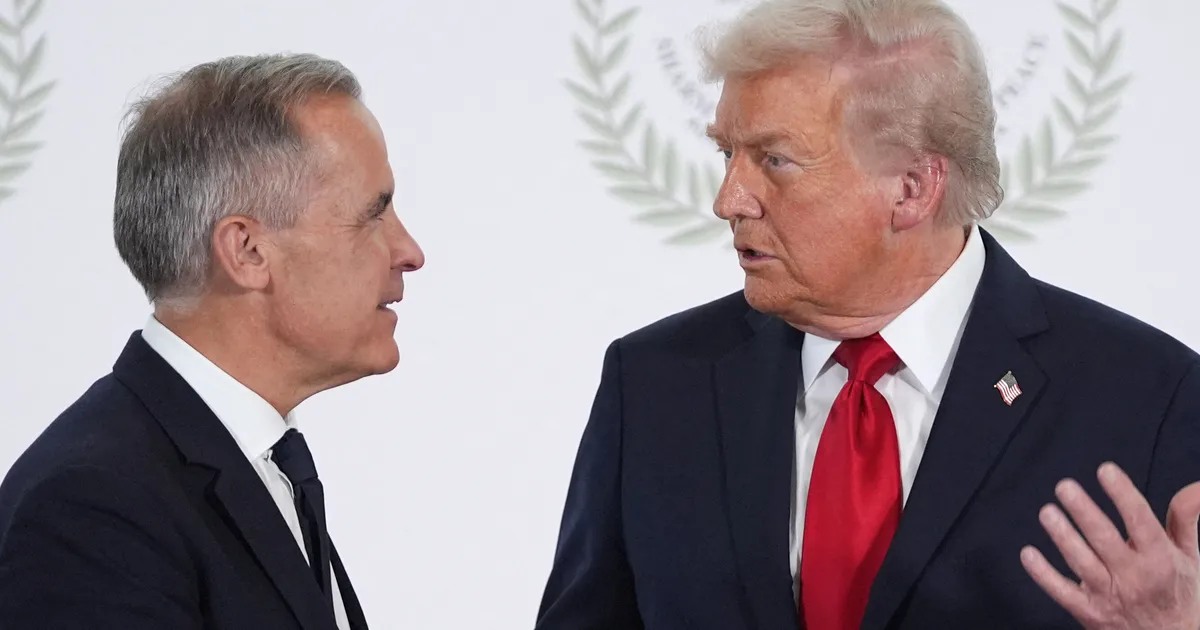
Donald Trump on Tuesday took some time out from waging war on Iran to renew hostilities with traditional US ally Canada, referring to Canadian Prime Minister Mark Carney as the country’s “future governor” — a remark that drew criticism on social media, where users called it juvenile and more.
The president made the dig on his Truth Social platform midway through a post that was otherwise about working with Michigan Governor Gretchen Whitmer (Democrat) to address the spread of invasive Asian carp in the Great Lakes.
“I’ll be asking other Governors to join into this fight, including those of Illinois, Wisconsin, Minnesota, Pennsylvania, Ohio, Indiana, New York and, of course, the future Governor of Canada, Mark Carney, who I know will be happy to contribute to this worthy cause,” Trump wrote.
Trump ended the post with a predictable boast:
“Separately, I am also working to save The Great Salt Lake, in Utah, which, in a short period of time, if nothing is done, will have no water. This is on top of everything else I am doing. Only ‘TRUMP’ CAN DO IT!”
Trump has previously mocked Carney with the “governor” title, similar to how he taunted Carney’s predecessor, Justin Trudeau, during the initial stages of his second term amid talk of the United States somehow taking control of its northern neighbour.
Carney, however, has repeatedly pushed back on such suggestions, insisting Canada will remain independent despite Trump’s tariffs and unusual warnings, such as his claim that China could somehow force Canada to stop playing hockey.
“Canada doesn’t live because of the United States,” Carney said in January, adding: “Canada thrives because we are Canadian.”
Critics on X, many with Canadian flags on their profiles, slammed Trump for the post:
What are the biggest issues facing the British people? Any pollster who asks this question invariably gets two responses: immigration and the cost of living. And not without reason: both are out of control and they are both impossible to ignore. It hasn’t escaped most people’s attention that their neighbourhood has been completely transformed in the space of a decade, or that their once manageable wage goes half as far as it used to.
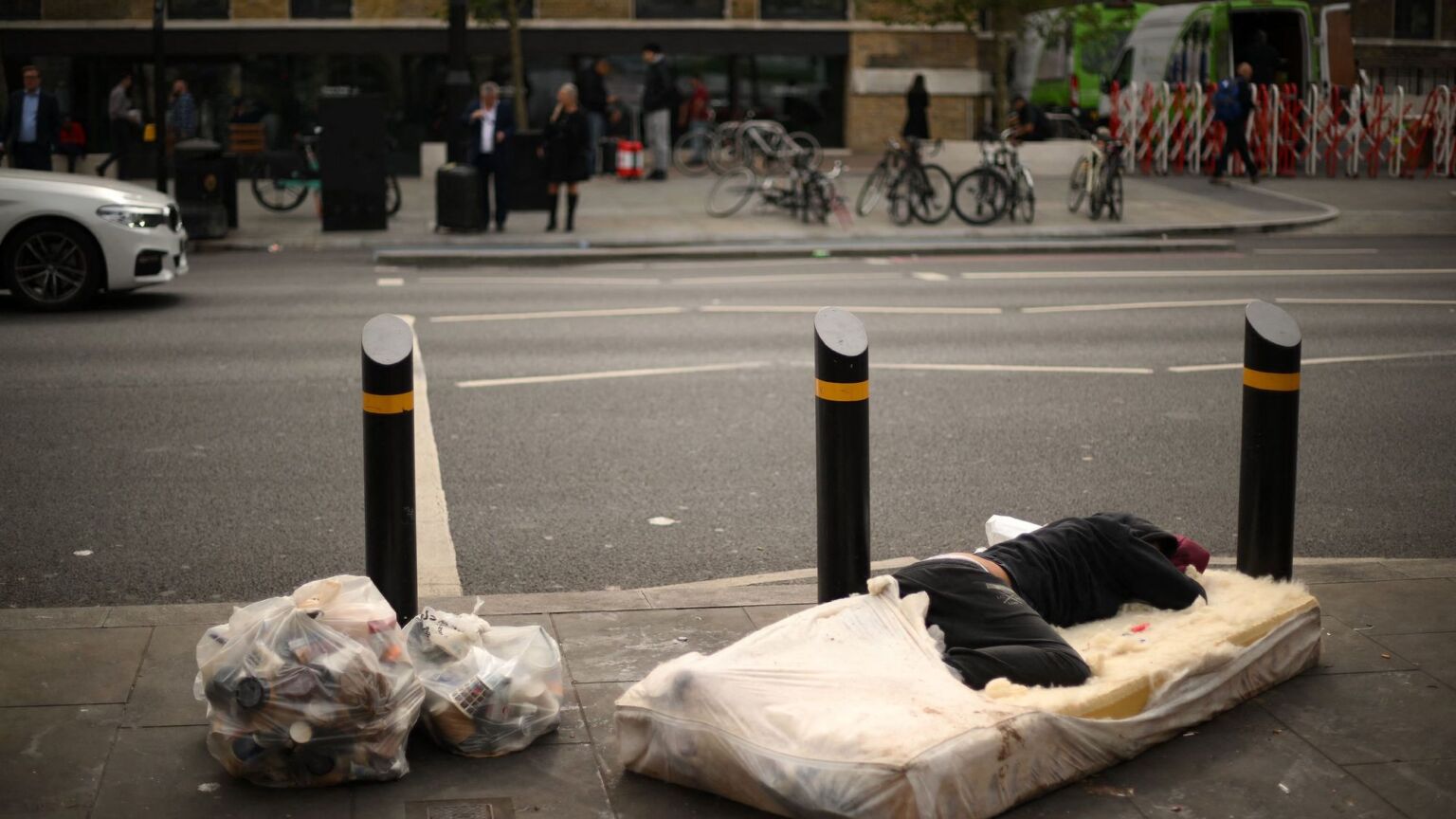
But in my view, the biggest force dampening the national mood is not either of these things. It is, instead, the proliferation of homelessness and begging.
Walk through any British town centre and the evidence is in front of you. Men and women slumped in doorways, visibly unwell. Begging outside shops and cafés, all the places that ordinary people go about their daily lives. Except, nobody really says anything about it. This is how decline is embedded. People accept and adjust. They tell themselves it is just the way things are, and perhaps how they’ve always been.
The public cannot fix homelessness. It is too complex. People can also escape the temporary discomfort of seeing it by heading home, shutting the door and forgetting. They cannot escape the discomfort they feel in their own street or the stress of financial worries. This is why voters do not talk much about homelessness, but are willing to debate the migration and inflation they actually see and feel. But blocking the problem from our consciousness is what makes this our biggest issue. We are not truly desensitised. We know it is still there, on the street and in our subconscious.
Over a decade, the unthinkable has happened. We step over beggars outside Greggs and pass people sleeping rough opposite parliament like they are furniture. Tent cities are springing up in cemeteries, parks and shopping streets. No one seems angry that billions have been spent while the crisis gets worse. An incredible 380,000 are homeless on any given night, and close to 5,000 are sleeping rough in all weather. Nothing undermines confidence in a country faster than visible proof that its institutions cannot perform their most basic function: providing a roof over people’s heads.
What makes this worse is that homelessness is not just a social and moral failure. It is an economic catastrophe. The government spends over £3 billion of our money each year just keeping homeless people in emergency accommodation. Tens of thousands of families are placed each night in grotty bedsits, budget hotels and short-term lets, often miles from their communities. Children try to do homework on shared beds and cramped floors. Adults live under constant stress, unable to plan their lives, provide stability or even work. We are not fighting homelessness. We are managing its proliferation.
And this is only part of the bill. Once housing benefit, support services, healthcare, legal and administration are included, the true cost runs far higher. Even that doesn’t include the billions of pounds in lost productivity. This is what societal decline looks like. Not sudden collapse, but visible disorder becoming normal. The shocking becoming the familiar, the unacceptable becoming routine.
Homelessness removes people from the workforce, it destabilises families and it damages children’s future earning power. Adults living in chaos can’t hold down jobs and their children fall behind at school because of insecurity, not lack of ability. Put simply, a country that cannot house its own people cannot function properly.
Our homelessness problem is complex but the core cause is simple. We haven’t built enough homes for years and the resulting shortage creates two certainties: the cost of housing rises and then those with the least money, or the most troubled lives, end up on the street.
Our chronic and colossal demand-and-supply imbalance is due to political choices and cowardice. Our political class has tolerated this because fixing it requires tough decisions and potential unpopularity. Until politicians accept not just that solving homelessness requires building far more homes, but also the political consequences of doing so, things will get worse. Announcements, funding pots and initiatives will continue, but the numbers will rise.
Homelessness is not just another policy problem. It is the clearest visible sign of a country losing its grip. It tells us that our system is broken and incapable of delivering basic necessities.
People see it every day and quietly absorb it. It changes how they think, how they spend money and how they feel about their country’s future. Until political leaders decide to fix this rather than manage it, Britain will continue to decline – economically and morally.
Andy Preston was mayor of Middlesbrough from 2019 until 2023.

We hope you love the products we recommend! All of them were independently selected by our editors. Just so you know, HuffPost UK may collect a share of sales or other compensation from the links on this page if you decide to shop from them. Oh, and FYI – prices are accurate and items in stock as of time of publication.
If you’re looking to give your wardrobe a spring refresh, you’re in luck, because M&S is packing some absolute doozies this season.
Now, it feels like there are buys in every new collection that have been specifically designed to sabotage my savings goals.
I’ve flirted with temptation and filtered through all the womenswear that’s just arrived to find the cream of the crop, so you don’t have to.
But you’d better move fast, because some of the best pieces are already starting to sell out…
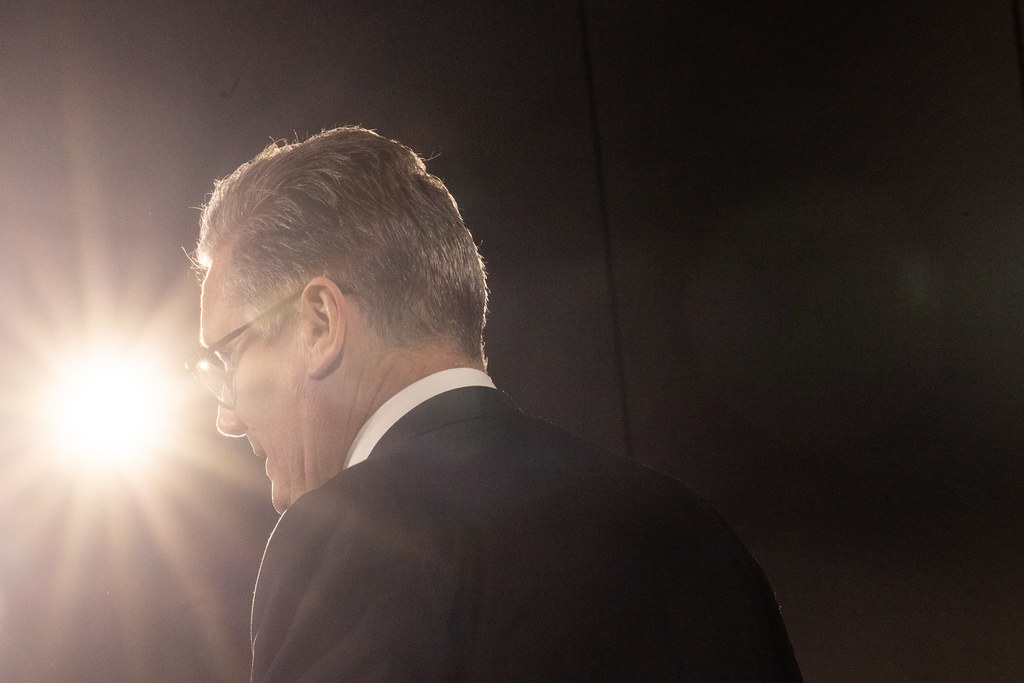
Sir Keir Starmer has tried using a simple explanation for the Mandelson affair: he didn’t know.
The Prime Minister has repeatedly insisted he was unaware of the “depth” of Peter Mandelson’s relationship with Jeffrey Epstein when he appointed him Britain’s ambassador to Washington. Mandelson, he says, misled him. Officials failed him. New information has since come to light which would have stopped the appointment “had I known it at the time”.
In Parliament on 10 September 2025, Starmer was categorical. “Full due process was followed during this appointment, as it is with all ambassadors,” he told MPs.
The documents released yesterday show that claim just wasn’t true.
Let’s go through it. Mandelson was a controversial appointment from the very beginning – and even if one had somehow missed his other dodgy departures from British politics, the Cabinet Office attempted to ensure the Prime Minister was properly briefed. A two-page due diligence report was placed on Starmer’s desk warning him of the “reputational risks” from Mandelson’s association with paedophile financier Jeffrey Epstein.
Officials noted a JPMorgan report describing the two men as “particularly close”. They recorded that Mandelson’s contact with Epstein continued after the financier had been convicted of child sex offences. They also flagged reports that Mandelson had stayed at Epstein’s house while he was in jail.
The Prime Minister could not miss it. Surely this was evidence enough not to go through with the appointment? And yet he did.
Starmer’s defence since Mandelson’s messy dismissal has been that the former ambassador misrepresented the relationship with Epstein. In February, the Prime Minister said the former US ambassador had “portrayed Epstein as someone he barely knew. And when that became clear and it was not true, I sacked him.”
But the papers released today show that officials had already outlined the essential facts before the appointment was made. The warning lights were flashing well in advance.
Not just that. Jonathan Powell, Starmer’s own National Security Adviser, described the appointment process at the time as “weirdly rushed” and “unusual”. He raised his concerns with Morgan McSweeney, then Starmer’s chief of staff. Starmer, the documents show, may have had “political conversations around this”.
Philip Barton too, then the permanent secretary at the Foreign Office, had his “reservations about the appointment”. Both were overruled.
What followed was hardly a forensic examination of the candidate from the former director of public prosecutions.
In response to the due diligence document raising reputational concerns, Mandelson was asked just three questions by McSweeney. He answered them. His responses were accepted at face value.
There is, throughout this process, an extraordinary lack of curiosity from those responsible for testing the appointment, with so few appearing to raise their concerns.
David Lammy told the press that he had opposed Mandelson’s appointment as ambassador. The official record suggests otherwise. A letter from Barton notes “the Foreign Secretary, who agrees with the recommendation”. At the time, that Foreign Secretary was Lammy.
Then there is the question of process – the very thing Starmer assured Parliament had been properly followed.
Emails indicate Mandelson was offered a “higher tiers” briefing on 6 January, granting access to highly classified Foreign Office material. But his developed vetting – the formal security clearance required for such access – was not completed until 29 January.
In other words, Starmer ordered such a speedy appointment that Mandelson was briefed on sensitive information before the vetting process had finished. That is a clear departure from the normal procedures.
For a role as sensitive as ambassador to the United States, it marks an unusually casual approach to risk.
After being dismissed, Mandelson said his “chief concern” was returning from Washington with “maximum dignity”. He initially sought £547,201 in severance – the value for his four-year contract. He eventually received £75,000.
Quite why he received anything at all given the circumstances of his dismissal is unclear. As Tory MPs Mims Davies and Alicia Kearns pushed for any such payment to be reveal, they were continually batted away – even though officials noted that there was “no prohibition” on publishing the terms.
One message released in the documents hints at the reasoning. Without “a positive indication”, officials warned, there was a “potential” that Mandelson might go public with some of his claims. Which claims those might be remain unclear.
In the release of summaries and internal correspondence came the Prime Minister’s box note – comments from private office and special advisers on a paper or submission, that has a box for the Prime Minister to leave his thoughts – left empty.
As shadow chancellor of the Duchy of Lancaster Alex Burghart wrote on Twitter: “I’ve worked in No10 – Spads and Private Secretary provide comments AND we’d expect the PM to write in his view. All that has been left out – why?”
The absence matters because the Mandelson affair ultimately turns on judgement, the Prime Minister’s to be precise.
Labour would prefer it to be seen as a failure of process: a misleading figure, incomplete information, and a government system that did not function as intended.
But the documents suggest something much simpler. The warnings were there. Senior officials raised concerns. The due diligence report spelt out the reputational risks in plain English.
The real question is not what the Prime Minister didn’t know.
It is why, having been told what he did know, he went ahead anyway.

Callum McGoldrick is investigations campaign manager at the Taxpayers’ Alliance.
As fashionable as it is to write off the last government’s time in office as a disaster, we shouldn’t be too hasty in dismissing some of its more successful policies. Particularly as these are the ones Labour have been quickest to undo.
The most glaring example of this is education. Michael Gove’s reforms of the system included taking control away from local authorities through the academy model, promoting exams over coursework and incentivising schools to focus on more traditional subjects. Between the 2009 baseline and the 2022 PISA results, England rose from 27th to 11th in the world for mathematics, and from 25th to 13th for reading.
Under Bridget Phillipson, Labour is removing the traditional subject focus in favour of creative arts and sports, scrapping single word Ofsted judgements for a softer system and scaling back the autonomy of academies. This is before even mentioning the dismantling of private schools. The Conservative legacy on education policy is being shredded.
Then there is welfare. Sir Iain Duncan Smith drove a massive overhaul to the benefits system through Universal Credit (UC) during the coalition years. Removing many of the cliff-edges of the old system for those starting to get into work, UC did mean that those that worked would earn more. Although it came in later, the Two-Child Limit restricted those on UC from receiving further taxpayer funding for having more than two children. Employment increased, and benefits spending was brought under control, at least until the pandemic undid much of the work.
Labour were elected with a promise to ‘make work pay’ with a whole host of benefit reforms. The early days of their government even saw tentative statements indicating a reduction in at least the growth rate of overall welfare spending. In a surprise to no one, the plans collapsed. The Two-Child Limit will be scrapped from next month, the standard allowance will be raised and they are reducing the amount the government can deduct from UC for debt deductions from 25 per cent to 15 per cent, further burdening those in work who must subsidise the debts of those out of work. The unwinding of this success in welfare started under the last government, but it has been accelerated since.
This brings us to fuel duty, surely one of the major Conservative successes in tax policy. From 1993, the duty had risen by 3 per cent above the inflation, later increased to 6 per cent in 1997. In this time, Britain went from having some of the lowest fuel costs in the world to among the highest. By 2000, over 80 per cent of the cost of petrol was tax alone.
Following huge protests in 2000, Gordon Brown cut fuel duty by 2p in 2001 on specific types of petrol and diesel while largely avoiding further rises until 2008. Alistair Darling increased the duty by 2p in 2009 while legislating for a schedule of aggressive tax hikes. A 1p per litre increase in April 2010, another 1p in October 2010, and a commitment to raise duty by 1p above inflation every single year from 2010 to 2014.
The 2010 election saw George Osborne become Chancellor. While he followed through with Darling’s scheduled increases in his first year in office, after petrol prices hit record highs in 2011, the Conservatives brought in a freeze. Since that freeze, no chancellor had increased fuel duty. In 2022 there was even an emergency 5p per litre cut in response to the Ukraine crisis which has further stayed in place to the present day. Had the old system stayed in place, motorists would be paying £19 billion more per year with a rate of over £1 per litre, according to the Institute of Fiscal Studies. From some of the highest rates in Europe, the Conservative government successfully brought us down to only slightly above average.
The prime minister insisted this week at PMQs that fuel duty has not increased under Labour. This was gaslighting. The freeze is set to end in September in order to pay for the benefits bill, bloated public sector and various other squanderings of taxpayers money.
Our latest research note at the TaxPayers’ Alliance shows just and how much it could undo some of the work of the past 15 years. Even with a decade and a half of freezes Britain already still has the fourth highest duty on diesel and the tenth highest duty on petrol when compared with EU member states. We pay 3p more per litre more than the EU average on petrol and 12p per litre more on diesel. If the 5p cut alone is removed, this gap would widen to 8p per litre above the EU average for petrol and 14p per litre above the EU average for diesel.
The Conservatives in opposition are demanding an extension to this cut. And rightly so. As well as protecting motorists and the wider economy, it is one of the rare bright spots in tax policy from the last government that is left to defend.

Miriam Margolyes Asks Queen Camilla To Pass On Message For King Charles
Teddy Bridgewater Rides Again

Glass Skin Picks on Amazon


-
Business6 days ago
Form 8K Entergy Mississippi LLC For: 6 March
-

 News Videos3 days ago
10th Algebra | Financial Planning | Question Bank Solution | Board Exam 2026
-

 Fashion6 days ago
Weekend Open Thread: Ann Taylor
-

 Crypto World3 days ago
Paradigm, a16z, Winklevoss Capital, Balaji Srinivasan among investors in ZODL
-
 Tech1 day ago
A 1,300-Pound NASA Spacecraft To Re-Enter Earth’s Atmosphere
-
 Sports7 days ago
499 runs and 34 sixes later, India beat England to enter T20 World Cup final | Cricket News
-

 Politics6 days ago
Top Mamdani aide takes progressive project to the UK
-

 Business2 days ago
ExxonMobil seeks to move corporate registration from New Jersey to Texas
-

 Sports4 days ago
Braveheart Lakshya downs Lai in epic battle to enter All England Open final | Other Sports News
-

 Sports5 days ago
Three share 2-shot lead entering final round in Hong Kong
-

 NewsBeat14 hours ago
Residents reaction as Shildon murder probe enters second day
-

 NewsBeat7 days ago
Piccadilly Circus just unveiled ‘London’s newest tourist attraction’ and it only costs 80p to enter
-

 Entertainment5 days ago
Hailey Bieber Poses For Sexy Selfies In New Luscious Lip Thirst Traps
-

 Business4 days ago
Search for Nancy Guthrie Enters 37th Day as FBI Probes Wi-Fi Jammer Theory
-

 Business1 day ago
Search Enters Sixth Week With New Leads in Tucson Abduction Case
-
 NewsBeat2 days ago
Pagazzi Lighting enters administration as 70 jobs lost and 11 stores close across Scotland
-

 Tech3 days ago
Despite challenges, Ireland sixth in EU for board gender diversity
-

 Tech2 days ago
ChatGPT will now generate interactive visuals to help you with math and science concepts
-

 Business3 days ago
Search Enters 39th Day with FBI Tip Line Developments and No Major Breakthroughs
-

 NewsBeat18 hours ago
I Entered The Manosphere. Nothing Could Prepare Me For What I Found.