
Politics
Sangita Myska receives foul racism

Trigger warning: this article contains depictions of extreme racist language.
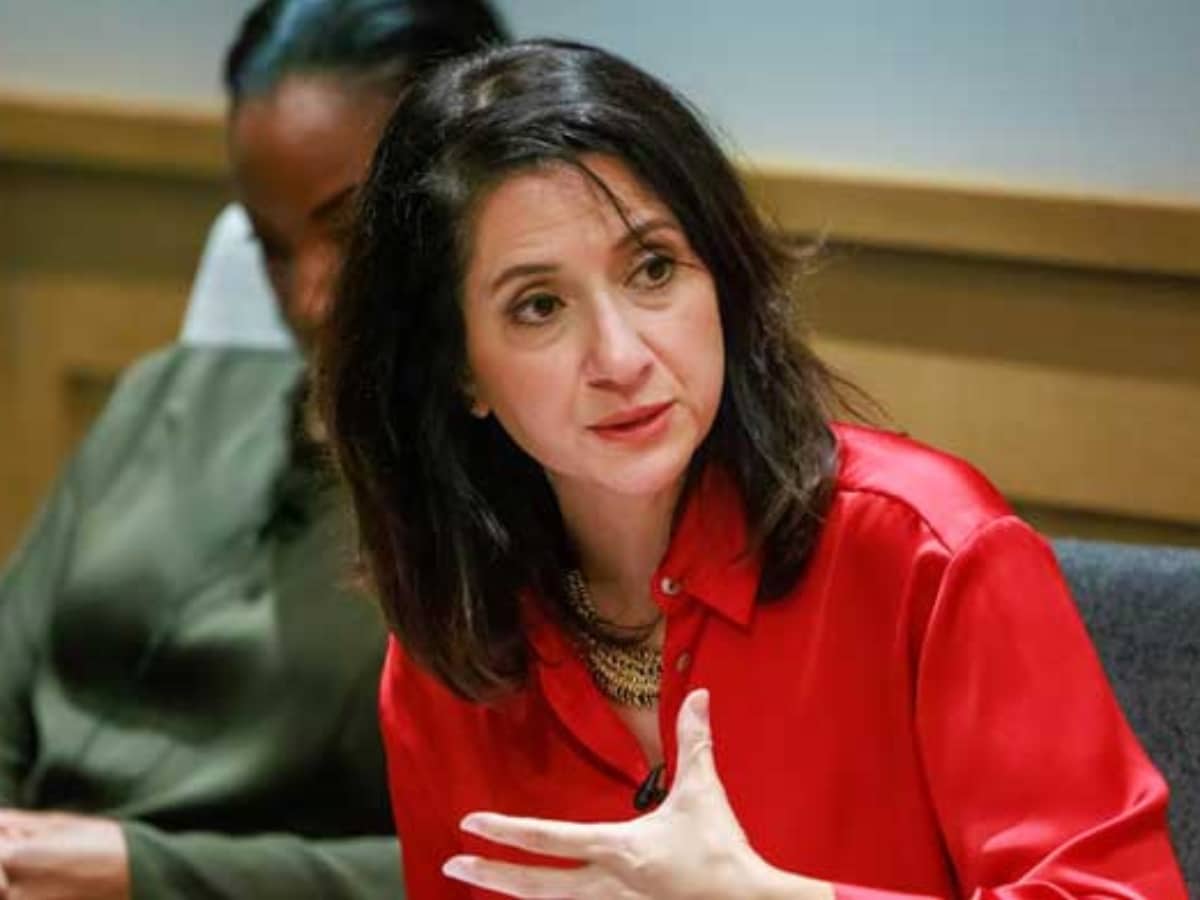
Journalist Sangita Myska has received foul, racist comments for daring to post footage of a disgusting racist tirade against a female British-Asian journalist in south London. But Myska also received a flood of support as hundreds condemned the racists and the politicians who had incited and enabled them.
Sangita Myska receives racist abuse
Sangita Myska posted a video of the verbal – and criminal – assault directed at BBC reporter Bhavani Vadde in Balham. The aggressor’s face was blurred out on Vadde’s wishes:
Appreciate your solidarity. Thank-you
— Bhavani Vadde (@BhavaniVadde) April 7, 2026
Britain is run by a government, with its own deep racist instincts, that appeases and panders to the racist right incited by Reform UK and others. So of course, among the mostly appalled and supportive comments – like turds on a pavement – were racists either adding their own filth or trying to justify the outrageous thug. And one set of comments stood out so much that Myska quoted it herself, with an ironic comment about being glad to be back home in England from a trip to Japan:
Good morning. It’s so good to be back home in Blighty 🙄🇬🇧 pic.twitter.com/sd7dvGZwwk
— Sangita Myska (@SangitaMyska) April 9, 2026
Most who saw this were rightly appalled and supportive, but some still couldn’t resist exposing their own rotted souls:
It must be awful for you, I think you would be much happier in your ancestral homeland. 👍
— Fellowship of the United Kingdom (@FellowshipofUK) April 9, 2026
You’re still not British btw
— Sensitive Young Saxon (@SYS_04_) April 9, 2026
They’re right. You’re not British, whatever it may say on that little bit of paper our treasonous politicians gave you. And you never will be.
You’re a parasite working to undermine us. You have a country and ancestral homeland, and you need to go there. Stop leeching off ours.
— Weird internet guy (@Weirdwebguy) April 9, 2026
Hearteningly, though, most gave the amoeba-brains the treatment they deserved – often with barbed humour:
This is mocking someone’s skin colour. Looks like my neighbours mum pic.twitter.com/Yb2tM839IG
— Klingonsmurf (@Klingonsmurfing) April 9, 2026
He’s a disgusting little incel, one who should probably receive a knock on the door in the very near future. pic.twitter.com/5CSh7bkqC5
— J Schwinger (@TheBottom_Lines) April 9, 2026
Awww look, the right wing, imbecilic cunts are out in force. Sad, pathetic bunch spending their time online and are then surprised that they feel miserable and bitter.
— REALNEWS24 (@neveragain499) April 9, 2026
Ah the smell of gammon in the morning 😳💜
Not the consensus of the masses
Spirant make it easier to read
Love and kindness to you 💜— Richard Marsden (@Delicaboy) April 9, 2026
Sangita Myska said she had received a flood of such abused since her return:
Thanks Lou. Something odd is happening. There’s been a torrent of it since I returned a couple of days ago.
— Sangita Myska (@SangitaMyska) April 9, 2026
She expressed her appreciation for the flood of support:
Alas, it seems I’ve been put on some sort of racist troll target list while away. Glad to be in the company of my lovely followers though – so thanks for the welcome back!
— Sangita Myska (@SangitaMyska) April 9, 2026
She even found time for a dig at former colleagues who smeared her after she was removed by LBC for daring to challenge an Israeli spokesman’s lies:
I couldn’t possibly comment…
— Sangita Myska (@SangitaMyska) April 9, 2026
And she was very clear where the blame lies for the emboldening of such monsters:
There are so many of them now – including in Parliament.
— Sangita Myska (@SangitaMyska) April 9, 2026
Happily – and contrary to her expectations – the idiots’ racism was too much even for Elon Musk’s ‘X’. The racist’s account has been suspended:
— Mak George (@MakGeorge) April 9, 2026
Featured image via the Canary


In the day following President Donald Trump’s announcement of a two-week ceasefire with Iran, dozens of congressional Republicans released statements of support for the administration’s peace negotiations.
But the lawmakers largely steered clear of one major topic: oil.
Crude prices tumbled following Trump’s Tuesday night announcement that the Strait of Hormuz would reopen as part of the ceasefire agreement. It’s what many Republicans were hoping for heading into the midterm elections.
But despite the ceasefire, it’s unclear when international oil shipments will return to normal through the Strait of Hormuz, and there’s alarm about Iran gaining more power over a waterway that carries roughly 20 percent of the world’s oil traffic.
“This is an important step toward ending the conflict, but we need to remain vigilant,” said Sen. John Hoeven (R-N.D.), a member of the Energy and Natural Resources Committee. “We must maintain pressure on Iran to follow through on its commitment to re-open the Strait of Hormuz and agree to a deal that achieves our objectives.”
Indeed, Iran state media reported Wednesday that the country would move to close the strait again if Israel kept bombing targets in Lebanon. The White House said Lebanon was not part of the ceasefire and downplayed the closure threat.
Still, the president has appeared open to Iran keeping some influence over the strait and charging ships for crossing. That’s something causing alarm with industry leaders.
“The supposed negotiating document, in my view, has some troubling aspects, but time will tell. I look forward to the architects of this proposal, the Vice President and others, coming forward to Congress and explaining how a negotiated deal meets our national security objectives in Iran,” Sen. Lindsey Graham (R-S.C.), long an Iran hawk, wrote on X about initial reports on the ceasefire deal.
Other Republican were less specific in their response. Energy and Natural Resources Chair Mike Lee (R-Utah) wrote on social media that the ceasefire was “excellent news.” But he did not weigh in on the oil price declines Wednesday or lingering concerns about energy markets, and his office did not respond to request for comment.
On the House side, Energy and Commerce Chair Brett Guthrie (R-Ky.) similarly kept his ceasefire comments focused on military objectives, rather than the energy ramifications of the conflict.
“I pray that the end of hostilities will be lasting, that the Iranian regime permanently ends their nuclear ambitions, and stops their spread of terror once and for all,” Guthrie wrote.
Sen. Kevin Cramer (R-N.D.), another outspoken Republican on energy issues, took a tone of caution while celebrating the ceasefire agreement. “We have to keep our eyes wide open obviously, it’s not like the Iranian regime is good for keeping its word, but in my mind, this is a pretty good breakthrough,” he said in a statement.
Rep. Andy Biggs (R-Ariz.) was one of the only GOP lawmakers to comment about energy and Iran on Wednesday. But rather than calling attention to plummeting oil prices, he instead made an argument for American energy independence.
The president and his allies have been touting their support for more U.S. fossil fuel production as an insurance policy against global disruptions, even though average gasoline prices spiked from $3.25 a year ago to more than $4.
“If the past two months have taught us anything, it’s that we can’t put a price tag on American energy independence and dominance,” Biggs wrote on social media.
Democrats keep up attacks

The ceasefire announcement and drop in oil prices didn’t blunt the Democrats’ campaign that the administration’s war — and other policies — are hurting American consumers.
Minority Leader Chuck Schumer highlighted the continued volatility in the Strait of Hormuz during a press conference Wednesday and said he didn’t expect prices at the pump to ease anytime soon.
“At home here, American families have paid the price for this war. Gas prices have skyrocketed in just a matter of days. They’re not going to change until August. And in general, the world oil markets will be unsettled for years,” Schumer said.
House Energy and Commerce ranking member Frank Pallone (D-N.J.) said, “Even though there’s now a ceasefire, the oil supply chain has unfortunately been disrupted — and may be for a long time.”
Iran’s control over Strait of Hormuz traffic — something it didn’t have before — is also giving Democrats ammunition against the president’s decision to join Israel in attacking Iran.
“A waterway that was free to the world is now a toll booth that Iran controls,” wrote Rep. Mike Levin (D-Calif.) on social media. “Every barrel of oil that gets taxed on the way through raises prices for American families”
Andres Picon contributed to this report.

Ethiopia is supplying the Sudanese Rapid Support Forces (RSF), a genocidal UAE-backed militia, with vehicles modified for war. The Yale School of Public Health’s Humanitarian Research Lab (HRL) published a new report on 8 April detailing the Ethiopian National Defence Force (ENDF) role in RSF’s shadowy supply chain
The ENDF has reportedly been supplying RSF with military-adapted vehicles for use in the war. HRL used a full suite of open source and satellite imagery in their report. Their latest briefing shows the suspect comings and goings of vehicles and vehicle-carrying trucks to an ENDF base.
HRL concluded:
with high confidence that there is activity consistent with military assistance to the Rapid Support Forces (RSF) occurring at an ENDF (Ethiopia National Defense Force) base in Asosa Town in the Benishengul-Gumuz region of Ethiopia between 29 December – 29 March 2026.
RSF, whose main backer is the United Arab Emirates (UAE), is currently engaged in a vicious war with the Sudanese government.
War in Sudan
As the Canary has reported, UAE has been a major backer of RSF in its war with the Sudanese government. Turkey, Egypt, Israel and many more countries are pursuing their own interests in Sudan too. British military components has also shown up on the battlefield in RSF hands. The UK is a major arms supplier to UAE.
As the Canary has said in our previous coverage of this poorly understood genocidal war:
The war in Sudan is theoretically between the Arab supremacist RSF and the Sudanese government. But foreign states pursuing their own interests are backing the combatants. The United Arab Emirates (UAE), for example, backs the RSF with arms and equipment. Egypt backs the government, alongside Russia, Turkey, Iran, Saudi Arabia, and Qatar. Israel has backed both sides at different times.
The mounting death toll is similarly mindboggling:
RSF has killed Sudanese civilians in vast numbers. And some estimates say 150,000 people have died and over 10mn have been displaced by fighting.
You can read more of our reporting on RSF and Sudan here.
New Yale findings
HRL said it had:
reached its conclusions about military assistance being provided to the RSF at the ENDF facility in Asosa based on five interconnected indicators present at the base over a five-month period of satellite imagery and open source data collection.
These ‘indicators’ include many details about ‘technicals’ – light civilian pick up trucks adapted for warfighting.
- Repeating presence of non-ENDF commercial car carriers offloading non ENDF consistent technicals.
- Offloaded unarmed technicals consistent with vehicles allegedly bound to RSF fighters in Ethiopia.
- Increased presence of tents, vehicle traffic, and logistics activity consistent with high tempo non-ENDF military support operations.
- Unarmed technicals are being retrofitted with gun mounts for heavy machine guns at base.
- Technical vehicles consistent with those present at Asosa are observed in open source data from Kurmuk.
You can read the full details in the 8 April HRL briefing here. The operation centres on the military base in Ethiopia’s Asosa Town in the Benishengul-Gumuz region – about 100km from the Sudanese border town of Kurmuk.
HRL reported:
This support occurs from within an active ENDF installation in connection with an armed actor credibly accused of committing acts of genocide and illustrates violations of UN Security Council Resolution 1591 prohibiting arms shipments to those engaged in fighting in the Darfur region.
Ethiopia and the UAE
Ethiopia and the UAE have close economic relations. Utilities Middle East reported on 7 April:
Ethiopia is placing energy and infrastructure at the centre of its deepening partnership with the United Arab Emirates (UAE), with a strong focus on power, logistics and large-scale development projects.
In January 2026, both governments stated their commitment to working together on various projects:
Both sides reaffirmed the depth of their longstanding strategic partnership, and the strong foundations of mutual respect and cooperation that define the UAE-Ethiopia relationship.
Both sides reaffirmed their comprehensive and strategic partnership in the promotion and defense of each other’s peace and security, territorial integrity and economic interests.
In the same press release, Ethiopia and UAE even found space to condemn the ‘warring parties’ in the conflict in Sudan – one of which HRL says they are both secretly backing:
The UAE and Ethiopia condemned attacks against civilians by the warring parties. They called on both warring parties to ensure the protection of civilians and humanitarian personnel. The two sides underlined that the primary responsibility for ending the civil war lies with both warring parties.
From civilian truck to armed ‘technical’ – thanks to Ethiopia
Activities at Ethiopia’s Asosa base allegedly include equipping the technicals with gun mounts:
HRL has observed activities consistent with the modification of unarmed light technical vehicles to be equipped with gun mounts capable of holding heavy machine guns.
HRL added:
the livery and vehicle type are not consistent with those in standard use by Ethiopia’s armed forces.
The tightly parked vehicle were often seen on satellite imagery next to long, dark objects:
These objects are consistent with the length of a gun barrel, including the 50-caliber machine gun often used by RSF mounted on the back of technical vehicles.
While HRL concedes there are many unanswered questions about the vehicles and Ethiopia’s activities, they said:
The vehicles assessed in Asosa are consistent in color and type with vehicles utilized by RSF in battle across frontlines in Blue Nile, Sudan in March 2026
According to Middle East Eye (MEE), who also covered the HRL report, available satellite imagery:
connects the car transporters and other vehicles seen at Asosa with Berbera, the Somaliland city port that hosts a base run by the United Arab Emirates.
UAE continues to deny it is backing RSF. HRL’s forensic investigations say otherwise. Sudan’s civilians are the ones who suffer in the meantime. And they do so in numbers – and under conditions – which are at once horrifying and criminally under-reported.
Featured image via the Canary

Comment provided by cognitive neuroscientist Dr Adolfo M García, Director of the Cognitive Neuroscience Centre, Atlantic Fellow at the Global Brain Health Institute, and Associate Researcher at Universidad de Santiago de Chile. He is also the creator of the speech testing app TELL.
Sometimes, dementia changes how people speak. Because it can affect the part of the brain responsible for language, it may mean those with the condition struggle to finish a sentence, replace an intended word with another one, or jumble up their words.
But writing in Nature recently, cognitive neuroscientist Dr Adolfo M García said that while some language changes are normal in “healthy” ageing, others might signal dementia risk before it is clinically recognised.
Speaking to HuffPost UK, he said that Alzheimer-specific changes “may begin several years before core dementia symptoms appear.”
How can you tell “normal” age-related language changes from dementia-related ones?
Noticing changes to your speech as you age doesn’t necessarily mean something is wrong.
“Compared with younger adults, healthy older adults may speak more slowly, take longer to find the right word, or lose their train of thought occasionally. Conversations can become a little less clear or detailed,” Dr García told us.
In fact, among those ageing healthily, many can expect improvements in some parts of their language.
“Their overall knowledge of words often grows, thanks to a lifetime of experience, so they may actually have a richer vocabulary than younger people.”
That idea is echoed in a theory called Heap’s law, “which posits that crystallised intelligence (knowledge accumulation) remains stable or improves in older adults”.
But, the neurologist added, “Dementia looks different. The key issue is not just slowing down ― it is losing words and meanings. People may struggle to name everyday objects, use vaguer or incorrect words, or mix up meanings (for example, calling a ‘chair’ a ‘table’). Their speech can become less coherent and harder to follow.
He added that while “normal ageing” can lead to “delayed processing with preserved or increased knowledge,” dementia “affects what we actually know and can express.
“Vocabulary knowledge is the most clearly distinct domain between healthy ageing and Alzheimer’s, as it increases in the former and is markedly reduced in the latter.”
Dr García hopes this will lead to better early dementia diagnosis
At the moment, there is no single test for dementia. And many cases are diagnosed years after the first symptoms begin (an average of 3.5 years, per one study).
Dr García told us that “changes in word processing and other language domains may begin several years before core dementia symptoms appear. This is a vital discovery, as the chances of effective intervention increase drastically when people at risk are detected early on (that is, when neurodegeneration has begun but clinical manifestations are not yet visible).”
He hopes that advanced language analysis software can raise those key flags sooner.
“The evidence keeps growing, research funds multiply, and user-friendly apps are becoming more available (like our very own TELL app). The core challenge, moving forward, is how to accelerate widespread adoption from clinicians and other stakeholders, so that these technologies can be globally harnessed for equitable dementia screening, diagnosis, prognosis, and monitoring.”

We hope you love the products we recommend! All of them were independently selected by our editors. Just so you know, HuffPost UK may collect a share of sales or other compensation from the links on this page if you decide to shop from them. Oh, and FYI — prices are accurate and items in stock as of time of publication.
It’s wedding season again! Yay (or nay, depending how you look at it).
There’s nothing more stressful than navigating overly-complicated wedding dress codes.
You can’t wear white (famously), some say you can’t wear black or red, and apparently green is off limits in some circles, too.
Not to mention that you have to factor in whether you’re going to be among the same group of friends as previous years of weddings past.
Add to that the number of separate ceremonies you have to dress for this year, and their respective weather and locations, and you have yourself a sartorial minefield.
The good news is that no one cares about what you’re wearing as much as they do the bride and groom. So fire up those group chats, brainstorm what’s appropriate, but ultimately choose something that feels ‘you’.
Whether you’re witnessing vows on a beach, in a church, at a vineyard, or in someone’s back garden, we’ve found 17 wedding guest dress contenders for the season ahead.
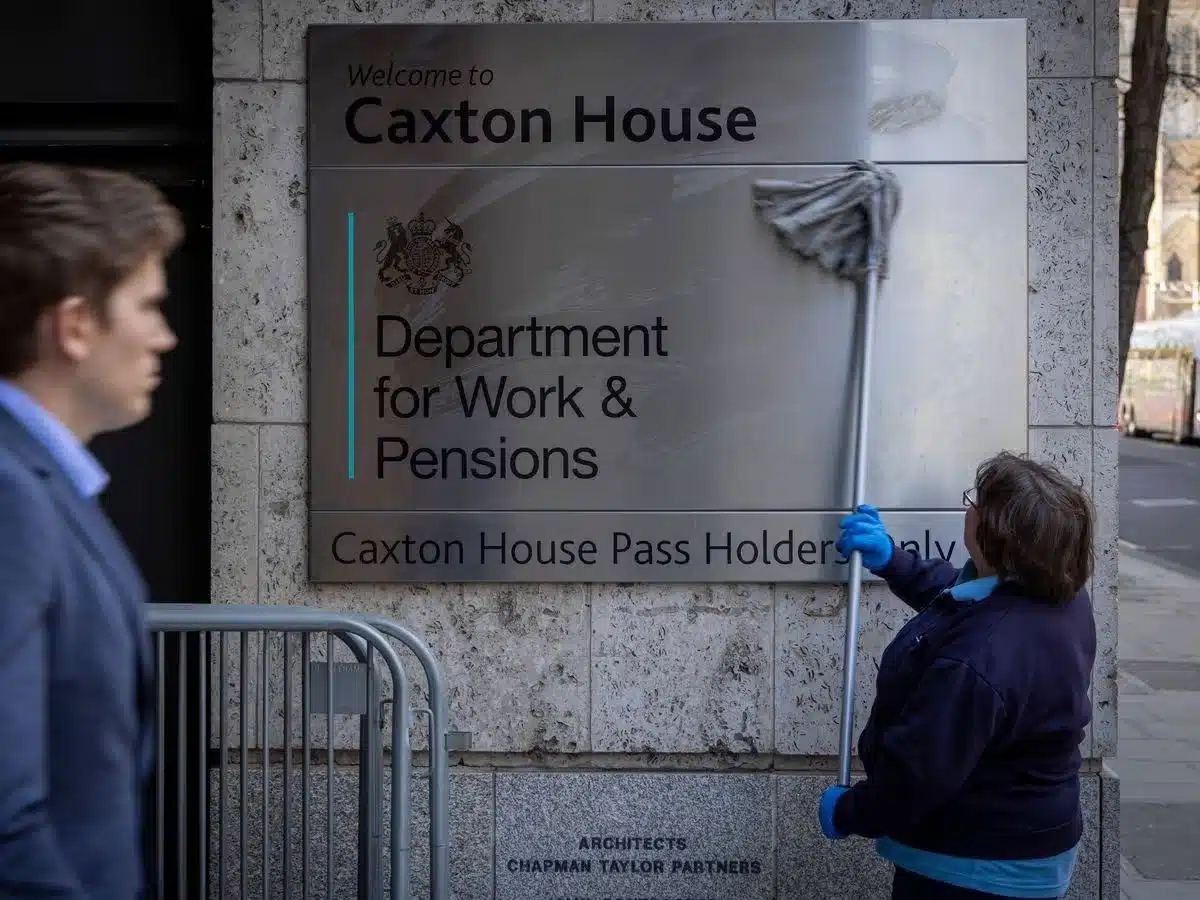
The Department for Work and Pensions (DWP) has essentially admitted that they have no plan for increased demand in Access to Work. This demand will come from the tens of thousands of disabled people who they’re pledging to ‘help’ in to work.
The DWP are currently hell-bent on forcing disabled people into work through schemes like WorkWell and the Get Britain Working plan.
They’re targeting those in the Low Capability for Work Related Activity group, which you fall under if you’re too sick or disabled to work. As the name suggests, the department knows these people can’t work, but has instead rebranded them in the press as ‘no work requirements’, making it sound like a choice.
At the same time, they are quietly cutting Access to Work, the scheme which gives disabled people funding to make working more accessible. This can be a support worker, mobility aids or assistive technology. Access to Work has already been struggling with the demand in recent years, and its solution is to cut the support they’ve already approved.
In a recent committee hearing, the DWP even blamed employers, saying many used Access to Work to provide support workers instead of hiring extra staff.
But with the DWP forcing even more disabled people into work, there’s going to be an even higher demand for Access to Work. So surely the department has a plan for this? What do you think?
Ministers are finally holding DWP to account
Labour MP Jonathan Brash asked the DWP in a written question:
To ask the Secretary of State for Work and Pensions, with reference to the Get Britain Working White Paper of 2024, what assessment his Department has made of the potential impact of increased levels of demand for the Access to Work programme as a result of the increased funding for tailored employment support for Disabled people on out of work benefits.
It’s a fairly reasonable question, as amongst the constant propaganda against disabled people who can’t work and the government’s pledges, there’s been nothing about Access to Work.
The DWP, of course, completely fobbed him off:
Minister for Disabled People Stephen Timms replied:
We are continuing to consider what support we provide in this space in the future. We will make use of the outcomes of the Pathways to Work Green Paper consultation, the Collaboration Committees, and upcoming work of the Independent Disability Advisory Panel to inform the future direction of Access to Work. We recognise the importance of the National Audit Office’s findings and are carefully reviewing their recommendations. These insights will support and strengthen our work to ensure the scheme continues to meet customer needs while delivering value for money.
It’s important to point out that the Pathways to Work green paper consultation was almost completely ignored. It also didn’t consult on the majority of changes the department proposed. The Independent Disability Advisory Panel also has no real influence on policy. And the department spent more time during the NAO inquiry blaming employers and claiming people were getting more than they deserved than on anything else.
Not only is this completely side-stepping the question, but it’s also almost the exact same answer he gave to another question from Brash. The MP for Hartlepool asked less specifically about what steps the DWP was taking to ensure Access to Work had enough resources to meet demand.
The answer was almost exactly the same, except before the above bumph, Timms said:
Demand for Access to Work has increased significantly since 2019/20, with more than double the number of applications in 2024/25. Since March 2024 we have increased the number of staff working on Access to Work claims by 29% from 500 full time equivalent (FTE) to 648 FTE in March 2026. Case managers prioritise applications where the customer is due to start a job within four weeks, we continue to streamline processing, improving consistent decisions, strengthening quality checks and enhancing case manager calls with customers and employers. Further to this, we continue to recruit and train new case managers.
It’s great that they’re doing this to get people into work, but with the current regime in Access to Work, we’ve no way of knowing how much someone’s needs are being fully met, or if the DWP is giving them the bare minimum. There’s also the fact that over 66,000 people are currently waiting for Access to Work; they can’t even handle the caseload they’ve got.
It’s clear just how little it cares
There’s also a big issue at the moment, as we heard in the NAO inquiry, they previously rushed through so many applications to clear the last backlog that when it came to review, many had their support cut. What’s stopping them from doing the exact same thing and stripping away the support they’d given in a rush to make up the numbers?
When you examine the DWP’s work even a tiny bit, it’s crystal clear just how little they’re actually going to provide tangible support for disabled people to get back into work. Beyond bullshit courses and low-paying apprenticeships that make them look like they’re helping, they actually don’t give a fuck how well supported disabled people are in work.
They don’t care if disabled people are working themselves to death in supported work. So long as the benefits bill comes down. Because after all, you can’t claim benefits if you’re dead.
Featured image via the Canary
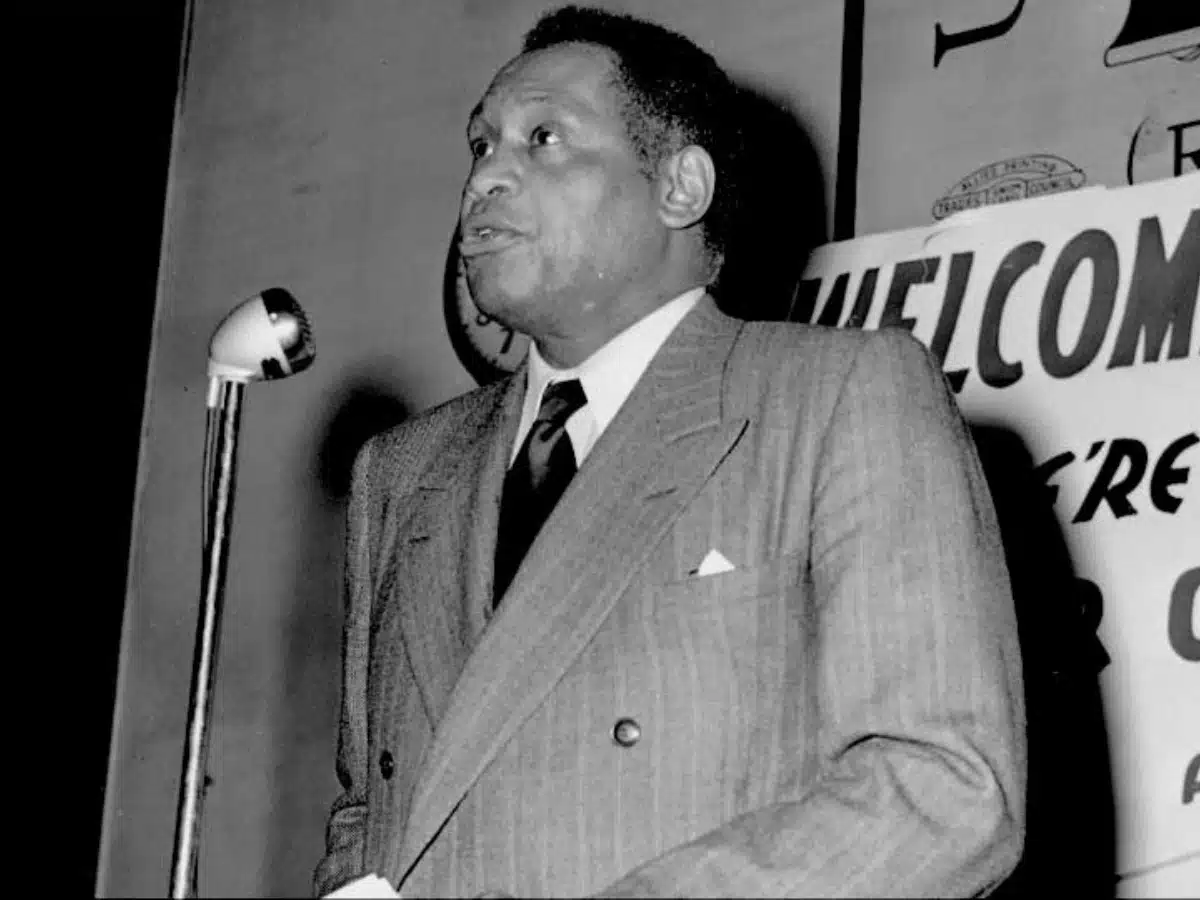
Paul Robeson, the African American singer, actor and activist (April 9, 1898 – January 23, 1976), married a woman who was part-Jewish, had a Jewish daughter-in-law, and spoke and sang Hebrew and Yiddish. He would have had several Jewish friends who fled Anti-Semitism in Europe and the USA to join the decades-long wave of migration to the burgeoning state of Israel. However, when his political views became too dangerous for the establishment, they came for him.
Paul Robeson: political awakenings
As a descendant of enslaved Africans (his father had escaped from a North Carolina plantation), he empathised with Jews’ search for sanctuary in Palestine, just as waves of his people migrated from the Deep South to the relative safety of the northern United States and Canada.
Old Testament stories that were canonised in the spirituals he learned from his ancestors and sang so beautifully were married in Robeson’s remarkable bass voice and repertoire to the histories and traditions of the two peoples, giving his renditions a poignancy and authenticity unmatched by few (if any) before or since:
Oh don’t you want to go / to dat gospel feast /
Dat promised land where all is peace?
Robeson’s love of Democratic Socialism and Communism was sparked in 1928 when, during a run of Showboat in London, he came across Welsh miners who had walked all the way to the capital to highlight the plight of their exploitation by capitalist bosses.
This encounter disabused him of the notion that only Black people suffered under capitalism, and developed in him the belief that Socialism was the only system under which Africans, other colonised peoples and even white working people could achieve freedom and equality.
Shining
Paul’s star shone brightest between 1939 (when he first sang Ballad for Americans to widespread acclaim) and 1943 (when he performed Othello in what remains the longest-ever run of a Shakespearean role on Broadway), while being a hugely sought-after concert performer and film actor on both sides of the Atlantic. As his Socialism solidified, he used his platform to campaign on issues ranging from trade unionism, racial justice at home, anti-colonialist struggles abroad, and maintaining friendship with the Soviet Union, notwithstanding the post-WWII onset of the Cold War.
It seems that his politics didn’t adversely affect his popularity as an artist for a while, but the authorities in the USA and Britain were very concerned about him espousing his political views repeatedly from the stage, and had him surveilled from about 1941, if not before.
While on tour in Europe in 1949, things took a decisive, ominous turn for Robeson.
The establishment turns
Attending the Paris Peace Conference that April, he made a speech in which he pointed out the absurdity of African Americans being asked prepare to fight against the Soviet Union (where he had experienced no racism) despite remaining second-class citizens in their own country.
This presented the administration with the opportunity to begin the demonisation of this national treasure. His speech was distorted in the American press, convincing the public that he had said African Americans shouldn’t join the armed forces, had expressed greater love for the Soviet Union than for his own country, and compared US policies to those of Hitler and Goebbels. Despite having helped raise money and morale for the war effort, and spent the war years touring US bases singing for troops, Robeson was transformed from national hero to Public Enemy #1 in the space of a few short months.
An outdoor concert he had been booked to give back home to raise funds for the Civil Rights Congress on August 27, 1949 was violently disrupted by vigilantes and had to be abandoned before Robeson got to the ground, outside Peekskill, New York State.
The following week, supported by many trade unions who organised guards for him and the crowd, the concert went ahead, on September 4th. It was however followed by another riot, where the mob, encouraged by the local police, attacked concert-goers as they left. In addition to numerous vehicles being destroyed, there were many injured, with one Black man losing an eye.
Love Song
Coming across this story in my research for my first play, Call Mr. Robeson, I realised that the Peekskill Riots was an extremely important but greatly underappreciated episode in American history, with Robeson being the crucible in which the combination of anti-Communism, anti-Black racism and anti-Semitism violently coalesced to reveal the USA as being as close to fascism as it had ever been.
Although it forms one of the highlights of the stage play, I had always thought it warranted separate dramatisation. Various ideas and events finally crystalised in an audio play, Paul Robeson’s Love Song.
One of its inspirations was the role the media played in manufacturing a fake ‘Anti-Semitism crisis’ in Britain’s Labour Party as a means of preventing Jeremy Corbyn from becoming UK Prime Minister. The political assassination of this overly-decent man, I argue, paved the way for Israel’s genocide in Gaza and its ongoing rampage around the Middle East.
Set in Kenosha, Wisconsin in 2020 during the protests that followed the near-fatal police shooting of a Black man, Jacob Blake, a pair of middle-aged siblings discover a unique Paul Robeson record in their late mother’s house, suggesting a romantic link between their grandmother and Robeson, dating back to the time of the Peekskill Riots. The open display of alt-Right Anti-Semitism in Charlottesville (“Jews will not replace us”) makes them recall their mother recounting what she had observed in the 1940s.
Robeson: gone but not forgotten
Written and recorded during the pandemic on basic microphones and laptops in bedrooms and kitchens on both sides of the Atlantic, Paul Robeson’s Love Song was premiered on his birthday, April 9, 2021. It remains relevant five years later, during the even-more-dangerous Trump era 2.0.
Also relevant are these words from Mr. Robeson himself from 1949: at an Anti-Apartheid rally in London, he noted that in South Africa, nationalists had succeeded in setting Africans against Indians in Natal, warning that “… they have provoked a fratricidal clash which unless checked very quickly may have the same tragic consequences for the non-European people of South Africa as the Arab-Jewish conflicts had for the people of Palestine.”
Tayọ Aluko is a playwright, actor and singer based in Liverpool. His stage play, Coleridge-Taylor of Freetown, will be performed in London in May.
Tickets to listen to Paul Robeson’s Love Song between April 29 and May 1 and then participate in an online Q&A with the author and some of the creatives can be purchased here.
Featured image via the Canary

On Thursday, April 9, Schitt’s Creek star Dan Levy’s new show Big Mistakes was released on Netflix.
The multi-award-winning actor and writer, who also released comedy-drama film Good Grief with the streamer in 2023, worked with I Love LA’s Rachel Sennot to create the show.
“Blackmailed into working for some very dangerous people, two deeply incapable siblings become the most disorganised duo in organised crime,” its description reads.
Levy appears as a pastor in the eight-episode chaos-fest, which promises to combine his signature comedic flair with high-octane crime drama. The cast also includes Taylor Ortega, Laurie Metcalfe, and Jack Innanen.
Here’s what the critics have to say so far:
″…This is less a great premise than a passable excuse for Levy to create another bickering, boundary-decimating on-screen family. As Schitt’s Creek proved, it’s where he excels, and the dynamic between the repressed and dutiful Nicky and the thrill-seeking, acid-tongued Morgan is a joy to witness…
“The domestic cringe comedy at its heart means Big Mistakes is far from a major error, but it isn’t quite a triumph either. Perhaps that’s inevitable. They may seem like a safer bet for a risk-averse TV industry, but shows made by stars can rarely compete with the ones that make them.”

“Big Mistakes is a wild ride. Sharper rewrites and edits to plot points would have offered a more succinct narrative, allowing the comedic tone to shine through. Despite its muddled storylines, the tone, wit and characters give viewers several glimpses into Levy and Sennott’s quirky world.
“If nothing else, the show captures the thrills and horrors of siblinghood and why, so often, the people you can truly rely on are those who have experienced the best and worst parts of you.”
“Dan Levy’s glorious Schitt’s Creek follow-up is worth the wait… It’s a cracking crime caper that takes the family comedy of Schitt’s Creek and whips it into a wicked, pitch-black thriller…
“There’s barely a character you don’t want to see more of in the Morelli family, with matriarch Linda, played by Laurie Metcalf (Hacks) particularly strong…
“Put it all together and it’s like David Sedaris has teamed up with David Simon. The only mistake in Big Mistakes, therefore, has been to make us all wait so long.”
“The family bickering is funny, as is some of the slapstick, and there are flashes of Schitt’s Creek in the siblings’ fractious but affectionate dynamic. In its search for a darker side, however, it flounders…
“Big Mistakes is stylish and watchable, yet the mood is inconsistent, and for a show that is so predicated on tension, it is oddly laid back.”
“There’s nothing under the surface, but it’s an entertaining surface.
“If you embrace the catty and cute dialogue, rather than being annoyed by it, it’s easy to get caught up and entertained courtesy of the tight direction (starting with Dean Holland on the first two installments), editing that leaves no room for breath (or for fully realized characterization) and a score from Peaches and Nora Kroll-Rosenbaum that shifts into a Run Lola Run gear of pulse-pounding intensity when it wants you to be distracted by the implausibility of the circumstances. You might be annoyed by Big Mistakes, but you won’t be bored, and that’s something.”
“Big Mistakes can be perceptive and funny when it focuses on the chaotic family unit, especially when Metcalf is present…
“The season finale leaves us with reason to believe that a second season will do a better job integrating the crime stuff with the family stuff. I’d still rather see the version of Big Mistakes that didn’t have to.”
“Levy and Sennott have crafted a story that feels real and relatable, even as the circumstances spiral into situations most people can only imagine themselves in…
“With a dry wit and a balance of drama and comedy that is oftentimes reminiscent of Succession – if the Roys were a middle-class family from New Jersey – Big Mistakes is certainly worth a weekend binge.”
″[A] crime of a comedy…
“The Morelli sibs’ involvement gets more and more fruitlessly complicated, though Messrs. Ivanir and Kuzum get to stretch beyond what at first seem clichéd roles. And Abby Quinn is excellent as Natalie, the mom’s campaign manager and toadying child. But the consistent tone of “Big Mistakes” is rancor. Unrelieved.”
All episodes of Big Mistakes are available on Netflix now.
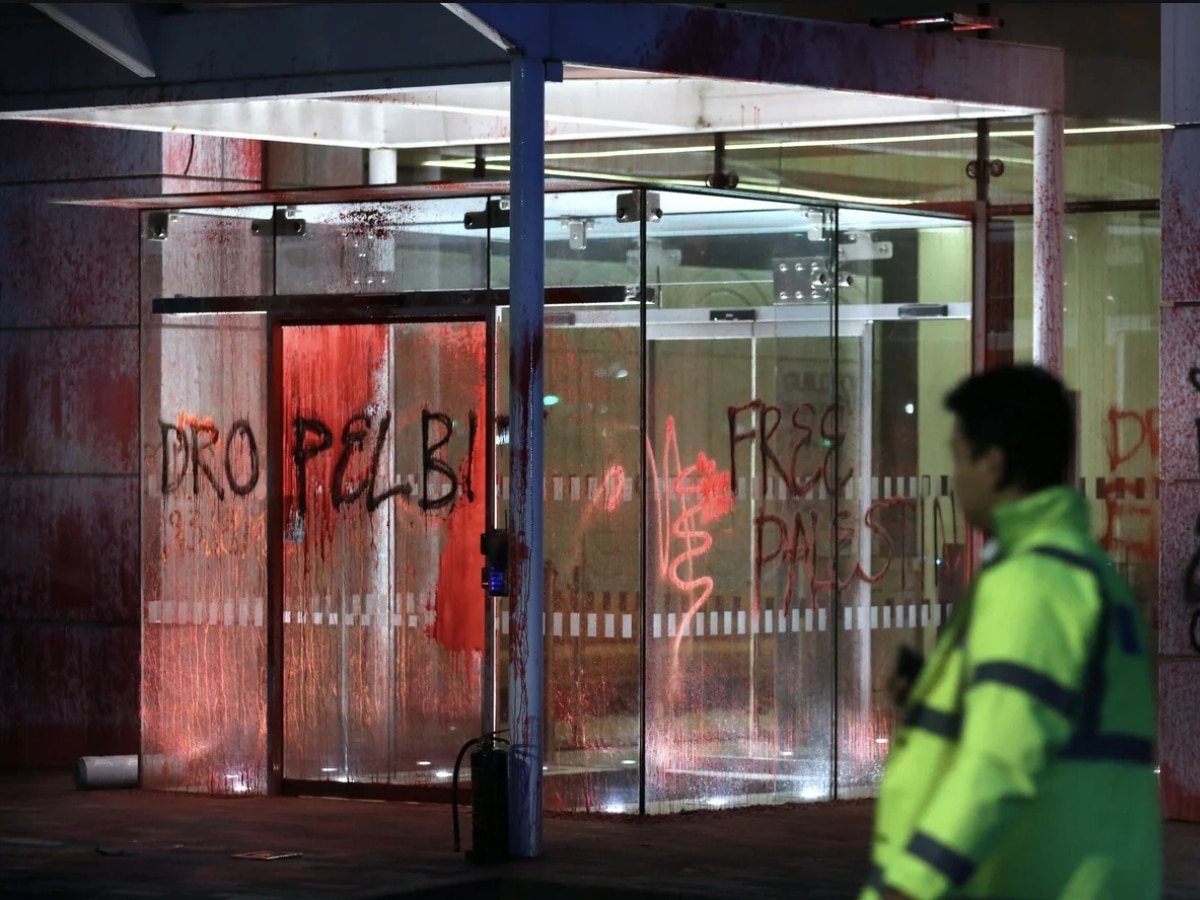
Before the direct action group was unlawfully banned, Palestine Action targeted giant insurance corporation Allianz for its support for Israel. Now, rather than follow the example of other firms and cut its ties to the genocidal colony, the company is suing six activists for occupying and throwing paint at its Guildford office during two anti-genocide protests in 2024 and 2025.
Allianz: a disgrace
Allianz reportedly ended its insurance of Israel’s biggest arms-maker Elbit in November 2025 after a sustained protest campaign, but maintains other contracts with firms involved in Israel’s weapons industry.
The firm has refused to pause its lawsuit until criminal trials related to the protests are concluded. The protesters have applied to the courts to force the firm to do so. One of them, Seren John-Wood, said that Allianz was seeking “unfair advantage”:
This is an unprecedented and unusual extra step that is being conducted parallel to criminal proceedings.
The burden of proof is significantly lower in civil courts. We believe that in a criminal court we will be found not guilty. In a civil court, they will have an extremely unfair advantage; we are unable to afford legal representation whereas, according to their own annual report, they made a record operating profit of €17.4bn (£15.1bn) last year. There is no legal aid available for civil courts.
Another, George Elliott, said that the firm had done more damage to its own reputation than the protesters had done to its offices:
Allianz brought on its own reputational damage and embarrassment, as well as any other alleged harm to its business and/or employees, by opting to insure Elbit Systems.
Featured image via the Canary
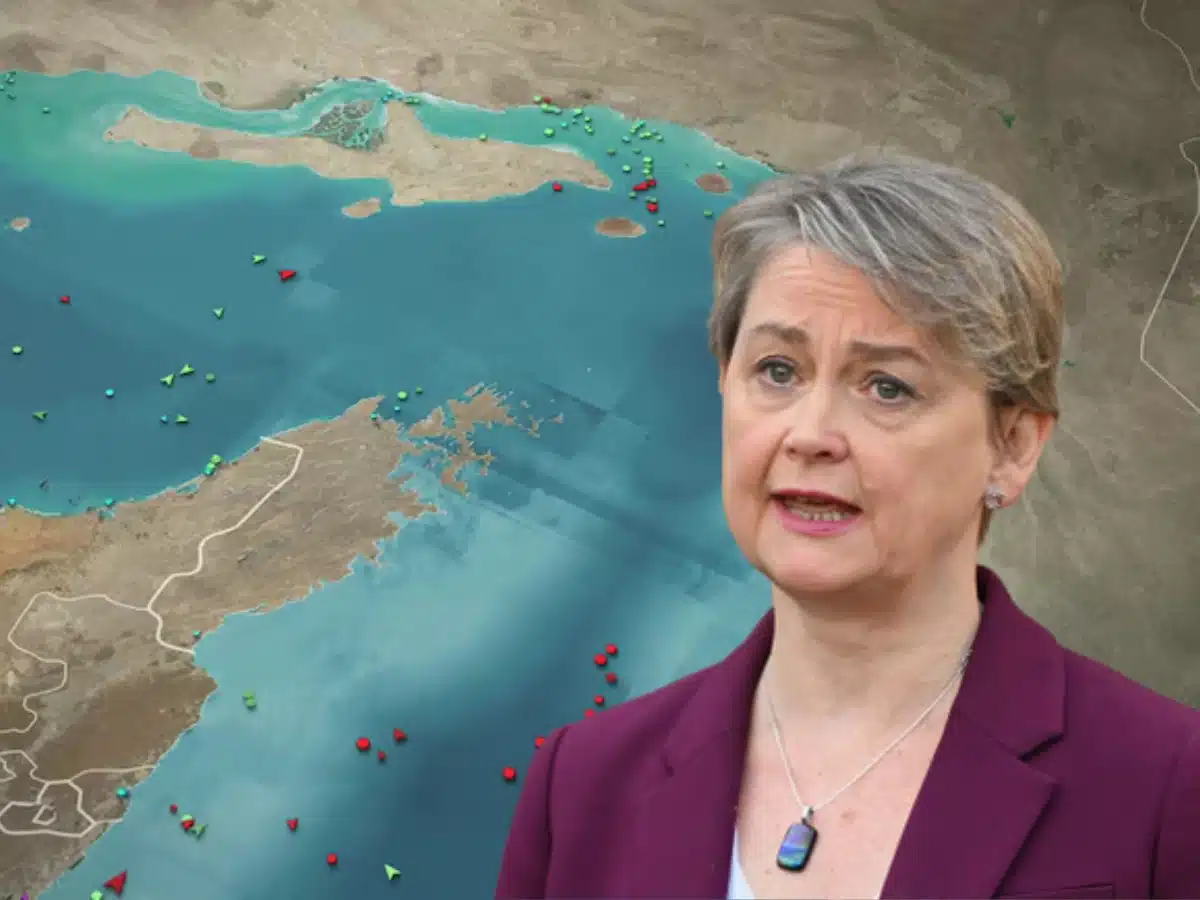
The US and UK-backed Israel breached the ceasefire reached on Wednesday by indiscriminately bombing Beirut in Lebanon, but it seems like our leaders, like Yvette Cooper, are more interested in reopening the Strait of Hormuz without the accountability of their main ally in the Middle East unleashing genocidal violence in Beirut.
The Strait of Hormuz
Labour ‘Friend of Israel’ Cooper is furious at Iran for closing a shipping lane but has nothing but lip service for Israel bombing Beirut, hitting 600 schools and 30 universities, and violating yet another ceasefire. Nothing on all the B-52 planes taking
Further, she knows full well that the Strait of Hormuz is actually open for peaceful nations – the Spanish, French, Portuguese, Japanese, and Chinese have all gotten their ships through. So the idea that the Strait is closed is simply not true.
Iran has re-closed the vital Hormuz Strait to oil tankers connected in any way to its aggressors and has again hit US facilities in the Gulf. Iran continues to allow vessels belonging to peaceful nations to pass.
When asked about Israel’s breach of the agreed ceasefire terms by bombing Lebanon on Wednesday and the Strait of Hormuz being opened, the Foreign Secretary, Yvette Cooper, said
We want the ceasefire to continue. We don’t want a return to conflict, and we crucially want to see the Strait of Hormuz reopened because this is crucial for the global economy and for tackling the cost of living crisis here at home, and no country should be allowed to hijack these international shipping routes that impact the entire world and its economy.
We do want to see the ceasefire extended to Lebanon. I am deeply troubled about the escalating attacks we saw from Israel in Lebanon yesterday. We are seeing the humanitarian consequences, the huge mass displacement of people in Lebanon, so we do strongly want the ceasefire extended to Lebanon but we also need to maintain that ceasefire that is applying currently accross Iran and crucially get the Strait reopened as well.
Foreign sec @YvetteCooperMP tells Sky News she is “deeply troubled” by the Israeli attacks on Lebanon and wants the ceasefire to be extended to the country.
She adds that “it is crucial that Iran is not allowed to introduce tolls on the Strait of Hormuz.” pic.twitter.com/JrCOpxglu9
— Sky News (@SkyNews) April 9, 2026
Lebanon strikes get lip service only
Cooper concentrates most of her wrath on Iran, closing the Strait rather than the British-backed Israel’s unspeakable violence that not only violated ceasefire terms but was a grotesque escalation.
Cooper went on to say she is speaking with the International Maritime Organisation in London about their proposal to get the first ships moving, the trapped ships that are trapped in the Strait of Hormuz, and it is also crucial that Iran is not allowed to introduce tolls, calling it an international transit through the high seas, so it cannot be allowed to apply tolls and restrictions on that route as it reopens.
Let’s first examine Cooper’s claim about the Strait. She may be familiar with the 1994 San Remo Manual on International Law Applicable to Armed Conflicts at Sea.
Well, according to the Conversation:
Under the law of naval warfare, states are generally divided between belligerents (those engaged in armed hostilities) and neutrals (those not involved in the war).
The line between belligerents and neutrals is not always an easy one to draw. In the Middle East, at a minimum, Iran, Israel and the US could be classified as belligerents.
According to the San Remo Manual, ships flagged to neutral states, including their warships, may exercise their navigational rights under general international law through a belligerent’s strait.
It is recommended that neutral warships give notice of their passage as a precautionary measure. A belligerent must not target neutral ships – they are not considered military objectives and must not be fired upon.
During this conflict, Iran’s territorial sea (which includes the waters within the Strait of Hormuz) counts as an area of naval warfare. The belligerent states are legally required to have due regard for the legitimate rights and duties of neutral states in an international strait.
Here is the UK’s problem, under this legal framework, the United Kingdom is not a neutral state.
By actively backing Israel’s military operations, providing weapons, intelligence, and diplomatic cover, the UK has made itself a party to the conflict. Cooper knows this and is conveniently glossing it over.
That means the UK is a belligerent state, just like the US and Israel. Had the UK chosen to act as a true neutral, rather than as a US vassal, it would have the legal standing to demand unimpeded transit through the Strait of Hormuz. But as a belligerent, it has no such right. Cooper cannot have it both ways, arming one side of a war while posing as a defender of international shipping law.
UK is supporting an illegal war
Contrary to Keir Starmer’s claims that the UK role is only defensive, the government has allowed US bombers to use its airbases at home and on the colonised Indian Ocean territory of Diego Garcia. The UK, whatever the government claims, is becoming more deeply entangled in this runaway war.
Sanam Naraghi Anderlini put it well on Channel 4 News. She said the Strait of Hormuz is actually open if you’re not part of the war. The Spanish, Portuguese, Japanese, and Chinese have all gotten their ships through. So the idea that the Strait is closed is just not true. It’s only closed if you are supporting the illegal war. Naraghi also pointed out that the US-Israel aggression has hit 30 universities and 600 schools.
When Channel 4’s Krishnan Guru-Murthy quoted Trump saying that some Iranians wanted the US to bomb it, she quickly responded that it was “egregious” and “absurd” to suggest that in a country of 93 million people suffering from toxins from petrochemical plants that were bombed, that they chose it.
#C4News “The strait of Hormuz is actually open if you’re not part of the war”
“The Spanish, Portuguese, Japanese, Chinese, have got ships through”
“The idea that the strait of Hormuz is not open is not true”
“It is closed if you are supporting the illegal war”
“They have hit… pic.twitter.com/HHNvyCFKve
— Farrukh (@implausibleblog) April 6, 2026
Labour Friends of Israel member Cooper should be ashamed. While Israel bombs Beirut and burns through yet another ceasefire, Britain’s Foreign Secretary saves her outrage for Iran closing a shipping lane. Cost of living crisis in UK is Labour’s making – not Iran’s – enough gaslighting.
Featured image via the Canary

The BBC’s international editor warned that Donald Trump’s ceasefire deal with Iran is “fragile and tattered” after Israel launched strikes against Lebanon.
Tehran insists that its agreement with the US – and Israel – included an end to all attacks against allies in the region.
However, the White House is denying such a claim, with US vice-president JD Vance calling it a “misunderstanding” over the terms of their agreement.
Speaking on BBC Radio 4′s Today programme, the corporation’s international editor Jeremy Bowen said the ceasefire is “fragile and tattered” right now as a result.
He said: “I personally find it, having looked at the Middle East for many many years, Lebanon and Israel, I find it very hard to believe that that strike yesterday – hitting 100 targets in 10 minutes, causing massive damage and loss of life inside Lebanon – I find it hard to believe it is not connected to the fact that the Israelis want to continue the war against Iran.”
He also pointed out that the Pakistani prime minister Shehbaz Sharif, who mediated the ceasefire, posted on social media that Lebanon was part of the ceasefire when describing the original deal.
Bowen also noted that Israeli prime minister Benjamin Netanyahu has been insisting he will continue trying to “reshape the Middle East in Israel’s interest”.
The specialist took issue with Trump’s claim of “complete victory” over Iran, too.
He continued: “You can argue very strongly with the American characterisation that they’ve had scored a massive victory here because while they’ve had many tactical successes, they clearly strategically have not got that.
“But they have given [Iran] a hammering.”
Bowen said that, as a result, Tehran would not be willing to give up control of the major shipping lane, the Strait of Hormuz.
Iran effectively closed the waterway over the last five weeks in response to the US-Israel strikes, causing oil prices to shoot up around the world.
Bowen said: “So what Iran has now is the control of the Strait of Hormuz. They are aware of the power of that.
“And sure, they’re not going to give it up easily because without that, they give up their influence.”
Subscribe to Commons People, the podcast that makes politics easy. Every week, Kevin Schofield and Kate Nicholson unpack the week’s biggest stories to keep you informed. Join us for straightforward analysis of what’s going on at Westminster.
Toulon Golf releases new ’86 inspired Small Batch Columbus putter

AMD finally puts a price tag on the Ryzen 9 9950X3D2 and it’s hefty

Conference League gets real as Crystal Palace bid to turn dream into reality


-

 NewsBeat7 days ago
Steven Gerrard disagrees with Gary Neville over ‘shock’ Chelsea and Arsenal claim | Football
-

 Business6 days ago
No Jackpot Winner and $194 Million Prize Rolls Over
-

 Fashion6 days ago
Weekend Open Thread: Spanx – Corporette.com
-

 Business5 days ago
Expert Picks for Every Need
-

 Business3 days ago
Three Gulf funds agree to back Paramount’s $81 billion takeover of Warner, WSJ reports
-

 Sports5 days ago
India men’s 4x400m and mixed 4x100m relay teams register big progress | Other Sports News
-

 Tech2 days ago
How Long Can You Drive With Expired Registration? What Florida Law Says
-
Business4 days ago
No Jackpot Winner, Prize to Climb to $231 Million
-

 Fashion3 days ago
Massimo Dutti Offers Inspiration for Your Summer Mood Board
-

 Tech7 days ago
Commonwealth Fusion Systems leans on magnets for near-term revenue
-

 Fashion2 days ago
Let’s Discuss: DEI in 2026
-
Politics6 days ago
Wings Over Scotland | The quality of mercy
-

 Business4 days ago
Akebia Therapeutics, Inc. (AKBA) Discusses Pipeline Progress and Strategic Focus on Kidney Disease Treatments at R&D Day – Slideshow
-

 Fashion6 days ago
Statement Sunglasses: The Accessory Shaping Modern Fashion
-

 Crypto World21 hours ago
Bitcoin recovers as US and Iran Agree a Ceasefire Deal
-

 Politics6 days ago
East Jerusalem Palestinian families eviction orders
-

 Fashion7 days ago
Thursday’s Workwear Report: Merino Wool Blend Short-Sleeved Sweater
-

 Sports7 days ago
Which German players will make final cut?
-

 Fashion6 days ago
For Love & Lemons’ Spring 2026 Line is for the Romantics
-

 Politics6 days ago
Why so many children are now classified as ‘disabled’
You must be logged in to post a comment Login