

Politics
Shapiro-backed Brooks wins competitive Pennsylvania primary

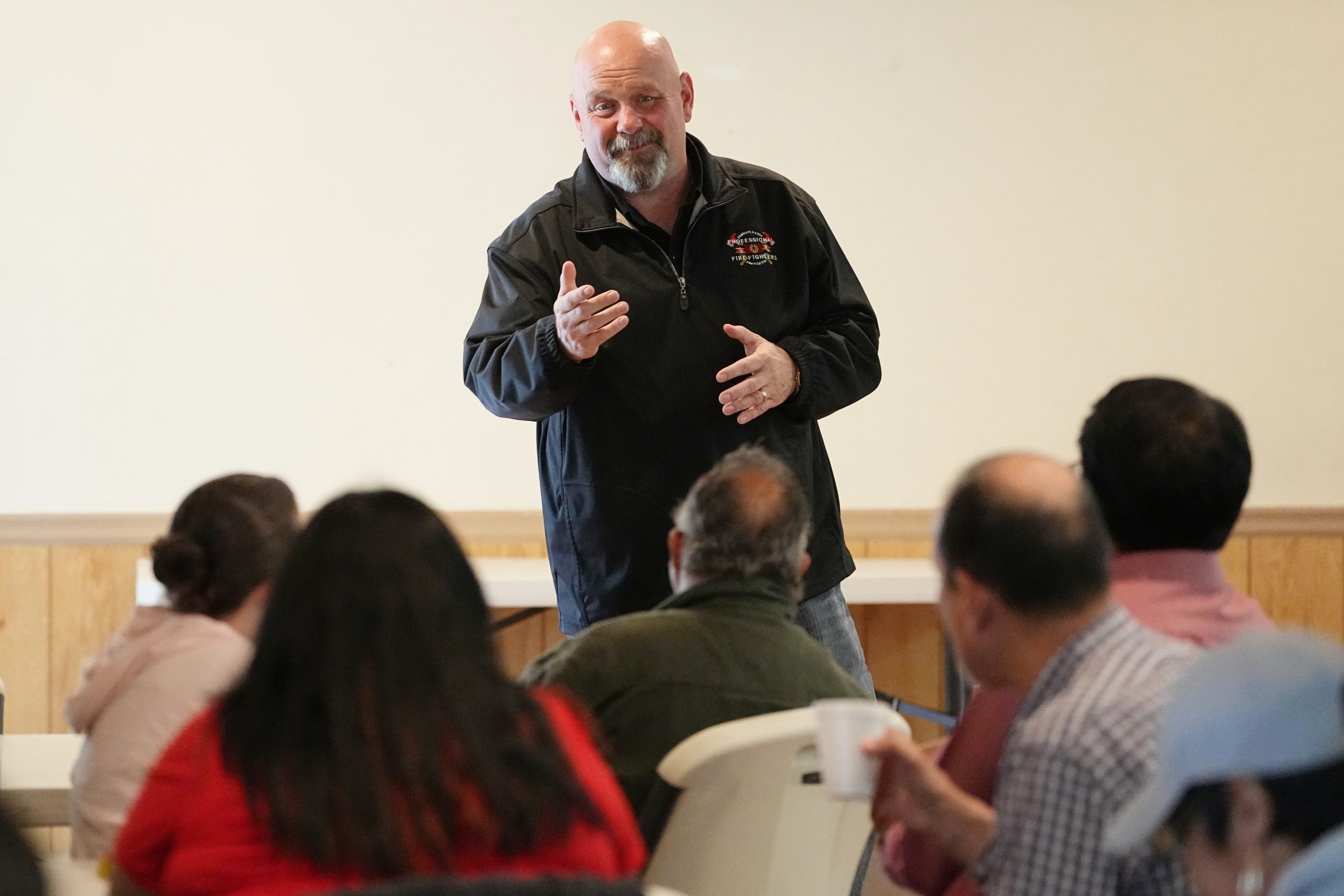

Pennsylvania Gov. Josh Shapiro just passed his first major test of the midterms.
Bob Brooks, a Shapiro-endorsed firefighter union leader, will take on GOP Rep. Ryan Mackenzie in a key November battleground after clinching the Democratic nomination for Pennsylvania’s 7th District over a crowded field.
It’s a significant win for Shapiro, who helped recruit Brooks into the race as part of his aggressive push to help Democrats retake the House by flipping four competitive seats in Pennsylvania. A romp across the map could serve as a launchpad for the governor’s potential 2028 presidential campaign.
It’s also a boon to the Democratic Congressional Campaign Committee, which recently added Brooks to its “Red to Blue” program and boosted him with a pre-primary ad buy.
Brooks, a first-time candidate, leaned heavily on the highly popular governor’s imprimatur to boost him over a four-way field that included former Northampton County Executive Lamont McClure, former federal prosecutor Ryan Crosswell, and engineer Carol Obando-Derstine, who served as an adviser to former Sen. Bob Casey (D-Pa.).
Shapiro went all-in, endorsing Brooks and hosting a fundraiser for him in December, cutting an ad for him in the spring and stumping with him shortly before Election Day.
The governor’s support brought scrutiny on both men. News outlets unearthed Brooks’ problematic old social media posts and a messy family property dispute. Brooks suggested that Shapiro tried to retaliate against a political foe in 2024 by encouraging his union to back her GOP opponent. (Brooks later said he misspoke.)
And a mysterious outside group with apparent ties to the GOP, Lead Left PAC, spent more than $1 million boosting McClure and attempting to sink Brooks and Crosswell in the final days of the race. Voters appeared to look past it all.
Brooks had more than just Shapiro in his corner. The blue-collar everyman who worked as a bartender and moonlights as a snowplow driver is being held up by an array of Democrats as a model for how the party can win back working-class voters.
He boasts one of the broadest endorsement lists of any House challenger on the map, a roster that spans from Sen. Bernie Sanders (I-Vt.) to former Transportation Secretary Pete Buttigieg, and from the Congressional Progressive Caucus to the Blue Dogs. He’s also brought together a cross-section of top Democratic operatives, including the progressive Fight Agency and The Bench, a new group that works to elect nontraditional Democrats.



Dan Kleban, the Maine Beer Company founder who briefly ran for Senate last year before dropping his bid and endorsing Gov. Janet Mills in the race, relaunched his campaign Wednesday by taking early swings against GOP Sen. Susan Collins and the “DC establishment.”
“I’m glad that Graham Platner has ended his campaign. For too long, this race has not been about Susan Collins’ repeated failures to do what’s right for Maine. We need to get back to that,” Kleban said in a statement Wednesday night. “Mainers deserve a senator who will fight for them against the DC establishment while also doing what’s right. I plan to be that senator.”
Kleban announced he was jumping back into the race in a post on Substack hours before Platner released a video saying he was suspending campaign operations. Kleban said in an interview on CNN Wednesday night that he “would not” take Platner’s endorsement if it was offered.
He also said the truncated nominating process the Maine Democratic Party will undertake to replace Plater is “not a perfect proxy for a full primary,” but that Maine voters “deserve a fair and open process that’s free of meddling from anyone from D.C. or New York.”
Kleban sought to position himself as the candidate to carry Platner’s movement forward and echoed the now-former nominee by decrying a system that’s “rigged against working-class folks.” He also said he would not vote for Chuck Schumer as Senate Democratic leader.
But Kleban stopped short of embracing Platner’s stance on Israel. When asked by CNN if he would categorize the war in Gaza as a “genocide,” Kleban did not repeat the term, instead calling it an “absolute tragedy” and saying he would condition arms sales to Israel.
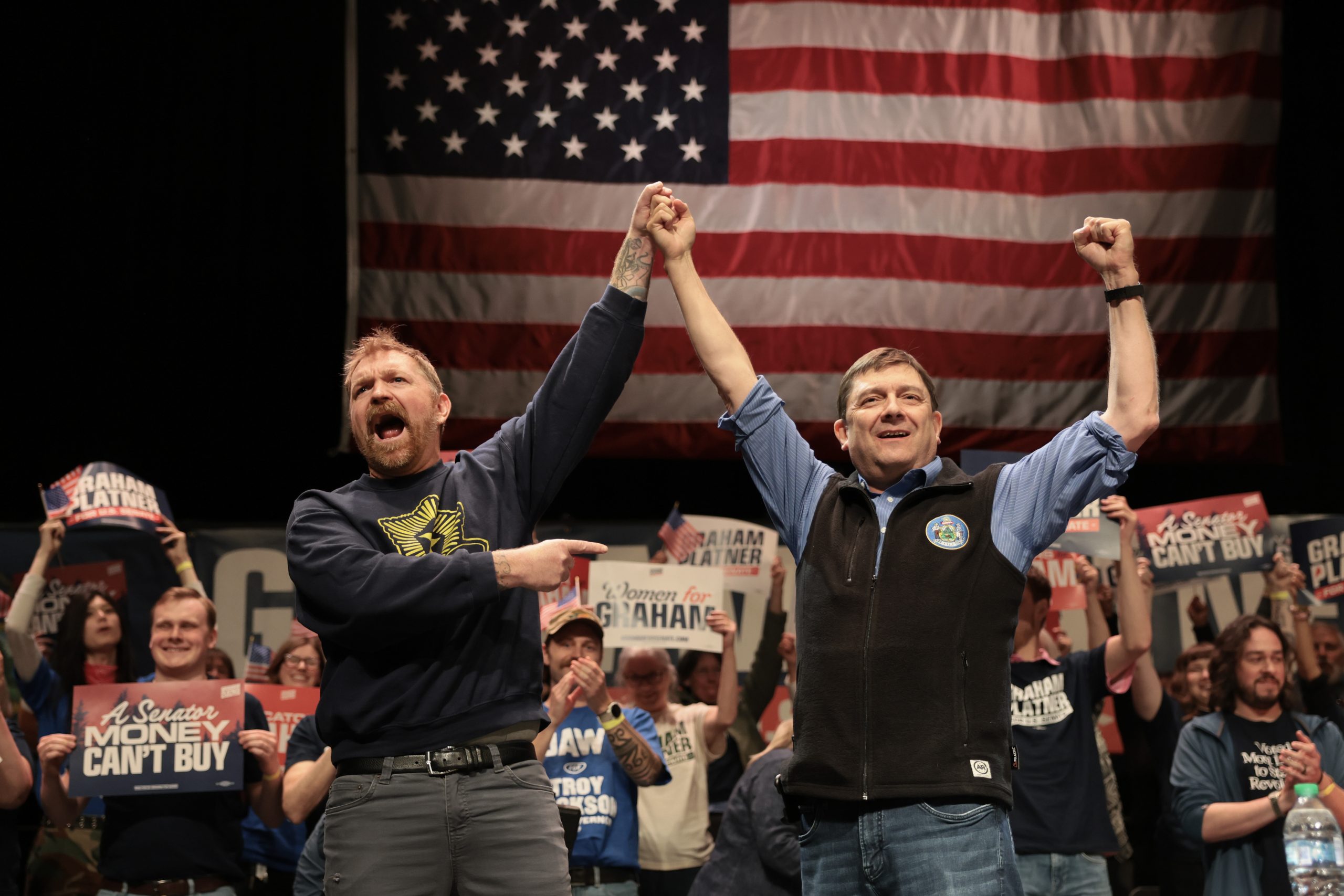
Graham Platner just dropped out of Maine’s Senate race. Some Democrats have already said they want to replace him.
A POLITICO report of a new sexual allegation against Platner on Monday set off a scramble among Maine Democrats, as they pressured the candidate to step down and weighed who could take his place to defeat GOP Sen. Susan Collins, the only Republican running in a state won by Kamala Harris this cycle. The party has long held that winning the Maine Senate race will be critical to retaking control of the upper chamber.
The steady loss of support and financial backing for Platner’s campaign — which denied the allegation — gave several progressives an opening to start their preparations.
Some, like former Senate President Troy Jackson, were more explicit than others, setting up joint fundraising committees before Platner dropped out. Others, including Secretary of State Shenna Bellows, said they would “seriously consider” entering the race if Platner suspended his campaign. Meanwhile, a few possible candidates, including Rep. Jared Golden, Maine Senate President Mattie Daughtry and actor Patrick Dempsey (yes, really) have ruled themselves out.
Now, jockeying for the nomination is expected to accelerate, with less than four months until Election Day.
State law gives the Maine Democratic Party the authority to replace Platner, and mandates that his successor must be chosen by July 27. On Wednesday, just before Platner suspended his campaign, the Maine Democratic Party approved tentative plans for a nominating convention to pick his successor.
Here’s where things stand.
Officially running
Troy Jackson
Jackson, who was a Platner ally before calling on him to step aside Monday, swiftly launched his Senate bid after Platner suspended his campaign.
“I’m in. And we’re going to defeat Susan Collins,” Jackson wrote in a post on X. “Maine deserves a Senator that will fight for working families.”
Jackson was widely speculated to jump into the race and had filed his interest in a bid with the Federal Election Commission before Wednesday.

A logger with long ties to organized labor, he’s quickly attracted attention from many of the oysterman’s progressive supporters. Our Revolution, a progressive organization founded by Sen. Bernie Sanders (I-Vt.), has already thrown its support behind Jackson.
But already, some votes from his 20-year history in the legislature are resurfacing, such as his 2009 state Senate vote against a bill to legalize same-sex marriage, giving Platner’s base a bit of pause. He later called that the “worst vote I ever took.” His closeness to Platner during the primary may also give pause to some Democrats as they choose their next nominee.
Still, as one of a number of Democrats who just lost the primary for governor, Jackson has the benefit of being able to quickly rebuild his campaign.
Considering running
Nirav Shah
Shah, a former public health official, is “evaluating” whether he will mount a Senate bid, he told POLITICO Tuesday afternoon. But he was already positioning himself as a candidate before Platner’s announcement.
He called for an open process on Tuesday, including at least one televised debate, and multiple public town halls across Maine.
Shah oversaw the state’s response to the Covid-19 pandemic. He mounted his first run for public office earlier this year, finishing second in Maine’s gubernatorial primary. He said in an interview that he is “very, very much aligned” with Platner’s politics.
Shenna Bellows
In a statement on Tuesday, the Maine Secretary of State said she would “seriously consider entering this race, because I believe I am uniquely fit to unite Mainers and defeat Susan Collins in just over 100 days.”
Bellows, who also ran unsuccessfully for governor, has been fielding calls about a potential run, according to a person familiar with her campaign, granted anonymity to speak about private conversations. The person pointed to her ideological alignment with Platner on progressive issues and compelling biography — she grew up poor in rural Maine and flipped a GOP-held state Senate district — providing an early glimpse of part of her pitch if she decides to enter the race.
Bellows previously ran for Senate and lost badly to Collins in 2014. She will need to prove to voters that she can win this time around, given her past defeat.
Dan Kleban
Kleban is the 49-year-old founder of Maine Beer Company who dropped out of the Democratic Senate primary earlier this year and threw his weight behind establishment-backed Gov. Janet Mills.
“I’m ready to fight for Mainers and bring a new generation of leadership to Washington,” he said in a statement Wednesday. “I believe I can unite our party and finally defeat Susan Collins in November.”
Like many of the others expressing interest, Kleban called for an open process to replace Platner. While he hasn’t served in public office, he has long been involved in Maine Democratic circles.
Jordan Wood
Wood is another former Senate candidate, but he switched to run for the state’s 2nd District after Rep. Jared Golden (D-Maine) decided he wouldn’t attempt reelection. Wood finished third in that race with state Auditor Matt Dunlap winning the nomination after a ranked-choice count.
“To beat Susan Collins, we need a candidate who can provide a true contrast and run an unapologetically progressive campaign: Passing Medicare for All. Stopping ICE terrorizing our streets. Standing up to Donald Trump’s abuse of power,” Wood wrote on X on Tuesday, saying he was “continuing conversations with voters across Maine if I should enter an open Senate race.”
A former staffer of former Rep. Katie Porter (D-Calif.), Wood may have trouble courting Platner supporters who want someone from outside of D.C. But he posted solid fundraising during his House run and has worked hard to keep his name in the fold.
Paige Loud
Loud also ran for Congress in the 2nd District, coming in last during the first round of voting.. She quickly filed interest paperwork with the FEC on Tuesday to succeed Platner.
“I don’t think we should be electing a man,” Loud, who also held an unpaid role on Platner’s campaign before leaving earlier this year, said in an interview. “I think I’m tired of making women vote for a man.”
Valli Geiger
People close to Platner have been quick to mention Geiger — a member of the state House and top ally of the oysterman — as a potential successor. But Wednesday brought some drama on whether she’d have Platner’s blessing.
Geiger told a Maine local outlet that Platner said he was throwing his support behind her. The Platner campaign then said that no such commitment was made.
Geiger did not respond to POLITICO’s phone call and subsequent text message on Wednesday.
In an interview with MSNOW, Geiger said she’d taken calls about running for Senate and that she would be willing to run. But the 70-year-old state representative said a younger candidate would be better.
Andrea LaFlamme
LaFlamme was a write-in candidate during the Democratic Senate primary, receiving just over 1,000 votes. On Tuesday, she said she believes she is the “best person to take on Susan Collins” in a post on Bluesky.
LaFlamme initially launched her write-in bid because of Platner’s earlier controversies, telling the student paper of the college she works for that electing Platner “sends the message that women are not valued.” Given the fate of her write-in campaign, and the number of well-known Democrats already running, it’s unlikely she will ultimately take on Collins.
Some names to watch
Chellie Pingree
Pingree is a longtime member of Congress serving Maine’s safe-blue 1st District. Her bid is more of a long shot, given the party would also have to replace her on the ballot — thus kicking off another rush of names — but her reputation as a longtime party leader could put her in contention. Her daughter Hannah is already the Democratic nominee for governor, as well.

“Mainers deserve a nominee they can trust, a campaign focused on the challenges facing our state and our country, and a Democratic Party that responds to allegations of sexual assault with clarity, compassion, and accountability,” Pingree said in a statement Monday, calling on Platner to step down.
Ryan Fecteau
Fecteau is the youngest person to ever become Maine’s state House Speaker.
He joined other Maine Democrats in pushing Platner to exit the race, saying POLITICO’s report “make[s] it clear that Graham’s campaign cannot be successful” in a post to Facebook.
Sara Gideon
After a failed run against Collins in 2020, Gideon has maintained a relatively low public profile. But she lands a spot on this list regardless — mostly because her campaign is still sitting on $2.4 million, which was noted in a required FEC report that was filed on Wednesday.
Alec Hernández and Jessica Piper contributed to this report.
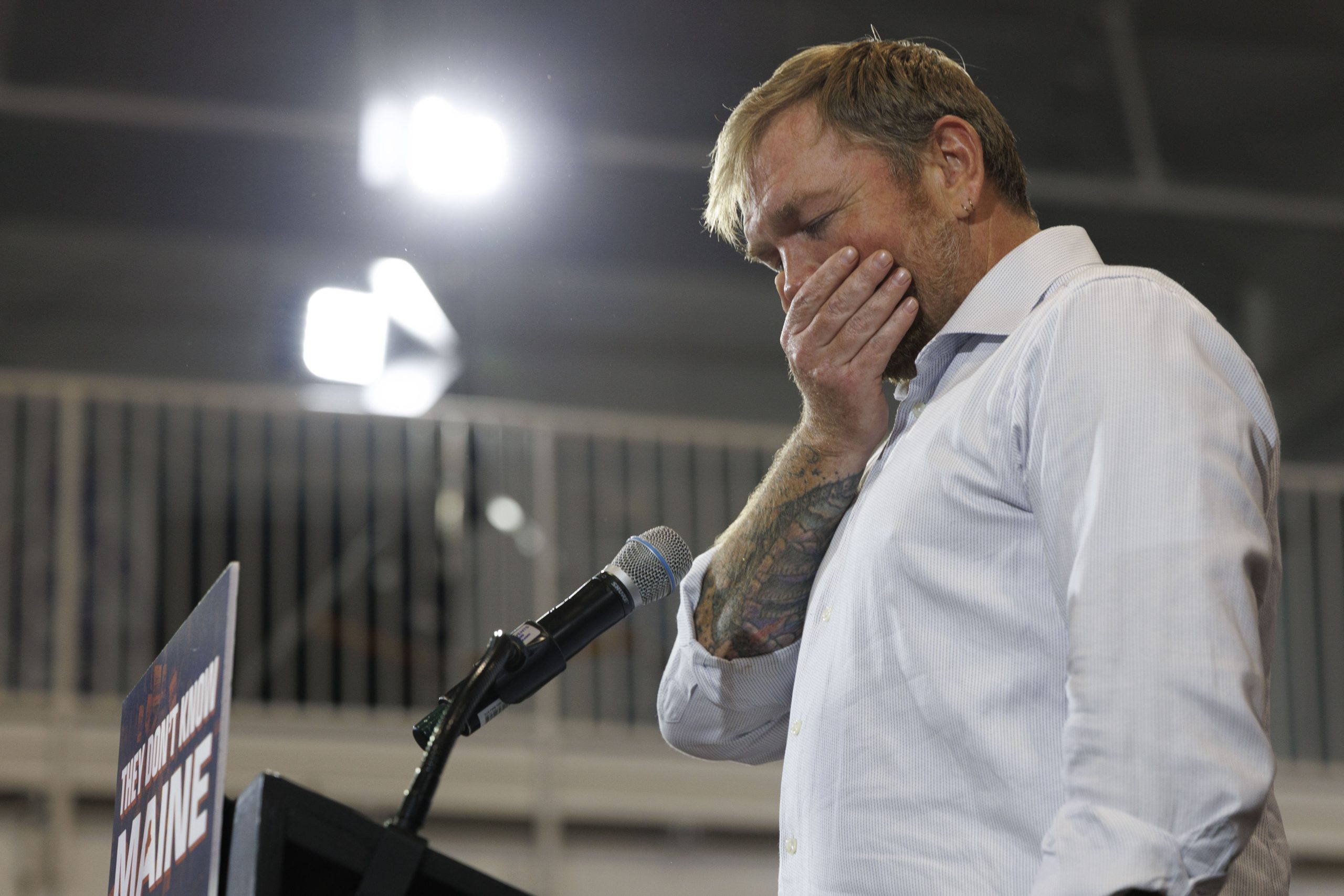

Democratic Maine Senate candidate Graham Platner ended his campaign on Wednesday after facing a detailed allegation of sexual assault, an astounding and rapid fall for the progressive oysterman whose meteoric rise and grassroots support helped him overcome establishment opposition to secure his party’s nomination.
But a persistent accumulation of controversies weighed on Platner’s campaign for months, and Monday marked a turning point: Democratic leadership, many of Platner’s staunchest progressive backers and key groups who had been helping fund his bid withdrew their support of Platner and pressured him to drop out after POLITICO reported a new allegation of sexual assault.
Maine resident Jenny Racicot said Platner forced her to have sex with him nearly five years ago despite her repeated objections. Platner called the allegations “all false” in the 11-minute, 15-second video posted on social media Wednesday night, adding, “it’s not real.”
“We are suspending campaign operations,” Platner said in the video. “I want to make clear, though: I intend to file my paperwork to withdraw.”
The Maine Democratic Party has until July 27 to name a replacement candidate, according to state law. Platner faced a July 13 deadline to decide whether he would drop out so the party could have time to replace him on the ballot.
“We believe that for the movement to continue, it can’t be me,” Platner said in the Wednesday announcement. “This is incredibly difficult, because I know that some will think it’s an admission of guilt, and it most certainly is not. We’re not doing it because of the allegations, we’re doing it because of the structures that are being taken away from us by those in power.”
Party officials, who previously called for Platner to withdraw from the race, did not immediately respond to a request for comment.
Within hours of POLITICO’s article publishing Monday, top Democrats in Maine and Washington demanded that he end his campaign. Those figures included former major supporters, such as Sen. Bernie Sanders (I-Vt.), Rep. Ro Khanna (D-Calif.) and Sen. Elizabeth Warren (D-Mass.).
The Democrat also lost key financial backing in a contest where cash will be king. He was abandoned by the Democratic Senatorial Campaign Committee, the Democratic National Committee and the Senate Majority PAC, the top super PAC supporting Senate Democrats, which said it is “redirecting resources away from the Maine Senate race in light of the latest allegations.”
VoteVets, a group that supports veterans for elected office, and End Citizens United, a liberal good governance group, also rescinded their endorsements.
Racicot’s allegation is the latest and most serious one Platner has faced, after The New York Times reported that she and several other former romantic partners alleged the candidate had displayed disturbing and sometimes violent patterns of behavior. Platner denied those claims, too.
Racicot told POLITICO she cut off contact with Platner after telling him their encounter was not consensual. She said she was torn over coming forward, in part, because she agrees with him politically.
Platner first announced his outsider campaign for Senate in August of 2025 with a flashy launch video highlighting his rural Maine roots and pledge to take on corporate interests.
But as he drew national attention, a slow drip of controversial moments from his past emerged.
POLITICO and other outlets revealed last fall a series of Reddit posts that Platner had made including posts that disparaged rural Mainers, promoted violent political action and described himself as a “communist.”
He later drew further criticism when an old photograph revealed a tattoo on his chest of a skull that resembled a Nazi totenkopf. Platner later had the tattoo covered and denied that he knew of its Nazi associations.
Still, Platner continued to gain momentum in the polls, and his rise forced Democratic Gov. Janet Mills — establishment Democrats’ preferred pick to take on GOP Sen. Susan Collins — to suspend her bid before the primary, citing a lack of financial resources. Platner went on to win the largely uncontested June 9 Democratic primary with 72 percent of the vote.
Platner’s decision to drop out leaves Democrats scrambling ahead of a critical Senate race against Collins — one that the party had identified as a must-win in order to regain control of the upper chamber in November.
It is unclear if Mills might be open to rejoining the race, though a person familiar with the situation told POLITICO that there was little prospect of party chiefs receiving support for her. Other potential Democratic candidates include former public health official Nirav Shah, Maine Secretary of State Shenna Bellows and former Maine Senate President Troy Jackson — who unsuccessfully ran for governor this year — as well as state Rep. Valli Geiger and brewery owner Dan Kleban, who briefly launched his own Senate campaign last year but dropped out when Mills entered the race.
The Maine Democratic Party approved a plan on Wednesday, shortly before Platner’s announcement, to choose the replacement candidate in a state party convention.
Aaron Pellish contributed to this report.
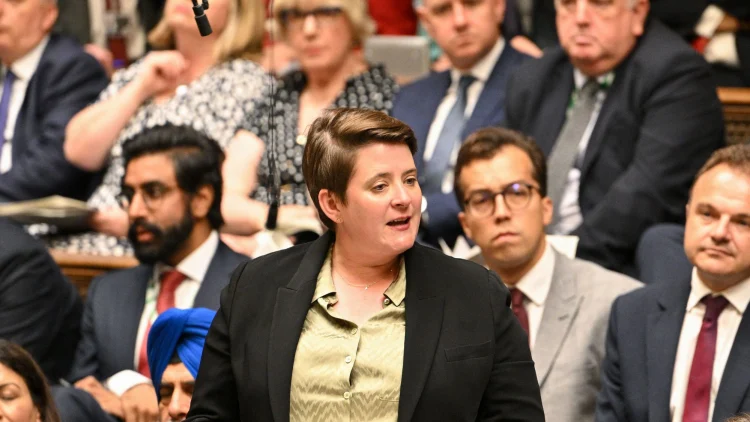

Olivia Bailey, Parliamentary Under-Secretary of State for Equalities (Credit: House of Commons)

3 min read
Parents who are found guilty of “abusively” trying to change their child’s sexuality or gender identity could be jailed under new legislation, a minister has confirmed.
Olivia Bailey, the minister for LGBT+ equalities, said parents would not be given any “carve-out” from the government’s planned ban on “abusive conversion practices” which cause “serious harm” to the victim. Those found guilty of breaching the proposed law could be sentenced to up to five years in prison.
Amid concern from religious and gender-critical campaigners that the draft Conversion Practices Bill could undermine parental autonomy, Bailey insisted the legislation will not prevent parents from choosing how to raise their children, as the courts will only convict people guilty of practices which meet strict thresholds for abuse.
The minister told The House magazine: “This is about abuse; it is about a very specific form of abuse. It is not about policing opinions, it is not about policing how parents parent, and it is for the courts to determine, not politicians, but – rightly – for the courts to determine what meets that threshold of abuse.”
Asked whether she expects any parents to go to prison as a result of the legislation, she said: “I think that anybody committing abuse, no matter where you find it, no matter in what walk of life – there are not carve-outs for abuse by parents in any other legal environment.
“So I think it is completely right that we just say very clearly in this legislation: we want to stop abuse, we want to stop abuse wherever it happens. Full stop. End of story.”
The bill defines a conversion practice as “any conduct” carried out with the intention of causing another person to have or not to have, or to believe they have or do not have, a particular sexuality or transgender identity.
But an offence only occurs where that conduct “amounts to an abuse of the individual”. In determining that, consideration would be given as to whether words or behaviour “of a sexual nature” or which are “violent or threatening” or “controlling or coercive” have been used, as well as whether “economic” or “psychological or emotional” pressure has been applied, “among other things”.
The victim must also have been caused “serious harm” to their “mental or physical health”, or “serious alarm or distress” which has a “substantial adverse effect on their usual day-to-day activities”.
The law will not only prohibit conversion practices aimed at making someone straight or cisgender and will, at least in principle, apply equally to practices aimed at making someone adopt an LGBTQ+ identity.
Healthcare services will be exempt from the bill’s provisions, except where a healthcare practitioner “falls far below the standards reasonably expected of a person in their position”.
The full interview with Olivia Bailey on the draft Conversion Practices Bill will feature in the next edition of The House magazine in print and online.
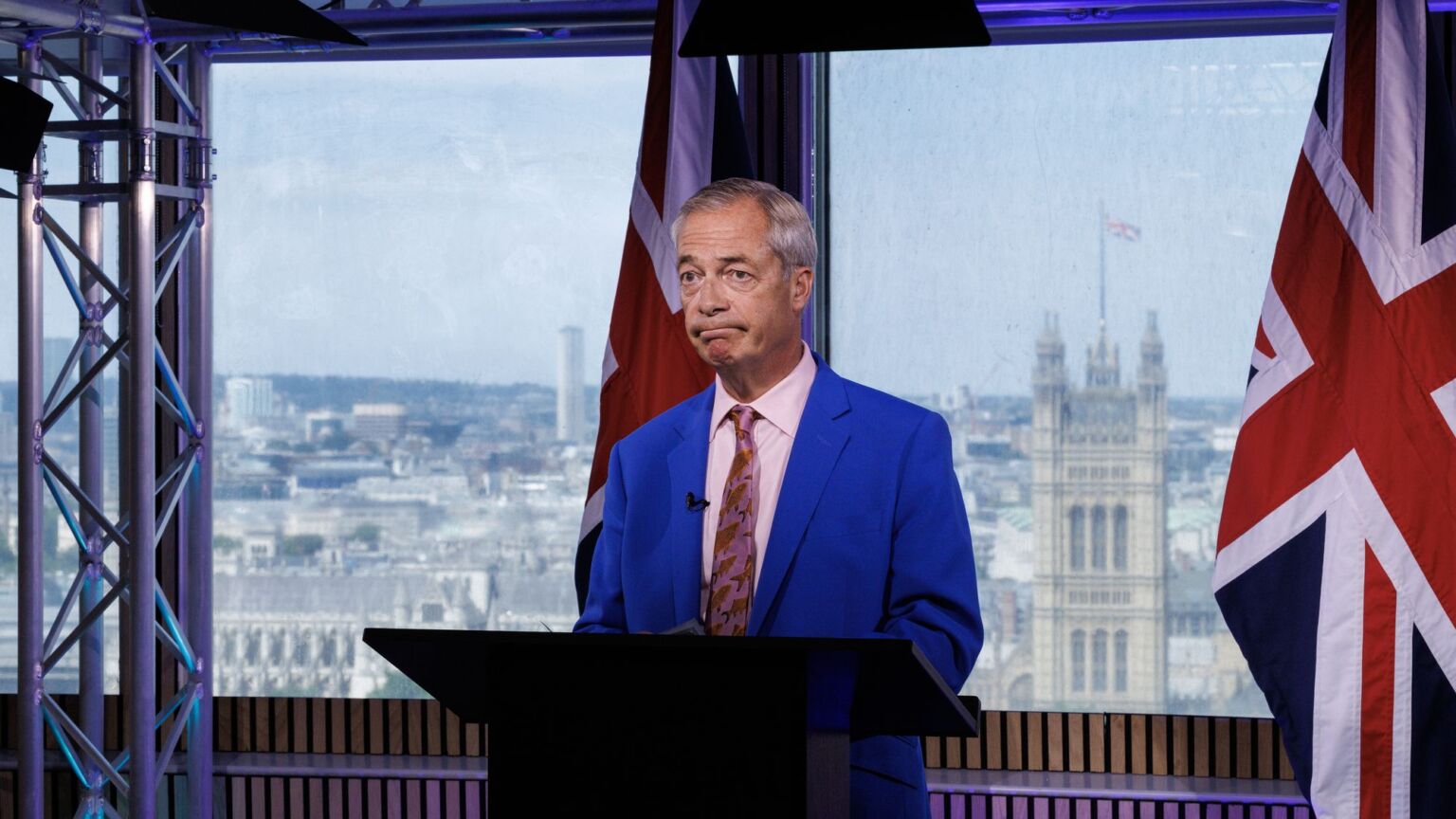
The post If Nigel Farage is so dangerous, why won’t they stand against him? appeared first on spiked.


4 min read
Seventy years on from the Clean Air Act, the incoming PM must put cleaner air at the heart of plans for economic growth.
It has been seven decades since Parliament passed the Clean Air Act in response to one of the worst public health crises in modern British history – the Great Smog. Since then, the legislation has saved thousands of lives.
But despite major progress on cleaning our air, today air pollution remains the largest environmental risk to public health in the UK. As well as damaging almost every organ in our body, poor air quality hits our economy hard, putting strain on health services and reducing productivity. That’s why, with Andy Burnham looking for bold ways to secure growth, cleaning our air must be a major part of the answer.
Action to secure cleaner air delivers profound benefits, and the UK has already taken the lead in some areas.
Witness the success of London’s ultra-low emissions zone (ULEZ), the world’s largest clean air zone. Recent research shows that between 2019 – when ULEZ was introduced – and 2024, estimated deaths associated with air pollution in London reduced by around 40 per cent.
Transformative policies like this can face opposition when first proposed, but public health outcomes are hard to argue with. Clean Air Zones in Bradford, Bristol, Birmingham and Sheffield have also shown their impact, with restricted-traffic zones leading to a reduction in cardiovascular disease and strokes.
Proven and affordable solutions to air pollution exist, but we need the political will to implement them. Clean air is beneficial for health and the environment, but is also good for economic development, too.
New research from CBI Economics finds that if the UK sees through its planned net zero policies, we will benefit hugely from cleaner air. We can secure a £7.7bn boost to our economy by 2050 through productivity gains as a result of improved health, reduced absences and longer working lives. Between 2011 and 2022, improvements in air quality accounted for around a third of labour productivity growth across the EU, according to OECD estimates.
In the UK, the CBI Economics report shows 38m additional working days could be returned to our economy by 2050. We would avoid 264,000 premature deaths and almost 500,000 hospital admissions. With an A&E admission costing between £114 – £563, this would mean major NHS savings.
Yet despite these enormous opportunities, the UK risks falling behind. We have far less ambitious air quality targets than the EU, and the UK isn’t in line with air quality guidelines from the World Health Organization (WHO). There are worrying signs that progress could be slowed further. Recent talk of the government weakening the UK’s 2030 electric vehicle sales targets would undermine one of the most important drivers of cleaner air and threaten the multiple benefits that stronger action could unlock.
As Burnham prepares to become PM, he has the opportunity to build on the leadership shown by some of our cities on clean air measures. What better way to signal that change in direction than introducing a new Clean Air Act with stronger legal limits for major pollutants, a commitment to accelerate the transition to zero emission vehicles, and clean heating for many more buildings.
With England having just sweltered through its hottest June on record, the importance of staying on track with the UK’s climate plans – a huge part of which means cleaner air for everyone – couldn’t be felt more acutely. Europe’s recent heatwaves triggered widespread ozone pollution episodes, with hundreds of monitoring stations exceeding the WHO’s ozone guideline. Indeed, heatwaves create a dangerous feedback loop; hotter temperatures produce more ozone, and ozone itself contributes to climate warming.
Burnham faces a huge array of pressures, but cleaning our air will enable him to address multiple interconnected areas. Given the economic, health, productivity and climate gains on offer, the case for action could not be simpler and clearer.
Jane Burston OBE is the CEO of Clean Air Fund

4 min read
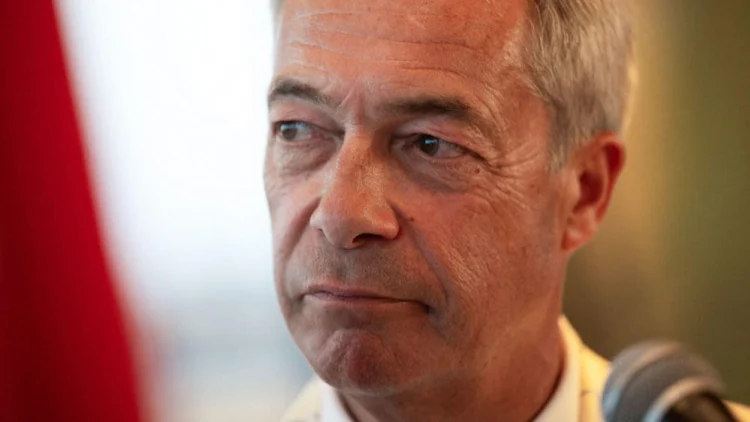
There are signs that the party leader’s shine is fading with potential Reform UK voters.
In Thinks Insight & Strategy’s latest focus groups with 2024 Labour voters now considering Reform, conducted on 24-25 June, participants were, for the first time since the general election, equivocal about Nigel Farage.
As researchers, particularly when dealing with qualitative data, we should always be cautious about drawing conclusions from small numbers of conversations. And it is really important to say that these voters were far more positive about Reform than about any other option available to them.
But the tone and energy amongst these participants definitely felt more muted – less convinced that Farage ‘gets it’ and is different from other politicians – than in any focus groups we have conducted with this audience in the past two years.
The ‘anti-politics’ sentiments that have characterised conversations with these voters since the election were still present. The sense that none of the mainstream parties have the interests of ‘ordinary people’ at heart. That they are failing to put British people first. That they simply can’t grip the problems the country faces.
But while, for many, Reform is still the only truly credible alternative to the mainstream parties, the bullishness that the party truly represents a break from the past, and that it will deliver the change they feel the country needs, was more muted than previously.
The change was mainly down to a shift in perceptions of Farage.
In the focus groups, carried out in two constituencies, Pontefract and Thurrock, voters said:
“Yes, probably. Got no choice… I’ll have to give him a chance, but… I’m not a big fan of Nigel Farage.”
“I’m not a fan, to be perfectly honest… the party could do good… let’s give Reform a chance, but yeah, maybe they should have someone else in charge.”
“He got a £5m gift from a donor … I don’t know who it was. It was some businessman based over in Thailand or something, and he said it wasn’t for anything, and he said … it was for his own security. And, well, you know, come on, man, you can’t say that you’re a man of the people whilst getting £5m gifts. It’s just not on.”
“There’s some hoo-ha about him receiving £5m as a gift, and there’s been questions asked: ‘Well, why were you given that? Was that by influence?’ He’s kind of answered it by saying it’s not really anybody’s business but his own, which you kind of think, okay. That kind of makes me think you’re hiding something.”
“They are losing momentum… they are very Nigel Farage heavy, so the more he slows down, the more that party doesn’t have anything else, leadership-wise.”
Where once Farage was the spear-point of the party’s appeal, embodying its anti-establishment, tell-it-as-it-is, common sense, in our latest focus groups, some respondents seemed less sure that Farage is truly different from other politicians.
Even among those most strongly considering a vote for Reform at the next general election, Farage was beginning to look less like the party’s main selling point, and more of a source of concern. While some felt he is what makes Reform and that the party is completely reliant on him, others went so far as to say he was a liability for Reform, and that it could do better without him.
Interestingly, the sentiment felt stronger amongst participants who are struggling financially.
In the most financially pressured groups, the £5m “gift” was spontaneously raised as a concern. The scale of the gift, and Farage’s assertion (one of several justifications he’s offered) that he needs the sum to feel secure, felt completely divorced from the realities of these voters’ day-to-day lives and financial worries. Few had believed that Farage was really ‘like them,’ but this made it harder than ever to believe he could truly understand their lives.
Amongst the public as a whole, our most recent survey also shows an increasing sense among the UK public that Reform may have peaked. In June 2025, 47 per cent thought Reform was going to go from strength to strength. Now only 36 per cent do so. They are more likely to agree that Reform has peaked and is unlikely to grow its support (48 per cent).
Ben Shimshon is Co-founder and CEO of Thinks Insight & Strategy
To mark the ten year anniversary of the EU referendum on 23 June, UK in a Changing Europe experts have written a short series of blogs reflecting on some of the issues at the heart of Brexit then and now. Here, Catherine Barnard reflects on the legal implications of Brexit.
One of the most common questions asked post-Brexit is: has the law changed much? In the run up to the referendum, Brexiters had made a big play on taking back control of our laws. This was reiterated in the government’s 2018 Command Paper: ‘EU law in the UK will end, as will the jurisdiction of the Court of Justice of the European Union (CJEU).’ It continued, ‘The laws that we live by will once again be passed by our elected representatives in Belfast, Cardiff, Edinburgh and London – who are fully accountable to the people of the UK. UK courts will no longer refer cases to the CJEU, with our Supreme Court truly supreme.’
Has this happened? The answer is yes – and no.
Let’s start with the adoption of new, post-Brexit laws. It is certainly the case that, post-Brexit, the UK has had the freedom to legislate for itself. However, that freedom to develop new UK rules has been constrained by four factors.
First, a lack of clarity as to what a new, independent UK regime might look like, not least because there was so little planning done before Brexit. Financial services were seen as an obvious contender for reform. The cap on bankers’ bonuses, introduced after the 2008 financial crisis, has been removed. However, the scale of divergence on financial services has been less than anticipated, given it was identified by the Chancellor in 2022 as a priority sector for regulatory reform.
Second, there has been a question of civil service/government and legislative capacity. With so much energy devoted to preparing for a no-deal Brexit, then delivering Brexit itself, and then Covid, there has been little time to develop an independent UK regulatory regime.
Third, some areas, like environmental protection and workers’ rights, are subject to the so-called ‘level playing field’ provisions in the Trade and Cooperation Agreement (TCA), which forbid either side from reneging on 2020 levels of protection and the UK from failing to broadly keep up with new EU rules. Significant divergence from EU rules (leading to weaker standards) in these areas would eventually lead to tariffs.
Fourth, to protect the Good Friday Agreement, the Northern Ireland Protocol (NIP)/Windsor Framework (WF) requires Northern Ireland to dynamically align (i.e. keep up to date) with about 300 EU rules. The greater the regulatory divergence by the other UK nations, the ‘harder’ the GB/NI border would become, meaning that more checks would take place, creating more disruption to the movement of goods. More generally, manufacturers did not want regulatory divergence from EU rules, since this would increase their costs in respect of GB/NI and GB/EU trade. The devolved administrations were not keen to depart either.
What about pre-existing EU law? Some hoped that Brexit would mean the wholesale repeal of EU law on the UK statute book. However, there was no new UK regulatory regime for matters as diverse as airline safety, food safety and workers’ rights. Continuity, and not repeal, was therefore the order of the day. This was delivered by the EU (Withdrawal) Act 2018 which took a snapshot of all EU legislation on the UK statute book and ensured it continued after Brexit. Some legislation, such as the rules on free movement, was turned off because it was no longer suitable in the post-Brexit world. Other legislation was amended to remove, for example, references to the European Commission and to replace them with UK equivalent bodies.
But that still left a huge swathe of EU-derived legislation, known as retained EU law (REUL). The problem was: no one knew how much. Originally it was thought to be about 2,500 pieces yet, as of early 2026, that number had grown to almost 7,000. Jacob Rees Mogg MP wanted a ‘bonfire of EU rules to power Brexit innovations’, which he aimed to deliver via the Retained EU Law (Revocation and Reform) Bill. A change of Prime Minister (Rishi Sunak) put a stop to such wholesale ‘arson’ but did ensure that the concept of supremacy of EU law (i.e. EU law taking precedence over conflicting national law) was removed from the UK statute book. Retained EU law was renamed as assimilated law.
Since Rishi Sunak’s time as Prime Minister, enthusiasm from government for regulatory divergence has waned, largely because of pressure from business, to the extent that now the (Labour) government’s position is that divergence should be ‘the exception, not the norm’. And if future agreements with the EU are signed, on matters such as SPS (sanitary and phytosanitary standards) and emissions trading, these will also require not just catching up with the EU rules which have been adopted since Brexit but also staying up to date with new rules. And this will mean the government having to take the power to implement EU rules by secondary, not primary, legislation – providing only a minimal scrutiny role for MPs.
And what about the role of the European Court of Justice (CJEU). Finished? Not so fast. Pre-Brexit case law continues to bind UK courts unless the Supreme Court or the Court of Appeal decides otherwise. They have been reluctant to do so. Even post-Brexit EU case law should be taken into account by the UK courts when interpreting a provision of assimilated law. References (i.e. questions) to the CJEU have largely been stopped except in respect of matters under the NIP/WF and the citizens’ rights element of the Withdrawal Agreement (until 2028). The CJEU also has a say on the interpretation of concepts of EU law which arise in the context of any disputes under the Withdrawal Agreement which goes to arbitration. A question must be referred to the CJEU although it is the arbitration panel which makes the final decision. A similar mechanism is likely to be provided for under any future UK-EU agreement on, for example, SPS or emissions trading. Under the TCA, which is a free trade agreement under international law, the CJEU has no role to play. But even here, in the first and only UK-EU dispute – on sand eels – the parties and interveners referred to concepts of EU law in their arguments.
EU law may have formally gone in Great Britain, but it is far from forgotten. Future agreements with the EU mean more EU law, not less, and the CJEU will continue to have a residual role.
By Catherine Barnard, Senior Fellow, UK in a Changing Europe & Professor of EU Law and Employment Law, University of Cambridge.


3 min read
Harold Wilson said the Labour Party is “a moral crusade or it is nothing”. Today, as so often in the past, our moral crusade is to deliver for a younger generation too often locked out of opportunity.
Across Britain, too many young people are growing up believing that they will be worse off than their parents. Communities that once offered pathways into skilled work have seen industries disappear and investment pass them by. If Labour is to shape the future, it must begin with the young; that means making skills, jobs, and opportunity the central mission of the next Labour leadership.
For too many wasted years under the last government, our sluggish economy was characterised by low pay, insecure work, and a chronic failure to invest in the talents of our people. We’re now reaping what the Conservatives sowed.
Young people do not lack ambition or need lectures about hard work. They need a government prepared to back them with apprenticeships, vocational education, and a foot on the ladder to high-quality jobs in every region of the country. That can be our government.
We should be creating a new generation of skilled workers in advanced manufacturing, green energy, construction, digital industries, transport and public services. Every young person should know that if they are willing to train, gain qualifications and contribute to society, there will be a job for them. This is not simply an economic argument. It is a moral one.
Work is about more than a wage packet. It provides purpose, responsibility and belonging. Strong communities are built when people feel they have a stake in society and confidence in their future. The dignity of work will always be a core Labour value because it empowers individuals and strengthens families.
That is why we must also be honest about the dangers of long-term welfare dependency. The welfare state should always provide security for those who need it. It should protect people from hardship, support those with disabilities, and help families through difficult times. These are principles Labour must never abandon.
But we should never accept a situation where, like under the Thatcher government, young people are signed off, written off, left without a route into employment. This damages confidence, limits aspirations and creates a dangerous sense of isolation. That isn’t compassion – a life spent trapped outside the labour market has profound consequences for individuals and society as a whole.
The answer is opportunity. We can support people when they fall while also doing everything possible to help them rise.
I understand young people’s concerns about the job market they face. The AI revolution is changing the way we work, the skills we need and the opportunities on offer for future generations – in as profound a way as the industrial revolution. But while it will undoubtedly both create and destroy jobs, I have no doubt it will also reward those nations who build the capacity, the infrastructure, and the workforce to take on this challenge.
As Alan Milburn’s report has laid bare, a million young people not in education, work or training cannot be the new normal. Pat McFadden has made a good start tackling this with the Youth Guarantee, which will help half a million young people, including those who have been out of work for 18 months. This government is rightly expanding apprenticeships for young people and developing new vocational qualifications.
The next leader must keep their foot on the gas and drive this agenda forward to create a genuine new deal for our young people.
Patrick Hurley is the Labour MP for Southport

More than a quarter of the House of Commons has signed an amendment calling for a national commission on electoral reform, in what backers are describing as an “open goal” for Andy Burnham, the likely incoming prime minister.
The amendment to the Representation of the People Bill, tabled by Labour MP Alex Sobel, has attracted 166 signatures, making it the most-signed amendment to any piece of proposed legislation since the 2024 general election. A total of 88 Labour MPs have backed the bill.
This development means the amendment has surpassed the 164 signatures gathered by Meg Hillier’s reasoned amendment to the government’s welfare bill in June/July 2025, which triggered a tortured climbdown from the government.
Supporters of the electoral reform amendment span eight political parties as well as independents, including Labour, Liberal Democrat, Green, Plaid Cymru, Scottish National Party (SNP), Alliance, Your Party and Social Democratic and Labour Party (SDLP) MPs.

MDU warns Chancellor clinical negligence system ‘not fit for purpose’

Northern Ireland RE curriculum is ‘indoctrination’ – Supreme Court
The Representation of the People Bill, which proposes extending the right to vote to 16- and 17-year-olds among other measures, is set to return to parliament next week.
The all-party parliamentary group (APPG) for fair elections has described the amendment as a straightforward win for Andy Burnham, who has previously championed both proportional representation (PR) and the idea of a national commission. Burnham is so far the only declared candidate in the race to succeed Keir Starmer as Labour leader and prime minister.
Alex Sobel, who chairs the fair elections APPG, has argued that the commission would be a signal to “break the status quo”.
Sobel said: “My amendment to establish a national commission on electoral reform is now the most supported amendment this parliament with 166 signatories from eight parties, half of whom are Labour.
“MPs still have five days left to sign and it’s clear with the change of government coming that the commission is not just a clear signal to break the status quo but hugely popular with both MPs and the public.”
Beccy Cooper, a prominent figure on Labour’s “soft left”, called the amendment a “golden opportunity for the incoming prime minister.”
Copper stated: “PR has been central to [Burnham’s] political analysis and remedy for Britain’s ailments for years, so this is about much more than just voting reform now – it’s about authenticity, trust, and showing he means what he says.”
Chris Curtis, who founded the Labour Growth Group (LGG), said that Labour MPs were now “clamouring” for electoral reform.
Curtis said: “You don’t have to be Harry Kane to see what an open goal this is for him. He should launch a commission in his first 100 days – so he can focus on his other priorities and bringing growth and hope to Britain.”
Burnham endorsed the idea of a national commission on electoral reform in an address to Labour conference last year. He argued that proportional representation “would lay the ground for a new politics [and] a better conversation with the public”.
Burnham further contended that electoral reform would precede economic reform and lead to “some of the structural changes this country needs to make.”
He stated: “What I think a move to a proportional system would do is it would allow new politics to come in, where parties that can agree can set a long term approach so repairing the basics, building the council and social homes that we need as a country over a 10 year period.”
Burnham repeated his support for electoral reform during the June 2026 Makerfield by-election.
In December 2024, the House of Commons voted in favour of the Elections (Proportional Representation) Bill – introduced by Liberal Democrat frontbencher Sarah Olney under the 10-minute rule procedure. The bill sought to “introduce a system of proportional representation for parliamentary elections and for local government elections in England”.
A total of 138 MPs supported the bill – with 136 opposed. Notably, 59 Labour MPs backed Olney’s bill.
Introducing the bill, Olney told the House: “First past the post [FPTP] is a broken and unfair system. This summer, the Labour Party won a landslide election victory, securing 63% of seats in the House of Commons in return for just 34% of the vote.
“The system leaves millions of voices unheard and creates a divisive, adversarial political climate where collaboration is discouraged and accountability is often sidestepped.”
In January 2025, Rushanara Ali, the then democracy minister, told the commons that there are “no plans” to change FPTP for national contests.
Ali said: “The [FPTP] system, while not perfect, provides for… a direct relationship between members of parliament and their local constituency.”
In September 2025, the APPG for fair elections published a “ready to go” blueprint for an independent review of the FPTP electoral system. Sobel described the proposal as “a ready to go plan to independently review how parliament is elected, promote a national conversation, and build consensus on a way forward”.

I’M BUYING BITCOIN, NOW NOW NOW!!!!!!! *Urgent*

Pub 15 minutes from Darlington with ‘sublime’ Sunday roasts

Changes to Swindon to Bristol train services as Chipping Sodbury tunnel works starts


-

 Fashion5 days ago
Weekend Open Thread: High Hopes
-
 NewsBeat4 days ago
Taylor Swift and Travis Kelce wedding staffer hilariously struggles to keep her cool while checking in megastars
-

 Fashion2 days ago
Open Thread: What Great Books Have You Read Recently?
-

 Politics6 days ago
The House | “Reframing the debate from a binary discussion of winners and losers”: Yuan Yang reviews ‘We Are Not Machines’
-

 Crypto World6 days ago
Standard Chartered Secures MiCA License as ESMA Adds 37 New Crypto Firms
-

 News Videos2 days ago
Whats Hidden Inside This Cash Register? #treasure #reselling #money
-
 Tech2 days ago
Anthropic’s new “J-lens” reveals a silent workspace inside Claude that mirrors a leading theory of consciousness
-

 Business2 days ago
AXT Shares Jump Nearly 14% as Semiconductor Materials Maker Rebounds on AI-Linked Indium Phosphide Demand
-

 Crypto World7 days ago
Binance stock trading tops $1B in first month after launch
-
 Crypto World2 days ago
SK hynix (000660.KS) Stock Dips as $28B Nasdaq ADR Offering Drives AI Memory Expansion
-

 Crypto World4 days ago
South Africa proposes crypto tax guidance under existing rules
-

 News Videos3 days ago
Best Time to Enter Small Caps Right Now? Another Bull Run? | Financially Free
-

 Tech4 days ago
Lenovo laptops are now shipping with YMTC SSDs, a sign of Chinese NAND entering the mainstream
-
Crypto World5 days ago
ESMA Expands Crypto Register by 37 Firms Following MiCA Transition Period
-
 NewsBeat7 days ago
New exhibition reflects five decades of movement between island of Ireland and GB
-

 Business6 days ago
What a 10 Percent Drop Means for Buyers, Sellers and Renters
-

 Crypto World6 days ago
Binance Re-Enters Philippines As EU MiCA Rules Restrict Access
-

 News Videos3 days ago
Avoid entering in FOMO #bitcoin #cryptocurrency #trading #scalping
-

 Sports1 day ago
Joshua Pacio ‘more complete’ ahead of ONE rematch vs Malachiev
-

 Crypto World6 days ago
Alibaba bans Claude Code over alleged backdoor security concerns
You must be logged in to post a comment Login