
Politics
Should You Take A Child’s Toys Or Privileges Away As Punishment?


Many of us have been there: your child isn’t doing as they’re told, you need to rush them out of the door so you can get to childcare and work on time, and you’re about to boil over.
They’ve launched their shoes in a huff, a sibling has been shoved, whatever it is, you’ve issued those fateful words: “Right, no TV until tomorrow!”
If they’re younger, and they’ve thrown a toy, you might even threaten to take it away for the next few hours.
The words are out – and there’s no going back. You have to see it through. If you’re lucky, your child caves, puts their shoes on, and stomps out of the door.
But how effective is removing toys or taking certain privileges away in teaching children a lesson?
Why taking away toys or privileges as punishment might not have the desired effect
While this kind of punishment can sometimes stop behaviour in the short term, psychotherapist Anna Mathur told HuffPost UK “it rarely teaches children what to do instead”.
Taking toys or privileges away as a punishment isn’t something she’d recommend.
“On its own, it tends to create fear or upset rather than understanding. Children often focus on the loss (‘my toy’s gone’) rather than the learning (‘my behaviour hurt someone’),” she explained.
“So while it might stop behaviour in the moment, it rarely teaches the skills we actually want children to develop, like empathy, emotional regulation, or taking responsibility.”
In her view, the only time removing something makes sense is for safety or logic, not discipline. “For example, if a toy is being thrown, it’s put away because it’s not being used safely. That’s protection, not punishment,” she explained.
Taking things away is “usually more about adult frustration than child learning”, the therapist continued. “As parents, especially when we’re overwhelmed, we can reach for control quickly.”
Staying calm and offering connection is key
While this strategy is “understandable” – especially when you’re stressed beyond belief and trying to leave the house – the therapist said “it’s not the most effective long-term approach”.
“What works better is connection first, then teaching: slowing the moment down, helping the child reflect, repairing what happened, and reinforcing positive behaviour,” she explained.
“Children learn best when they feel safe enough to think, not scared enough to comply.”
She suggested a helpful question for parents to ask themselves is: am I trying to punish, or am I trying to teach?
“Children behave better when they feel understood and regulated, not when they feel scared of losing things,” she continued.
“And often ‘poor behaviour’ is actually a sign of overwhelm, tiredness, hunger or big feelings they don’t yet know how to manage. In those moments, what looks like defiance is often dysregulation.”
Her general rule is “connection first, teaching second, consequences third” as “taking something away doesn’t address the root cause”.
Try to catch and reinforce positive behaviour as much as possible
The Welsh government advises that parents should also try to give positive consequences for their child’s positive behaviour more often than they give negative consequences for unwanted behaviours.
An example of a positive consequence might be: “Well done for putting all your toys away, now we can read a book together.”
Mathur is a big believer in this, too. “I also encourage parents to focus just as much on catching and reinforcing positive behaviour as correcting negative behaviour,” she added.
“Children repeat what gets attention. Noticing kindness, effort and repair can be far more powerful than only responding when things go wrong.”

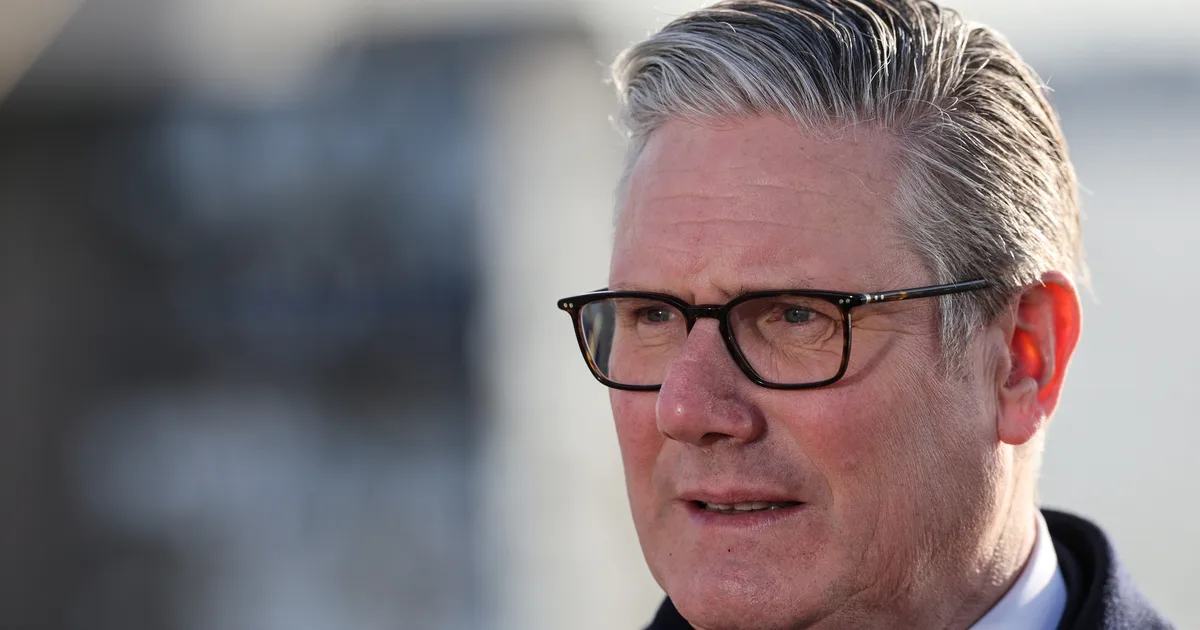
Keir Starmer is expected to make Labour’s decision not to go to war with Donald Trump against Iran central to the party’s local election campaign on Monday.
Speaking from the West Midlands, the prime minister is expected to call on the UK to “stand together” amid the turbulence from the wars in Ukraine and Iran.
Alongside his cabinet ministers and Labour’s deputy leader Lucy Powell, Starmer will vow to continue “to fight to earn every vote” and “fight for the country we are building together, a Britain built for all”.
He will say: “Because, in the context of everything that is happening in the world, those values – that fairness we stand for – it’s never been more important.
“That is the thing about the volatile world we live in now.
“It tests, not just our security, our strength on the world stage. It also tests our fairness at home. Our unity.”
Starmer will take aim at his rivals too, accusing Tory leader Kemi Badenoch and her Reform counterpart Nigel Farage of poor leadership over the Iran war.
The prime minister is expected to say: “We will protect our forces, our people, our allies in the region. But I made the decision that it is not in our national interest to commit British forces to a war, without a clear legal basis and a clear plan – and I stand by that.
“It’s a question of judgement. Do not forget that the Tories and Reform would have rushed us into this. With no thought of the consequences, including for the cost of living. Utterly reckless.”
Both right-wing parties initially suggested Starmer should have granted Trump full access to UK military bases for his pre-emptive strikes on Iran last month.
The PM rejected that US request, later allowing access only for defensive and limited attacks in an attempt to keep British troops out of the war.
Starmer will be trying to galvanise the public before voters head to the ballot box on May 7 for local elections across England, and national elections in Scotland and Wales.
It’s the first major test of the Labour government since Starmer’s landslide victory in 2024.
But the party has slumped dramatically in the polls in the last two years.
Labour lost a seat to the Greens in last month’s Gorton and Denton by-election, coming in third place after Reform UK.
The launch also comes as energy bills are set to fall to £117 next week as the price cap for April to June comes in.
Starmer will say that decrease in energy bills is down to Labour’s efforts to stabilise the economy.
However, there are fears wholesale gas and oil prices could drive the cap up for the following quarter, between July and September, as the Iran conflict squeezes global energy prices.
Iranian forces continue to effectively block the major shipping lane, the Strait of Hormuz, by targeting most oil tankers which passed through it – subsequently pushing up prices worldwide.
The cabinet is also set to play an active role in the coming weeks with almost 30 visit across the country over the next week.
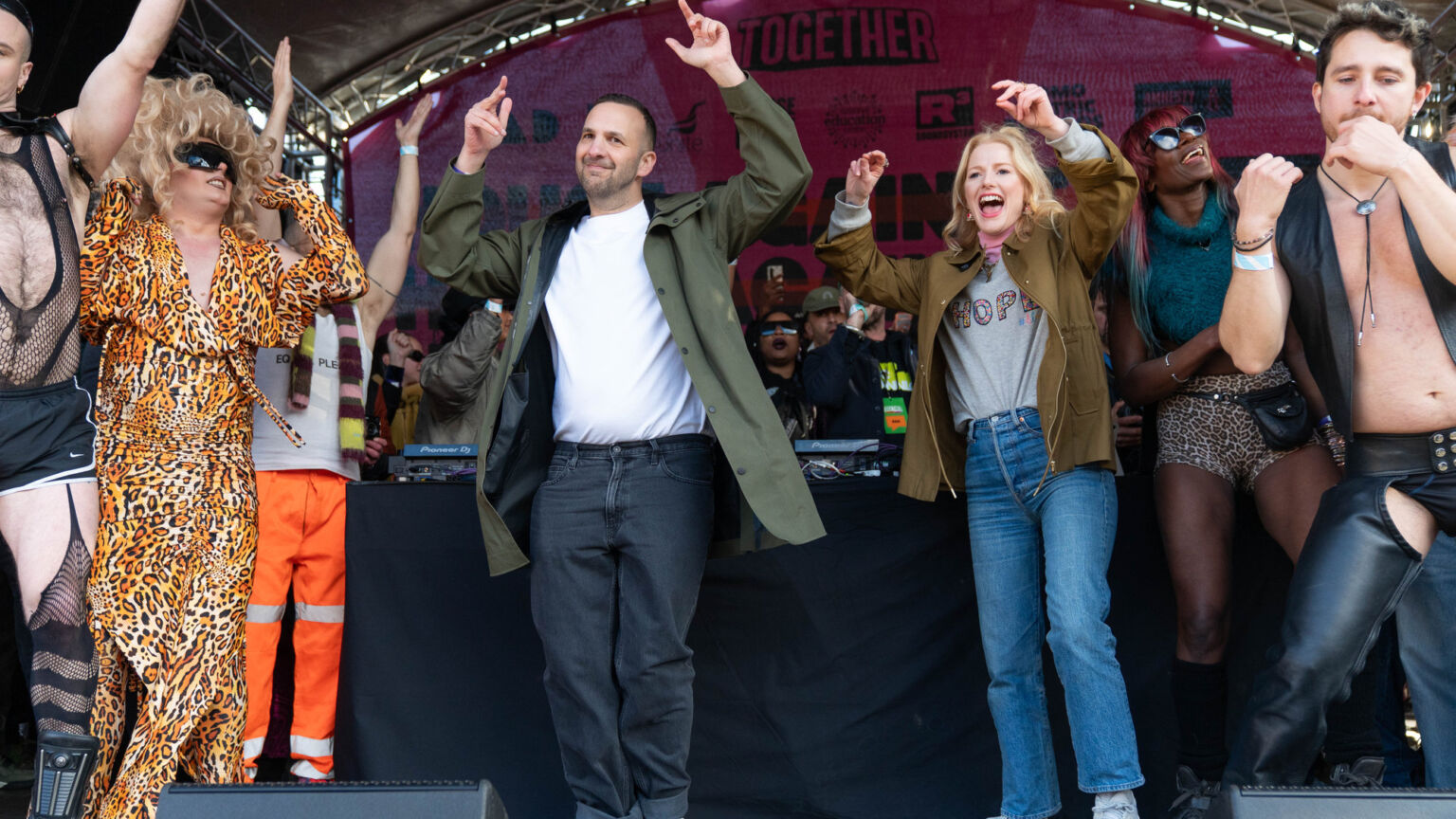
‘Love, unity, hope.’ That was the cringe, Hallmark-card message of yesterday’s ‘march against the far right’ in London, organised by the Together Alliance – a coalition of trade unions, hysterical left-wingers and dense celebrities who have memed themselves into believing that the right-populist Reform UK is a ‘far-right party’.
I’d barely been on Whitehall for 30 seconds before I saw that most lovely, unifying and hopeful of sights: a sea of flags of the Islamic Republic of Iran, the terror state that has been veiling women, hanging homosexuals and murdering dissidents and Jews ever since 1979.
You might think that any self-respecting anti-fascist wouldn’t want to be seen dead with these ayatollah fanboys, apologists for an anti-Semitic dictator with messianic designs on the world. (Now who does that remind me of? It’s on the tip of my tongue!) But you would be wrong. The flags and placards of the late Supreme Leader, Ali Khamenei, offed by Israeli airpower last month, bobbed through the crowd without incident.
This is not guilt by association. Not least because the Together Alliance has formally associated itself with groups who have – to put it gingerly – ‘links’ with many of the most blood-stained Islamist movements on Earth.
On its website, its list of supportive groups includes the Muslim Association of Britain. This inoffensive-sounding org, a veteran of anti-Iraq War and ‘pro-Palestine’ activism, was founded by one Muhammad Sawalha, a former Hamas military chief in the West Bank, who now lives in London for some reason. You remember Hamas, that Jew-killing, woman-raping jihadi army. That Hamas.
Then there’s the Islamic Human Rights Commission, which the think-tank Policy Exchange describes as ‘an entity tied to the Iranian government’. Its greatest hits include awarding Charlie Hebdo ‘Islamophobe of the Year’ just two months after the mag’s staff were massacred by Islamists, hailing Khamenei as a ‘great martyr’ at the recent Al-Quds Day demonstration, and trying to organise a boycott of Holocaust Memorial Day.
Depressingly, I could go on. And none of this is the least bit surprising. Since October 7, we’ve seen alleged leftists in dayglo dungarees happily marching alongside Islamic radicals waving placards featuring caricatures that wouldn’t look out of place in Der Stürmer, or chanting Arabic war slogans about the slaughter of Jews in the 7th century. That’s a fun day out for them now.
Britain’s Islamo-left has been on the march for decades, too. Back in 1994, Chris Harman of the Socialist Workers Party penned ‘The Prophet and the Proletariat’, a pamphlet arguing that Islamism spoke to a ‘feeling of revolt [that] could be tapped for progressive purposes’. This hellish marriage of convenience has now been consummated. Hence, Jeremy Corbyn calling Hamas and Hezbollah his ‘friends’. Hence, Lindsey German of the Stop The War Coalition, which was also out in force yesterday, declaring loftily that ‘democracy in the Middle East is Hamas, is Hezbollah’. German said that back in 2006 – the last time Hamas-run Gaza held an election.
But this is no longer confined to the dregs of the old left. What yesterday’s demo – with its festival-style branding, dance stage and tote-bag-swinging attendees to match – reveals is that the deranged brand of ‘anti-fascism’ that has curdled in recent decades has gone mainstream among the time-rich middle classes. An anti-fascism that thinks the British people peacefully, democratically agitating for national sovereignty, less migration and more clout is a terrifying echo of the 1930s, all while ignoring religious extremists blowing up kids at pop concerts and stabbing Jews at synagogues.
The ‘left’ has simultaneously become dumber and more extreme. Green Party leader Zack Polanski, the de facto headliner yesterday, embodies this lobotomisation. A man who got involved in politics about five minutes ago and gives off the distinct impression he has never read a book that wasn’t written by Owen Jones. A man who thinks and speaks in faux-inspirational Insta talking points – replete with talk of ‘hope’ and ‘love’ – while pushing leaflets through letterboxes appealing to voters on the basis of ginned-up ethno-religious grievance. A man who confuses virtue-signalling for politics, blokes in wigs for women, and hardline conservative Muslims for allies in the fight for rainbow-coloured ‘social justice’.
This is not your grandfather’s anti-fascism. There were appeals from the podium yesterday to the Battle of Cable Street and the fight against the National Front. This is an insult to historical memory, almost a form of stolen valour. At Cable Street, Jews, leftists and East Londoners faced down Oswald Mosley’s Blackshirts. In the 1970s, genuine anti-fascists organised to stop genuine far-right thugs stabbing Asian people or burning black families out of their homes. Yesterday, tens of thousands of Daunt Books botherers gathered in Westminster to collectively screech about a migration-sceptical political party they happen to dislike leading in the opinion polls. It’s not the same thing.
Alongside Nigel Farage, Tommy Robinson was the other bête noire of the day. The Together Alliance was hastily formed after the anti-Islam, nationalist activist’s Unite The Kingdom demonstration last September, which brought north of 100,000 people out on to the streets. The speeches from Together Alliance organisers implied they feel they are losing ground. They constantly stressed theirs was a gathering of ‘working people’, despite the overwhelmingly more bourgeois vibe, and insisted their march had attracted half a million (the Metropolitan Police reckon it was closer to 50,000).
But rather than ask why ordinary people are so fed up with uncontrolled migration, multiculturalism and Islamic extremism that they are taking to the streets – even getting behind questionable characters they might have previously swerved – the speakers yesterday appeared convinced the little folk are just sadly mistaken. Billy Bragg and others charitably conceded they have a right to be angry. They are just angry about the wrong things! Silly geese. That gnawing sense of unease at how the country is changing, in ways no one ever voted for? That’s just misdirected anger at ‘the billionaires’ and the sorry state of public services. As one placard put it, rather less diplomatically, ‘Stop blaming immigrants… for your shit life’. Scratch an ‘anti-fascist’, find a classist.
But it’s not just Robinson, is it? The left and even the centrist dads have spent the past decade calling Brexit fascist, the Tories fascist, Farage a fascist. What they mean is democracy. The public’s stubborn refusal to lie back and accept their own disenfranchisement. That is what really keeps the great and good up at night. Meanwhile, these supposed warriors against black-clad barbarism appear remarkably chilled out about the threat posed by the Islamists – who account for 94 per cent of all terror deaths since 1999, and three-quarters of MI5’s terrorism caseload. Hell, they will even happily march alongside them on a sunny Saturday. With ‘anti-fascists’ like these, who needs fascists?
Tom Slater is editor of spiked. Follow him on X: @Tom_Slater_.
Tommy Robinson is the UK’s most infamous anti-migrant activist. Surprising no one, he’s also an ‘expat’ who legally lives in Spain. If you’re wondering what the difference is between a ‘migrant’ and an ‘expat’, it’s that you’re average expat is oblivious to the point that they say things like this:
Imagine an immigrant in Spain complaining about other immigrants lol https://t.co/d1g6qmiHUY
— Jordan M (@Jordan_MG_) March 28, 2026
Oblivious
There are two things to point out here.
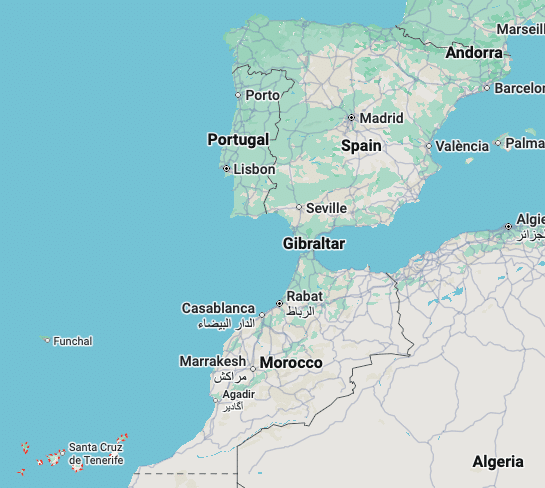
The first is that Spain is considerably closer to Africa than it is to Britain. The second is that the ‘Spanish’ Canary Islands are literally on the African continental plate (see the bottom left below):

For reference, this is how far the UK is from the Canary Islands:

A person shouldn’t be shocked to see Black people when visiting the continent of Africa.
In fact, the people Robinson is filming should be shocked to see him. Not because he’s white, but because he’s a racist little toerag who won’t stop travelling outside his own sphere of culture.
Tommy Robinson — Man of the world
Reporting on Robinson’s Spanish life, the Olive Press wrote in October 2025:
TOMMY Robinson has told a UK court that he formally resides in Spain – although his exact address will remain confidential.
The revelation confirms long-held suspicions that the far-right activist has used the country as a bolthole from problems in the UK, such as legal proceedings and concerns over his personal safety.
According to Ezra Levant, the Canadian publisher of the far-right media website Rebel News and a long-time supporter, Robinson is currently living in Spain ‘for safety’.
The claim was echoed in court by prosecutor Jo Morris.
The admission is likely to prompt questions over how and why Spanish authorities have permitted his continued residence, given his string of criminal convictions and notoriety in the UK.
Robinson’s safety has been called into question more than once. In February this year, Robinson claimed he was on the run from ISIS, but then proceeded to keep filming his location while abroad:
🚨 BREAKING: Tommy Robinson really needs money for his next luxury holiday pic.twitter.com/ZyLLcHv3FR
— Gadget (@Gadget440) February 14, 2026
Two things on ‘Tommy Robinson’ fleeing UK to ‘protect his family’:
1) He permanently moved his family from UK to Spain back in 2020, 5 years and 7 months ago.
2) His marriage ended in divorce in 2021.Tommy doesn’t have to worry about ISIS. Never in history has ISIS attacked an… https://t.co/8AsM7CVDdB
— Kathleen Tyson (@Kathleen_Tyson_) February 13, 2026
The following are two examples of ‘on-the-run’ Robinson broadcasting his location to the world:
Tommy Robinson is laughing at his gullible supporters while he and his son are living a high luxury life.
If he is a priority target for ISIS, why is he keep updating everyone about the next location he’s going to be at. pic.twitter.com/jiYqXlYqOW
— Mukhtar (@I_amMukhtar) February 28, 2026
Tiny Tommy went to Mar-a-Lago and recorded himself while off his head. pic.twitter.com/axlACnb4Gq
— Mukhtar (@I_amMukhtar) March 21, 2026
Mukhtar has also highlighted Robinson’s other travels:
Scroll through this thread.
Tommy Robinson’s kids are living the high life, going on luxury holidays, flexing on a private jet whilst struggling mums are sending him £20 out of their last £40 in the bank. https://t.co/u33Iri7Con
— Mukhtar (@I_amMukhtar) February 26, 2026
Unreal
As a final update on Robinson, little Tommy has assured his followers that the screengrabs are NOT REAL:
I have seen stuff posted on whatsapp groups and here on X – people claiming to have some disgusting communication between me and my son about young women.
They are (obviously) not true.
It looks as though the far left, the islamists, and the real far right (who are working…
— Tommy Robinson 🇬🇧 (@TRobinsonNewEra) March 29, 2026
The problem Robinson has is that he’s so consistently full of shit that whenever we see him denying something, we immediately assume it’s true. A good example of this was when he told his supporters that the suspected scam he was promoting wasn’t a scam:
No it don’t , at least do some research before . I wouldn’t be sharing if it was a scam
— Tommy Robinson 🇬🇧 (@TRobinsonNewEra) January 26, 2026
For reference, the above is how his posts usually read. The following, meanwhile, is how his ‘not-a-scam’ tweet read (emphasis added):
I’m not usually one to post about trading tools or opportunities.
But loads of my friends have been using Core Signals for months, and the results are hard to ignore.
Some of you got early access through my mailing list. Every single person who did has made money.
At this point, it’s just depressing that people can’t see through all this.
Saying that, if his followers do get upset by the thought of Africans living in Africa, they possible deserve to be scammed by this shameless, little turd.
Featured image via Raw Pixel
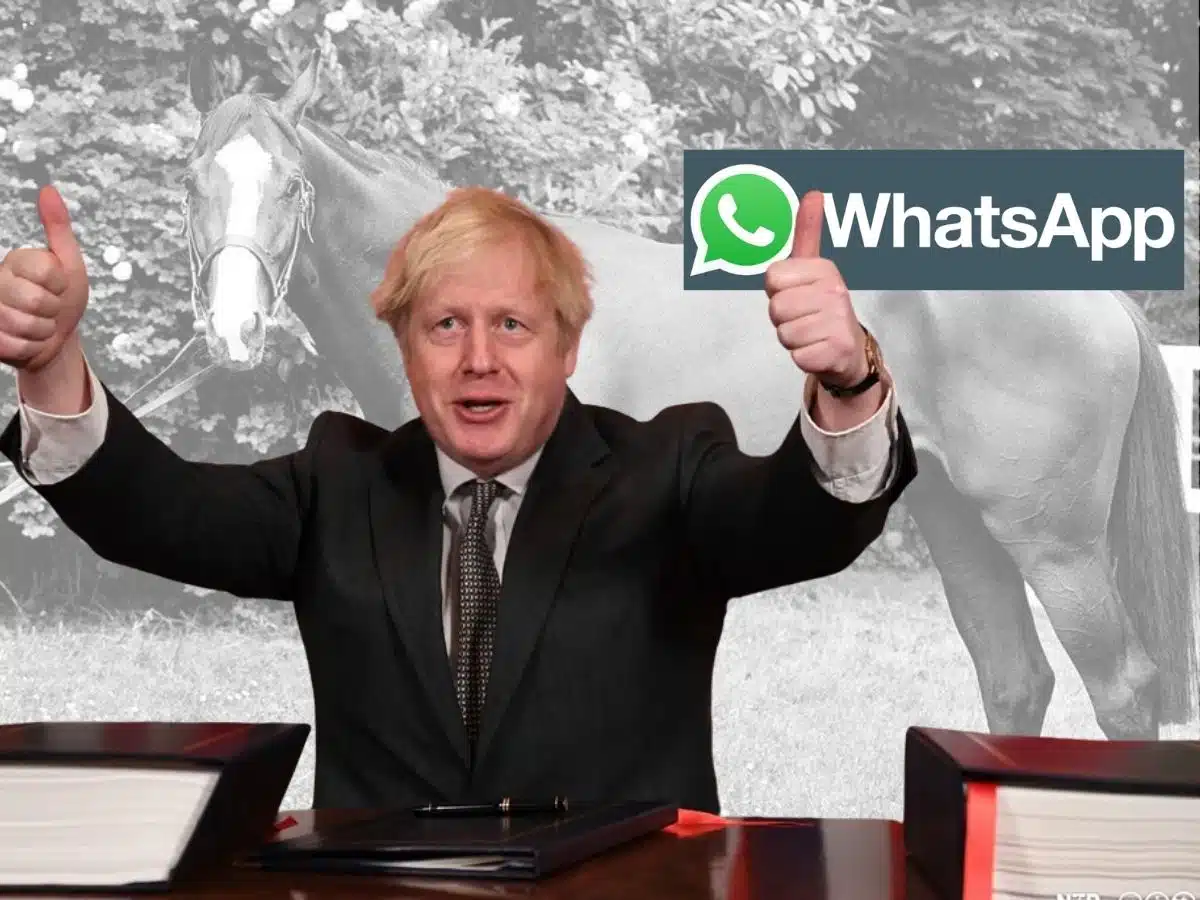
As we’ve covered, the Labour Party‘s latest scandal centred on the WhatsApp messages sent between the disgraced Peter Mandelson and the also-disgraced Morgan McSweeney. We’ve criticised both men for years, so we were in a pretty good position to cover this story. The same cannot be said of one Alexander Boris de Pfeffel Johnson:
girl… https://t.co/k9RvfUJ1NN pic.twitter.com/zz6RrKcKOe
— Ben Smoke (@bencsmoke) March 28, 2026
WTFApp
On 26 March, we covered that Keir Starmer’s former chief of staff Morgan McSweeney reported his phone stolen in October last year. Given that this happened after his mentor Peter Mandelson was sacked, people suspected McSweeney faked the theft to covertly delete some messages. Suspicions only heightened after it came out that McSweeney had given the police incorrect information while also failing to tell them he was a key government employee.
Later that same day, we learned that the people investigating Peter Mandelson weren’t asking to search his personal devices. This was despite them knowing Mandelson had used his personal devices for government business. This is all especially dodgy, because they’re investigating Mandelson as a result of him leaking secret government information to the notorious paedophile Jeffrey Epstein.
So yes, this is all very bad.
But still, look at the state of this cunt:
The greatest vanishing act since Shergar!https://t.co/7vu2BvoHWQ
— Boris Johnson (@BorisJohnson) March 28, 2026
If you don’t know, ‘Shergar‘ was some famous horse that got stolen — exactly the sort of reference you’d expect from Johnson.
This is what the Standard reported regarding Johnson’s own missing WhatsApps:
About 5,000 WhatsApp messages on Boris Johnson’s phone at the start of the Covid pandemic have gone missing, the inquiry into it was told on Wednesday.
They added:
About 5,000 WhatsApp messages on his phone from January 30, 2020 to June 2020 were unavailable to the inquiry. Pressed on this, Mr Johnson said: “I don’t know the exact reason, but it looks as though it’s something to do with the app going down and then coming up again, but somehow automatically erasing all the things between that date when it went down and the moment when it was last backed up.”
Inquiry counsel Hugo Keith KC said a technical report provided by Mr Johnson’s solicitors suggested there may have been a factory reset at the end of January 2020 followed by an attempt to reinstate the contents in June 2020, but the former prime minister denied knowledge of that. “I don’t remember any such thing,” he said.
We think he might remember such a thing, honestly.
We also suspect he might know what happened to that horse the way he keeps going on about it.
Boris Johnson — Liar liars
Boris Johnson is one of the worst prime minister’s we’ve ever had, and if he ever tries to return to office we should throw chairs at him until he runs away. At the same time, he does at least bullshit with some panache. Keir Starmer lies all the time too, but he acts like we’re the ones at fault for noticing:
A remarkable thing about Starmer is that, despite being the most prolific liar in British political history, he is a terrible liar. https://t.co/v2IfP2kIqs
— Karl Hansen (@karl_fh) March 26, 2026
It says a lot about this country that our options for PM have been ‘eccentric liar’ and ‘boring liar’.
Featured image via Wikimedia
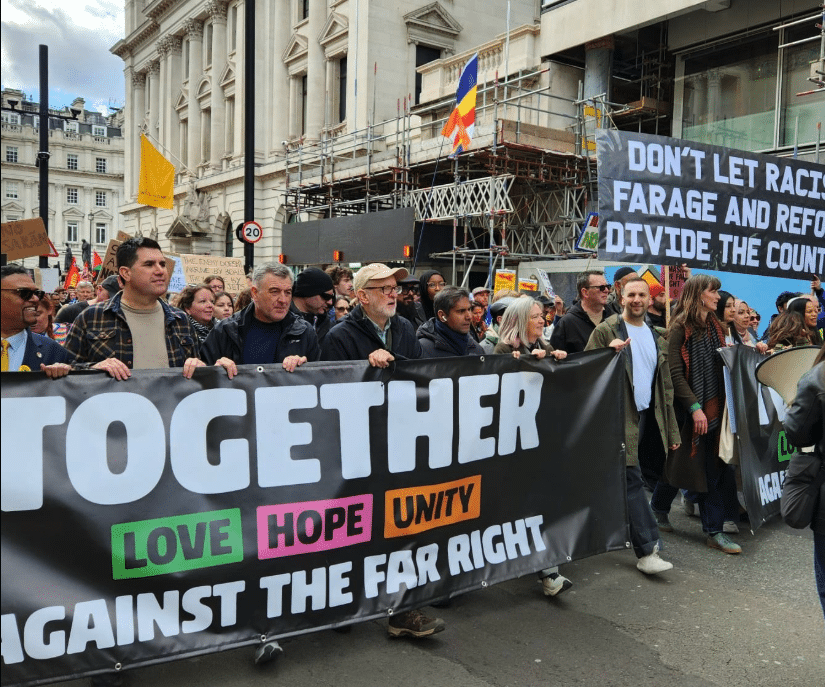
Saturday 28 March saw a significant anti-far right protest take place in London. According to Green Party leader Zack Polanski, however, you probably wouldn’t realise this if you’d been locked to the BBC:
How can the BBC justify how much coverage they give other marches which are significantly smaller in size?
The bias is so obviously blatant.https://t.co/vT67pvnoZh
— Zack Polanski (@ZackPolanski) March 29, 2026
Zack Polanski — Numbers
The Guardian piece Zack Polanski links to above notes:
Organisers say half a million are taking part – though police disagree
Getting an accurate picture of the number of people attending a march is always difficult, but today’s organisers say they believe half a million people have gathered in London.
Rally co-organiser Kevin Courtney, chairman of the Together Alliance coalition, told crowds gathered on Whitehall:
“Our estimate is now that there are half a million people on this demonstration – the biggest demonstration ever against the far right. And it gives us all confidence to carry on. Thank you very much.”
The Met Police say their initial estimate is more like 50,000 people. They concede, however, that it is hard to get an accurate number as marchers are so dispersed throughout central London.
Muslims, Jews, Christian’s, atheists
Gay, straight, trans
Public sector workers, private sector workers, students, retired people
Disabled people, older people, younger people
White, black, brown
All people marching TOGETHER against the far right
— Harry Eccles (@Heccles94) March 29, 2026
We’ve joined the short march at the Together Alliance demo in central London today – oh and the rave on Trafalgar Square is already popping off 💚 pic.twitter.com/aRVWsfBulm
— Canary (@TheCanaryUK) March 28, 2026
Polanski was a speaker at the protest:
“Look around. Look at the people around you. We are intergenerational. We are white, we are black, we are Asian, we are Muslim, Christian, Jewish, non-faiths. We are community”
“And together, we will win”
We WILL win. https://t.co/vzJZBLAQYD
— Anne Greensmith 💙 (@snowleopardess) March 29, 2026
Half a million people marched together today – in the biggest demonstration against the far-right in our history.
Our message to Farage and his allies was clear:
We will defeat your division with unity.
And we will challenge your hate with hope. pic.twitter.com/JfdWBiXiBC
— Richard Burgon MP (@RichardBurgon) March 28, 2026
While the BBC did cover the protest, it’s fair to say that other protests have received significantly more attention. A key example of this was the far-right ‘Unite the Kingdom’ protest, which saw about 150,000 people hit the streets of London. An example of the BBC’s extended coverage was this piece in which they interviewed attendees to understand why they attended the Tommy Robinson-linked event.
As we previously reported, Generation Remigration spoke at Robinson’s Unite the Kingdom. ‘Remigration’ is the plan to mass deport migrants and their descendants from European countries. And as we said at the time:
We’re not quite sure how that will work in Britain given the continuous influxes of populations we’ve experienced since the Roman Empire, except we are sure, obviously – they’re talking about deporting Black and brown people.
Attention economy
Beyond the BBC, the Unite the Kingdom rally sent shockwaves through the UK media. This was because it was the largest far-right rally in years. Despite this – as Polanski said – even larger rallies regularly fail to capture media attention. This is especially true when they’re linked to issues that the establishment opposes, such as the liberation of Palestine.
Polanski is right to fight for all the attention this movement can get, because lord knows the media won’t offer it from the goodness of their hearts.
Featured image via Richard Burgon

Responding to their aggressors, Iran has said that the war isn’t over until they say it’s over:
JUST IN: 🇮🇷 Iran says “as the victors, we will set the conditions for ending the war, and the enemies will be forced to accept them.”
— BRICS News (@BRICSinfo) March 27, 2026
The Iran quagmire
The message comes as Donald Trump has expressed his disinterest with continuing the war:
Just take a step back and think about the fact that he killed 200 children the very first day of the war and is now saying “that was fun but I’m bored.” He’s a true sociopath https://t.co/ncb9c7RmcA
— evan loves worf (@esjesjesj) March 27, 2026
As noted above, the US did indeed strike a school, killing hundreds of children. People disputed this at the time, and some even claimed that Iran had blown up the school itself. What’s gone less reported is all the carnage since then:
I can’t find a single headline from a mainstream Western outlet with this story.
Imagine the coverage if 26 Israelis had been killed, mostly women and children. https://t.co/XvfakobZ3S
— Assal Rad (@AssalRad) March 28, 2026
This continued assault has included more strikes on schools:
Terrifying reality check. In just 27 days of their illegal war, the US and Israel have demolished over 600 schools across Iran, martyring more than 1,000 students and teachers. They are systematically destroying civilian infrastructure with zero regard for humanity. pic.twitter.com/sB57A4kl0x
— Furkan Gözükara (@FurkanGozukara) March 27, 2026
Trump has now claimed the US will pause strikes on Iran for 10 days, as reported by the BBC:
Donald Trump’s decision to pause any attack on Iranian energy plants for a further 10 days could be a pivotal moment in a conflict that has now lasted almost four weeks.
The US president’s commitment to deadlines is fluid – this is his second extension of this particular threat – but he uses them nonetheless for a purpose: to send signals, to distract attention and to buy time.
Take this latest promise to hold off a threatened “obliteration” of Iran’s energy infrastructure, a massive escalation that could trigger both Iranian retaliation against similar Gulf facilities and damage chances of a sustainable peace and global economic recovery.
It may be Trump wanted again to calm international markets; it has not gone unnoticed this latest pause was announced minutes after trading closed on Wall Street.
The boys who cried negotiation
Because the US and Israel have repeatedly attacked the countries they’re supposedly holding peace talks with, there is no reason for Iran to trust Trump. At the same time, there’s clearly a good reason for them to make the global economy hurt, because doing so will force their enemies to think twice before launching another attack.
In other words, Iran may be speaking honestly when they say this ends when they say it does.
That is unless Trump becomes convinced that wrecking the global economy is a price worth paying for a victory that takes decades to achieve and provides no actual benefits.
Featured image via Amwaj

It’s been a bad month for Reform UK’s Matt Goodwin. First he lost the Gorton & Denton by-election, and then he lost what little remained of his credibility. Now, things, have gotten so bad that his right-wing colleagues at GB News are mocking him too:
Incredible scenes on @GBNEWS tonight, where they’re still mocking MattGPT, with the Pride of Wales @Caiwilsh labelling him the Triggered Tantrum of the week! @GoodwinMJ has lost his own channel 😭 pic.twitter.com/pvOnbMI1UG
— andy twelves (@andytwelves) March 28, 2026
Hostile workplace
Goodwin is a GB News contributor, as they state on their site at the top of this unsettling mosaic of Matts:


As we reported on 28 March, Goodwin went on GB News to defend himself against the accusation that he wrote his book Suicide of a Nation with the help of ChatGPT. This went incredibly poorly for Goodwin:
🇬🇧 Failed Reform UK candidate Matt Goodwin defends himself against accusations his book was written by ChatGPT by reading a statement written by ChatGPT.
Analysis of Goodwin’s new book, Suicide of a Nation, found that it invents numerous quotes by historical figures, uses false… pic.twitter.com/ywNgV2AEsw
— Europa.com (@europa) March 27, 2026
In the video at the top, a panel of five of Goodwin’s colleagues talk about the “many painful moments” from the debate — all of which were felt by Goodwin himself. The man inflicting that pain was journalist Andy Twelves, who has now said the following:
Are your colleagues mocking you in the workplace? Join a Union. https://t.co/v17tvHkw6C https://t.co/Xy8vr96gNt
— andy twelves (@andytwelves) March 29, 2026
Given his past commentary, we suspect Goodwin probably won’t be joining a union any time soon:
UK trade unions today are far more interested in upholding a broken model of mass immigration that undercuts British workers and serves globalist firms than representing the workers they were founded to represent. This is why Reform is now, by far, the party of the working class
— Matt Goodwin (@GoodwinMJ) October 10, 2025
It’s not just GB News who are going for Goodwin either. The allegedly unsavoury Dan Wootton called Goodwin out for his plastic Brexiteer credentials (the image is clipped, but it notes Goodwin backed Remain in the EU Referendum):
https://t.co/TZU892U4Pl pic.twitter.com/cBz17ykzSI
— Dan Wootton (@danwootton) March 29, 2026
And this is what Restore leader Rupert Lowe said in response to one of those patriot-bait nationalist accounts on Twitter:
Goodwin made unpleasant and quite sinister career threats to the young men backing Restore Britain.
I would heavily suggest he focuses on his own output, or at least upgrade his AI subscriptions.
— Rupert Lowe MP (@RupertLowe10) March 27, 2026
Reform — Good riddance
As we covered at the start of the Gorton & Denton by-election, Matt Goodwin is a longtime establishment insider pretending to be an outsider.
Or he was, anyway.
Now that he’s soiled his reputation, he’s actually on the outside of the media career he’d built for himself.
Featured image via GB News
As reported by Reform Exposed, Nigel Farage‘s party is struggling to attract women candidates:
Just 16 out of 74 in Scotland.#ScottishElections pic.twitter.com/wIEr4xSGWd
— Reform Party UK Exposed 🇬🇧 (@reformexposed) March 29, 2026
Given Reform’s politics, this is entirely unsurprising.
Reform’s Victorian mindset
On 25 February, we reported that Reform have been talking about ending no-fault divorce. This would mean people can only get divorced if they’re able to cross the right government tick box. Obviously this would leave many — mostly women — vulnerable to abusive partners.
This is what Andrew Marr said to Reform’s Richard Tice:
Danny Kruger, you’ll have seen his speech today, and he wants to find government measures to oblige women or persuade women to have more children. And he’s also interested in getting rid of no-fault divorces. A lot of female voters around the country will look at this and say, there’s a lot of kind of quite posh white men telling us what to do, and we won’t like it.
Tice failed to provide any sort of answer:
‘We need more prosperous families which lead to a more prosperous country.’
Reform’s Richard Tice dodges @AndrewMarr9‘s question over whether reversing no-fault divorces is his party’s policy. pic.twitter.com/9RpwHoFxU5
— LBC (@LBC) February 24, 2026
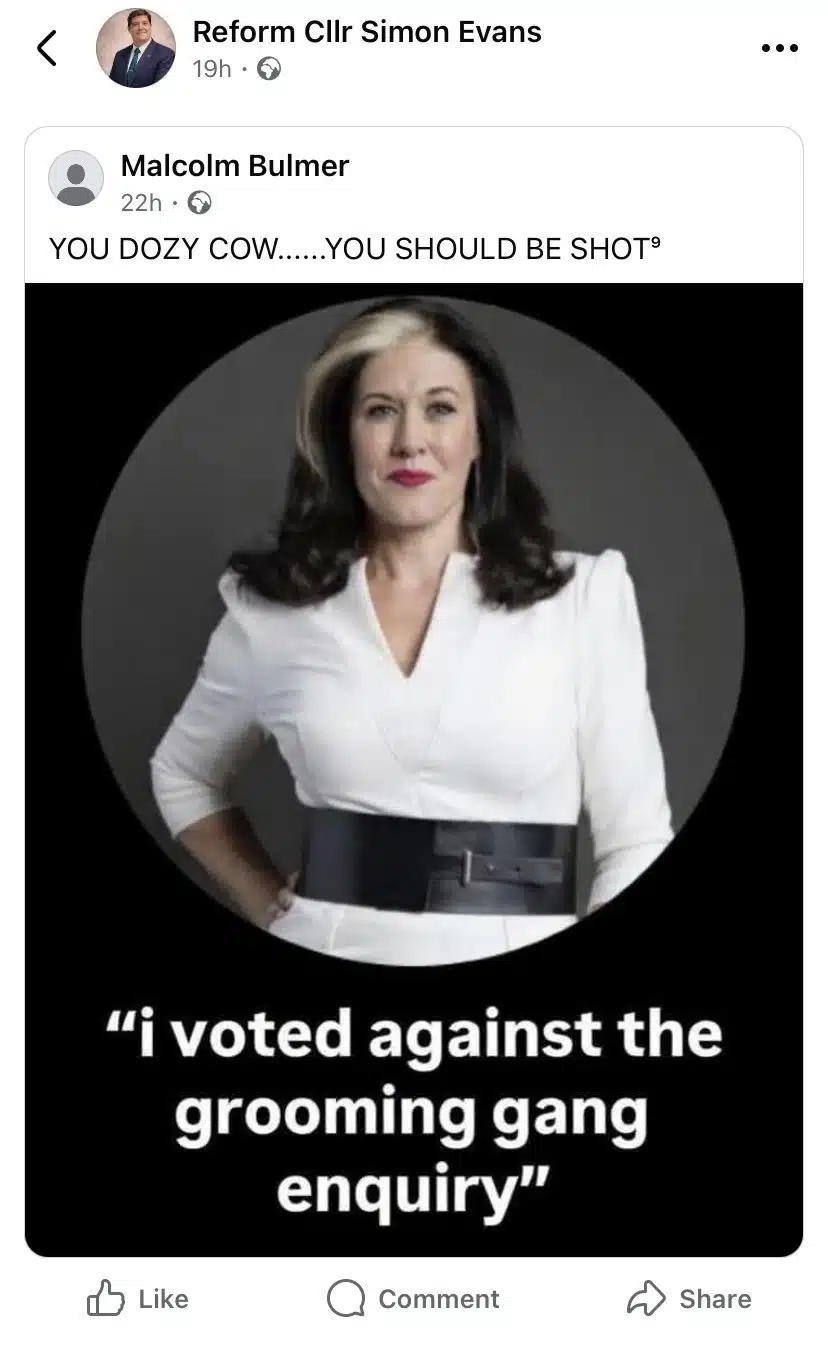
There was also the case of the councillor who reposted that a female Labour MP ‘should be shot’:

It’s additionally the case that Nigel Farage was accused of using grooming gang victims for political capital (accused by the victims themselves, in fact).
As we reported at the time:
On 28 October, we reported that Nigel Farage had inserted himself into the latest UK grooming gangs inquiry. In that piece, we covered that a former employee had accused him of opportunism. We also highlighted that Farage may not be the best person to speak out on this topic given his support for convicted rapist Donald Trump, or the fact that he refused to clearly condemn the alleged human trafficker Andrew Tate:
A man is judged by the company he keeps. pic.twitter.com/vOZLwzKTje
— Reform Party UK Exposed 🇬🇧 (@reformexposed) October 28, 2025
Since then, Farage’s involvement has further toxified the potential inquiry, with several abuse victims demanding an apology from the Reform leader:
EXCL: Five women have asked for an apology from Nigel Farage after he suggested they weren’t victims of grooming gangs.
They said that, while they had been abused by Asian men, they were “aware the inquiry is not just about us” and the comments were “degrading and humiliating”.
— Pippa Crerar (@PippaCrerar) October 29, 2025
Reporting on the party’s “problem with women”, Alexandra Topping wrote in the Guardian:
When Nigel Farage told a journalist this week she should “write some silly story … and we won’t bother to read it”, it provoked an instant – and divided – reaction. For some it was a “masterclass” in dealing with mainstream media, but for others it was “rude, dismissive, misogynistic, arrogant”.
Behind the scenes, Farage’s treatment of the Financial Times’s Anna Gross – which was met with mirth and applause among Reform diehards in the room – provoked disquiet and anger among lobby journalists across the political spectrum.
As the Reform UK leader was leaving the event, a Guardian political reporter suggested he had been rude and had upset the journalist. “Good,” Farage responded.
It is not the first time Farage has been accused of patronising a female journalist. When the former BBC Radio 4 Today presenter Mishal Husain asked him about the potential consequences of shooting down Russian planes last October, Farage responded: “Listen love, you’re trying ever so hard.” A month later he accused the Telegraph’s Camilla Tominey of playing a “silly little game” when she asked who his chancellor would be.
Unsurprising
Because of the above, it’s unsurprising to see Reform are doing significantly less well with women:

It’s also unsurprising to learn that they are struggling to attract female candidates.
Going forwards, it will be interesting to see if Reform try to appeal to women, or if they simply hope that legions of new, resentful men magically appear out of nowhere.
Featured image via Estitxcu Carton (Wikimedia)
The turnout at the “independence march and rally” yesterday was so abysmally poor that it seems almost unfair to pick on any of the scores of SNP elected representatives who didn’t bother to show up.
But dear old Cosy Feet Pete Wishart had the most chef’s-kiss excuse of all.

The reason he didn’t fancy getting his wee Billy Whizz quiff blown about a chilly Calton Hill was that he had important business “taking on the far right” – who were of course nowhere to be seen – with “half a million” (50,000) of his British besties, a convenient short Tube ride away from his London residence, at an event called… UK Together.
Now there’s some more irony you can’t buy.

Just like Mick McCann from Preacher guarding New York from the Kaiser in 1917, the MP for Perth and Kinross-shire has done a heroic job defending Britain from the far right and fighting for Scottish independence from the plush safety of the Palace Of Westminster for the last 25 years – even though we’re out of the EU, independence is nowhere in sight and Nigel Farage is set to be the next Prime Minister.
But time and tide waits for no man, and as Farage enters No.10 and Wishart walks off to retirement, (having handily reached the requisite age by the next election), Slippers will just have to wipe his tears over quarter of a century of total failure on his fat UK Parliament pension of around £50,000 a year for the rest of his life.
Thanks for your service, Pete.

Last night, John and I sat down to watch the Huw Edwards drama which Channel 5 showed last week. It was that or Virgin River or the Hotel Inspector.
Watching a drama about someone you vaguely know was bound to be a strange experience. What I wasn’t expecting, but should have, was that it was a profoundly uncomfortable viewing experience.
I had lunch with Huw Edwards back in 2021, when all this woeful saga was going on. I can’t quite remember how it came about, as I had never met him before, but I dutifully turned up at the Langham hotel, opposite Broadcasting House in Portland Place, looking forward to having a chat with the man who was Britain’s premier news broadcaster. In all honesty, I was flattered to be asked.
While I never suspected him of doing anything like the things he has been found guilty of, the whole lunch was a profoundly weird experience. He seemed to be on edge the whole time. I knew he had had depression, but he was acting very oddly. Admittedly, at times he was quite funny and entertaining, but kept obsessing about various of his BBC news colleagues and how incompetent or ghastly they were. Jeremy Vine copped it more than most. When I left the Langham, I remember thinking ‘well that was weird’.
When The Sun story broke about a famous BBC personality, I just somehow knew it was him. I have a terrible Gaydar, but I do remember wondering about his sexuality, despite knowing he had five children. I also had a number of younger gay friends who told me how attractive they found him, way before the scandal became public.
In some ways. Martin Clunes played a blinder. He looked far more like him than I expected him to, and got his voice quite well too. I thought at times he ventured a little into caricature, and played up to dramatic necessity to make him appear monster-like. We could certainly have done without the w*****g scene, but overall the drama stayed just the right side of the taste line and didn’t go too far into prurience.
When the scandal first broke, I will admit to having some sympathy with Huw, but that soon disappeared when it was revealed that he had accepted and scene nearly 400 images of underage children, some of whom were under ten.
Huw had lived the secret of being gay, or bi, for all his life. He’s not alone in that. He came from a small Welsh village and inevitably led a closeted existence. By the time he acted on his feelings, he was well into middle age. He’s not alone in that. He was also clearly flattered by the attention of young men. He’s not alone in that. However, what he has done is enabled people who have a stereotypical view of dirty old gay men to be reenforced, and that is unforgiveable. Some people still assume all gay men are happy to sleep with anyone else that has a penis, including those who are underage. It is simply untrue. Gay people are no more susceptible to paedophilia than straight people are, yet the myth still persists. And Huw Edwards is partly responsible for that.
So, it’s Virgin River on Netflix tonight…

How Much Money Does He Make Flipping This Mercedes? #shorts #reselling #flipping #money
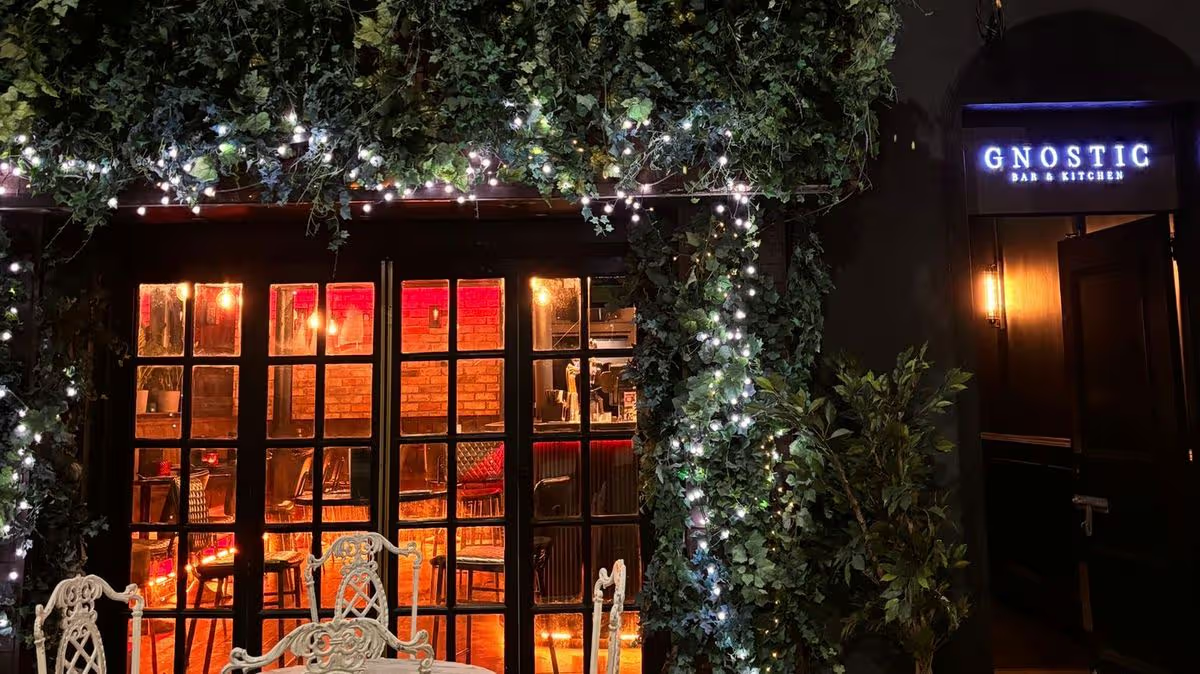
Gnostic may be off the beaten track, but this Belfast gem is well worth the dander

Explained: How RBI’s safety net to protect falling rupee could mean Rs 4,000 crore shock for banks

Smart energy pays enters the US market, targeting scalable financial infrastructure

Why Israel is blocking foreign journalists from entering

Bitcoin: We’re Entering The Most Dangerous Phase
How Much Money Does He Make Flipping This Mercedes? #shorts #reselling #flipping #money

“This time it’s yo’ money”: Trump’s signature to be added to U.S. paper currency

How and WHAT to invest in! #investing #stockmarket #money #finance #recession #inflation #wallstreet
-
 NewsBeat5 days ago
Manchester United reach agreement with Casemiro over contract clause amid transfer speculation
-

 News Videos4 days ago
Parliament publishes latest register of MPs’ financial interests
-

 Sports7 days ago
Gary Kirsten Accuses Pakistan Cricket Board Of ‘Interference’, Mohsin Naqvi Responds
-

 Sports7 days ago
Remo Stars and Kano Pillars Strengthen Survival Hopes in NPFL
-

 NewsBeat2 days ago
The Story hosts event on Durham’s historic registers
-

 News Videos7 days ago
Ch 9 Financial Management Part 1 | Detailed One Shot | Class 12 Business Studies Boards 2026
-

 Business3 days ago
Instagram, YouTube Found Responsible for Teen’s Mental Health Struggle in Historic Ruling
-
 NewsBeat5 days ago
Tesco is selling new Cadbury Dairy Milk bar and people can’t wait to try it
-
 Entertainment7 days ago
Cynthia Bailey Dishes on ‘RHOA’ Season 17, Discusses Kandi
-

 Tech6 days ago
Samsung will soon let you control smart home devices from your car’s dashboard
-
 Entertainment1 day ago
Lana Del Rey Celebrates Her Husband’s 51st Birthday In New Post
-
 NewsBeat7 days ago
Colombian military plane with 110 soldiers onboard crashes following takeoff
-

 Business6 days ago
More women enter wealth management, but few in advisory roles: study
-

 Fashion6 days ago
Does It Matter What You Wear When You’re Laid Off and Looking?
-

 Fashion7 days ago
Fringe Bags for the Season
-

 Business6 days ago
Late-paying firms face multimillion-pound fines under new crackdown
-

 NewsBeat5 days ago
Entrepreneurs Forum survey reveals optimism in North East
-

 Sports5 days ago
Fantasy Baseball Week 1 Preview: Top sleeper hitters for both five- and 12-day period led by Munetaka Murakami
-

 Politics6 days ago
How Media Platforms Balance Performance and Accessibility in Image Delivery
-
 NewsBeat6 days ago
NASA Artemis II Astronauts enter 14-Day quarantine as moon rocket reaches launchpad
You must be logged in to post a comment Login