

Politics
Simon Walters: Badenoch’s gamble on student loans has paid off. But not everyone wanted her to do it


Simon Walters is a political journalist and Consultant Editor (Politics) of the Independent.
The way he is going it is soon going to require a Maths degree to keep up with the tally of Keir Starmer’s U turns.
According to reports the Prime Minister is preparing to perform another somersault – his fifteenth – over the soaring cost of student loans.
If so, it will be good news for millions of students – including Maths graduates – saddled
with debts of up to £60,000 and rising.
Incredibly, recent changes by Rachel Reeves to the student loans repayment system, originally supposed to protect low earners, mean that before long ex-students on the minimum wage face having cash deducted from their meagre pay packet.
With professional job prospects for graduates at an all-time low it adds insult to injury.
Politically speaking, a Starmer climbdown will also be good news for Kemi Badenoch who can chalk it up as another personal victory over him.
The Conservative leader has led calls for student loan interest rates – in some cases as high as six per cent (twice the cost of the home loan they can’t afford either!) to be reduced.
Some of her own aides advised her against it, arguing it was a ‘niche interest’ and that it was futile for the Tories to attempt to woo the ‘campus vote’ – long seen as a minority and overwhelmingly Left leaning.
On top of that some of the loan repayment rates at the centre of the controversy, the ‘Plan 2’ scheme, were set by David Cameron’s Conservative Lib Dem Coalition administration.
But Badenoch, who entered Parliament a year after Cameron left Downing Street, wasn’t put off by that small inconvenient detail.
She persisted, arguing the vast increase in student numbers in the last 25 years, allied to rising loan costs, presents the Tories with a captive new audience, an army of aspirational but frustrated thirty somethings, some of whom are still forced to live with mum and dad, in no small part because of their crippling student debt.
She could see that potentially they are a Millennial and Gen Z version of ‘Essex Man,’ ‘Mondeo Man,’ ‘Worcester Woman’ or the more generic ‘Red Wall’ – key groups of voters whose concerns were seen to have been ignored, and shrewdly targeted by leaders from Margaret Thatcher and Tony Blair to Nigel Farage who spotted a gap in the market.
Badenoch also had the would-be successful leader’s necessary slice of luck when she was handed a publicity coup on a prime time plate after financial guru Martin Lewis attempted a bungled ambush of her on Monday.
Bursting into the ‘Good Morning Britain’ TV studio unannounced he squeezed next to presenter Ed Balls on the sofa where the two proceeded to give one of the most egregious combined displays of mansplaining ever seen.
Kemi could not have been less flummoxed.
She swotted the two Alpha Males away with the same sang froid she demonstrates in dispatching Starmer at the Commons Despatch Box every Wednesday. (Not that anyone has ever accused him of being an Alpha Male.)
Which is precisely what she did to the Prime Minister this week on the issue of student loans.
If Starmer does act to curb student loans no one seriously expects Kemi to be crowned campus queen. But it will further emphasise the growing divide in their perceived authority over their parties. It makes it all the more certain that Badenoch will lead hers into the next election, and all the more likely that Starmer will not.
Badenoch is not so naive as to believe she is anywhere close to building a platform to win that election.
But in an age when Conservative speakers are more likely to have been deplatformed on university forums it is a beginning.


I am a voracious reader and I always have been. I always carry a book with me when I travel, even if I’m just getting the bus to the city centre, I basic live part-time at my local library and I love nothing more than being asked for book recommendations.
However, sometimes the world gets on top of me, life is too busy and I am too perpetually overwhelmed to really take in a book. Even one I know I’ll love. Even one I know I have loved before. It’s miserable.
The last time this hit me, though, I discovered immersive reading.
How immersive reading cured my reading slump
Immersive reading, if you didn’t know, is when you listen to an audibook while reading a physical or digital copy of the book at the same time. It sounds overstimulating but I promise as somebody that’s very sensitive to sound, it’s really not.
The first book I tried it with was Andy Weir’s 2021 book Project Hail Mary. I knew I wanted to try it as I loved The Martian but for the place I was in mentally, just trying to read my boyfriend’s hardback copy wasn’t enough. So, I made the most of my Libby app and loaned the audiobook from the library.
Why does immersive reading work?
For me personally, when I’m listening to an audiobook, I treat it like a podcast. I listen while I do the dishes, while sorting the laundry, while doing anything but sitting and taking in the story.
Immersion reading sort of takes away that option. I have to pause, I have to take it in, and within just 10 minutes, I’m in a different world entirely to the one around me.
Audible recently launched the option to read and listen in their app due to popular demand. In an announcement on their website, Audible say: “Research shows that combining [reading and listening] can improve focus and comprehension, and Audible’s own data backs this up.
“Customers who currently listen while reading along are among Audible’s most engaged users, consuming nearly twice as much content per month as audiobook-only customers. In a recent U.S. survey of people who read and listen together, more than nine in ten agreed that reading while listening improves cognitive retention and comprehension.
They added that these benefits make the feature especially valuable for language learners, students, and anyone who simply wants to consume more books.
Brb, looking into learning a new language with immersive reading.
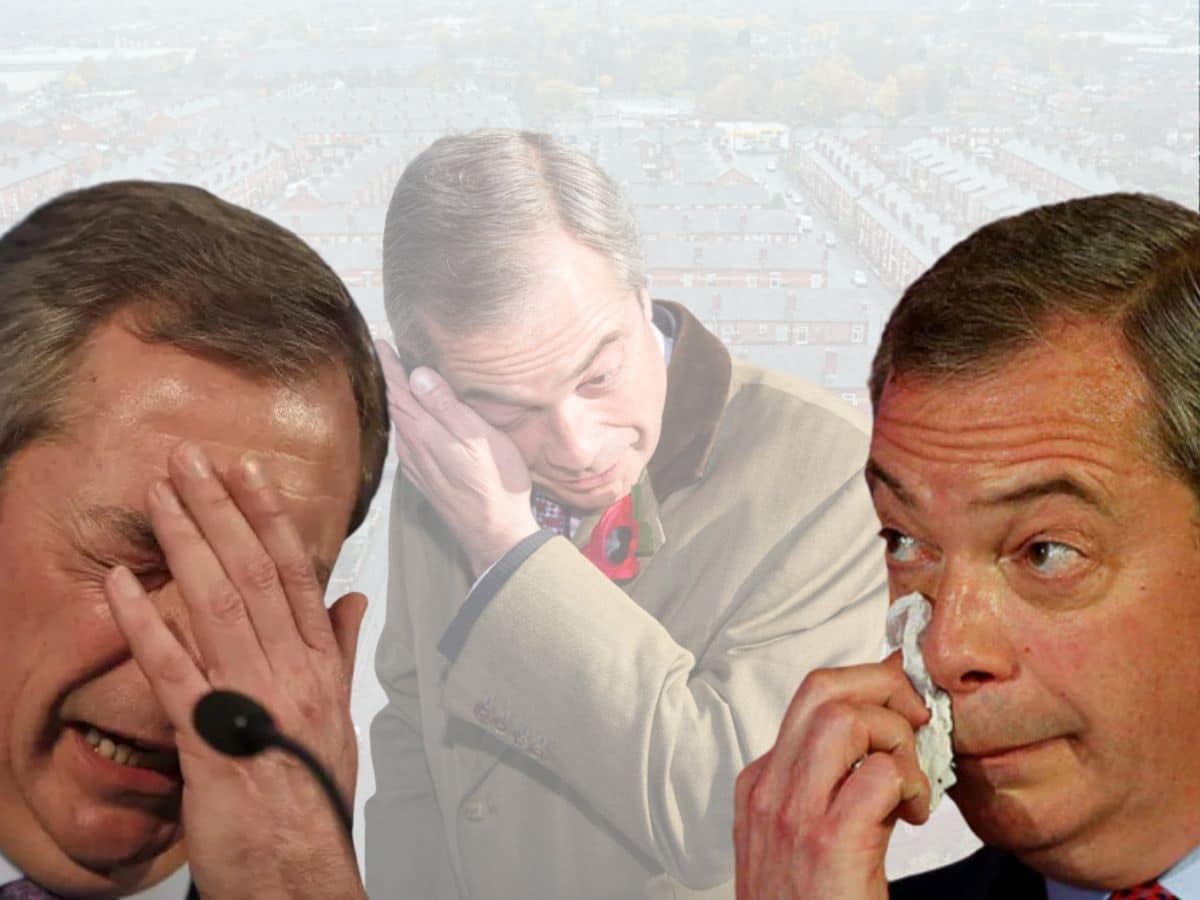
As we’ve reported, the Greens secured a decisive victory in the Gorton & Denton by-election. In response, Green candidate Hannah Spencer thanked the people of the area. Crybaby Nigel Farage, meanwhile, tried to paint himself as a victim of the local electorate:
Straight into TRUMP MODE, blame cheating.
You pathetic little sore loser. You lost because you’re a prick, not because of cheating. Because enough good people saw through your bull shit.
— OGDad (@OGDAD__) February 27, 2026
‘Sectarian voting’
You’ll note Farage blames two things here:
Speaking on “sectarian voting”, Novara’s Ash Sarkar said:
Gorton and Denton is majority white, and interestingly, majority Christian! https://t.co/xkPb0sO7SF pic.twitter.com/27gGwHc6KZ
— Ash Sarkar (@AyoCaesar) February 27, 2026
Columnist Nesrine Malik, meanwhile, drew attention to this article she wrote in July 2024:
It’s always telling, which votes are considered valid and which aren’t. Which ones are “tactical”, which express “legitimate concerns” and which are merely “sectarian”. The four independent candidates who won in last week’s election by harnessing frustrations about Gaza are already being treated as a worrying sign of the emergence of sectarian politics. The implication is that it’s only Muslims who care about Gaza, and that they do so at the expense of their domestic concerns and loyalties. The truth is that Gaza’s resonance stretches across diverse demographics. It is both connected to and informed by other political grievances, and it has become the expression of something that our political climate has made it difficult to countenance – that voters can have principles they care about without this being an indication of extremism or irrelevance.
In response to the “cheating” accusation, the Green Party said:
The scale of our victory shows that the Green Party has picked up substantial support in all parts of the constituency, in all areas, among all people. It was a victory for unity over division, for hope over hate. Our message to lower bills, protect the NHS and public services and for peace and human rights was a message which resonated here, to all voters in this by-election.
To be fair, we did observe what looked like cheating in the by-election. Editor Alonso Gurmendi noticed the same issues:
There is evidence of:
– Labour making up a tactical voting site report
– Labour running political ads outside a voting station
– Reform sending electoral materials without imprint
But they want you talking about “family voting” nobody complained of til after polling closed
Uh huh— Alonso Gurmendi (@Alonso_GD) February 27, 2026
Labour used a fake voting advice site to trick voters.
Reform broke the law by hiding from voters, that they funded the “concerned neighbour” letter.
They’re now saying they lost to the Greens because the EVIL Gorton and Denton voters teamed up against them via “family voting”. pic.twitter.com/D540RLKjI6
— Femi (@Femi_FPolitics) February 26, 2026
‘Family voting’
If you’re unclear what “family voting” is, you’re not alone:
I’ve just done a Google Trends search for “family voting”.
Weird how this has managed to materialise as a phenomenon for this one specific by-election! https://t.co/2uZdwvNIGz pic.twitter.com/WpzooTkXDj
— Owen Jones (@owenjonesjourno) February 26, 2026
This is how Steven Swinford of the Times described it:
International election observers have claimed they saw “concerningly high levels” of family voting in the Gorton and Denton by-election
Family voting is an illegal practice where two voters use one polling booth at the same time. It can involve husbands instructing their wives how to vote
Democracy Volunteers UK observed 32 cases of family voting in 15 of the 22 polling stations they observed. A spokesman for the organisation said it was the “highest levels of family voting at any election in our 10 year history of observing elections in the UK.”
John Ault, director of Democracy Volunteers, said: “Today we have seen concerningly high levels of family voting in Gorton and Denton. Based on our assessment of today’s observations, we have seen the highest levels of family voting at any election in our 10 year history of observing elections in the UK.’
“We rarely issue a report on the night of an election, but the data we have collected today on family voting, when compared to other recent by-elections, is extremely high.
“In the other recent Westminster parliamentary by-election in Runcorn and Helsby we saw family voting in 12% of polling stations, affecting 1% of voters. In Gorton and Denton, we observed family voting in 68% of polling stations, affecting 12% of those voters observed.”
The implication is that Muslim men are forcing their wives to vote a certain way. Given that the attacks are coming from the right, the suggestion is that if not for these overbearing husbands, Muslim women would vote Reform – a party which constantly slams Muslims and women:
If you want to be stuck in a loveless marriage with a partner you hate, then Reform may be the party for you
By @skwawkbox https://t.co/PrnSKGPe0q
— Canary (@TheCanaryUK) February 26, 2026
This is what reporter Gary Younge said about the phenomenon:
The emergence of ‘family voting” as an issue and “democracy volunteers” as a force over the last two hours does not just smack of desperation. It’s a dangerous slur on an entire community and a disgrace on those peddling it.
— Gary Younge (@garyyounge) February 27, 2026
Ash Sarkar said:
“Family voting” – of which police and polling station staff saw no evidence during the vote – is totally made up horseshit intended to cast suspicion on ethnic minorities for having the temerity to exercise their democratic right.
That’s it.
— Ash Sarkar (@AyoCaesar) February 27, 2026
Mail on Sunday commentator Dan Hodges said:
Going to be a lot of froth about “family voting” tomorrow. But I spent the day speaking to a lot of Muslim voters. And they weren’t voting Green because they were being coerced. They were voting Green because they feel betrayed by Labour and Starmer. Just like everyone else.
— (((Dan Hodges))) (@DPJHodges) February 27, 2026
And we added:
Yes, there was family voting.
Gorton voted based on which party will help working-class families best.
That’s not billionaire funded Reform – that’s the Greens.
— Canary (@TheCanaryUK) February 27, 2026
Cut through
The establishment parties can’t accept that voters want something besides more of the same. That’s why you’re going to hear a lot about “cheating” and “sectarian voting” in the coming years from Farage and others.
But as this by-election has shown; that’s all just noise, and a positive message absolutely can cut through.
Featured image The Canary

Image: © Tayfun Salci/ZUMA Press Wire / Alamy

3 min read
A tale of espionage, high finance and low morals, politics, murder and sex
This novel is set at the beginning of a new government. Labour has just been elected. The prime minister is a human rights lawyer and he commands a thumping majority.
There are thinly disguised political characters we know and love so well, which adds to the enjoyment of the book. I appreciated some of the political analysis, including a readout of the problems that the new Labour government faces.
At Chequers, the prime minister sums up the situation that the new Labour government has found itself in. He observes, “we have a collapsing criminal justice system, no friends aboard, a rebellious Parliamentary Labour Party, and no money. The Torys are just leaving it to us, subcontracting the job of the opposition to our own backbenchers”.
Into the mix rides a former prime minister, who has an impressive institute in his name; one that conducts polling and dares to think the unthinkable. His big idea, seized upon by the new prime minister, is to rejoin the EU.
It would be wrong to characterise this novel as being about the new Labour government. It is in fact a story of intrigue and espionage, of warring factions of the British intelligence services, of high finance, low morals and treachery, of ratting and re-ratting, of murder and sex.
The inevitable international baddies are the Russians, who are busy infiltrating the highest levels of government with an aim to neutralise the UK, and stop them being a bridge between Europe and America. Thrown into this explosive mix are MI5 and MI6 with their own agendas, jockeying for position and power, subverting democracy, and saving the country from interfering prime ministers and politicians.
 There are a number of pertinent political observations within the novel, including a chilling remark from the Russian FSB commander who raises his vodka glass, salutes the “Little Tsar” and states: “Mr president, this is our time. Democracy is dying. This is the age of the autocrat.”
Enter into this world a successful lobbyist, a lifelong Tory who is “undeniably manipulative, scheming and ruthless” and who has effectively lost his business due to the new political order.
To say more would be to spoil the plot for readers.
Is it a good book? To be honest, I was not sold on the plot’s premise of a Russian attempted intervention. I did like some of the political analysis, and the Westminster intrigue made me smile – but I tend to like my novels with a little more meat on the characters. It’s entertaining, however, and serves as a warning against single-sex parliamentary delegations and lobbyists…
Baroness Brown of Silvertown is a Labour peer
The Lobbyist
By: Lionel Zetter
Publisher: Nine Elms Books
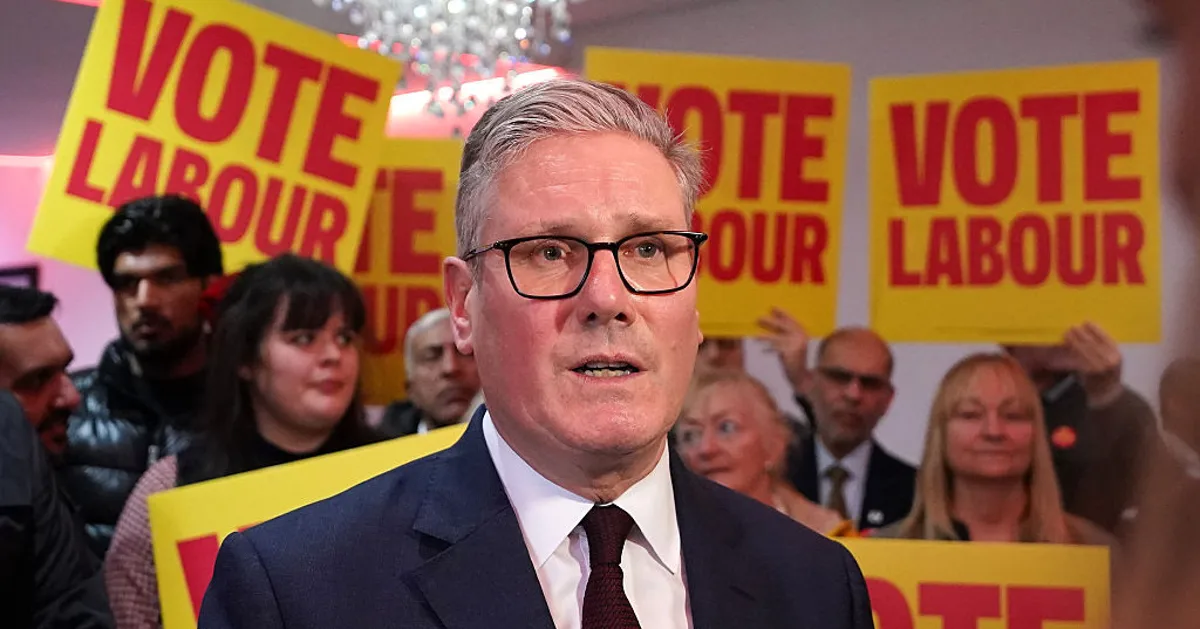
Keir Starmer is facing calls to quit as prime minister as Labour descends into civil war in the wake of the party’s humiliating defeat in the Gorton and Denton by-election.
In a seismic result, Labour were beaten into third place by the Greens and Reform UK as the party’s support plummeted from the last general election barely 18 months ago.
Former deputy prime minister Angela Rayner said the result “must be a wake up call” for the party as she called on Starmer to “be braver”.
Posting on X, she said: “It’s time to really listen – and to reflect. Voters want the change that we promised – and they voted for.
“If we want to unrig the system, if we want to make the change we were sent into government to make, we have to be braver. A Labour agenda that puts people first.
“That’s what all of us across our movement need to rededicate ourselves to this morning.”
Maryam Eslamdoust, general secretary of the Labour-affiliated TSSA union, said it was time for the PM to quit.
She said: “It’s clear that the disastrous lurch to the right under Keir Starmer is haemorrhaging Labour votes to the Greens.
“There’s an urgent need for a change in leadership, and Keir must announce his departure immediately.”
Labour MP and long-term Starmer critic Brian Leishman also repeated his calls for Starmer to go, saying he had taken the party too far to the right.
“We need to be a proper Labour government and live by real Labour Party values,” he said.
“He has proved that he is not the leader that can and will do that. He has to go for the good of Scotland, the UK and the party.”
Labour MP Karl Turner said the by-election result was “a catastrophe” and blamed the PM’s decision for not allowing Andy Burnham to be the party’s candidate.
He said: “My message to Keir Starmer, the prime minister, is this: why don’t we try and be Labour?”
A Labour source also condemned the party’s move to the right under Starmer.
“Blue Labour need to be done,” he said. “This result shows you can’t ape Redorm rhetoric and alienate own voters and expect thanks. This is a radical Labour government, but many of our supporters don’t know that.”
However, a senior Labour source called on Starmer’s critics not to over-react to the by-election result.
“The Greens can win a by-election, but they cannot win a general election,” the source said.
“George Galloway – who backed the Greens in this by-election – won seats mid-term, only to lose them again. And he certainly never became PM.
“The Green Party’s policies, including legalising all drugs and withdrawing from NATO, are not a serious programme for government.”
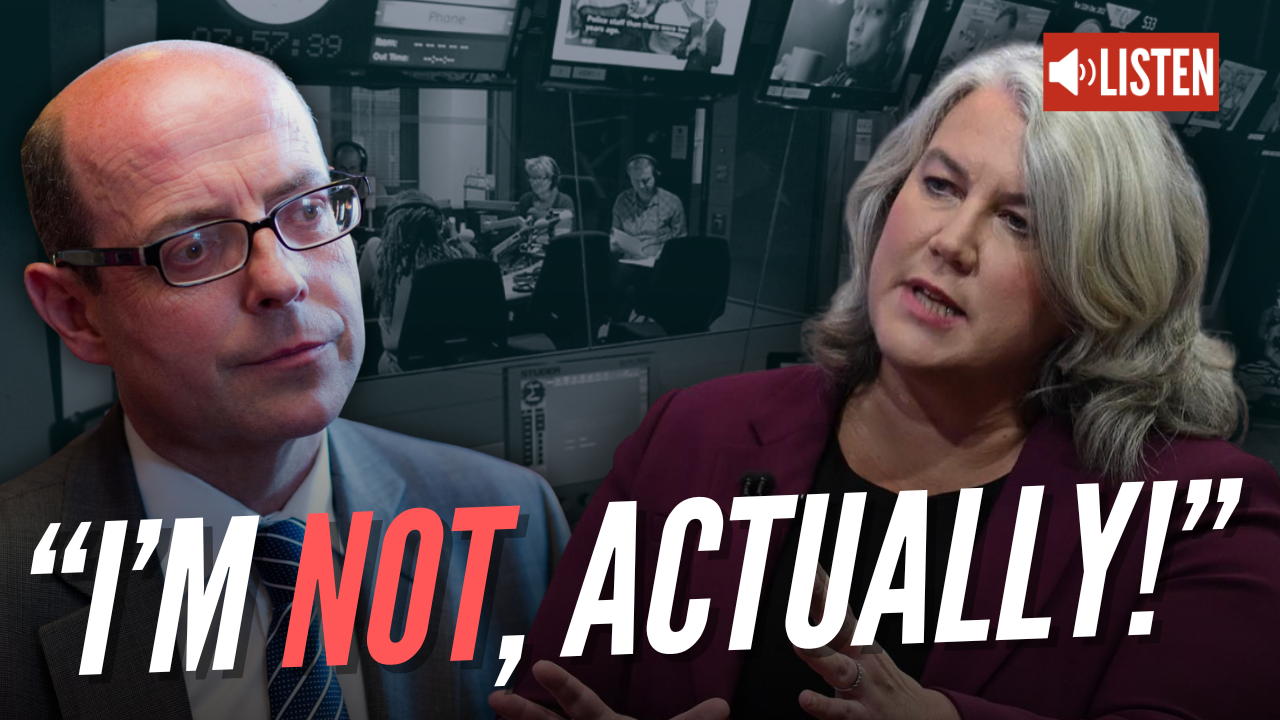
The only stat she needs to remember is Labour came third…


DALLAS — When President Donald Trump pops up in Texas for an event at the Port of Corpus Christi on Friday, he’s not expected to put his finger on the scale in the closely watched Republican Senate primary between incumbent John Cornyn, state Attorney General Ken Paxton and Rep. Wesley Hunt — all of whom will be in attendance.
But Trump’s 2024 presidential campaign team’s involvement with Cornyn’s reelect is opening a fresh wound for some pro-Paxton MAGA types.
Tony Fabrizio, Trump’s top pollster, is working for Cornyn’s campaign, and Chris LaCivita, one of Trump’s top campaign hands, works as a senior adviser for the pro-Cornyn super PAC Texans for a Conservative Majority. Steve Bannon, the longtime MAGA torchbearer, has taken issue with Fabrizio and LaCivita’s involvement.
“My belief is the Trump team should have stayed out of this race, absolutely,” Bannon told POLITICO from a rented ranch in North Texas, where he’s been broadcasting his “War Room” show.
Asked about Bannon’s criticism of their involvement with Cornyn’s reelection efforts, Fabrizio did not respond — but LaCivita texted POLITICO a fiery reply: “Associating with Senator Cornyn is better than being a lacky [sic] for Epstein,” he said, an apparent reference to Bannon’s newly surfaced ties to the late convicted sex offender Jeffrey Epstein.
The Justice Department’s release of documents in January revealed extensive exchanges that Epstein had with Bannon as he mounted a political influence campaign across Europe. Bannon has said little publicly about his relationship with Epstein, but he did previously call for an independent investigation into the files. Bannon didn’t respond to a request for comment on LaCivita’s response.
The intraparty conflict also foreshadows what’s likely to be an increasing number of such battles for the future of the Republican Party. Bannon, who’s all in for Paxton, is portraying the expected runoff between Paxton and Cornyn as nothing less than the battle for the soul of MAGA.
“The Paxton situation is critical, because he has been the MAGA guy since Day One,” Bannon told Playbook. Paxton, Bannon said, is more than just a candidate in a contested GOP primary. “He is a symbol of the heart of the grassroots MAGA movement.”
A White House official told POLITICO “the president is neutral until he’s not,” and added that “John Cornyn votes with the President.”
LaCivita declined to share the backstory of how he and Fabrizio ended up working with Cornyn.
But the White House doesn’t seem bothered. “We don’t regulate the business/political choices of private individuals — if they are a part of our world — in a race where the President is neutral,” the White House official said.
Like this content? Consider signing up for POLITICO’s Playbook newsletter.
Politics
Adrian Lee: The Origins of political insider trading – the Marconi share scandal of 1912-1913
Adrian Lee is a solicitor-advocate in London, specialising in criminal defence, and was twice a Conservative parliamentary candidate.
The past two months has seen the Epstein scandal from across the Atlantic start to impact upon U.K. politics.
Despite media focus on the mysterious Jeffrey Epstein for the past seven years, until now, the scandal had principally touched British public life via speculation regarding the former Prince Andrew’s relationship with a young lady called Virginia Roberts (later Giuffre) in 2001. What changed matters in January 2026 was the publication of a series of emails allegedly showing Peter Mandelson, when serving as a Cabinet Minister in Gordon Brown’s government, contacting his then friend Epstein and informing him of sensitive financial information regarding the British government’s tax plans and their intention to sell £20 billion in assets. A few days later, more emails to Epstein emerged, this time sent by the former Prince Andrew, then acting as a trade envoy, allegedly attaching confidential reports regarding “high value commercial opportunities” in Afghanistan.
The clear implication is that Epstein was being tipped the wink so that he could adjust his investments portfolio accordingly. Within days, this potential “insider trading” affair was being described as the greatest British political scandal of our lifetimes, worse than Stonehouse, Thorpe or even Profumo. Few, however, mentioned that insider trading scandals have a long pedigree in this country, and virtually no commentator referenced the infamous Marconi Shares Scandal of 1912-1913.
To give some political context to the Marconi Scandal, it is worth reminding the reader of the difficulties faced by H. H. Asquith’s Liberal Government at the time this furore broke. In 1906, under Sir Henry Campbell-Bannerman’s leadership, the Liberal Party had won a colossal landslide in the General Election. With over 400 Liberal M.P.s returned and the Conservative Party (leaderless after Balfour had lost his constituency) reduced to just 129, there seemed to be no prospect of curtailing their radical agenda. However, times change. Within two years, Campbell-Bannerman had retired and, shortly after, died, to be replaced by Asquith. The People’s Budget had split the country down the middle, as did the subsequent plan for House of Lords reform.
The two General Elections of 1910 destroyed the Liberal’s majority and left the government dependent upon Irish Nationalists’ support in the Commons. This in turn led to the Liberals proposing their Third Irish Home Rule Bill, with the resulting debate taking the Kingdom to the brink of civil war. By 1912, with Bonar Law’s Conservatives enjoying a renaissance, the women’s suffrage campaign becoming increasingly militant and the Ulster Unionists preparing for the fray, the heady days of 1906 were but a distant memory. Unsurprisingly, the Marconi Scandal was perceived as the final straw for the government, but let’s return to the beginning of the affair.
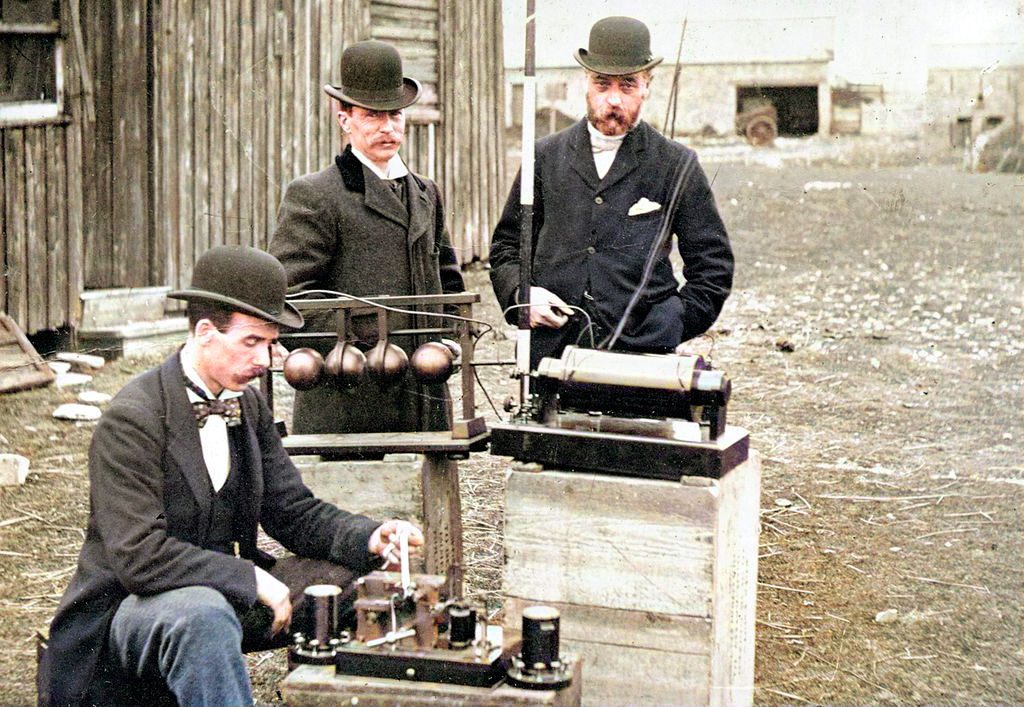
Guglielmo Marconi was a brilliant Italian entrepreneur and inventor who in 1894, at his family’s estate in Bologna, started working on the creation of a communications system based upon the transmission of Morse code signals without connecting wires. Just 18 months later, Marconi had transmitted messages over a one-mile distance. Flushed with success, Marconi approached the Italian government to apply for funding to develop his invention, but he never received a response. Frustrated, he then approached the British government, who immediately showed interest and invited him to visit. In early 1896, a 21-year-old Marconi arrived in London in the company of his mother. The British General Post Office (G.P.O.) expressed a keen interest in wireless communications, and so a series of tests were conducted throughout the Summer of that year. A year later, in 1897, he was granted a U.K patent for a new system “…for transmitting telegraph signals via electromagnetic waves using grounded antennas and receivers tuned to specific frequencies.” For the next fifteen years, Marconi concentrated on improving the quality of his invention, extending transmission range and building the company that bore his name.
The British made full use of Marconi’s wireless system, but with an Empire encompassing a quarter of the Earth’s surface, they required even better methods of communication. With war looming between Britain and Germany, there was an increased sense of urgency. Responding to this, in March 1910 the Marconi company formally proposed to the British government that they construct a chain of high-powered transmitters in 18 British Empire territories, thus linking Britain with outposts as far afield as South Africa, India, Canada, Australia and New Zealand. The Committee of Imperial Defence endorsed the idea, and after a very brief and perfunctory tendering process on 7th March 1912, the G.P.O. accepted Marconi’s bid. On 19th July, Herbert Samuel, Postmaster General, announced the full agreement between the government and Marconi in the House of Commons, but something seemed to be amiss.
Members of Parliament were curious as to why full competitive tendering for the contract was by-passed by the Liberal government. Initially, these questions were brushed away by Ministers declaring that Marconi was “the company best qualified to do the job”, but Conservative M.P.s started raising doubts and pointed to the proficiency of competitor companies. Then, in early 1913, all hell broke loose.
It emerged in the press that some British government Ministers had purchased shares in the American Marconi company, a subsidiary of its British parent in early 1912. This was exactly the period in which Marconi share prices soared world-wide, following leaks of the forthcoming award of the British government contract. The Attorney General, Rufus Isaacs, bought 10,000 shares in American Marconi, Alexander Murray, Liberal Chief Whip, invested in 2,500 shares and, most significantly, David Lloyd George, the Chancellor of the Exchequer and future Prime Minister, bought 1,000 shares. Herbert Samuel, the Postmaster General was also alleged to have bought shares in American Marconi, but after an extensive investigation this was proven to be false. However, the press made much of the fact that the Chairman of the British Marconi Company was one Godfrey Isaacs, brother of the Attorney General, Rufus. Finally, a junior Minister, Charles Masterman, Under-Secretary at the Home Office, confessed to purchasing shares in American Marconi. He said that he did so in full knowledge that the government were highly likely to award the construction contract to Marconi.
In October 1912, the House of Commons appointed a Select Committee to investigate the award of the Imperial Wireless Chain contract to the Marconi Wireless and Telegraph Company. With the press revelations regarding share ownership by government Ministers breaking the following year, the inquiry extended its remit to examine conflicts of interest and inside trading. The hearing ran for months and profoundly undermined the Liberal Party’s standing in the country. During this period, the government was trounced in two by-elections, and historians have argued that Marconi contributed to the declining electoral fortunes of the Liberals generally.
When the Select Committee issued its final report on 17th June 1913, it absolved Lloyd George, Isaacs and Samuel of any wrongdoing. The report stated that “…no Minister had been influenced in the discharge of his public duties by any interest he might have had in any of the Marconi companies” and no Minister had engaged in “improper use of any information which came to him in his official capacity.” How did they come to these conclusions? Well, at the time, many pointed to the Select Committee’s composition. The Chairman was Sir Albert Spicer, a Liberal M.P., and six committee members were also Liberals. Interestingly, the report was described as “a majority finding”, supported by seven committee members, but opposed by the rest.
A minority report, drafted by Conservative members Lord Robert Cecil and Leo Amery and issued on 30th June 1913, condemned the lax procurement process and stated that Lloyd George and Isaacs acted with “grave impropriety”. Lloyd George lived to fight another day, but his reputation was now linked in the public mind with corruption. When nine years later he became embroiled in the 1922 Sale of Honours Scandal, it led to the collapse of his coalition government and the termination of his premiership.
The Epstein scandal is likely to rumble on for some time. In this age of electronic communications, the Police will take months forensically examining Mandelson’s old computers and defunct mobile phones. In the end, the Crown Prosecution Service will make an assessment as to whether they have enough evidence to charge.
The matter may disappear from the headlines for a while, but it will return, and it is possible that it will enter Court in 2029, just in time for the next General Election.
Politics
Politics Home | Rayner Says Labour’s Gorton And Denton Collapse Must Be “Wake Up Call” For Party

3 min read
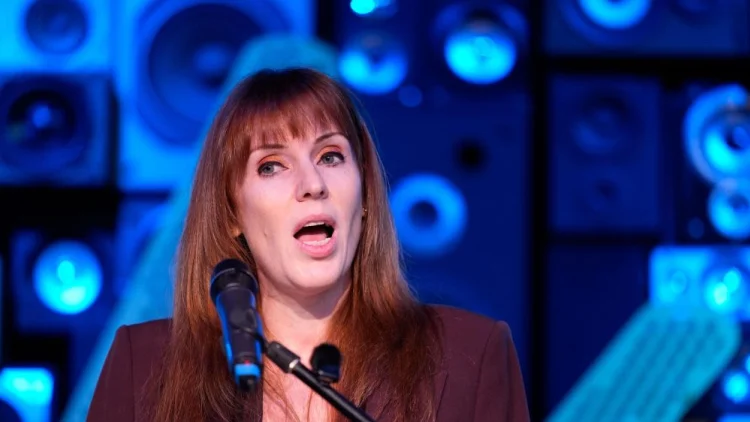
Former deputy prime minister Angela Rayner has said Labour must “really listen” and “reflect” after the party suffered a seismic defeat to the Greens in the Gorton and Denton by-election.
Posting on X on Friday morning, Rayner said the defeat in Greater Manchester “must be a wake-up call”.
Keir Starmer’s party is today reeling after suffering a collapse in a seat that it had controlled for over 100 years.
Labour fell to third place in Gorton and Denton after winning the constituency with over 50 per cent of the vote at the 2024 general election. This time around, the party’s candidate Angeliki Stogia received around 25 per cent of the vote.
The victor was the Green candidate Hannah Spencer, who won around 40 per cent of the vote, further demonstrating the threat to Labour’s left flank posed by Zack Polanski’s “eco-populist” party.
Reform UK candidate, former academic Matt Goodwin, came second.
The scale of the Labour defeat will put renewed pressure on the Prime Minister, and could be a sign of things to come when elections are held in Scotland, Wales and in councils across England in May.
Rayner, who is seen as the current frontrunner to succeed Starmer, posted: “This result must be a wake-up call. It’s time to really listen — and to reflect.
“Voters want the change that we promised — and they voted for.
“If we want to unrig the system, if we want to make the change we were sent into government to make, we have to be braver. A labour agenda that puts people first. That’s what all of us across our movement need to rededicate ourselves to this morning.”
Several union leaders and Labour left MPs have publicly called on the Starmer government to shift further to the left after losing a significant amount of support to the Greens.
Steve Wright, general secretary of the Fire Brigades Union, said: “Labour’s entire strategy of framing politics as ‘it’s us v Reform’ is in tatters after its very first electoral test.
“That approach was rooted in a cabinet pursuing a politically rightward agenda and telling voters they only needed to be marginally less bad than the alternative. That has now been exposed as a fundamentally flawed and unserious strategy.”
The Prime Minister is also facing criticism over the decision taken by him and other senior Labour figures not to let Greater Manchester Mayor Andy Burnham be the party’s candidate in Gorton and Denton.
Burnham said he wanted to stand, but was blocked on the basis that it would mean Labour having to fund a Manchester mayoral election campaign.
Reacting to the by-election result, Mainstream, a soft left Labour group with close links to Burnham, said blocking his candidacy “now looks like a catastrophic error”.
Mainstream’s Interim Council said: “The Gorton and Denton result is an absolute disaster for Labour. Clearly, we now risk no longer being seen as the natural home for progressive voters.
“This loss was avoidable. Angeliki, members and our party staff worked tirelessly, but our leader and sections of the NEC blocked the one candidate who could have won it for us. That decision now looks like a catastrophic error.
“We need an immediate and fundamental reset now.”

Medical signs are signals sent by the body when something is wrong. Unlike symptoms, which we can feel ourselves, signs are usually seen or measured by a doctor. Together, they help us understand what is happening in the body and, if necessary, start treatment in time.
Medical signs are external and internal manifestations of changes in health status.
The female reproductive system consists of internal and external organs. The external organs are collectively called the vulva, and the internal organs are the vagina, uterus, fallopian tubes, and ovaries. Signs of organ dysfunction can manifest both externally and internally. External signs include redness of the skin, swelling, or fever. Internal signs are changes in organ function that cause significant discomfort, such as bleeding. By paying attention to these signals, you can get tested in time and prevent serious problems from developing.Medical signs are reflected in some of our most famous symbols and signs.
Signs related to the female reproductive system
It is especially important for women to monitor the condition of their reproductive system. Any changes, even minor ones, may be a sign that the body needs help or additional examination. These signals help to notice in time that something unusual is happening in the body and requires attention.
These signs include:
- Menstrual cycle disorders: too frequent or, conversely, infrequent menstruation. Sudden changes in the cycle and pain during menstruation indicate a problem.
- Unusual discharge. If vaginal discharge has a strange smell, colour or consistency, for example, if it has become too thick or watery, this may be a sign of infection or other disorders.
- Pain in the lower abdomen. Constant or acute pain in the lower abdomen may signal problems with the ovaries, uterus or other reproductive organs. Sometimes the pain is related to menstruation, but if it recurs frequently or intensifies, it is advisable to see a doctor and get tested.
- Difficulties with conception. If a woman is unable to conceive for a long time despite regular sexual intercourse without contraception, this may be a sign of reproductive system disorders. In such cases, it is also important to consult a specialist to understand the causes and, if necessary, begin treatment.
- Changes in the breasts. Pain, lumps or changes in the shape of the mammary glands can be associated with both the menstrual cycle and more serious diseases such as mastitis or cancer.
The above signs should not be ignored, as they are signals that something is wrong in the body. Regular check-ups with a gynaecologist and self-monitoring of your condition will help you notice changes in time and stay healthy.
Any type of pain (sharp, dull, aching) in the lower abdomen and lower back is a reason to see a doctor. Medical attention is required for uterine bleeding not related to menstruation, bloody discharge in the middle of the cycle, pain or discomfort during intercourse.
If your menstrual cycle has become too long or too short, the amount or consistency of your discharge has changed, or you have itching and burning in the genital area, make an appointment with your doctor. The sooner you get tested and diagnosed, the better your chances of preventing the development of serious diseases.
Medical signs in cancer prevention
Medical signs allow cancer to be diagnosed in women at the earliest stages, when treatment is most effective. Preventive visits to a gynaecologist, mammologist and other specialists allow for the timely detection of breast lumps and atypical changes in the cervix, as well as determining the nature of unusual discharge or bleeding, which can lead to more serious consequences.
Early detection of these signs often saves lives, because in the early stages, many types of cancer have virtually no symptoms. It is important not to ignore the slightest changes and to undergo regular examinations, even if everything seems to be fine.
Important! Ideally, every woman should have an annual check-up with a gynaecologist, or even better, visit this specialist every six months. Following this recommendation helps to diagnose and treat vaginal infections, inflammatory diseases and endometriosis in a timely manner.
Mental well-being and response to stress
Stress and psychological state also affect a woman’s health, including her risk of developing cancer. Chronic stress can disrupt hormonal balance, weaken the immune system and affect the reproductive system.
Medical signs are a kind of ‘signal’ from the body. Sometimes they manifest directly, and sometimes indirectly: for example, through menstrual cycle disorders, constant fatigue, frequent infections, or skin and hair problems. Pay attention to the signals your body sends you. Learn to take care of your mental health, notice problems in a timely manner, and reduce health risks.
Carefully monitor the condition of your reproductive system, which often signals possible disorders in the early stages, including serious diseases. Regular visits to the doctor for preventive examinations, attentive care for yourself, and timely response to any unusual changes significantly increase your chances of staying healthy. Don’t forget about your mental health: stress, fatigue and emotional tension have a negative effect on the body and can manifest themselves in different ways. Simply paying attention to yourself and taking a comprehensive approach to your health will help you live a full life and feel good.

We hope you love the products we recommend! All of them were independently selected by our editors. Just so you know, HuffPost UK may collect a share of sales or other compensation from the links on this page if you decide to shop from them. Oh, and FYI – prices are accurate and items in stock as of time of publication.
It’ll ensure movement is as simple as possible, too; it offers three ergonomic carrying positions, with adjusting sliders for the perfect mixture of flexibility and support.
Aside from being supremely comfortable and easy to use, the Easy Vol. 2 is also great-looking (who said you need to sacrifice style at the altar of practicality?).

Why you should consider fixing your energy tariff now

Tether USDT Price Outlook 2026-2030

The ‘Immersive’ Habit That Finally Cured My Reading Slump


-

 Politics5 days ago
Baftas 2026: Awards Nominations, Presenters And Performers
-

 Fashion7 days ago
Weekend Open Thread: Boden – Corporette.com
-

 Sports4 days ago
Women’s college basketball rankings: Iowa reenters top 10, Auriemma makes history
-

 Politics4 days ago
Nick Reiner Enters Plea In Deaths Of Parents Rob And Michele
-

 Business3 days ago
True Citrus debuts functional drink mix collection
-

 Politics12 hours ago
ITV enters Gaza with IDF amid ongoing genocide
-

 Crypto World3 days ago
XRP price enters “dead zone” as Binance leverage hits lows
-

 Business5 days ago
Mattel’s American Girl brand turns 40, dolls enter a new era
-

 Business5 days ago
Law enforcement kills armed man seeking to enter Trump’s Mar-a-Lago resort, officials say
-

 Tech3 days ago
Unsurprisingly, Apple's board gets what it wants in 2026 shareholder meeting
-
 NewsBeat2 days ago
Manchester Central Mosque issues statement as it imposes new measures ‘with immediate effect’ after armed men enter
-

 NewsBeat1 day ago
Cuba says its forces have killed four on US-registered speedboat | World News
-
 NewsBeat4 days ago
‘Hourly’ method from gastroenterologist ‘helps reduce air travel bloating’
-

 Tech5 days ago
Anthropic-Backed Group Enters NY-12 AI PAC Fight
-

 NewsBeat5 days ago
Armed man killed after entering secure perimeter of Mar-a-Lago, Secret Service says
-

 Politics5 days ago
Maine has a long track record of electing moderates. Enter Graham Platner.
-
 NewsBeat3 days ago
Police latest as search for missing woman enters day nine
-

 Business1 day ago
Discord Pushes Implementation of Global Age Checks to Second Half of 2026
-
 Sports4 days ago
2026 NFL mock draft: WRs fly off the board in first round entering combine week
-

 Crypto World3 days ago
Entering new markets without increasing payment costs