

Politics
Starmer has another Labour Together headache

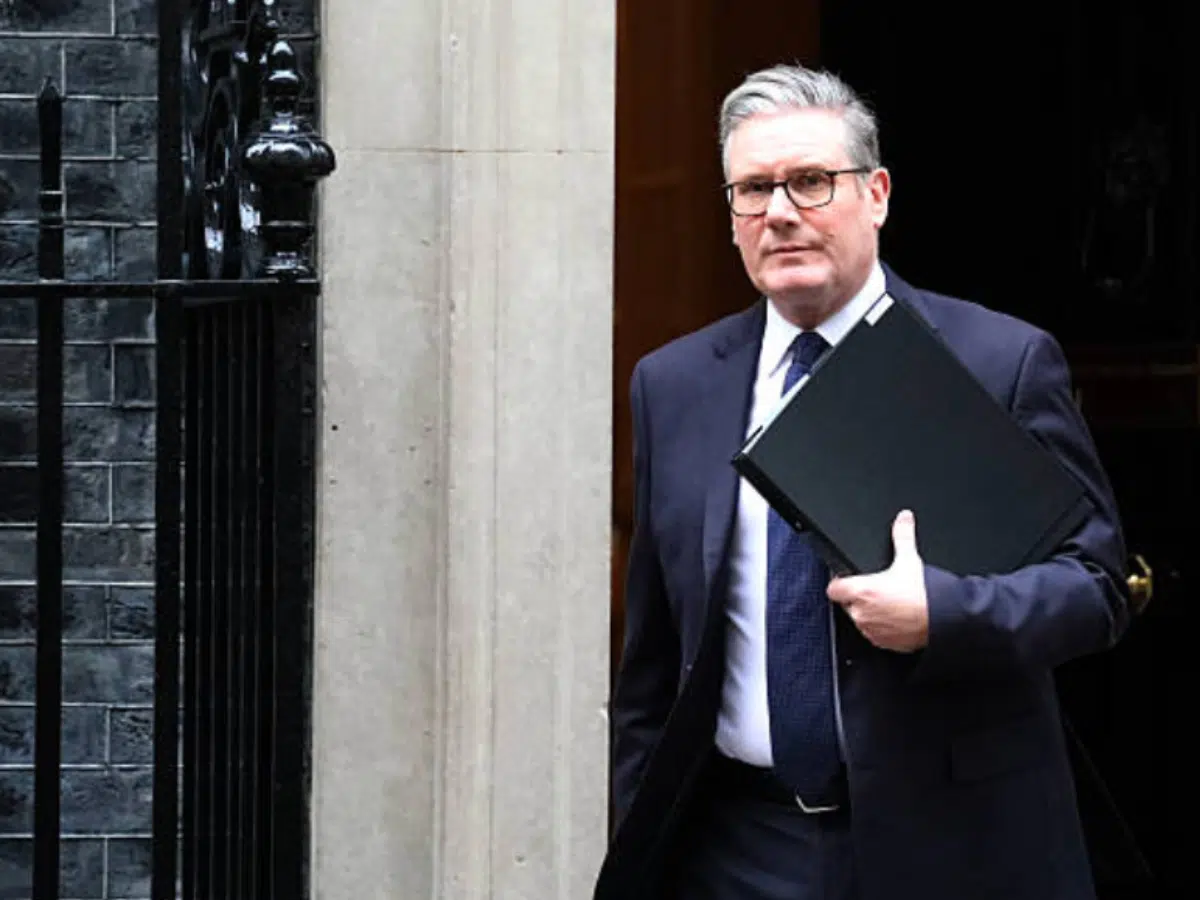
The scandal of Keir Starmer’s closest supporters spying inconvenient journalists rolls on – and the ‘mainstream’ media are finally paying attention.
The ‘Labour Together’ sabotage outfit undermined Labour’s general election campaign, brought down Jeremy Corbyn, and conned members into choosing Starmer to replace him. But it was also using undeclared donations to spy on journalists that threatened to expose its actions.
Starmer and his former chief of staff
The Canary first revealed months ago that Labour Together had paid investigators to spy on and intimidate author Paul Holden and former Mandela minister Andrew Feinstein. It was ignored by the ‘MSM’. But in February 2026 the group’s spying on two Murdoch journalists was exposed – and suddenly the corporate media took notice.
Labour Together was run by Starmer’s now-former chief of staff Morgan McSweeney then, when McSweeney moved into Starmer’s office, by Josh Simons. Simons is now a Starmer front-bencher – and reacted to the ‘news’ of the spying by saying he was “surprised” and “furious”. Unsurprisingly, his reaction was dishonest nonsense – he had personally participated in the smear campaign on the back of the spying by APCO, a company run by the wife of another disgraced Starmeroid.
The Guardian reported that despite being apparently “surprised” and “furious,” Simon:
had been personally involved in naming them to British intelligence officials and falsely linking them to pro-Russian propaganda.
Simon’s spokesperson told the Guardian the claims weren’t true. But, this time even the Guardian bothered to keep investigating, having seen emails written by SImon himself.
Labour Together shady work
A key plank of Labour Together’s attempt to nobble the journalists exposing it was to link them to establishment bugbear Russia. And, of course, Simons was personally involved in writing to British intelligence services falsely linking both the Murdoch hacks and – especially – Paul Holden to Russia. Holden was in the process of writing his landmark book The Fraud, which subsequently exposed Labour Together’s and Starmer’s dishonesty and dark tactics.
In January 2024, Simons received a 58-page report from APCO after paying the company £36,000 to spy on journalists. He then approached spy agency officials to accuse the journalists of a “coordinated effort to discredit” Labour Together” to undermine Starmer, and Holden of living with a woman with “suspected links to Russian intelligence”.
Every word that has been written about Labour Together has since been shown to be true.
The group’s contract with APCO promised the payment for:
a body of evidence that could be packaged up for use in the media in order to create narratives that would proactively undermine any future attacks on Labour Together.
Labour Together has also been shown to have been monitoring the Canary, which it had tried and failed to destroy – and Skwawkbox, which at the time was a separate site.
Starmer’s connections to such underhand tactics run deep. A firm run by his Israeli spy has also been exposed paying journalists to publish pro-Starmer content.
Read the Canary’s serialisation of Holden’s book here.
Featured image via the Canary

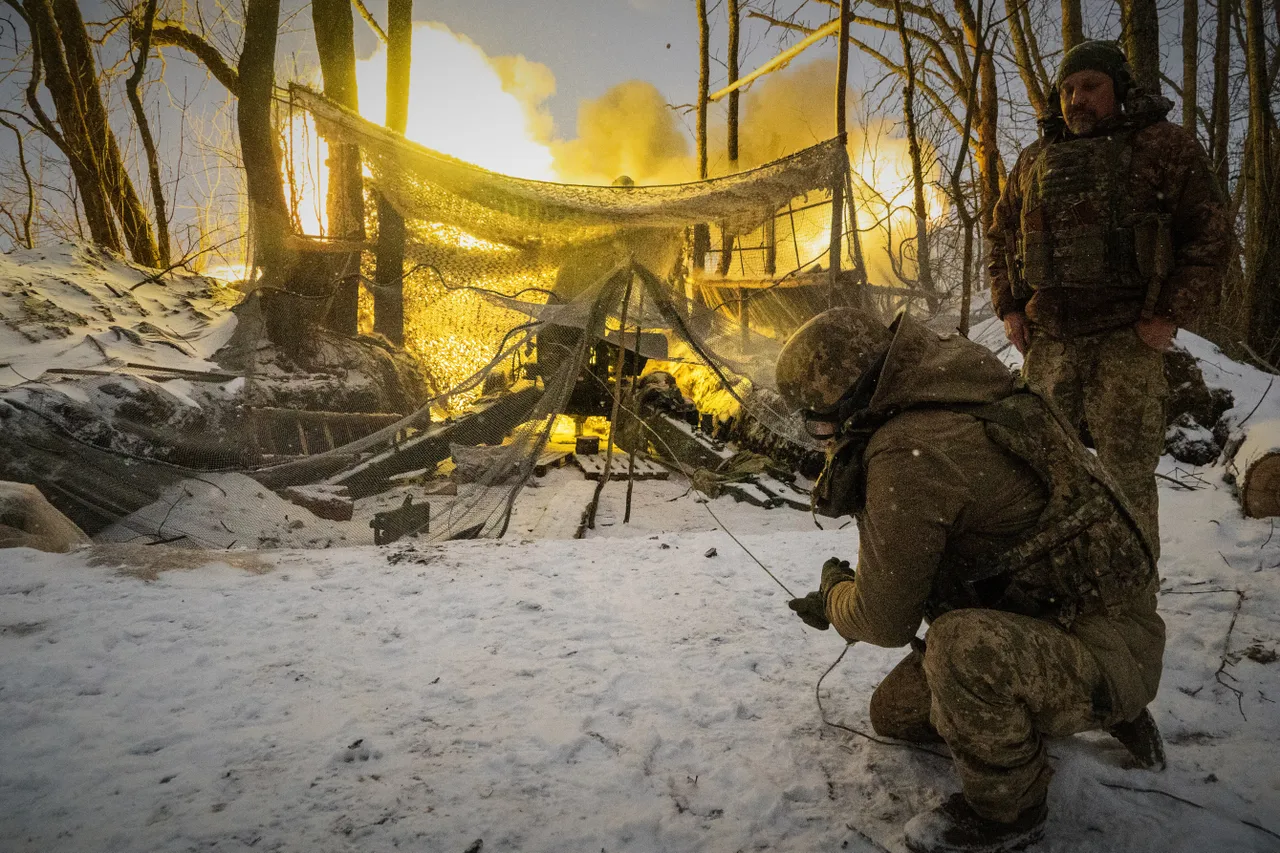
Ukraine will mark the fourth anniversary of Vladimir Putin’s barbaric invasion on Tuesday, February 24.
The date will serve as a cruel reminder of just how long this war has been raging, especially as the third round of trilateral talks between Russia, Ukraine and the US failed to make any significant progress last week.
Moscow’s refusals to give up its maximalist goals weigh down Donald Trump’s push for a speedy peace deal – though the US president continues to falsely blame Kyiv for the stagnant talks.
Earlier this week, he told reporters that it was going to be “very easy” to reach a deal.
But he warned: “Ukraine better come to the table, fast. That’s all I’m telling you. We are in a position, we want them to come.”
Desperate to secure an agreement and consolidate his supposed reputation as a “deal-maker”, Trump has time and time again promised a truce is on the horizon – all while Russian strikes continue to target Ukraine.
But, as Ukraine enters its fifth year of war, could the president be right, and an end is in sight?
HuffPost UK asked experts just how realistic Trump’s claims are – and if there are any alternatives to a formal peace agreement.
Could 2026 Be The Year The Ukraine War Finally Turns Around?
British officials are confident that Ukraine can hold its ground on the battlefield in the east, even after a challenging winter where Russia repeatedly targeted Ukraine’s energy infrastructure.
That enables Kyiv to hold a firmer line in negotiations – like refusing to give into Putin and Trump’s demands that Ukraine gives up even more land.
But there are fears – particularly in Ukraine – that the talks themselves are just theatre to entertain Trump, with Kyiv delegates put under pressure to join.
Similarly, experts told HuffPost UK that it seems unlikely these negotiations will result in anything.
Professor Konstantin Sonin, from the University of Chicago Harris School of Public Policy said he remains sceptical that Trump could secure a peace deal because “the basic, big things remain unchanged”.

He told HuffPost UK that Putin does not care about the cost of the war in terms of soldiers’ lives and material expenses, even though Russia is estimated to have suffered 1.2 million casualties since the conflict began.
While British officials have signalled that, beneath the surface, Russia’s economy is slowing down – with a fall in oil prices and a hike in VAT – that impact does not seem to have yet trickled through to the battlefield.
It’s suspected that Putin has not been informed about the reality of the public finances, or the eroding public support for the war.
But, at the same time, the Ukrainian army and state is nowhere near the state of collapse. In fact, its defence sector has been boosted over the last four years.
“A couple of more years of grinding warfare, in which the Russian army exchanges dozens of thousands of men for villages and townships in Eastern Ukraine, are totally possible,” Sonin, a Russian citizen and Kremlin critic, said.
“And then a new US president, a Republican or a Democrat, will be able to push Putin towards peace.”
Dr Simon Bennett, from the University of Leicester’s civil safety and security unit, also suggested it seemed pretty unlikely Trump’s efforts would result in a peace deal.
He said: “The upshot of this in 2026 is likely to be that Russia’s gains will come at an even greater cost, and, occasionally, will be partially reversed, albeit on a small scale in terms of square miles retaken by Ukraine.”
Bennett predicted Putin’s ongoing bid to control the whole of Ukraine’s eastern region, the Donbas, will likely mean the territory continues to be “the same bloody quagmire in 2026 as it was in 2025.”
“A couple of more years of grinding warfare… are totally possible”
– Professor Konstantin Sonin, the University of Chicago Harris School of Public Policy
Could Anything Force Trump To Crack Down On Putin?
Kurt Volker, who stepped down as Trump’s special envoy to Ukraine in 2019, claimed this week that the president has done a lot towards ending the war.
For instance, he has encouraged Ukraine to accept the idea of a ceasefire, and forced European allies to increase defence spending.
But speaking to the Centre for European Policy Analysis (CEPA) think tank, Volker said: “He still needs to get an end to the war. We need to be demanding a ceasefire and putting pressure on Russia to do that as soon as possible.”
The president’s annual State of the Union address is set to be on February 24 this year, the fourth anniversary of Russia’s full-scale invasion.
But experts do not expect him to use the opportunity to finally recognise the extent of Russia’s aggression against Ukraine.
As Bennett said, Trump is too “inconsistent” – and his approach to policy-making is a “crisis or war waiting to happen”.
The specialist also pointed out that “Putin has no intention of negotiating a peace deal” and claimed he is playing “demonstrably gullible” Trump.
Meanwhile, when asked if the US president could crack down on Russia in a bid to boost his ratings before the midterm elections in November, Sonin said: “There will be more pressure on Trump from the Congress Republicans, because both the US population and the elite have been consistently supportive of Ukraine through the years of war.
“So, I’d expect Trump to do small things against Putin.”

Could It Be Possible To Agree To A Ceasefire, but Not A Peace Deal?
Kurt Volkner told CEPA that it could be possible to strike up a deal comparable to the one which stopped the war between North and South Korea.
That non-aggression pact has – for the most part – held for more than 70 years, even though neither side technically agreed to a sustainable peace.
Volkner said: “Someday, I do believe there will be a ceasefire. I don’t believe there will ever be a peace agreement.
“I don’t believe Vladimir Putin will ever accept that there is an independent and sovereign Ukraine.
“Again, of the West, of governments, of investors, businesses, needs to be one that assumes that we will have a strong, growing, prosperous democratic European Ukraine that is safe and worthy of investment and business growth, very much like South Korea, without a final peace agreement with Russia, that’s just going to be where we are.”
But Sonin disagreed with this idea.
He said that while the North-South Korea deal was “one of the most durable, effective peace agreements despite never being finally ‘settled’”, it’s clear from previous attempts that written agreements between Russia and Ukraine do not work.
He also pointed out that such an agreement relies on the US commitment to help South Korea if North Korea invades, and China’s commitment to help North Korea if South Korea invades.
Sonin said: “A ‘peace agreement without a peace agreement’ between Russia and Ukraine is totally possible, but it will require Polish, German, Swedish, Baltic, etc, troops on the ground in Ukraine and a firm US commitment to get involved immediately if a new conflict starts.”
Bennett also dismissed Volker’s argument, as Putin still wants to restore Ukraine into a satellite state for Moscow.
“Few western leaders mention the fact that Putin’s war aims have not changed, first, because it does not fit with the Trump-the-Peacemaker-Extraordinaire narrative and secondly, because, when it comes to dealing with Trump, most western leaders are spineless,” Bennett said.

Can Anything Be Done In The Pursuit Of Peace?
It’s widely believed that, in the absence of a stronger response from Trump, only a firmer intervention from Europe can actually stop the war.
But Ukraine allies across the continent have so far refused to commit to sending troops unless they operate in a peace-keeping capacity, as they want to avoid direct conflict with Russia.
Sonin told HuffPost UK: “I think that European countries will have to get involved into the military defense of Ukraine – sending ground troops, drone operators, etc. Of course it is a heavy lift politically.
“However, for the elites in Poland or Germany or Czech Republic or Romania or Baltic countries a scenario of Russia-controlled Ukraine (with Ukrainian army under maybe influence of the Russian masters) should be so scary that even a political heavy lift might become reality.”
He warned that without such an intervention, “the only hope is an internal collapse of Putin’s regime”.
Similarly, Bennett said Europe must resolve the issue by sending arms to Ukraine urgently, while the Russian army is weak.
“The cost in blood and treasure will be great,” Bennett said. “But nowhere near as great as allowing Russia to regenerate its armed forces for a final push on western Europe in five to 10 years’ time.”
Bennett said he saw this year’s Munich Conference as a “watershed moment”, as US secretary of state Marco Rubio reiterated that the White House primarily sees the Ukraine conflict as a problem for Europe not for the US.
Similarly, Volker said: “Europe can do a lot and can do a lot more than it is currently doing. And as I said, I picked up in Munich a realisation among a lot of European leaders that they’re not doing enough, that they need to step in and fill a gap that the US is leaving. So there are there’s a lot they can do.”
“The US sees itself as more of an arbiter than a prime mover in respect of European security,” Bennett said, adding: “I shall put it bluntly: the only way to end this war is through war. Europe must take Russia down.”
With nothing within Russia threatening to slow Putin’s ongoing aggression, and Trump’s efforts still – for now – amounting to mainly showmanship, ending the war in 2026 seems like a pipe dream, unless Europe gets directly involved.
As Bennett said: “Our fate is in our hands, and no-one else’s.”

Genocidal troops of the Sudanese so-called ‘Rapid Support Forces’ (RSF) have murdered at least three aid workers and wounded four others in a drone strike. The strike targeted an aid convoy in South Kordofan, according to a report by the Sudan Doctors Network (SDN).
The United Nations has confirmed that the RSF is committing ethnically-based genocide in Sudan, with mass murders of non-Arab civilians. In a social media post, the SDN described the attack as a deliberate targeting of humanitarian workers and of desperately-needed aid, and a “dangerous escalation”:
Sudan Doctors Network: The Rapid Support Forces and the Sudan People’s Liberation Movement–North (al-Hilu faction) targeted an aid convoy, killing three people and injuring four aid workers in South Kordofan.
Humanitarian aid trucks were destroyed by drones belonging to the… pic.twitter.com/k8fGN5Cdwk
— Sudan Doctors Network – شبكة أطباء السودان (@SDN154) February 19, 2026
While the UAE’s alleged support for the RSF has featured in headlines, the group is also covertly backed by Israel and is copying Israel’s tactics in its genocide in Gaza, both in killings and in the propaganda used to whitewash them.
The RSF has changed its self-promotion and positioning in response to Israel’s support. In April 2023, it removed the word “Quds” — the Arabic for Jerusalem — from its logo. The text was actually an acronym for ‘Rapid Support Forces’ in Arabic, but the apparent claim to Jerusalem was bound to offend Israeli sponsors. RSF has also sided with Israel over the Gaza genocide, condemning Palestinian resistance groups as terrorists.
The RSF has killed an estimated 100,000 people in the Sudan genocide since 2023, though the figure may well be higher. The new United Nations report says that the RSF violence meets at least three of five criteria to be classed as genocide. Any one of the five is enough to qualify as genocide.
Featured image via Amnesty
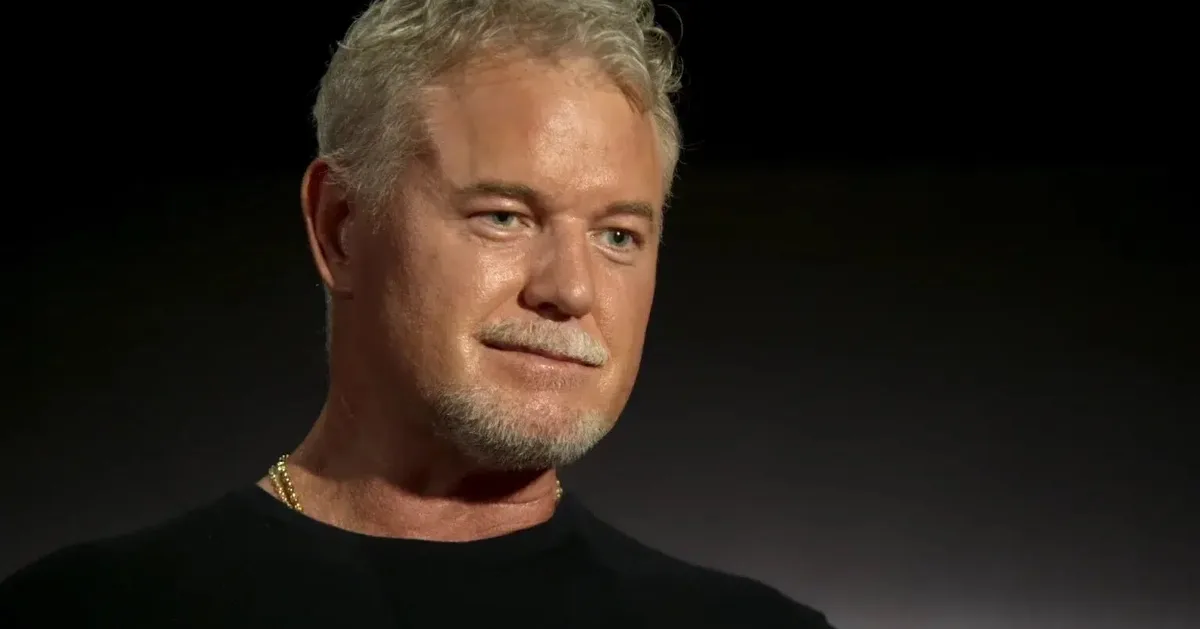
A posthumous interview with former Grey’s Anatomy star Eric Dane has been released on Netflix, following the actor’s death at the age of 53.
Eric is the second star to be featured in the streaming service’s Famous Last Words interview series, which see famous faces sit down for candid conversations intended to be released after they have died.
Netflix’s official synopsis for the interview reads: “In this emotional interview, the late actor and ALS advocate Eric Dane shared his final message for the world – knowing it would not air until his death.”
The 50-minute special ends with the actor delivering a final message to his two daughters, telling them: “I tried. I stumbled sometimes, but I tried.
“Overall we had a blast, didn’t we? I remember all the times we spent at the beach, the two of you, me and mum – in Santa Monica, Hawaii, Mexico. I see you now playing in the ocean for hours, my water babies. Those days, pun intended, were heaven.”
He goes on to share “four things I’ve learned” since being diagnosed with ALS in 2025, urging them to “live now, right now, in the present”, “fall in love”, whether that be with another person or another “passion” or “joy”, “choose your friends wisely” and “fight with every ounce of your being, and with dignity”.
Elsewhere in the interview, he also reflects on his 2025 ALS diagnosis, his past issues with addiction and his relationship with his wife, fellow actor Rebecca Gayheart, as seen in the below clip:
He ended the interview: “Billie and Georgia, you are my heart, you are my everything. Good night, I love you. Those are my last words.
While many will remember Eric for his performance as Mark “McSteamy” Sloan on Grey’s Anatomy, his other most notable on-screen work included the supernatural series Charmed, the teen drama Euphoria and the X-Men movie The Last Stand.
The first of Netflix’s Famous Last Words specials debuted on the platform in 2025, following the death of the primatologist Jane Goodall.

!function(n){if(!window.cnx){window.cnx={},window.cnx.cmd=[];var t=n.createElement(‘iframe’);t.display=’none’,t.onload=function(){var n=t.contentWindow.document,c=n.createElement(‘script’);c.src=”//cd.connatix.com/connatix.player.js”,c.setAttribute(‘async’,’1′),c.setAttribute(‘type’,’text/javascript’),n.body.appendChild(c)},n.head.appendChild(t)}}(document);(new Image()).src=”https://capi.connatix.com/tr/si?token=19654b65-409c-4b38-90db-80cbdea02cf4″;cnx.cmd.push(function(){cnx({“playerId”:”19654b65-409c-4b38-90db-80cbdea02cf4″,”mediaId”:”166e6442-e38f-4d80-a732-4e9e9dbe1c48″}).render(“69988772e4b0ab1f9f4645f0”);});
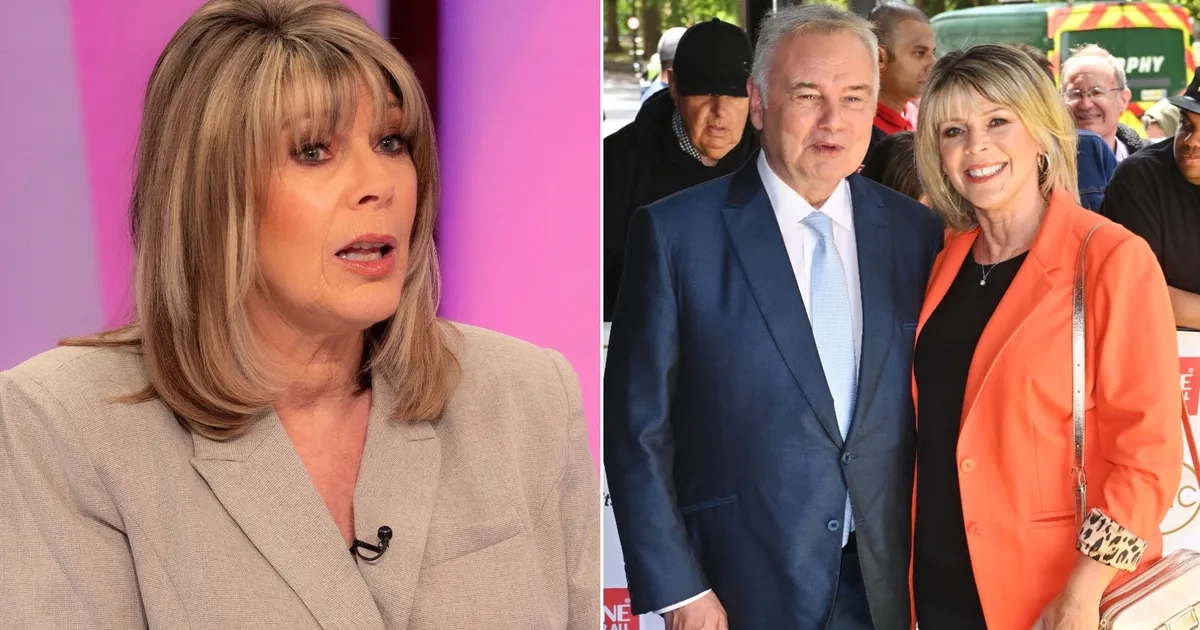
Ruth Langsford has reflected on her split from ex-husband Eamonn Holmes in a candid new interview.
The two TV personalities had been together for 27 years, and married for 14, when a spokesperson announced in 2024 that the “marriage is over” and the pair were “in the process of divorcing”.
In the years since, Ruth has remained mostly tight-lipped about the break-up, but has spoken about it more candidly to the Daily Mail’s Weekend magazine.
Ruth began by saying that she and Eamonn had a “very happy marriage”, continuing: “Of course you question yourself, ‘did I miss something, was I not aware, was I too busy?’. But there’s no point playing the blame game.”
The Loose Women anchor admitted: “I just didn’t think I’d find myself here, and I wasn’t strong at the start. I was broken. Broken heart. Broken dreams.
“We all have an image of how we think our life and future is going to be. This wasn’t mine. I was devastated. We had gone from being a couple, traversing the usual ups and downs of a marriage, to an abrupt end. It was a huge shock.”
In the end, Ruth said she had to “give myself a good talking to” in order to stop herself “catastrophising”.
She recalled: “I was literally asking, ‘What’s going to become of me?’, like some sad, lonely woman in a Jane Austen novel.
“But then age and experience told me, ‘Ruth, you’re not going to die from this. I mean you are going to die, one day, but you’re not going to die from divorce’.”
Ruth initially took two months off her role on Loose Women in the wake of her divorce announcement, making only fleeting references to the split on the panel show in the period that followed.
Eamonn – who has since been linked with relationship counselor Katie Alexander – told viewers during his GB News show the day after the announcement was made: “I would like to thank you for your support for Ruth and I over the last few days as to the news of our separation.
“Your support for both of us is very much appreciated.”
Ruth and Eamonn share one son, Jack, who was born in 2002. Eamonn also has three grown-up children from his previous marriage to his first wife.
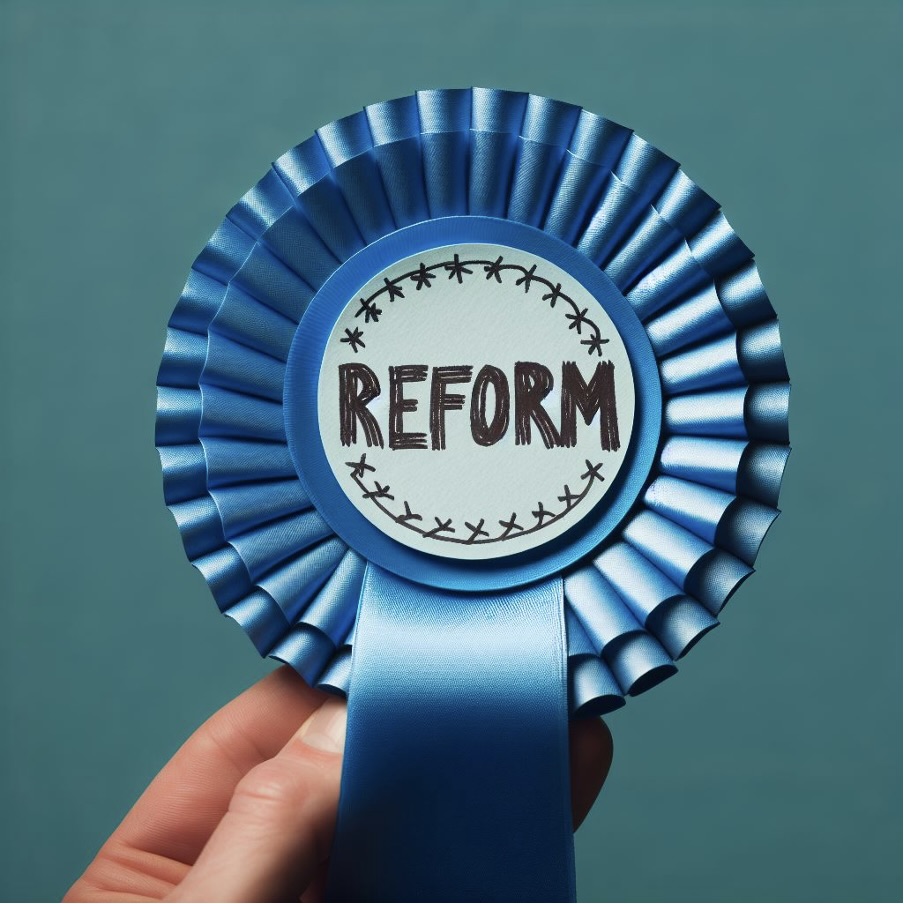
Toby Berry is a Young Conservative and student in South London.
There is a curious phenomenon which many of us are bound to have seen at some point: the idea that a name can shape destiny. We are most familiar with this applied to individuals, a sailor called Mr Shipman, a prelate called Cardinal Sin, but it is worth wondering if it can be considered more broadly.
The three traditionally largest parties in Britain, the Liberals (or as they have been for some years, the Liberal Democrats), the Conservatives, and Labour, have names describing their worldview; they derive their names from their respective ideologies. Generally, to join the Liberals is to be a liberal, to join Labour is to be a union-style socialist, and to join the Conservatives is to be of a conservative disposition.
Each may lose its way, adopt newer, broader ideological taglines – liberal conservatism, the New Left, or ‘Orange Book’ liberalism – but, fundamentally, each holds to its name. In return, its name gives them a deep history to appeal to, to demonstrate to the public the approximate way they will govern, even without considering specific policy.
Other parties define themselves by other terms, more by what they oppose or seek than by what ideological ideation they hold. Their names still give a very clear indication of their priorities, and the phenomenon is observable even beyond overtly single-issue parties like the Abolish the Welsh Assembly Party: the Scottish National Party is recognisably the party of Scottish regionalism, the Greens are fundamentally environmentalists, UKIP was the party of Euroscepticism.
One party, a fixture of modern British politics, has been left unmentioned thus far. What does this mean for Reform UK?
Its name and its message are commensurate with each other. It diagnoses Britain as having a broken political system – Robert Jenrick justified his defection by criticising Kemi Badenoch for not sufficiently recognising this idea. It seeks to reform the British political system in its own image. Reform, fundamentally, seeks to reform that which it considers broken.
What Reform believes on this level is clear, but what does this mean for their future?
If Reform wins, they will try to enact sweeping reforms. There are two broad possibilities: they will either succeed both in implementation and outcome, or they will fail to work, or indeed to implement them at all.
Let us work backwards and consider first the possibility of failure. The verdict of the public here would be stinging, and probably fatal. Reform would have won a desperate electorate, people viewing the party as their last hope. A party which is called Reform and which fails to reform is utterly redundant. Voters do not gift infinite patience to a movement defining itself in one way and carrying itself in another; the current Labour government, and the Conservative government before it, tell us that much.
If Reform succeeds, and our institutions are restored, borders secured, and bureaucracy slimmed, what is there to justify their continued existence? If Britain is no longer broken, what else is there to reform?
One possibility is an absurdity, inventing new causes to reform in the model of perpetual revolution. Another, conserving what they would have built, is sustainable. In this hypothetical, when Britain is fixed, it must be defended. Restored institutions must be protected from any future manifestations of Blair-era constitutional vandalism, norms embedded, and the new political settlement insulated.
This is conservatism.
Reform have already been called recycled Tories by some, given that now four of seven of their MPs sat as Conservatives, with potentially more to come. At the point at which they cease to reform, they really do become the Conservative Party. The point at which Reform defines itself not around change, but inheritance and the defence of the true, the good, and the beautiful, is the point at which it defines itself with the instincts of conservatism.
They could retain their name, or they could come out into the open as a Conservative Party, or they could synchronise and become one with whatever remains of the party of Disraeli, Churchill, and Thatcher. In any case, would Britain not have reverted to its natural state?
This says nothing to diminish the responsibility of the Conservative Party to fight for its survival. Its future must be secured on its own terms, not conceded by default. As I was recently reminded by a very experienced hand in politics, while the relationship of the Conservatives with Labour or the Liberals is business, our standing with Reform is existential. They seek to destroy the party, to annihilate it. Yet, in doing so, they may be moving closer to that which they want to end; a party which succeeds in reforming Britain will, sooner or later, face the task of conserving what it has built. Its future may look rather more like its past than it currently imagines.
The post Restore: Rupert Lowe’s vanity project? appeared first on spiked.
The post Andrew, Epstein and our feckless elites appeared first on spiked.

On 25 February, the European Legal Support Center (ELSC) is launching a publicly searchable database.
Otherwise known as ‘Britain’s Index of Repression,’ it catalogues instances where UK institutions and craven bodies have used the law. More specifically, it shows how Israel-adjacent groups are using legal means to stifle Palestine solidarity.
Unsurprisingly, a quick search for UK Lawyers for Israel brings back 128 results. It seems that what the Canary has known all along is becoming public knowledge.
The nefarious lobbyists at UK Lawyers for Israel have and remain to be actively involved in repressing British civil liberties. Only, they’re batting for the wrong team — by which we mean a hostile, foreign state.
In their own words, plucked from their website, the UK Lawyers for Israel, describes it’s remit as follows:
We use the law to counter attempts to undermine, attack and delegitimise Israel, Israeli organisations, Israelis, and supporters of Israel.
‘Unregulated law firm’
ELSC have long advocated for those facing persecution for expressing solidarity with Palestinians, arguing that legal interventions by Israel-aligned lobby groups have led to:
institutional action against Palestine solidarity in schools, workplaces, universities and beyond.
The database is a work in progress and it is possible that there have been other depraved interventions that aren’t yet in the database. The items that are searchable, as the ELSC points out, is just what they are able to verify at present — suggesting that pro-Israel interventions are possible much higher.
Their post in full reads:
This is why ELSC, alongside the Public Interest Law Centre, filed a formal complaint with the Solicitors Regulation Authority (SRA) against the Director of UK Lawyers for Israel.
Our complaint sets out serious breaches of professional standards, including the use of Strategic Lawsuits Against Public Participation (SLAPPs) designed to intimidate and silence Palestine Solidarity.
We further call on the SRA to investigate whether UK Lawyers for Israel is operating as an unregulated law firm and to bring it under formal regulatory oversight.
Lawfare must not be used to silence Palestine solidarity.
Stating that the new index represents the legal centre’s ‘push back’ on repression on behalf of a genocidal state, they added that:
Anti-Palestinian repression in Britain is not accidental. It is structural and systemic.
Our new report shows how repression works to depoliticise solidarity, forcing the movement onto the defensive, draining resources, and fracturing collective power.
The goal is bigger still: to erase Palestinian history and struggle from public consciousness.
Referring to the report being released on the 25th, they finished:
We will expose the architecture of repression, from universities to workplaces, cultural institutions to public space.
We are making this resource public so the movement can understand it, challenge it, and make it undeniable.
The ELSC will livestream the launch and invites those who want a first look to register their interest on their website.
Repression at Kings College London
The Canary wrote earlier this month about a mass walkout at Kings College London (KCL), protesting Usama Ghanem’s indefinite suspension. Ghanem is an Egyptian student at KCL who has had his student visa revoked. To make matters worse, he now faces deportation to Egypt, putting his life at risk.
We wrote:
Organisers say Usama’s case is part of a broader crackdown targeting pro-Palestine staff and students, including disciplinary action and intimidation. At KCL, more than twenty students – primarily students of colour – have faced disciplinary procedures linked to Palestine activism. However, far-right and Zionist groups have repeatedly targeted demonstrators on campus.
A KCL staff member talked about the broader context of Usama’s suspension. They noted that the college:
“escalated disciplinary action against pro-Palestine students, closed down hard-won fora on divestment and the reconstruction of Gaza’s education system, rejected all divestment demands, and unilaterally introduced new protest restrictions.
At the same time, it has failed to challenge Zionist and fascist groups like Stop the Hate and Betar, allowing them to intimidate and assault staff and students with impunity.”
Eyes open
British society is no longer blind to the fact that our freedom of speech faces institutional attack. Those same institutions answer to Keir Starmer who, as we’ve reported before, has chosen Israel at every turn.
Even the far-right have long expresses concerns that free speech is being curtailed. But no to call out blatant attacks on universal civil liberty and the unspoken institutional veto against anyone opposing the murder of innocent men, women and children in Gaza.
As British citizens, we need to ask ourselves ‘why are some people more outraged about limits on hateful speech than about our ability to object to mass murder’?
Once the ELSC releases its Index of Repression, those in power are no longer able to deny this reality. The layers of secrecy keeping people misinformed and beguiled by political trickery have been stripped back.
Feature image via Barold/the Canary
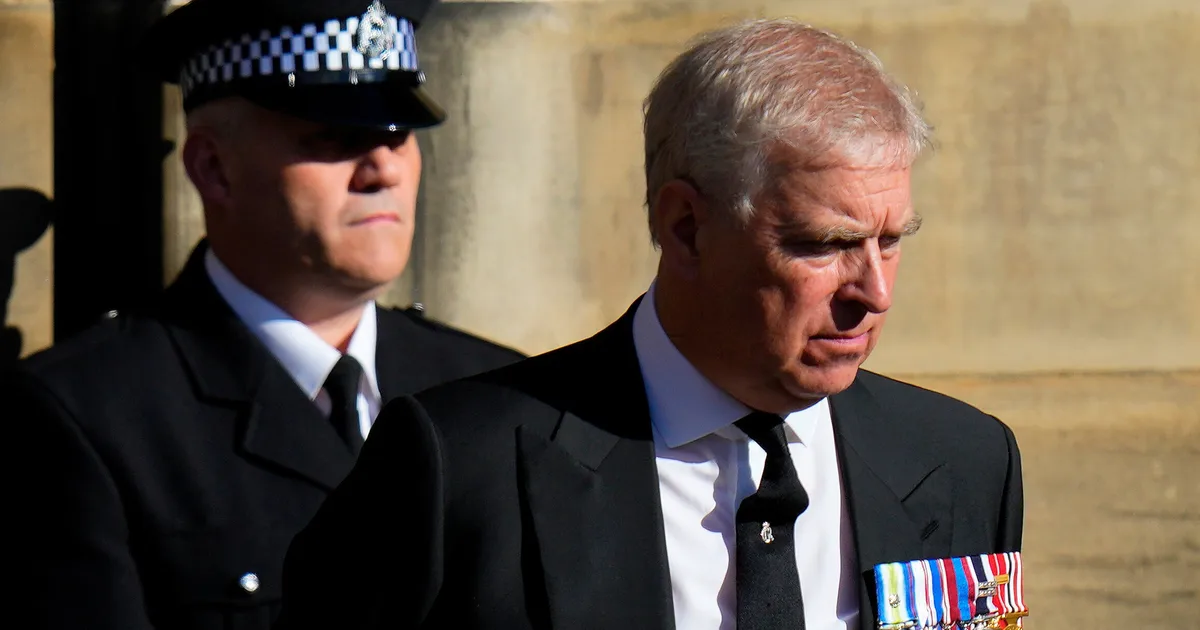
Calls for Andrew Mountbatten-Windsor to be removed from the line of succession are growing following the former prince’s arrest.
The former Duke of York was held in custody for 11 hours on Thursday, on his 66th birthday, before being released under investigation.
Andrew has always denied any allegations of wrongdoing.
He was detained on suspicion of misconduct in public office while his homes in were searched by police.
It’s understood that the search in his Norfolk home on the Sandringham estate has concluded while officers continued to look through his Royal Lodge home in Windsor, Berkshire, on Friday.
The shocking turn of events comes after three million documents related to the dead paedophile Jeffrey Epstein were released by the US Department of Justice.
Several UK forces have since started to look into various claims, including the possibility that Andrew sent confidential information to Epstein in his capacity as Britain’s trade envoy.
The documents suggest the former prince may have forwarded government reports from his visits to Vietnam, Singapore and China to the disgraced financier.
Thames Valley Police also said in February that it was assessing a separate allegation that a second woman was sent to the UK by Epstein for a sexual encounter with Andrew in 2010.
The woman, who is not British, was in her 20s at the time.
Yesterday’s arrest was not in relation to allegations of any sexual offences.
Andrew stepped down from his royal duties in 2019 after a car crash Newsnight interview about his friendship with Epstein.
When further allegations about their association emerged in October, King Charles stripped Andrew of his titles – including his status as prince.
However, Andrew remains eighth in line to the throne, behind Prince William and his children, and Prince Harry and his children.
Legislation via an act of parliament would be needed to remove him from the line of succession, and MPs would have to debate the topic.
These latest claims, alongside the arrest, have triggered calls for more extreme action.
A YouGov poll has found 82% of the public think Andrew should be removed, while 6% disagreed and 12% said they were not sure.
Lib Dem leader Ed Davey said the monarchy must work to make sure Andrew can “never become king”.
He said: “The most important thing right now is that the police be allowed to get on with their job, acting without fear or favour.
“But clearly this is an issue that parliament is going to have to consider when the time is right, naturally the Monarchy will want to make sure he can never become King.”
Meanwhile the Green Party leader Zack Polanski has called for a full statutory inquiry.
“I think its pretty awful, I think there are lots of questions to be asked,” he said. “We obviously need to wait for the legal process to make its way, but I would say we really need a full statutory inquiry.”
He argued that “when necessary” people should be “removed” from their positions – adding that he did not believe Britain should have a monarchy.
Meanwhile, shortly before Andrew’s arrest, prime minister Keir Starmer told BBC Breakfast that “nobody is above the law” when asked about the allegations against the former prince.
The King already appeared to distance the royal family from his disgraced brother on Thursday in a statement.
He wrote: “I have learned with the deepest concern the news about Andrew Mountbatten-Windsor and suspicion of misconduct in public office.
“What now follows is the full, fair and proper process by which this issue is investigated in the appropriate manner and by the appropriate authorities. In this, as I have said before, they have our full and wholehearted support and co-operation.
“Let me state clearly: the law must take its course.
“As this process continues, it would not be right for me to comment further on this matter. Meanwhile, my family and I will continue in our duty and service to you all.”
In a statement on Thursday evening, the police said: “Thames Valley Police is able to provide an update in relation to an investigation into the offence of misconduct in public office.
“On Thursday we arrested a man in his sixties from Norfolk on suspicion of misconduct in public office.
“The arrested man has now been released under investigation.
“We can also confirm that our searches in Norfolk have now concluded.”

Betting sites UK | Best & new online bookmakers

Sam Altman claims ChatGPT’s adult mode will ‘be able to safely relax the restrictions’ of the chatbot, but firing a critic of the plan is a reason to be wary
BofA raises CF Industries stock price target on strong Q4 results


-

 Video4 days ago
Bitcoin: We’re Entering The Most Dangerous Phase
-

 Tech6 days ago
Luxman Enters Its Second Century with the D-100 SACD Player and L-100 Integrated Amplifier
-

 Crypto World3 days ago
Can XRP Price Successfully Register a 33% Breakout Past $2?
-

 Sports4 days ago
GB's semi-final hopes hang by thread after loss to Switzerland
-

 Video15 hours ago
XRP News: XRP Just Entered a New Phase (Almost Nobody Noticed)
-
 Tech4 days ago
The Music Industry Enters Its Less-Is-More Era
-

 Business3 days ago
Infosys Limited (INFY) Discusses Tech Transitions and the Unique Aspects of the AI Era Transcript
-

 Video3 days ago
Financial Statement Analysis | Complete Chapter Revision in 10 Minutes | Class 12 Board exam 2026
-

 Entertainment2 days ago
Kunal Nayyar’s Secret Acts Of Kindness Sparks Online Discussion
-

 Tech2 days ago
Retro Rover: LT6502 Laptop Packs 8-Bit Power On The Go
-

 Crypto World7 days ago
Bhutan’s Bitcoin sales enter third straight week with $6.7M BTC offload
-
 Sports2 days ago
Clearing the boundary, crossing into history: J&K end 67-year wait, enter maiden Ranji Trophy final | Cricket News
-

 Entertainment2 days ago
Dolores Catania Blasts Rob Rausch For Turning On ‘Housewives’ On ‘Traitors’
-

 Business2 days ago
Tesla avoids California suspension after ending ‘autopilot’ marketing
-
 NewsBeat5 days ago
The strange Cambridgeshire cemetery that forbade church rectors from entering
-

 Crypto World2 days ago
WLFI Crypto Surges Toward $0.12 as Whale Buys $2.75M Before Trump-Linked Forum
-
 NewsBeat5 days ago
Man dies after entering floodwater during police pursuit
-

 Crypto World20 hours ago
83% of Altcoins Enter Bear Trend as Liquidity Crunch Tightens Grip on Crypto Market
-

 NewsBeat6 days ago
UK construction company enters administration, records show
-

 Politics3 days ago
Eurovision Announces UK Act For 2026 Song Contest