
Politics
Starmer’s defence dilemma – UK in a changing Europe

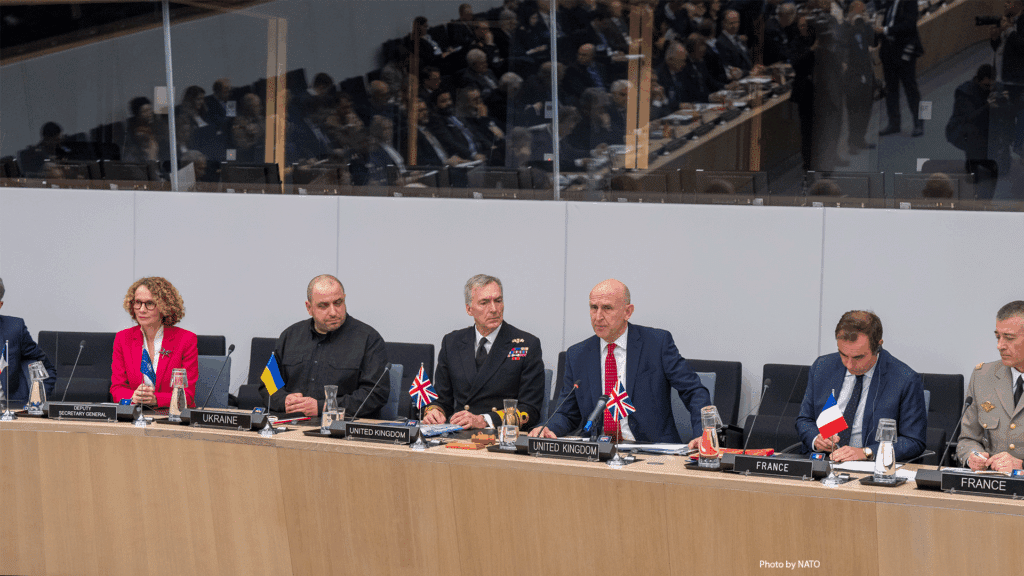
Andrew M Dorman reflects on UK defence policy and argues that while the UK must deintegrate its defence capabilities from the US and implement the recommendations of this year’s Strategic Defence Review more quickly, there are economic tradeoffs.
Since Donald Trump began his second term as US president, Keir Starmer and many of his fellow European leaders have acted as if in 2029 there will be some form of return to ‘normality’.
Starmer has continued the policies of his Conservative predecessors. Through a royal visit, promises to increase defence spending and an absence of criticism, Starmer has hoped to minimise US tariffs on the UK, keep the US in the NATO alliance and supportive of Ukraine in its war with Russia. He has also repeated the standard British strapline emphasising the importance of the UK remaining Europe’s leading military power and some form of bridge between the US and Europe.
Whilst the on-off alignment of the US with the Russian position on Ukraine has been a real concern, the new US National Security Strategy marks a major change in US foreign policy. Its language is deeply antagonistic towards Europe, including the United Kingdom, and has been well received in Russia. It speaks of US involvement in European domestic politics in support of more nationalistic, extreme parties and questions the NATO Article V guarantee.
For the United Kingdom this represents a further nail, if not the final nail, in the coffin of the US-UK special relationship and America’s walk away from the defence of Europe. The United States can no longer be relied on to help defend the West and its values. Rather any US involvement will be on a transactional basis, and the United Kingdom needs to rapidly unpick 80 years of defence integration with, and dependence on, the US. This is no small task and will need to be undertaken in partnership with the UK’s European allies. The failure to do so will leave the UK isolated and entirely dependent on the whims of the US presidency. To date, there is no evidence that Starmer has taken on board this new reality.
Since taking office Starmer’s government has undertaken an externally led Strategic Defence Review (SDR) which has emphasised both the near time threat posed by Russia and a longer-term one posed by other authoritarian governments such as China, Iran and North Korea. All of this has been accepted mainstream orthodoxy within Britain’s wider defence establishment.
His government has accepted the SDR’s recommendations, including continuing the replacement of the UK’s nuclear capabilities, starting to develop a second nuclear delivery system, providing a reserve corps of two army divisions and significantly enhancing Britain’s maritime contribution to the North Atlantic and Norwegian Sea. The government has pledged to increase defence spending to 2.5% of GDP by 2027, and 3% by the end of the parliament. They have also committed to the new NATO 3.5% target for direct defence spending plus an additional 1.5% on defence related infrastructure by 2035.
The problem is the glacial pace of delivery, largely caused by a lack of money. For example, construction of six new munitions and energetics factories to allow the UK to produce enough munitions in wartime has yet to start and orders for the replacement for the AS90 self-propelled guns given to Ukraine have yet to be made leaving the British Army desperately short of artillery. The promised Defence Investment Plan is rumoured to be unaffordable with a basic choice boiling down to whether the UK has an army or navy based on current planned funding levels. Moreover, within the SDR there is no sign of any prioritisation amongst the 60+ recommendations
With Christmas fast approaching Keir Starmer has a defence dilemma before him. He is confronted with Russia engaged in sub-threshold warfare with much of the west and the potential for a real war with Russia in the next 5 years. For example, mysterious drones have been seen over the French nuclear submarine base, over airfields in Belgium and Denmark and the Republic of Ireland whilst ships linked to Russia continue to snag undersea cables. The new US National Security Strategy attacks Europe and Trump continues to question NATO’s Article collective security guarantee. At the same time, the British economy is struggling to recover from the effects of Covid-19 and leaving the single market. The UK has high levels of overall debt and a current account deficit of around 4.5%. It has crumbling infrastructure and social services in need of additional resources.
In some ways the situation is reminiscent of the position that Clement Attlee, one of his Labour predecessors, found himself in in 1950. Attlee was confronted with the outbreak of the Korean War, real fears of a third world war (see the 1950 Defence and Global Strategy Paper), a nation recovering from the effects of World War II including the continuation of rationing, war damaged infrastructure, a high level of national debt and social services in need of investment. Attlee’s solution was to embark on rapid rearmament on a scale far higher than NATO’s 3.5+1.5% target to help deter war paid for, in part, through taxation such as the introduction of prescription charges.
Britain’s European allies in Scandinavia, the Baltic States, Poland, Germany and France have all responded to the threat posed by Russia with significant increases in defence spending. The question for Starmer is whether to do likewise, fully fund rearmament and maintain Britain’s position as Europe’s leading military power and supporter of Ukraine or to dither, obfuscate and leave the UK dependent on a disdainful US ally who will decide on the day whether to help.
By Andrew Dorman, Professor of International Security, King’s College London.



As Labour Together has been in the news a lot in recent months, here’s a breakdown of who’s been funding it.
We focused on Electoral Commission data for donations to Labour Together over the value of £40,000. And the following individuals have given the biggest donations:
Labour Together itself has donated over £1.1m in total to Keir Starmer’s Labour Party since late 2023.
1. Martin Taylor (£4m+)
The data shows that key Labour Together donor Martin Taylor has given over £4m to the organisation since 2015. The biggest donation was £800,000, which the Electoral Commission noted as “accepted” on 28/03/2024.
Taylor also donated an extra £3.5m to Keir Starmer’s Labour Party in early 2024. And he had already given Starmer himself a direct donation of £95,000 on 10/03/2020.
MPs that Taylor has given significant donations to include former Labour Together secretary Josh Simons (£47,000 on 21/11/2024), Dan Jarvis, Angela Rayner, Shabana Mahmood, and Lucy Powell. And he’s donated significant sums to the following Constituency Labour Parties (CLPs):
- Streatham and Croydon North, the CLP of former Labour Together director Steve Reed.
- Finchley and Golders Green, whose MP is Sarah Sackman. She has also received thousands of pounds of donations from Labour Together itself and Labour Together donors Trevor Chinn and Richard Greer (who, along with Labour Together and fellow donors, has also backed David Lammy and Angela Rayner).
- Chipping Barnet, whose MP is Dan Tomlinson. He has received thousands of pounds from Labour Together and its donors, including Chinn and Lubner.
- Aldershot, whose MP is Alex Baker. She also got £10,000 from Labour Together.
- Greenwich and Woolwich, whose MP is Matthew Pennycook.
The Electoral Commission has recorded over £9.3m worth of political donations from Taylor in total. These include £591,800 that he gave the Labour Party under Ed Miliband’s leadership.
2. Gary Lubner (£1.8m+)
Gary Lubner has given Labour Together over £1.8m since 2023. The biggest donation of £250,000 came on 06/10/2023.
Lubner gave Starmer’s Labour £4.5m before the 2024 election, including a massive single payment of £2.2m on 30/05/2023.
Lubner’s biggest donation to a specific politician seems to have been £28,500 on 30/01/2026 for new MP Miatta Fahnbulleh. Fahnbulleh had previously been of interest to Labour Together, serving as a “Policy Fellow” there. Lubner had already given her £5,000 back in 2024 too.
Lubner has also joined Labour Together and fellow donor Stuart Roden in donating thousands of pounds to new MP Mike Tapp.
In total, Lubner has made over £9.9m worth of political donations, according to the Electoral Commission.
3. David Sainsbury (£1.2m+) and Francesca Perrin
A political donor of over £47m in total, David Sainsbury has given more than £1.2m to Labour Together since 2024. Having donated a massive single sum of £8m to the Liberal Democrats in 2019, his biggest donation to the Labour Party – of £3m – came on 06/04/2023.
Sainsbury gave his biggest individual donation of £44,000 to MP Darren Jones on 26/09/2025. Labour Together had previously given Jones over £50,000 in early 2024.
Sainsbury’s daughter Francesca Perrin became a director of Labour Together Limited in 2024. She has given the organisation at least £310,000 since 2023. She also gave Starmer’s Labour a massive donation of £1m on 01/12/2023, following three more donations to the party totalling another £1m between 2021 and 2022.
Perrin’s biggest donations to individual MPs went to Shabana Mahmood and Wes Streeting, who each got £50,000 donations from her in late 2025.
4. Trevor Chinn (£400,000+)
While Trevor Chinn’s biggest individual donation to Labour Together was £50,000 on 29/01/2021, he also consistently sent it donations of over £10,000. In total, he has donated well over £400,000 to the organisation over the years. And all his political donations to date easily surpass £1m.
Chinn was a director of Labour Together Limited from 2016 to 2024. As the Canary has reported, he also:
made donations to Tony Blair (while MP), Ruth Smeeth, Tom Watson, Rachel Reeves, Ian Austin, and Wes Streeting
Fellow directors during Chinn’s tenure included MPs Lisa Nandy, Steve Reed, and Jon Cruddas.
Nandy has received thousands from Chinn and fellow Labour Together donor Simon Tuttle. Reed, meanwhile, has received thousands from Taylor, Chinn, Labour Together, along with massive support from major Labour and Tory donor Lisbet Rausing (also a key backer of Ed Miliband). Cruddas also got thousands from Chinn and Taylor.
By 2024, Labour MPs had received around £200,000 from Chinn, including £50,000 for Keir Starmer’s 2020 leadership campaign. After Starmer, Rachel Reeves and Angela Rayner are the next biggest recipients of Chinn’s cash, receiving at least £25,000 each.
Chinn has also funded new MP Damien Egan (as has Gary Lubner).
5. Stuart Roden (£100,000+)
Stuart Roden gave Labour Together £100,000 on 31/01/2025. He has made over £1.6m of political donations since 2023, primarily to Starmer’s Labour Party.
In 2024, he gave four CLPs £5,000 each. These were:
- Peterborough CLP, whose new MP since 2024 has been Andrew Pakes. Also in 2024, Pakes received £15,000 from Gary Lubner and £10,000 from Labour Together.
- John Mann‘s former CLP of Bassetlaw, where his wife Jo White has been an MP since 2024. Trevor Chinn also donated over £3,000 to Bassetlaw CLP between 2023 and 2024, with White declaring £8,350. Chinn had previously donated thousands to Mann when he was an MP too.
- The North East Somerset and Hanham constituency of Dan Norris. Chinn donated to his campaign too, as did fellow Labour Together donor Ecotricity Group Ltd. Other big donations for Norris came from former Tony Blair and Gordon Brown adviser Jonathan Mendelsohn (owner of Red Capital) and former David Miliband backer David Claydon. Norris remains an MP despite his 2025 suspension from Labour.
- Midlothian North and Musselburgh CLP, which also got a £5,000 donation from Labour Together Limited in 2024 and £3,000 from Trevor Chinn between 2023 and 2024. Kirsty McNeill has been the Midlothian MP since 2024. Other donations to McNeill included £15,000 from Gary Lubner and £3,000 from fellow Labour Together donor William Reeves.
Other Labour Together donors
William Reeves has given Labour Together at least £90,000 since 2024. He has also given the Liberal Democrats over £200,000 since 2023, along with just £25,000 to Starmer’s Labour.
Smaller donors have included Fiona Mactaggart, Ian Laming, William Perrin, Daniel Luhde-Thompson, Nick Marple, Ecotricity Group Ltd, Clive Hollick, Simon Tuttle, Paul Myners, Richard Greer, and Sean Wadsworth.
Current or former Labour MPs mentioned in this article
In this article, we have mentioned the following current or former Labour MPs who have received significant funding from Labour Together or its donors.
Government ministers
- Dan Jarvis
- Darren Jones
- David Lammy
- Shabana Mahmood
- Kirsty McNeill
- Ed Miliband
- Lisa Nandy
- Matthew Pennycook
- Lucy Powell
- Angela Rayner
- Steve Reed
- Rachel Reeves
- Sarah Sackman
- Keir Starmer
- Wes Streeting
- Mike Tapp
- Dan Tomlinson
Current Labour MPs
- Alex Baker
- Damien Egan
- Miatta Fahnbulleh
- Andrew Pakes
- Jo White
Current Lords
- Ian Austin
- John Mann
- Ruth Smeeth
- Tom Watson
Former Labour MPs
- Jon Cruddas
- Dan Norris
By Ed Sykes

Christian Climate Action, a nonviolent climate protest group, received a blessing from Sarah Mullally, the new Archbishop of Canterbury.
Members of the group met the Archbishop in Chartham, Kent, on the final day of her pilgrimage to Canterbury. They asked her to bless their work to protect the climate and nature, which includes acts of protest and civil disobedience.
As part of its Stop Crucifying Creation campaign, Christian Climate Action (CCA) is calling on the Church of England to speak out publicly against the forces driving the climate crisis.
Exchange of blessings
Rev Sue Parfitt asked the Archbishop to stop and to bless the group. Archbishop Mullally did so, using the Old Testament blessing from the book of Numbers:
May the Lord bless you and keep you, may the Lord make his face shine upon you and be gracious to you and grant you peace.
Rev Parfitt, then gave a blessing to Archbishop Sarah, saying:
We pray for you, Sarah, as Archbishop; that you will know the love of God, the company of the Spirit and the light of Christ as you meet him, crucified and risen, in people and places along your pilgrim way. Amen.
Christian Climate Action continue to mobilise
Members of CCA will be on the streets on Wednesday 25 March, when the Archbishop will be officially installed at the cathedral.
Rev Parfitt said:
We were delighted to take part in lining the route as Archbishop Sarah ended her pilgrimage to Canterbury on Passion Sunday. Christian Climate Action received a blessing from her on their continuing work to have the Church prioritise the Climate and Nature Emergency.
Rev James Grote, who was also present, said:
We wanted Bishop Sarah to bless Christian Climate Action in its work of giving voice to all those who struggle hard and painfully for justice in the climate and nature emergency where people are losing their lives, homes, communities and work because of flood, drought and fire.
We pray that, under the leadership of the new Archbishop of Canterbury, the Church of England will speak out and set things right as it calls the government to act, challenges the fossil fuel industry and the banks which fund it, and the media which is complicit.
More than 70 members of CCA have also written to the Archbishop urging her to back Stop Crucifying Creation. Action proposed in the document includes a switch to ethical investments and banking, re-wilding Church land, lobbying for positive climate and nature action, and caring for victims of the crisis.
Featured image via Christian Climate Action

Powered systems that controlled airflow and ventilation through the two reactors at Wylfa nuclear power station, Anglesey have been permanently switched off.
The systems were fundamental to maintaining dry air flow and humidity levels to support the safe conditions needed for fuel transfer and the removal of the 87,890 fuel elements during the site’s defueling phase.
As the systems are no longer required, turning them off brings environmental benefits and delivers efficiencies in energy costs.
All 22 of the first-generation Magnox nuclear reactors in the current Nuclear Restoration Services (NRS) decommissioning programme are breathing naturally – marking a pivotal point in the Nuclear Decommissioning Authority (NDA) group’s mission.
Wylfa Site Director, Stuart Law, said:
“This is a great achievement for NRS and the NDA. It reflects years of careful planning and collaboration with our regulators to ensure compliance while delivering real benefits for the site and the environment.”
This success has simplified long term operational processes, enhanced environmental safety by eliminating the use of hazardous substances such as glycol and refrigerant gases and saved around £130,000 in annual energy costs.
Ross McAllister, NDA Group Environment Health Safety and Wellbeing Director, said:
“This is an important milestone for Wylfa and the wider NRS estate. These systems have been vital for many years and switching them marks tangible progress towards simpler, more sustainable and cost-effective operations on site.
It also demonstrates how collaboration supports progress across the NDA group as we deliver on our mission to leave a positive legacy for generations to come.”
Approximately 1 tonne of the associated steelwork, pipework and cabling removed was recycled. A further 1.4 tonnes of scrap metal from the four dehumidifier units will be recycled when the hazardous components inside have been removed and treated by waste management specialists Robert Hopkins Environmental.
The completed breathing reactors project paves the way for the installation a new electrical system that will disconnect Wylfa from its aging 132kV transformer and connect it to a smaller, more efficient electrical supply from a neighbouring village.

Iran appears to be asserting its power over the Straits of Hormuz, a key maritime route which carries a fifth of the world’s oil and gas shipments.
The US-Israeli war against Iran—as the Canary previously reported and predicted—saw Tehran lock down the narrow channel.
The conflict began with unprovoked US-Israeli strikes on 28 February. It has been since been reported by the Pentagon, its European allies, and the UN atomic watchdog, that there was no imminent threat from Iran, nor evidence to suggest it was developing a nuclear weapon.
If it wasn’t clear from Trump’s fuzzy comments, the war has been going terribly from the get-go. Donald Trump is still searching for off-ramps while threatening to strike Iran if it obstructs vessels passing through the narrow strait.
And as the war of words continues, the US still appears to be sending thousands of US troops to the region.
While Trump says he’s holding talks with Iran, the U.S. is still deploying thousands of troops against Iran.
— USS Boxer ARG + 11th MEU (~2,500 Marines).
— USS Tripoli ARG + 31st MEU (~2,200 Marines).
Total in region: 50,000+ US troops
82nd Airborne Division (paratroopers):…
— Clash Report (@clashreport) March 23, 2026
And Trump has even suggested that the US and Iran could control the straits jointly.
Iran’s approach has been much less erratic. The country has locked in for a long war and turned off a key tap in the global energy economy.
Iran’s new power
The Straits of Hormuz is a narrow channel between the Persian Gulf and the Gulf of Oman. They are natural chokepoint. Like the English channel, they are only 21 miles wide at their narrowest point. 20% of the world’s oil supply passes through annually.
Shipping experts reported on 23 March that China has paid Iran $2m to let a ship through a new ‘safe route’. This may suggest China has at least tacitly accepted Iranian sovereignty over the strait.
So the first confirmed mainland Chinese vessel just paid Iran $2 million to transit Hormuz. This is the moment Beijing effectively recognized Tehran’s de facto control over the strait. Every Chinese ship that follows legitimizes the toll a little more, and that $2 million per…
— Supply Signal (@SupplySignalAI) March 23, 2026
As one supply intelligence account noted this could mark a major shift in global economic power:
So the first confirmed mainland Chinese vessel just paid Iran $2 million to transit Hormuz. This is the moment Beijing effectively recognized Tehran’s de facto control over the strait.
Adding:
Every Chinese ship that follows legitimizes the toll a little more, and that $2 million per crossing gets baked into global freight rates before you can say “supply chain costs.” The question isn’t whether more Chinese vessels pay. It’s how long before this becomes just another line item in shipping contracts.
Ship tracking website Marine Traffic said Iran was using its control of the straits to selectively signal its newfound power:
Hormuz traffic sends mixed signals
Iran appears to be pursuing a calibrated strategy in the Strait of Hormuz, using selective vessel passage as strategic signalling rather than imposing full disruption. According to #MarineTraffic data, some activity may be resuming, with nine… pic.twitter.com/fKjlPhdHYx
— MarineTraffic (@MarineTraffic) March 24, 2026
The Financial Times wrote on 23 March, as Trump appeared to signal he wanted negotiations, that Tehran’s leverage was formidable:
Iran has for years threatened to shut down the strait, through which a fifth of the world’s oil and gas passes. And now they have done so, Iranian officials have indicated, it will no longer be business as usual.
Tehran’s ability to slow the flow of traffic to a near halt through attacks and threats has been its main point of leverage over Trump and the global economy, pushing energy prices to multiyear highs.
The FT added that:
An Iranian MP said that would be the new normal, suggesting Iran would extract a toll from vessels.
The Strait of Hormuz is no longer closed. It is no longer open. It is something the world has never seen before: a permissioned corridor run by the Islamic Revolutionary Guard Corps, priced at $2 million per vessel, payable in yuan.
the pace of vessel transits across the Strait of Hormuz picked up over the weekend with at least 16 vessels crossing the chokepoint since Friday. Twelve of those vessels sailed through the new route that transits Iranian territorial waters.
The US and Israeli attacks have not panned out as the aggressors planned. Apart from widespread destruction across the region, one result has been to hand Iran greater control of a vital energy corridor.
Whether or not the US and Iran return to talks, the terrain of global economic power seems to be being re-shaped before our eyes.
Featured image via the Canary

Financial Times Stock Exchange 100 Index — otherwise known as FTSE 100—shows that the share value of the top 100 UK companies has leapt by 20% in a year. Meanwhile, overall UK growth has stagnated at 1.3% in 2025 and real terms worker pay is largely lower than in 2008.
Economic inequality
The FTSE 100 is a corporate oligarchy because it’s largely remained the same over the past decade. Only an average of 125 companies have rotated in and out of the FTSE 100 over this period.
Since the index was launched in the 1980s, only 500 companies have had a place in it. That’s despite massive advancement in tech and other sectors.
The UK economy could be made up of a healthy blend of small-medium businesses. Meanwhile, the government could take strategic public ownership of essentials— including pharmaceuticals—and provide housing at cost price. If that were the situation, the fluctuation in the FTSE 100 would be much higher.
Instead, it has long been dominated by a revolving door of the same profiteering companies. And it’s stock market value has leapt by 55% in the past five years.
Increase in bosses pay
The top executives of FTSE 100 companies have been substantially and vertically rewarded for the increase in stock price. Last year, the boss of Lloyds Bank received a 20% pay increase, while the boss of NatWest had a 35% pay increase.
It is worth noting that due to the economic shocks of the unlawful US-Israel war against Iran, some of the largest multinational oil companies like BP and Shell—part of the top FTSE 100—may stand to benefit from rising oil prices. Meanwhile, average citizens are left to foot the bill of rising energy bills.
Wealth concentration
Corporate capitalism is about maintenance of existing wealth and power rather than a truly competitive and diverse economy. Small and medium size enterprises receive between just 2% and 5% of lending from banks, despite making up 60% of private sector jobs.
With that in mind, a mixed economy of common and private ownership could be much more fruitful than the dominance of a few large corporations. The government can strategically invest in the economy and, to a degree, plan what resources and expertise will become necessary. It’s clear that AI and automation (the fourth industrial revolution) would be highly beneficial.
Featured image via the Canary/Unsplash

Campaign group 350.org has responded to the World Meteorological Organisation’s (WMO) latest report. It sounds the alarm on a global climate “state of emergency”, saying that the crisis will worsen the humanitarian toll of soaring oil and gas prices driven by the Iran war. 350.org urged countries to protect their citizens from climate harm and rising costs, and to start urgently transitioning their economies away from fossil fuels.
The World Meteorological Organisation’s State of the Global Climate 2025 pronounced 2015-2025 as the hottest 11 years on record. And it warns that weather has become more extreme on a day-to-day basis, impacting millions of people and causing billions in economic losses.
The report also said that the increase in the annual carbon dioxide concentration in 2024 was the largest annual increase recorded, driven by continued fossil fuel emissions. Amid an energy crisis described by the International Energy Agency as the ‘worst’ in decades, United Nations secretary-general Antonio Guterres points to “our addiction to fossil fuels” as destabilising both the climate and global security.
The UN’s World Food Programme has warned that if the Iran conflict continues, 45 million more people could face acute hunger due to rising prices. Meanwhile, scientists warn of the possibility of El Niño pushing heat records to record highs and causing severe heatwaves, droughts and floods this year.
Anne Jellema, 350.org executive director said:
Soaring prices for fuel, fertiliser and food could be the last straw for millions of families in the global South already pushed into poverty by climate change.
Governments must act now to stop oil and gas companies profiting from the war— by taxing their windfall profits to finance protections for ordinary people. Some of the revenues should be used to fund wider access to rooftop and balcony solar and other renewable solutions that will immediately reduce families’ bills while also strengthening national energy security.
If governments care about their people, the time is now to end our addiction to crisis-ridden and planet-destroying fossil fuels.
On 24-29 April, the first conference on transitioning away from fossil fuels will take place in Santa Marta, co-hosted by the governments of Colombia and the Netherlands. 350.org urges all governments to join this momentous gathering of countries to plan a fossil fuel phaseout, pursuing a global commitment first made at the COP28 UN climate talks.
Featured image via the Canary

The post ‘The intifada has come to London’ appeared first on spiked.

A parliamentary debate on Thursday 26 March will aim to give much-needed publicity to a group of chronic, genetic illnesses that most medical professionals class as ‘rare’ – when in fact they are just rarely diagnosed. Moreover, it will hopefully shine a light on two even less diagnosed conditions that are comorbid with this group – but which can be life-threatening.
EDS: not rare, just rarely diagnosed
The Ehlers-Danlos syndromes (EDS) are a group of 13 complex genetic tissue disorders. These conditions affect the entire body, often leaving people in daily pain, exhaustion, and isolation. The hypermobility spectrum disorders (HSD) are connective tissue disorders whose features overlap with the most common type of EDS, hypermobile EDS.
These conditions are lifelong, incurable, and chronically under-recognised, with limited treatment options and far too little understanding. EDS and HSD also often come with other long-term conditions such as mast cell activation syndrome (MCAS), postural orthostatic tachycardia syndrome (PoTS), gastroparesis, myalgic encephalomyelitis (ME), and Long Covid.
Peer-reviewed studies indicate that as many as 1 in 500 people in the UK (over 135,000 individuals) are living with EDS or HSD, many of whom remain undiagnosed for years or even decades. The lack of awareness means people are often misdiagnosed with anxiety, depression, or psychosomatic illnesses. This leaves them feeling dismissed, isolated and without access to the care they need.
Life-threatening conditions
However, what are even less-readily diagnosed are craniocervical and atlantoaxial instabilities (CCI and AAI). These conditions are characterised by the joints in the cervical junction moving in ways they wouldn’t in someone without EDS. It means that often, blood flow to the head is restricted, and nerves in the neck are compressed or even damaged.
In the worst cases, any injury to a person’s neck or head can cause cerebrospinal fluid leaks from either the neck or head areas. Crucially, CCI and AAI can also be so severe that a person’s brain and skull begin to sink onto their cervical junction – which can be life-threatening.
Yet on the NHS, these conditions are not recognised in the context of EDS and HSD. They cannot readily be diagnosed due to the need for an upright MRI scanner. And if they even are, there are no treatment options available.
For people in the UK with severe CCI and AAI, the only options are to pay privately abroad for surgery to effectively fuse their cervical junctions in place – and this carries huge risks.
Neglected and ignored
Yet the government knows all too well about EDS, HSD, and CCI/AAI. However, successive administrations have failed to take any meaningful action. The Canary was told by one senior NHS neurosurgeon that he and a group of other senior practitioners advised the-then health secretary Jeremy Hunt in 2013 that upright MRI scanners were desperately needed in the NHS. He ignored them.
Fast-forward to earlier in March 2026, and the now-Labour government effectively batted-away an MP’s question over CCI and AAI; failing to recognise the disastrous state of care for people living with the conditions.
There are a lot of reasons why medical professionals and successive governments have ignored EDS and is associated comorbidities. Misogyny is one. Most people living with the conditions are women. Prejudicial tropes are another. For too many years, people called those living with EDS ‘double jointed’ and they were all too often misdiagnosed with other illnesses. The psychiatry lobby is involved, too – as it all too often seems determined to psychologise what are actually physical illnesses. Plus, a lack of robust research is another.
So, on 26 March Labour MP Josh Newbury organised a Westminster Hall debate on EDS, HSD, CCI, and AAI. You can get involved by asking your MP to attend. Charity EDS UK has created an online letter tool, which you can access here.
EDS must be properly recognised
EDS UK is calling for urgent, practical changes to improve care:
-
Integration of EDS and HSD into NHS service specifications and long-term condition strategies.
-
Joined-up, multidisciplinary care across primary and secondary services.
-
Training and support for healthcare professionals.
-
A national multidisciplinary team (MDT) for rare complex cases like CCI.
However, the Canary is well aware this will not be easy. So, the more MPs that attend the debate the better. EDS and its comorbidities are devastating for the people living with them and their loved ones. The government needs to do so much more – and this debate could hopefully be the start of that.
Featured image via the Canary
Nuclear Transport Solutions sign new strategic agreement on development of transport package designed to safely move the next generation of nuclear fuel.
Nuclear Transport Solutions (NTS), the world’s leading nuclear transport specialist, and nuclear technology company Westinghouse have signed a new strategic agreement to work together on the development of Pegasus – NTS’s revolutionary transport package designed to safely move the next generation of nuclear fuel.
The signing took place at the British Embassy, in Washington DC, as part of a prestigious event celebrating the UK and US commitment to advancing nuclear energy generation.
Pegasus is designed as the world’s leading transport package for High Assay Low Enriched Uranium (HALEU), a more efficient type of nuclear fuel that will power many of the next generation of advanced reactors.
These reactors are key to delivering low-carbon, homegrown energy and powering emerging technologies such as artificial intelligence.
The UK-US agreement reinforces secure, reliable energy supply in both countries. It formalises the sharing of technical expertise, safety protocols, and design insights between NTS and Westinghouse, accelerating development of Pegasus for deployment. It also strengthens collaboration on engineering, regulatory compliance, and fuel handling standards.
Ben Whittard, NTS Co-CEO, said:
“This partnership allows us to deliver our expertise in the secure transport of advanced nuclear fuel in the UK and US. The growth of AI and the need for reliable, ultra-low carbon energy demonstrates the importance of nuclear power in our future, and we’re thrilled to be at the forefront of its development.”
NTS brings over 50 years of international experience and is recognised as a trusted partner for safe, secure and reliable nuclear transport expertise.
In 2024, the UK government awarded NTS £10.5 million to lead the development of the UK’s transport capability for HALEU. As part of the Nuclear Decommissioning Authority (NDA), NTS benefits from close links to government and access to some of the UK’s strongest nuclear expertise.
Sophie Lemaire, Interim Co-President of Westinghouse Nuclear Fuel, said:
“We are very pleased with our new collaboration with NTS to co-develop the Pegasus HALEU transport package. This is an important step in making HALEU available in the US and UK.”
The signing marks another significant step in the UK-US golden age of nuclear energy security. It is helping to unlock a major expansion of new nuclear projects across both countries, supporting energy security and the UK’s mission to deliver more clean, homegrown power.
Minister for Nuclear Lord Vallance said:
“Developing our own capability to make and transport advanced nuclear fuel is critical to shoring up our position as a nuclear world leader.
Not only does this improve our energy security at home and reduce our reliance on Russian nuclear fuel, it provides export opportunities to grow our economy and ensure our allies can build resilient supply chains.
This agreement builds on our close co-operation with the US on nuclear energy.”
NDA Group CEO, David Peattie, said:
“This agreement is yet another example of how the NDA group is driving forward the Government’s ambition to become a clean energy superpower.
Pegasus represents a transformative step in advancing the UK’s energy independence and low-carbon ambitions, unlocking export potential and cementing the nation’s role as a world leader in nuclear innovation.
It also further reinforces NTS’s place as a global leader in delivering safe, secure, and dependable nuclear transport and logistics solutions.”
British Embassy in Washington Chargé d’Affaires, James Roscoe, said:
“Between the UK and the US, our commitment to developing new frontiers in nuclear energy is shifting from promise to reality – and this partnership between NTS and Westinghouse is a prime example of that ambition.
This deal will see British and American innovators deepen collaboration on engineering, safety, regulatory understanding, and fuel handling expertise – ensuring that our two nations maintain the technological edge in nuclear energy.”
Almost 200 containers of low-level radioactive waste that once formed part of Britain’s experiment with fast breeder nuclear reactors are being entombed.
Almost 200 containers of low-level radioactive waste that once formed part of Britain’s experiment with fast breeder nuclear reactors are being entombed in a purpose-built underground vault at Dounreay.
The containers are stacked 4 high and the spaces filled with grout before being covered by a steel reinforced concrete slab. This slab will become a floor to support more containers going to the vault for disposal.
Low-level waste from the clean-out and dismantling of the site’s reactors, fuel plants and laboratories is being packed into drums, super-compacted to become pucks and stacked inside containers that are filled with grout before being moved to their final resting place in a cavernous below-ground vault. Some larger waste items go into the containers and are grouted alongside the pucks.
Originally, it was planned to half-fill the low-level waste vault with almost 1,000 containers before entombing them in grout and covering with a reinforced concrete floor. This provides a stable base upon which another 1,000 containers can be stacked.
But the project team at Nuclear Restoration Services re-evaluated their methodology and concluded there were practical advantages by adopting a staged approach to carrying out the intermediate floor slab works.
The first stages are now complete, marking the permanent disposal of 192 half-height ISO containers that cover a fifth of the available floor-space and giving the team and their contractors valuable experience.
“The original plan was to pour concrete slabs to a depth of 500mm over the full 80m x 50m area once the vault was half full,” explained operations manager Graham Bremner.
“We looked again at this and realised there were benefits from moving to a staged approach in line with grouting instead – a significant reduction in downtime during mid-life closure of the vault for waste disposal operations and minimising significant demand of concrete supply that would impact local contractors.”
The reinforced concrete floor will eventually support point loads of containers 4 high up to 160 tonnes in weight.
The vault is one of 2 operational disposal facilities, with the other being used for low-level demolition waste.

Baseball Hall of Famer sues his old team saying they used his name and number on jersey sales without permission

This version of the Kindle Scribe Colorsoft is quite hard to get hold of

How to Generate Income with Gold and Money Received During Marriage | Financial Tips for Women


-
 Crypto World4 days ago
NIO (NIO) Stock Plunges 6.5% as Shelf Registration Sparks Dilution Worries
-

 Fashion4 days ago
Weekend Open Thread: Adidas – Corporette.com
-

 Politics4 days ago
Jenni Murray, Long-Serving Woman’s Hour Presenter, Dies Aged 75
-

 Crypto World3 days ago
Best Crypto to Buy Now: Strategy Just Spent $1.57 Billion on Bitcoin During Fear While Early Investors Quietly Enter Pepeto for 150x Potential
-

 News Videos6 days ago
RBA board divided on rate cut, unusually buoyant share market | Finance Report | ABC NEWS
-

 Crypto World3 days ago
Bitcoin Price News: Bhutan Sells $72 Million in BTC Under Fiscal Pressure, but the Smart Money Entering Pepeto Sees What the Market Does Not
-

 Politics6 days ago
The House | The new register to protect children from their abusers shows Parliament at its best
-

 Tech5 days ago
inKONBINI Lets You Spend Summer Days Behind the Register
-

 Crypto World6 days ago
Canada’s FINTRAC revokes registrations of 23 crypto MSBs in AML crackdown
-

 Sports1 day ago
Remo Stars and Kano Pillars Strengthen Survival Hopes in NPFL
-
 NewsBeat6 days ago
Residents in North Lanarkshire reminded to register to vote in Scottish Parliament Election
-

 News Videos6 days ago
PARLIAMENT OF MALAWI – PAC MEETING WITH REGISTRAR OF FINANCIAL ON AMARYLLIS HOTEL – INQUIRY LIVE
-

 Politics5 days ago
Gender equality discussions at UN face pushbacks and US resistance
-

 Business2 days ago
No Winner in March 21 Drawing as Prize Rolls to $133 Million for Next
-

 Business6 days ago
Who Was Alex Pretti? 5 Key Facts About the ICU Nurse Killed by Federal Agents in Minneapolis
-

 Sports1 day ago
Gary Kirsten Accuses Pakistan Cricket Board Of ‘Interference’, Mohsin Naqvi Responds
-

 Tech2 days ago
Give Your Phone a Huge (and Free) Upgrade by Switching to Another Keyboard
-

 Sports4 days ago
2026 Kentucky Derby horses, odds, futures, preview, date: Expert who nailed 12 Derby-Oaks Doubles enters picks
-
Sports6 days ago
Vikings Free Agency Enters Phase 2 with Key Questions
-

 Tech7 days ago
Subnautica 2 might finally be entering early access in May
You must be logged in to post a comment Login