
Politics
Susan Hall: We could see a Conservative revival in London this year

Susan Hall is a member of the London Assembly, a councillor in Harrow and a former Conservative candidate for Mayor of London
In just under 100 days, millions of Londoners will drop into polling stations in schools, halls, and civic centres across our city to cast their votes for their ward councillors, and in some cases their borough Mayor. Many will have already filled in and sent off their postal ballots. Hundreds, if not thousands, of brave Conservatives are standing to represent their homes and streets against parties of all stripes and colours, and all will find out in the small hours of the morning how successful they have been. Whether it’s their first time, their tenth time – whether they’re defending their seat, or striving to win a new one – I know personally what a challenge it can be, but also how big the reward is. To those colleagues, I say: do not lose faith.
We all have a part to play as we enter the last stretch of track to councils and townhalls across London. As I write this, I know many Conservatives across London will be out delivering leaflets until their hands are blistered and cut to the bone, in the cold and the dark, trying to complete just one more street, one more estate, one more map. They’ll be knocking on doors, just as I do, and talking to voters about the issues that hardworking Londoners are facing every day when they step outside of their front door. Some will be organising mutual aid for Conservatives just across the council boundaries from them; others will be organising the fundraisers that pay for leaflets and adverts, and which keep the lights on at associations.
Many in the media have written off the Conservatives – they want to talk about other parties, breakthrough parties, exciting flash-in-the-pan parties. But beneath their noses, there is a different story unfolding in London: one of a Conservative success, where the work that Conservatives in councils, City Hall, and Parliament, as well as activists along the way, have put in the effort that is now beginning to show signs of paying dividends. We must defend the Conservative councils that do such a fantastic job of showing up their Labour counterparts by running fiscally-responsible, common-sense-oriented agendas. We must regain councils like Westminster and Wandsworth before Labour can do any more damage than they have already achieved in the short time they’ve been running them. We must advance in streets, wards, and councils where Labour’s monolithic vote is shattering like a glass vase into fragments of disillusioned voters who want and deserve better than the contempt with which the so-called “party of workers” has held them in.
But we can only achieve these results with a concerted team effort. If you haven’t already, do think about getting in touch with your association to ask how you can help. Whether it’s as a candidate, or knocking doors, or even telephone canvasing – more Conservatives covering more ground is going to be the difference between a win and a loss in so many wards across our city, and those wins and losses compound into bigger results that will form that final picture of what London will look like on the morning of the eighth of May. Even just a few hours of your time will mean the world to candidates battling through wind and rain to meet voters, and will go a long way to helping the Conservative fightback in London turn into the Conservative victory.
In my Mayoral campaign, I met so many wonderful volunteers across London who gave everything to help get me over the line. I saw firsthand how dedicated so many Conservatives in London were, and how close it got us to winning City Hall. We have a chance now to build on that, and go further – so please, if you can, get out to help. Your local Conservative Association needs you, and now is the time to send Labour, the Lib Dems, Greens, Reform, and independents a message that we are not finished in London – we’re only just getting started.

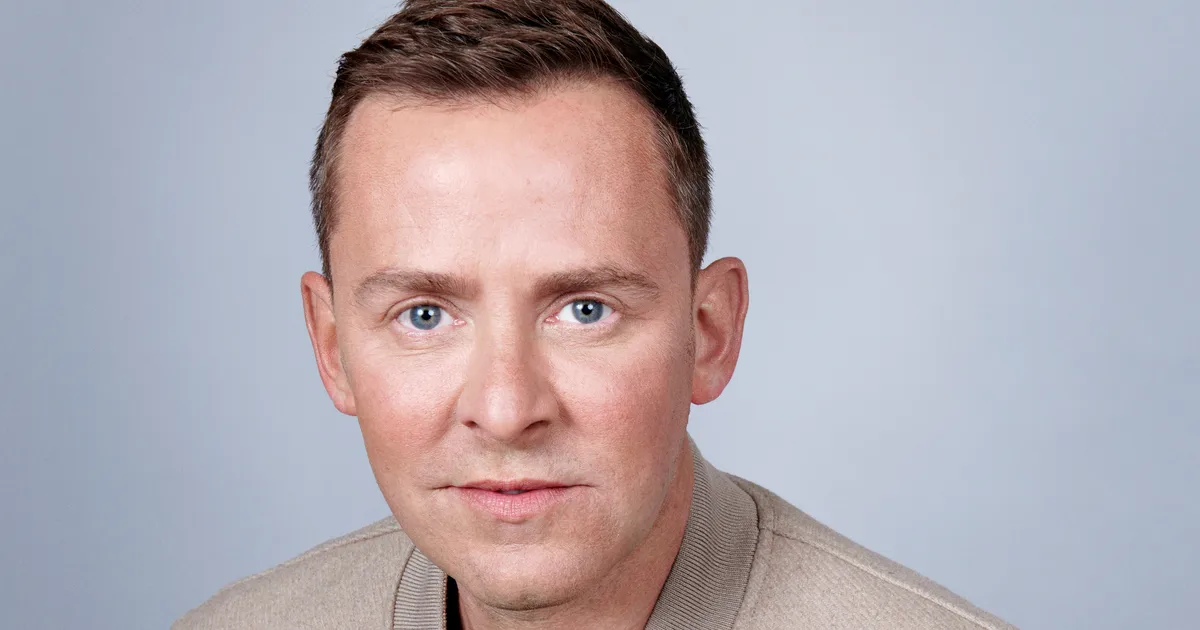
Scott Mills has been axed from his role on the BBC Radio 2 breakfast show due to allegations relating to his behaviour.
Gary Davies has been sitting in for Scott on his usual Radio 2 slot since Tuesday 24 March, with the usual host signing off his previous day’s show by telling his listeners he’d be “back tomorrow”.
BBC News subsequently confirmed on Monday morning that the presenter would not be returning, following what it described as “allegations about his personal conduct”.
“While we do not comment on matters relating to individuals we can confirm Scott Mills is no longer contracted and has left the BBC,” a spokesperson said.
Last year, Scott took over as the host of Radio 2′s flagship breakfast show from outgoing host Zoe Ball.
Before his sudden exit, he had worked with the BBC for almost 30 years, joining the corporation in 1998 as a presenter on Radio 1.
He remained with Radio 1 for more than a decade, before making the jump to BBC Radio 5 Live in 2019 and Radio 2 in 2022, initially taking over Steve Wright’s afternoon slot before being instated as the station’s breakfast show’s host.
In addition to his work on BBC Radio, he has served as the UK’s commentator during the semi-finals of the Eurovision Song Contest for a number of years, currently sharing the role with fellow broadcaster Rylan Clark.
Back in 2024, he and his now-husband Sam Vaughan took part in the second season of Celebrity Race Across The World, going on to win the show.
With the regular series of Race Across The World due to return to our screens next month, BBC News noted that Scott had been due to present a companion podcast to accompany the show prior to him parting ways with the broadcaster.
He has also competed on Strictly Come Dancing, finishing in 11th place alongside professional partner Joanne Clifton back in 2014.
Scott also fronted a one-off documentary for the broadcaster in 2011, titled The World’s Worst Place to Be Gay?.
GP Dr Dominic Greyer previously shared that strength training, good sleep, reducing inflammation, maintaining your “metabolic flexibility,” and enjoying life (in moderation) separates those who age well from those who don’t.
And a new paper, which focused on the short-lived African turqioise killifish, aimed to work out how different behaviours appeared to affect their ageing trajectories.
The fish, which were partly chosen because they shared “key biological features with longer-lived species like humans, including a complex brain”, shared the same genes and were raised in similar environments.
Researchers found that by midlife (for the fish, 70-100 days), fish that lived longer were already behaving differently from those that died sooner.
Study leader Claire Bedbrook said, “Behavioural changes pretty early on in life are telling us about future health and future lifespan”.
What were the differences?
In this study, one of the biggest factors was sleep. Fish that had longer lives mostly slept at night, while those with shorter lifespans slept both at night and during the day.
Incidentally, longer naps, more disorganised nap times, and a higher percentage of naps taken at noon and in the early afternoon have been linked to increased mortality risk among humans.
But activity mattered too.
Fish who swam harder and faster were likelier to live longer, “a measure of spontaneous movement that has been linked to longevity in other species as well”.
And fish that lived longer were more active in the daylight as well. A separate human study found that those who did the majority of their physical activity between 11am and 5pm, or mixed throughout the day, had a lower cardiovascular and all-cause mortality risk than those who moved mostly in the early morning or at night.
Ageing seemed to happen in stages
The researchers noticed that ageing seemed to occur in two to six stages rather than gradually.
“We expected ageing to be a slow, gradual process,” Bedbrook said.
“Instead, animals stay stable for long periods and then transition very quickly into a new stage. Seeing this staged architecture appear from continuous behaviour alone was one of the most exciting discoveries.”
Similar patterns have recently been noted in humans.
Researchers hope this will benefit humans
In an editor’s summary, senior editor at the journal Science, Mattia Maroso, said: “These results might lead to better understanding of the ageing process in other vertebrates, including humans”.
And speaking to Stanford Reports, study leader Ravi Nath said, “Behaviour turns out to be an incredibly sensitive readout of ageing… You can look at two animals of the same chronological age and see from their behaviour alone that they’re ageing very differently”.
The other study leader, Claire Bedbrook, shared, “We now have the tools to map ageing continuously in a vertebrate… With the rise of wearables and long-term tracking in humans, I’m excited to see whether the same principles – early predictors, staged ageing, divergent trajectories – hold true in people”.
We think The Scotsman might have gotten a bit confused and/or carried away when it came to putting the clocks forward at the weekend. At 6am on Sunday morning they tweeted this:

But the link was a 404. We checked the print edition of Scotland On Sunday but there was nothing there. Finally, though, the article has shown up in today’s paper and on the website, and to be honest, readers, we still think it must be some sort of mistake, because it’s two days early for April 1st.
And this is too batshit crazy to explain any other way.

Fortunately it’s the end of the month and time for our latest election analysis piece, so let’s pick our way through the madness. Heaven knows we could all do with the laugh.
“Labour believes it has identified a route to forming the next Scottish government by flipping a dozen constituencies from the SNP and relying on a strong Reform performance on the regional list to deprive John Swinney’s party of the keys to Bute House.
Anas Sarwar’s team believe that in battlegrounds across the Central Belt, where constituencies can be framed as a straight fight between Labour and the SNP, turning 11 or 12 seats red would create three large party blocks, with an assumption Labour would be the only party able to form a government with the help of Reform.”
Good lord, where to even start? The first thing to note is that given all current polling figures, any constituency gains by Labour would be all but guaranteed to be wiped out by a corresponding loss of list seats, so the entire premise of this strategy is demented from the start.
If you look at the last 10 polls, Sarwar’s party is sitting on anywhere from 12% to 19% of the list vote, which ought to be good for 2-3 list seats per region, but if they picked up a few constituencies across the Central Belt that’d be slashed into single figures.
The definition of “Central Belt” is a matter of interpretation, but by any reasonable measure includes at least five regions and possibly six. West Scotland includes areas that anyone would class “Central Belt” – Clydebank, Milngavie, Strathkelvin, Eastwood.

Obviously Edinburgh And Lothians East counts.

Same goes for Central Scotland (clue’s in the name!) And Lothians West.

Ditto for Glasgow.

Mid Scotland And Fife is probably the most debatable, but Dunfermline, Cowdenbeath and Kirkcaldy are hardly in the Highlands and are areas Labour has traditionally been strong in and will at least fancy a shot at. And remember, even picking up a single seat in (say) Kirkcaldy would be enough to halve Labour’s list vote for the whole region.

There can’t be much debate about South Scotland either, unless you’re going to seriously try to dispute that Hamilton and East Kilbride are in the Central Belt.

(Wikipedia defines it as including large swathes of Fife and the Borders.)

So even if Labour picked up “11 or 12” constituencies due to their concentrated vote – and that’s a very, very big ask unless their polling dramatically improves – the likely impact on their total seat count would be zero, because they’d lose the same number on the list.
“The claim is they would have a “moral mandate” to govern, but in order to stand a chance of forming the next government, Labour needs the polls to tighten dramatically to around four or five points. Currently, Labour trails the SNP by around 18 points – meaning Mr Sarwar’s campaign will need to bring forward something extraordinary to move the dial on public opinion in the coming weeks.“
No kidding. But even that understates the magnitude of the problem. Labour’s current constituency-vote polling (again on the last 10 polls, covering the whole of 2026) ranges from 12% to 20%, so to close an 18-point gap they’d need to almost DOUBLE it in the next five weeks, and if you think there’s the tiniest chance of that happening then please contact us at once to take advantage of a fantastic offer we’re currently running on magic beans.
(Labour still haven’t managed to identify a single meaningful policy difference between themselves and the SNP, as Wings has been pointing out for the last three years and which the Scottish mainstream media has finally noticed.)

To be honest, after this arrant nonsense the rest of the Scotsman article is just padding and waffle to fill out the page.
“Labour’s potential route to Bute House would rely on unionist parties, including Reform, to vote in Mr Sarwar as first minister following May’s election, with Labour attempting to govern as a small minority administration.”
Even the most outlandish arithmetical scenario by which Sarwar could win a vote to become FM would require the support not just of Reform but also the Tories, Lib Dems and Greens. Let’s all just pause for a moment and ponder that five-party coalition including Malcolm Offord, Alex Cole-Hamilton and Ross Greer, shall we?
(I asked Grok to visualise it. Yikes.)

But the paper clutches at one last straw.
“One potential scenario, seen by The Scotsman, forecasts that if Labour can take four of the six Glasgow constituencies, the SNP would not be fully supplemented for the losses on the regional list due to the strength of the anticipated Reform vote.
The scenario suggests that instead of the SNP picking up three regional list seats for Glasgow, Reform would come first as the highest performing party that has not won a constituency, with it likely four seats would then be split evenly between Labour and the SNP – with Reform picking up a second regional MSP.”
So even in the miraculous event of Labour picking up FOUR seats in Glasgow (where the SNP’s average majority is around 8,000), the supercoalition would only make a net gain of two, with Labour somehow getting TWO list seats despite their list vote having been divided by FIVE, which would currently put it on something like 3%.
(Which of course is nowhere even REMOTELY close to enough for a SINGLE list seat, let alone two. If they won four constituencies they’d need to be on around 40% of the list vote to have a chance of ONE list seat. They’ve achieved that exactly once in Scottish Parliament history, in 1999.)
The only tiny theoretical chance for the Unionist parties to oust the SNP on anything like current polling is if Reform (the only opposition party who are reasonably strong across the country, not just in pockets of concentrated support) win a lot of constituencies, clearing the others to sweep up on the list. But that’s stupendously unlikely, because no other party is going to knock doors and tell people to vote for Reform. Labour trying to somehow achieve it by picking up a few seats in Glasgow is just suicidally stupid.
So, y’know, wow. We have every sympathy with the press in having to find stuff to write about over the next five wretched weeks and attempt to create some sort of jeopardy as to who’s going to win this election, but if this – “What if Labour suddenly DOUBLED their vote?” – is how crazy they’re getting when it’s still March, we dread to imagine what sort of desperate insanity we’re going to be reading by the start of May.

You probably already know that strength training and calcium can help to keep your bones healthy and strong as you age.
But some factors – like getting enough vitamin D, which helps to absorb calcium, and avoiding smoking, which raises your risk of osteoporosis and is linked to a 30-40% higher risk of broken hips – are less obvious.
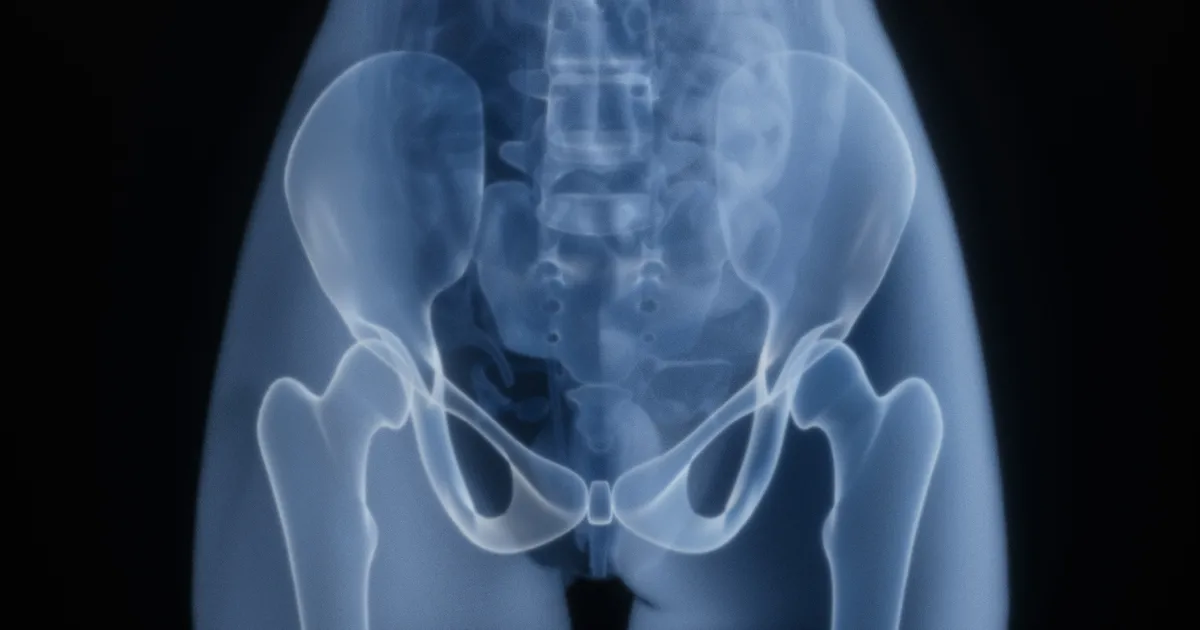
And in one study, prunes, which are high in anti-inflammatory polyphenols and calcium-balancing vitamin K, appeared to preserve bone density and strength at weight-bearing parts of the hip for post-menopausal women.
What did the research show?
The researchers followed a group of 235 postmenopausal women, who are at greater risk of bone loss, over a year.
They told one group to eat 50g (about five to six prunes) a day during the trial, and another group to eat 100g a day. A third group didn’t eat any prunes at all.
Though both prune levels were beneficial, the first group (50g) were more likely to stick to the habit, which meant they tended to get better results.
Professor Mary Jane De Souza, the study’s lead author, said: “Consuming five to six prunes a day for 12 months resulted in preservation of bone at the hip, a finding that was observable at six months and persisted through month 12.”
Postmenopausal women who didn’t consume any prunes saw a 1.1% bone loss in the same time period, while for those in the study, it stayed the same.
That benefit could lead to fewer bone breaks.
It could have benefits for bone quality, too
The same group of women were part of another study looking at how prunes seemed to affect the structure and estimated strength of their tibia.
“This is the first randomised controlled trial to look at three-dimensional bone outcomes with respect to bone structure, geometry and estimated strength,” Professor De Souza said.
“In our study, we saw that daily prune consumption impacted factors related to fracture risk. That’s clinically invaluable.”
She added that prunes may help to reduce the risk of osteoporosis, but more research is needed.
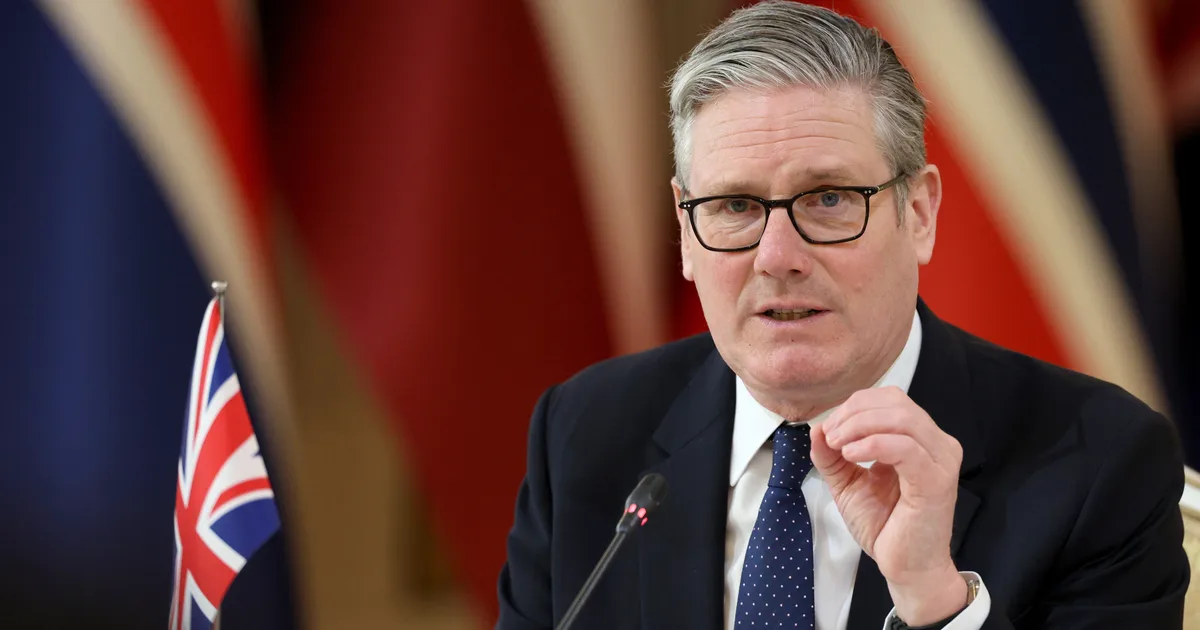
Keir Starmer has taken an indirect jab at Donald Trump while launching Labour’s local elections campaign.
Despite spending the first year of the president’s second term bending over backwards for Trump, the prime minister is now celebrating the distance between himself and the White House after it chose to bomb Iran.
Starmer has permitted US troops to use military bases for defensive and limited strikes on Iran, but refused to let American soldiers use the same sites for pre-emptive attacks.
Some fear that Iran may not differentiate between granting permission for defensive and offensive strikes.
But, Trump has continually slammed the UK government repeatedly for not immediately assisting him with his operation in the Middle East.
Despite this strain in the “special relationship”, the PM even made his distance from the White House a selling point
Without directly mentioning Trump, Starmer claimed he would stand by his values “whatever the pressure and whoever it’s coming from”.
Speaking from Wolverhampton, he said: “People look at their screens and they’re worried when they see explosions, infrastructure blown up, the rhetoric that goes with it, worried about whether this is going to escalate even further.
“And therefore it’s really important that I reiterate where I stand and where this government stands, because this is not our war and we are not going to be dragged into it.
“Yes, of course we will defend British lives and British interests in the region. We’ll stand by our allies in the Gulf region, but we’re not going to get dragged in.
“That’s my values, that’s my principles, and that’s what we’ve applied to our decisions, whatever the pressure and whoever it’s coming from.”
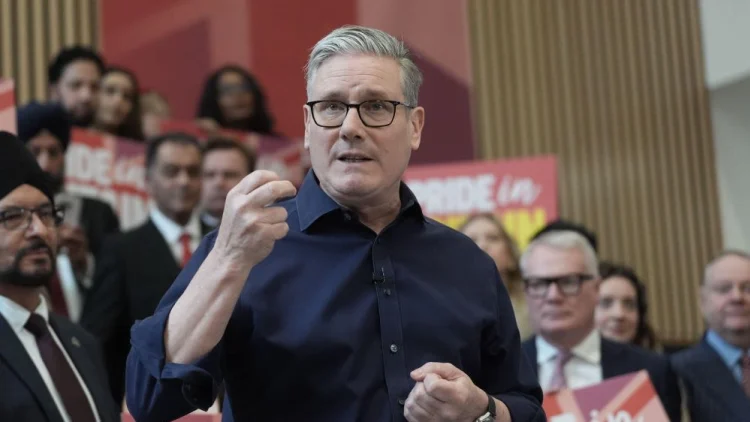
3 min read
Keir Starmer has reiterated that the conflict in Iran is “not our war” and the UK is “not going to be dragged into it” as the government tries to protect households from the economic impact of the conflict.
Speaking on Monday, the Prime Minister said that he knew the war in the Middle East, triggered by US and Israeli attacks on Iran, was “causing huge concern” for the public.
“Therefore, it’s really important that I reiterate where I stand and where this government stands, because this is not our war and we are not going to be dragged into it,” he said.
Starmer has granted the US permission to use UK bases for what he describes as defensive strikes on Tehran. However, he has refused to commit Britain to deeper involvement, leading to repeated public criticism from US President Donald Trump.
Later on Monday, the PM will host a Downing Street round table with senior leaders from the energy, shipping, financial and insurance sectors, alongside the UK’s Commander Maritime Operations, who will set out the security picture in the Strait of Hormuz and the Middle East.
Iranian threats to attack ships travelling through the Strait of Hormuz, which is one of the most important trade routes in the world, have led to a spike in oil and gas prices since the conflict began.
Petrol prices in the UK have already been affected by the war, and the government is expected to announce financial support for households most exposed to rising energy bills.
However, there is now growing alarm over the impact on food prices, with fertiliser, crucial to food production, being impacted by the closure of the Strait of Hormuz.
Starmer was speaking to reporters at the launch of Labour’s local elections campaign in Wolverhampton.
The party is expected to face a bruising set of results when elections take place in English councils, Scotland and Wales on 7 May.
The PM has sought to make the Iran war a dividing line with his rivals, saying Tory leader Kemi Badenoch and Reform UK leader Nigel Farage wanted to go “straight in with both feet into the war without thinking through the consequences”.
“It’s terrible judgement because taking your country to war is the single most important decision a prime minister can ever take.
“And if they had been in government, we would be in a war with no plan.”
Starmer, whose own leadership could come under pressure if Labour’s performance in May is as bad as many in the party fear, pointed to what the government was doing to protect households from cost-of-living pressures worsened by the Iran war.
The PM has indicated that he wants to take a targeted approach to protecting people from soaring energy bills.
Last week, he told MPs he was “acutely aware” of how much it cost the taxpayer when former prime minister Liz Truss gave blanket energy bill support in response to Russia’s invasion of Ukraine.
Starmer also said this morning that he would chair another Cobra meeting on Tuesday to discuss the economic impact of the war.
However, he insisted that the advice to motorists is that there was “no need to do anything other than what is normal” amid warnings about fuel shortages.
On Sunday, Education Secretary Bridget Phillipson told Sky News that drivers should “fill up as normal” and insisted that the government was “well prepared” for disruption.
Dutch national Olax Outis from campaign group Free The Filton 24 Netherlands (NL) will appear at Southwark Crown Court on Monday 30 March after a month in prison without trial.
Olax Outis in court
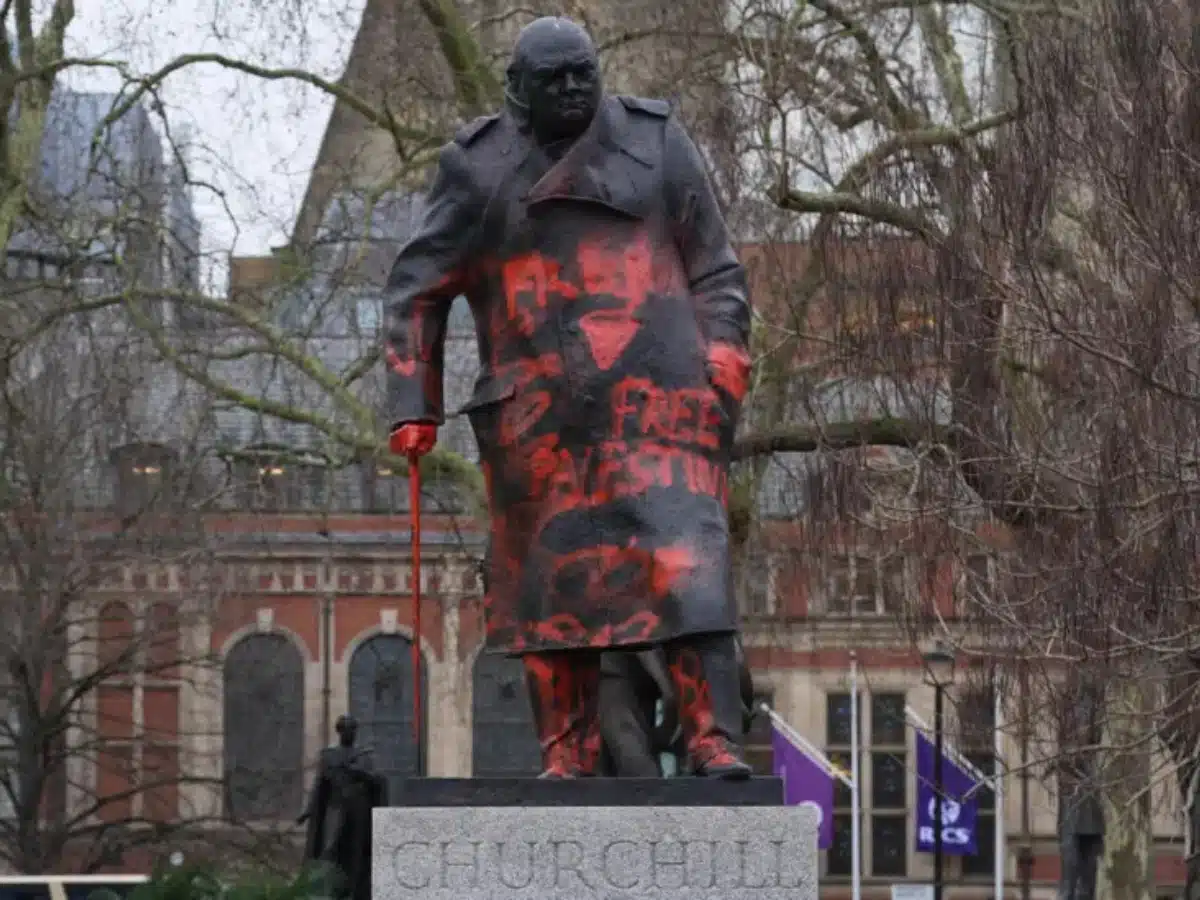
Olax has been held in a UK prison for a month for allegedly defacing the Winston Churchill statue in Parliament Square with finger paint – a crime which in his home country would be considered a misdemeanor at most.
He has denied criminal damage, while the prosecution claimed that the finger paint caused £11,970 in damage to the statue.
Olax painted messages such as “NEVER AGAIN IS NOW”, “STOP THE GENICIDE”, “FREE PALESTINE”, “ZIONIST WAR CRIMINAL” and “GLOBALISE THE INTIFADA!” in the bronze Churchill statue on February 27, was arrested and has remained in custody since.
The conditions of the UK prisons have been described by Olax as “grim”. He reported that some days he receives insufficient food, there are cockroaches in the cells and he is regularly moved around, making it incredibly difficult to keep in touch with his family abroad.
Silence
Today Olax will appear before Southwark Crown Court for his plea hearing where he will find out whether he will be released on bail, granted permanent release, or remain in custody for his peaceful resistance against complicity in the extermination of the Palestinian people.
His solitary action was the first by Free the Filton 24 NL outside the Netherlands. Since its inception, the group has stood in solidarity with the British resistance against the genocide in Palestine. The governments of both the Netherlands and the UK refuse to condemn the Palestinian genocide and are complicit through passive and active support for Israel.
The governments of the UK and the Netherlands remain silent regarding the arrest and disproportionate incarceration of Olax. Aside from automated email replies, there has been no response following emails and letters to the relevant ministries on Olax’ behalf.
Featured image via the Canary
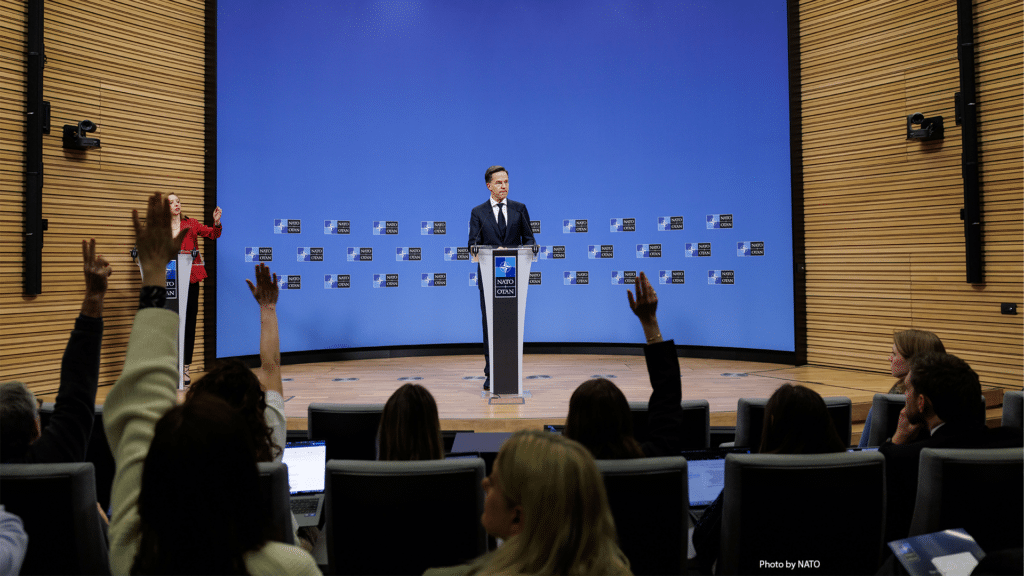
Mark Webber explores the impact of the Iran crisis on NATO, highlighting the trend towards an increasingly Europeanised alliance built on deeper ties and increased spending which he suggests will continue regardless of the outcome of the conflict.
For NATO, these are hard times for optimism. Still, NATO’s upbeat Secretary General, Mark Rutte is not to be deflected. In mid-February, on the back of a seeming resolution of the Greenland crisis, Rutte claimed the alliance was ‘the strongest it has been since the fall of the Berlin Wall.’ In the midst of the US-Israel war with Iran, Rutte has managed both to commend the campaign and to suggest the allies will come out of it more united, not less.
Can one square this Panglossian position with the reality of the latest transatlantic trauma? President Trump, who never needs an excuse to belittle NATO, has suggested the alliance ‘faces a very bad future’ if its members do not help the US reopen the Straits of Hormuz, shuttered by Iran. A week ago, the UK along with nineteen NATO allies plus Australia, Japan, New Zealand and South Korea expressed their ‘readiness to contribute to appropriate efforts to ensure safe passage through the Strait.’ No discernible movement has, however, occurred since. At NATO HQ in Brussels, there has been no discussion of a coordinated maritime effort.
The war has impacted the alliance directly. Iranian missiles have been intercepted by NATO-supplied air defences in Turkey, the NATO training mission in Iraq has been withdrawn and US F35s have been transferred from the Cold Response exercise in Norway to the Gulf. Individual allies have been unwilling to join the US-Israeli campaign, but bases in several countries, including the UK, France, Germany, Greece, Italy and Portugal have been used to facilitate ‘one of the most logistically complex operations the US military has been involved in for decades.’ Only Spain has refused the US access to its bases.
Practical support has thus not been inconsequential. But politically, the United States has acted in isolation. NATO’s major allies – Germany, the UK and France – have kept their distance. Trump’s current European bête noire, Spanish prime minister, Pedro Sánchez has publicly condemned the ‘illegal’ war. Even Trump’s supporters – the leaders of Italy, Hungary and Slovakia – have questioned the wisdom of the American campaign.
On Iran, just as with Greenland, NATO is divided between the United States and the rest. This could well feed an ongoing animus in the Trump administration. Trump (or, for that matter, his fellow NATO sceptics, Vice-President J.D. Vance and Secretary of War Pete Hegseth) could turn against the alliance at any moment. None of this bodes well for NATO’s next summit (scheduled for July in Ankara). By that point, the war will either be over on terms declared by the Trump administration or will have entrapped the American military in an unwinnable conflict. Either outcome is perilous for transatlantic unity. A self-defined victory would propel Trump toward further destructive acts of adventure. Failure, meanwhile, could have very similar results, as Trump chooses new targets to compensate for the Iranian misadventure and criticises allies to deflect blame for his own strategic ineptitude. Whether propelled by ambition or ire, action against Cuba seems increasingly likely. This would be a marginal issue for NATO. But a reprise of Trump’s hankering after Greenland would return the alliance to crisis mode.
The NATO allies have dealt with the demands of the two Trump administrations through a mixture of deference (agreeing to ambitious defence spending targets), detachment (as currently over Iran) and political resolve (as with the Greenland crisis earlier this year). In parallel, they have taken serious steps to reduce their military dependency on the United States. Some of this is out of urgent necessity. The Trump administration’s severance of military aid to Ukraine means the Europeans now fund the lion’s share of arms transfers to that embattled country. In addition, Europeans have deepened defence cooperation within the EU. They have also cooperated through overlapping minilateral and bilateral defence initiatives. This ‘clustering’ of defence is not new. The British-led Joint Expeditionary Force has been operational since 2015; the European Air Transport Command was established in 2010. Yet such initiatives have accelerated in recent years. Between 2022 and 2025, European states signed among themselves 135 bilateral defence partnerships.
NATO itself is quietly becoming Europeanised. And this, tellingly, has America’s support. In recent months, the Pentagon has helped execute a reform of the NATO command structure that will see Americans relinquishing oversight of NATO Joint Force Commands (JFC) Norfolk and Naples (where a Brit and Italian will take up command). German officers already command NATO’s two other JFCs at Brunssum and Ulm. US commanders will retain NATO’s tactical land and air commands and will acquire from the British oversight of NATO maritime command. The US is not, therefore, rushing for the exit. This is a gradual shift, but it is a planned one aimed at greater European responsibility. The US also wants greater European effort – the ability to field, according to Under Secretary of War, Elbridge Colby, a ‘preponderance of the forces required to deter and, if necessary, defeat conventional aggression in Europe.’ Here too there is marked progress. Defence budget increases alongside Finland and Sweden’s accession to NATO have boosted Europe’s military standing. In a conventional war with Russia, NATO would still struggle if the United States was not fully committed. However, the steps needed to correct this deficiency are, according to a recent Atlantic Council report ‘well within the capabilities of [the] NATO allies.’
Three long-term trends now seem evident irrespective of the Iran war or, indeed, Trump’s disparagement of NATO. First, a security architecture is developing in Europe – involving the EU, a Europeanised NATO, clustered defence, and a de facto wartime alliance with Ukraine – which is not reliant on American design. The Trump administration is through the alliance engaged with but not seeking oversight of this network. Second, Europe’s centre of strategic gravity is now in the east and north. NATO ally Turkey has been exposed by the Iran war, but there are no moves afoot to galvanise NATO’s ‘southern’ agenda. NATO’s frontline is adjacent to Russia and here leadership on defence spending and military mobilisation is being demonstrated by Germany, Poland, the Baltics and the Nordic states, not by NATO’s traditional European big hitters France, Italy and the UK. Third, these developments, require strategic deftness. Clinging to the hope that America will rediscover its transatlantic vocation amounts to strategic paralysis. If, to return to Rutte, NATO is to be strong it will be so on the back of its European component.
By Mark Webber, Professor of International Politics, University of Birmingham
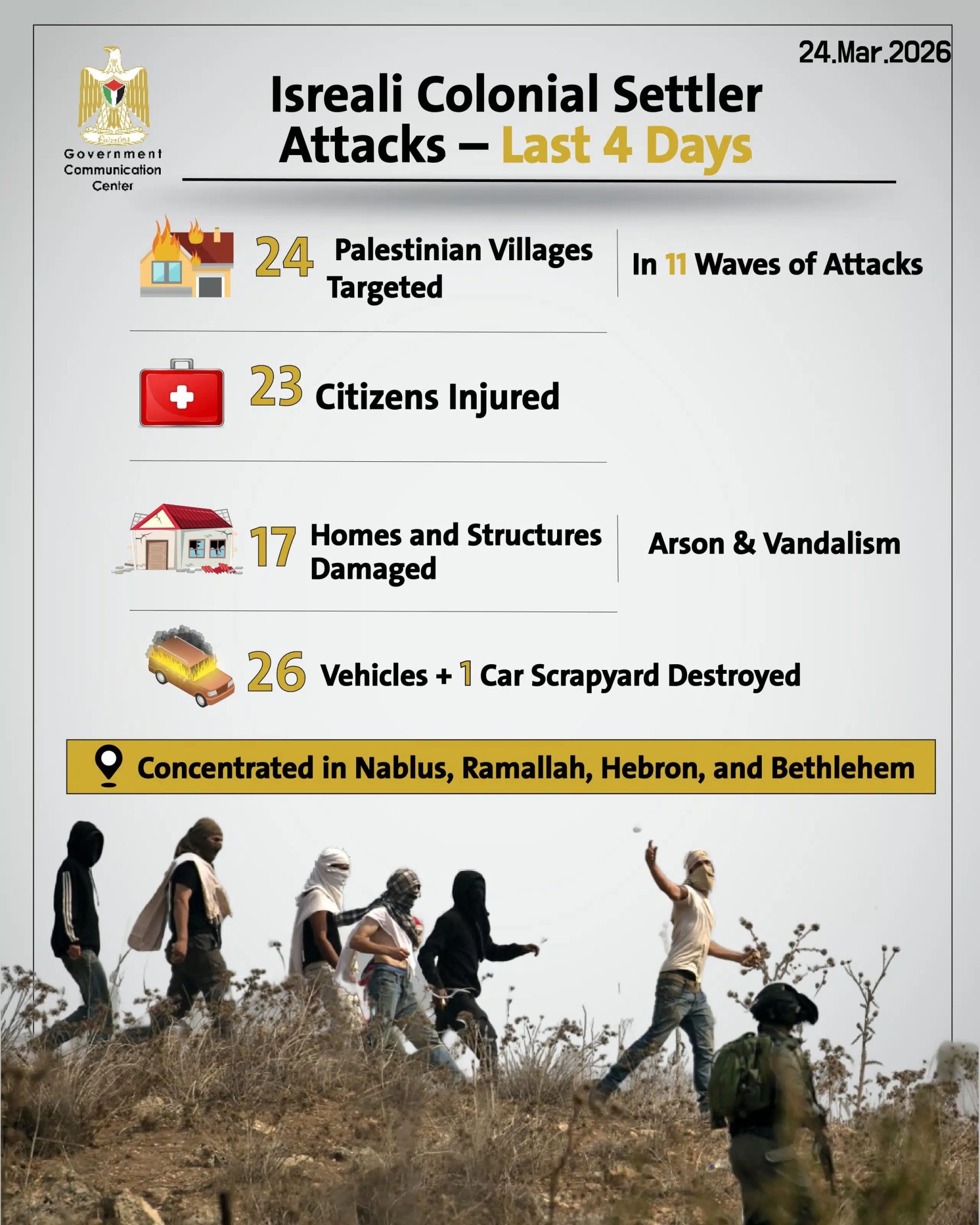
While all eyes are focused on the bigger regional issues, there has been an unprecedented increase in settler violence across the occupied West Bank.
Attacks on Palestinians by illegal “Israeli” colonists are no longer isolated acts of violence but a state policy of deliberate and organised terrorism.
At a recent press briefing, Palestine’s minister of foreign affairs and expatriates, Varsen Shahin, pointed to a sharp increase in the frequency and severity of settler attacks. She explained that such violence includes murder, physical assaults, the burning of homes and agricultural lands, destruction of infrastructure, theft and incitement practices, such as targeting places of worship.
The objective of these actions, she said, is to intimidate Palestinians and force them off of their land.
Shahin stressed that the situation in the occupied West Bank can no longer be viewed as isolated “acts of violence”, but as terrorism. She described this settler terrorism as “a deliberate and organised system of provocation” and a “state policy” designed to terrorise, displace and inflame.
Its purpose is to uproot us and provoke reactions that can be exploited for escalation against us. It is a calculated strategy to justify continuation and expansion of genocidal violence against the Palestinians, carried out by settler militias and armed gangs, who are illegally residing in occupied territory and supported by “very influential people in the government.
Israeli settlers armed by government, protected by IOF
These colonial Jewish settlers operate under the protection of the Israeli Occupation Forces (IOF). They are armed and funded by the “Israeli” government, and constitute a direct extension of policies of annexation and settlement expansion. Shahin noted that the impunity and lack of international accountability, which has been ongoing for decades, has allowed Israel to do whatever it wants, including getting away with genocide.
She said:
Settler terrorism complements the accelerating settlement expansion that is occurring, through approval of new settlement units, new settlements, new planning measures and new legislation. All this entrenches the settlement enterprise and fulfills Israel’s expansions and colonialist policies, and ethnic cleansing of the Palestinian people.
She added:
These acts are illegal under international law and aim to normalise permanent control of the occupied state of Palestine, undermine the Palestinian right to self-determination, and try to force us to leave. When we are forced to leave, they will then call that voluntary.
More than 20 Palestinians have been injured in the latest reported settler attacks.

In the Khalla Amira and Rujoum Ali areas of Masafer Yatta, in the South Hebron Hills, settlers released their livestock near people’s homes on 25 March. They assaulted Palestinians in the area, injuring and hospitalising several. The IOF then arrived, firing tear gas and sound grenades at residents. Seven Palestinians were abducted and several people were detained.
Tragedy: One man, 31, dead, and others injured
In another incident in the evening of the same day, vehicles carrying Palestinian workers on the Umm al-Khair to Fateh Sidreh road, in the Masafer Yatta area, were chased by settlers accompanied by the IOF. They opened fire on the vehicles which led to one overturning and catching fire.
Yusri Majed Abu Qabita, 31, was killed and three other Palestinian men were injured.
No Palestinian is spared from this settler terrorism. An elderly man was injured in an attack in the Tubas governorate, in the Northern occupied West Bank.

East of Tulkarm, in the town of Ramin, settlers stole sheep and injured two Palestinian men.


About 750,000 Zionist settlers live illegally in settlements across the occupied West Bank, including east Jerusalem. They carry out crimes against Palestinians all day every day, but harsh words and meaningless sanctions from the international community do absolutely nothing to stop them. As yet, they have faced no accountability for any of their vicious crimes.

Fourteen Palestinians were killed by settler terrorism in 2025 while 11 people have been murdered in the first three months of 2026, according to figures from the Colonisation and Wall Resistance Commission (CWRC).
In 2024, the International Court of Justice (ICJ) ruled “Israel’s” occupation of Palestine is illegal, and called for all settlements in the West Bank and east Jerusalem to be evacuated.
Shahin summed up the situation and said:
Not only are our lives, our dignity and our rights threatened, but humanity, morality and justice under international law, and its applicability to all similarly. This is a real test. If the test fails in Palestine it will fail elsewhere, and the suffering will mount elsewhere.
Featured image via the Canary

Where can violent men meet like-minded lonely hearts? For Aurin Makepeace, it wasn’t through a dating app or the local pub – he met his ex-boyfriend, Steven Rothwell, in prison. Rothwell was serving time for murder; Makepeace for stabbing a stranger and leaving him with life-threatening injuries. When they were released, the convict couple stayed together.
But the lag love story didn’t last. The pair split in 2023, though they stayed in contact. Then, on 19 August 2025, Makepeace stabbed Rothwell in the chest and left him to die. He had assaulted Rothwell’s girlfriend earlier on the same day. He then tried to spin an implausible story to cover his tracks.
None of this is especially remarkable. Violent men commit violent acts. What is remarkable is that it was reported as a killing by a woman. After leaving prison in 2011, Makepeace began identifying as transgender, and so apparently otherwise sane professionals obligingly described him as female.
Official and media reports were illustrated with a photograph of the convict sporting straggly blonde hair and a five o’clock shadow, set on a jawline hewn out of granite and testosterone. Yet Cheshire Live and North Wales Live inaccurately reported that Makepeace is a ‘woman’, without even referencing his trans identity. Readers could be forgiven for wondering whether the picture editor was having an episode. The BBC didn’t cover the trial, though it did publish a report following Makepeace’s arrest, which simply referred to a ‘woman’ who had been charged. Meanwhile, the Daily Mail and the Sun both referred in their headlines to Makepeace as a ‘transwoman’ and used female pronouns.
The journalists were doubtless taking their lead from prosecutors. In a tone-deaf statement peppered with ‘she’ and ‘her’, Rachel Worthington of CPS Mersey-Cheshire proudly said that: ‘The jury [has] seen through Makepeace’s layers of lies.’ Worthington has some cast-iron gall complaining about lying in a statement that refers to a male murderer as if he were female.
Telling the truth about the sex of offenders matters because patterns of violence are not evenly distributed between the sexes. Pretending otherwise does not make anyone safer. According to Ministry of Justice figures, around 24,000 men are in prison for violence against the person, roughly 27 per cent of the male estate. For women, the figure is closer to 3,500. The gap widens further with sexual crime: 18 to 20 per cent of male pisoners are sex offenders, compared with just two to three per cent of female inmates. Among the 245 male prisoners who identify as transwomen or nonbinary, 151 are convicted sex offenders, which is around 62 per cent.
We are now nearly a year on from the UK Supreme Court confirming that sex in law refers to biological reality. Many hoped this would mark a return to plain speaking. And there have been innumerable employment tribunals in which claimants have won the right not to be discriminated against for knowing what every dog knows – that there are only two sexes. There has, in effect, been a grassroots uprising against trans tyranny. YouGov polls show a drop in support for legal sex change. Today 55 per cent of Britons say they believe that allowing men to use spaces reserved for women, such as women’s toilets or changing rooms, ‘presents a genuine risk of harm to women’.
Yet the mainstream press and taxpayer-funded institutions still contort themselves to avoid stating the obvious. At a time when trust in legacy media and statutory bodies is dropping, they are at risk of seeming dangerously out of touch and losing public confidence. Why should anyone pay their BBC licence fee or buy a newspaper when journalists and editors are misleading them? Why should anyone respect police officers and court officials who coddle the feelings of dangerous criminals?
To describe a violent man as a woman is not a harmless courtesy, it is an abdication of responsibility. It distorts crime statistics, misleads the public and erodes trust. Crucially, it demands that everyone else participate in a lie. To indulge this pretence is to adopt the worldview of dangerous thugs like Makepeace. It prioritises his feelings over reality, professionalism and public safety.
A society that cannot name what it is looking at cannot hope to confront it. And one that will not speak plainly about male violence will find itself increasingly unable to stop it.
Jo Bartosch is co-author of Pornocracy. Order it here.

Splurge Monday’s Workwear Report: Detira Grosgrain Waist Detail Midi Dress

Everything you need to know about the cast of BBC’s new drama Babies

Futures Rise on Iran Talk Hopes Amid Oil Surge


-
 NewsBeat5 days ago
Manchester United reach agreement with Casemiro over contract clause amid transfer speculation
-

 News Videos4 days ago
Parliament publishes latest register of MPs’ financial interests
-

 NewsBeat3 days ago
The Story hosts event on Durham’s historic registers
-

 Business4 days ago
Instagram, YouTube Found Responsible for Teen’s Mental Health Struggle in Historic Ruling
-
 NewsBeat5 days ago
Tesco is selling new Cadbury Dairy Milk bar and people can’t wait to try it
-
 Entertainment7 days ago
Cynthia Bailey Dishes on ‘RHOA’ Season 17, Discusses Kandi
-

 Tech7 days ago
Samsung will soon let you control smart home devices from your car’s dashboard
-
 Entertainment2 days ago
Lana Del Rey Celebrates Her Husband’s 51st Birthday In New Post
-

 Fashion6 days ago
Does It Matter What You Wear When You’re Laid Off and Looking?
-
 NewsBeat7 days ago
Colombian military plane with 110 soldiers onboard crashes following takeoff
-

 Business6 days ago
More women enter wealth management, but few in advisory roles: study
-

 NewsBeat6 days ago
Entrepreneurs Forum survey reveals optimism in North East
-

 Politics7 days ago
How Media Platforms Balance Performance and Accessibility in Image Delivery
-
 NewsBeat6 days ago
NASA Artemis II Astronauts enter 14-Day quarantine as moon rocket reaches launchpad
-

 Business6 days ago
Late-paying firms face multimillion-pound fines under new crackdown
-

 Crypto World6 days ago
BTC gives up $70,000 level as markets mull higher interest rates
-

 Sports5 days ago
Fantasy Baseball Week 1 Preview: Top sleeper hitters for both five- and 12-day period led by Munetaka Murakami
-

 Fashion6 days ago
Coffee Break: Korean Skincare Set
-

 Fashion6 days ago
Althea Mink: Patrice Taylor’s Atlanta Couture Brand Built on Legacy, Resilience, and Architectural Glamour
-

 Tech5 days ago
US FCC Prohibits Approval Of New Foreign-Made Consumer Routers
You must be logged in to post a comment Login