

Politics
The deluded Tories are foolishly attacking nationalisation

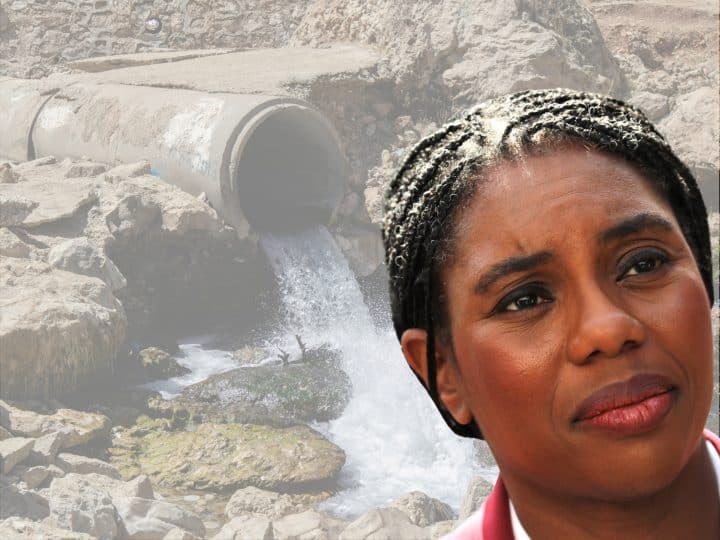

In a new video, leader of the Tories Kemi Badenoch has unveiled her latest desperate push to remain relevant. The problem is her new plan is to oppose something which enjoys almost universal support from the public:
Starmer, Burnham, Farage, Polanski…These men have one thing in common. They all want nationalisation.
That will mean companies run by politicians but paid for with YOUR money.
There’s only one party that stands against their failed ideas and that’s the Conservatives. pic.twitter.com/vjQmRQ4V7n — Kemi Badenoch (@KemiBadenoch) May 24, 2026
Enjoy obscurity, Tories!
In her tweet, Badenoch says:
Starmer, Burnham, Farage, Polanski…These men have one thing in common.
This is correct, but the thing they have in common is that they have READ THE ROOM:

Badenoch also said:
That will mean companies run by politicians but paid for with YOUR money.
Sorry, but whose money does she think pays for privatised services?
Is she unfamiliar with the concept of an electric bill?
Does she not know about bus fares?
In the video itself, Badenoch says:
Do you know what it’s like to have the government controlling everything? It is not cool. You think government is bad now and yet you’re saying let’s have the government run all the industries. If you don’t think government is good now, why is it going to be better if you give it more things to do?
So Badenoch – who wants to govern the country with the Tories – is arguing that politicians like her shouldn’t be trusted to govern anything. This is a bold strategy if nothing else!
Badenoch also said:
Why were the water companies privatized in the first place? It’s because when they were nationalised, they weren’t working very well, they were wasteful, they cost a lot of money and they just weren’t very good.
At the end of the day, a water company is just a building with people in it. She’s clearly deluded herself into thinking there’s some sort of business magic which means you can’t run a company for the public good, but if the will is there, it can be done.
The privatisation nightmare
We Own It have provided 10 reasons why privatisation failed:
- You don’t have a choice – public services are natural monopolies: “Privatisation was introduced because of a belief in free markets and consumer choice. But public services tend to be what economists call ‘natural monopolies’, or services where competition doesn’t really make sense. For example, when you take the train, you don’t really have a choice about which one to use. There is no real market.“
- Waste: “Money from your bills and taxes should go into improving public services. But with privatisation, [shareholders must receive dividends]. Interest rates are higher for private companies than they are for government. (Plus, there are the extra costs of creating and regulating an artificial market.)“.
- Cutting corners: “The drive to maximise profit comes into conflict with the need to spend time caring, or spend money to meet people’s needs“.
- Cherry picking: “Private companies cherry pick the profitable bits of a service and leave the rest“.
- Fragmentation: “When lots of private companies are involved in delivering a public service, this can create a complicated, fragmented system where it’s not always clear who’s doing what. For example, on our railway, different organisations are responsible for managing the track and stations, running trains and leasing trains. This is inefficient and wasteful“.
- Wrong incentives: “When private companies run public services, they may not have an incentive to help tackle problems. For example, companies running private prisons will get paid more money if more people are locked up“.
- Inadequate regulation: “Often there’s a revolving door between people working for the regulator and people working for the companies they are regulating. For example, Cathryn Ross who was previously the CEO at Ofwat, the water regulator, now works for privatised Thames Water“.
- Lack of flexibility: “Councils and government departments are responsible for meeting the needs of the public – but privatisation means less flexibility for changing circumstances. If an outsourcing contract with a private company needs changing, government must pay more to make changes or improvements, add in extras or to opt out“.
- Loss of capacity: “Handing over control to private companies weakens the public sector, reducing the skills and people available to provide high quality public services“.
- Risk of bailouts: “Public services are vital, they’re not optional extras, and so they are often too big and too important to fail. This means the government stands ready to rescue private companies in their hour of need – we saw this for example with outsourcing firm Carillion, the East Coast railway line, energy retailer Bulb and Thames Water”.
Not the same
Badenoch suggested that Starmer, Burnham, Farage, and Polanski are all the same on nationalisation, but that’s really not the case.
Starmer is nationalising the train operators, but that had already begun under the Tories to an extent, because privatised rail was such a colossal failure that even they couldn’t ignore it. Starmer has refused to renationalise anything else despite once pledging to do so.
Burnham is talking about “stronger public control”, which as we keep pointing out, is not the same thing as renationalisation. He complained when we said this, but as he’s refusing to give a clear idea of what does have planned, he can complain all he likes:
I’m not doing anything of the kind. Just got to be realistic about how quickly it can be done.
— Andy Burnham (@AndyBurnhamGM) May 24, 2026
Farage talked about nationalising British steel. Badenoch weirdly seems to think voters are against this despite strong evidence to the contrary:

Polanski, meanwhile, is actually planning to nationalise public services, so well done him:
Another poll in front of Labour?
We're coming for Reform next!
Time for rent controls, nationalise our public services & protect our NHS.https://t.co/0qbagSvIYp pic.twitter.com/T1LrG77Ohm
— Zack Polanski (@ZackPolanski) March 30, 2026
Anyway, all this aside, we absolutely support the Tories and Badenoch’s decision to make themselves the face of Britain’s most hated catastrophe.
Featured image via Alishia Abodunde (Getty Images) / Heather Diehl (Getty Images)
By Willem Moore



CANBERRA — It was disappointment from start to finish around the USA vs. Australia match in the Bush Capital, won comfortably by the American side.
Neither of Canberra’s Socceroos made the starting lineup and the local government failed to provide an outdoor watch site for the match, despite a heavy social media campaign from locals. With federal politicians out of town and back in their districts this week, the campaign lacked star power and fell on deaf ears.
That left thousands to fill inner city pubs and the University of Canberra, which were allowed special trading hours for the match, from 4.30 a.m.
Australia’s politicians — vocal in their support in the lead-up to the match — went silent quickly, after Australia’s own goal 11 minutes minutes into the game.
If the Aussies’ lackluster performance left the crowd subdued, they found energy to boo Health Secretary Robert F. Kennedy Jr. — a notably unpopular figure in Australia, which embraced harsh Covid lockdowns and vaccines — when he appeared on the match broadcast.


You don’t have to rely on The Discourse to know whether soccer is finally being embraced by America. Political ad spending targeted to catch World Cup viewers tells you all you need to know.
Look no further than today’s Susan Collins-aligned Pine Tree Results PAC launching the next phase of a seven-figure general election ad campaign targeting Democrat Graham Platner in Maine, the latest that flickered to life statewide during the U.S. Men’s National Team World Cup match against Australia.
“The first U.S. World Cup game was the most watched soccer broadcast in American history,” a GOP operative working on the Maine senate race, and granted anonymity to speak candidly, told POLITICO. “Maine markets are performing better than national average and the critical Portland DMA has a significant soccer fan base.”
Or consider that James Talarico’s first ad buy of the general election Senate campaign is an $800,000 Spanish-language TV campaign spot set to air during each U.S. and Mexico group stage match.
In Denver, in Colorado’s 8th Congressional District, there’s Republican Gabe Evans in a Spanish language ad, debating whether it’s soccer or football with his mother.
In politics, campaigns and super PACs are reluctant to spend money where there aren’t eyeballs, so each of these set pieces are a datapoint bearing out the truth that international soccer can draw them.


FIFA rang in Juneteenth, the country’s newest federal holiday, with a video that played in Seattle ahead of the U.S. team’s pivotal showdown with Australia.
It stars Seattle Supersonics legend and NBA Hall of Famer Gary Payton and features iconic Seattle locations.
“Some remember, some reflect, while many others celebrate,” Payton says in the video, which highlights landmarks including the Northwest African American Museum and Pike Place Market. “This day means freedom, black liberation, joy, jubilation and celebration. And today, we are definitely celebrating.”
Leonardo Santiago, head of media relations for FIFA26 Inc., said the organization plans to commemorate the holiday marking the end of slavery at each World Cup match taking place on Friday. Separate videos personalized to Foxborough, Massachusetts, which hosts Scotland and Morocco, and Philadelphia, where Brazil and Haiti will face off, and Santa Clara, California, are also dropping to mark the holiday.
“FIFA worked with each Host City to ensure the video is personalized for each stadium, featuring imagery specific to that city while recognizing the nationwide holiday and its importance,” Santiago said. “As the video plays, the stadium will also have complementary graphics on the ribbon boards as well.”
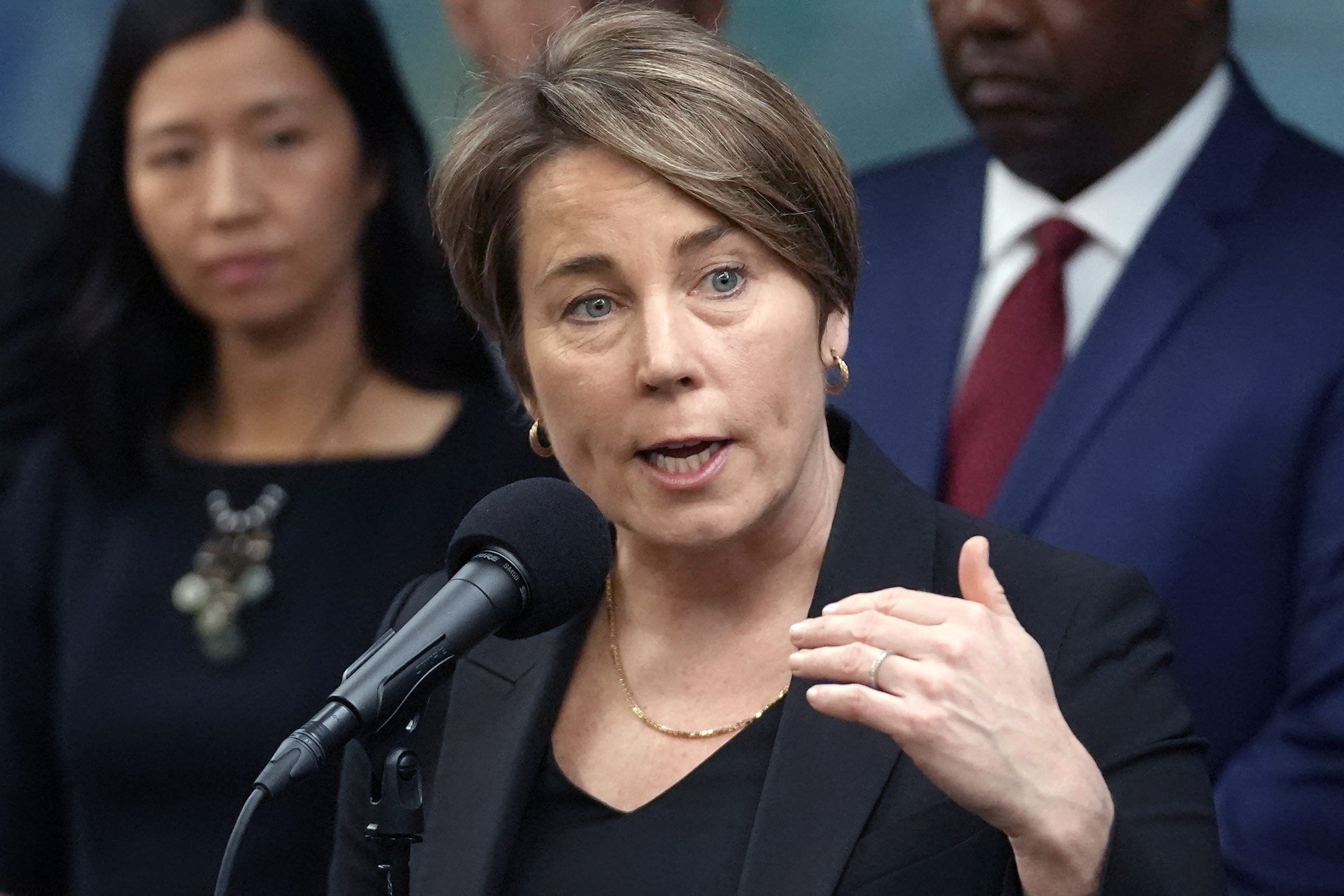

FOXBOROUGH, Massachusetts — Boston is bouncing and the Massachusetts governor wants to thank thousands of kilted Scottish soccer fans who have taken over the city between Scotland’s first match against Haiti last weekend and its second, against Morocco, today.
The tournament’s shock love affair is sparking delight in Gov. Maura Healey’s office as the supporters plow cash into the local economy, star in feel-good viral videos and drink copious quantities of Sam Adams Boston Lager.
Earlier this week, the governor — who’s seeking what stands to be an easy reelection this year — spoke with POLITICO about which of Massachusetts’ World Cup wins can be made permanent, including extended hours for bars and service along mass-transit networks.
This interview has been edited for length and clarity.
Were you expecting this?
Oh, yeah, what do they say? No Scotland, no party? [Author’s note: This is, indeed, what they say.] I would say the Tartan Army’s reputation precedes them in the best of ways. So we knew that they would bring a ton of energy and joy and the noise. The bagpipes, the partying in our restaurants and bars, it’s just been great, and to think — it’s very warm here, of course — half of them are doing it in kilts. It’s really amazing to see.
What has stood out to you?
In just a matter of days, the Tartan Army has become part of the Massachusetts family. We have seen them become regulars at our local restaurants and our pubs. We’ve seen them take over Fenway Park. 5,000 fans marching with bagpipes into the games. We loved the viral videos of them trying hot dogs […] inside Fenway. The videos of them taking over the cruise ships in Boston Harbor. We even had a Boston police officer kicking a soccer ball with them at the fanfest. So it’s just been really wonderful for us in Massachusetts, and we’re thrilled to have them here.
Do you have plans to capitalize on this beyond the World Cup?
Given that Scotland-Haiti was our first match, we were really thrilled. Massachusetts has a huge Haitian population. And then, of course, a lot of people in Massachusetts have ties with Scotland because many, many families here have ancestors who came from Scotland. And I have to say, I think Scotland just set the tone from the day the fans got into town. There was concern leading up to the World Cup, you know, how’s this all gonna work? And the media was covering a lot about security and transportation, and all these things about what could go wrong. And as soon as the Scottish fans arrived, they just laid the whole vibe for the World Cup. It’s gonna be about joy, energy, fun and bringing people together from all around the world. And I really credit them with establishing the vibe for our World Cup experience right at the outset.
Have the ticket prices charged by FIFA had an impact on that?
Well, one thing that I was really determined to do was to make sure that we were able to secure tickets for young people here in Massachusetts, which we did. 1,100 tickets that we distributed through Boys and Girls Clubs, so the kids who otherwise wouldn’t have a chance to see the game, were able to see the game — and for free. We’ve tried as a state to help out where we can, making $10 million available to communities around Massachusetts to host watch parties, because we know not everybody can afford to go to the game.
And as the governor of a blue state, how were your interactions with the Trump administration on planning for the tournament?
Well, when it comes to public safety that is something that it’s so imperative that local, state and federal authorities work together on. We did around transportation funding, security funding, that’s the way it should be. There should be that kind of work and coordination.
At the local level, would you support either a pilot program or a permanent extension of later last call and public drinking districts after the end of July? And would you encourage the legislature to start working on a bill about this?
We wanted to do that to create a welcoming environment, and I know that extension is helping our restaurants and bars and helping local businesses, and helping fans enjoy this experience. I’m certainly open to making some things more permanent, and I think this gives us a great opportunity to pilot it right now and see how it goes.
Do you see it as a runway for allowing happy-hour discounts, which have been banned in Massachusetts for decades, to become legal again? Because you’ve previously expressed problems with the concept.
I expressed support for happy hour the other day. We’ll see, we’ll have more conversations with the legislature.
And in terms of the transport would you consider keeping extended service hours on the MBTA?
I’ve always been for extended service hours. For us, it’s just a matter of budgeting and the labor costs associated with that. Also, you need a little bit of downtime so that trains can get repaired and maintained. We extended hours well before the World Cup on weekends, and it’s certainly something that I’d like to see us do across the system. But again, it’s just a matter of what we can do in terms of budget. But so far, transportation has been working really well. Trains have been made available, and selling out, and people have really enjoyed that experience; it’s been super easy, you know, getting to and from the match.
I think some Scotland fans would maybe dispute that it was easy getting back from the [Haiti] match, but I guess it’s all relative when the stadium is far away from the city.
I know. You can only run so many trains at once. But, hey, they won, so …
I understand it’s a challenge to keep young people in state. Are these measures you approved for a summer of intense tourism part of a longer-term solution?
I think that they’re really important to making sure that people know that we’ve got a great culture here and a great vibe for young people. That’s why I’m building homes […] so we can look at housing costs. Massachusetts is a place where people come to study from all around the world, and it’s a place that’s filled with young people, filled with opportunity. We’ve got an innovative economy, and doing so much in life sciences and robotics and AI, and cutting-edge industries. And it’s a very safe state and safe city. We’ve got the best schools in the country, best health care in the country. We got a lot going for us. And we’ve got great sports teams, too. So it’s a great vibe for young people, and we’re working always to try to make sure the message is out there around the globe. This is a great place to come and study, and start a business or raise a family.
Lisa Kashinsky contributed to this report.


(Alamy)

2 min read
Labour MPs who remain loyal to Keir Starmer have told PoliticsHome they will force a leadership contest to stop an Andy Burnham coronation if Keir Starmer doesn’t stand.
The Prime Minister is expected to spend the weekend mulling his future after Burnham’s landslide victory in the Makerfield by-election on Thursday injected fresh momentum into his bid to replace Starmer in No 10 and triggered new calls for the PM to stand aside.
Over 100 Labour MPs have publicly called on Starmer to set out a resignation plan at the time of writing, and Burnham backers are hopeful that the PM will agree to an orderly and non-confrontational transition of power in the coming days.
Earlier today, Starmer insisted he would “fight” any challenge to his leadership.
Among Starmer loyalists, however, planning is underway for the event that the PM decides not to enter a leadership contest. Within this group, there is strong opposition to Burnham taking over as leader without being put through a contest.
Starmer loyalists would need 81 MPs to force a contest, with organisers telling PoliticsHome on Friday night that they could raise the numbers to do so.
“There is a sizeable number of MPs who will not just sit back and allow Andy to be crowned,” said one.
Another added: “There will be a candidate but only if Keir Starmer decides he won’t stand.”
Loyalist Labour MPs have told PoliticsHome that Chancellor of the Duchy of Lancaster Darren Jones could be the candidate they unite around to trigger a contest.
Last month, PoliticsHome reported that Jones was believed by Labour MPs to be sounding out support for a potential future leadership bid.
MPs reluctant to get behind Burnham say they are unclear on where he stands on key policy issues and have deep concerns over suggestions that Ed Miliband could become chancellor.
They are also concerned about left-wing group Momentum’s involvement in Burnham’s by-election campaign, as well as former shadow chancellor and Jeremy Corbyn ally John McDonnell’s tearful reaction to the outgoing Manchester mayor’s victory.
While Starmer loyalists remain willing to fight the PM’s corner, the growing feeling within the party is that it is a matter of when, not if, he is replaced by Burnham.
The long-serving Labour MP Harriet Harman today told the Electoral Dysfunction podcast that Burnham would become prime minister, adding that the Parliamentary Labour Party “herd” wasn’t just moving against Starmer, it was “stampeding”.
Alan Johnson, the former Labour health secretary, who, like Harman, is a respected figure in the party, told LBC he would advise Starmer: “It’s over, Keir”.

The post What Makerfield means for Labour, Reform and Restore appeared first on spiked.
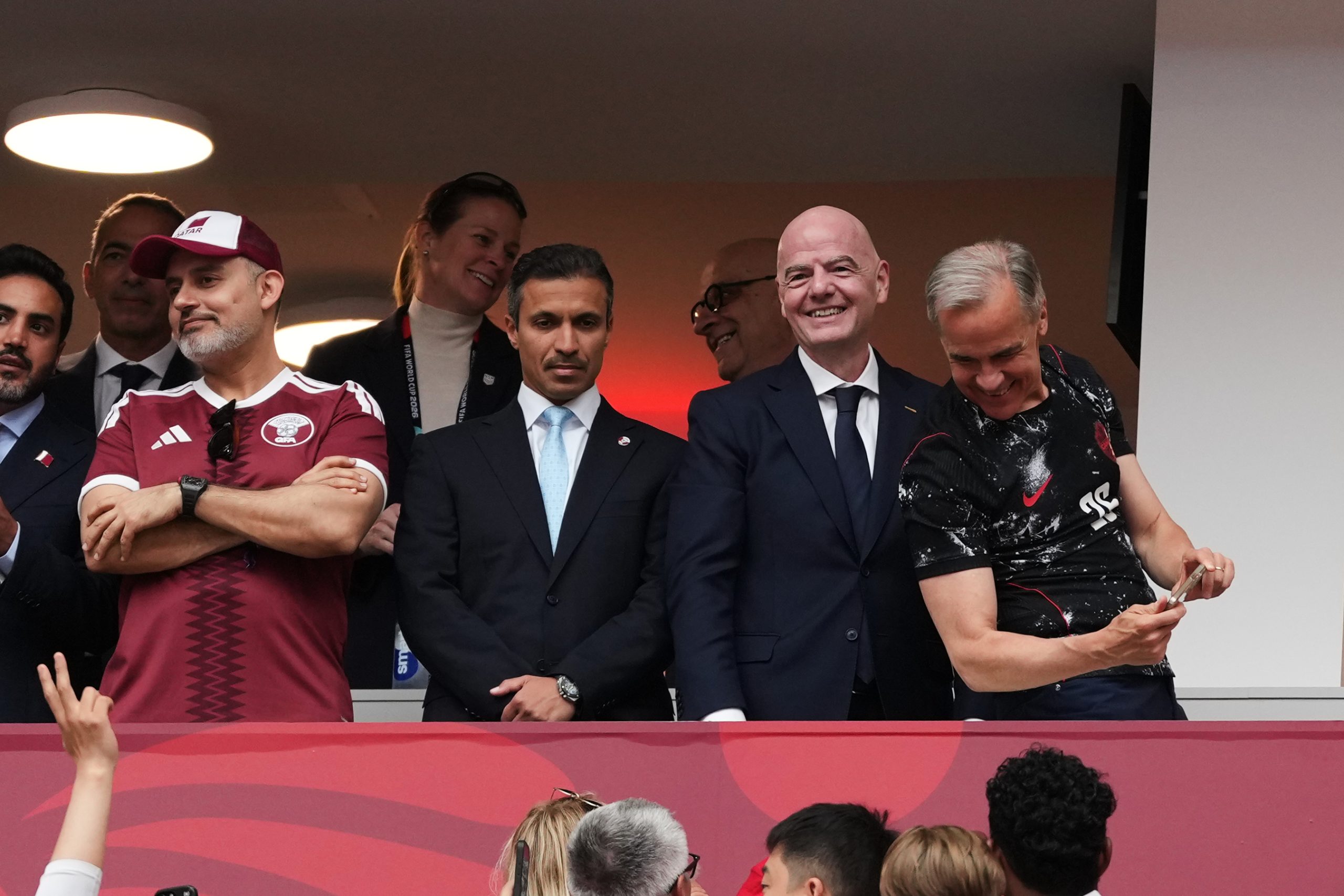

VANCOUVER — Major League Soccer commissioner Don Garber joined Prime Minister Mark Carney on Friday to watch Canada’s thrashing of Qatar. Garber probably did not want Carney to enjoy the stadium experience too much.
BC Place is Major League Soccer’s most troublesome facility. The arena is old, was not designed with soccer in mind, and is owned by a government agency — the BC Pavilion Corporation, which also controls the Vancouver Convention Center — that forces the Vancouver Whitecaps to fight for dates on the calendar against concerts and other events.
“We want to be the ones that control our destiny, like every sports team does,” Garber told reporters Friday in Seattle.
The Whitecaps are now up for sale, and Garber is actively pushing British Columbia’s political establishment — including Premier David Eby and Vancouver Mayor Ken Sim — to find a solution can keep the team from decamping to Las Vegas. While the government has been willing to renegotiate its financial relationship with the team, a proposed new stadium would take “four-plus years” in construction, which Garber said was untenable.
“It unimaginable how long we’re going to be out of the stadium,” he told reporters Friday in Seattle. “They are very relevant club that doesn’t have a good business model, and you can’t be sustainable.”
Garber recounted he met with Eby while in Vancouver, and sat with Carney and Victor Montagliani — the head of regional soccer confederation CONCACAF and a close ally of the prime minister — during the match itself. Garber said he has placed a league official in Vancouver full-time to manage the negotiations with local officials over the Whitecaps’s future.
“We want to be the ones that control our destiny, like every sports team does,” said Garber. “It’s easier for business people to make decisions, a little harder for politicians.”

SEATTLE — Some American fans walking toward Lumen Field on Friday morning were playfully jeering their Australian peers whenever they spotted a telltale yellow jersey. But a major driver of the local economy offered a kinder greeting to the visiting team.
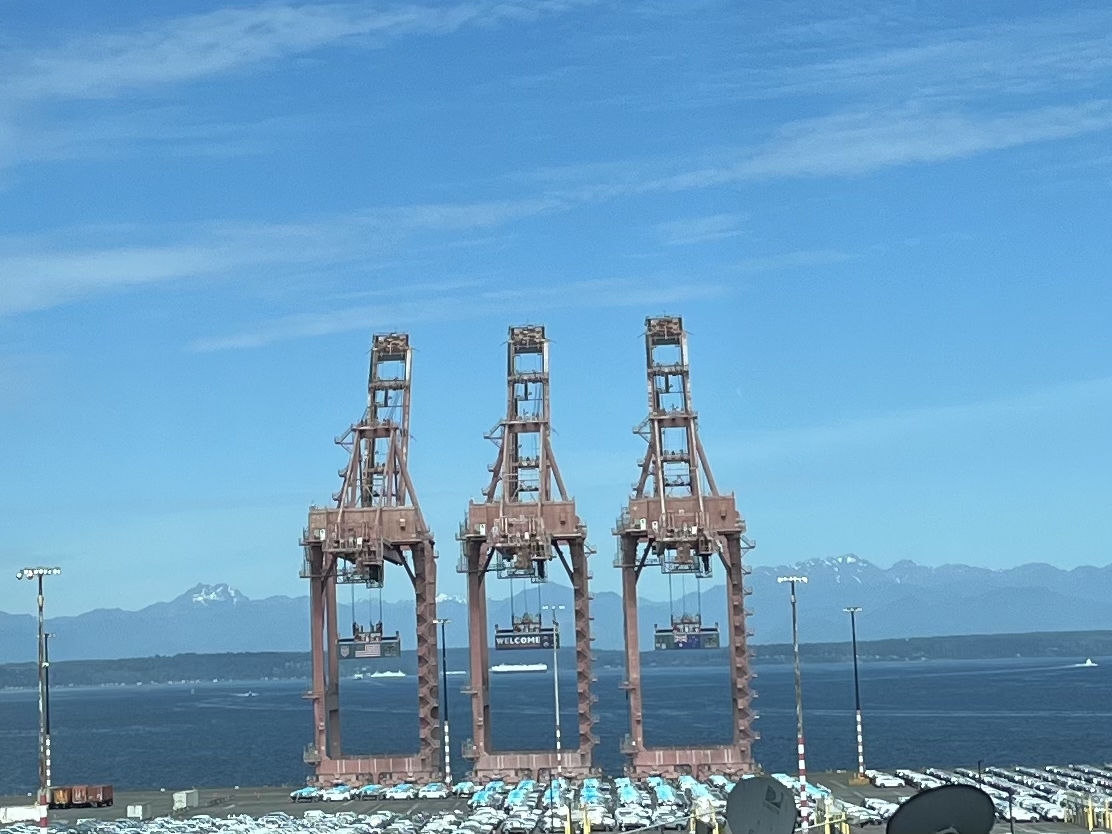
Cranes in view of the stadium gates have been outfitted with the Australian flag and a WELCOME message from the Northwest Seaport Alliance, which manages the ports of Seattle and Tacoma, along with dockworkers’ union ILWU Local 19.
The seaport alliance and the labor union representing its workforce are mounting a similar display throughout the World Cup, rotating flags out to reflect the pair of teams that will face off next in Seattle. But keeping the Australians happy is a more urgent cause for Seattle harbor interests than, say, Bosnia and Herzegovina and Qatar.
Australia is one of the ports’ top trading partners, with the 14th largest source of container volume at the Port of Seattle, but ranks much higher when it comes to the dollar value of goods that come from there. (New Zealand, for example, sends more volume to Seattle than Australia but it’s worth only half as much.)
Meat, including beef and lamb, and minerals comprise the biggest categories of goods that Australia ships to the United States, although some of the most valuable exports — gold and pharmaceuticals — are more likely to land at Sea-Tac airport than via the harbor.
The U.S. and Australia have had a free-trade pact since 2005, although President Donald Trump’s tariff regime threatens to disrupt some trade flows. Australia is currently pushing back on its inclusion on an American list of countries alleged to use forced labor in its supply chains, which the U.S. Trade Representative is using as the basis to impose a 12.5 percent tariff.
Politics
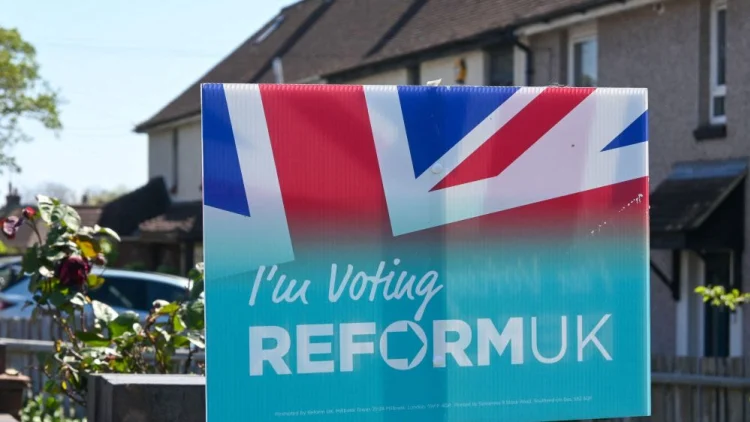
Politics Home | Reform Council Leader Under Investigation For Sharing Contract With Reform HQ

3 min read
The leader of Reform-run Lincolnshire is being investigated by his own council after claiming to have shared a local authority contract with senior party figure Zia Yusuf.
Sean Matthews, who became leader of Lincolnshire County Council in 2025, said he had shared an IT contract with Yusuf, who was Reform chairman at the time, soon after he was elected.
Speaking on the Reform Party podcast earlier this month, Matthews said: “A lot of the work that we have is contracted out, and some of those contracts are ridiculous. Some of them are 25-year contracts.”
He continued: “When I took over last year, there was a new IT contract waiting to be signed and…the contract was put in front of me, and it was an 11-year contract in IT, and you go, this is not something I’m about to sign.
“In fact, I sent it off to Zia Yusuf and said, ‘look, am I being crazy here, is this contract ok?’ He said ‘leave it with me, I’ll have a look at it’.”
Matthews went on to claim that Yusuf “had a look at it” but, in the meantime, he had looked through it himself and come to the conclusion that it was “a lot of money” and “a long time”.
The council leader said he had persuaded the company offering the contract to make some changes, introducing a no-break clause and “they saved us over the period of those seven years, over £20m”.
After Matthews appeared on the podcast, PoliticsHome understands that his comments were raised with the council. As a result, the case was referred to the Council’s Information Assurance Team to be reviewed.
Nigel Farage’s party went into the 2025 local elections pledging to cut council waste through what it described as its own ‘Doge’ (Department of Government Efficiency) unit.
Inspired by Elon Musk and the Donald Trump administration, and led at the time by Yusuf, the party said this cost-cutting drive would free up money for Reform-run local authorities to lower council taxes.
The plan ran into GDPR issues, with questions raised over what data Reform councillors were legally able to share with senior party figures. Reform-run councils have also been forced to raise council tax, though the party argues they are smaller increases than those implemented by other political parties.
A Reform UK spokesman said: “Reform has a wealth of businesslike experience and we support our council leaders wherever we can. We do that in the right way, with the right boundaries, and our councils have achieved huge savings and efficiencies.
“We will not take any pathetic lectures from bureaucrats or journalists who whinge if we don’t save money, then whinge if we take action to save money. Reform UK are proven to be delivering better value for taxpayers.”
Lincolnshire County Council did not respond to multiple requests for comment.

The best-selling newspaper in Sydney, Australia, is out with a pep talk for the country’s national team ahead of its match today against the United States:


No Oil Demand Peak in Sight, OPEC Says

The Best Crypto to Invest in Right Now as XRP ETF Draws $5.3M and Cardano Builds Toward August Catalyst

Anne Hathaway, Adam Shulman’s Relationship Timeline


![J MONEY - NA NHA NOME [VIDEO OFICIAL]](https://wordupnews.com/wp-content/uploads/2026/05/1777799968_maxresdefault-80x80.jpg)
-

 Business5 days ago
No Jackpot Winner as $257 Million Prize Rolls Over to $269 Million Monday Draw
-
 Crypto World5 days ago
Zimbabwe Requires Crypto Businesses to Register Annually Under New FIU Regulations
-

 Crypto World7 days ago
Bitget enters Argentina’s regulated crypto market through PSAV registration
-

 Tech7 days ago
NanoClaw integrates JFrog registries to secure AI agent downloads
-
 Entertainment5 days ago
Matt Damon’s Viral Sci-Fi Thriller Has Taken Over HBO Max
-

 Business5 days ago
Anthropic staff to meet White House officials next week, Axios reports
-

 Tech5 days ago
As AI companies race to go public, who else is along for the ride?
-
 Crypto World5 days ago
Bitcoin could crash to $48,000, if this historical pattern is triggered
-

 Politics5 days ago
“Israel’s” ban on ICRC visits ruled illegal, but Knesset moves to stop them permanently
-
 NewsBeat5 days ago
Warning of disruption as Cardiff Crossrail works to start
-

 News Videos5 days ago
Financial Accounting | Last Day Revision Strategy and Booster | CMA Inter – June 2026
-
 NewsBeat5 days ago
what doctors are seeing in ebike crashes
-
 NewsBeat5 days ago
Tributes to former deputy head teacher at Cambridge school among death and funeral notices
-

 Entertainment6 days ago
Deion Sanders Shares Powerful Post After Viral Advice To Deiondra
-
 Entertainment5 days ago
Kate Middleton Glare Goes Viral After Kids Booed At Royal Event
-

 Crypto World5 days ago
XRP ETFs Outperform As Bitcoin And Ethereum Funds Extend Outflow Trend
-
 Crypto World5 days ago
Market Preview: SpaceX (SPCX) IPO Record, Federal Reserve Meeting, and Iran Nuclear Agreement
-

 Tech5 days ago
Over 400 Arch Linux packages compromised to push rootkit, infostealer
-

 Business5 days ago
Invesco Quality Income Fund Q1 2026 Commentary
-
 Entertainment7 days ago
44 Years Later, This Is the Greatest Star Trek Quote in Sci-Fi History
You must be logged in to post a comment Login