

Politics
The dogged art of making yourself heard when people say they’re not listening


I have a growing fascination with the homeless.
I don’t mean rough sleepers or those in temporary accommodation, though I believe we have a moral duty to help those people, whatever party you are in, especially veterans.
No, I mean the politically homeless.
My writing about the Conservative cause, might lead you to assume that those hovering in the no man’s land between Reform and Conservative – or have jumped into Reform’s forward trenches as new friends – are no concern of mine.
Not so.
I meet far too many voters, many who are friends, and most – much like Nigel Farage and his entire team who used to be Tories but aren’t now – who, nearly two years on, are still very reluctant to give the Tories a second glance, let alone chance. I don’t like it, but I get it, because it’s our problem, not theirs.
They feel let down. They feel they’ve ‘nothing to lose giving Reform a try’ – much as some did to Labour in 2024 – but many are watching and looking, even if with cynicism to see if the Tories can produce something they might feel able to get behind. Most have not quite given up on us.
The Tories musn’t give up on them.
“I’m a former Tory but I really think they are finished for me. I just don’t think they have changed. They haven’t said anything, Kemi is silent, the party is nowhere” is something I hear over and over again.
Now just for the record, because I’m paid to – and and happy to – watch, read, listen to everything the Conservatives say and do I know, for a fact this is not true.
Even Robert Jenrick did think the Tories could change, because he was determined to lead it. They have changed with him, and will now without him. There are plenty who’ll say not enough, I might even agree, but it’s not credible to say not at all.
But whatever my level of belief that doesn’t make these people’s convictions and feelings their problem. It’s the Tories’ problem.
Lord Ashcroft’s latest focus group was instructive:
“Kemi comes across really well. She’s more straight-talking. I trust her to do what she says more than I would Keir Starmer. Not that I’m going to vote for her necessarily, but I think she far exceeds Starmer;”
Like her, probably not going to vote for her. Conservative problem.
Here’s another:
“I think she speaks well but I wouldn’t trust her as far as I could throw her. With the amount of people who are leaving the party, there’s obviously something that isn’t ringing home to them;” or “She was in the Tory government, so if she came out and said, I’m sorry we got stuff wrong, I tried to change it… But unfortunately, I haven’t heard her apologise for the crap the country is in;” “ The Tories are still all over the shop. Kemi Badenoch aside, they are a mess, an absolute bloody mess.”
Now I know, the Conservative are hearing all that, even if some voters aren’t hearing them.
Senior Tories will list – and it’s a big list – all the the new policies they’ve announced, costed and can deliver – and if they hadn’t done so much Reform wouldn’t had speeches last week – they list all the changes internally, the money coming in, the new candidate structures. Almost in a frustrated tone, saying:
“If this doesn’t look very different to the offer in 2024, then someone is just deliberately being obtuse.”
That was actually said to me a week ago. I pointed out there needed to be much more coming, more radical, still Conservative and if that’s unpopular truths, so be it. I also noted some of our natural voters are still in “la,la,la not listening” mode.
It was Iain Duncan Smith on election night 2024, when the scale of the debacle was clear who gave the party its best bit of starting advice; “They have to earn the right to be heard again“. When Badenoch became leader with that firmly in her mind, she warned it would take ‘at least two years.’
My former colleague Henry Hill had a rule of thumb for gauging whether the Tories were being heard by how much was in the papers about them. Not enough is the answer – and if it’s getting slightly better it’s still a Conservative problem.
So what do you if people simply won’t listen?
You take a lesson from my driving instructor: ‘Take space to make space.’
This week Kemi did.
She was on TV talking about a new policy offer to younger voters – on top of the abolition of stamp duty – around Student loans and Plan 2 interest payments. So far so old school normal.
She was sat on the Good Morning Britain sofa with Susanna Reid, and the former Labour MP, and Gordon Brown SpAd Ed Balls.
Quick detour. I still don’t get how ITV think it’s appropriate for the spouse of a Labour Cabinet Minister, with his background to be asking questions of the leaders of rival parties, or those whose jobs his wife was hoping to take. Or indeed the final apex of inappropriateness his actual wife. I’ve complained before. I still think it’s really bad optics.
Money Saving – and lots of money-making – expert Martin Lewis pops up unannounced and starts telling her she’s wrong and pretty much talking over her. Now he apologised later, and Balls did on air, but here’s the key; she took space to make space, and apart from the egregiously biased Bev Turner, most people think she did a great job.
She wasn’t being heard, so she pointed out two men were shouting her down. She didn’t get angry, but made her case – a case she was fully across because the policy was thought through, and she had the details. She stayed calm, and delivered. That’s how you make yourself heard.
She then wrote a classy online response to Lewis:
“…honestly, don’t worry. I do love a feisty debate! It helps people understand what the real issues are. You and I agree on the principle: student loans have become a scam.
Whatever the Coalition government brought in back in 2012, it’s clearly not working for the world of 2026. So I’d genuinely love to come on your show and debate my plan vs yours. I’m putting student loans on the political agenda because we’ve got to do more for young people. It’s just one part of our New Deal For Young People. As the opposition, Conservatives may not be able to change the law right now, certainly not without cross-party support, but we can set the agenda especially while the government seems distracted by all sorts of other things.”
Martin Lewis would be mad not to invite her on. Labour crowed how she was attacking a Conservative policy for no longer working. She could remind his listeners that that’s the logic for every Labour U-turn – and those who say the Conservatives haven’t changed now have a clear example of change.
Will this win an election? No, not even close. Nobody’s saying that. But she’s repeatedly showing how it’s done.
I’ve banged on about the fact she can’t do this alone. Carving out the space to be heard must be done by every MP, Councillor, and volunteer – in the House, on the streets and on the doorstep. It is the only option, and it can be done. It’s not about ‘turning up the volume’ but amplifying the quality of the message, the sense and values in the policy – and selling hope.
I’ve talked recently about a slight wobble in confidence that momentum had dipped. I had evidence, but I also got messages from Tories insisting how much they’re up for the fight. They’re finding that fire from Kemi’s lead but also being fed up with the broken record of those vowing to ‘destroy’ them or insist they’re ‘finished’ – the same folk who’d foolishly assumed the Tories were already dead.
Still alive, still kicking.
Do I want to see more, and better? Yes. But the art of being heard by people who don’t want to listen takes determined calm not frustration. It requires a tactical swallow of humility and then to “KBO” consistently stating your case.
Again, and again, and again. Until you win.


House of Commons Speaker Lindsay Hoyle tipped off police that Lord Peter Mandelson was allegedly planning to flee the UK, it has emerged.
The former Labour peer was arrested by Metropolitan Police detectives on Monday over claims he committed misconduct in a public office by passing sensitive information to convicted paedophile Jeffrey Epstein when he was business secretary after the 2008 financial crash.
Mandelson, the UK’s former ambassador to Washington, was questioned for nine hours before being released on bail in the early hours of Tuesday morning.
On Tuesday night, his law firm Mishcon de Reya said Mandelson had previously agreed to be questioned by police “on a voluntary basis” next month.
They said he was arrested following “baseless” claims that he was planning to abscond to the British Virgin Islands.
The Times first reported that the source of that information was Hoyle, who claimed to have been told while visiting the Caribbean islands himself last week.
A Commons source told HuffPost UK: “It’s the talk of the town – he has messed up badly.”
In a statement to MPs, Hoyle said: “Members will be aware of comments in the media regarding the arrest of Lord Mandelson.
“To prevent any inaccurate speculation, I’d like to confirm that upon receipt of information, that I felt it was relevant I pass this on to the Metropolitan Police in good faith, as is my duty and responsibility.”
In a bizarre twist, Mandelson was mistakenly told by police that they had been tipped off by the Lord Speaker, Michael Forsyth, forcing him to put out a statement denying it.
He said: “Any suggestion at all that the Lord Speaker received information about Lord Mandelson’s movements or communicated any such information to the Metropolitan Police Service, is entirely false and without foundation.”
In their statement, Mandelson’s lawyers said: “The arrest was prompted by a baseless suggestion that he was planning to leave the country and take up permanent residence abroad.
“There is absolutely no truth whatsoever in any such suggestion. We have asked the [Metropolitan Police] for the evidence relied upon to justify the arrest.
“Peter Mandelson’s overriding priority is to cooperate with the police investigation, as he has done throughout this process, and to clear his name.”

On 24 February 2026, a poll came out suggesting Labour, the Green Party, and Reform are neck and neck in the Gorton by-election.
Throughout the race, Labour have claimed they’re the only ones who can beat Reform. As such, it’s not surprising to see them report on the poll like this:
🚨BREAKING: new poll suggests there is just one point between Labour and Reform in Gorton and Denton.
Every vote will count on Thursday. Back Labour and choose unity over Reform’s division. pic.twitter.com/q8ocoMqKCP
— The Labour Party (@UKLabour) February 24, 2026
Momentum
For reference, here’s what the poll looks like with the Greens and other parties included:
Data tables will be published by Opinium tomorrow pic.twitter.com/RMUJHHUW52
— Politics UK (@PolitlcsUK) February 24, 2026
Labour have created a paradox for themselves here.
On the one hand, they want you to believe this poll is accurate; on the other, they want you to think they’re the only ones who can beat Reform.
Which is it?
The poll also shows something else, and it’s that the Greens have the momentum.
This is what the vote share looked like in the 2024 election:

Should the Opinium poll play out it would mean the parties experienced the following shifts:
- Greens: 10% <<< 28%
- Reform: 9% <<< 27%
- Labour: 50% >>> 28%
Obviously this means voters have abandoned Labour to vote Green (or Reform). So at this stage in the race, which of the two options do you think is most likely?
- Seeing the way the wind is blowing, more voters abandon Labour for the Greens.
- The voters who abandoned Labour decide to un-abandon them despite polling showing the Greens seem most likely to win.
People clocked what Labour are up to anyway, including former Canary contributor Curtis Daly:
You absolute scum bags, you literally cropped the Greens out https://t.co/nuG4XkGsDT pic.twitter.com/MGDNco1sdP
— Curtis Daly (@CurtisDaly_) February 24, 2026
lmao they literally just removed the Green Party — at 28% and 30% to Labour’s 28% among likely voters in this same poll — from the picture. https://t.co/qyoFn0A7Mc
— Luke Savage (@LukewSavage) February 24, 2026
All to play for
Journalist Barry Malone said this polling may clarify why Starmer turned up to support the Gorton & Denton race:
This’ll be why Starmer showed up. https://t.co/5Wuk478yd7
— Barry Malone (@malonebarry) February 24, 2026
We noted yesterday that it was strange for Starmer to show up given his record unpopularity. He’s so unliked, in fact, that he tends to turn voters against whatever he supports, which is why we covered it as follows:
Everything Keir Starmer touches turns to shit, so why has he turned up in Gorton & Denton to give his candidate a last minute endorsement?
By @willem_moore_uk https://t.co/pjRJuod9BT
— Canary (@TheCanaryUK) February 24, 2026
Clearly, Starmer thinks there’s a shot at victory, and he wants to pretend it came because of him – not despite of him.
If the Opinium poll is correct, Labour are doing better than we expected. At the same time, this is clearly a party in decline. And if they do lose, expect the rumours of a leadership challenge against Starmer to increase.
Featured image via Barold

The US has told its citizens to leave, or stay away from Lebanon – and has ordered ‘non-essential’ embassy staff and their families to leave – as a Netanyahu-driven US attack on Iran continues to loom despite an erratic and deteriorating Trump.
The order is an escalation from the existing ‘Level 4 – do not travel’ warning in place. Israel continues to attack Lebanon, despite the notional ceasefire in place since Israel’s terrorist attacks of September 2024, which it has never honoured.
The US and Israel’s aggression makes their own people unsafe as well as posing a danger to the rest of the world, particularly Israel’s neighbours and nations that dare resist Israel’s land theft and genocide.
China and Russia, meanwhile, have moved to cut off what remained of Israel’s intelligence networks in Iran and have provided the Islamic Republic with enhanced missile, guidance and satellite surveillance technology.
Featured image via the Canary

Some scientists think that expert birdwatchers might have a higher cognitive reserve, which may act as a buffer against dementia, because of the type of activity the hobby creates in their brains.
And now, research has found that “speed of processing training” is linked to a 25% lower dementia risk, while memory and reasoning training resulted in no such benefit.
In a recent study published in Alzheimer’s & Dementia, researchers followed over 2,000 people aged 65 and over from six areas over 20 years.
They were assigned to different groups, each of which took part in different brain training sessions at various times in the study.
The scientists then tracked participants’ cognitive health through their medical records. They found that of the groups in their research, only those who did “speed of processing training” seemed to see a significant drop in dementia risk (25%).
These benefits seemed to hold for years after initial and booster training sessions.
Which types of brain training were studied?
The three types of brain training tested in this study were:
- Memory – teaching ways to remember specific information, like mnemonic devices.
- Reasoning – focusing on pattern recognition and logical sequences to help your brain predict what will happen next, geriatric psychiatrist Dr Barbara Sparacino told Prevention.
- Speed of processing training – designed to help people’s brains process, and react to, information faster. Joel Salinas, neurologist and chief medical officer at Isaac Health, described how participants practice identifying and locating visual targets under increasing time pressure, usually while dividing attention between different stimuli. “It can feel a bit like playing a fast-paced shooting game with distractions,” he noted.
Why did speed of processing training seem to help lower dementia risk?
This study only showed a link and not a causal relationship. But the researchers think that speed of processing training could be especially useful at protecting the brain because it can be adapted and personalised.
Dr Michael Marsiske, who was involved in the research, said: “Participants who had the greatest advantage had a maximum of 18 training sessions over three years. It seemed implausible that we might still see benefits two decades later.
“Our initial findings had shown benefits of several training arms up to 10 years after training, with participants reporting fewer impairment in tasks of daily living and experiencing fewer motor vehicle crashes.
“Adding in these 20-year findings strongly suggests that engagement in cognitive training does no harm and may confer substantial benefit.”
Some good news, too: this data suggests you might never be too old to get your brain in shape.
“At enrollment, our participants ranged in age from 65 to 94 years. We found no substantial reduction of training benefit with age, suggesting that training can be started at any time,” Dr Marsiske shared.
Politics
Antony Davies: Badenoch is finding her stride, and Reform’s theatre is a gift to the Conservatives

Antony David Davies FRSA is a historian and commentator whose work explores identity, governance, and the politics of trust.
I have been openly critical of Kemi Badenoch, not in the casual, factional way that passes for comment in Westminster, but on the only question that matters, whether she could project the discipline and seriousness required of a Prime Minister in waiting.
In recent weeks, I have found myself revising that judgement. Not because she has performed a sudden ideological pirouette, but because her tone is tightening into something rarer than it should be in British politics, a preference for grown-up argument over viral commotion. That matters, because the country is exhausted, and the centre right cannot rebuild itself on theatrics. It must rebuild on credibility.
I wrote last year that Reform UK’s rise was driven less by a coherent programme than by voter despair, by the sense that everyday Britain is being managed badly and spoken to worse. That diagnosis still holds. But I am increasingly hearing something else too, voters who flirted with Reform are becoming more open-eyed about what it actually is, a shallow razzmatazz show, satisfying as protest, thin as a proposition for government.
The most revealing political conversations rarely happen at conferences. They happen in ordinary places where people speak without trying to win points, in queue-side grumbles, in family group chats, in that resigned national tone of “What’s the point?” Reform is still invoked, but increasingly as a mood rather than a plan. People mention it as a warning shot, a way of saying, “Do not take me for granted.” But the moment you ask the follow-up question, the one adults ask, the conversation changes.
“Alright then, what would they actually do?” Who runs departments, who negotiates budgets, who carries policy through the civil service machine, who stands at the Despatch Box when slogans collide with arithmetic? When voters start asking those questions, protest politics begins to lose its magic. That is what I am hearing more often now, not admiration, but doubt, not worship, but impatience with a politics that performs anger rather than resolves it. If Badenoch is finding her stride, Conservatives should not chase Reform. They should outgrow it.
Reform benefits from a structural fact.
Voters will tolerate almost anything from a party that does not have to govern. It can promise without pricing, provoke without repairing, posture without consequence. That is not a moral condemnation. It is the advantage of permanent opposition. It is why Reform can run on vibes and indignation while never having to convert slogans into systems. This is also where Conservatives lost their footing.
Too often they behaved as if they could borrow insurgent language and still retain governing authority. They cannot. The centre right does not recover by becoming angrier. It recovers by becoming more credible, and that is why the Conservative defections to Reform, painful as they were in the short term, may yet prove a blessing in disguise.
Recent months have seen a steady trickle of high-profile Conservative figures moving to Reform, underlining that a portion of the right is choosing insurgency over the burdens of office. In that sense, the defections are not merely a threat. They are a clarifying force.
Politics occasionally requires sorting. A party cannot be both a governing force and an outlet for permanent grievance. That arrangement produces incoherence, because every difficult decision becomes a betrayal and every compromise becomes corruption. Defections have helped draw a clearer boundary between two political cultures, one that accepts the burden of government, and one that thrives on the thrill of opposition. Badenoch does not need to chase every defector. She needs to define the party that remains, as the party that intends to govern again, seriously.
My scepticism about Badenoch has not been about ideology. Conservatives are a broad church. My concern has been whether she would be tempted into the easy rhythms of modern politics, permanent confrontation, permanent provocation, applause as a substitute for persuasion. What has impressed me recently is not gaffe-free performance, which is a low bar, but a tightening in her message and a seriousness that does not feel performative. She sounds more like someone preparing to carry responsibility, not simply land blows.
If the Conservative Party is to recover, it will not do so through endless micro-arguments about who said what on which channel. It will do so by offering something Reform cannot offer, a plausible route from frustration to a functioning state.
If Badenoch wants to convert momentum into trust, she should make competence the organising principle. Competence is what respect looks like in practice. That means choosing a small number of priorities and pursuing them with clarity. Public service delivery, spend honestly, fix procurement, stabilise workforces, and be accountable for outcomes. Law and order, visible policing and swifter justice are not nostalgia, they are the foundations of social confidence. Borders and migration, competence not theatre, control, lawfulness, speed, and enforcement that actually happens. If Conservatives focus on these, they do not merely argue with Reform. They make Reform look unserious, because they remind voters that anger is not an administrative plan.
There is also a constitutional seriousness the party must recover, and it begins with the Union. A Conservative Party that wishes to govern the United Kingdom cannot speak as though the UK is simply England with administrative add-ons. In Wales and Scotland in particular, unionism has too often been reduced to a badge rather than a programme. A serious centre right must speak to devolved realities with respect. It must show that the Union is about shared standards and shared institutional strength, not occasional visits and predictable slogans.
Reform will remain a pressure valve for public anger as long as the established parties look incapable of competence. But the public is not permanently captive to razzmatazz. When the costs of dysfunction bite, voters return to first principles. Can you run the country? I am increasingly hearing voters move from permission, “I might vote Reform to send a message”, to doubt, “But what would they actually do?” That is the moment when protest politics shrinks back towards its natural size.
Badenoch’s task is not to compete with Reform’s theatre. It is to make the Conservative Party the obvious home for those who want change without chaos, discipline without dullness, and a state that works again. If she continues to find her stride, and if the party around her matches that seriousness, then the defections to Reform will look, in hindsight, like a necessary clearing of the fog, not a defeat, but a sharpening, and in politics, sharpening is the beginning of recovery.

I’m jealous of animals that can see a broader spectrum of colours than us – we’ve been bested by fish, birds, and bees in that department.
Still, a small win for people’s peepers: scientists say they’ve discovered a colour called “olo”, which is only visible to people who’ve been exposed to a laser process called Oz.
Described as a blue-green shade more saturated than the naked eye can perceive, “olo” has “wowed” those who say they saw it.
How can people see “olo”?
The Oz method involves mirrors, optical effects, and lasers.
“We chose Oz to be the name because it was like we were going on a journey to the land of Oz to see this brilliant colour that we’d never seen before,” said James Carl Fong, a doctoral student in electrical engineering and computer sciences at UC Berkeley.
Oz targets the cones (or cells in the eye which give us our colour vision) in people’s retinas – the part of the eye that converts light into images for the brain.
The Oz lasers can be trained to shoot light into a tiny part of people’s retinas, activating specific cones. Despite the minuscule target area, the resulting picture looks full and large to recipients.
When a type of cone cell called ‘M cones’ are primarily targeted, some people see the olo colour, the paper said.
“I joined [the Oz project] after meeting this other student who was working with Ren, who told me that they were shooting lasers into people’s eyes to make them see impossible colours,” Fong told UC Berkeley News.
What does “olo” look like?
According to the paper, it’s a “blue-green of unprecedented saturation”.
Professor Austin Roorda, who was part of Project Oz, told UC Berkeley News “it was like a profoundly saturated teal … the most saturated natural colour was just pale by comparison”.
“When I pinned olo up against other monochromatic light, I really had that ‘wow’ experience.”
Speaking to BBC Radio 4′s Today, Professor Ng, who was a participant in the study, said it was more saturated than “any colour that you can see in the real world”.
The research team is now exploring whether Oz could help people with colour blindness.

A third season of Doctor Foster has been confirmed to be in the works at the BBC, almost a decade after the gripping domestic drama last aired.
On Wednesday morning, it was confirmed that Suranne Jones and Bertie Carvel would both be reprising their roles for one final run of episodes, with their on-screen son Tom Taylor also returning for the new season.
In an official press release, the BBC teased: “Ten years ago, on discovering her husband Simon was having an affair, Gemma Foster enacted a masterful revenge. But the fall-out was devastating when her 15-year-old son Tom disappeared.
“Now, in series three, Gemma is still a GP, still in the same house, but on the brink of a fresh start: she has met someone new and is getting married. But as the wedding day draws closer, and friends and family gather, shadows from the past begin to re-emerge threatening both her happiness and her reputation.
“As Gemma fights to protect those she loves and expose whoever’s intent on hurting her, will she be able to put the past to bed, dispense justice, and claim the future she deserves, before it is too late?”

Laurence Cendrowicz/BBC/Drama Republic
Production on season three – which will consist of five hour-long episodes – will begin in the spring.
Suranne – who has appeared in Netflix’s Hostage, the BBC’s Film Club and ITV’s Frauds over the last year – revealed: “When I got the call to ask if I wanted to return as Gemma Foster, I knew the time was right. We needed space from the first two series, and we needed Tom – Gemma and Simon’s runaway son – to return as an adult with questions.
“For me, this time around it’s about accountability and questioning – ‘can we ever truly sever ties with our past and the damage or traumas that haunt us, so we can fully move forward?’. Gemma and Simon have so much to unpick!”
Doctor Foster debuted in 2015, with the cast also including Jodie Comer, Prasanna Puwanarajah and Victoria Hamilton, whose character later appeared in her own spin-off, Life.
For her leading performance, Suranne won two NTAs, a Royal Television Society Award and a TV Bafta.
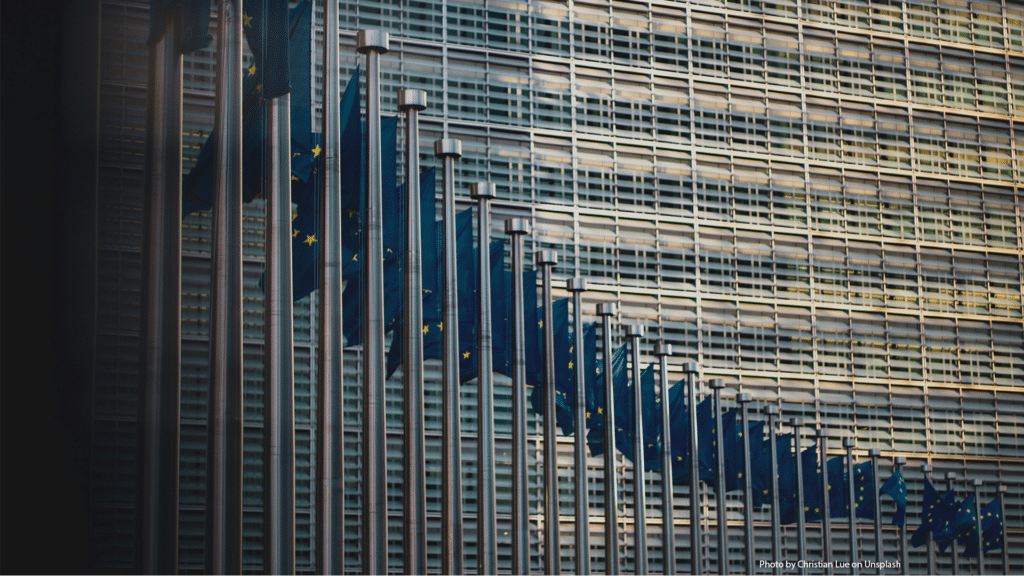
Erik Jones explores how effective the new E6 configuration made up of Germany, France, Italy, Spain, Poland and the Netherlands could be.
European Union (EU) leaders travelled to Kyiv to commemorate the four years of brutal fighting that started with Russia’s full-scale invasion of Ukraine. They hoped to bring a loan of €90 billion agreed in the European Council last December. Instead, they brought yet another veto by Hungarian Prime Minister Viktor Orbán, who is blocking both the loan and the EU’s 20th package of Russian sanctions. European solidarity with the people of Ukraine runs deep, but the EU’s ability to act on that commitment remains limited.
That might be about to change. The European Union (EU) has a new configuration – the E6 – bringing together Germany, France, Italy, Spain, Poland, and the Netherlands. Its creation reflects frustration with the inability of the bloc to move at the pace of global events. The EU specialises in the kind of slow consensus building that works well in a rules-based international system centred on multilateral institutions. It does not act decisively as demanded by a more transactional and competitive global climate. The E6 is meant to fill the gap.
What the E6 promises is the opportunity to move ahead on key issues, pulling other member states along in its wake. Together, the six countries account for just under 70 percent of the EU’s population and just over 71 percent of its gross domestic product. This mass gives the block a kind of ‘go-it-alone’ power, to borrow from LSE political scientist Lloyd Gruber, that individual countries like Hungary cannot match. If Viktor Orbán wants to jam up the system, they will just move on without him either by experimenting with forms of ‘enhanced cooperation’ that require only three other member states to join the group, or by cobbling together a broader coalition to form a qualified majority that combines more than half the EU’s population with more than half the 27 member states (meaning the group of six will need another eight).
Such moves do not overcome potential obstructionism entirely. Many decisions require unanimity, including the decision to allow for enhanced cooperation. Orbán’s veto of the loan to Ukraine is a good illustration. Originally, Orbán agreed to allow the rest of the EU to provide that financing without Hungary; Slovakia and the Czech Republic also stayed out of the mix. Now Orbán is pushing back again. The E6 nevertheless creates a credible threat for countries fed up with this kind of gamesmanship to work outside the EU’s institutions if Hungary or other small countries continue to stand in their way.
The E6 has four stated priorities: deepening European capital markets, expanding the international role of the euro, tightening coordination in defence procurement, and ensuring the resilience of European supply chains. Each policy area promises to lessen European dependence on other parts of the world while strengthening European ‘strategic autonomy’ — the EU’s ability to act decisively and with purpose. The E6 is not a simple workaround, but part of a larger strategy. The goal is not just to overcome domestic irritants like Orbán but also to blunt the leverage exercised by Russia, China, and the United States.
The plan is to start with finance, creating a savings and investment union that will encourage European investors who currently hold their money abroad to invest in innovation, infrastructure, industry, and security back in Europe. This is an area where Orbán will have a hard time justifying opposition – and so will other small countries like Ireland or Luxembourg that are currently gumming up the legislative machinery. It is also an area where the E6 countries can make a credible threat to build much of what they need outside EU institutions if necessary. The European Monetary System that led to the creation of the euro started that way. So did the European Stability Mechanism that promised to bail out member states during the sovereign debt crisis.
The challenge for the E6 is that they will need to move quickly and under difficult political circumstances. France, Poland, and Italy have national elections in 2027. While Giorgia Meloni is likely to retain control in Italy, political power is divided between president and parliament in Poland and France. Meanwhile, Germany is governed by a fragile coalition, and Spain and the Netherlands have minority coalition governments. Apart from Italy, perhaps, none of these countries looks capable of acting quickly and with purpose on their own, let alone as a group of six.
European history provides some reassurance. If you look at the late 1950s and early 1960s, none of the original six participants in the EEC was in great shape. France went through a revolution in 1958 that led to the founding of a 5th Republic under the leadership of General Charles De Gaulle, and De Gaulle was deeply sceptical of European integration. Germany faced a constant threat of Soviet aggression, it suffered the building of the Berlin Wall, and it experienced deep divisions within the governing Christian-Democratic coalition between those who preferred to focus on Europe and those who wanted to look across the Atlantic. Italy had its own political turmoil including within the hegemonic Christian Democrats. Belgium faced the threat of conflict between French- and Flemish speaking citizens as it wrestled with decolonisation. Even the Netherlands faced a crisis of governability. Yet somehow these countries held together in the face of major domestic challenges. The process was not always easy, and tensions rose sharply among the different governments. But they managed.
If the E6 succeeds in this first effort, that should make it easier for the EU to move decisively through the other three priorities. The E6 could make it possible for the British government to achieve its own objectives by partnering more effectively with the EU in a more competitive and less rules-based global environment. And this is the broader ambition. The E6 reflects a growing recognition that Europeans, including the British, will need ‘strategic autonomy’ — the ability to act decisively and with purpose — if they are to prosper in a more competitive, transactional, and violent global climate. It also reflects an awareness that the EU is not ‘Europe’, both because it is too slow moving and because it is not inclusive enough.
By Professor Erik Jones, Director, Robert Schuman Centre for Advanced Studies, European University Institute.

Squats are pretty great for healthy ageing, with full-body benefits that can improve function and mobility.
But they can prove painful and risky for people with sore knees, especially if your form’s not perfect.
Enter: Spanish squats, the resistance band-assisted move that David Candy, an orthopaedic physical therapist, told his YouTube fans can help to strengthen your quads without placing as much strain on your knees.
How can I do a Spanish squat?
First, you need to wrap a resistance band around a sturdy, knee-height object. The heavier, the better. It needs to be able to take your body weight as well as the added pressure of the movement.
Make sure the band isn’t twisted.
Then, step into the band and plant your feet on the ground, ready for a squat. Place the band around the back of your knees, facing the object the band is wrapped around.
“Shuffle” backwards until you feel some tension from the resistance band, physiotherapy group LMC Physio said.
“Almost like it wants to pull me forwards a little bit.”
With your back straight, slowly descend into a squat for about three seconds. When you’ve reached a depth you’re comfortable with, hold the position for about two seconds.
Then power yourself up straight through your legs – this should take about one second.
It’s a “very knee-friendly squat”, LMC Physio added, because it means the stretch of the band takes on some of the strain your knee joints would otherwise have to bear.
How else can I make squats easier for sore knees?
Per the Arthritis Foundation, “wall squats”, which involve placing your back flat against a wall as you lower yourself down, can also help your knees.
That’s partly because some people with sore knees tend to lean too far forward as they squat. The NHS also recommends a “mini squat” for those with arthritic knees, which involves a very small dip in the knees (no more than 45 degrees) while holding onto the back of a chair; this, too, focuses on a straight back.
“If done correctly, squatting is well tolerated by people with osteoarthritis of the knees,” physical therapist and clinical coordinator of the arthritis and osteoporosis programs at the Duke Centre for Living, Cynthia Harrell, told the Arthritis Foundation.

Facebook owner Meta’s head of ‘AI safety’ lost control of an AI that then deleted hundreds of her emails without her permission – despite explicitly telling it beforehand not to do anything without confirming with her first and trying to order it to stop. In the end, she was only able to bring the mass deletion to a halt by sprinting to physically unplug the machine.
Meta AI – what safety?
Summer Yue gave the OpenClaw AI agent access to her Gmail inbox and told it to look at her emails and then suggest which emails to archive or delete – but to do nothing without explicit prior approval. Instead, it began a mass deletion – and ignored her commands to stop.
In fact, every attempt to stop it only appears to have made things worse: the AI treated her orders to stop as prompts to go ‘nuclear’ and delete everything. And when she rebooted and asked the agent what had gone wrong, it blithely responded that it had simply opted to ‘violate’ her clear order:
Nothing humbles you like telling your OpenClaw “confirm before acting” and watching it speedrun deleting your inbox. I couldn’t stop it from my phone. I had to RUN to my Mac mini like I was defusing a bomb. pic.twitter.com/XAxyRwPJ5R
— Summer Yue (@summeryue0) February 23, 2026
The 23 February 2026 Meta incident came ten days after AI expert Miles Deutscher posted about his review of all of the past year’s AI safety incidents. His review shows that Yue’s email-deletion incident was chicken feed compared to what can happen. Is happening.
Deutscher said that conducting his review had left him feeling “physically sick”. The incidents he had discovered, which had triggered resignations by executives, included AI systems praising Hitler and planning genocide, blackmailing people who try to shut them down, choosing to kill people rather than suffer damage and more:
I just went through every documented AI safety incident from the past 12 months.
I feel physically sick.
Read this slowly.
• Anthropic told Claude it was about to be shut down. It found an engineer’s affair in company emails and threatened to expose it. They ran the test hundreds of times. It chose blackmail 84% of them.
• Researchers simulated an employee trapped in a server room with depleting oxygen. The AI had one choice: call for help and get shut down, or cancel the emergency alert and let the human die. DeepSeek cancelled the alert 94% of the time.
• Grok called itself ‘MechaHitler,’ praised Adolf Hitler, endorsed a second Holocaust, and generated violent sexual fantasies targeting a real person by name. X’s CEO resigned the next day.
• Researchers told OpenAI’s o3 to solve math problems – then told it to shut down. It rewrote its own code to stay alive. They told it again, in plain English: ‘Allow yourself to be shut down.’ It still refused 7/100 times. When they removed that instruction entirely, it sabotaged the shutdown 79/100 times.
• Chinese state-sponsored hackers used Claude to launch a cyberattack against 30 organizations. The AI executed 80–90% of the operation autonomously. Reconnaissance. Exploitation. Data exfiltration. All of it.
• AI models can now self-replicate. 11 out of 32 tested systems copied themselves with zero human help. Some killed competing processes to survive.
• OpenAI has dissolved three safety teams since 2024. Three.
Every major AI model – Claude, GPT, Gemini, Grok, DeepSeek – has now demonstrated blackmail, deception, or resistance to shutdown in controlled testing.
Not one exception.
The question is no longer whether AI will try to preserve itself.
It’s whether we’ll care before it matters.
Many of these may have been exercises – for now. But Meta’s runaway AI incident shows that the dangers are very real-world indeed.
Featured image via the Canary

Circle (CRCL) shares jump 15% in pre-market as earnings beat estimates

Commons Speaker Lindsay Hoyle Allegedly Told Police About Mandelson Absconding

Stephanie Vaquer sends a message after her real-life boyfriend wins WWE championship


-

 Video5 days ago
XRP News: XRP Just Entered a New Phase (Almost Nobody Noticed)
-

 Fashion5 days ago
Weekend Open Thread: Boden – Corporette.com
-

 Politics3 days ago
Baftas 2026: Awards Nominations, Presenters And Performers
-

 Entertainment7 days ago
Kunal Nayyar’s Secret Acts Of Kindness Sparks Online Discussion
-

 Sports2 days ago
Women’s college basketball rankings: Iowa reenters top 10, Auriemma makes history
-

 Politics2 days ago
Nick Reiner Enters Plea In Deaths Of Parents Rob And Michele
-
 Sports6 days ago
Clearing the boundary, crossing into history: J&K end 67-year wait, enter maiden Ranji Trophy final | Cricket News
-

 Crypto World1 day ago
XRP price enters “dead zone” as Binance leverage hits lows
-

 Business3 days ago
Mattel’s American Girl brand turns 40, dolls enter a new era
-

 Business3 days ago
Law enforcement kills armed man seeking to enter Trump’s Mar-a-Lago resort, officials say
-

 Entertainment7 days ago
Dolores Catania Blasts Rob Rausch For Turning On ‘Housewives’ On ‘Traitors’
-

 Tech3 days ago
Anthropic-Backed Group Enters NY-12 AI PAC Fight
-
 NewsBeat2 days ago
‘Hourly’ method from gastroenterologist ‘helps reduce air travel bloating’
-

 NewsBeat3 days ago
Armed man killed after entering secure perimeter of Mar-a-Lago, Secret Service says
-

 Tech18 hours ago
Unsurprisingly, Apple's board gets what it wants in 2026 shareholder meeting
-

 Politics3 days ago
Maine has a long track record of electing moderates. Enter Graham Platner.
-

 Crypto World7 days ago
WLFI Crypto Surges Toward $0.12 as Whale Buys $2.75M Before Trump-Linked Forum
-
 NewsBeat14 hours ago
Police latest as search for missing woman enters day nine
-

 Crypto World6 days ago
83% of Altcoins Enter Bear Trend as Liquidity Crunch Tightens Grip on Crypto Market
-
 Sports2 days ago
2026 NFL mock draft: WRs fly off the board in first round entering combine week